|
 Nederlands /
Dutch Nederlands /
Dutch
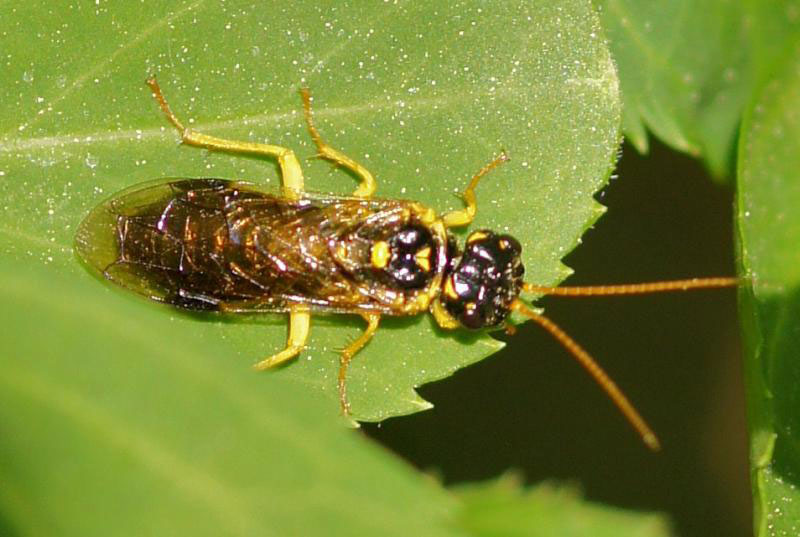
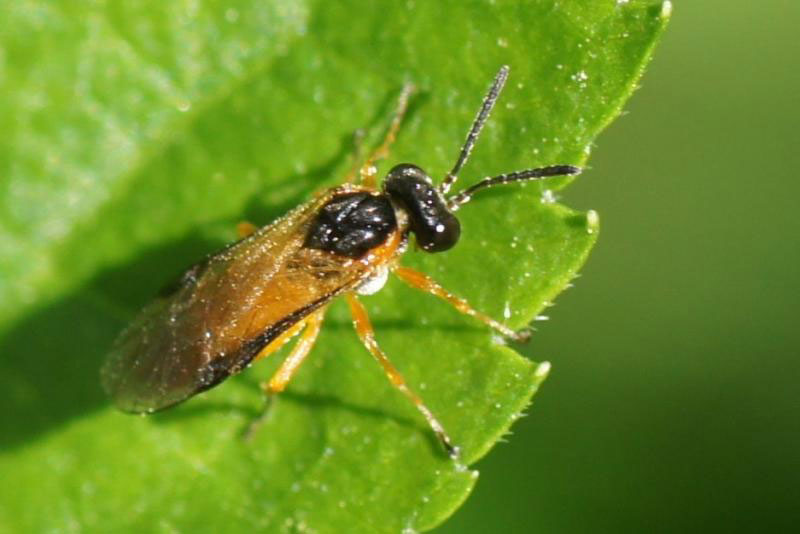
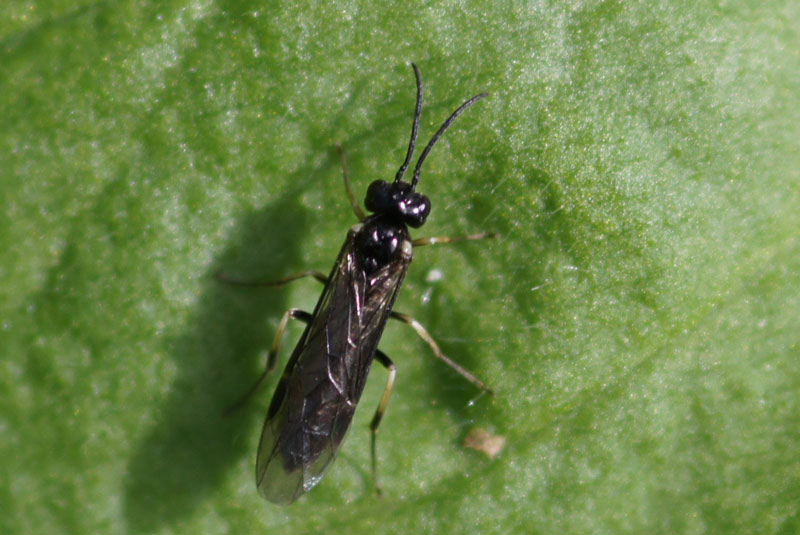
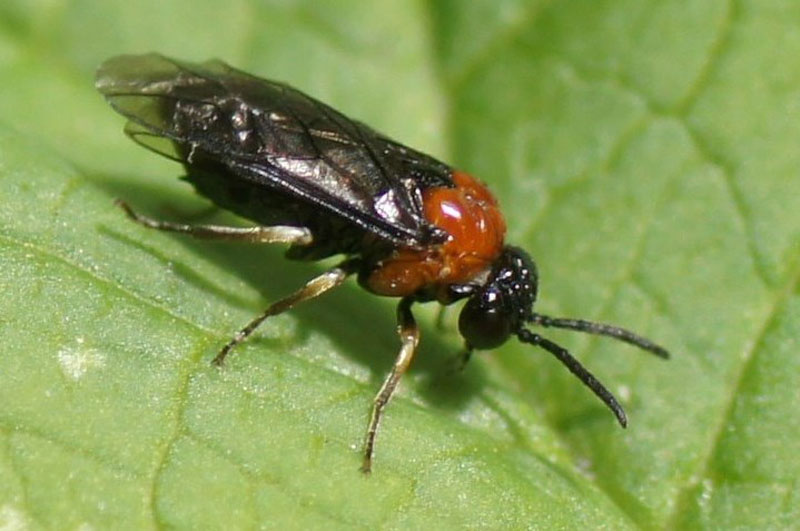
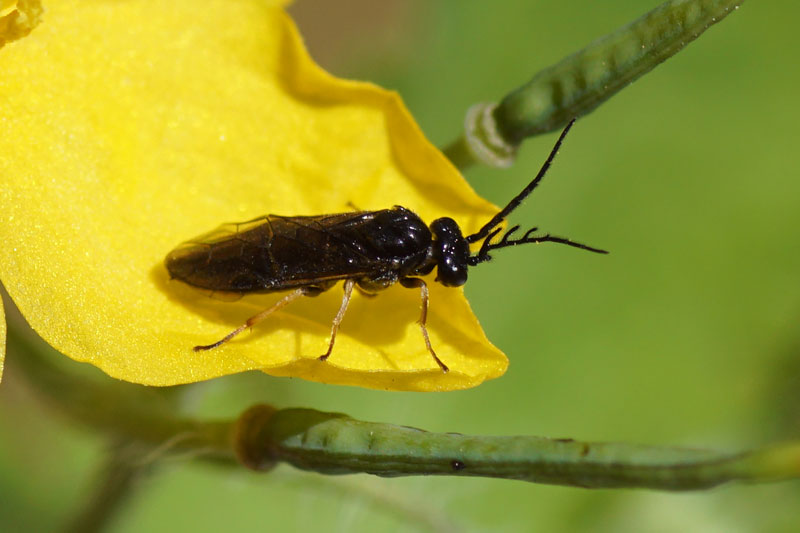
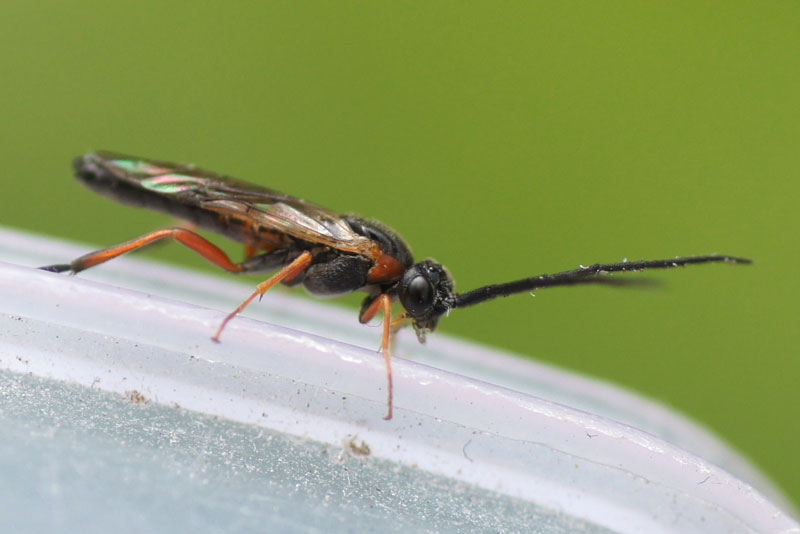
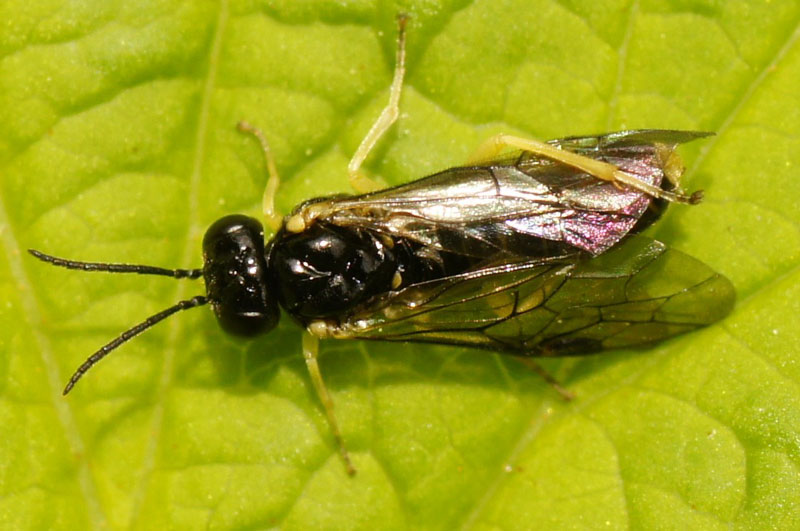
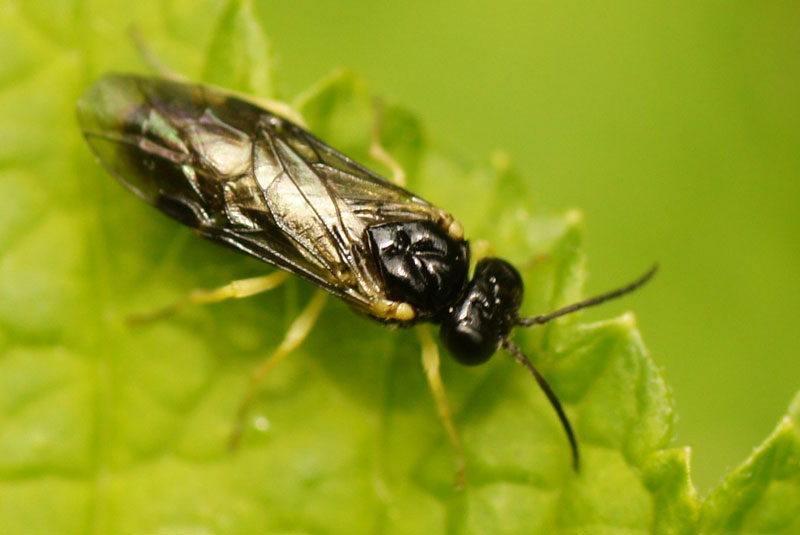
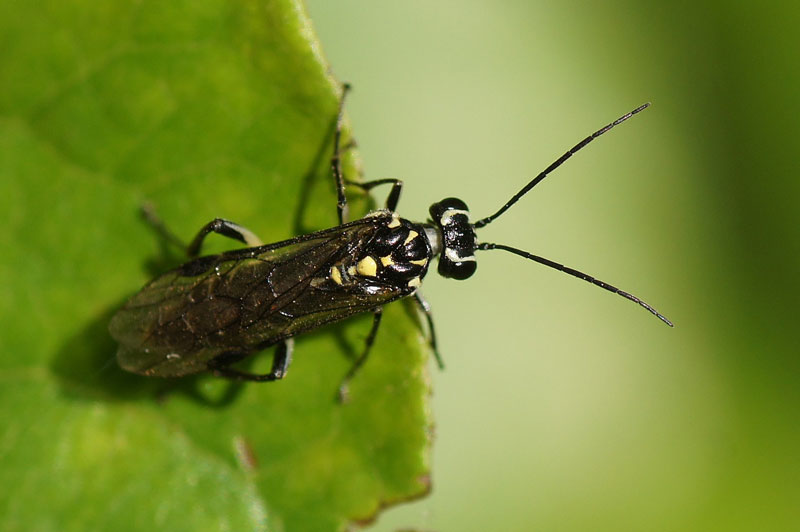
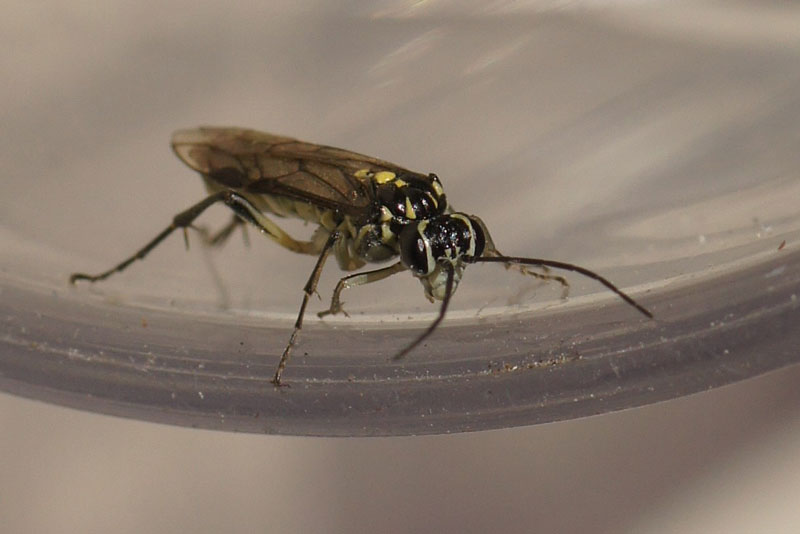
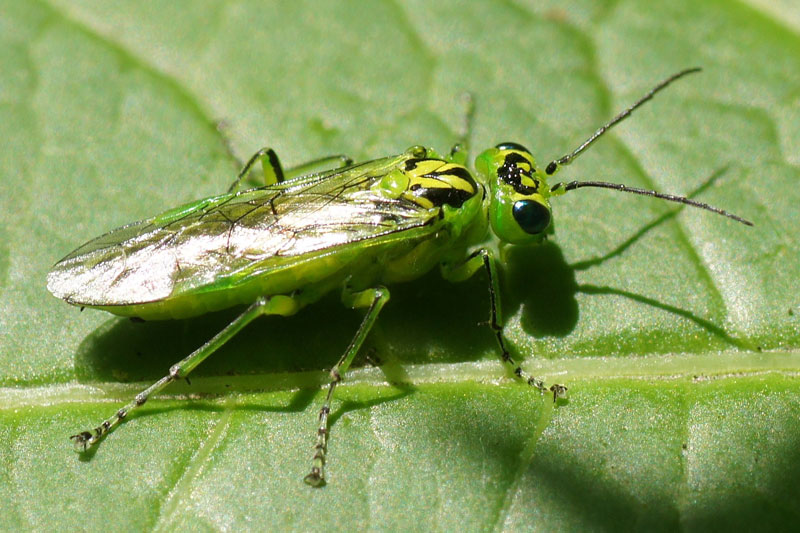
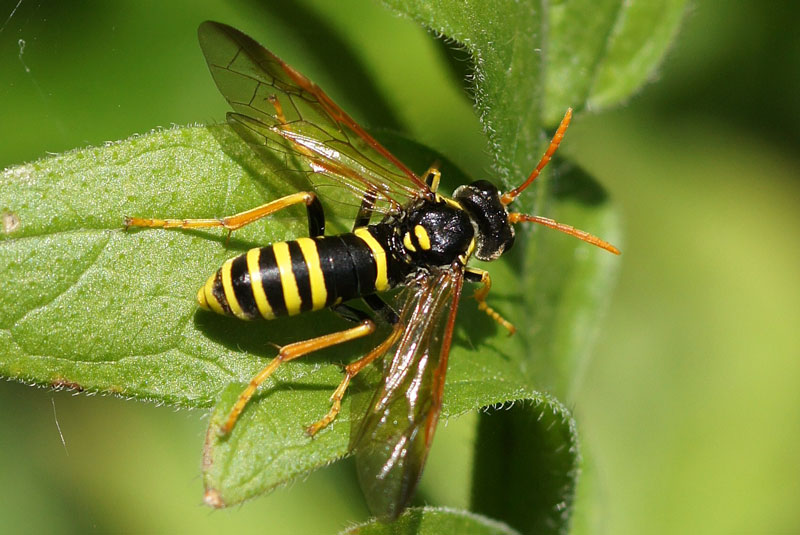
Sawflies, Symphyta
| Wasps belong to the order
Hymenoptera. The other insects, which belong to this order, are bees, bumblebees, ants and saw
flies (Symphytae).
|
| Saw Flies
(Symphyta)
They
are not flies. Sawflies are closely related to wasps. But they don't have
the 'waist' of wasps. They
make no nest and have no social organization. Sawfly larvae feed on
leaves. The larvae look similar to the caterpillars, but they have six or
more pair of prolegs. Some larvae look like little slugs.
|
Argidae.
 .. ..
 . .
 . .
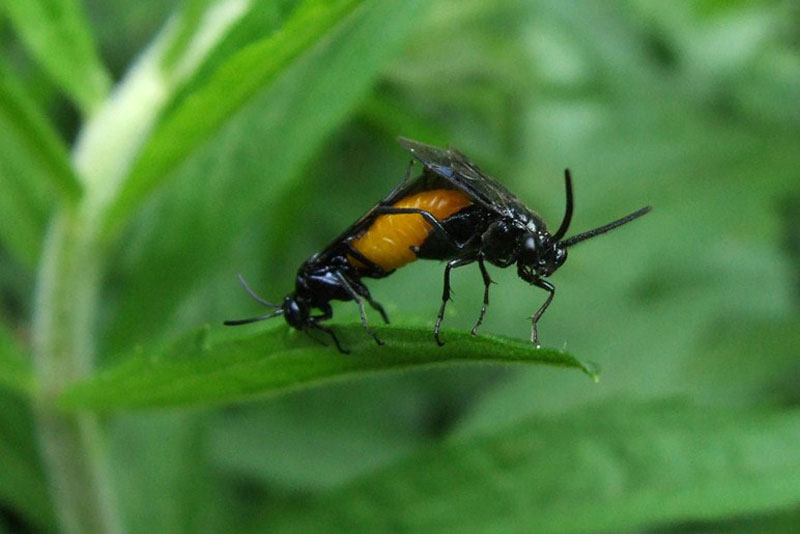
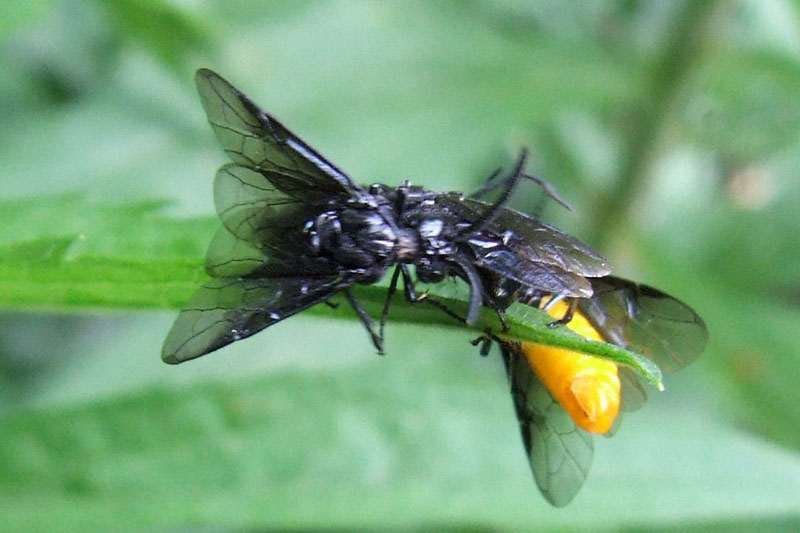
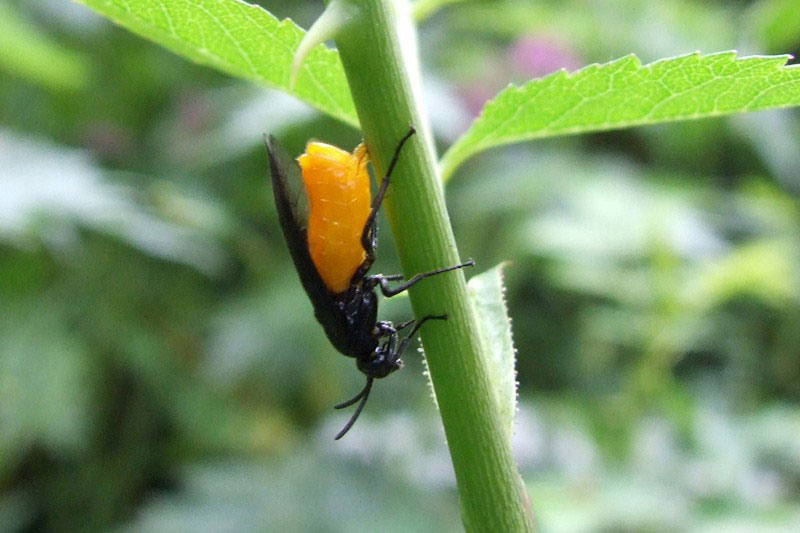
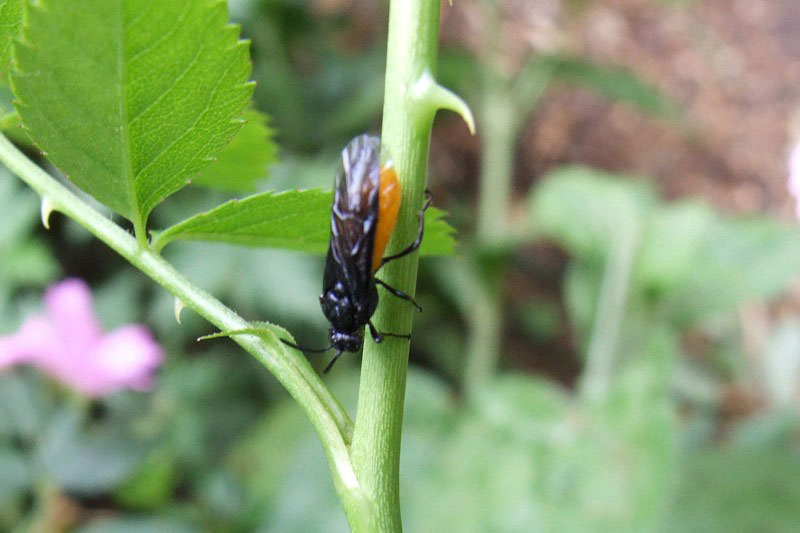
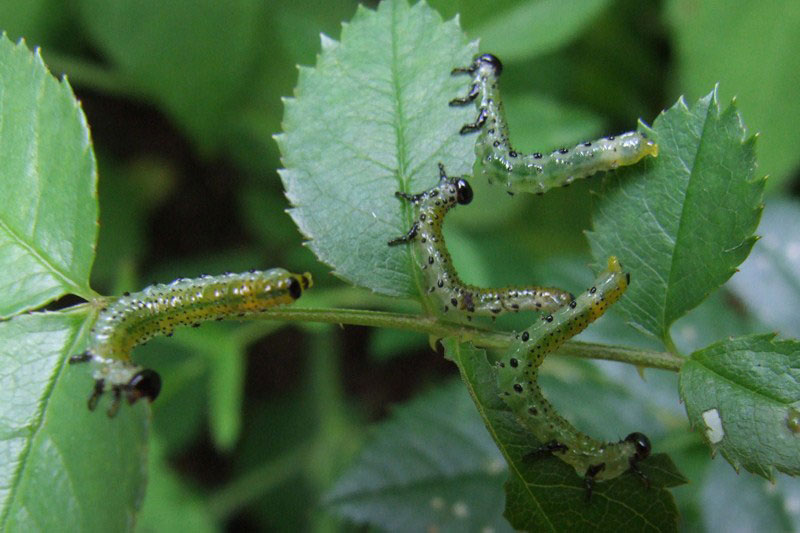
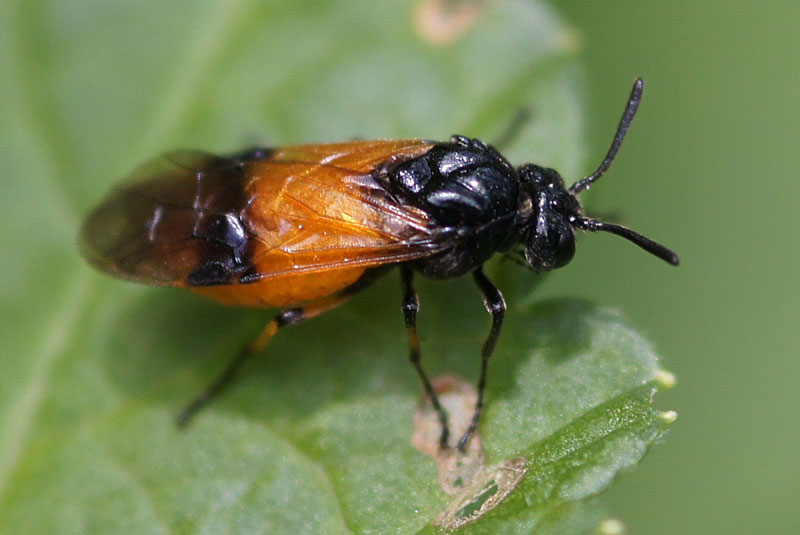
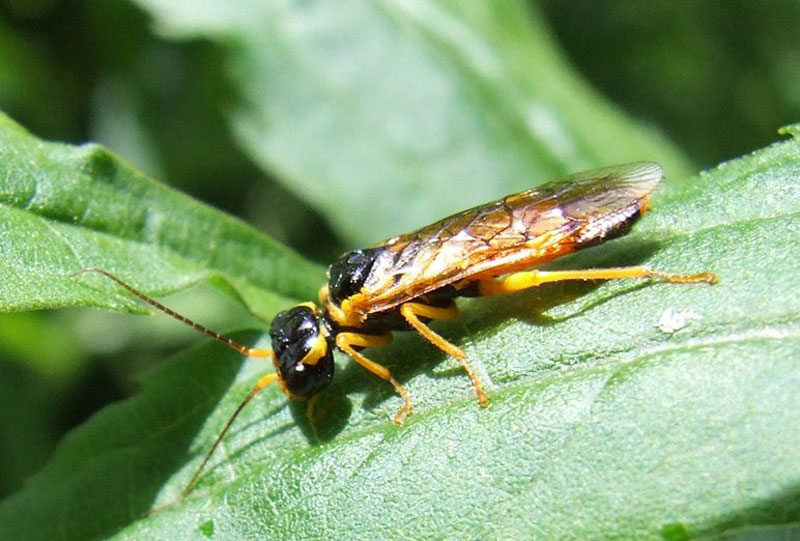
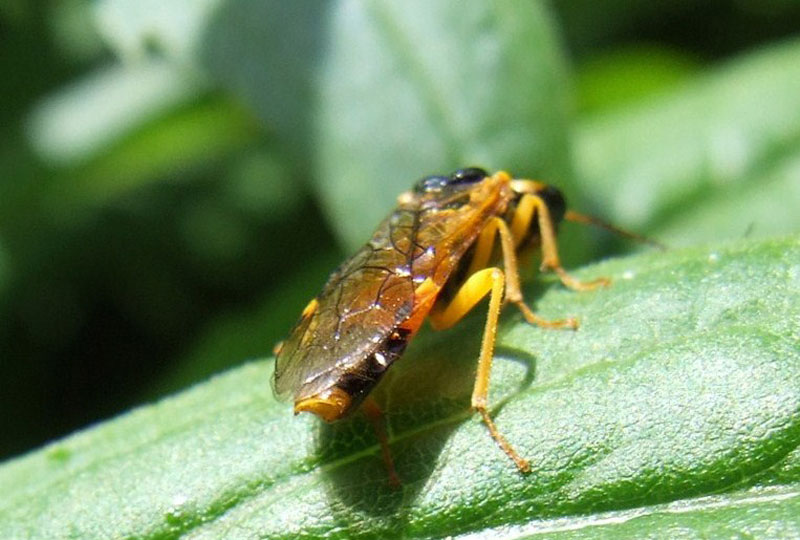
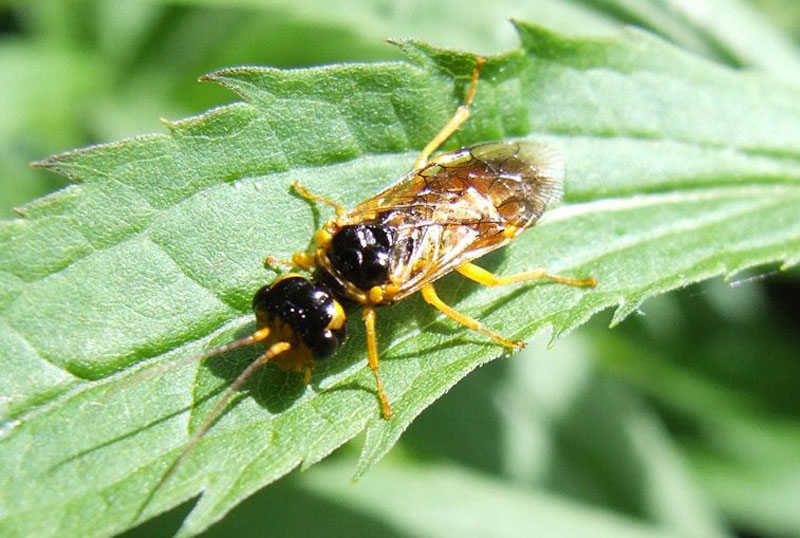
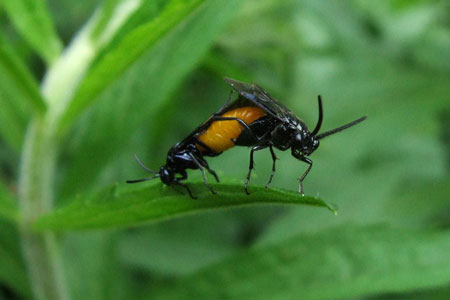
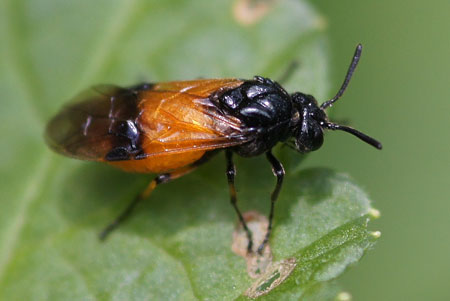
 Large Rose Sawfly (Arge pagana).
Subfamily
Argina.
Family Argidae.
Large Rose Sawfly (Arge pagana).
Subfamily
Argina.
Family Argidae.
The
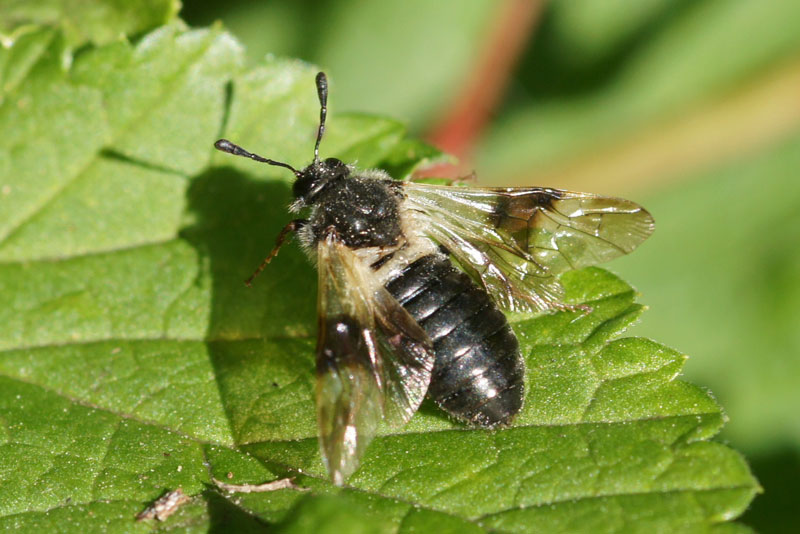
left is a Large Rose sawfly. But the other sawfly is an other species.
Perhaps an Iris Sawfly.
The Large Rose
Sawfly saws a hole in a Rose (plant) and lays eggs.
The larvae eat the rose. But usually there is not
much damage, because the larva has many natural enemies.
Photos 1-6-2008, 2-6-2008. In August I saw the larvae of the Large Rose Sawfly (Arge
pagana) on the rose.

 Photos 17-8-2008.
|
 .. ..
 . .
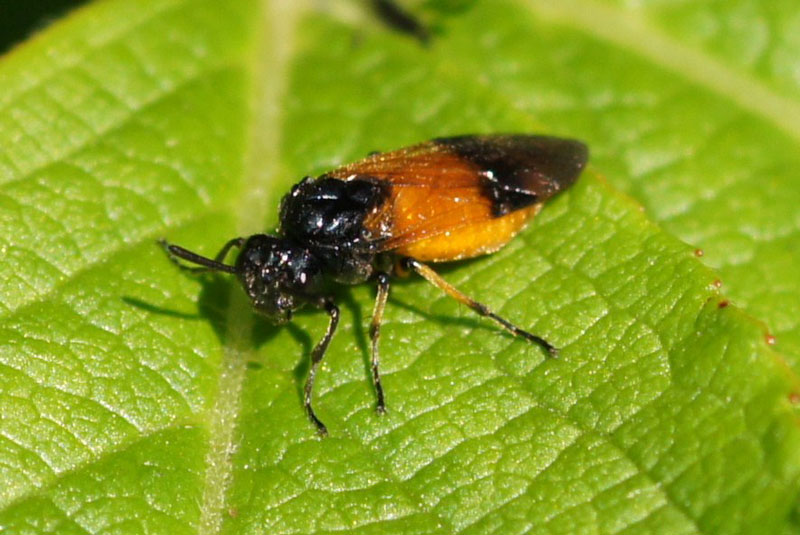
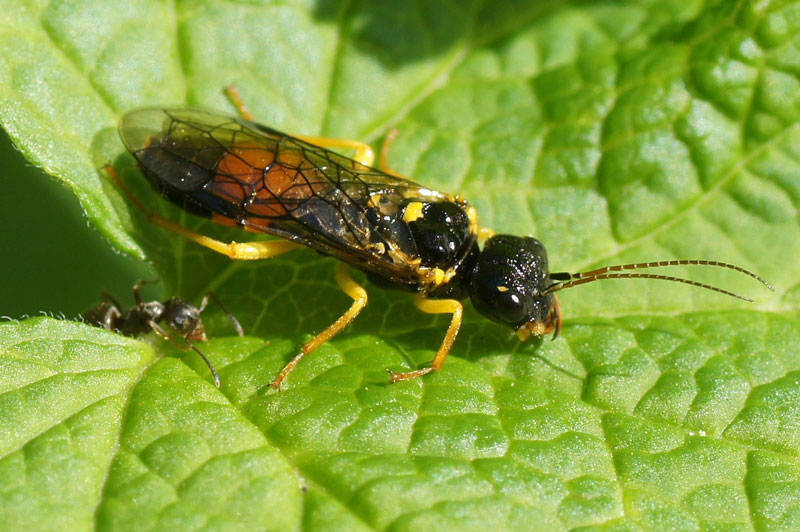
 Bramble sawfly (Arge
cyanocrocea). Subfamily
Argina.
Family Argidae.
Bramble sawfly (Arge
cyanocrocea). Subfamily
Argina.
Family Argidae.
Arge cyanocrocea resembles the Arge
pagana. But the difference is still clearly visible through the dark part of the wings.
The larvae feed on the leaves of blackberry, especially blackberries (Rubus
fruticosus), raspberry (Rubus idaeus) and burnet (Sanguisorba officinalis).
Length: 7, 8 mm.
Europe, Asia Minor, Japan. Photos 21-5-2011, 22-5-2011. |
Clubhorned
Sawflies (Cimbicidae).
A small family with a club-shaped thickening at the end of the antenna.
German:
Keulhornblattwespe.
French: Tenthrède du chèvrefeuille.
 .. ..
 . .
 . .
 . .
 Honeysuckle
Sawfly. (Abia fasciata, Zaraea fasciata). Family Clubhorned
Sawflies (Cimbicidae).
Honeysuckle
Sawfly. (Abia fasciata, Zaraea fasciata). Family Clubhorned
Sawflies (Cimbicidae).
A Sawfly with a striking white band and a club-shaped end of the antennas. The larvae live in the honeysuckle.
They winter as a pupae in the ground. Adults appear in April.
In the Netherlands it is quite rare.
Length 11 mm.
Europe, North-West Africa, North and Central Asia. Photos 25-4-2010, 4-6-2010. |
 .. ..
 . .
 Abia lonicerae or Abia aenea. Family Clubhorned
Sawflies (Cimbicidae). Rare in the Netherlands!
Abia lonicerae or Abia aenea. Family Clubhorned
Sawflies (Cimbicidae). Rare in the Netherlands!
Abia Abia lonicerae and Abia aenea are very
similar. The distinction is in the form of the 3rd segment of the antenna
and a difference in punctures at the side of the thorax. (Thanks Jorgen). These
Abias are beautiful sawflies with a coppery sheen.
This Abia I found the window in the scullery.
The larvae of both species live in the honeysuckle.
Length 11, 12 mm. Photos 5-5-2013. |
Pamphiliidae.
Genera Acantholyda, Caenolyda, Cephalcia, Neurotoma
en Pamphilius.
Genus Pamphilius.
The larvae live singly in leaf rolls, mostly on Rosaceae or catkins-bearing trees (Corylaceae, Betulaceae, Salicaceae and Fagaceae).
Information: The
European Pamphiliidae (Hymenoptera: Symphytha), with special reference to the
Netherlands by C. van Achterberg and B, van Aartsen.
 .. ..
 . .
 Pamphilius
inanitus. Family
Pamphiliidae.
Pamphilius
inanitus. Family
Pamphiliidae.
Not quite sure! Photos 25-5-2009.
On the forum "Hymis" I had the
next question: I think Pamphilius spec. (25-5-2009 Bergen N.H. Holland) Is
Pamphilius cf. marginatus possible?
The answer was: In Holland, P. marginatus is found mostly in Limburg,
still very low outside this region. In marginatus yellow face, climb the
inner orbit of the eyes and the abdomen is black with yellow spots over
the sides.
For these reasons, I believe that this specimen is nearest to P. inanitus
a species widespread in the Netherlands.
I must warn you, I'm no expert. Greetings,
José Luis Ruiz de la Cuesta. Thanks José |
 .. ..
 . .
 Pamphilius balteatus. Family
Pamphiliidae.
Pamphilius balteatus. Family
Pamphiliidae.
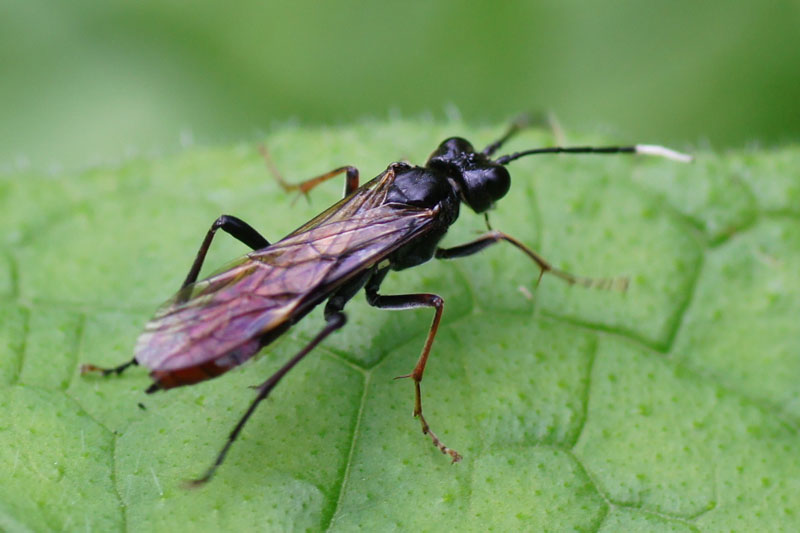
Dark abdomen, black head with yellow line behind the eyes and a yellow spot on the thorax. Black antenna.
Photos 24-4-2019. |
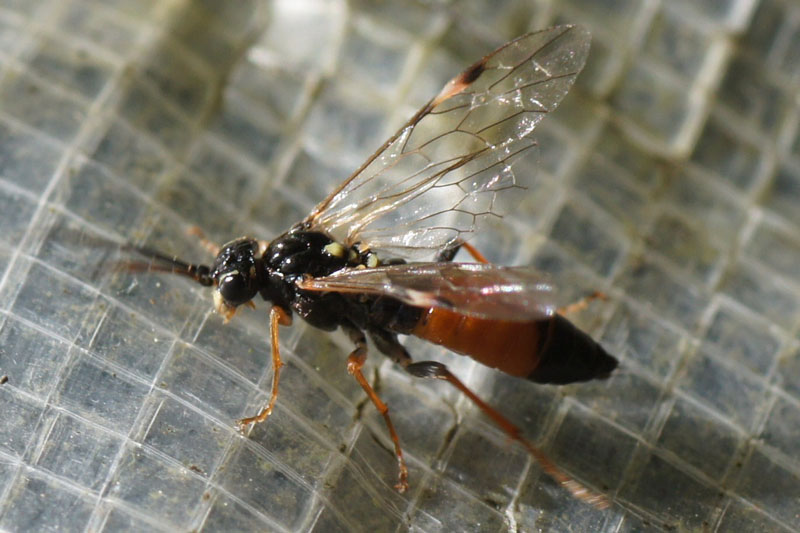
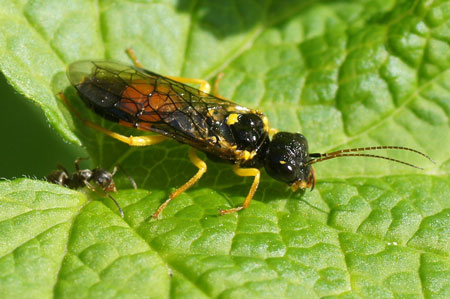 .. ..
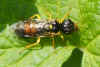 Pamphilius hortorum. Family Pamphiliidae.
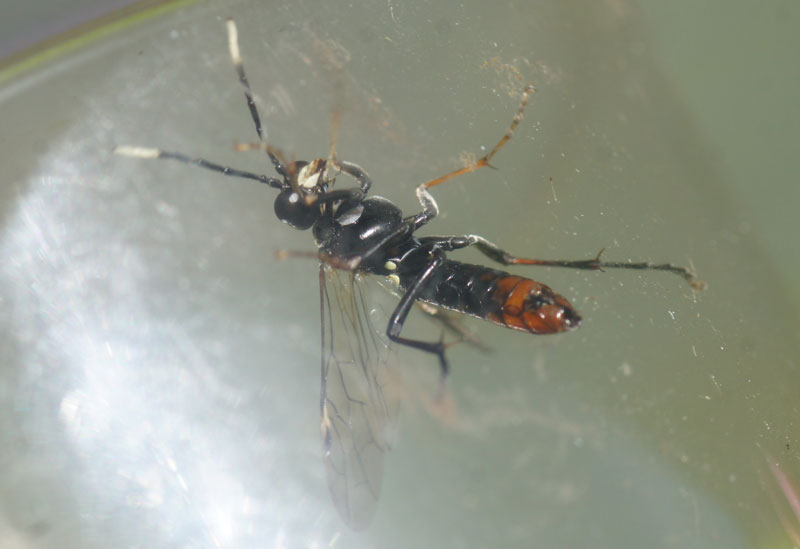
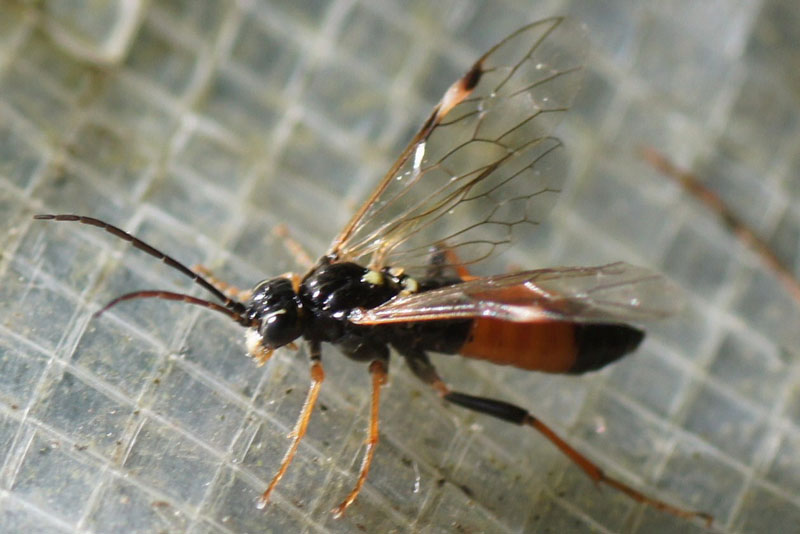
Black with orange-red abdomen, black head and a yellow spot on the thorax. Greyish antenna with black first segment.
Photos 22-5-2013. |
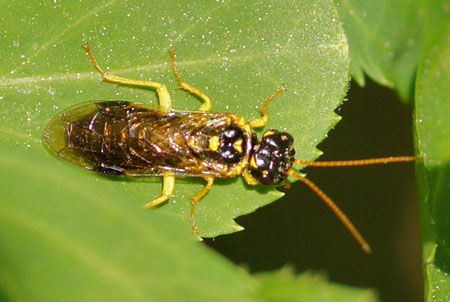 .. ..
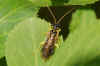 Pamphilius sylvaticus. Family Pamphiliidae.
Black abdomen. Black thorax with two yellow spots. Black head with yellow spots, orange antenna. Photos 25-4-2011. |
Common sawflies (Tenthredinidae).
A large family, diveded in subfamilies.
Subfamily Allantinae.
 .. ..
 . .
 Curled Rose Sawfly (Allantus
cinctus). Subfamily Allantinae. Family Common sawflies (Tenthredinidae). Curled Rose Sawfly (Allantus
cinctus). Subfamily Allantinae. Family Common sawflies (Tenthredinidae).
The light green larvae feed on the leaves of the
strawberry. They can be found at the back of the leaves.
Two generations in a year. (spring and autumn)
Length 6 - 9 mm.
They hibernate as a pupa in the soil.
It looks like the Allantus cingulatus, but in Allantus cingulatus the jaws in part and the labrum are usually white.
The Dutch name (translated) is strawberry sawfly. The English name shows,
the larvae also like the leaves of roses.
Photos 19-6-2012. German:
Rosensägewespe, Gebänderte Rosenblattwespe. |
 .. .. . .
 .
.  .
.  Athalia spec. Subfamily
Allantinae. Family Common sawflies (Tenthredinidae).
Athalia spec. Subfamily
Allantinae. Family Common sawflies (Tenthredinidae).
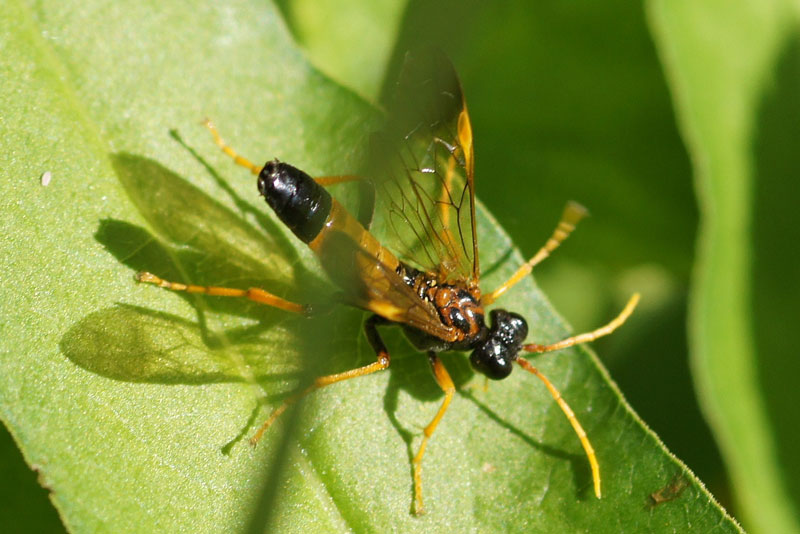
A yellow, orange sawfly with a black head. The top of the thorax is also black. The edge of the wing is black.
First I thought of Athalia Rosae. But this sawfly has a partially orange thorax.
Species in the Netherlands:Athalia ancilla, Athalia bicolor, Athalia circularis, Athalia cordata, Athalia cornubiae, Athalia liberta, Athalia longifoliae, Athalia
lugens, Turnip sawfly (Athalia rosae), Athalia rufoscutellata, Athalia scutellariae.
Here all
species on Observation.
Length 6-8 mm.
The sawfly Athalia looks like the sawflies of the family Arge, but the antenna
of Arge species consists of 3 segments and the antenna of Athalia has more segments.
Photos 5-9-2010.
|
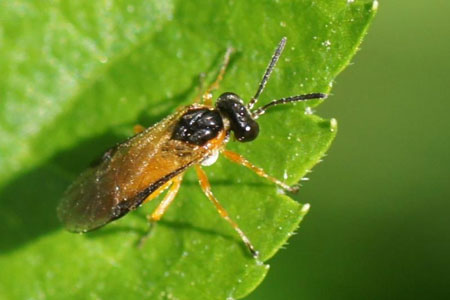 Athalia circularis or Athalia longifoliae. Subfamily
Allantinae. Family Common sawflies (Tenthredinidae).
Athalia circularis or Athalia longifoliae. Subfamily
Allantinae. Family Common sawflies (Tenthredinidae).
A yellow, orange sawfly with a black head. The top of the thorax is also black. The edge of the wing is black.
Just like the Athalia above, I did not get further than Athalia spec with this sawfly. Until it was identified as Athalia circularis or Athalia longifoliae by Luc Elshout in 2023. Thank you! Athalia longifoliae is very rare in the Netherlands, so less likely.
The difference with the top Athalia is the completely orange legs. The hind shins of this species have a black ring, but it is not visible here.
Length
5-8 mm. Photo 27-5-2013.
|
 Turnip sawfly
(Athalia rosae). Subfamily
Allantinae. Family Common sawflies (Tenthredinidae).
Turnip sawfly
(Athalia rosae). Subfamily
Allantinae. Family Common sawflies (Tenthredinidae).
A yellow, orange sawfly with a black head. A partially orange thorax. The edge of the wing is black.
Ten years after the Athalia spec. above I finally saw
it in the garden.
May until autumn. Length 6-8 mm. Larvae on plants of the family
Cruciferae or Brassicaceae. Photo 7-7-2020.
|
 .. ..
 A sawfly probably from the subfamily
Allantinae. Family Common sawflies (Tenthredinidae). A sawfly probably from the subfamily
Allantinae. Family Common sawflies (Tenthredinidae).
Probably, but not quite sure. A genus is not possible. But anyway I have placed this nice sawfly on this page.
Photos 9-4-2014. |
Subfamily Blennocampinae.
 .. ..
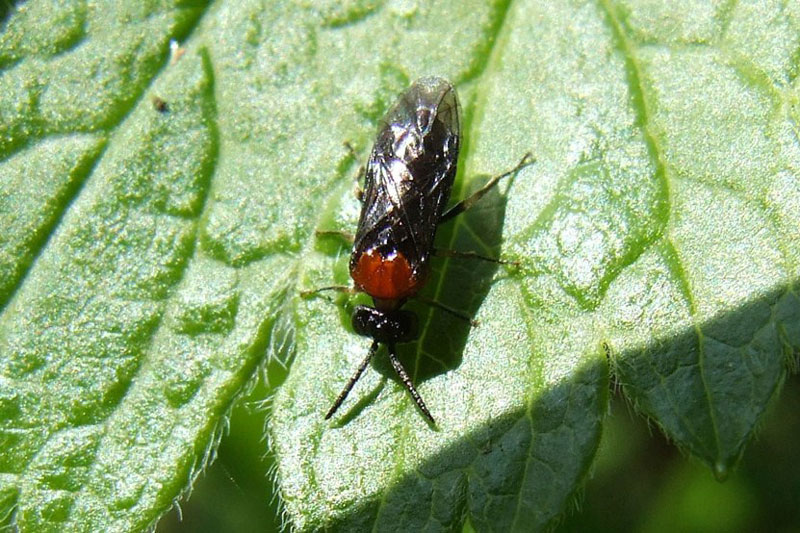
 Eutomostethus ephippium. Subfamily
Blennocampinae. Family
Common sawflies (Tenthredinidae). Eutomostethus ephippium. Subfamily
Blennocampinae. Family
Common sawflies (Tenthredinidae).
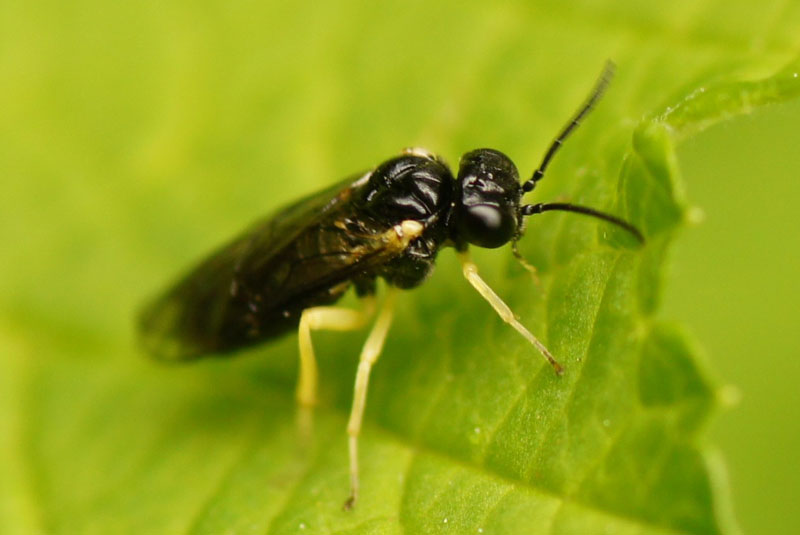
A
small black with red sawfly.
Length 7 mm. Photos 19-8-2013. |
 .. ..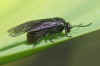 . .
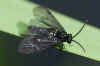 . .
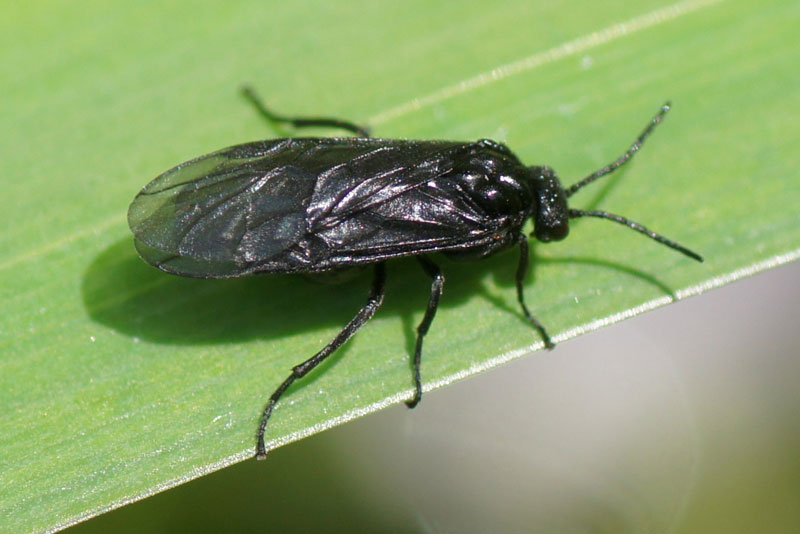
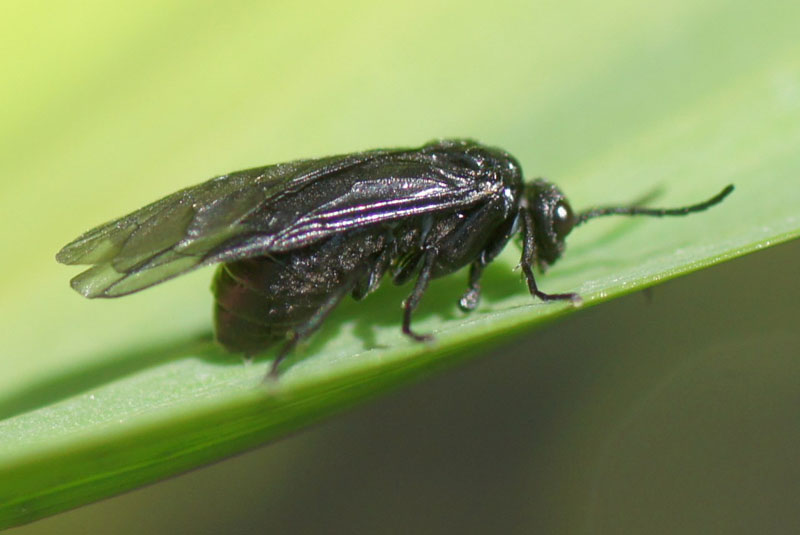
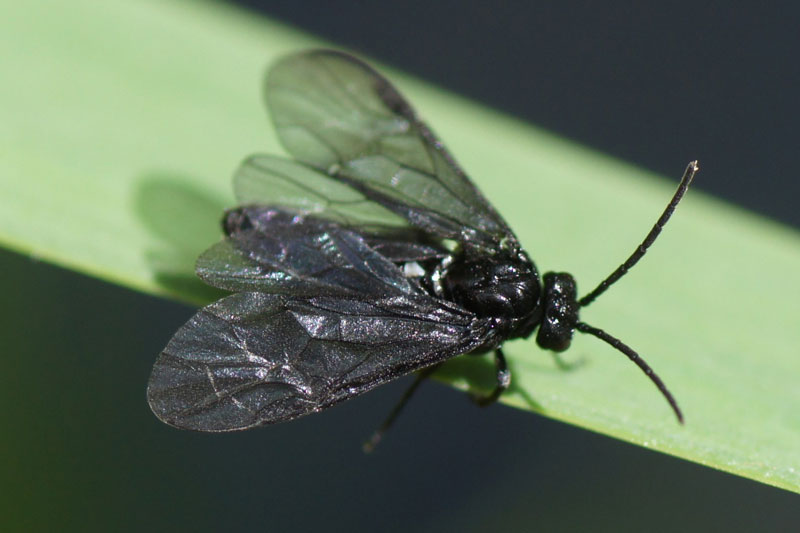
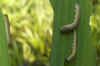 Iris Sawfly (Rhadinoceraea micans). Subfamily Blennocampinae. Family Common sawflies (Tenthredinidae).
There
are other black similar
species. Because they are found in the garden on the Yellow
iris and
because I had larvae of the iris sawfly,
I think this is the Iris Sawfly. The larvae can grow up to 5 cm
long.
In June they move into the ground, spin under the ground a cocoon and
pupate.
In May the sawflies appear, which deposit the eggs.
Photos sawflies 15-5-2013.
German: Irisblattwespe French: Tenthrède
des iris. |
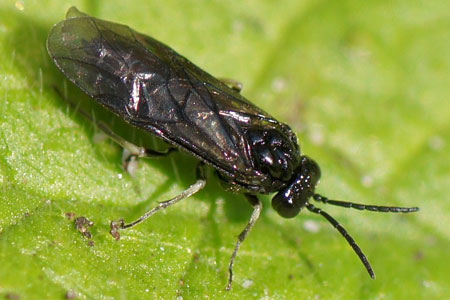 Subfamily Blennocampinae. Family Common sawflies (Tenthredinidae). Subfamily Blennocampinae. Family Common sawflies (Tenthredinidae).
In general, the sawflies of the subfamily Blennocampinae
are short. robust and dark. This could be a Monophadnus. But it isn't certainly. In the Netherlands
live Monophadnus Pallescens and Monophadnus Spinolae. These two species are
only to determine by genital examination.
Monophadnus Pallescens: Larva feed on members of the buttercup family. Length 5. 6 mm. Generally short, robust, dark species.
Photo
22-03-2012. |
Subfamily Dolerinae.
Subfamily Heterarthrinae.
 .. ..
 . .
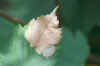 . .
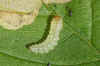
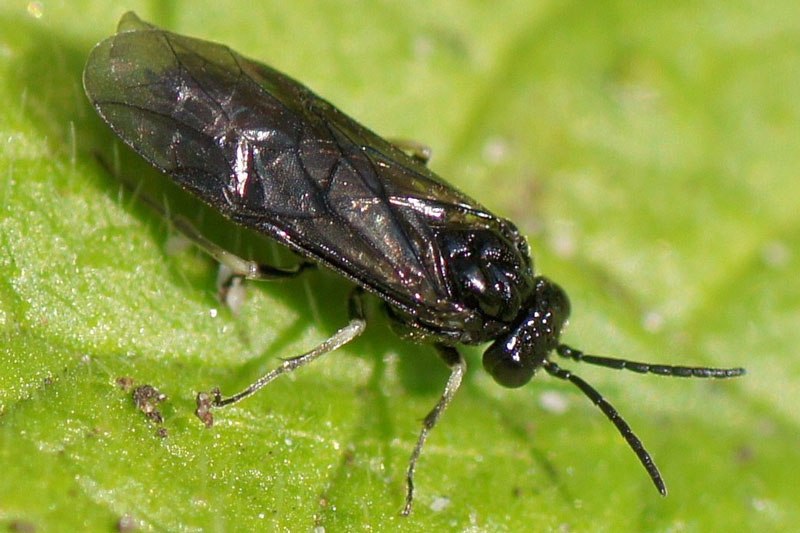
Heterarthrus aceris.
Subfamilie Heterarthrinae. Family
Common sawflies (Tenthredinidae).
A black saw fly. The wings on the front pale. Legs at the 'knees' pale.
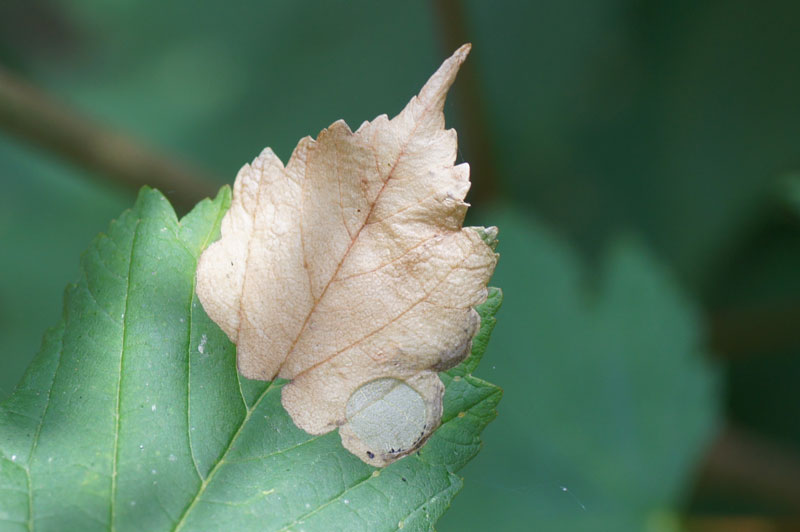
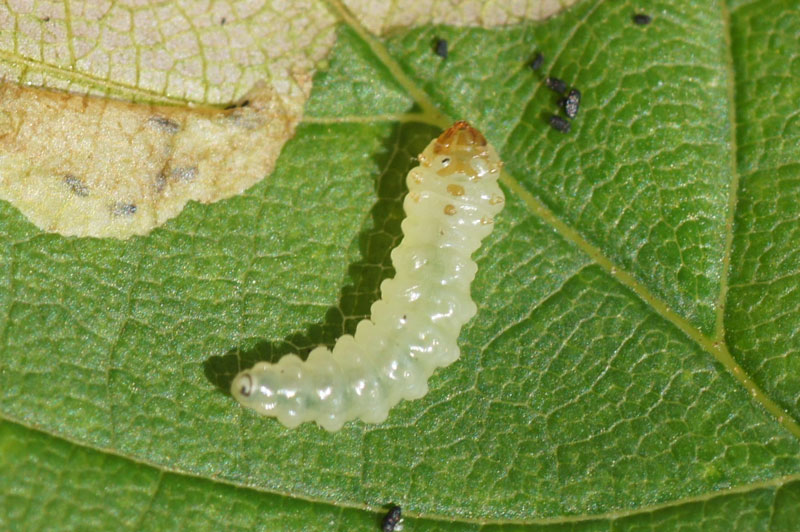
The larvae of this specie are making mines in the leaves of sycamore, sycamore maple (Acer
pseudoplatanus). The full grown larva spins itself a disc shaped cocoon within the mine.
Finally it falls to the ground. There are no corridors in the mine.
I saw a female dropping eggs in the edge of leaves in April. In June, I saw the circle in the mine and I also found a larva.
Photos 30-4-2017, 15-6-2017.
Other similar species:
Heterarthrus cuneifrons (Altenhofer & Zombori, 1987) on Acer pseudoplatanus
but makes the mine in the middle of the leaf.
Heterarthrus wuestneii (Konow, 1905) makes the mine also frm the edge of
the leaf. but on Acer campestre.
Not yet in the Netherlands:
Heterarthrus flavicollis (Gussakovskij, 1947): op Acer platanoides, Heterarthrus leucomela
(Klug, 1818):
on Acer campestre, Heterarthrus leucomela (Klug, 1818): on Acer
pseudoplatanus.
Thanks to John Bouwmans and Ad Mol.
|
 Caliroa
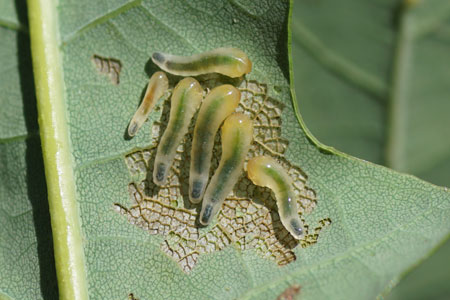
varipes. Larvae. Subfamilie
Heterarthrinae. Family
Common sawflies (Tenthredinidae).
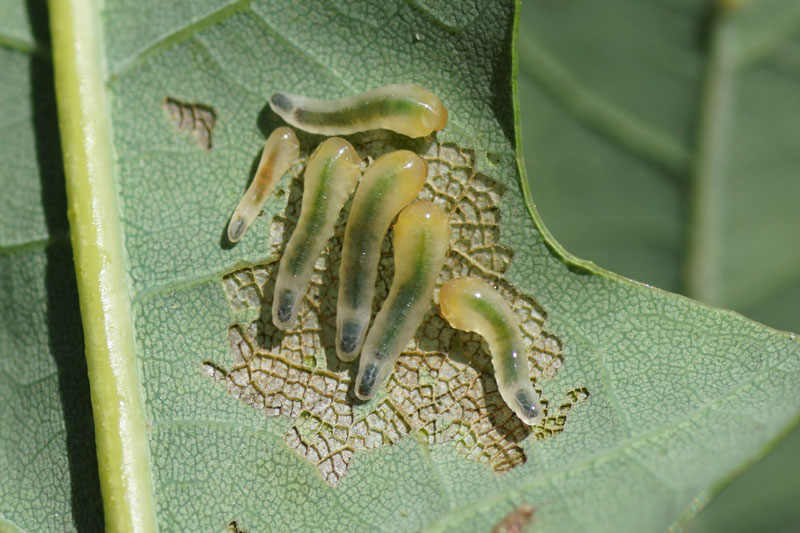
In the Netherlands are the species Caliroa annulipes, Caliroa cerasi, Caliroa cinxia, Caliroa cothurnata, Caliroa varipes.
The larvae, slugworms feed on the undersides of leaves of various trees. On oak in this photo. Little black sawflies. Photo 22-6-2022.
|
Subfamily Nematinae.
 Cladius pectinicornis. Male. Subfamily
Nematinae.
Family
Common sawflies (Tenthredinidae).
Cladius pectinicornis. Male. Subfamily
Nematinae.
Family
Common sawflies (Tenthredinidae).
Not quite sure, as there are more relatives who look like it. But the male is easier to spot than the females because of the forked antennae, which the female lacks. The three lower projections are about the same length. A shorter one at the fourth antenna segment and a very short one at the fifth segment.
The head, thorax and abdomen are black. The legs with light shins. Length 5-7mm.
May, Sept. The larva can be found in rose, strawberry and great burnet. Europe. Photo 14-5-2022.
|
 .. ..
 . .
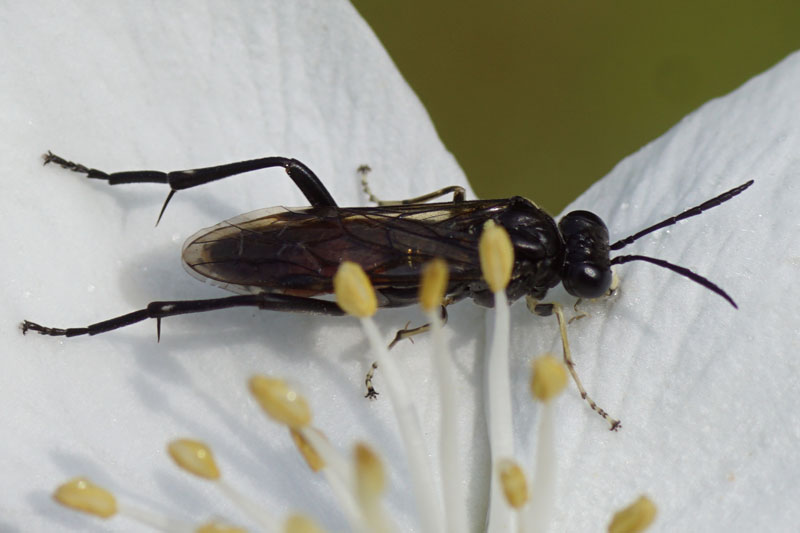
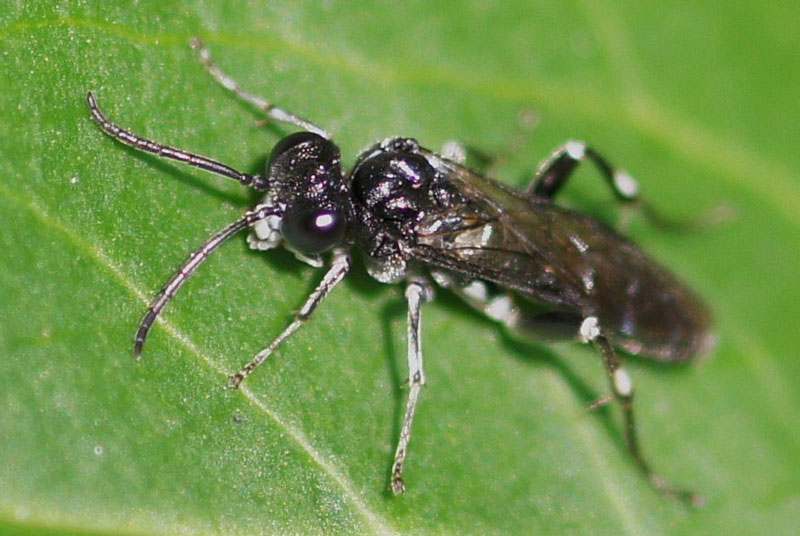
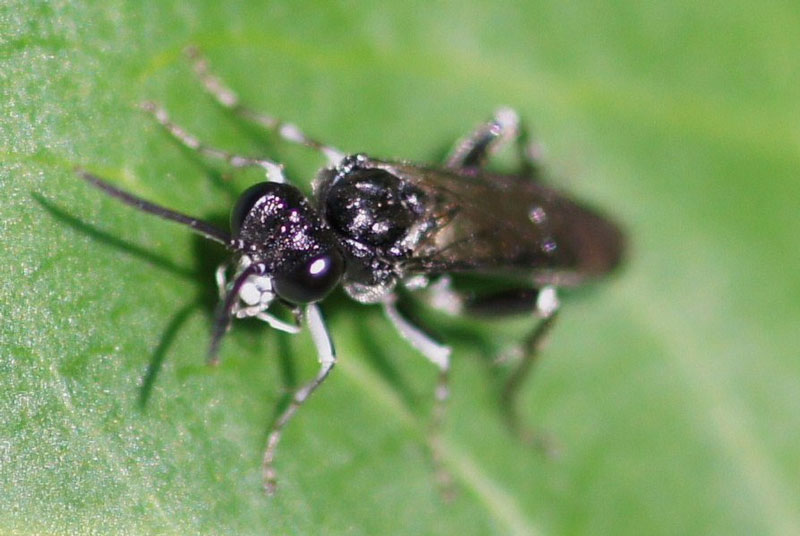
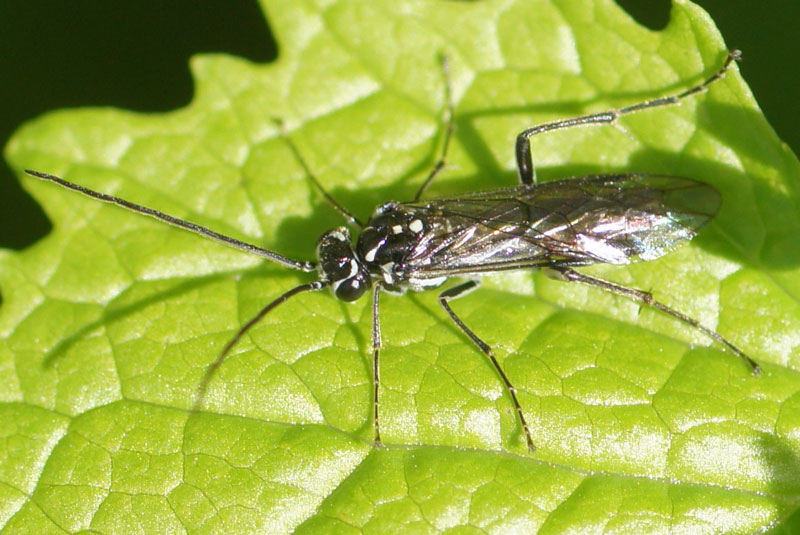
 Hoplocampa fulvicornis. Subfamily
Nematinae.
Family
Common sawflies (Tenthredinidae). Hoplocampa fulvicornis. Subfamily
Nematinae.
Family
Common sawflies (Tenthredinidae).
Not quite sure, for there are other is similar relatives.
A small sawfly 4, 5 mm. The head, thorax and abdomen are black. The antennas consist of 9 segments and are light brown to dark brown in the males and the females. The legs are light yellow. The transparent wings have brown veins.
April, May.
The larvae can be found in eg plums, cherries, apricots. So they are harmful.
Europe.
Photos 10-4-2011. |
 .. ..
 . .
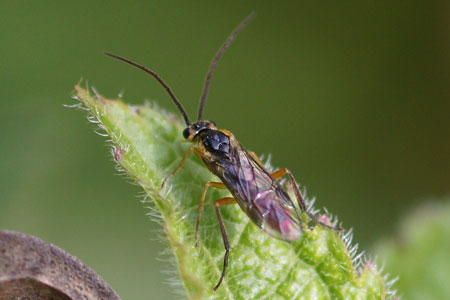
 . .  Subfamily Nematinae. Family Common sawflies (Tenthredinidae). Subfamily Nematinae. Family Common sawflies (Tenthredinidae).
The antennae are striking by the large segments.
It's a difficult subfamily. The species and even the genus can not be determined. Nematus is a possibility.
But it is not certain. (For example, Willow sawfly - Nematus salicis. There are many photos of the
larvae, but none of the sawfly itself.)
Photos 3-11-2007. |
 .. ..
 Nematus spec. Subfamily
Nematinae.
Family
Common sawflies (Tenthredinidae). Nematus spec. Subfamily
Nematinae.
Family
Common sawflies (Tenthredinidae).
This time it is certain that it is a Nematus, but there are several similar species.
Photos 11-8-2015. |
 Nematus spec. Subfamily
Nematinae.
Family
Common sawflies (Tenthredinidae).
Nematus spec. Subfamily
Nematinae.
Family
Common sawflies (Tenthredinidae).
This larva feeds on a currant leaf. So it could be a
common gooseberry sawfly (Nematus ribesii). But the larva of Nematus leucotrochus also eats currants. So I'm not sure of the species. Photo
31-5-2023. |
 .. ..
 Nematus lucidus. Subfamily
Nematinae.
Family
Common sawflies (Tenthredinidae). Nematus lucidus. Subfamily
Nematinae.
Family
Common sawflies (Tenthredinidae).
Head, antennae, thorax, as well as the last segments of the abdomen are black. The shoulders, the front segments of the abdomen and the legs are red. The abdomen is torpedo-shaped.
The larvae feed on hawthorn and sometimes blackthorn.
8-11 mm. It looks like the larger Nematus lucidus.
April-June.
Photos 2-5-2015. |
Subfamily Selandriinae.
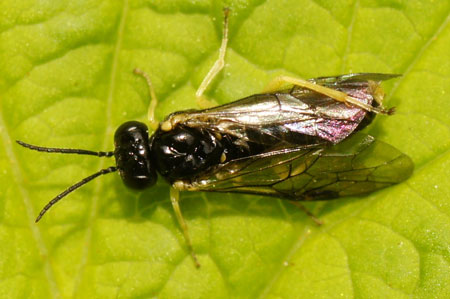 .. ..  . .  Aneugmenus spec. SubFamily Common sawflies (Tenthredinidae). Aneugmenus spec. SubFamily Common sawflies (Tenthredinidae).
In the Netherlands there are three similar species: Aneugmenus
coronatus, Aneugmenus padi, Aneugmenus temporalis.
The sawfly of Aneugmenus padi lives on ferns. Of the other species is not known to me.
Length 5, 6 mm. Photos 7-5-2014. |
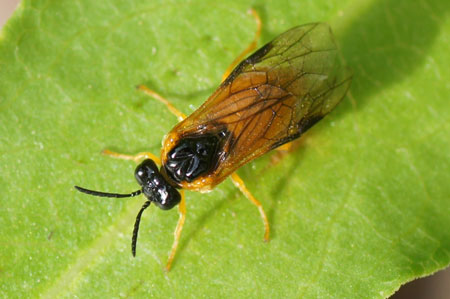 .. ..
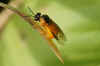 Selandria serva. Subfamily Selandriinae.
Family Common sawflies (Tenthredinidae). Selandria serva. Subfamily Selandriinae.
Family Common sawflies (Tenthredinidae).
Selandria serva looks a lot like Athaliah and Arge species. A yellow, orange sawfly with a black head. The top of the thorax is also black. Its legs are entirely yellow, orange.
The larvae feed on grasses. The eggs are deposited in the left picture. Length 6 - 11 mm.
May - October.
Photos 26-6-2012. |
Subfamily
Tenthredininae.
 .. ..
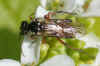 . .
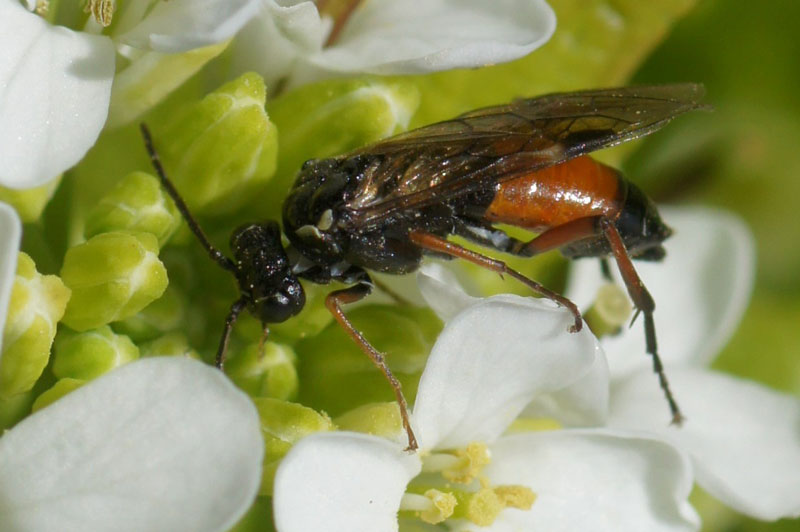
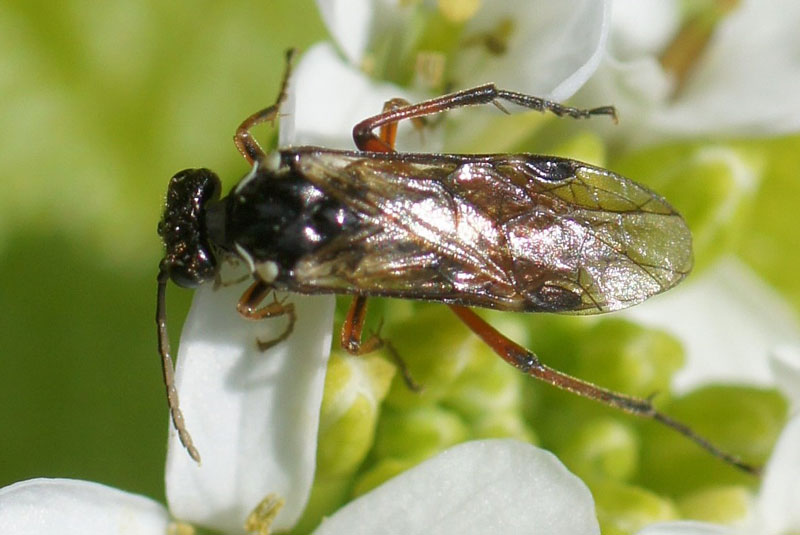
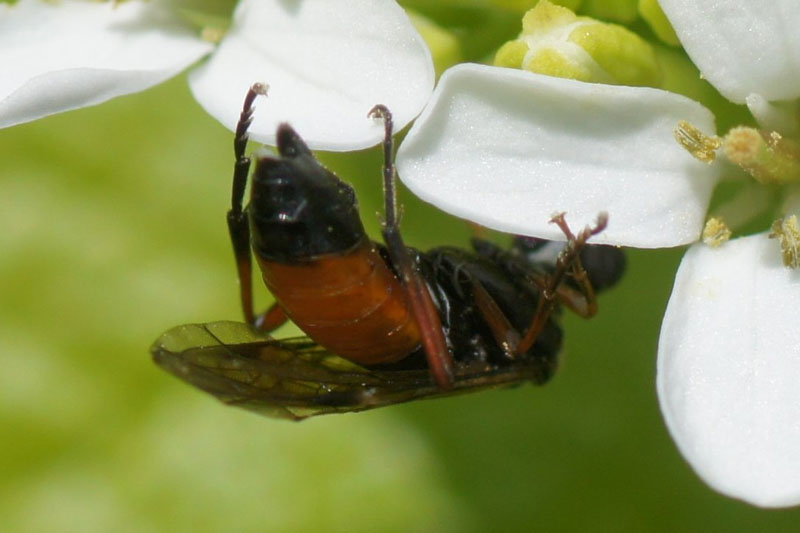
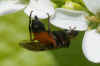 Aglaostigma aucupariae.
Subfamily
Tenthredininae. Family Common sawflies (Tenthredinidae).
Aglaostigma aucupariae.
Subfamily
Tenthredininae. Family Common sawflies (Tenthredinidae).
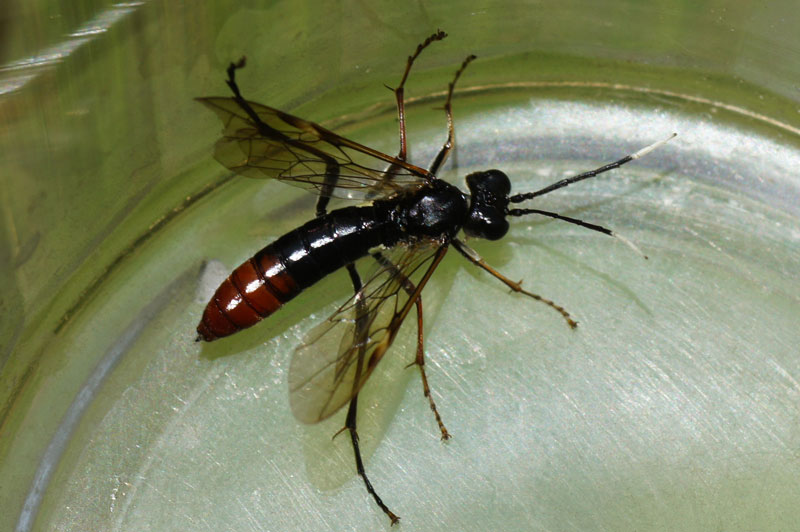
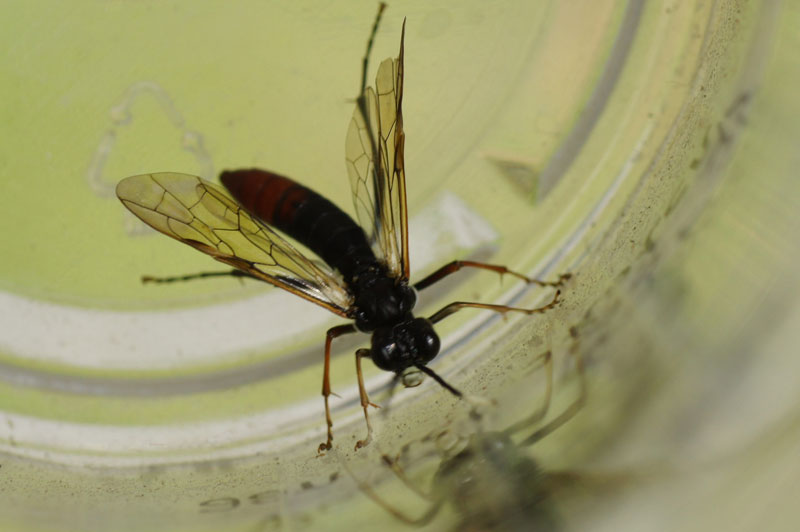
The sawfly has has black abdomen with in the middle a broad red band. I found it
on Garlic mustard (Alliaria petiolata). Photos 14-5-2013.
|
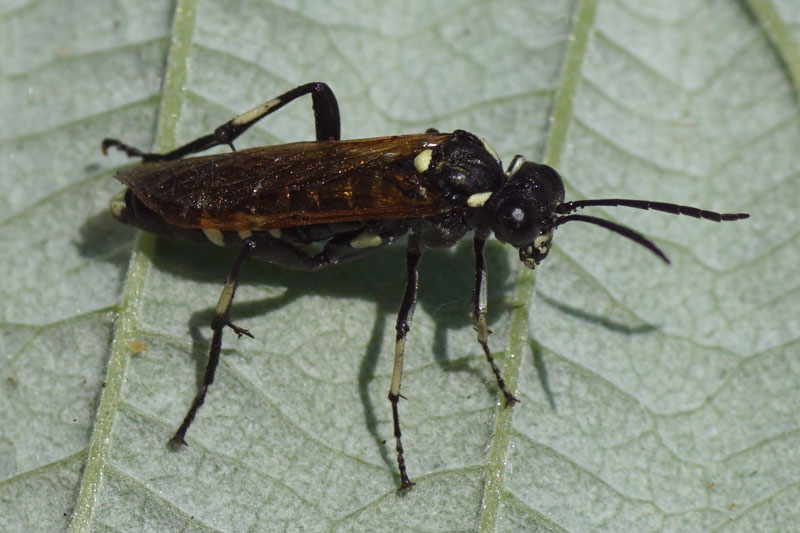
 .. ..
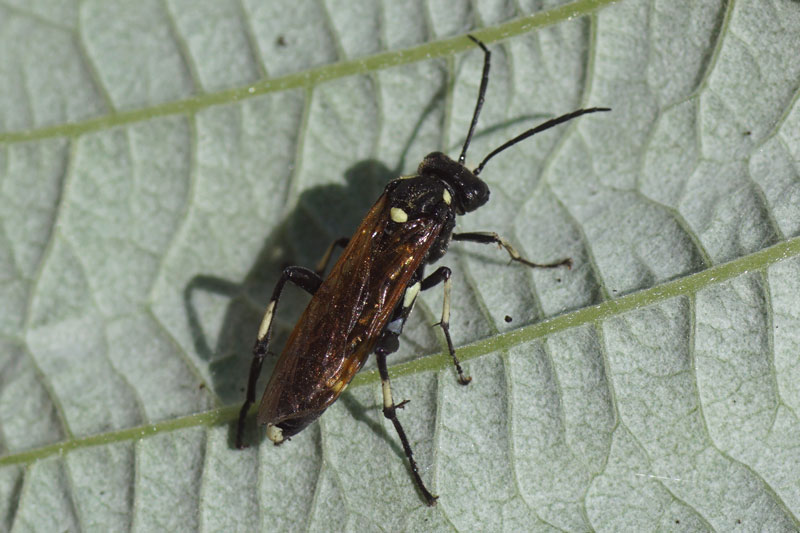
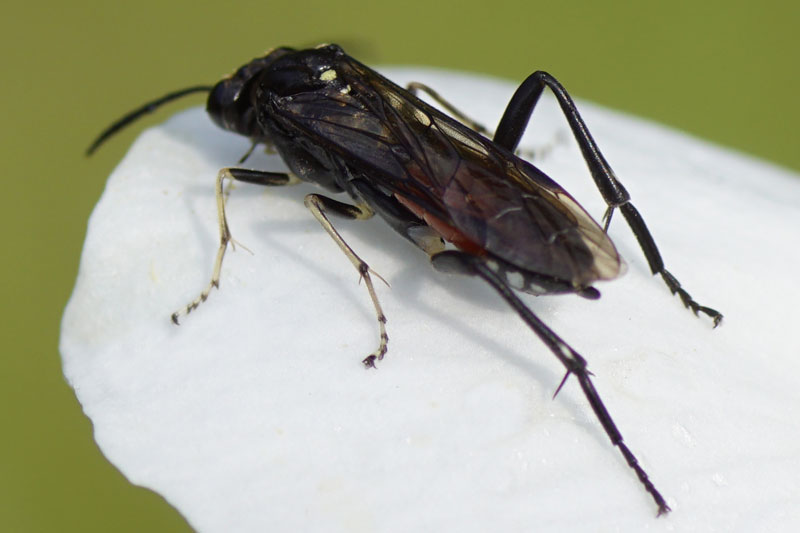
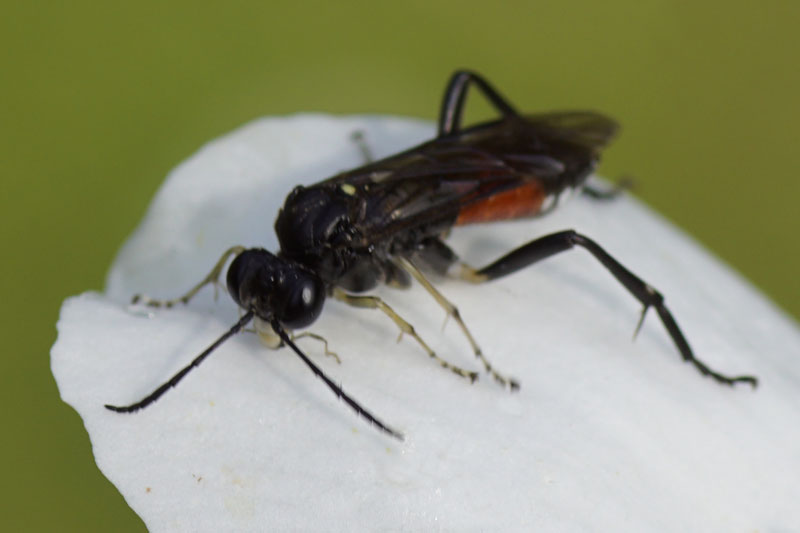
 Macrophya albicincta/alboannulata. Subfamily Tenthredininae. Family Common sawflies (Tenthredinidae).
Black body. These two species are recognizable by the white pronotum. According to Jorgen Ravoet you can see the difference between the species if you have a good view of the posterior trochanters. Thanks Jorgen. Photos 23-4-2011. |
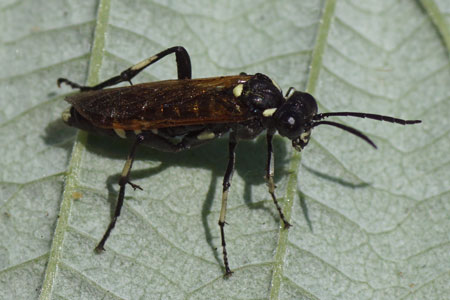 .. ..
 Macrophya duodecimpunctata. Subfamily
Tenthredininae. Family Common sawflies (Tenthredinidae).
Macrophya duodecimpunctata. Subfamily
Tenthredininae. Family Common sawflies (Tenthredinidae).
Body black with white. Females with orange wings, males with pale brown wings.
Larvae feed on various sedges and grasses in wet habitats. Photos 19-5-2024. |
 .. ..
 . .
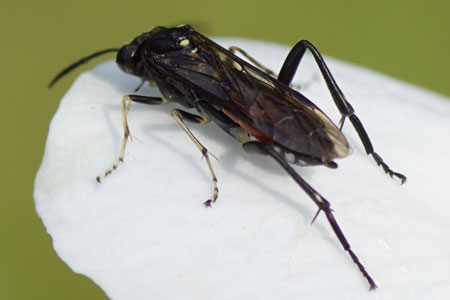
 Macrophya militaris. Subfamily
Tenthredininae. Family Common sawflies (Tenthredinidae).
Macrophya militaris. Subfamily
Tenthredininae. Family Common sawflies (Tenthredinidae).
Het eerste en tweede paar poten van de vrouwtjes zijn witachtig met zwarte achterkanten. Zwart achterlijf met een rode streep in het midden. Clypeus, labrum van de zwarte kop zijn wit.
Zwarte antennes. Het mannetje heeft een geheel zwart achterlijf.
Larven op planten uit de familie Rosaceae. Foto's 18 -6-2025.
|
 .. ..
 . .
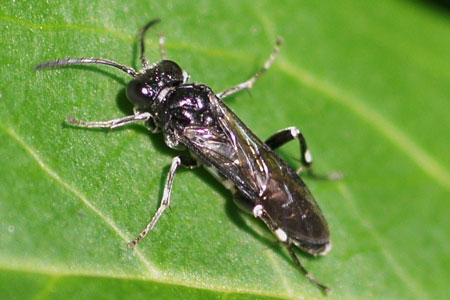
 Macrophya
ribis. Subfamily Tenthredininae. Family Common sawflies (Tenthredinidae). Macrophya
ribis. Subfamily Tenthredininae. Family Common sawflies (Tenthredinidae).
Black body. The white bands around the legs are striking. But these bands have more species.
They are found near birches. But also near other deciduous trees such as Acer campestre (food plants for larvae). Photos 15 -7-2011. |
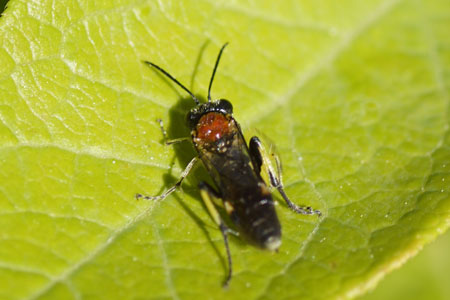 Macrophya teutona. Subfamily
Tenthredininae. Family Common sawflies (Tenthredinidae).
Macrophya teutona. Subfamily
Tenthredininae. Family Common sawflies (Tenthredinidae).
Recognizable by the red pronotum.
Larvae can be found on Euphorbia als green spurge or leafy spurge, Euphorbia esula.
Photo 28-5-2020. |
 .. ..
 . .
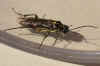 . .
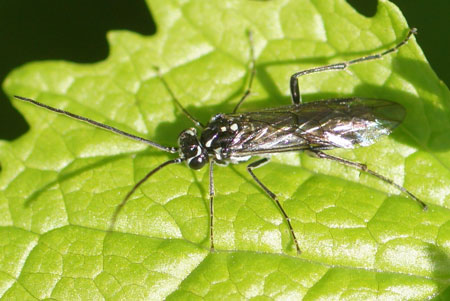
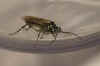 Macrophya albicincta/alboannulata. Subfamily Tenthredininae. Family Common sawflies (Tenthredinidae).
These two species are recognizable by the white pronotum. According to Jorgen Ravoet you can see the difference between the species if you have a good view of the posterior trochanters. Thanks Jorgen. Photos 23-4-2011. |
 .. ..
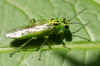 Rhogogaster
spec.
Perhaps a green sawfly
(Rhogogaster viridis).
Subfamily
Tenthredininae. Family Common sawflies (Tenthredinidae). Rhogogaster
spec.
Perhaps a green sawfly
(Rhogogaster viridis).
Subfamily
Tenthredininae. Family Common sawflies (Tenthredinidae).
The
larvae feed on the
leaves of a wide range of plants and trees.
The sawfly hunt on other insects and their larvae.
Photos 7-7-2012. |
 .. ..
 .
.
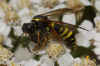 .
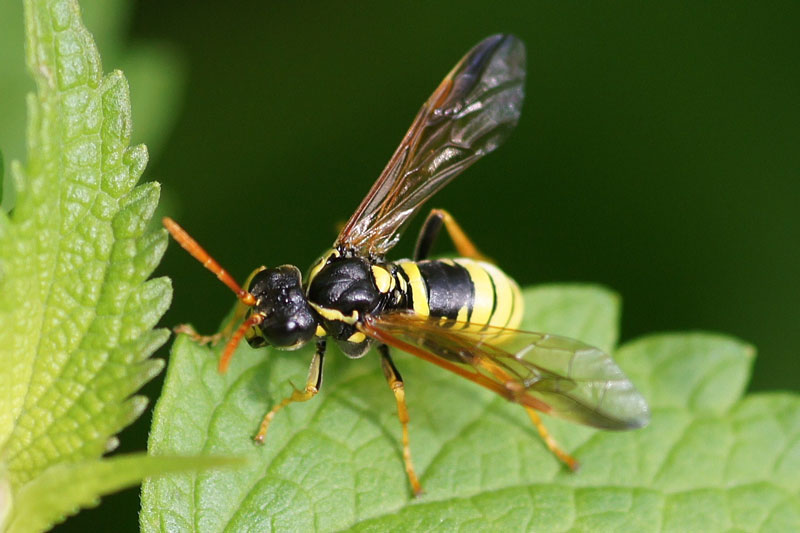
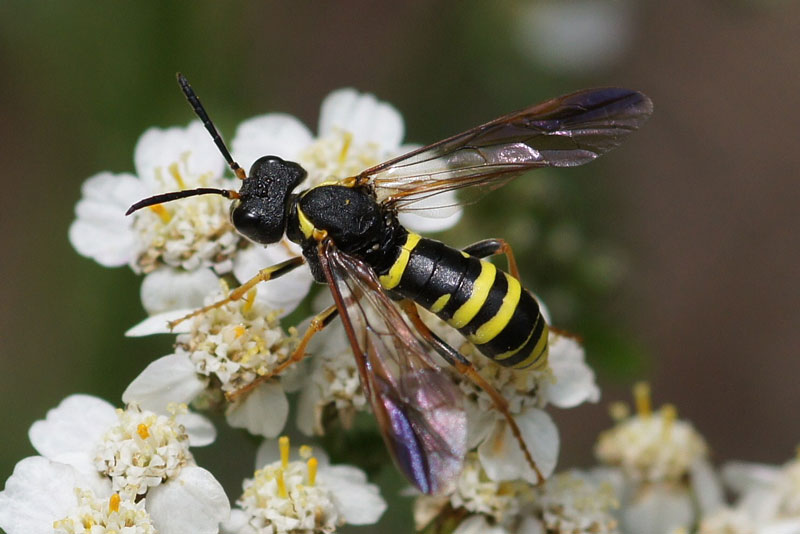
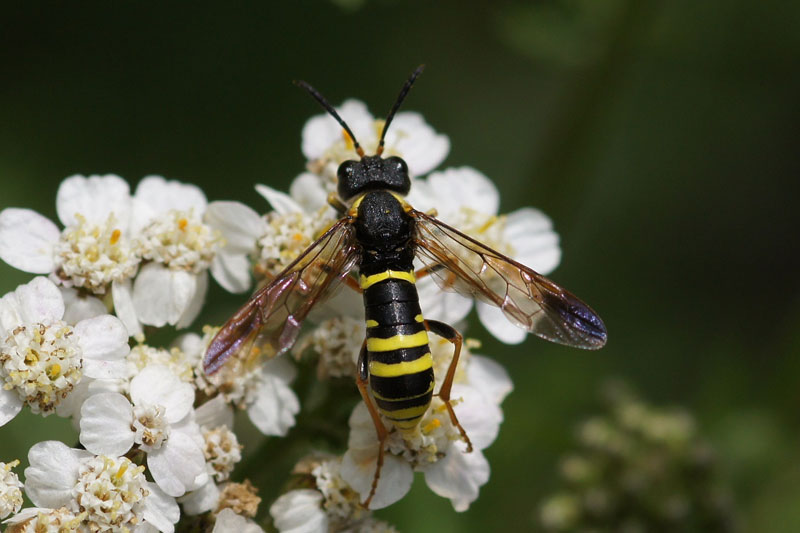
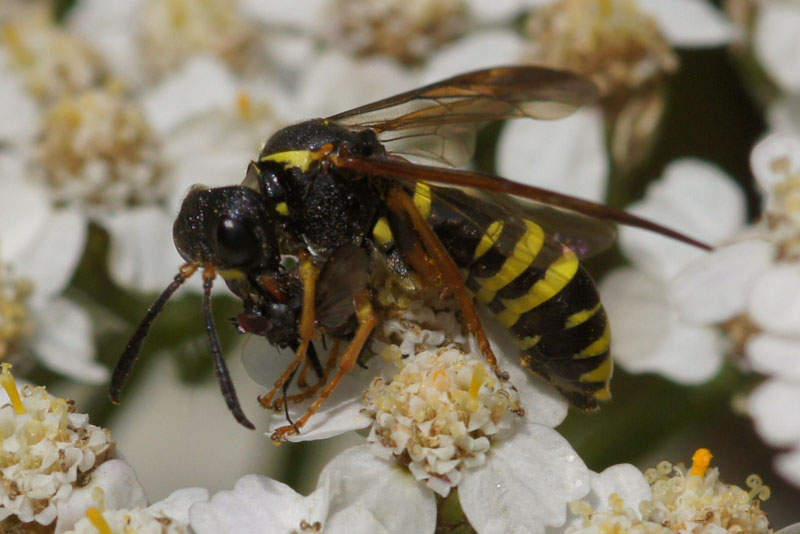
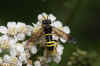
. 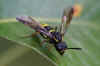 Tenthredo vespa.
Tenthredininae.
Family Common sawflies (Tenthredinidae). Tenthredo vespa.
Tenthredininae.
Family Common sawflies (Tenthredinidae).
Occasionally
I see it with prey to the yarrow, where many flies are. See last picture.
About 13 mm.
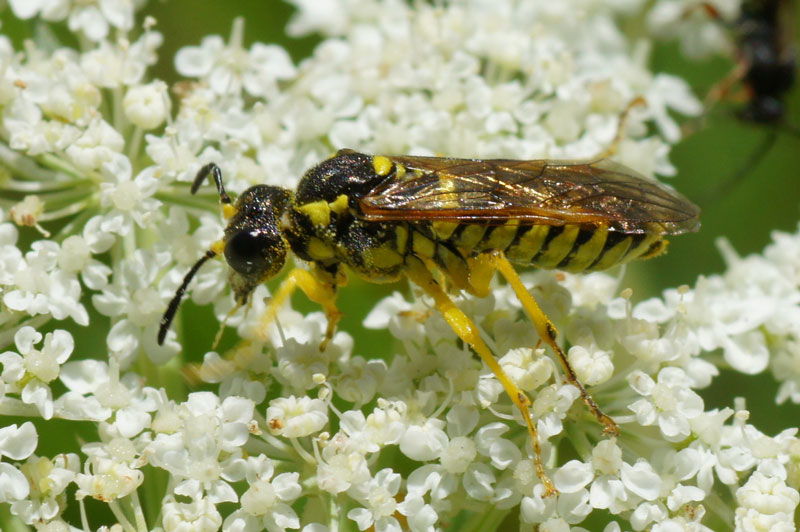
The black body with the bright yellow stripes looks like the body of social
wasps (Vespidae). The wings have a dark spot. The first segment of the black antenna is orange.
Photos 10-7-2011,
3-7-2011. |
 .. ..
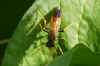 Tenthredo campestris. Subfamily Tenthredininae. Family Common sawflies (Tenthredinidae).
A sawfly with black abdomen with a central broad yellowish band. Antennae and legs are yellowish
Male: 9 - 12 mm. Female: 12 - 14 mm. The larvae feed on various herbaceous plants. The sawfly catch insects. April - September. Europa. Photos 24-5-2011.
|
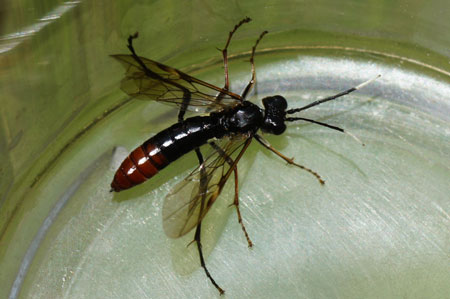 .. ..
 . .
 . .  Tenthredo livida.
Subfamily
Tenthredininae. Family Common sawflies (Tenthredinidae). Tenthredo livida.
Subfamily
Tenthredininae. Family Common sawflies (Tenthredinidae).
The thorax and the head are black with a white area around the mouth. The abdomen is variable in
colour from black to red. Black antennas have a white tip (like T. balteata,
T. bipunctula, T. colon and T. ferruginea). Wings with a striking two-tone
pterostigma.
They feed on small insects and nectar and pollen from flowers mainly from the Apiaceae
family. The larvae feed on leaves of many plants.
Length 10-15 mm. May - September.
Photos 10-7-2016. |
 .. ..
 Tenthredo notha.
Subfamily
Tenthredininae. Family Common sawflies (Tenthredinidae). 500
from our house.. Tenthredo notha.
Subfamily
Tenthredininae. Family Common sawflies (Tenthredinidae). 500
from our house..
A striking black with yellow sawfly It looks like T. arcuata and T.
brevicornis. They feed on small insects and nectar and pollen from flowers mainly from the Apiaceae family. The larvae feed mainly on clover.
Length 8-11 mm. June - September. Photos 18-7-2016. |
 .. ..
 . .
 Tenthredo mesomela.
Subfamily
Tenthredininae. Family Common sawflies (Tenthredinidae). Tenthredo mesomela.
Subfamily
Tenthredininae. Family Common sawflies (Tenthredinidae).
A black and green sawfly. Antennas, part of the
pronotum, top abdomen are black. Face shoulders, scutellum, underside of the abdomen are green. The legs are also green with black.
The adult sawfly feeds on pollen and honey from umbellifers as well as small insects. The larvae can be found in different species of plants like buttercup and knotweed.
Length 9,5 - 13 mm.
May, July. Europe. Asia. Photos 19-5-2014. |
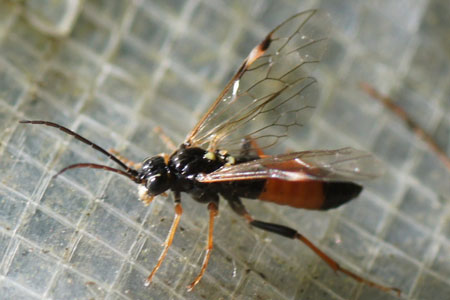 .. ..
 Tenthredopsis scutellaris.
Subfamily
Tenthredininae. Family Common sawflies (Tenthredinidae).
Female.
Tenthredopsis scutellaris.
Subfamily
Tenthredininae. Family Common sawflies (Tenthredinidae).
Female.
The male has a different color. The rear thigh of the male
is light, of the female dark. The female has black abdomen with a central broad red band.
In the Netherlands it is quite rare.
Length 10 - 12 mm. May, June.
Photos
8-6-2012. |
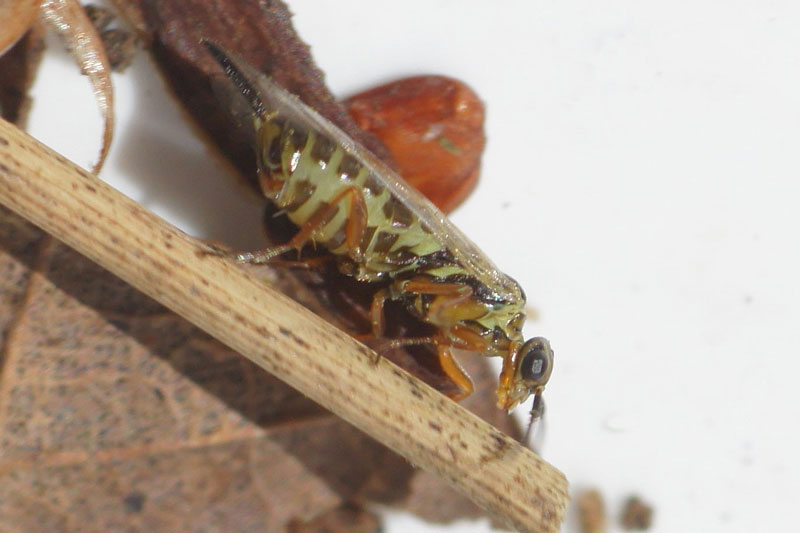
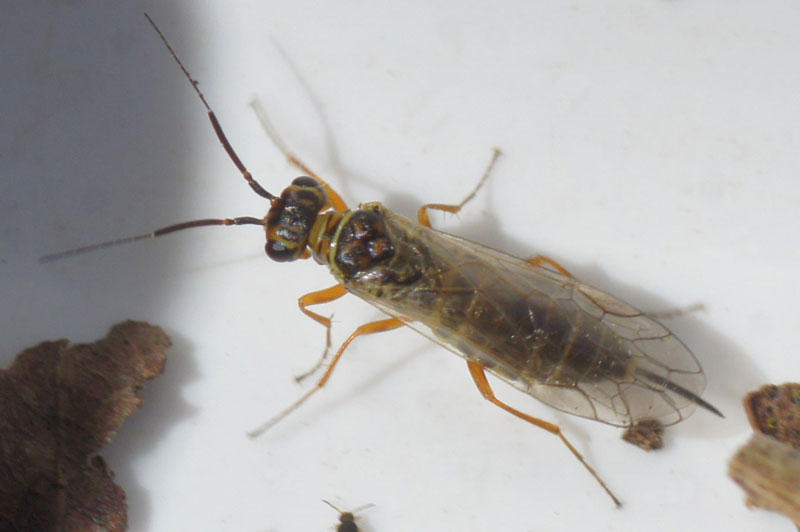
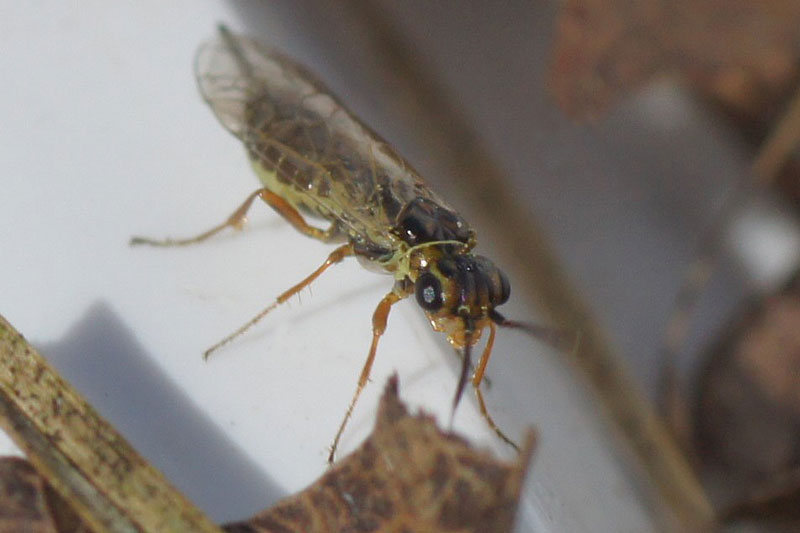
Xyelidae.
The Xyelidae are a small family of sawflies. Known fossil record of more than 200 million years ago. So they are among the oldest living insect families. In many species the larvae
feed on pollen or live in buds of conifers (pine, spruce). However, there are some species that feed on foliage of deciduous trees.
 .. ..
 Xyela spec. Family Xyelidae.
In the Netherlands there are three species: Xyela curva, Xyela julii and Xyela
longula.
A small sawfly with very striking antennae. The first segments are thick and long. The rest of the antenna consists of small segments. The legs are brown orange. The head and body are yellow orange brown, brown drawn.
The females have an ovipositor.
Length about 5 mm.
Photos 18-4-2014. |
 .. ..
 . .
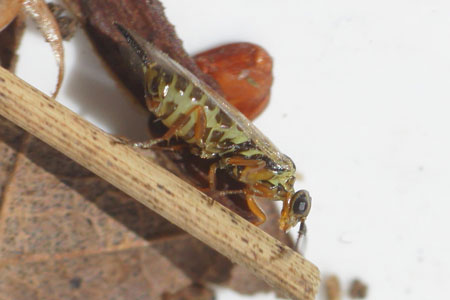
 Xyela curva. Family Xyelidae.
This wasp I found in the dunes on the ground among the leaves under pines. According to Ad Mol
it's a Xyela curva. Thanks to the pictures of the underside it could be identified. Especially the wide
and curved shape of the sheath of the ovipositor is important.
See the
drawing on page 201.
Xyela curva is found in black pine (Pinus nigra). There the eggs are laid. The larvae feed on pollen of
pinus.
Photos 10-4-2017. |
I want to thank everyone, who has helped me on waarneming.nl and forum.hymis.de
to identify. In particular Jorgen Ravoet.
Nederlands /
Dutch
 
Subpage flies:
Tachinidae
Blow-flies
(Calliphoridae) House
flies (Muscidae) Soldierflies
(Stratiomyidae) Root-Maggot
Flies (Anthomyiidae)
Small
flies Gnats
Subpage wasps, bees, bumblebees: Parasitica, Ichneumonidae
Bumblebees
Bee
hotel Leaf-cutter bee
Subpage France: Insects
France
|