|
 Nederlands /
Dutch Nederlands /
Dutch
| Insects
France The Ardèche, July 2010
|
In 2010 we were on holidays in France. We were on the camping at Joyeuse.
The pictures of the insects I made I've put on this page.
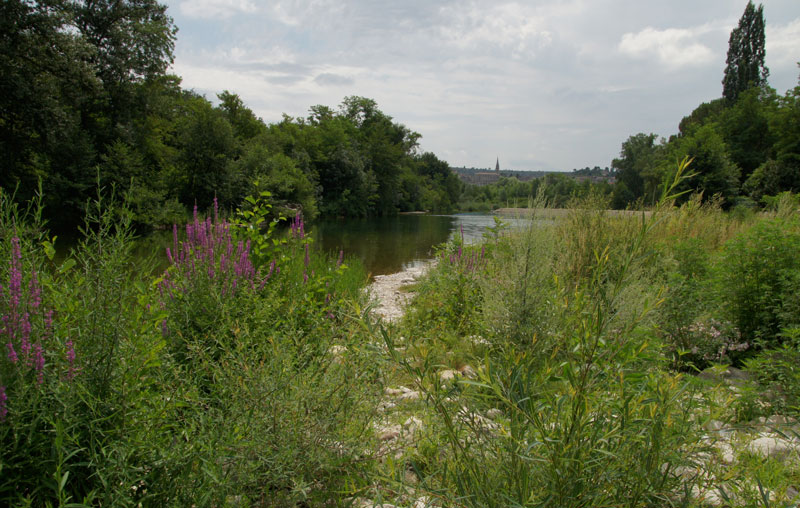
A river runs along the campsite where many insects could be found.
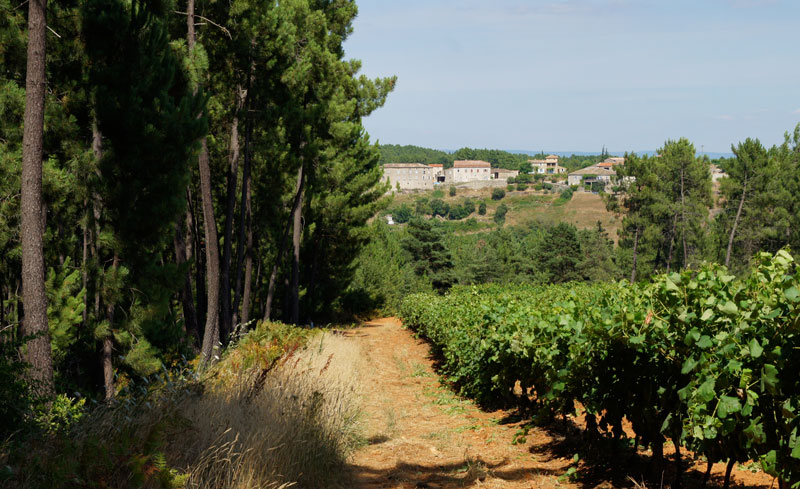
I also photographed insects near the forest and vineyards.
Bugs
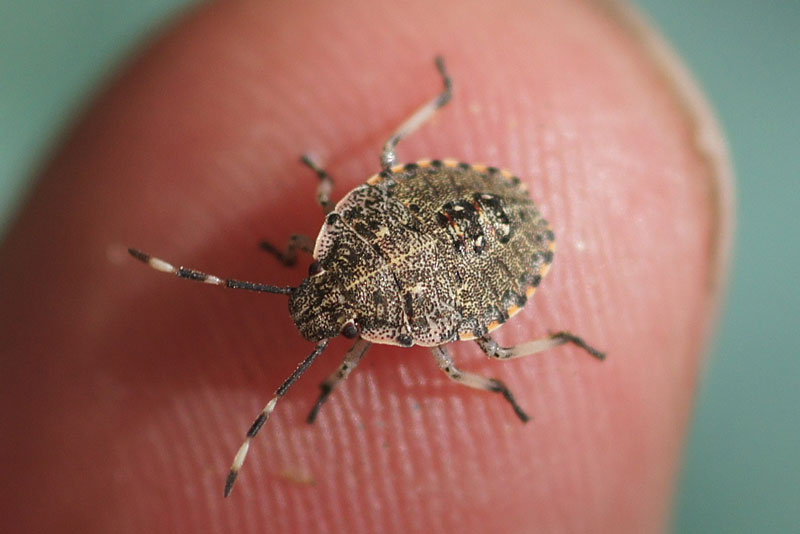
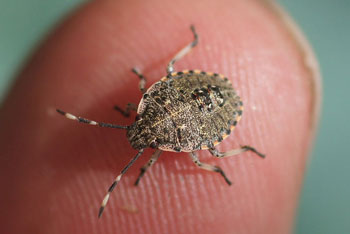 Rhaphigaster nebulosa nymph. Family Stink
bugs (Pentatomidae).
Rhaphigaster nebulosa nymph. Family Stink
bugs (Pentatomidae).
|
|
I saw this nymph walking in the caravan. Unfortunately I haven't seen
an adult bug. In the Netherlands it is found in the south. Because of the
white rings on the antennas they are well recognized.
Several deciduous trees.
Palearctic, Europe, northeastern United States.
Stink bugs became even more prevalent in homes and offices
across the United States in 2017. While the insects may be fascinating,
homeowners and
business owners
do not want to deal with an infestation inside their buildings. Even large
companies like
TitleMax
need to stay on top of building maintenance issues to prevent stink bugs
from getting inside.
|
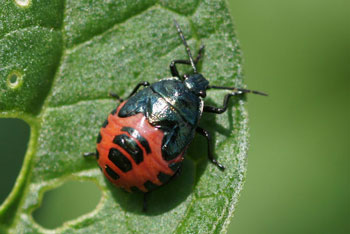 Zicrona caerulea nymph.
Family Stink bugs (Pentatomidae).
Zicrona caerulea nymph.
Family Stink bugs (Pentatomidae).
A nymph. The adult bug is completely metallic dark like the dark
part of the the nymph.
It is a predatory species, but they also suck juices. Length 5 to 7 mm.
The adult bug overwinters. From July the new adults appear. From Africa to
northern Europe. It is also found in the Netherlands. |
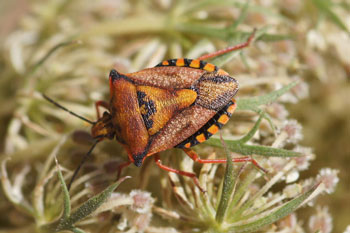 .. .. . .  . .
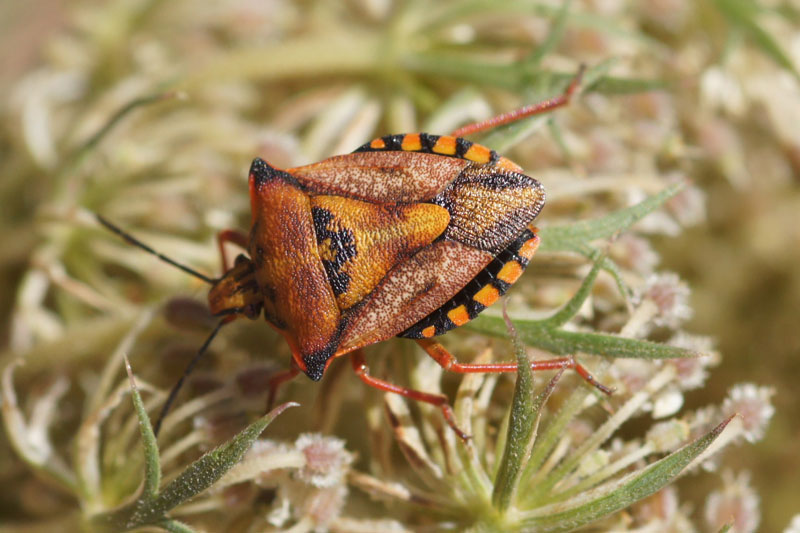
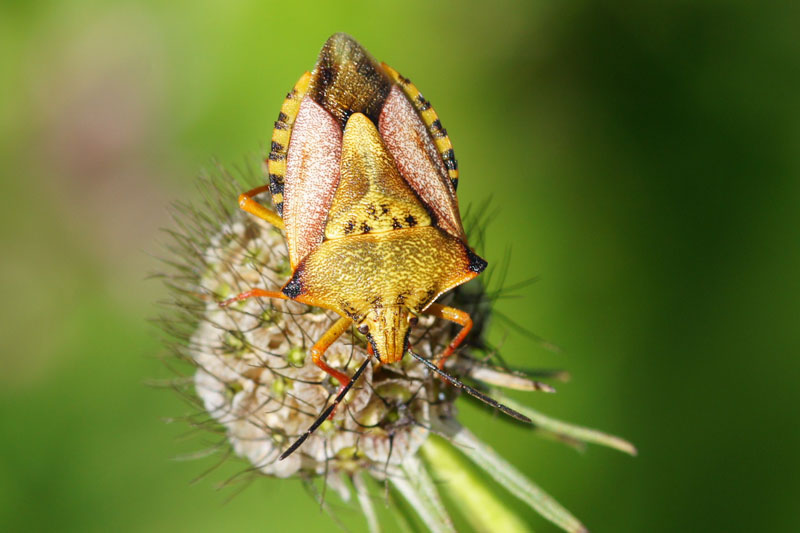
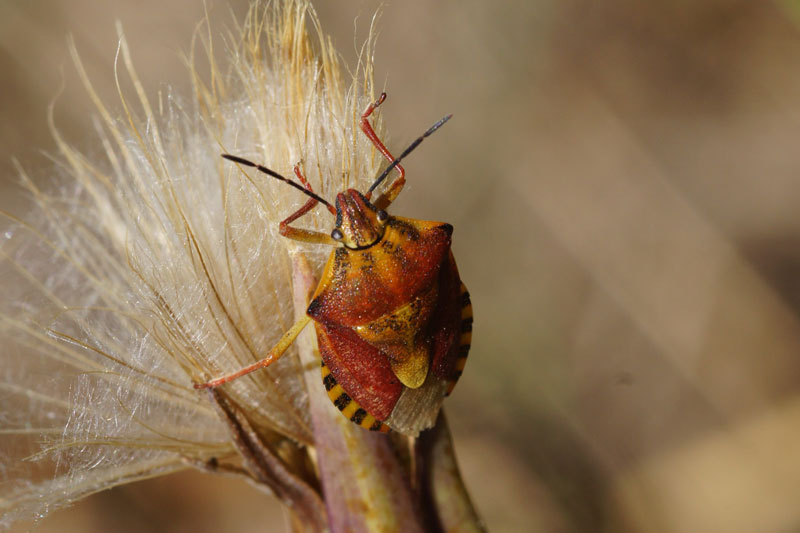
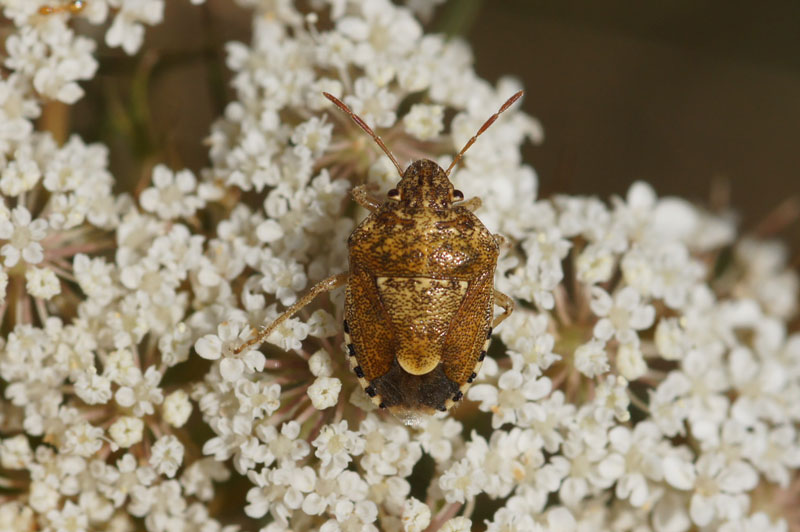
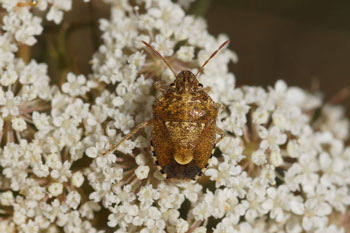
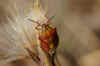 Carpocoris. Family Stink bugs (Pentatomidae).
There are a some species, which are very much alike and all occur
in the Ardèche. Namely Carpocoris purpureipennis, Carpocoris
mediterraneus nose, Carpocoris fuscispinus and Carpocoris pudicus. The
names are of the bugs on the photos are not certain!!! Photo 1 en
2 maybe Carpocoris fuscispinus, photo 3 maybe Carpocoris pudicus |
 Staria lunata. Family Stink bugs (Pentatomidae).
Length 7 - 8 mm. Especially in the Mediterranean regio. |
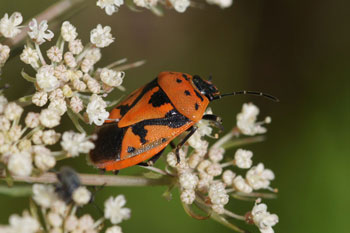 Eurydema ornata. Family Stink bugs (Pentatomidae).
Like family members, the color varies from yellow to red. There are
similar species E. oleracea and E. dominulus.
It hibernates as an adult bug and is often found on crucifers such as
cabbage and cress. Especially in Southern Europe, but there are also bugs
found in the Netherlands and England. Length 7 to 9 mm. |
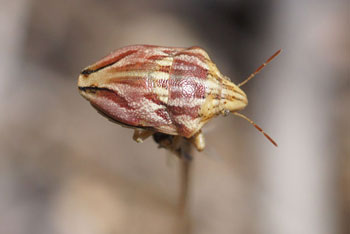 Odontotarsus. Family Jewel bugs (Scutelleridae).
There are different species. Odontotarsus purpureolineatus, Odontotarsus
robustus are possible. |
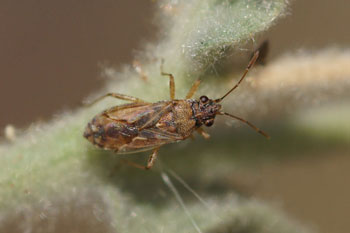 Nysius cf graminicola. Subfamily Orsillinae. Family:
Seed Bugs or Ground Bugs (Lygaeidae).
cf means: very probably. It is very similar to the Nysius senecionis.
Nysius cf graminicola. Subfamily Orsillinae. Family:
Seed Bugs or Ground Bugs (Lygaeidae).
cf means: very probably. It is very similar to the Nysius senecionis. |
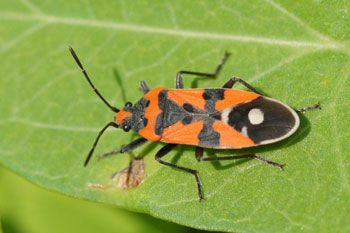 .. ..
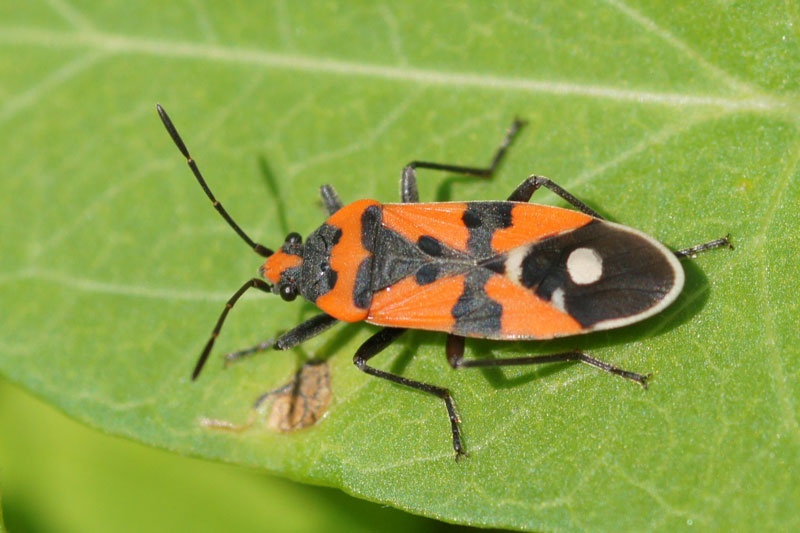
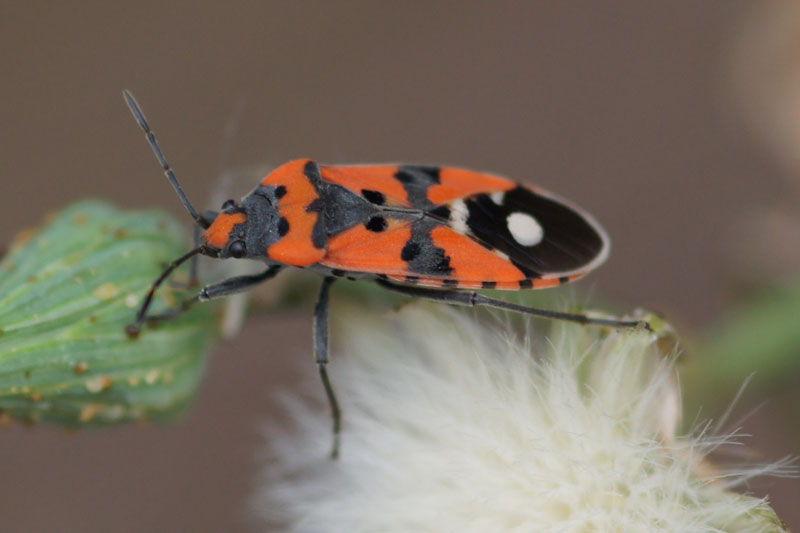
 Lygaeus equestris, Lygaeus simulans. Family:
Seed Bugs or Ground Bugs (Lygaeidae).
Lygaeus equestris, Lygaeus simulans. Family:
Seed Bugs or Ground Bugs (Lygaeidae).
Characteristics: Black legs and shield. A white round spot and a
white border on the wing membrane
L. equestris occurs especially on Vincetoxicum hirundinaria, Seseli
hippomarathrum and dandelion.
The adult bug overwinters. From North Africa to Northern Europe. Length 10
- 12 mm |
 .. ..
 . .
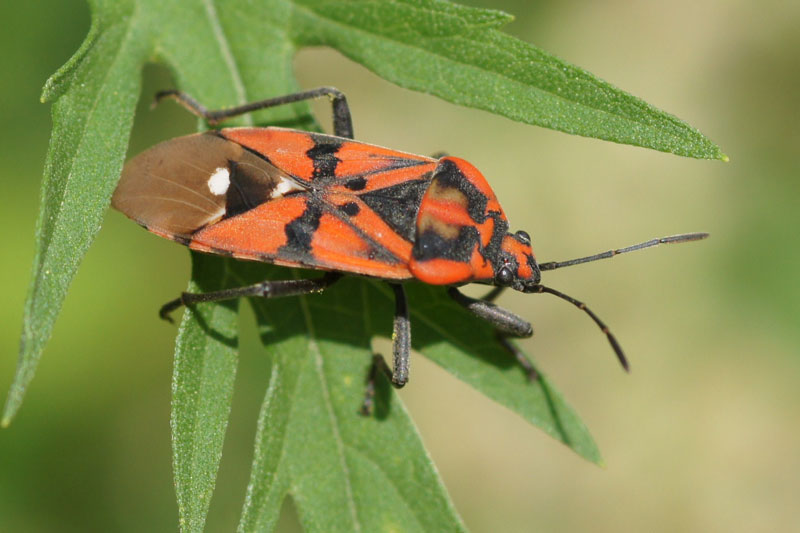
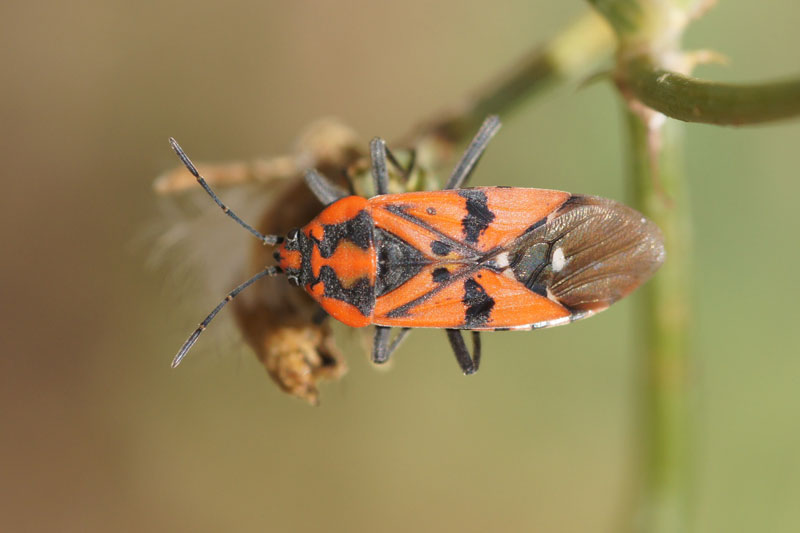
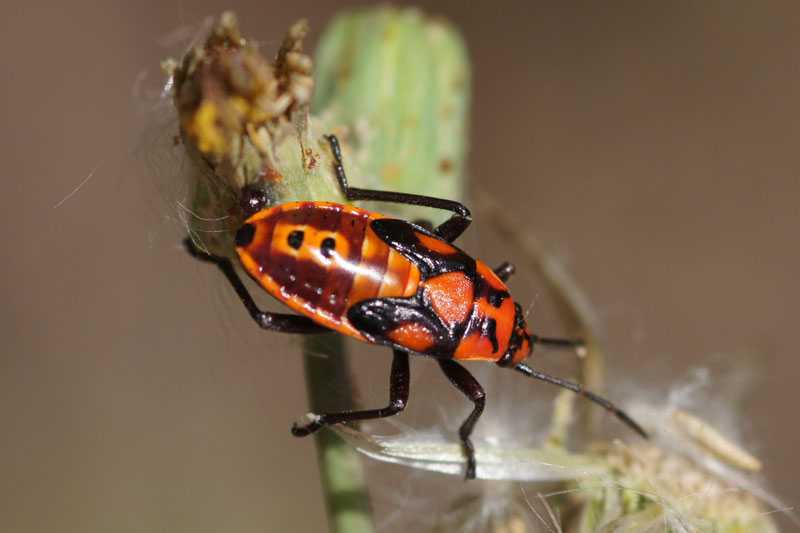
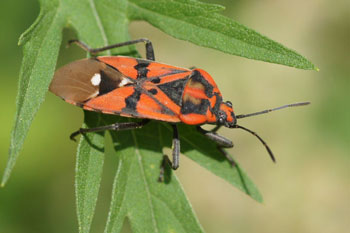
 (A nymph of the Lygaeus pandurus) Spilostethus pandurus
(formerly also called Lygaeus). Family:
Seed Bugs or Ground Bugs (Lygaeidae).
(A nymph of the Lygaeus pandurus) Spilostethus pandurus
(formerly also called Lygaeus). Family:
Seed Bugs or Ground Bugs (Lygaeidae).
Characteristics: A white spot on the light brown wing membrane. Length 10
- 14 mm. |
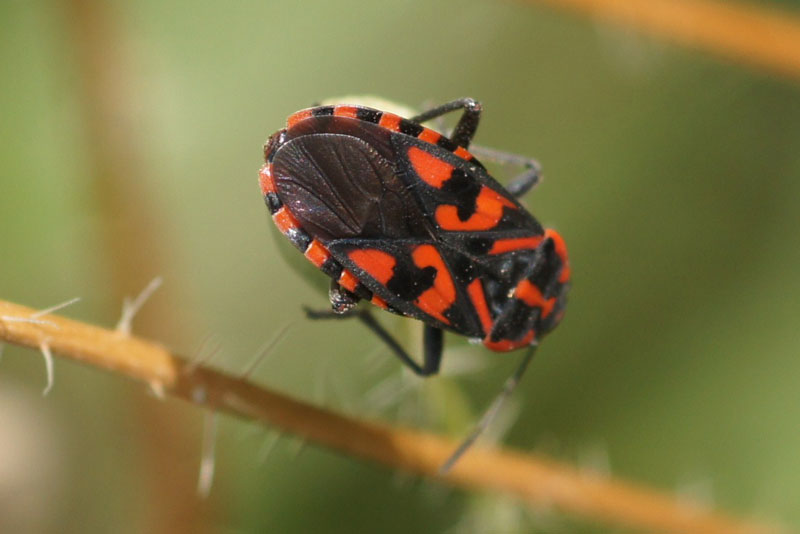
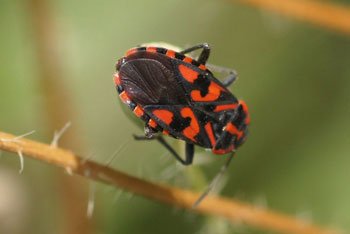 Spilostethus saxatilis. Family:
Seed Bugs or Ground Bugs (Lygaeidae). Spilostethus saxatilis. Family:
Seed Bugs or Ground Bugs (Lygaeidae).
Another ground bug with red and black warning colors. The wing membrane is
also black.
On herbaceous plants like umbellifers and the composite family. In autumn
you see this bug often sunbathe on logs and stones. Saxatilis: Latin for
between the rocks.
The adult bug overwinters. South Central Europe, Southern Europe, Asia
Minor. Length: 10 - 11 cm. |
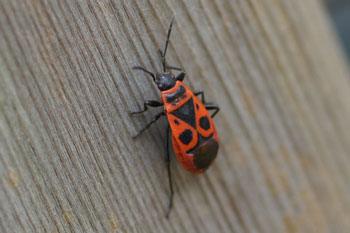 Firebug
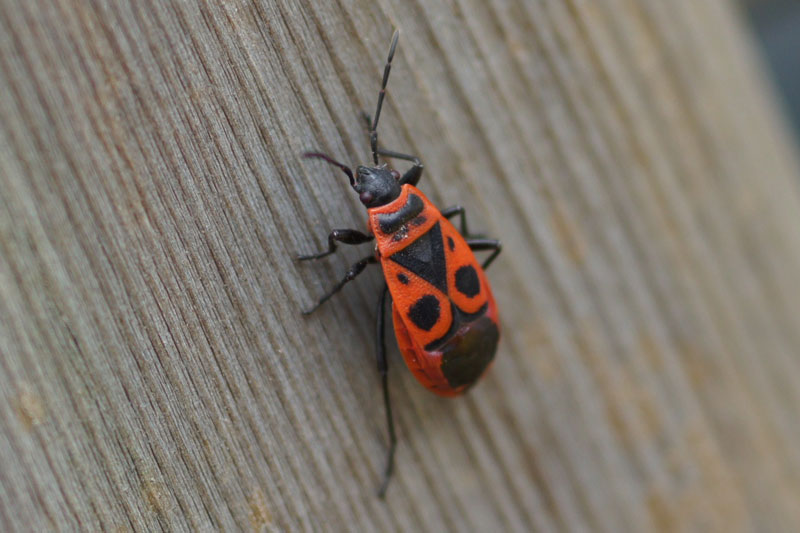
(Pyrrhocoris apterus). Family Pyrrhocoridae. Firebug
(Pyrrhocoris apterus). Family Pyrrhocoridae.
Pyrrho-coris = red insect. a-pterus = without wings. But they have
brachypterous wings. Brachyptery means, that the wings are very reduced
and non-functional. The can't fly. Occasionally there are long winged
firebugs (macropteer).
They are strikingly red with a black head. Also striking are the black
triangle and the two large black round spots.
This bug also lives in the Netherlands. You often see them in dense groups
near lime trees. They feed on the fallen leaves and seeds. They live also
on other plants, but don't cause much damage. They also eat dead insects
and sometimes even living insects.
The firebug is a plant eater, but it causes little damage. Sometimes there
hundreds of firebugs on the same spot. Especially after a mild winter.
Augustus - May. They overwinter in colonies. Palaearctic. Length 10 - 12
mm.
|
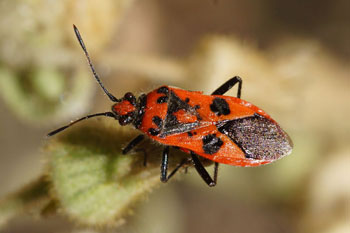 Corizus hyoscyami. Family: Scentless Plant Bugs (Rhopalidae).
A difference with the Firebug is that the Corizus hyoscyami is black
on its head. It is hairy and the wing membrane has much veins.
You can find them on a range plants (like Verbascum). It prefers sandy
areas with lots of sun. It lives also in the Netherlands.
For predators it doesn't taste good. The adult bug overwinters. In May
there are nymphs, which mature in September. So you see them all year.
Length 9 - 11 mm. |
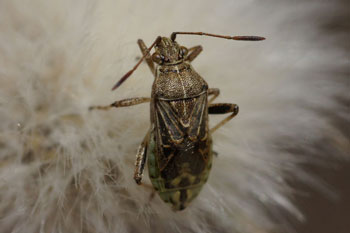 Stictopleurus
cf punctatonervosus. Family: Scentless Plant Bugs (Rhopalidae). Stictopleurus
cf punctatonervosus. Family: Scentless Plant Bugs (Rhopalidae).
This bug is very similar to Stictopleurus Abutilon. They live in the
southern Netherlands. They start to be less rare.
Charistic: The the tip of the scutellum of both species is round. The
tip of the scutellum of Stictopleurus crassicornis (in Belgium) is
pointed.
The pronotum of S punctatonervosus is more
and regularly punctuated. On the
neck shield are marks like reading glasses. (Two semi-circles) with S.
Abutilon are full circles. The marks are not always clear.
Length
6 - 8 mm. The adult bug overwinters. |
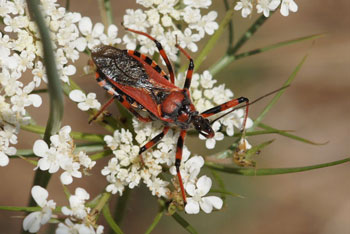 .. ..
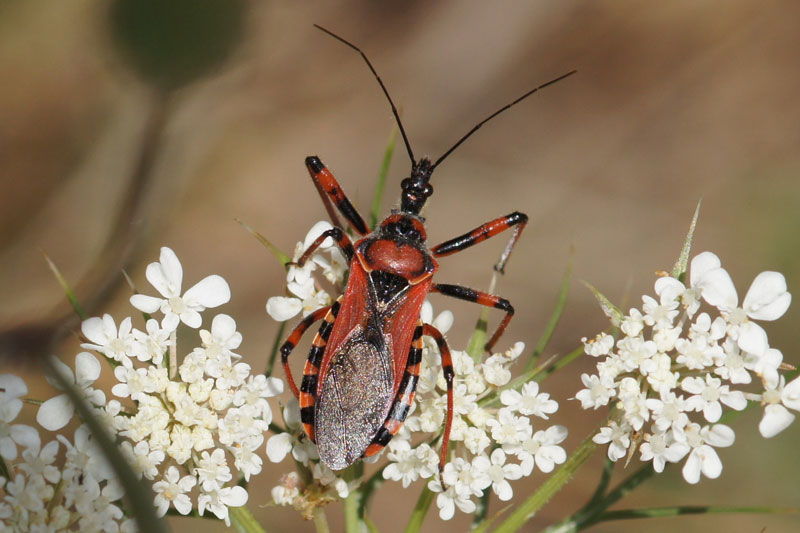
 Rhynocoris. Familie Reduviidae.
A predatory bug. I think a Rhynocoris iracundus. But there are more
species in France.
Bees should also beware of this bug. Their bite is said to be painful for
us. Length 14 - 18 mm. |
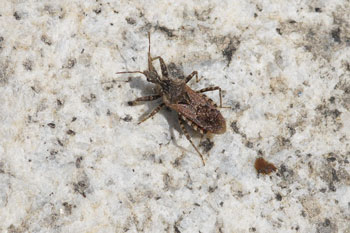 Coranus griseus. Familie Reduviidae.
This predatory bug lives mainly on the ground and attacks various prey. I
could not close. Unfortunately, it flew away. |
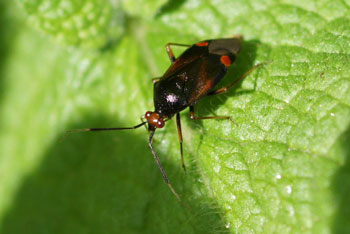 Deraeocoris ruber. Family Miridae.
This predatory bug feeds
on small insects. Quite broad and variable in color. From red to
black. The cuneus is always red. The last antennal segment is thinner.
It lives also in the Netherlands. July - September. Length 6 - 8
mm. |
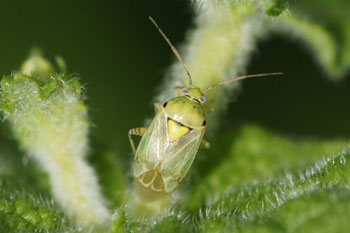 .. ..
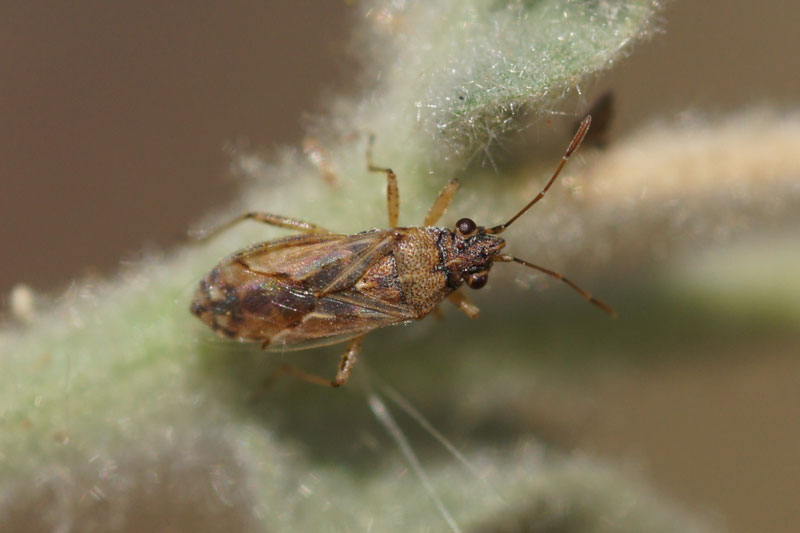
 Lygus
gemellatus. Family Miridae. Lygus
gemellatus. Family Miridae.
They are variable in colour. From yellowish to reddish brown. Also in the
Netherlands. Length about 5 mm. |
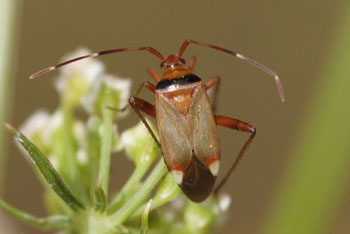 ,, ,,
 . .
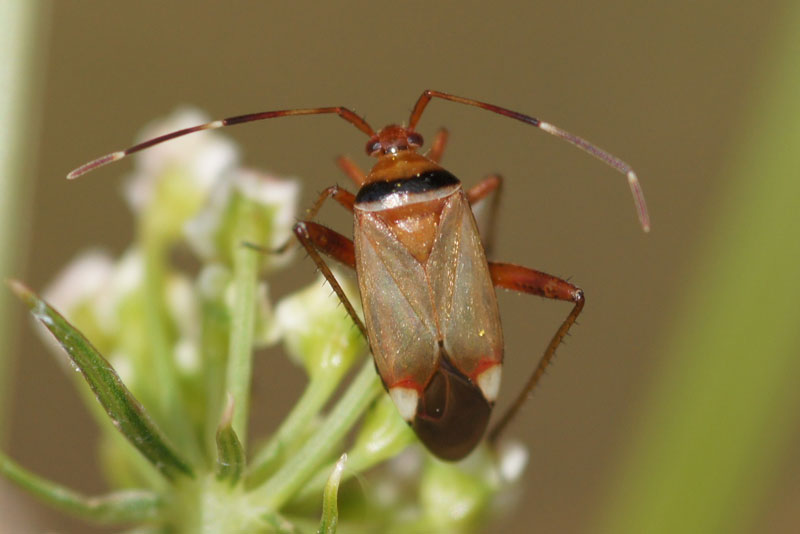
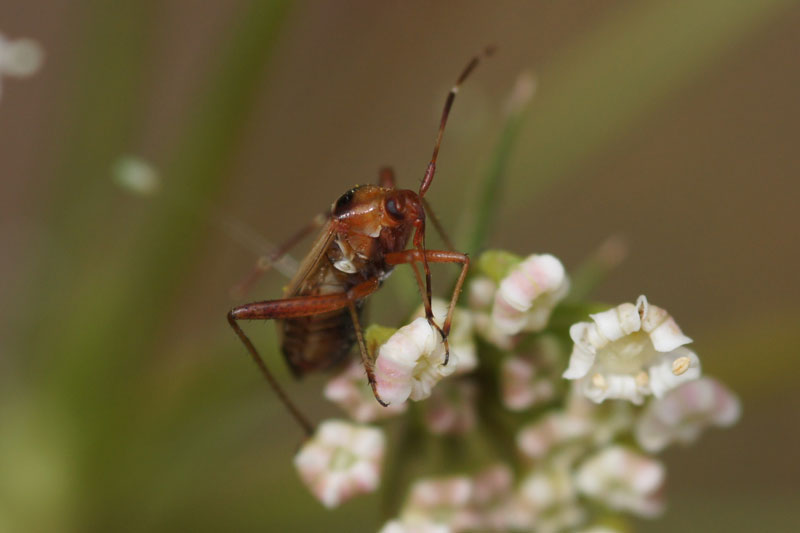
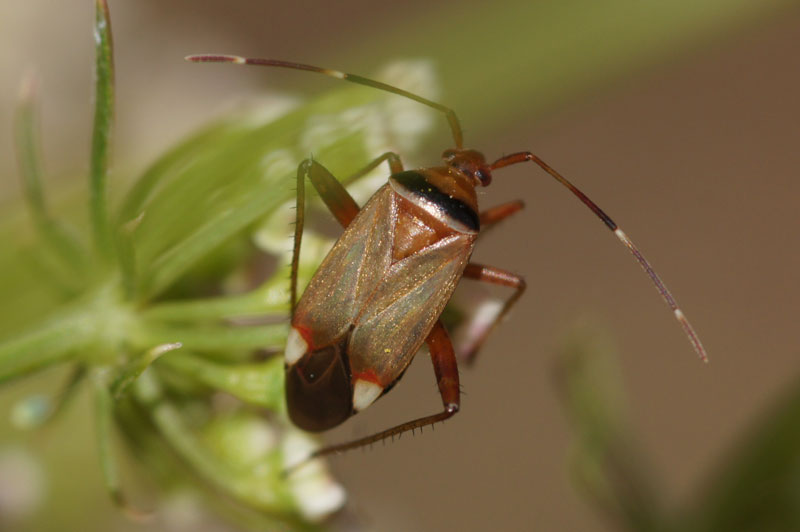
 Adelphocoris vandalicus. Genus Adelphocoris. Family Miridae.
 |
Cicadas
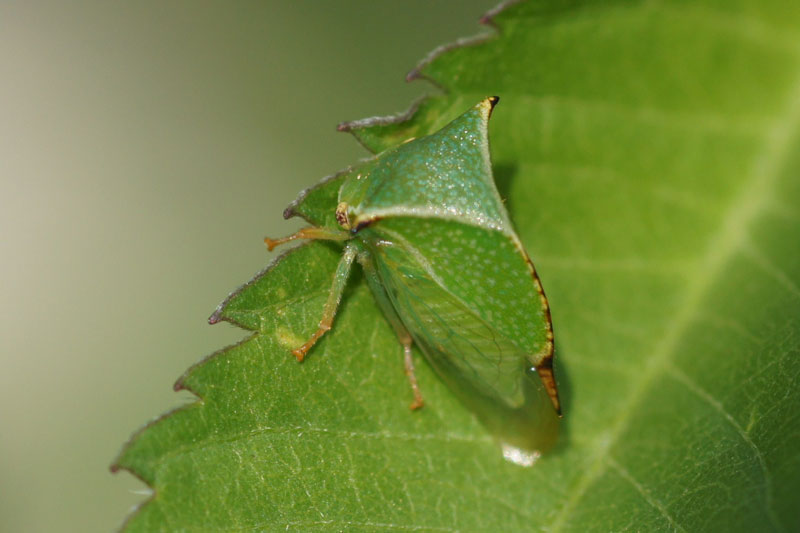
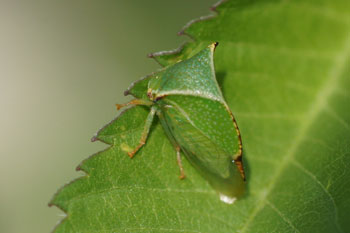 A treehopper Stictocephala bisonia, Stictocephalus bisonia. Family
Membracidae.
A treehopper Stictocephala bisonia, Stictocephalus bisonia. Family
Membracidae.
Native to North America. Spread in Europa early 20th century most likely via the fruit.
It is now in Southern and Central Europe, Central Asia and North Africa.
Bisonia refers to the resemblance of its profile to that of a bison. It has a the
triangular shape and the sides of the front develop into small points. It has
transparent wings.
This bright-green treehopper feeds upon sap from leaves of trees and plants as willow, elm, goldenrod, clover. But also fruit trees and vines.
The eggs overwinter in the branches. The female bores with its ovipositor
a hole for the eggs. The nymphs appear in May, June. They crawl down and
feed on grasses and weeds. Length: 6 - 8 mm |
 .. ..
 . .
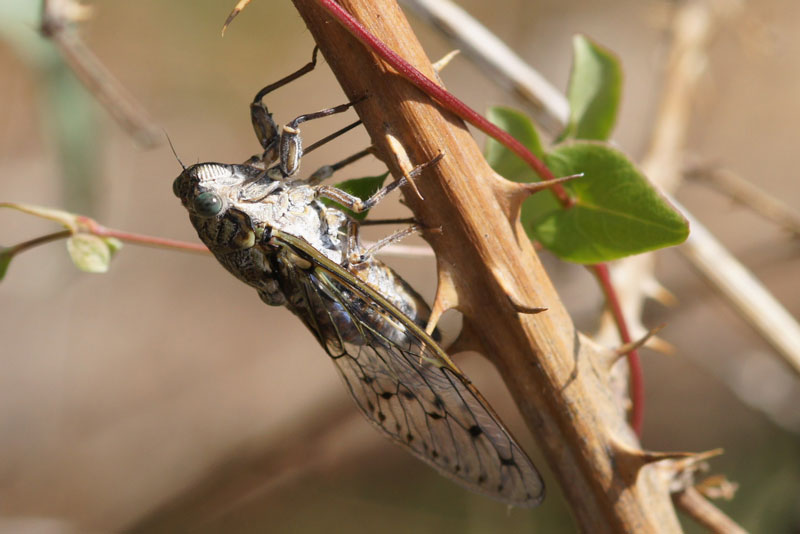
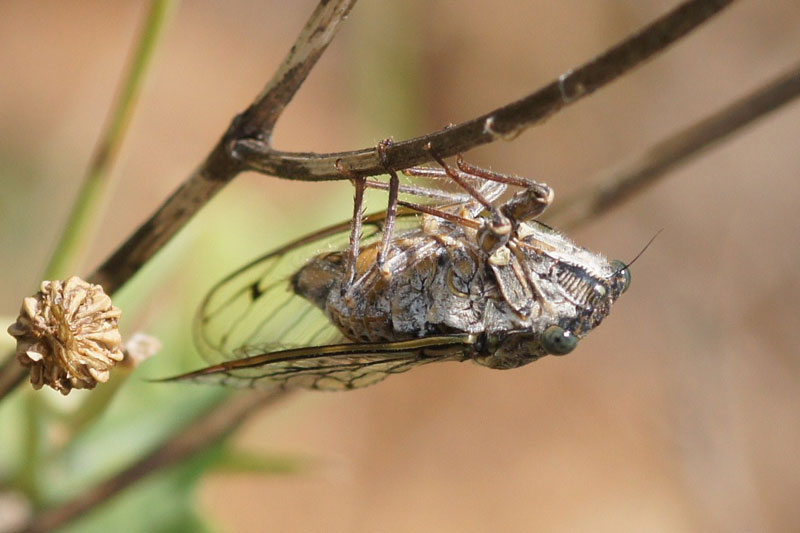
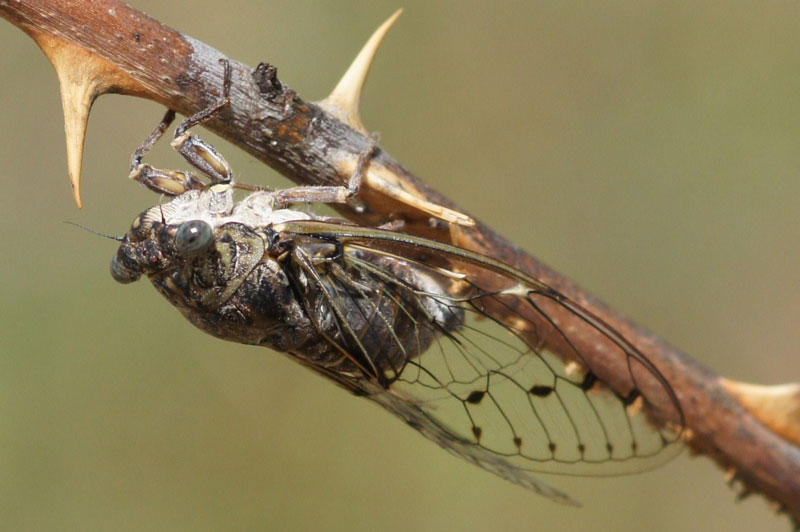
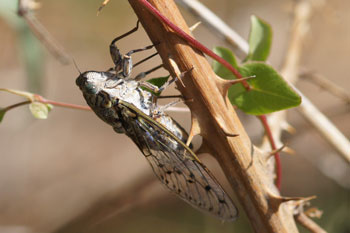
 Maybe Cicada orni. Family Cicadidae.
About
25 mm. One of the known singing cicada. In the Mediterranean, you always hear them. You see them much less. If they sit against a tree, they are very well camouflaged. Closer up, they stop making noise. This
cicada was sitting on a beautiful spot.
The larva of a singing cicada lives underground for several years feeding on juices of plant roots.
The adult cicadas don't live long. (Several weeks to several month |
Dragonflies, damselflies
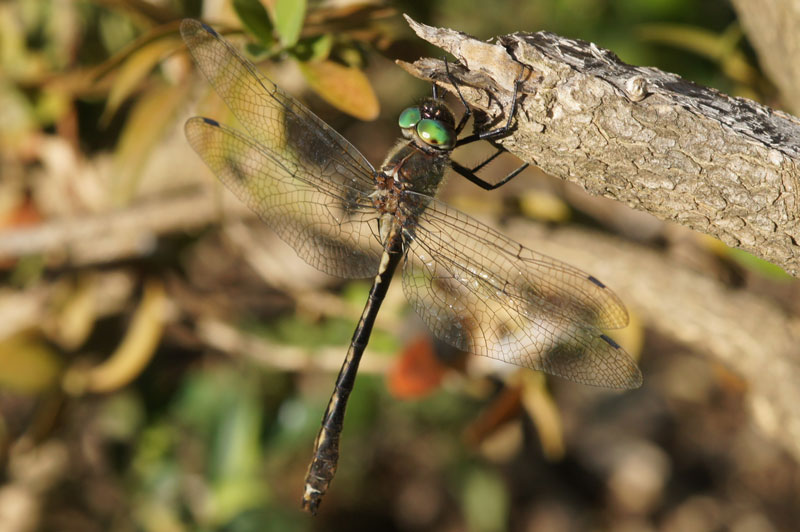
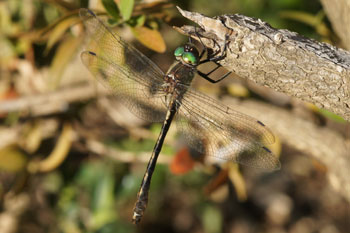 Orange-spotted Emerald Dragonfly (Oxygastra curtisii).
Family Cordulliidae.
Orange-spotted Emerald Dragonfly (Oxygastra curtisii).
Family Cordulliidae.
This dragonfly is no longer in the Netherlands. Usually around not too fast-flowing streams and rivers with shrubs and trees along the shore. The colour of the thorax and abdomen is bronzy-green . Along the length of the dorsal surface of the abdomen it has yellow, orange, elongated spots. The eyes are bright green.
Length: 47 - 54 mm. May - August. |
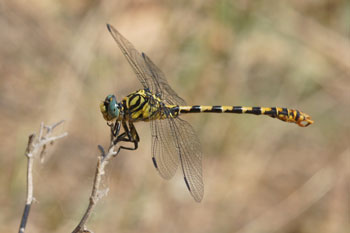 .. ..
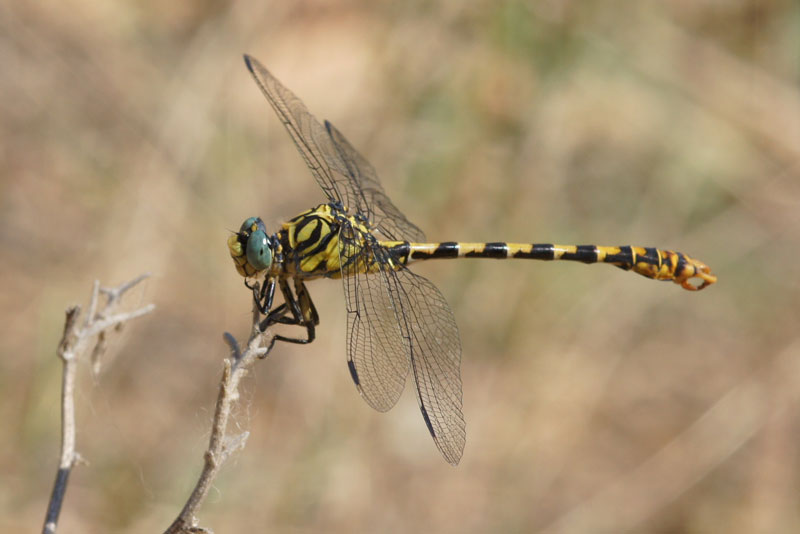
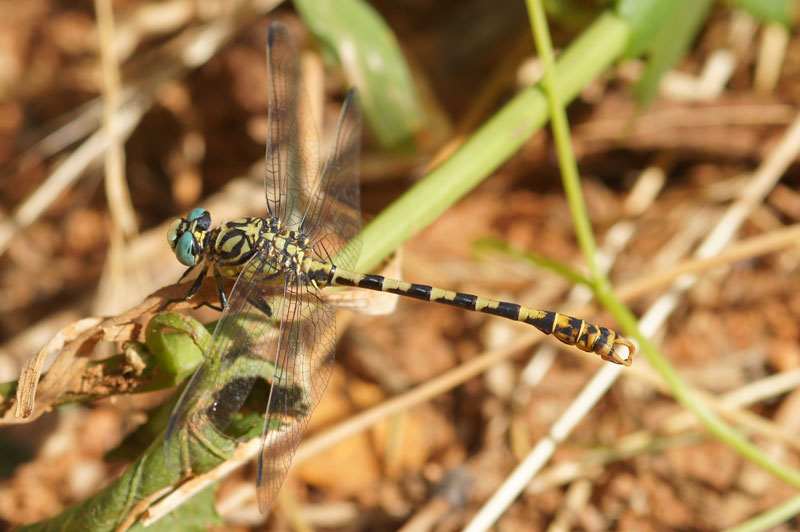
 Small Pincertail (Onychogomphus forcipatus). Family Libellulidae.
You usually see it near fast-flowing streams and rivers and lakes with gravel and sand. I saw them a lot
on a path between the vineyards. Sometimes I had to avoid them.
Recognizable by the yellow thorax with wavy black stripes. Green eyes with two black horizontal stripes. A black abdomen with yellow spots.
In the Netherlands the Small Pincertail is very rare. Europe,
North Africa, the Near East.
Length 50 -53 mm. June - September. |
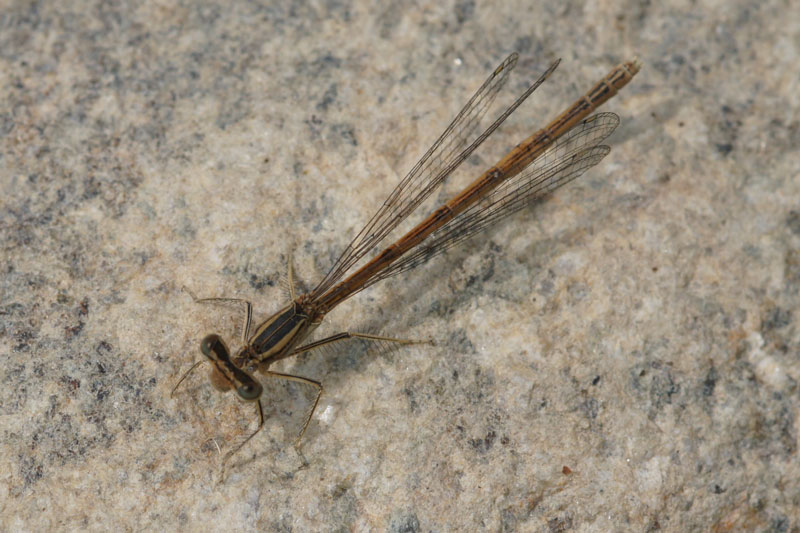
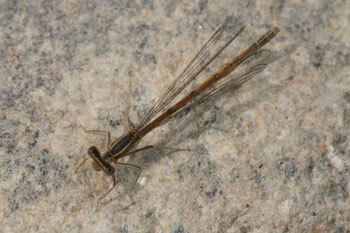 Orange Featherleg (Platycnemis acutipennis). Family
Platycnemididae.
Orange Featherleg (Platycnemis acutipennis). Family
Platycnemididae.
This species is found in France and Spain. In the Netherlands and Belgium,
we only have the White-legged damselfly or Blue Featherleg. The hind tibia
of Featherlegs have a conspicuous featherlike expansion. Often near
running water. The eggs are laid in water plants. |
Wespen
 .. ..
 . .
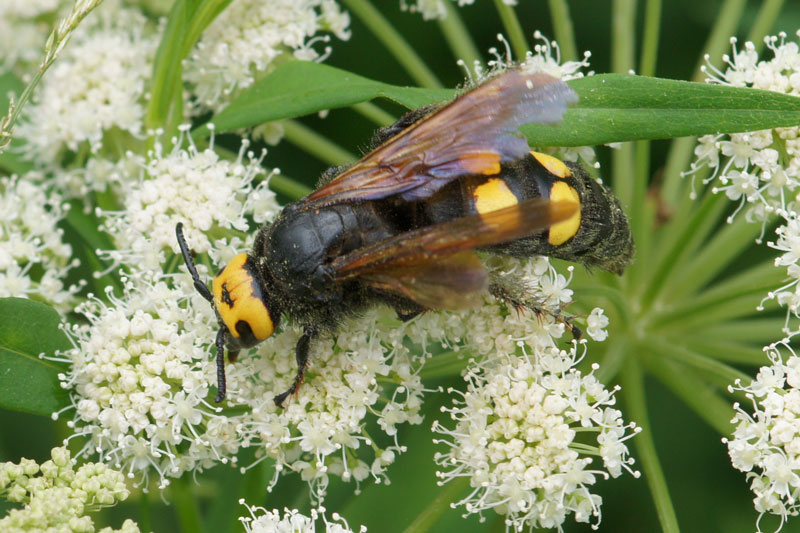
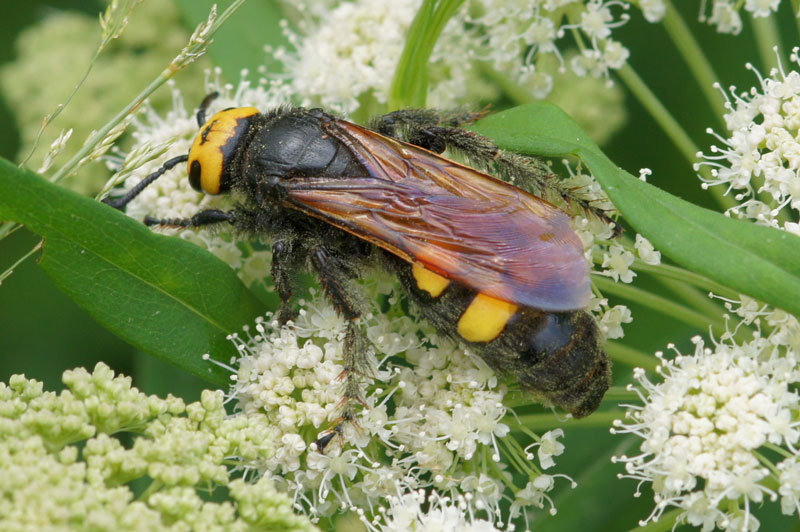
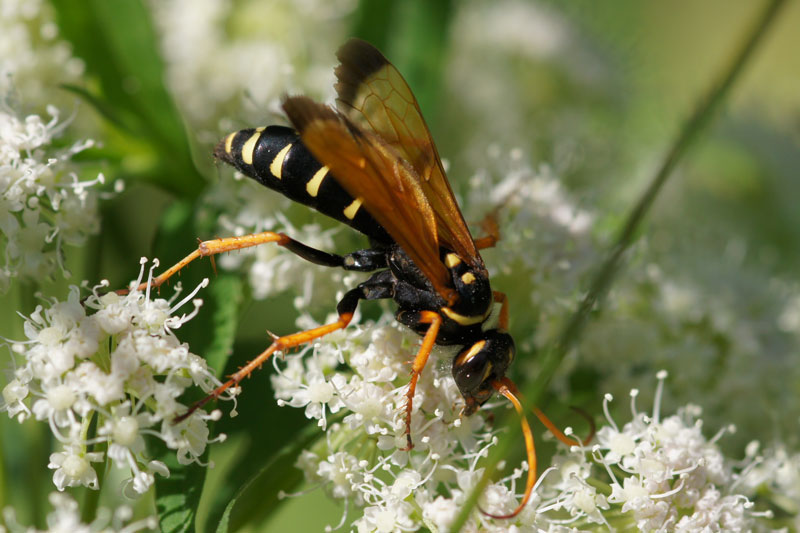
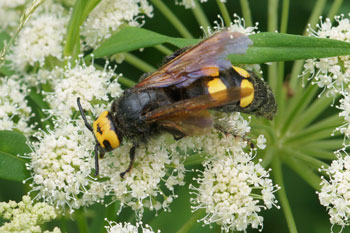
 Megascolia
maculata flavifrons. Family:
Scoliidae. Megascolia
maculata flavifrons. Family:
Scoliidae.
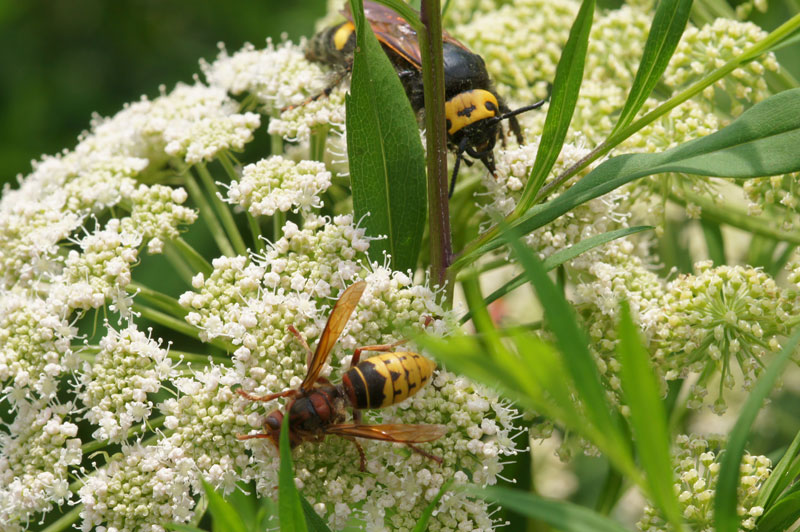
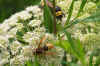
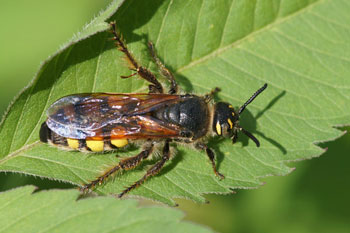
The largest wasp in Europe. An impressive wasp, which is not
dangerous to humans. The female has a yellow head and is 45 mm long. The
second picture shows the Megascolia maculata flavifrons with a hornet
wasp. Also a large wasp, but much smaller than the other one. Megascolia
maculata is similar, but has brownish red hair. The male is smaller and
has longer antennae.
The females sting the large larvae of rhinoceros beetles (Oryctes
nasicornis) stag beetle (Lucanus cervus) and July beetle (Polyphylla fullo)
to paralize it. Then it lays her egg on the outer skin. The larva will eat
into its host. When it has killed its host, it creates a cocoon near its
host. It overwinters in its cocon.
On this page are some large beetles. But I do not know their larvae are
are host of this Mammoth wasp. |
 Colpa sexmaculata. Family:
Scoliidae.
Colpa sexmaculata. Family:
Scoliidae.
Not as large as the Megascolia maculata flavifrons. You can
see it is family. Length about 20 mm |
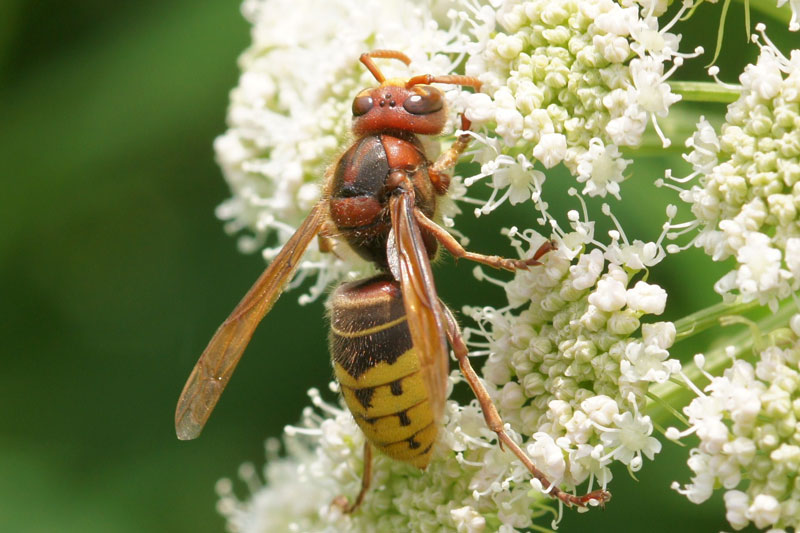
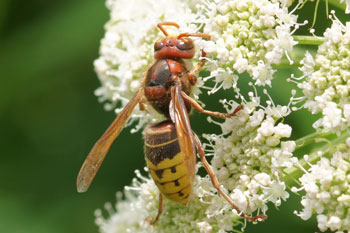 Hornet (Vespa) Genus Vespa. Subfamily Vespinae. Family Vespidae.
There are three species in Euroasia. Namely Vespa germanica, Vespa media
en Vespa crabro. Vespa crabro is the largest, about 30 mm. That's much
larger than an ordinary wasp. They don't sting so fast, but it is more
painful. They are also social wasps with a nest. Usually no more than 1000
wasps. In Autumn they are not attracted to human food. There is less
aggressive contact between hornets and humans. They catch many other
insects.
The Vespa crabo lives in the Netherlands. Especially in the south and east
of the Netherlands and on sandy soils. But it is also found in the west. |
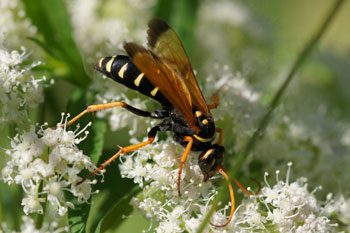 .. ..
 Batozonellus
lacerticida. Family spiderwasps (Pompilidae). Batozonellus
lacerticida. Family spiderwasps (Pompilidae).
This beautiful spiderwasp hunts large orb weaver spiders (Araneidae), for
example, the wasp spider (Argiope bruennichii) Argiope lobata,
Araneus
angulatus and Araneus ventricosus. The spider is paralyzed with a
poisonous sting and then dragged into a hole. In the abdomen an egg is
laid.
They have orange wings with dark tips. |
Wolbij
 .. ..
 . .
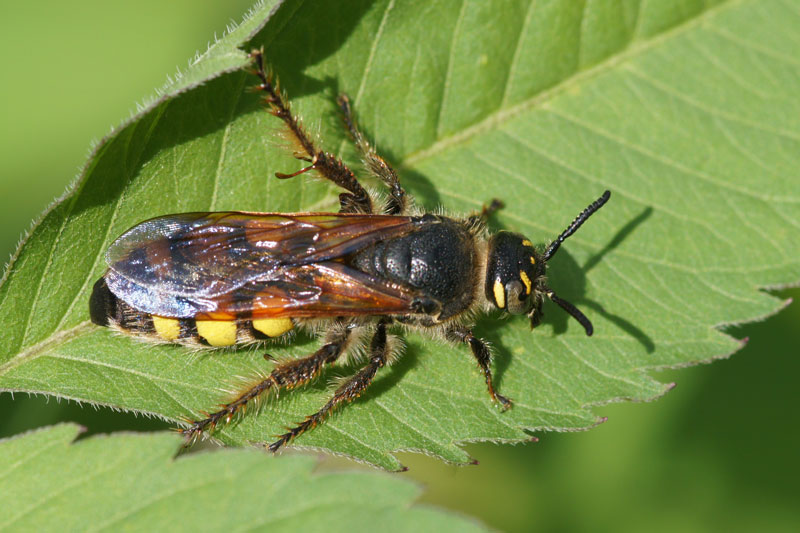
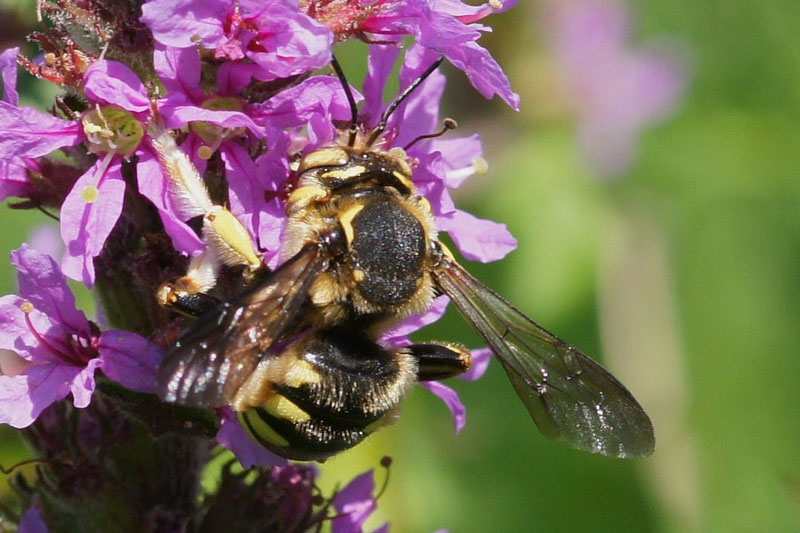
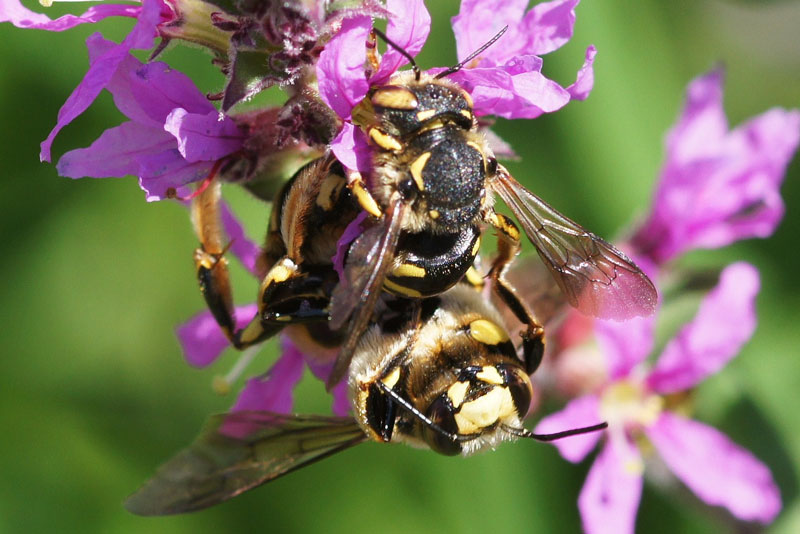
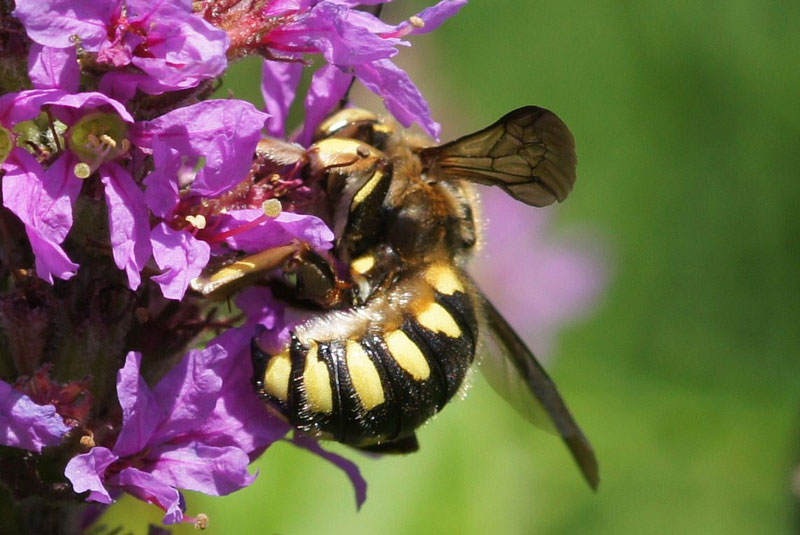
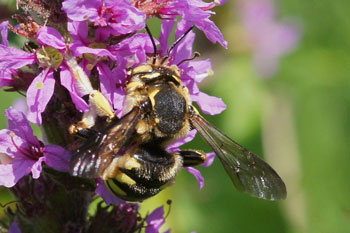
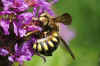 Wool Carder bee (Anthidium spec.). Family Megachilidae.
There are many similar species. In the Netherlands there are also some
some species. This bee looks like an Anthidium florentinum. But another
species is also possible. They have white hairs on the underside of the
abdomen. (a kind of hairy brush) On these hairs they carry pollen. They
are large, solitary, stocky bees. The female builds her nest in holes with
plant hairs rather like carding wool.
The males defend their territory against conspecifics and other bees. For
this they use the sharp spines on their abdomen. |
Flies
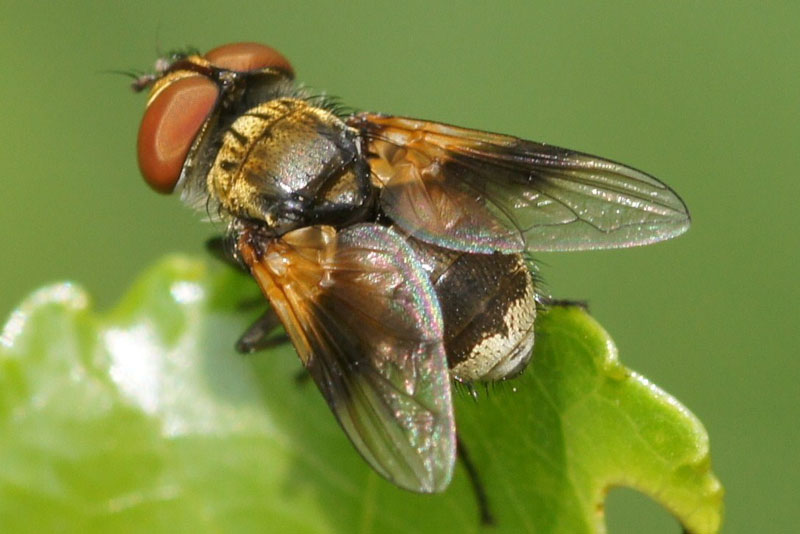
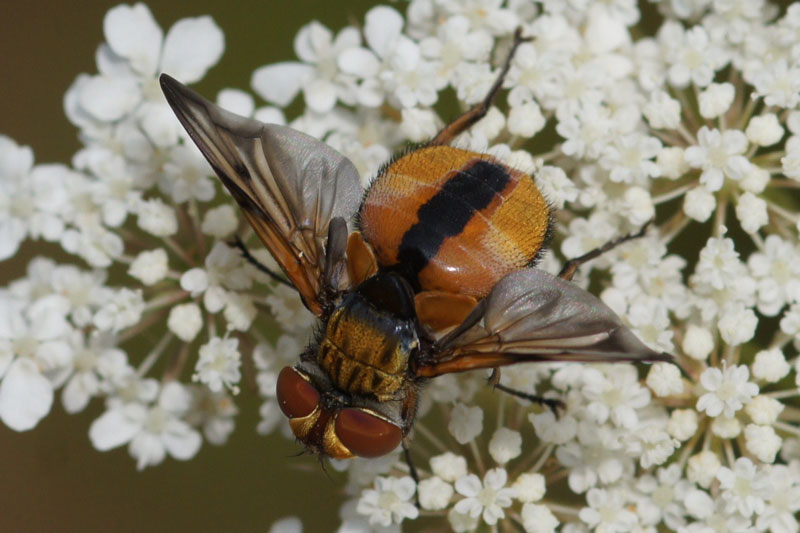
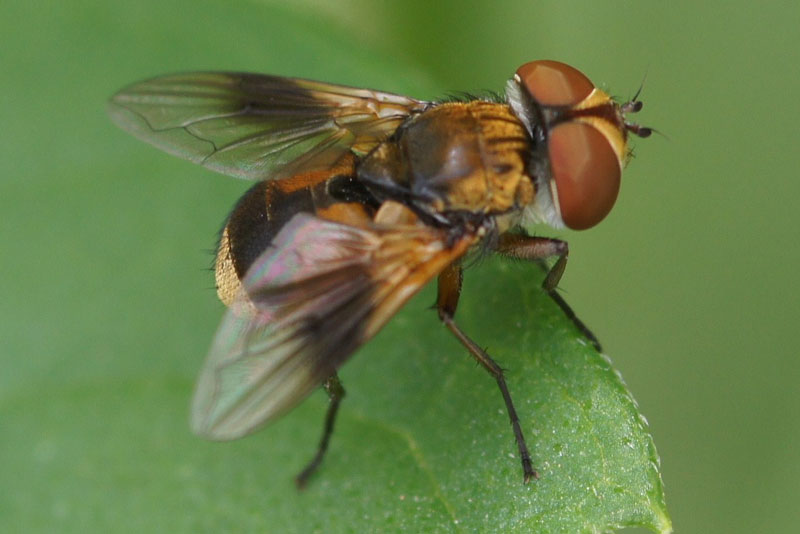
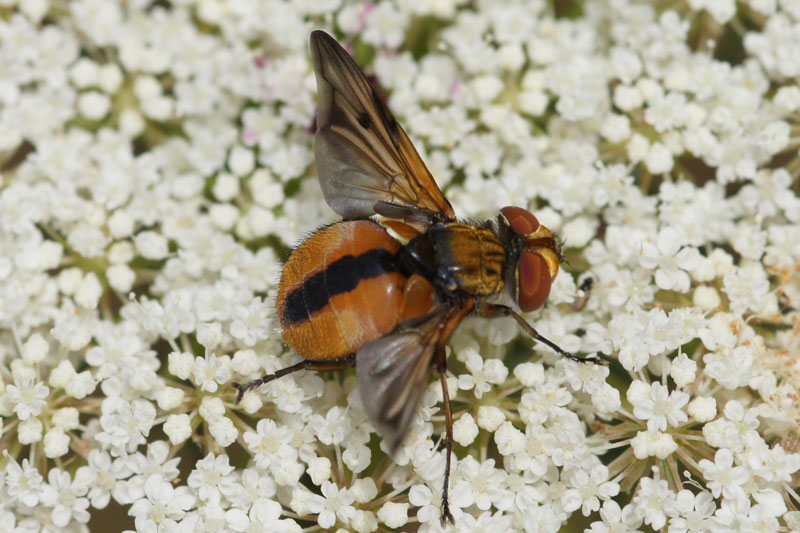
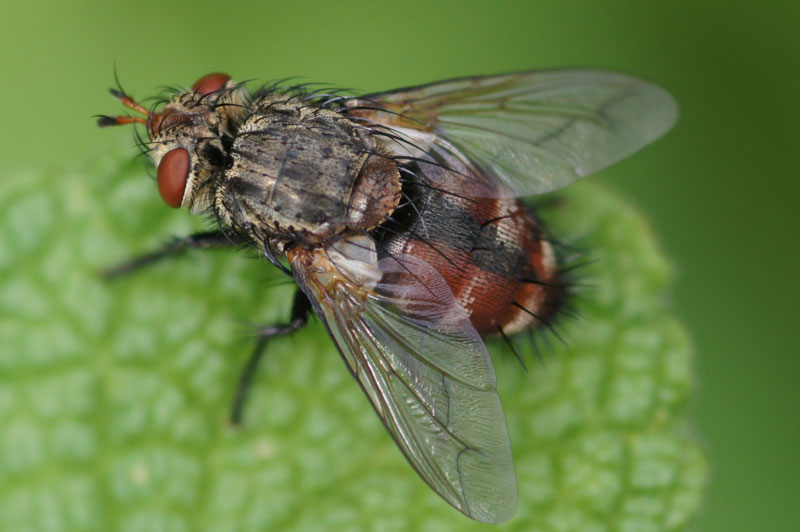
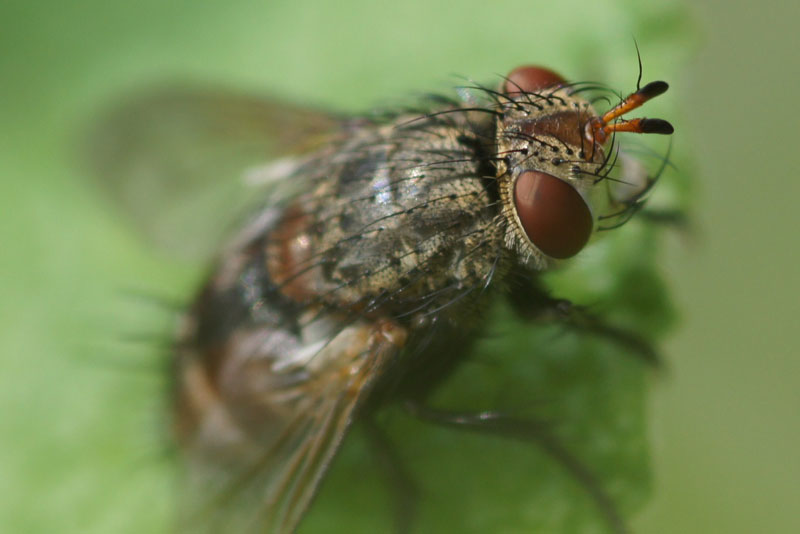
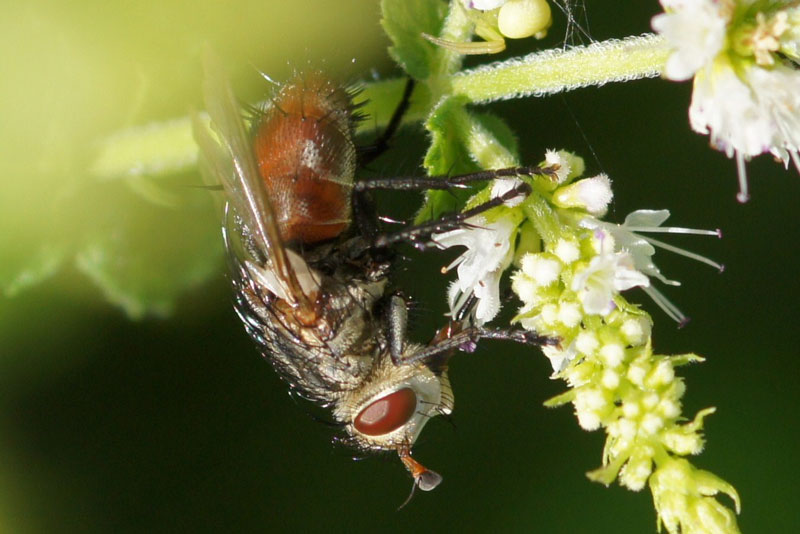
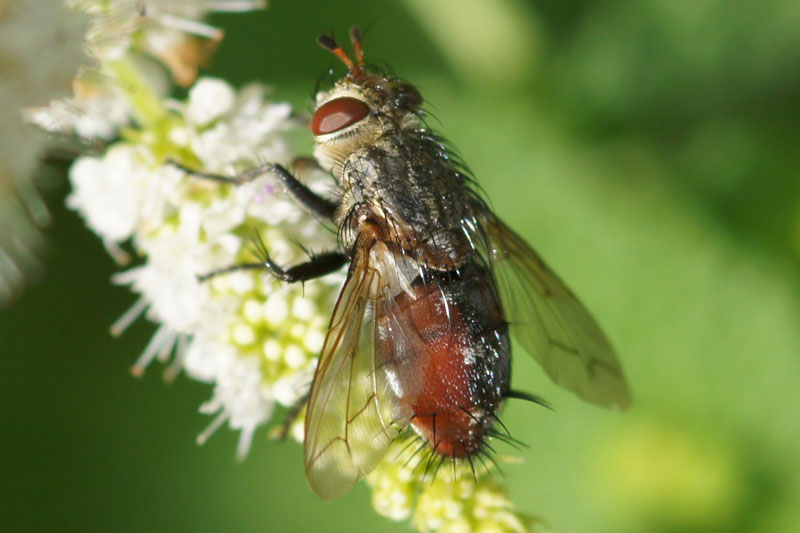
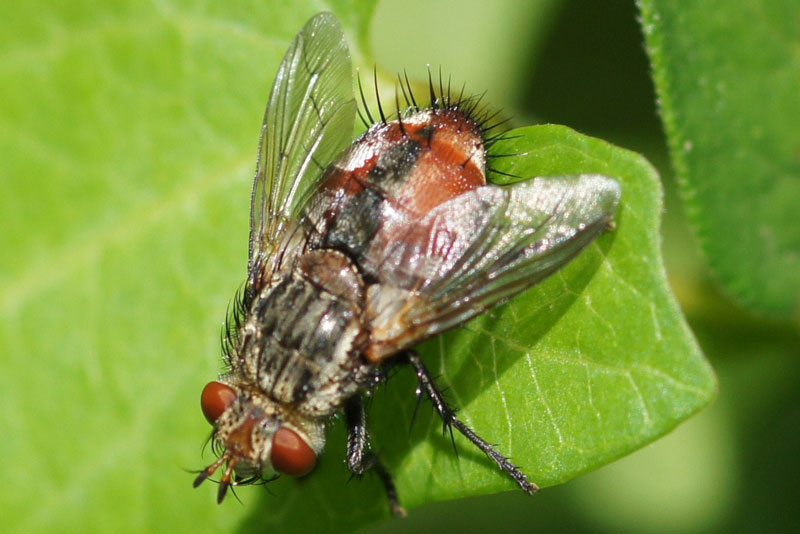
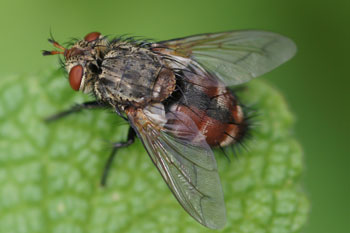
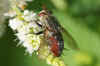
Ectophasia crassipennis Subfamily Phasiinae. Tribe
Phasiini. Family: Tachinidae.
This fly lives in southern Europe and in the warm parts of Central Europe.
Not in the Netherlands like some other members of the subfamily. Those are
on my page "Tachinidae".
Males and females are different. The brownish yellow abdomen of the male
has a wide black stripe.
The female lays the eggs directly into the host the shield bug (Pentatomidae)
Length 5 - 9 mm. May - September. |
 .. ..
 . .
 . .
 . .
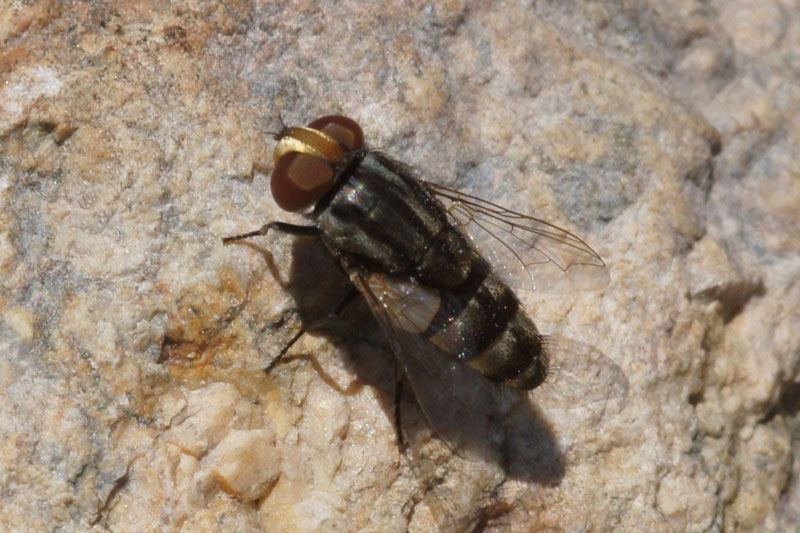
 Peleteria
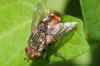
spec. Maybe Peleteria varia. Subfamily Tachininae. Tribe
Tachinini
Family Tachinidae. Peleteria
spec. Maybe Peleteria varia. Subfamily Tachininae. Tribe
Tachinini
Family Tachinidae.
Another Tachinid. Two members of the subfamily are on the page "Tachinidae".
From Southern Europe to Slovakia. Not in the Netherlands. June -
September. |
 .. ..
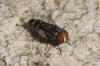 . .
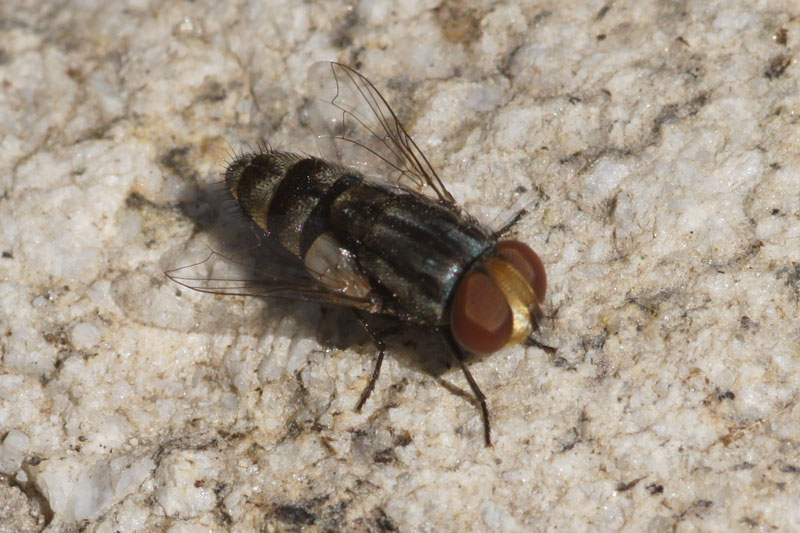
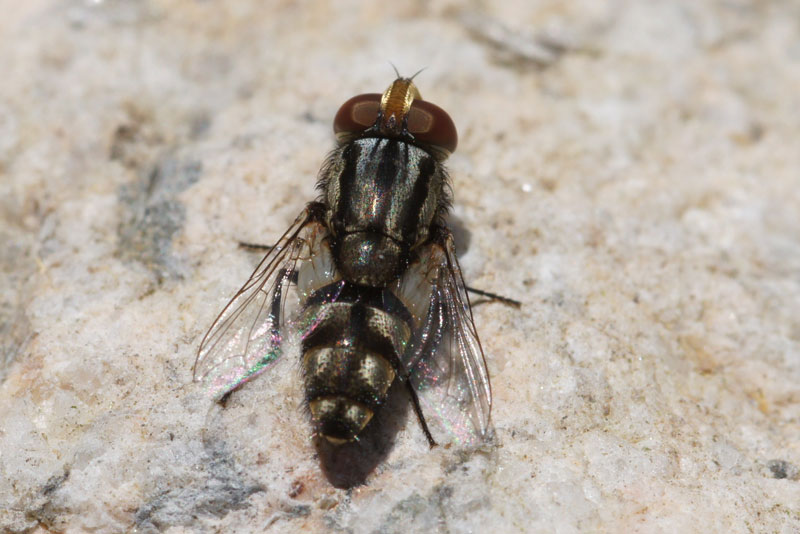
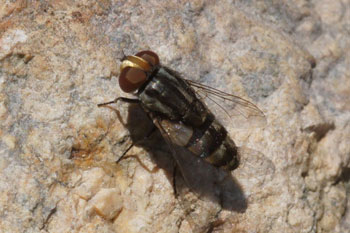
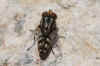 Miltogramminae.
Family flesh flies (Sarcophagidae). Miltogramminae.
Family flesh flies (Sarcophagidae).
Most of these flies are kleptoparasites of solitary bees and wasps. They
lay an egg in the nest of these bees and wasps. The larvae eat the food
intended for the bee and wasp larvae . They are not to identify from a
photograph . |
 .. ..
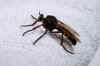 . .
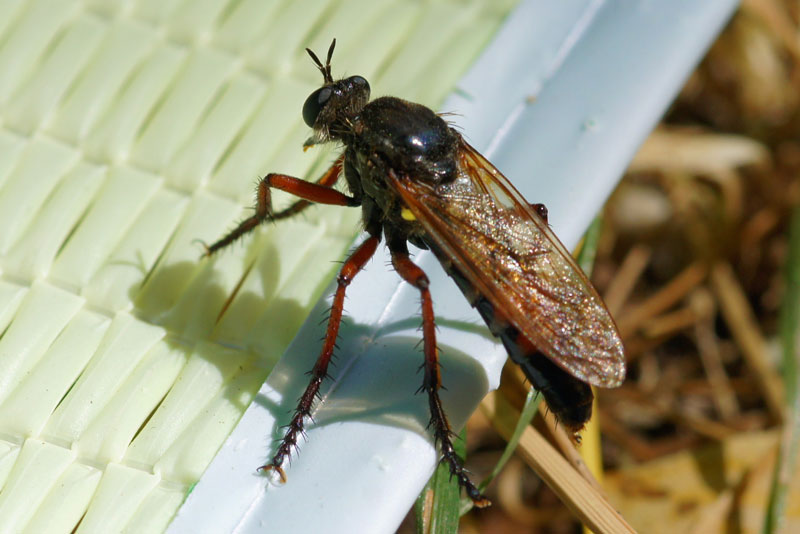
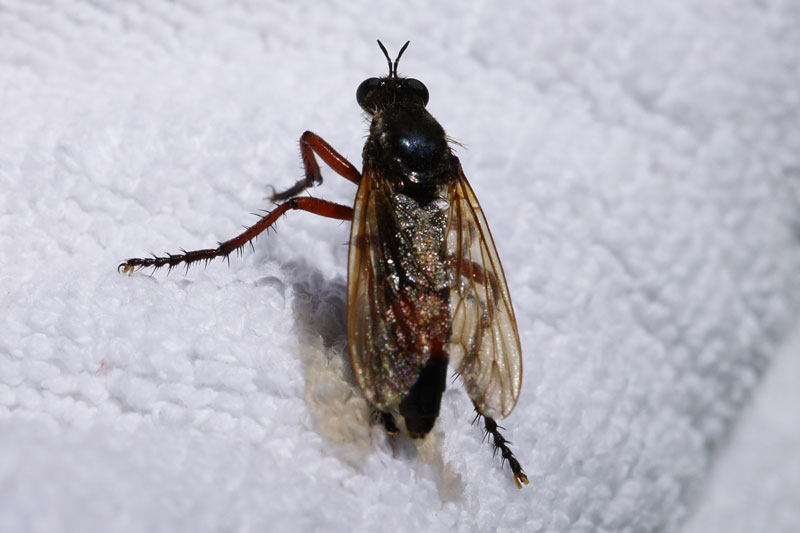
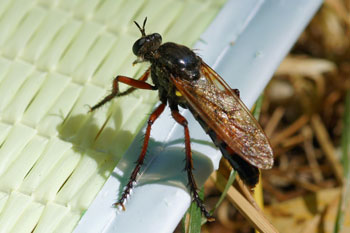
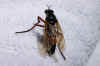 Dasypogon
diadema female. Genus Dasypogon. Family robber flies (Asilidae). Dasypogon
diadema female. Genus Dasypogon. Family robber flies (Asilidae).
In Southern Europe this is a common robber fly. Males have a black
abdomen. The females have red markings on the black abdomen. The color of
the wings is also different. The wings of the males are blackish. The
wings of the females are brown. The eggs (1-6) are laid in sand balls with
a diameter of about 4, 5 mm. |
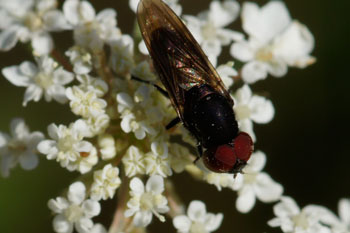 Chrysogaster solstitialis. Genus Chrysogaster. Family Hoverflies,
Flower Flies (Syrphidae).
Chrysogaster solstitialis. Genus Chrysogaster. Family Hoverflies,
Flower Flies (Syrphidae).
It lives also in the Netherlands. But I haven't seen it in our garden. (in
2013 also in our garden!!)
It has red eyes and dark wings. The thorax has a purple sheen. The larvae
live in muddy banks with rotting wood. May - September. North
Africa, Europe Length 6 - 9 mm. |
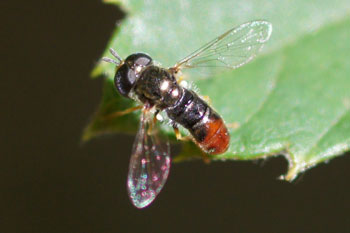 .. ..
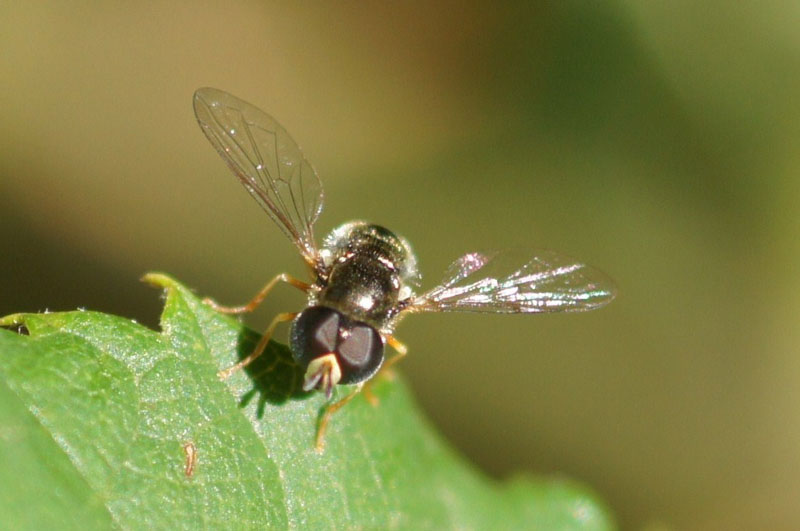
 Paragus spec. Genus Paragus. Family Hoverflies,
Flower Flies (Syrphidae).
Paragus spec. Genus Paragus. Family Hoverflies,
Flower Flies (Syrphidae).
These hoverflies are tiny flies from 4 to 7 mm. Sometimes they are
completely black. Sometimes the abdomen is for a part red (or yellow). The
paragus in this picture has the length of about 4 mm. The species I don't
know. (in 2012 also found in the dunes in the netherladns!!) The larvae
feed on aphids. |
Butterflies
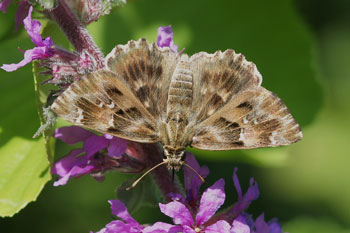 .. ..
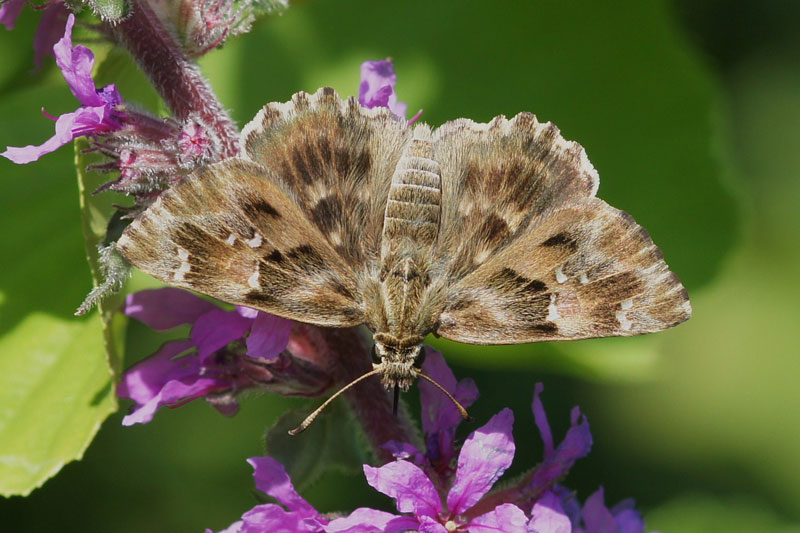
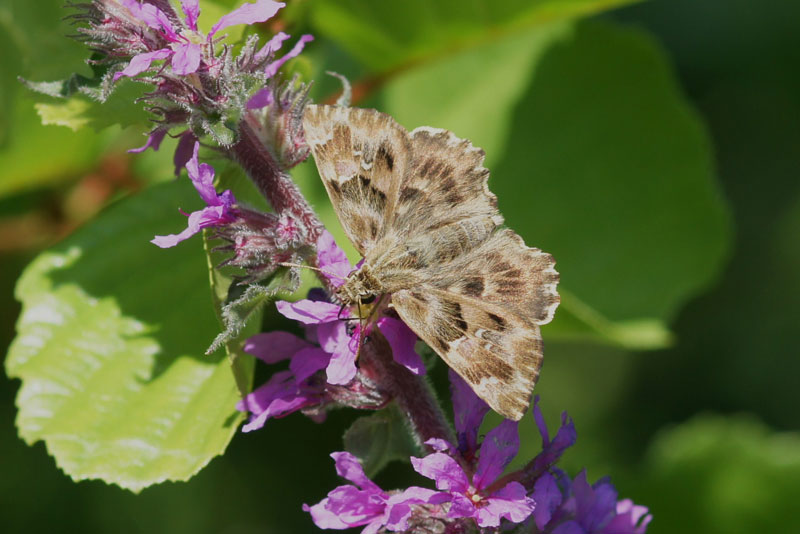
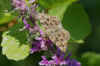 Mallow Skipper
(Carcharodus alceae). Family Hesperiidae. Mallow Skipper
(Carcharodus alceae). Family Hesperiidae.
The eggs are laid on species of Mallow like common mallow. I have these
plants in the garden. But I live far from Limburg. And that's the only
part of the Netherlands with Mallow Skippers.
Light brown wings with dark brown spots. Forewing length about 14 mm.
Flight: April - October. Southern and Central Europe. Rare in the
Netherlands (Limburg). |
 .. ..
 . .
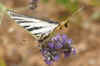 . .
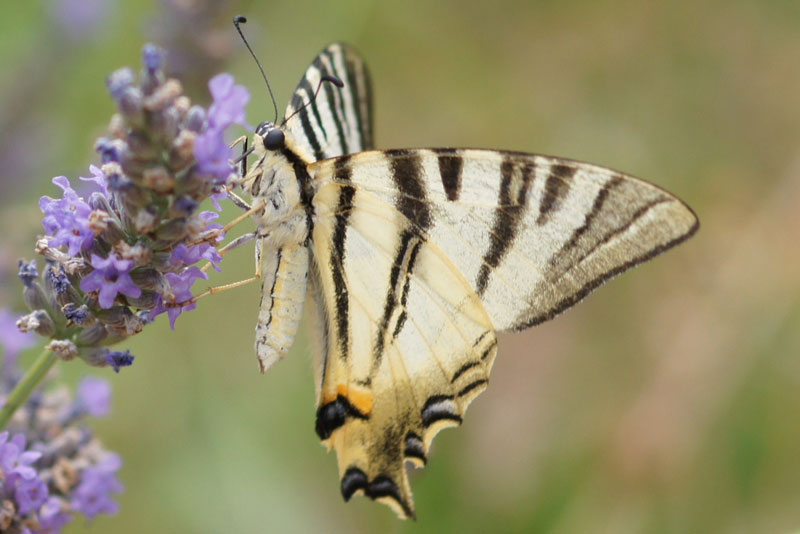
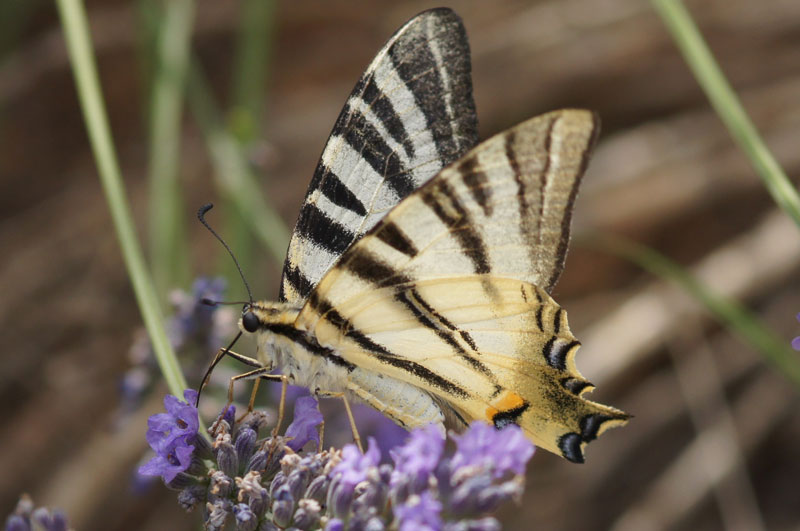
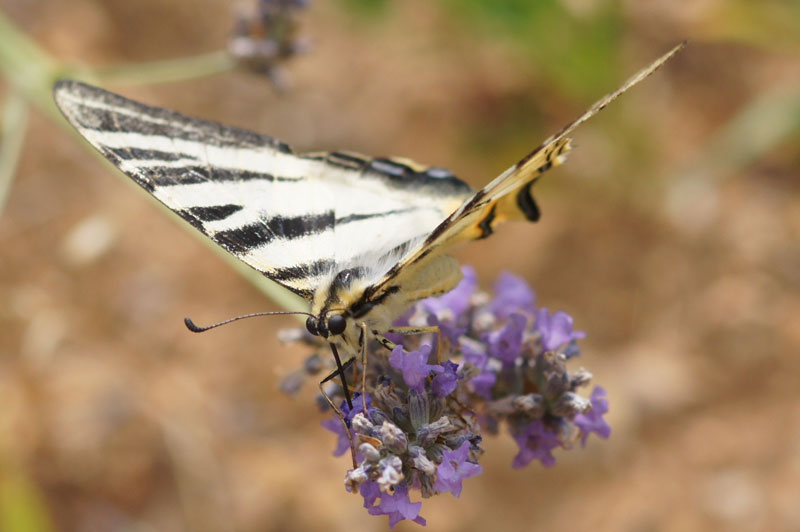
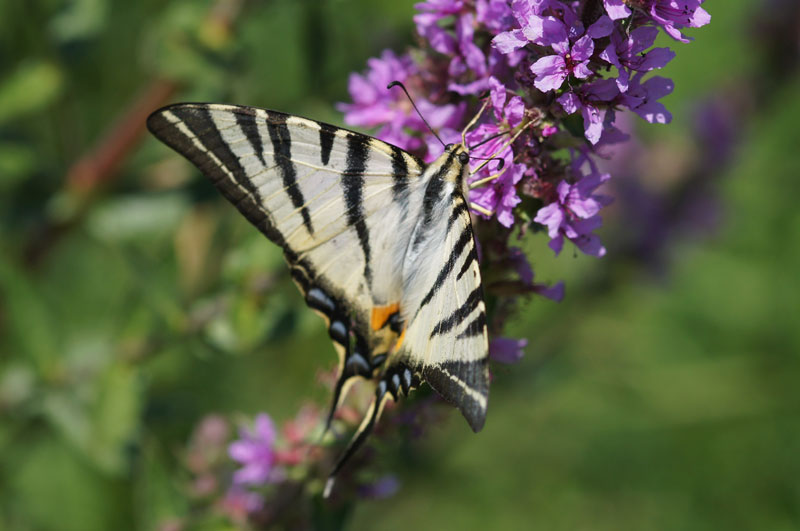
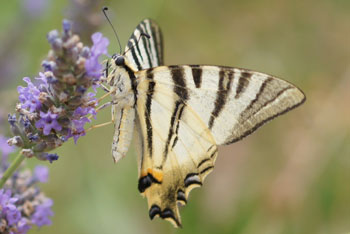
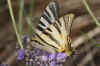
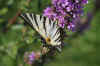 Scarce Swallowtail, Sail Swallowtail, Pear-tree
Swallowtail (Iphiclides podalirius). Familie Pages (Papilionidae). Scarce Swallowtail, Sail Swallowtail, Pear-tree
Swallowtail (Iphiclides podalirius). Familie Pages (Papilionidae).
In the Netherlands as very rare migrant butterfly. This holiday I saw them
every day. It's a beautiful large butterfly. The wing length is 32 to 39
mm.
The caterpillar has several food plants. Like blackthorn, peach and
hawthorn. March - October.
It looks like the Netherlands in less common yellow swallowtail (Papilio
machaon) Throughout Europe, not in the northern parts, Asia Minor, China
and India. |
 .. ..
 . .
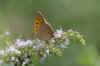 . .
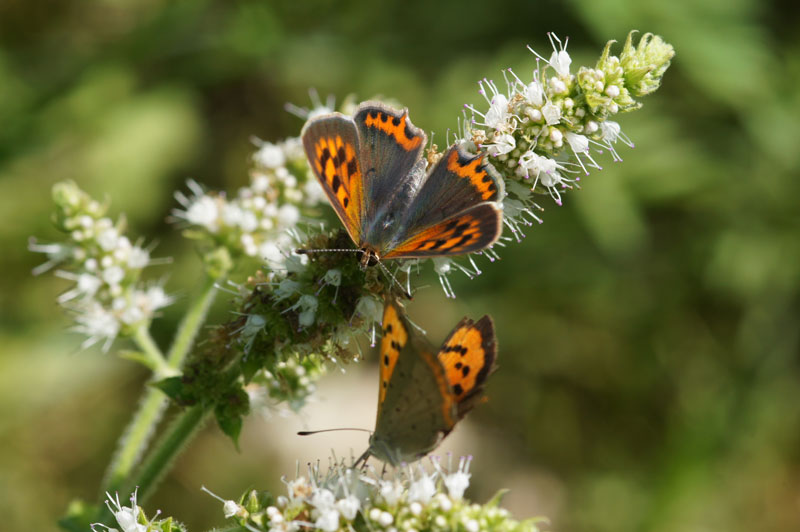
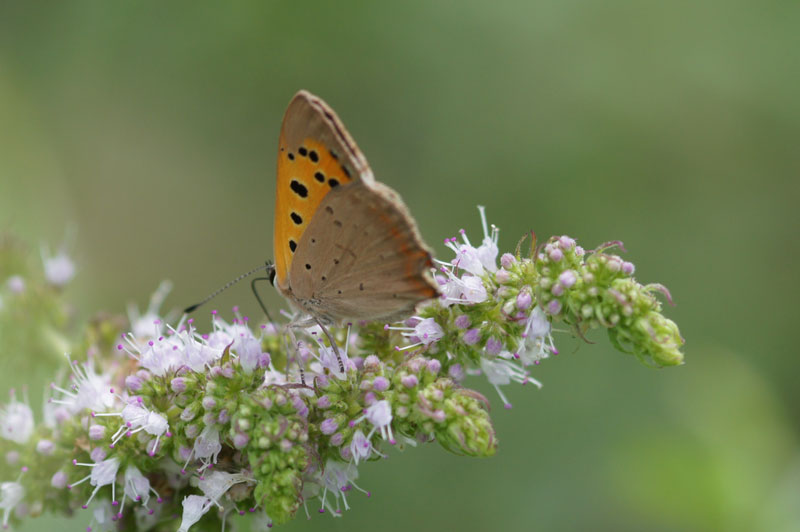
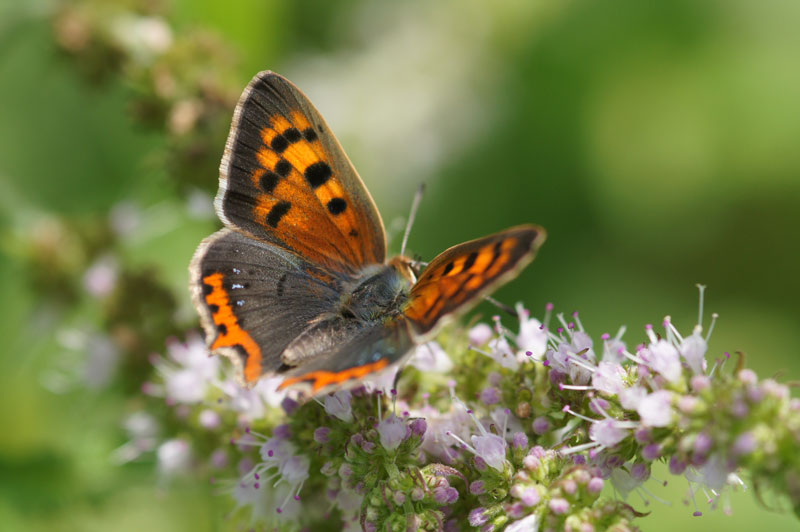
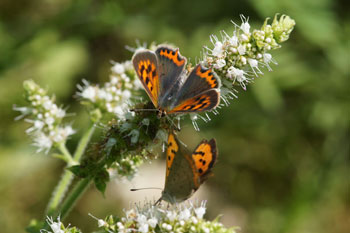
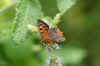
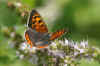 Small Copper, American Copper, Common Copper
(Lycaena phlaeas). Family Lycaenidae. Small Copper, American Copper, Common Copper
(Lycaena phlaeas). Family Lycaenidae.
It is widespread throughout the Palearctic region. Also in the
Netherlands. It has dark hind wings with an orange boarder.
March - October. Two or three generations. Host: Different species of
sorrel. |
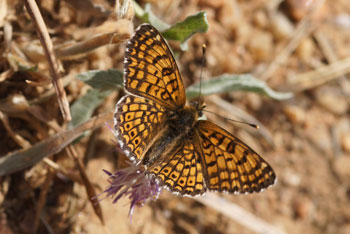 .. ..
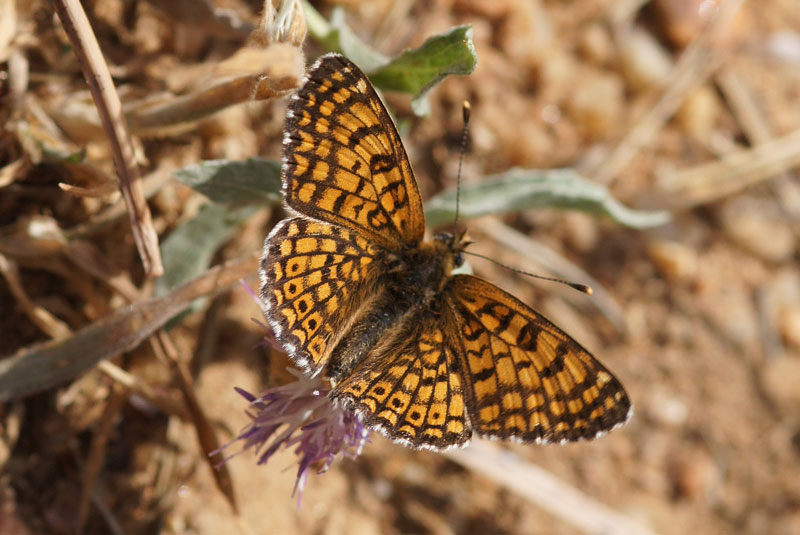
 Glanville Fritillary (Melitaea cinxia). Family
Nymphalidae.
Glanville Fritillary (Melitaea cinxia). Family
Nymphalidae.
It
lives in Central and Eastern Europe. In the Netherlands it is an
endangered species. It only found in southern Limburg.
Forewing length 16 to 21 mm. As host, it has mostly narrowleaf plantain.
The caterpillar overwinters. Flight time: May - September. One generation. |
 ,, ,,
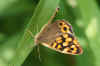 . .
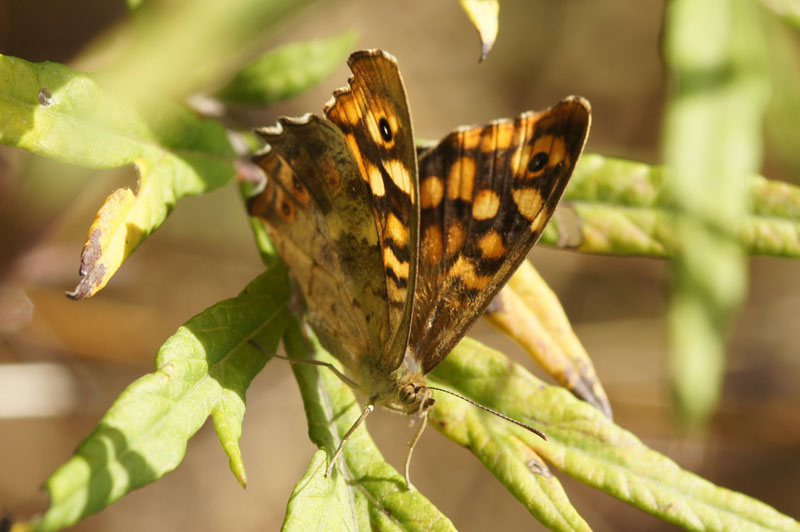
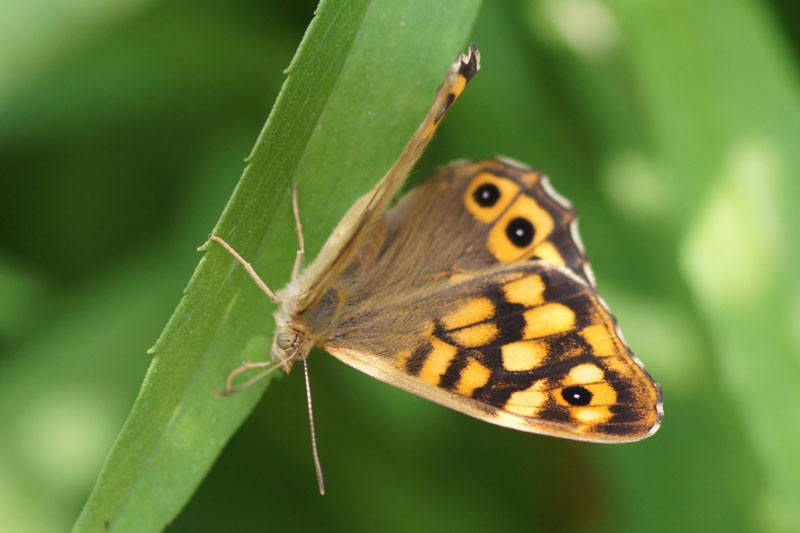
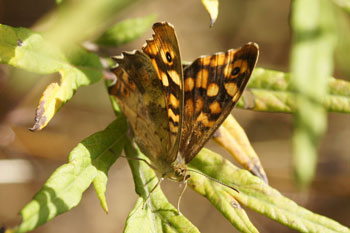
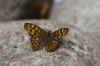 Speckled
Wood (Pararge aegeria) subspecies Pararge aegeria aegeria. Subfamily
Satyrinae. Family Nymphalidae. Speckled
Wood (Pararge aegeria) subspecies Pararge aegeria aegeria. Subfamily
Satyrinae. Family Nymphalidae.
The other subspecies is Pararge tircis aegeria. It has pale yellow spots.
I have written about this species on the page
"butterflies".
Pararge aegeria aegeria has orange spots and lives in southern Europe and
northern Africa. Host plants are various grasses. Wingspan 32-42 mm.
February - October. Two to three generations. |
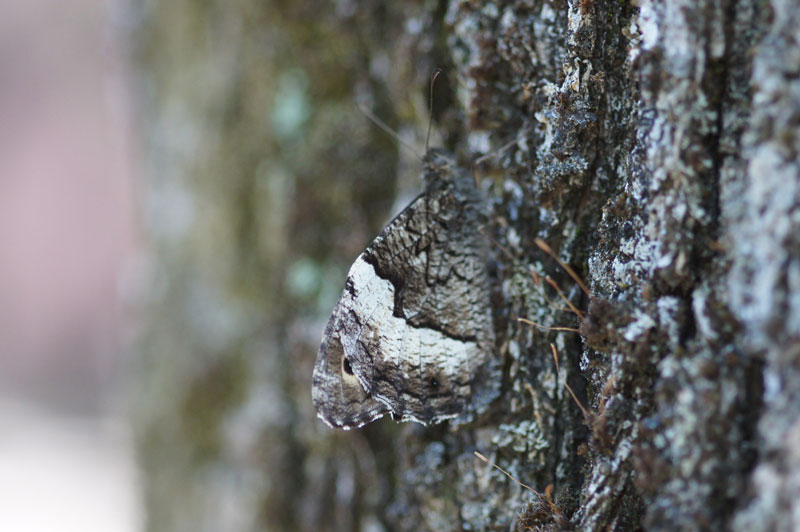
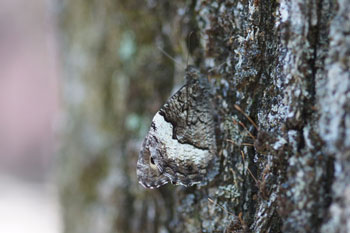 Great
Banded Grayling
(Brintesia
circe). Subfamily Satyrinae. Family Nymphalidae. Great
Banded Grayling
(Brintesia
circe). Subfamily Satyrinae. Family Nymphalidae.
Central
and Southern Europe, Asia Minor. In the Netherlands, this butterfly has
diappeared.
We were visiting a cave. There she saw them flying from tree to tree. They
stayed mainly in the shade with folded wings. There they were very well
camouflaged. Unfortunately I haven't made good shots. A large butterfly
with a wingspan of 68 to 82 mm. Host plants are various grasses. June to
September. One generation. |
 .. ..
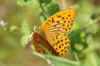 . .
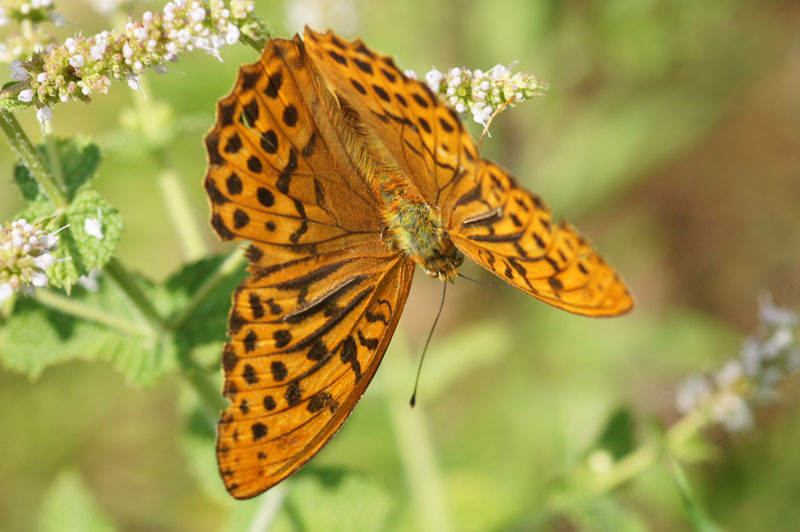
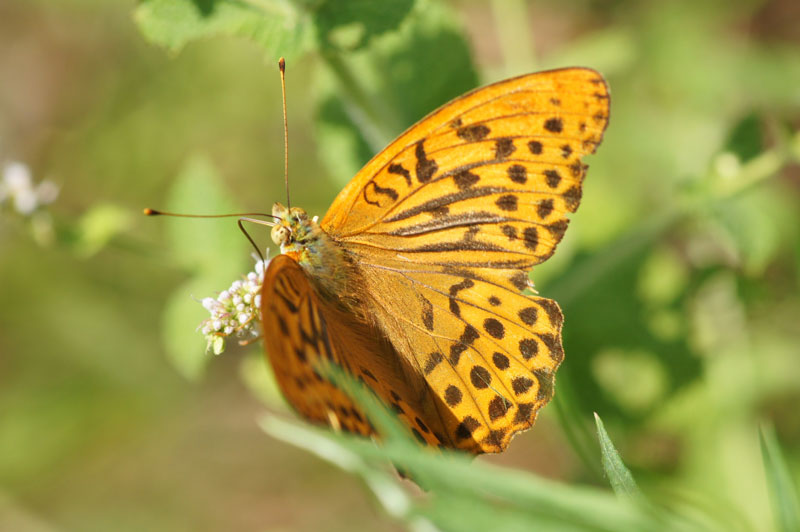
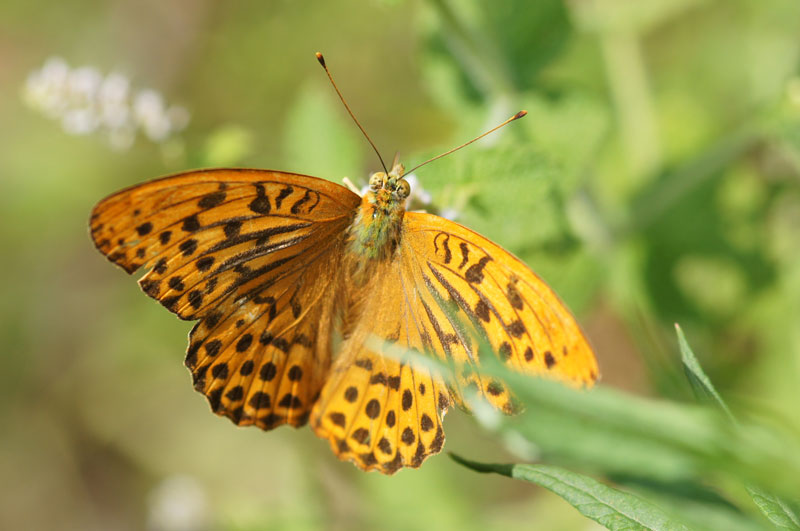
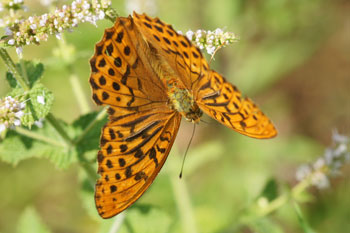
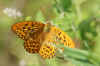 Silver-washed Fritillary (Argynnis paphia).
Family Nymphalidae.
Silver-washed Fritillary (Argynnis paphia).
Family Nymphalidae.
A large beautiful butterfly with a wing length of 27 to 35 mm. Europe. In
the Netherlands only a migrant butterfly.
Host: Different species of violets. The young caterpillars hibernate. Eggs
are deposited on trees near violets. May - September. |
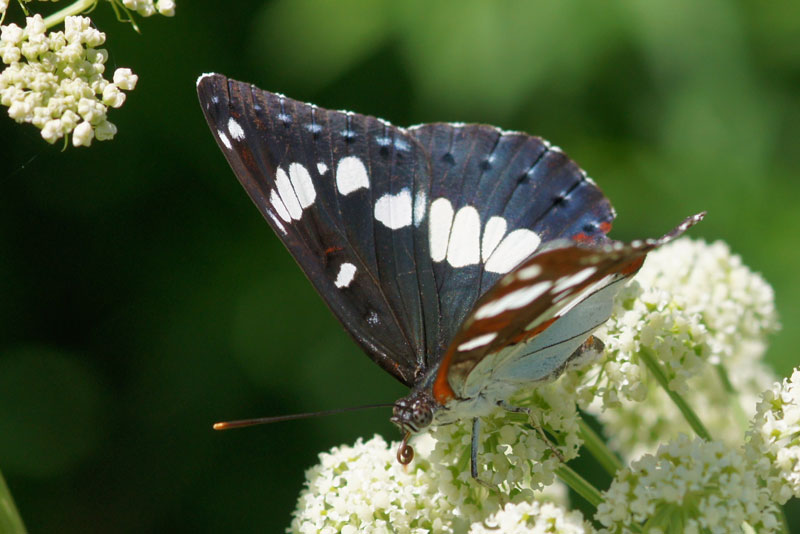
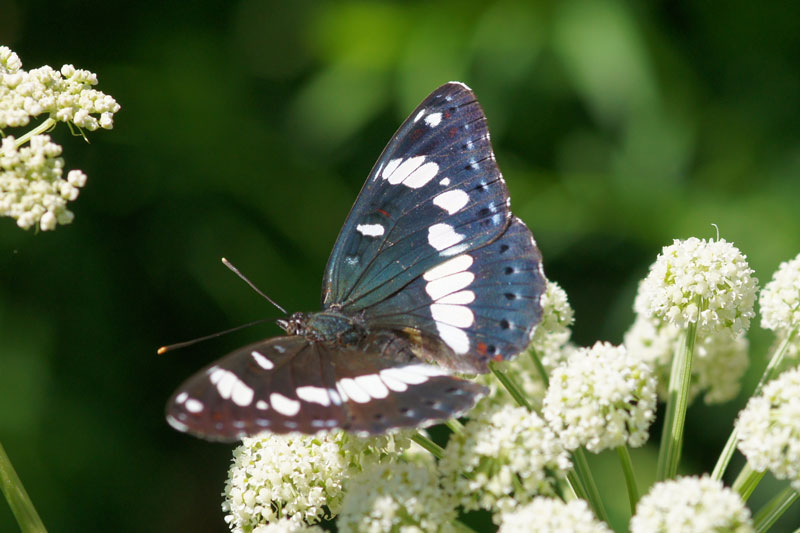
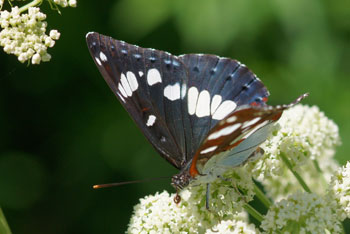 .. ..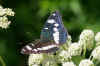 . .
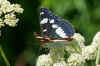 Southern
White Admiral
(Limenitis reducta).
Familie Nymphalidae. Southern
White Admiral
(Limenitis reducta).
Familie Nymphalidae.
Wingspan
22 - 27 mm. The upperside of the wings has a beautiful blue sheen.
Flight time: May to August. A generation. It is found in Northern Spain,
Southern and Eastern France, Italy, the Alps. In the Netherlands it is a
very rare migrant butterfly. |
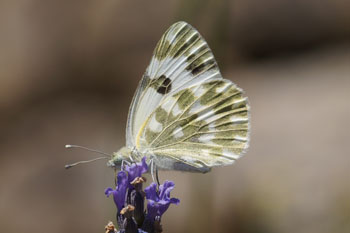 .. ..
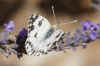 Eastern
bathwhite (Pontia edusa) or bathwhite (Pontia daplidice).
Family Pieridae.
Eastern
bathwhite (Pontia edusa) or bathwhite (Pontia daplidice).
Family Pieridae.
Both butterflies are nearly identical. But the eastern bathwhite lives in
the South East of France and Central Europe. The bathwhite (Pontia
daplidice) lives in western Europe. The bathwhite (Pontia daplidice) is
very rare in the Netherlands. Host plants: Mainly resedaceae. The
butterflies you see often in cruciferae. March - October. Several
generations.
|
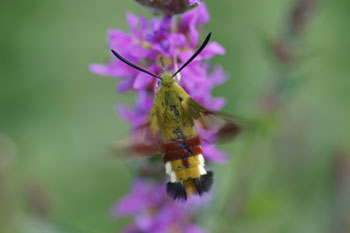 .. ..
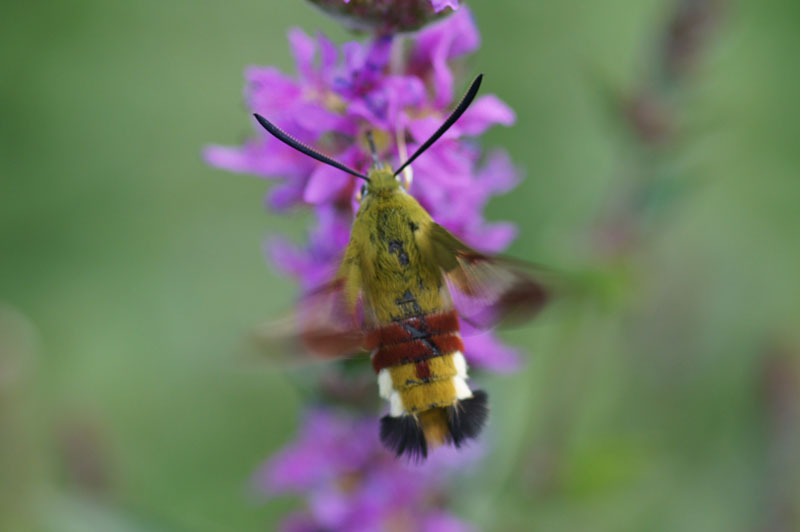
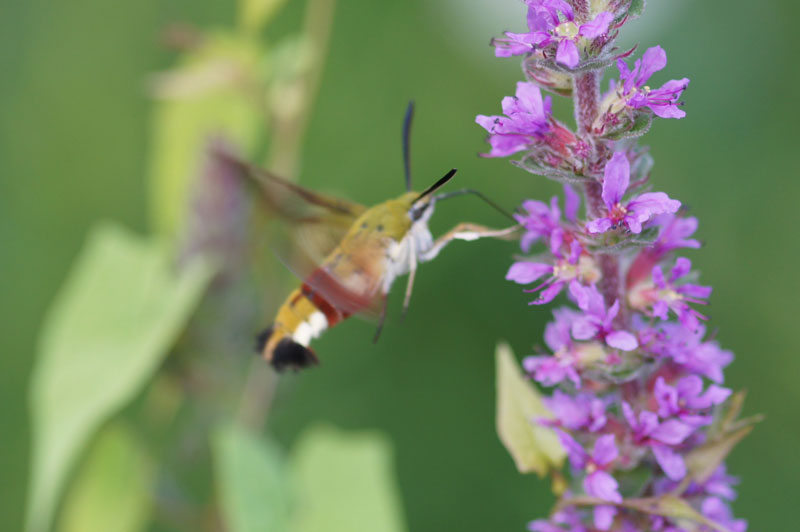
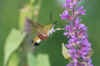 Broad-bordered Bee Hawk-moth (Hemaris fuciformis). Family
Sphingidae. A day-flying moth.
Broad-bordered Bee Hawk-moth (Hemaris fuciformis). Family
Sphingidae. A day-flying moth.
I have described this moth on my page "butterfly". Because I see
it sometimes in our garden. In France I saw it more often. But I still have not a good photograph. They so
very active.
|
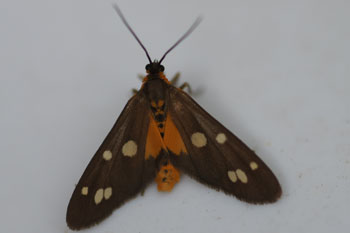 .. ..
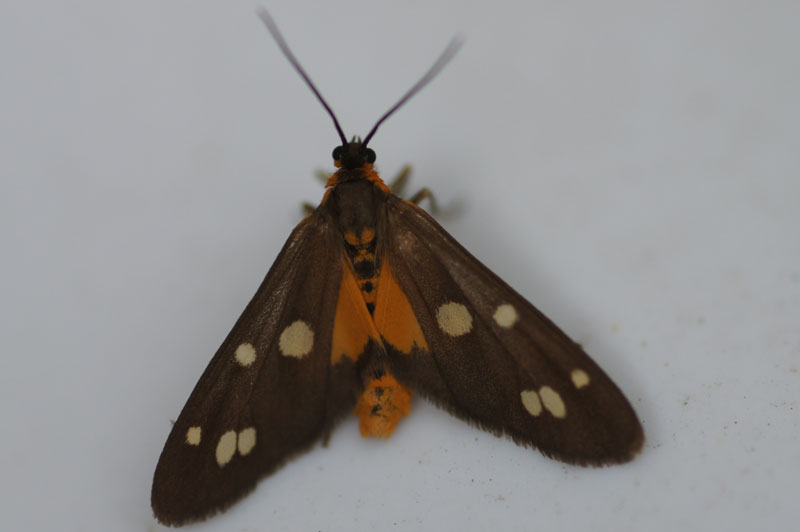
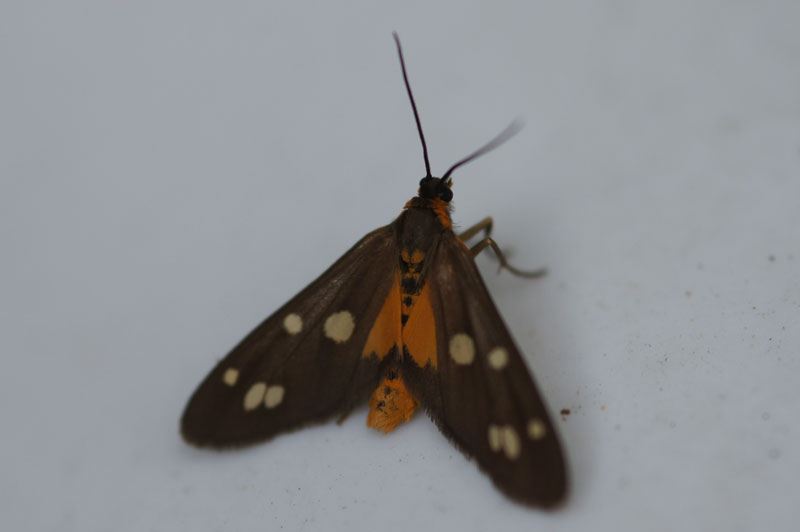
 Dysauxes
punctata. Family Arctiidae. Dysauxes
punctata. Family Arctiidae.
A moth. The last butterfly that morning we saw just before we left the
Ardèche. It is found in Central Europe, Asia Minor and North Africa.
The hosts are Prunus subcontractor and Genista. But also lichens. June -
September. One or two generations. |
Beetles
 .. ..
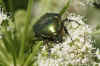 . .
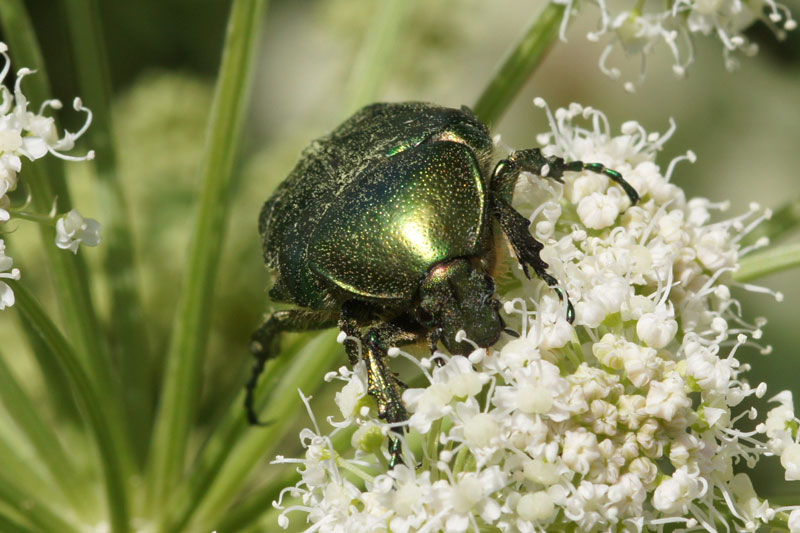
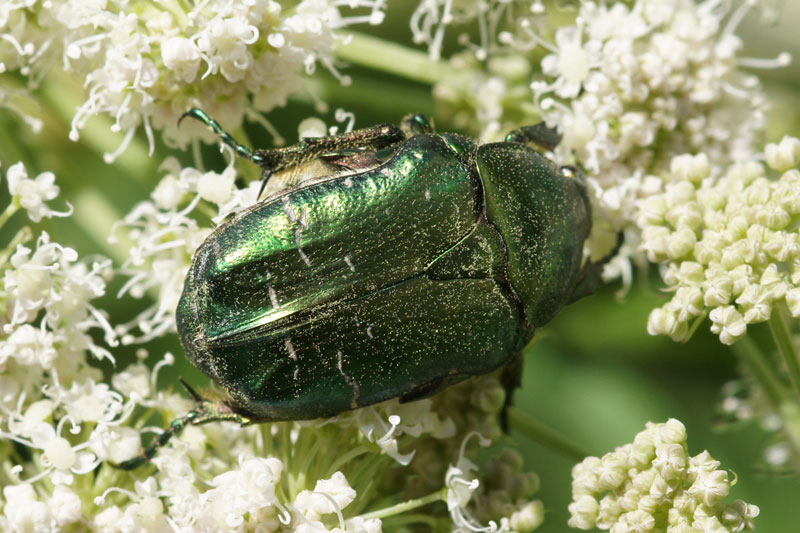
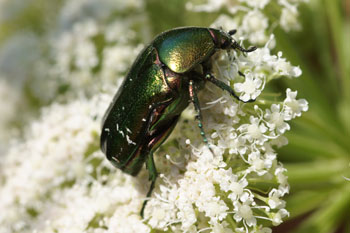
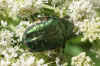 Rose chafer (Cetonia aurata). Family: Scarabaeidae (Scarab beetles)
There is also the Rose chafer (Protaetia cuprea), which is very similar. Up to about 2 cm. By the metallic green color is a beautiful beetle. Another feature is the bright stripes on the shields.
It feeds on pollen, petals and wound fluids of trees. You can find it when it's sunny on different flowers like the elder and hawthorn. Here they sat on a umbellifer. The larvae live and hibernate in decayed wood. Except in the North they are common species in Europe. In the Netherlands they are rare (mostly in the south and east.) |
 .. ..
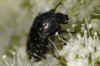 . .
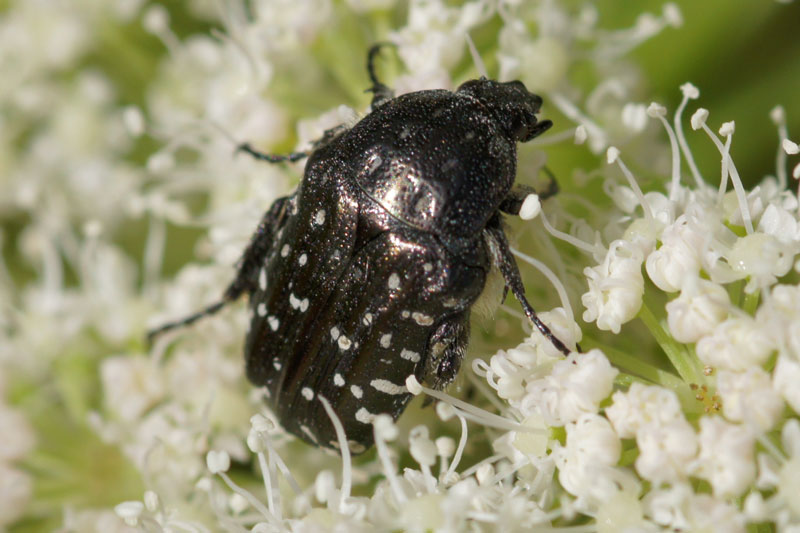
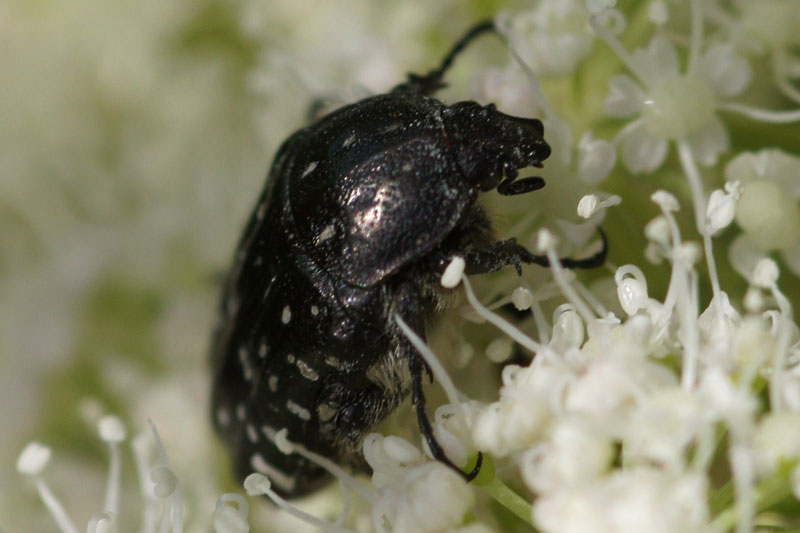
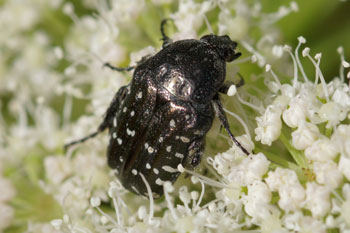
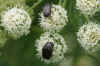 White-spotted rose beetle
(Oxythyrea funesta). Family Scaraeidae (Scarab beetless). White-spotted rose beetle
(Oxythyrea funesta). Family Scaraeidae (Scarab beetless).
This is also a beautiful shiny beetle. But it is black instead of green. On the shields are white spots.
Central and South Europe, North Africa, Asia Minor, Middle East. The Oxythyrea funesta is found in the southern Netherlands, but it is rare. Length 8 - 12 mm. In the Netherlands: May-July. |
 .. ..
 . .
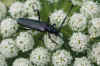 . .
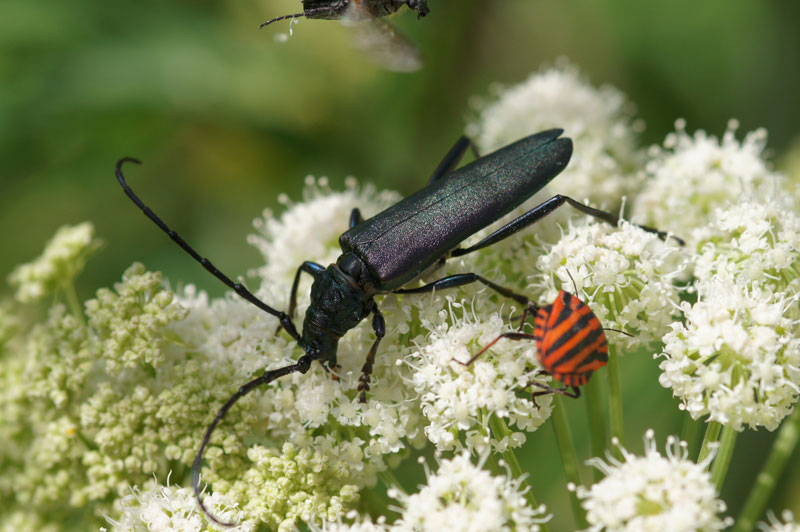
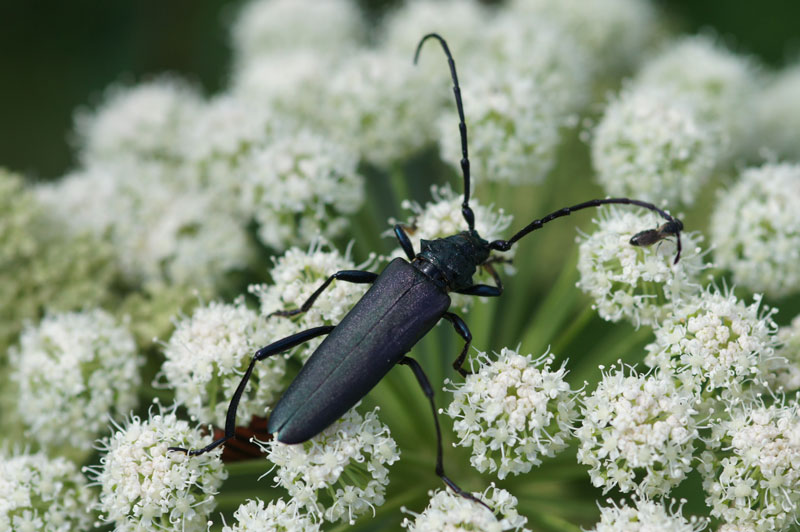
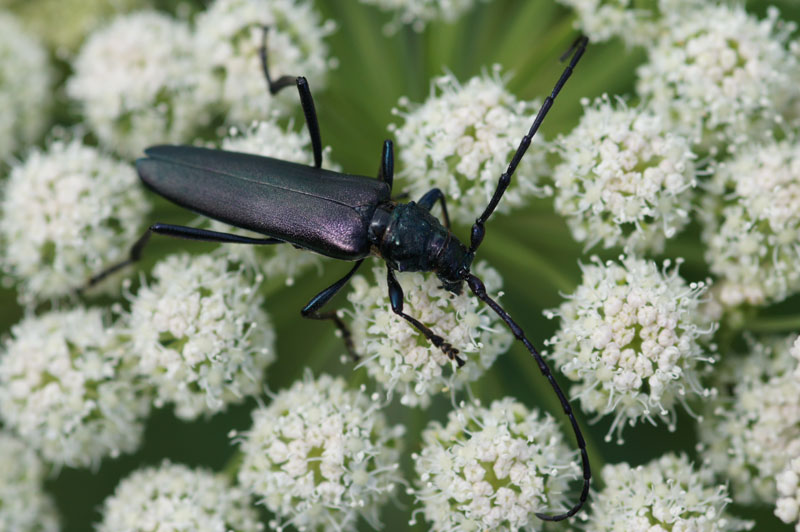
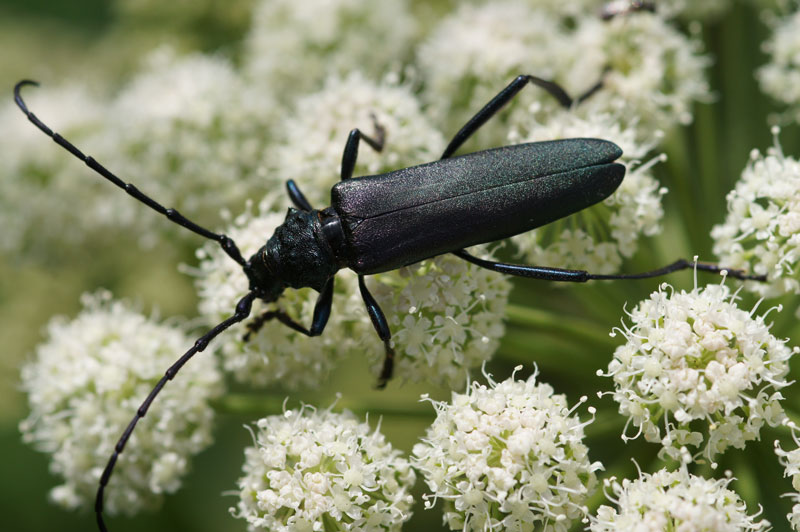
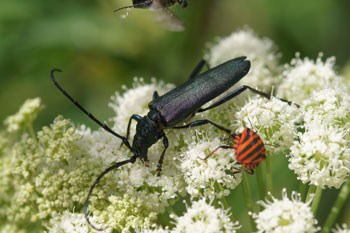
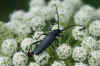
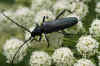 Musk beetle (Aromia
moschata). Family longhorn beetles (Cerambycidae).
The
musk beetle is also in the Netherlands, but is quite rare. Especially in
my neighborhood. It is a large beetle with a length of 3 to 4 cm. (compare
it with the Striped Shield bug (Graphosoma lineatum) It is black with a
blue green black metallic sheen. It lives on willow. A larva can be there
two to three years in life. Occasionally you will find the larvae of the
poplar and alder. If it feels disturbed, it spreads a musky odor. Hence
its name Musk beetle (Aromia
moschata). Family longhorn beetles (Cerambycidae).
The
musk beetle is also in the Netherlands, but is quite rare. Especially in
my neighborhood. It is a large beetle with a length of 3 to 4 cm. (compare
it with the Striped Shield bug (Graphosoma lineatum) It is black with a
blue green black metallic sheen. It lives on willow. A larva can be there
two to three years in life. Occasionally you will find the larvae of the
poplar and alder. If it feels disturbed, it spreads a musky odor. Hence
its name |
 .. ..
 . .
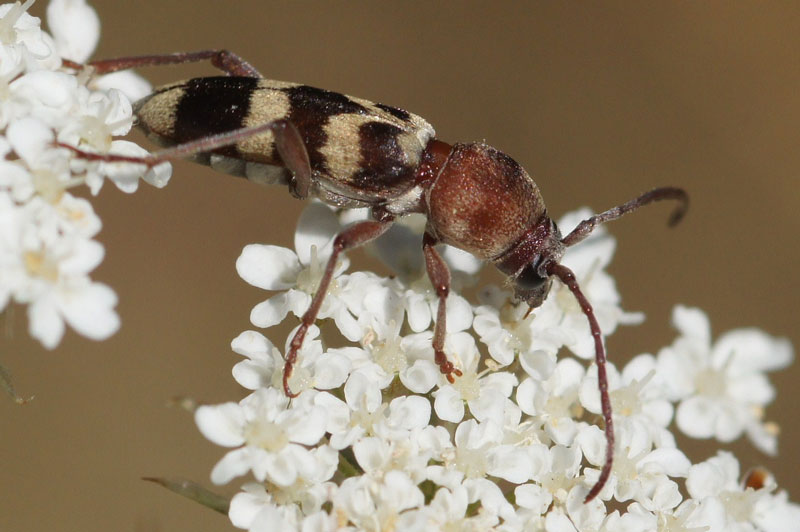
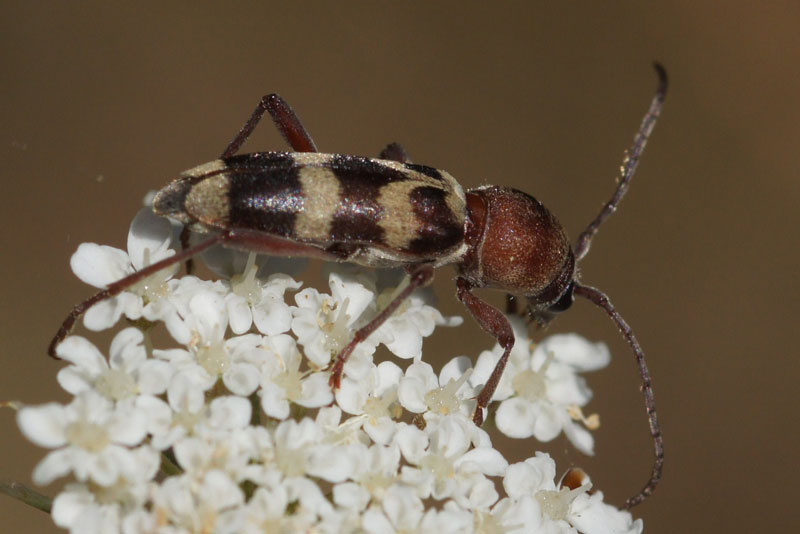
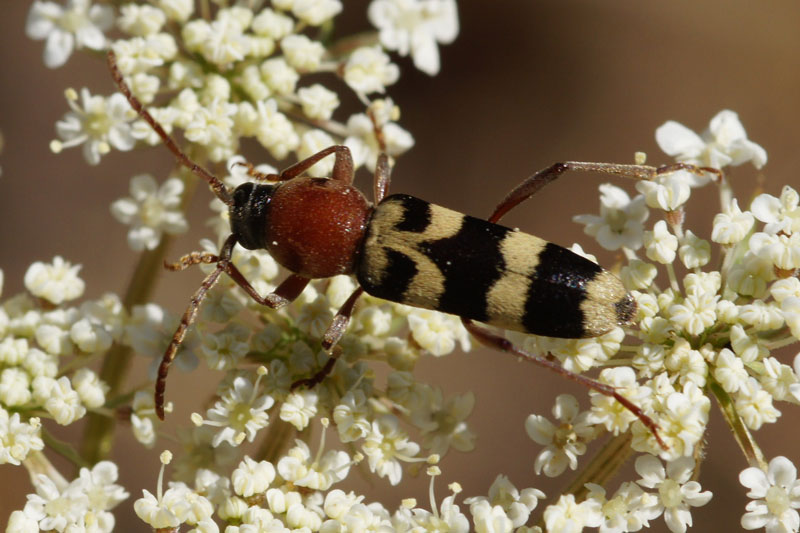
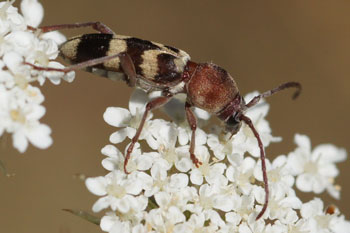
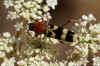 Chlorophorus trifasciatus. Family longhorn beetle (Cerambycidae).
Typical are the three broad white bands on the elytron. Central Europe,
Southern Europe, Turkey.
The larvae develop in two years in stems and roots of various plants,
especially herb stall (Ononis), but also in other family members.
May-July. I saw a lot of these longhorn beetles. Length 6 to 12
mm. |
 .. ..
 . .
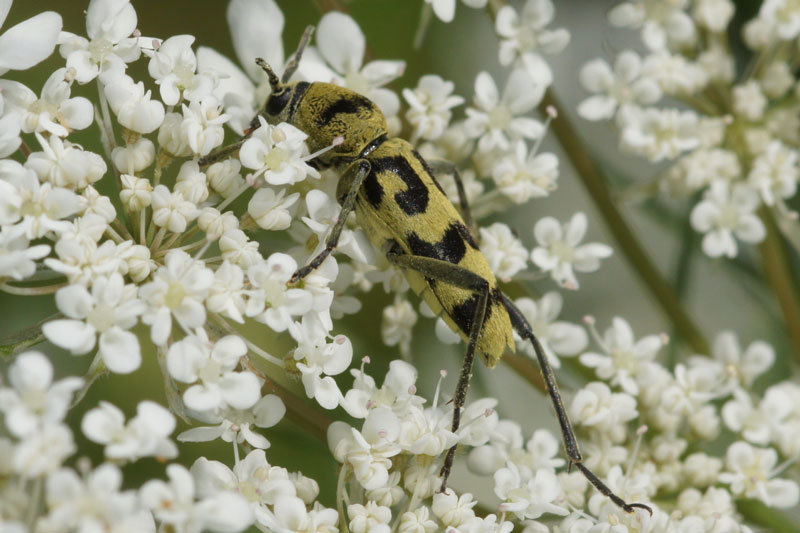
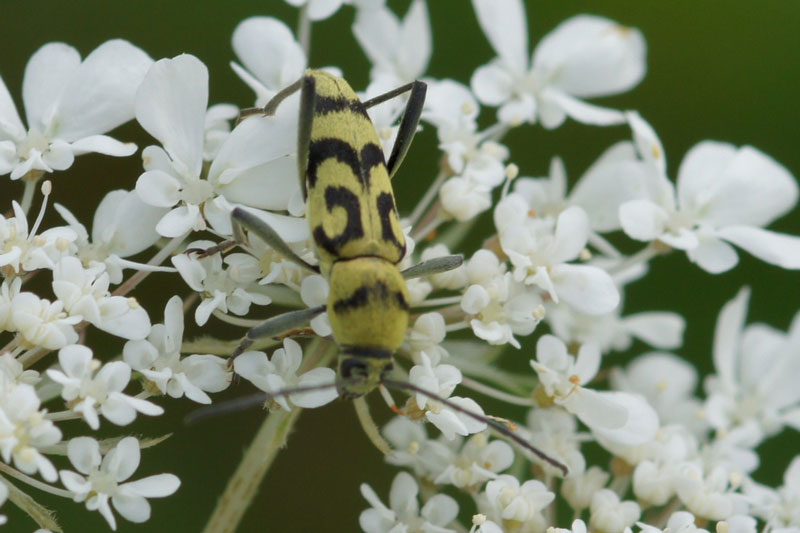
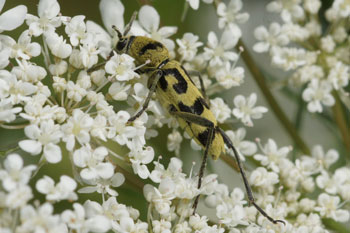
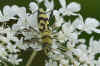 Chlorophorus
varius. Family longhorn beetles (Cerambycidae). Chlorophorus
varius. Family longhorn beetles (Cerambycidae).
A
yellow
green
beetle
with
black
bands.
On
the
neck
shield
is
also
a
black
transverse
stripe.
The
upper
band
on the
elytron
is
shaped like a
horseshoe.
I
have seen a lot of these longhorn beetles, hut I
do not have many
pictures.
When
I
put
photos
on the
computer,
I
noticed that
a
part of
the antennas
was
missing.
The
beetle had
no
problems
with it.
It
lives
in Europe
but not
in
the Netherlands. The
larva
is
found
in
woody
plants
in
the stems of
herbaceous
plants.
There
it stays two
to three years.
May
-
September.
|
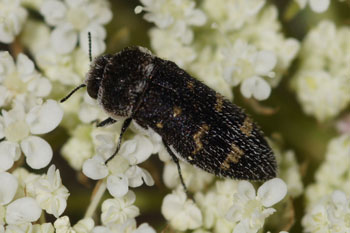 .. ..
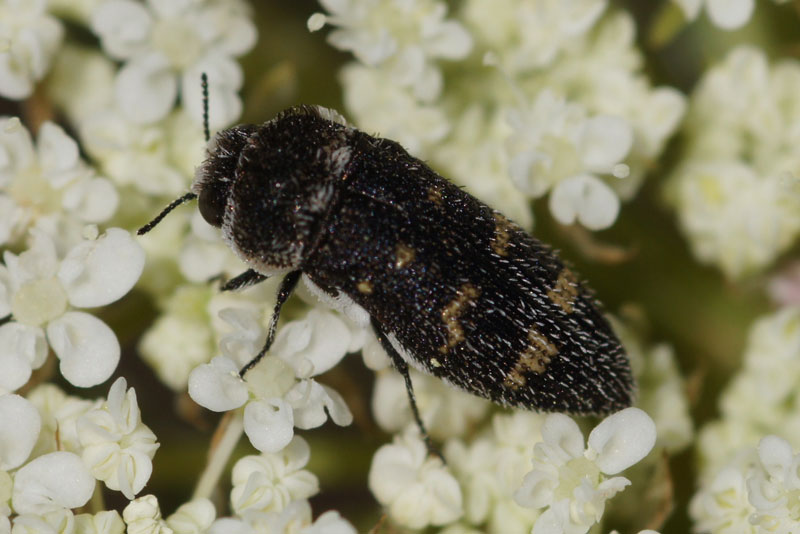
 Acmaeodera Maybe Acmaeodera
taeniata. Subfamily Acmaeoderinae. Family jewel beetles (Buprestidae). Acmaeodera Maybe Acmaeodera
taeniata. Subfamily Acmaeoderinae. Family jewel beetles (Buprestidae).
The larvae develop in the wood. There are several species in the area near
the Mediterranean See, Middle and Eastern Europe.
They have shape of the jewel beetles in our garden, but they don't have
shiny elytra. On the elytra of these species are short thick hairs..
June-August. |
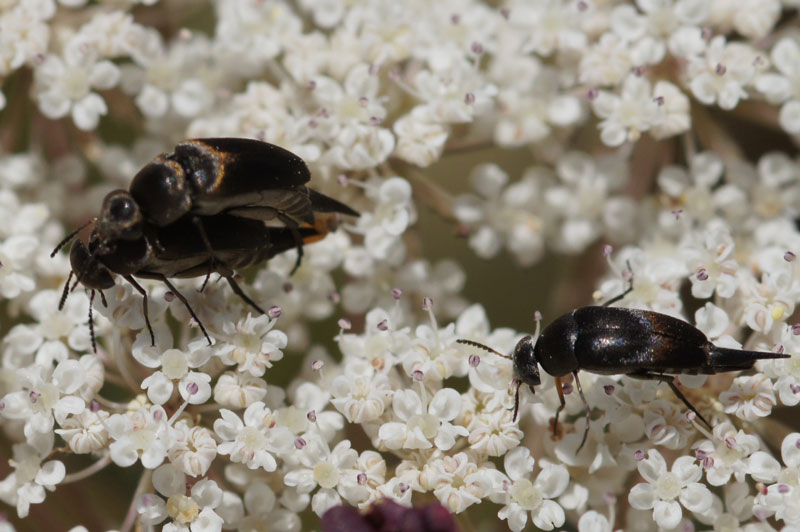
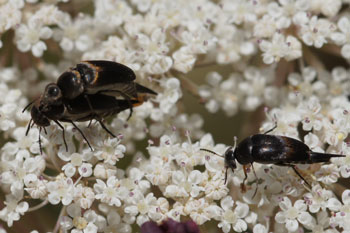 Mordella Maybe Mordella aculeata. Subfamily
Mordellinae. Family tumbling flower beetles (Mordellidae).
Mordella Maybe Mordella aculeata. Subfamily
Mordellinae. Family tumbling flower beetles (Mordellidae).
I saw many of these species on umbellifers. The adomen has a
characteristic thorny end.
There are different species in Central Europe. The larvae of Mordella are
found in wood and herbaceous plants. Length 5 - 7 mm. |
 .. ..
 . .
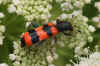 . .
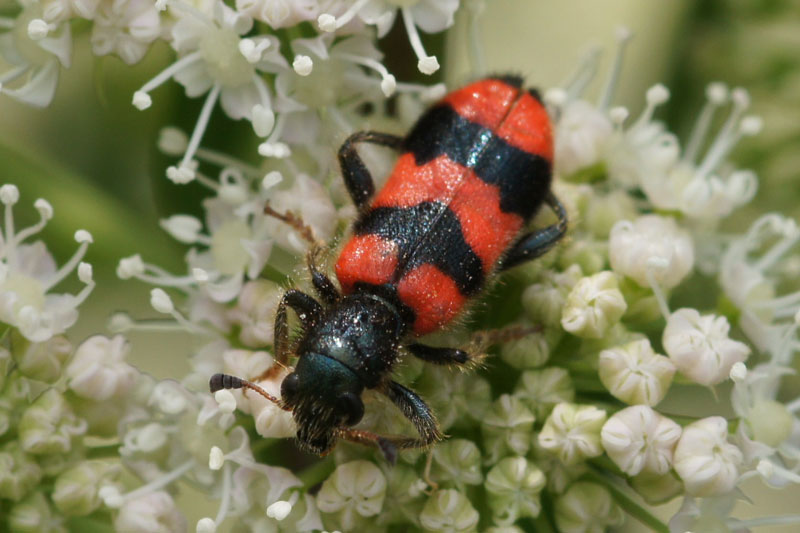
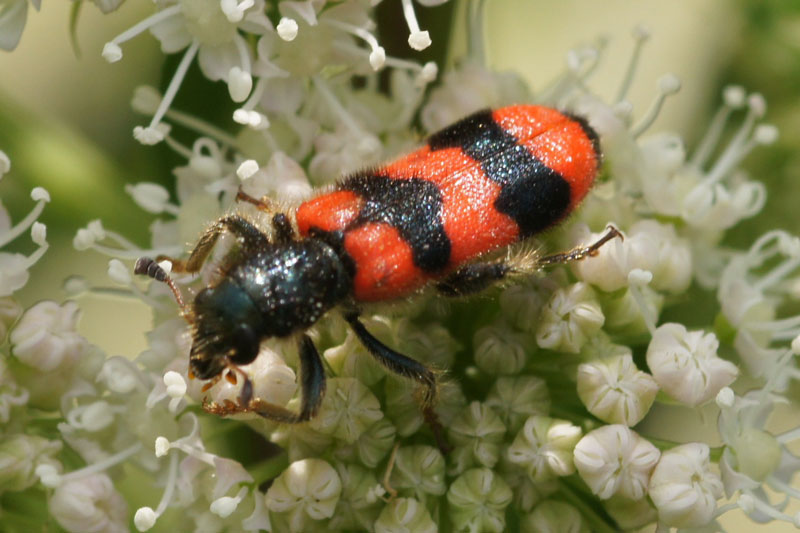
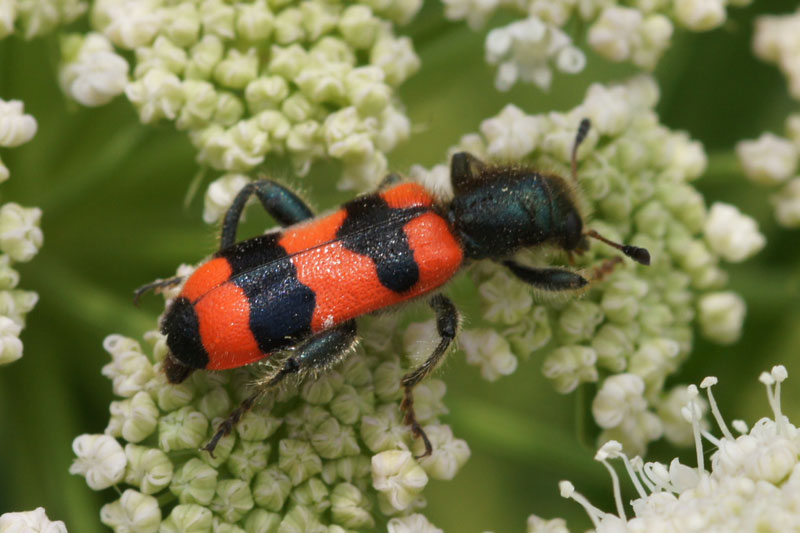
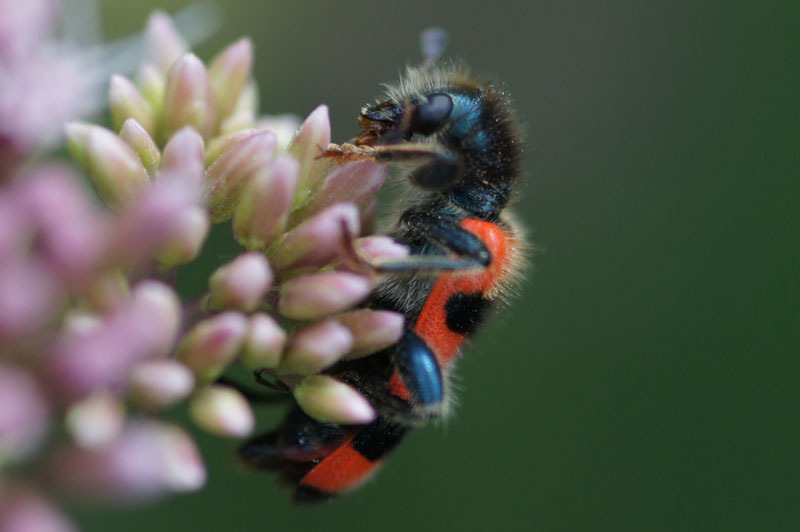
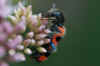 Bee
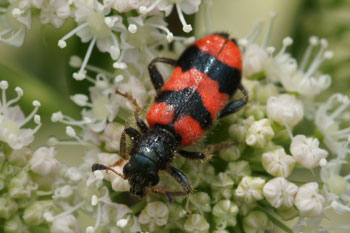
beetle,Trichodes apiarius, male. Family checkered beetles
Cleridae. Bee
beetle,Trichodes apiarius, male. Family checkered beetles
Cleridae.
Trichodes
alvearius
is
very similar,
but
this species has red around the last black spot.
The
beetles
feed
on pollen
but
also on small
insects.
The
larvae live in the nests of honey
bees and
solitary
bees
and
feed
on the
pollen
and the larvae of the bees.
Central
Southern
Europe.
Rare
in
the Netherlands.
Length
9
-
13 mm.
May
to August. |
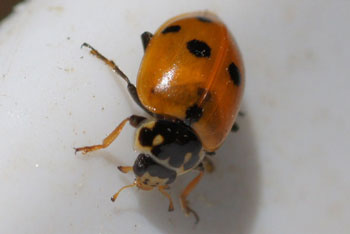 .. ..
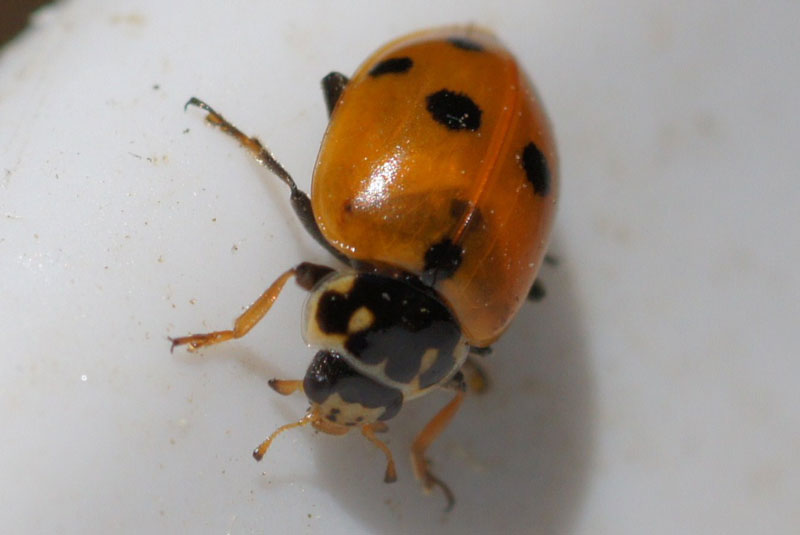
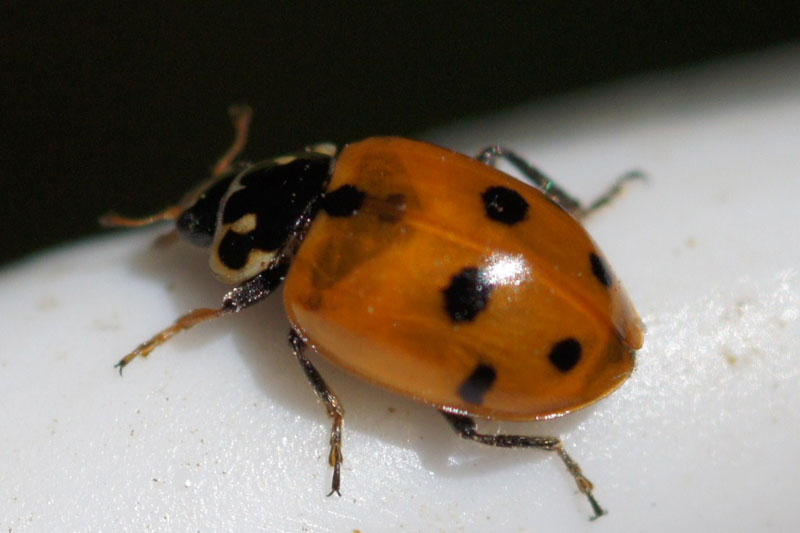
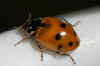 Variegated Lady beetle (Hippodamia variegata). Subfamilie typical
ladybirds (Coccinellinae). Family ladybirds / ladybugs (Coccinellidae).
Variegated Lady beetle (Hippodamia variegata). Subfamilie typical
ladybirds (Coccinellinae). Family ladybirds / ladybugs (Coccinellidae).
The edge around the neck shield is white. Usually there is white next to
the black dot in the middle of the elytra.
It is also found in the Netherlands, but I haven't seen it. Native in
Europe. Introduced into North America. Length 3-6 mm. |
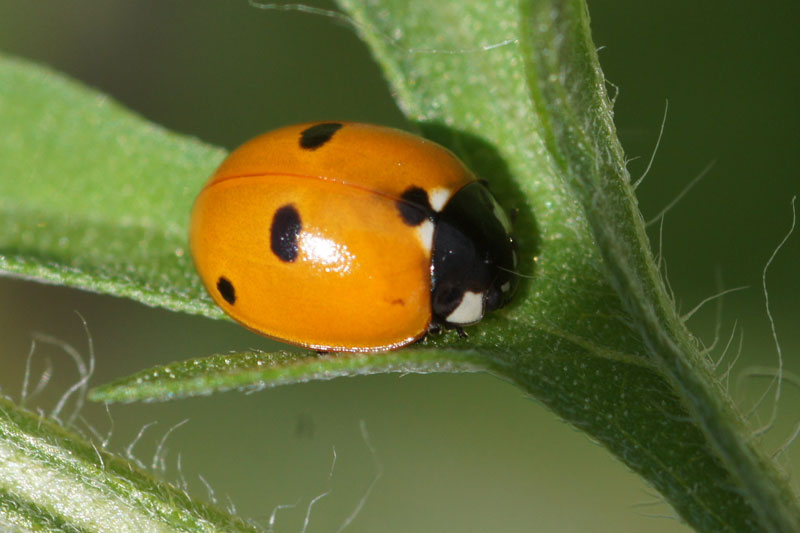
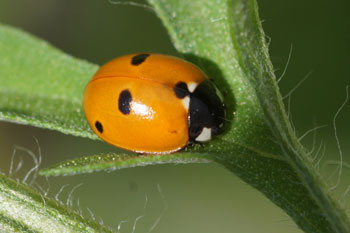 5-spot ladybird (Coccinella quinquepunctata) Subfamilie typical
ladybirds (Coccinellinae). Family ladybirds / ladybugs (Coccinellidae).
5-spot ladybird (Coccinella quinquepunctata) Subfamilie typical
ladybirds (Coccinellinae). Family ladybirds / ladybugs (Coccinellidae).
They feed on aphids and larvae of leaf beetles. This ladybird also lives
in the Netherlands. But unfortunately not in our garden. The spots at the
rear and of the elytra can be small. Then they are more difficult to
recognize. Length 3.5 - 5 mm. |
 .. ..
 . .
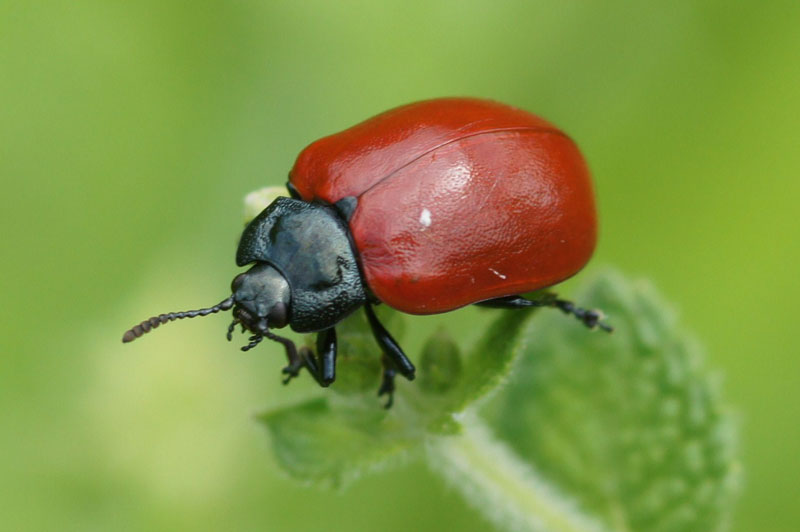
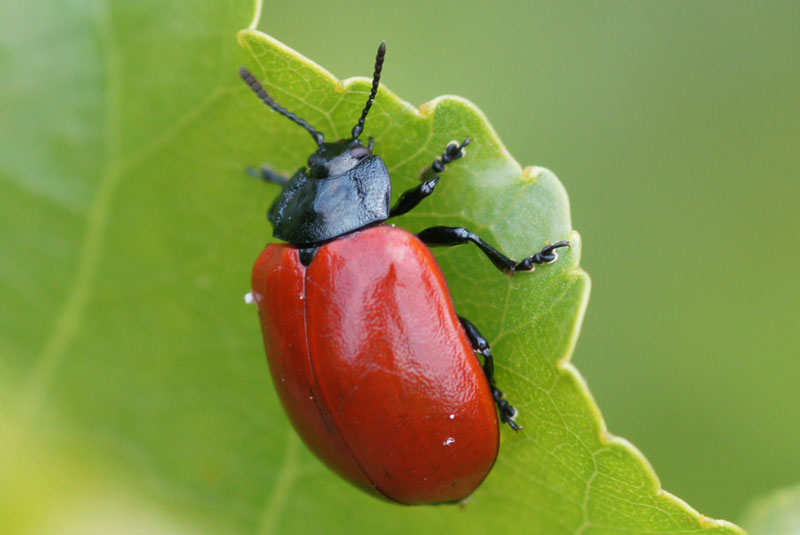
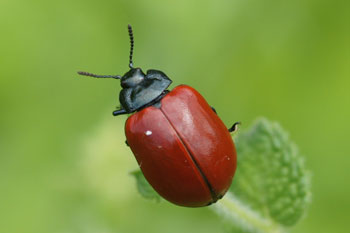
 Poplar leaf beetle (Chrysomela
populi) old name Melosoma populi. Family leaf beetles (Chrysomelidae).A
black rounded beetle with red elytra. Like ladybirds, they release a
bitter, smelly liquid, when they feel threatened. Poplar leaf beetle (Chrysomela
populi) old name Melosoma populi. Family leaf beetles (Chrysomelidae).A
black rounded beetle with red elytra. Like ladybirds, they release a
bitter, smelly liquid, when they feel threatened.
It lives on poplar and willow. In Europe and the Netherlands is a general
bug. I miss both trees around the garden. Therefore, I had no photo of
this leaf beetle.
The adult beetle overwinters. Length to 13 mm.
|
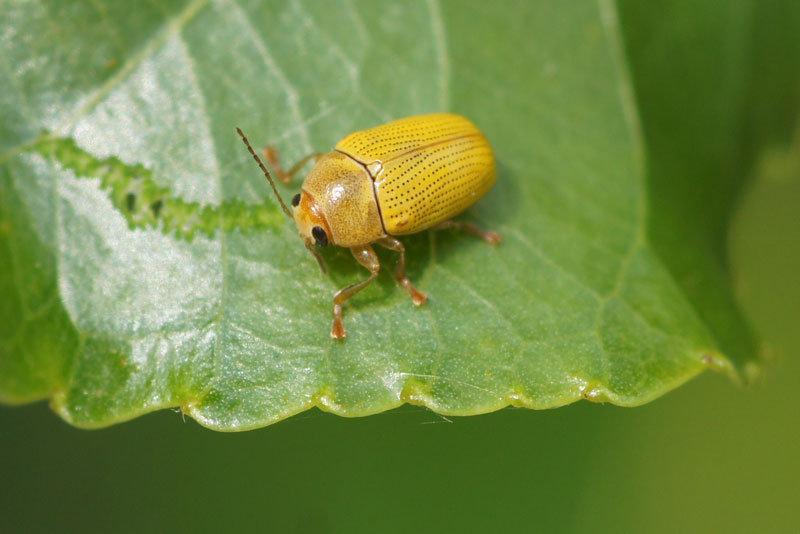
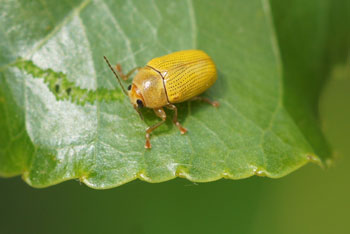 Cryptocephalus.
Maybe Cryptocephalus sulphureus, Cryptocephalus fulvus, Cryptocephalus
luridicollis Cryptocephalus.
Maybe Cryptocephalus sulphureus, Cryptocephalus fulvus, Cryptocephalus
luridicollis |
Other insects
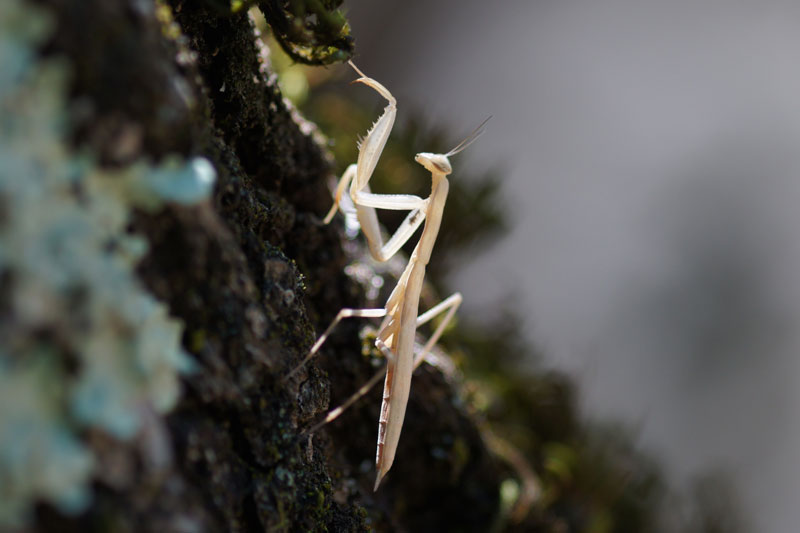
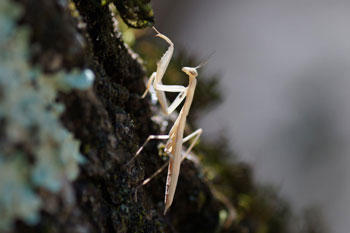 European mantis, Praying mantis (Mantis
religiosa).
Family praying mantises (Mantidea). European mantis, Praying mantis (Mantis
religiosa).
Family praying mantises (Mantidea).
European mantis can be recognized by the dark spot near its armpit, the line over the eye. The neck shield about half as long as wings / abdomen. Usually they are greener than
the European mantis in the picture.
Native to Southern Europe. But now also in the U.S. and Canada.
They are more akin to cockroaches than to grasshoppers. I haven't photographed
grasshoppers. Another time perhaps.
This praying mantis was in the sun on a place with much shadow. |
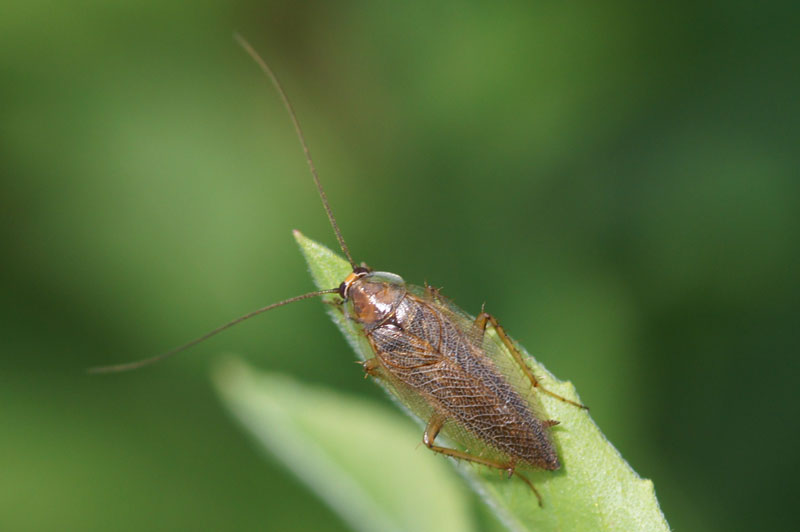
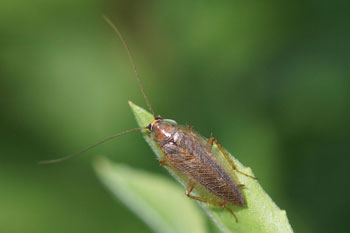 Cockroache. Family Blattellidae Orde
(Blattodea). Cockroache. Family Blattellidae Orde
(Blattodea).
Perhaps Ectobius pallidus, but Ectobius vittiventris is also possible. If you know the
name, you can mail me. I do not know much about cockroaches.
Usually, you read, that they are household pest insects and that they are difficult to
control. But it is a beautiful insect. |
I want to thank everyone, who has helped me (waarneming.nl)
to identify.
Nederlands /
Dutch
 
|