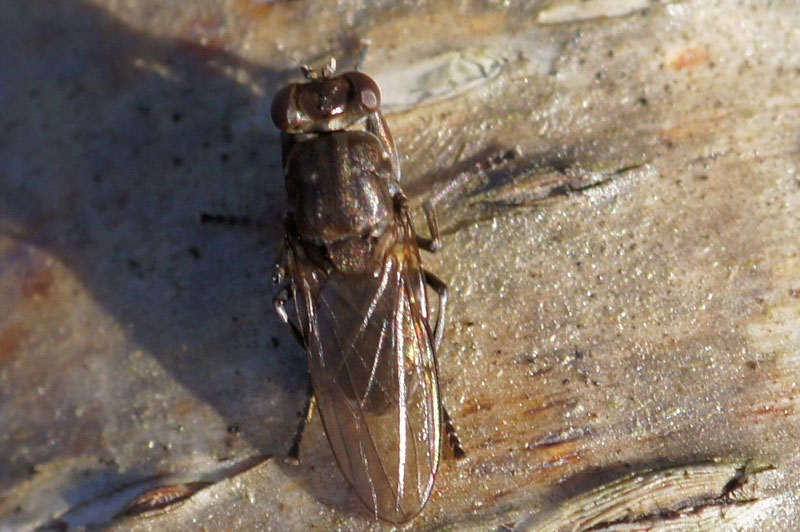
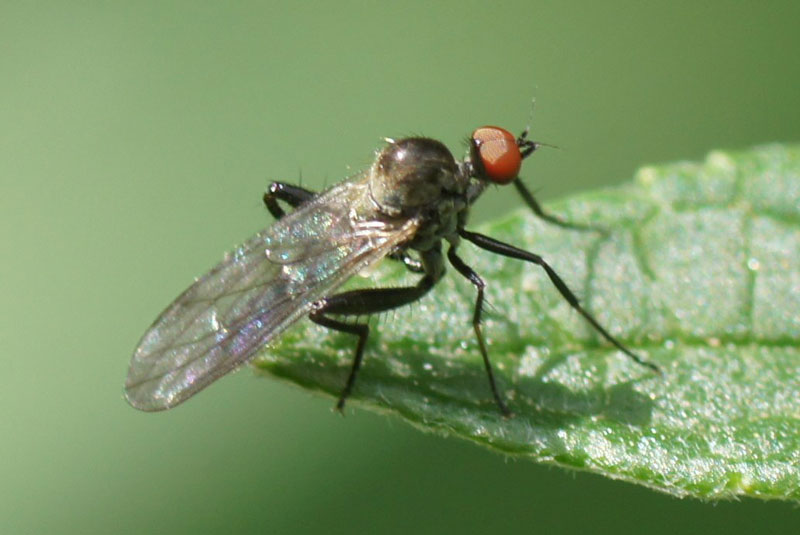
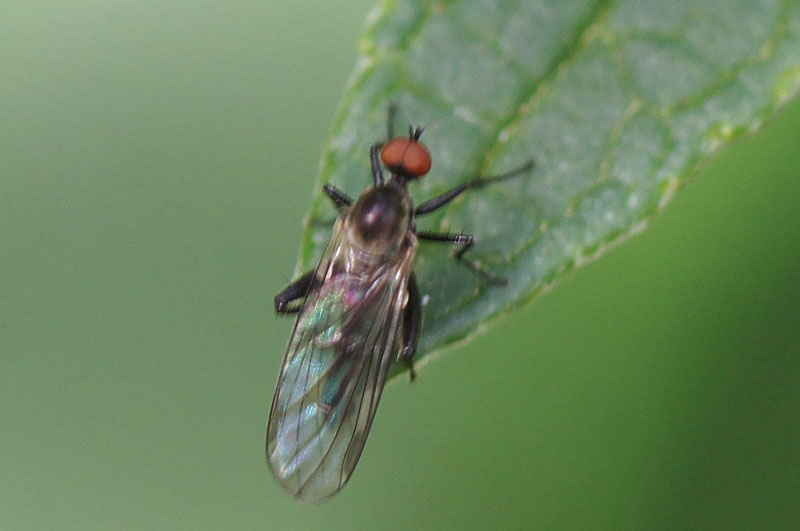
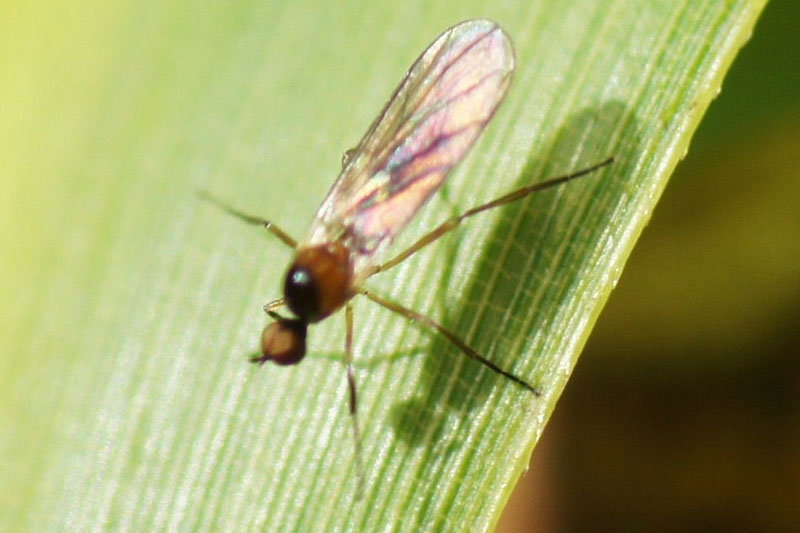
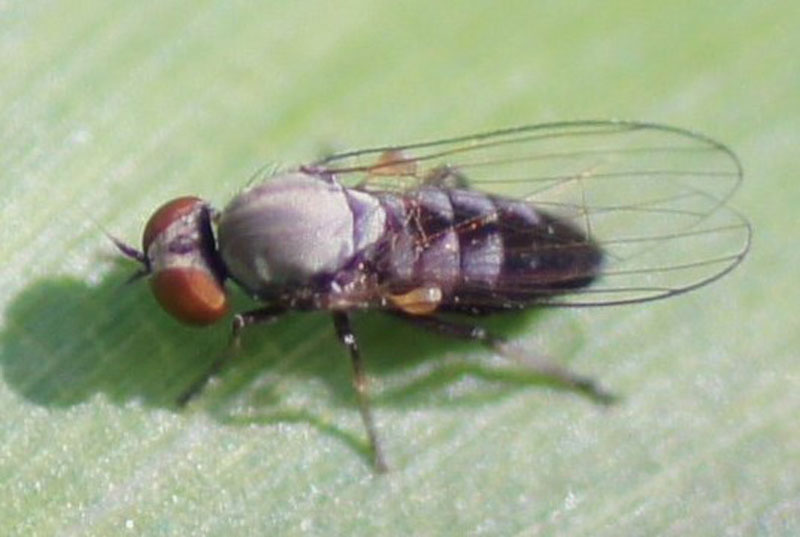
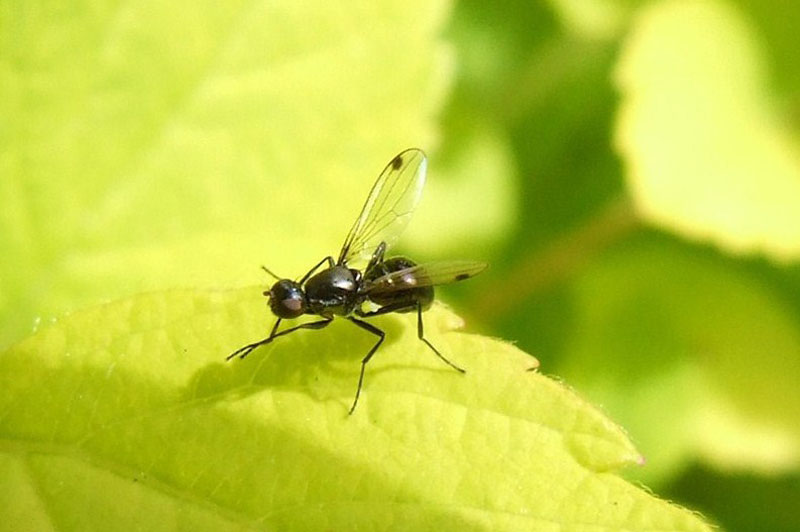
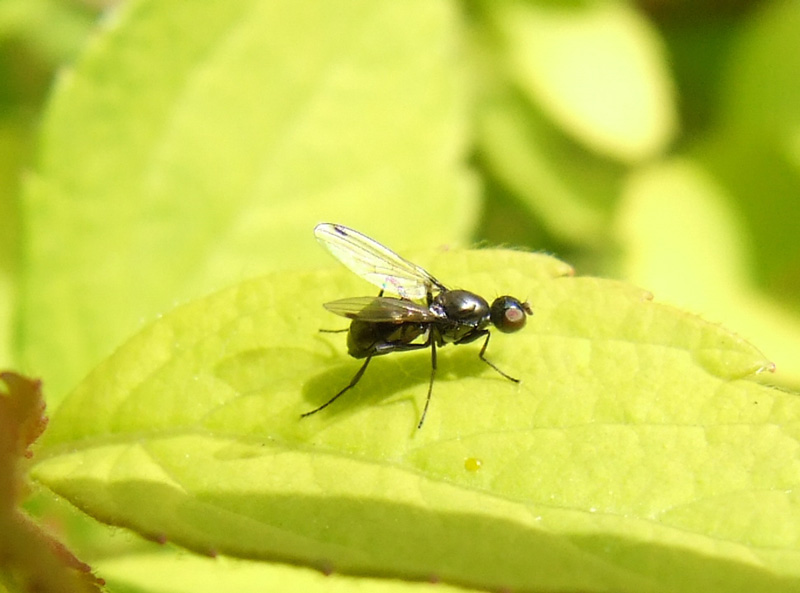
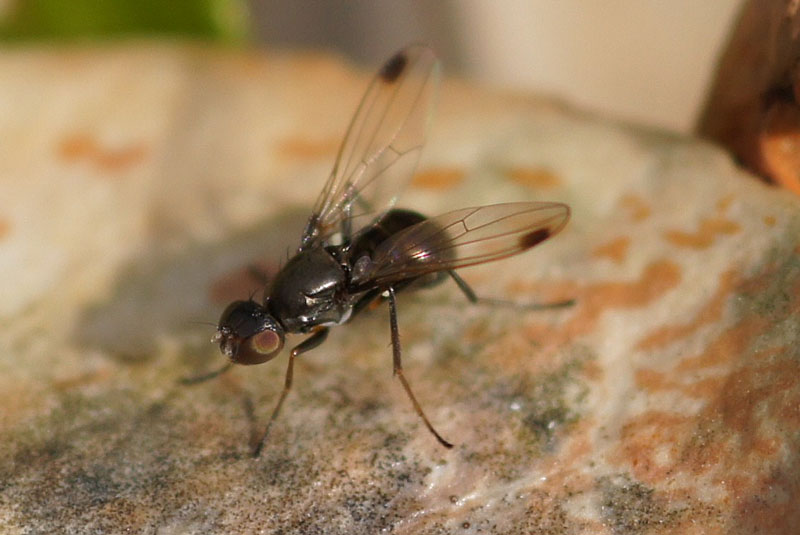
|
Subpage flies:
Tachinidae
Blow-flies
(Calliphoridae) House
flies (Muscidae) Soldierflies
(Stratiomyidae)
Root-Maggot
Flies (Anthomyiidae)
Small
flies Gnats
 Nederlands /
Dutch Nederlands /
Dutch
Small
Flies
| The family flies, which for the most part consist of very small flies, I
have put on a separate page. It's an alfabetical sequence. I have used the scientific (Latin) name
of the families. |
Miner flies (Agromyzidae)
Miner flies. The larvae mainly mine leaves and stems of herbaceous plants. But they can also occur in roots and seeds.
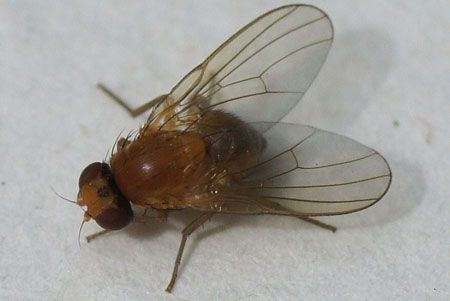 ... ...
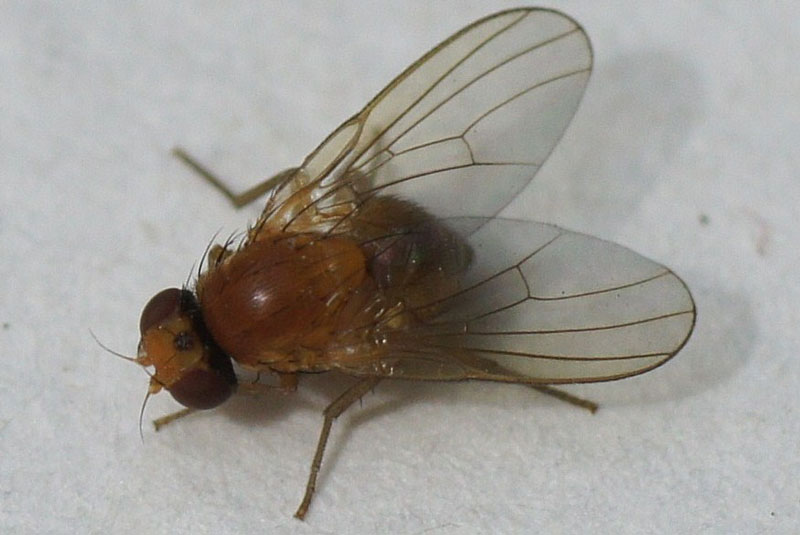
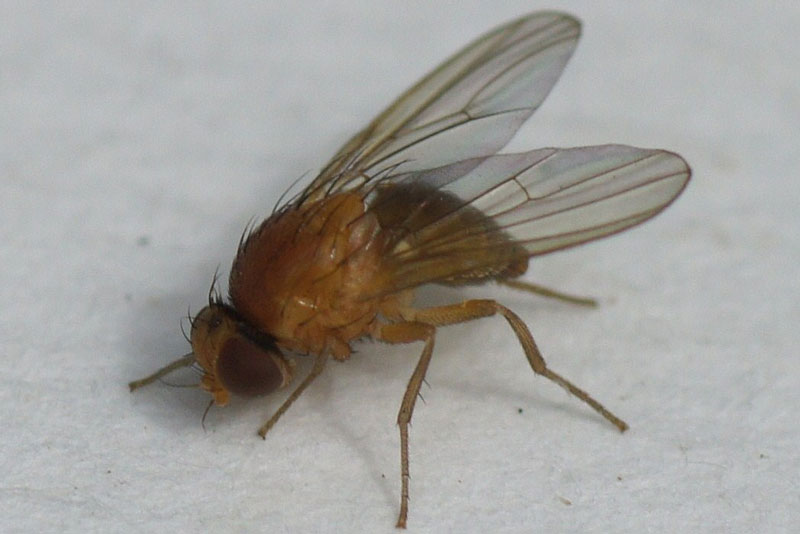
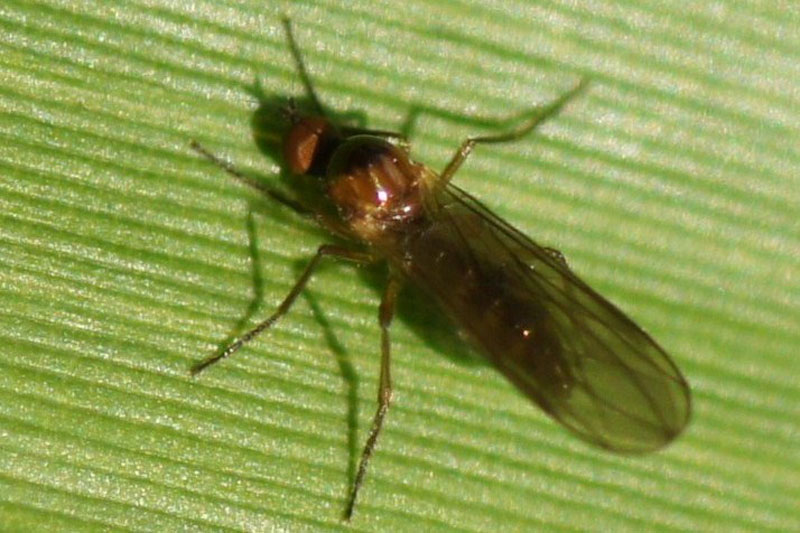
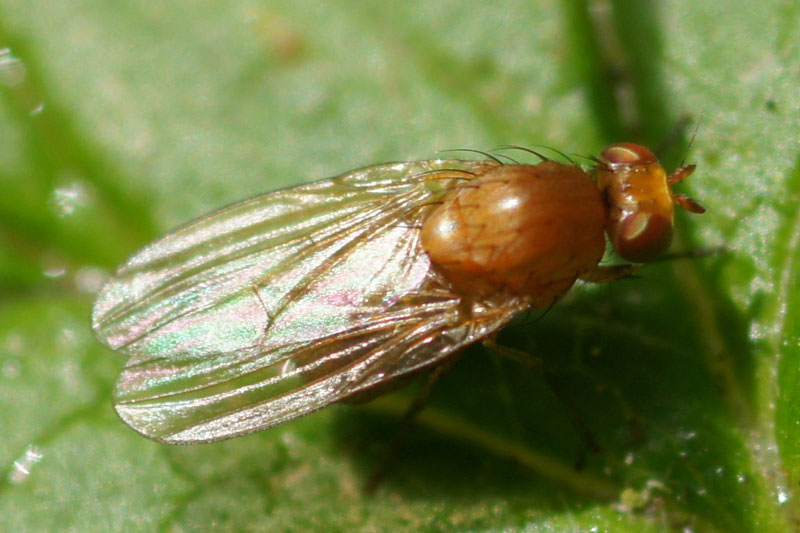
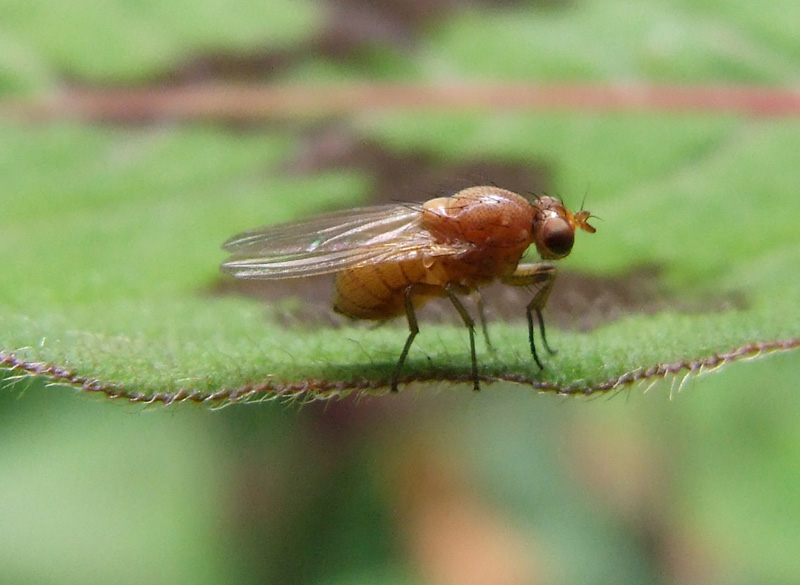
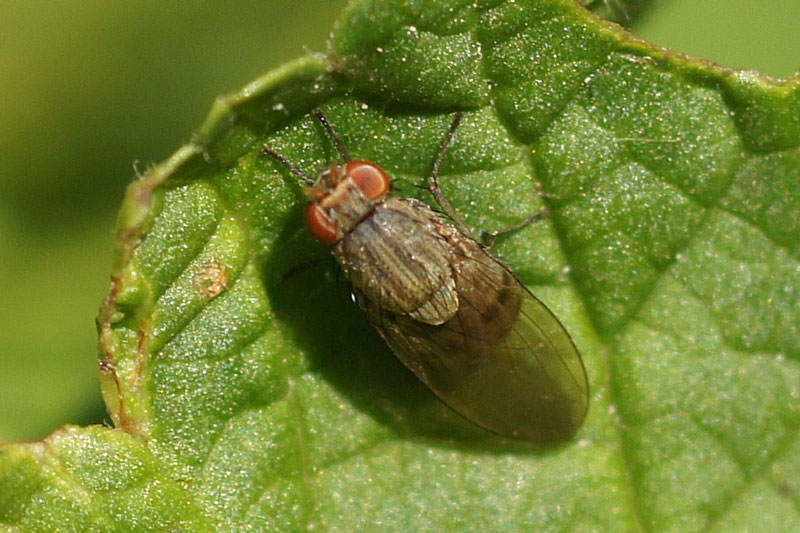
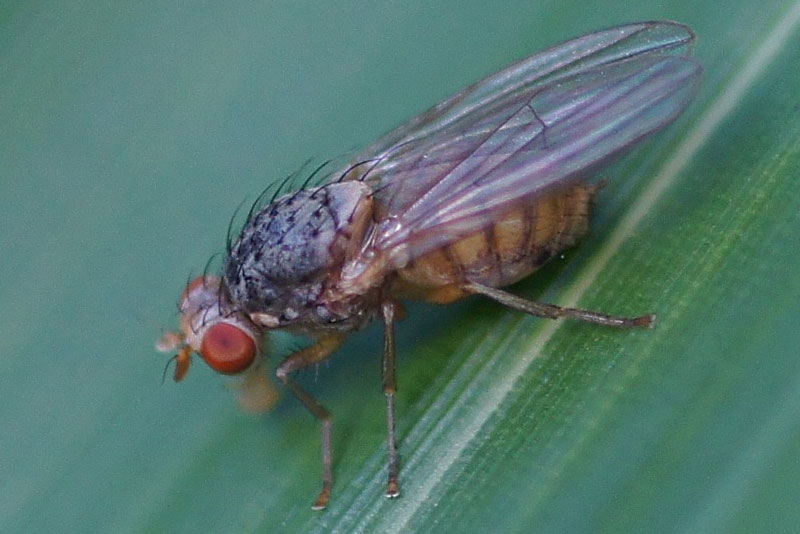
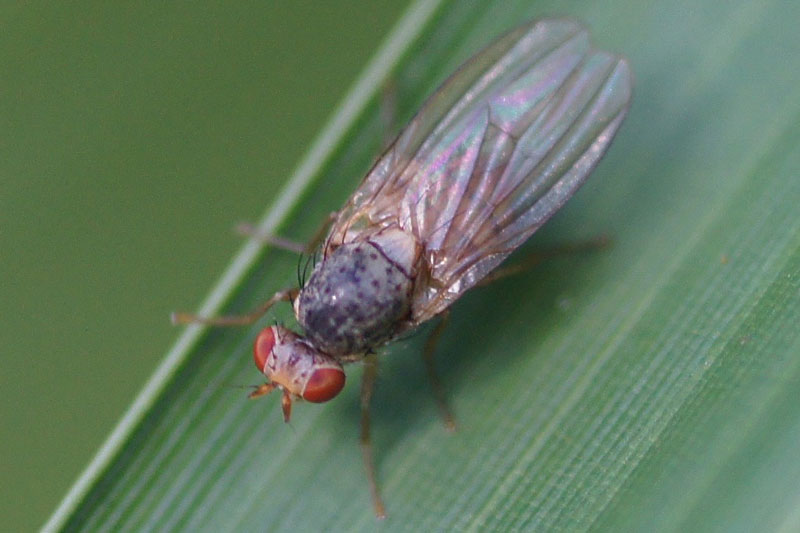
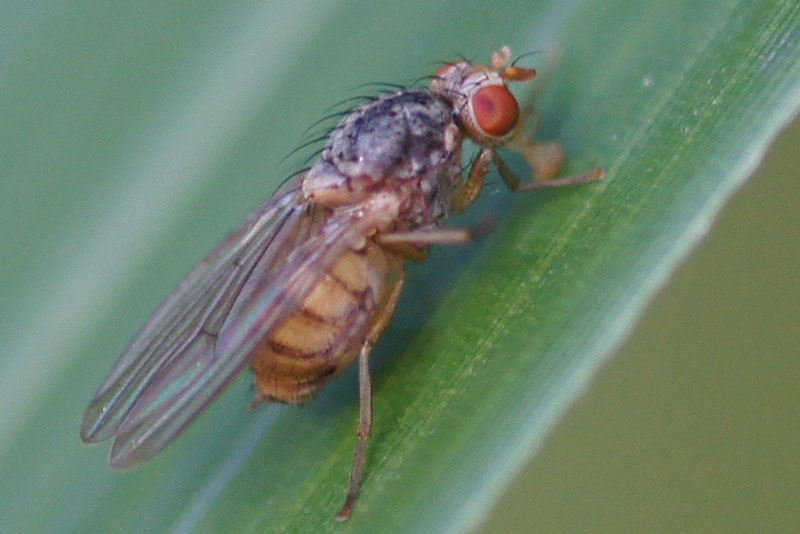
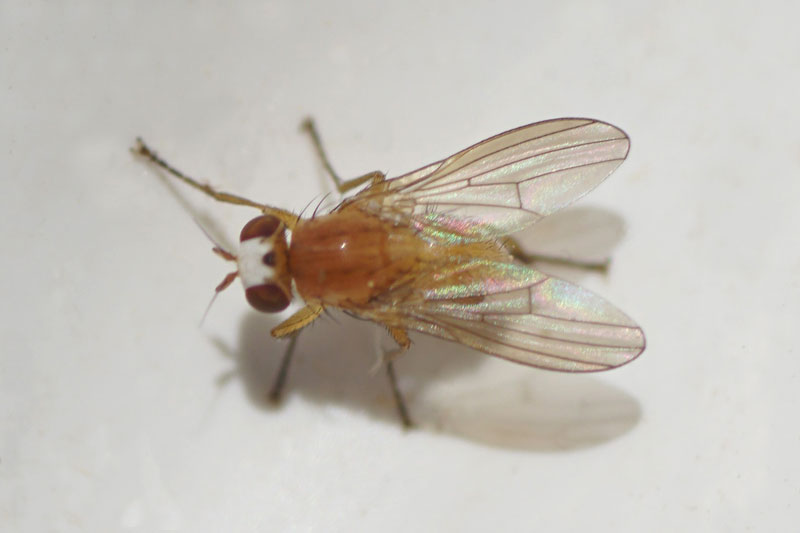
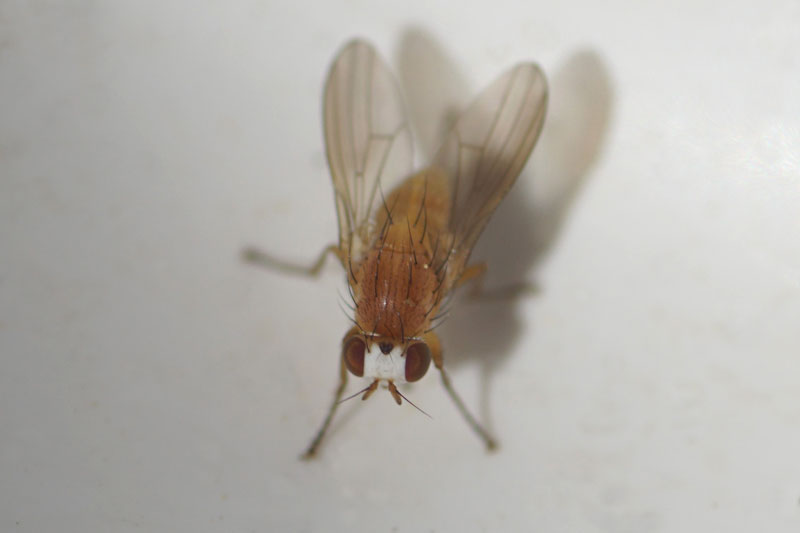
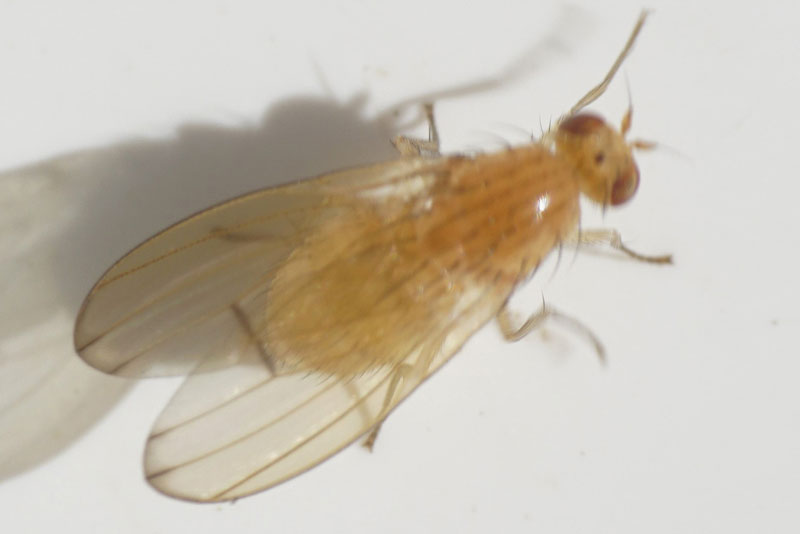
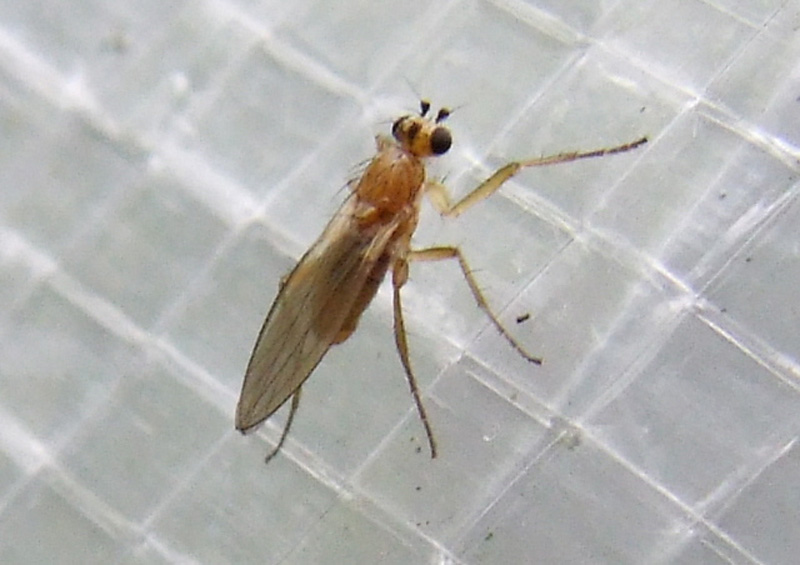
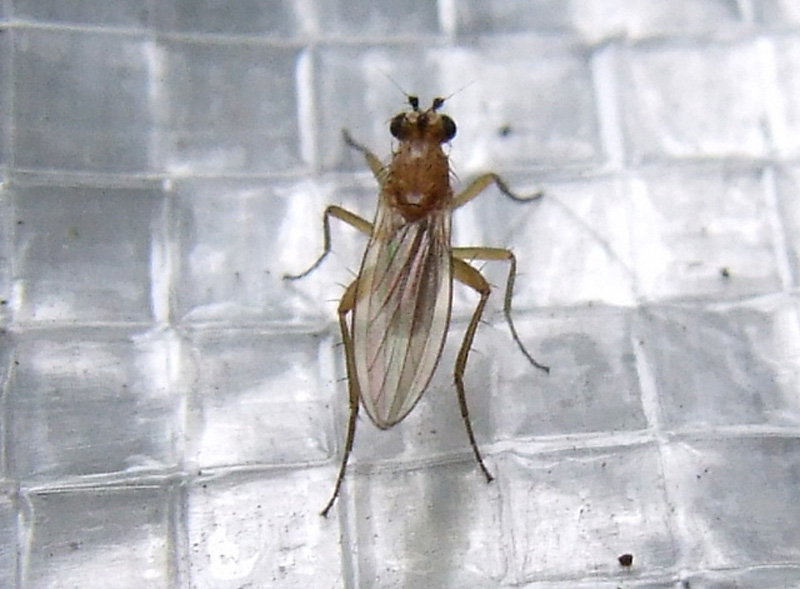
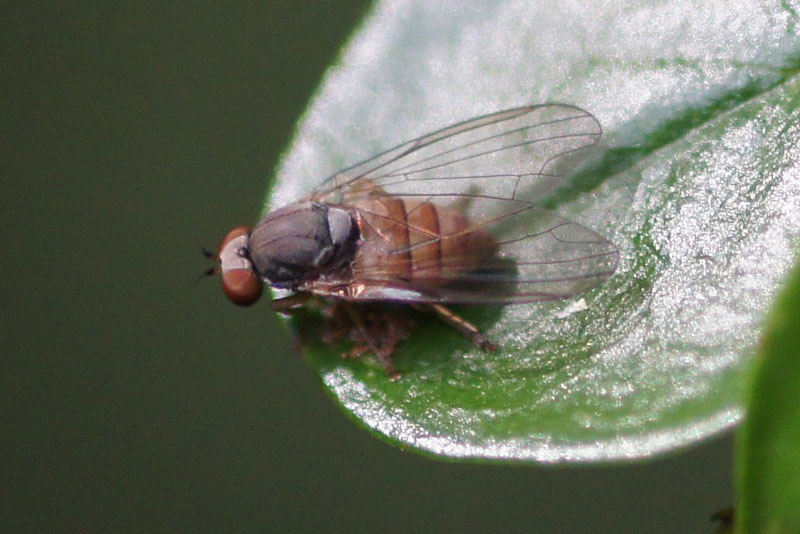
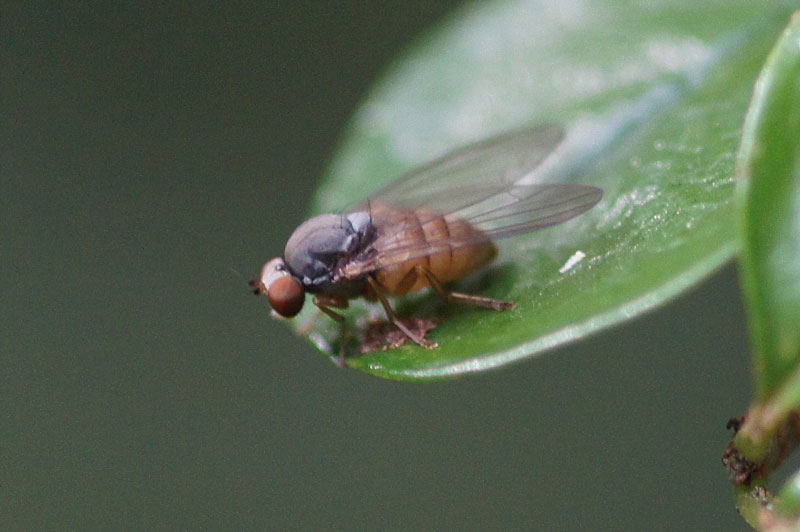
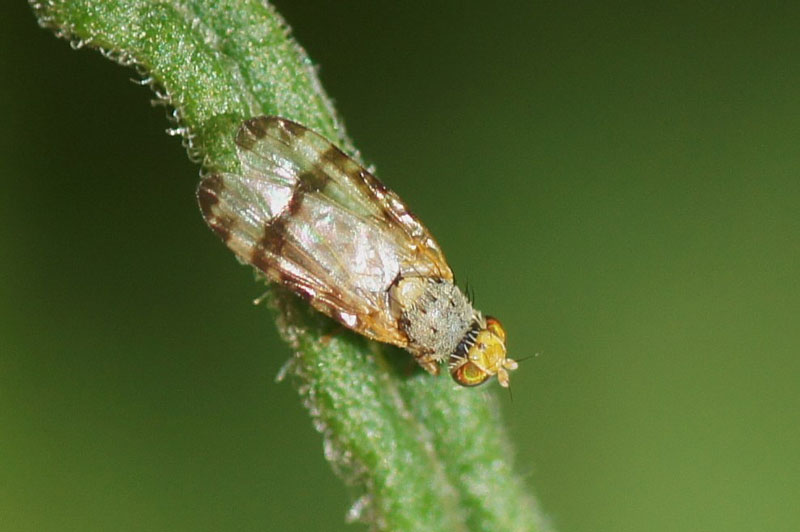
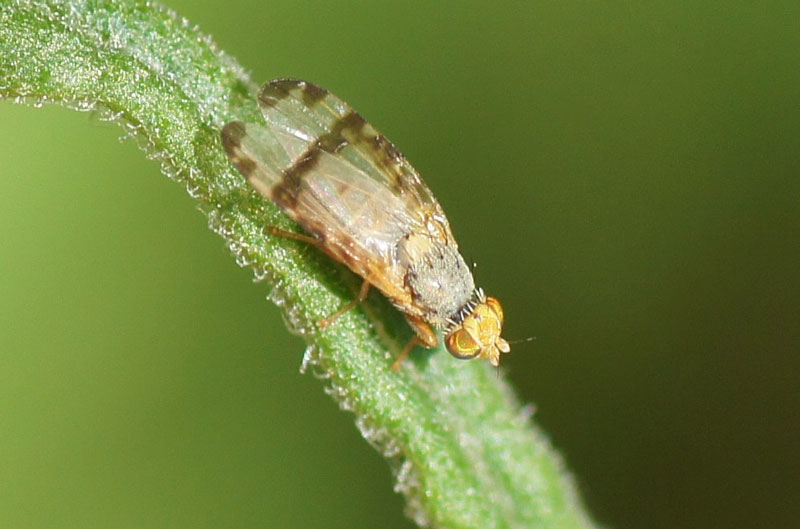
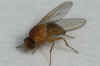 Agromyza ferruginosa. Family miner flies (Agromyzidae).
The larva of Agromyza ferruginosa mines on plantsof the borage family (Boraginaceae) like
Anchusa, lungworts and comfrey. A number of eggs are deposited at the underside of the leaf.
First the larvae eat a communual corridor. Than they make a large brown blotch.
Determined by Milos Cerny from Czech Republic. Thanks Milos.
I haven't measured the fly. I think about five mm. It is striking orange.
Europe. Photos 3-7-2012. |
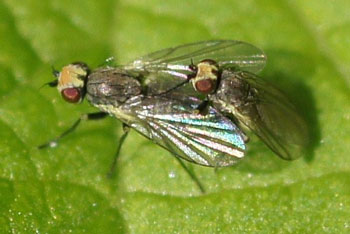 ... ...
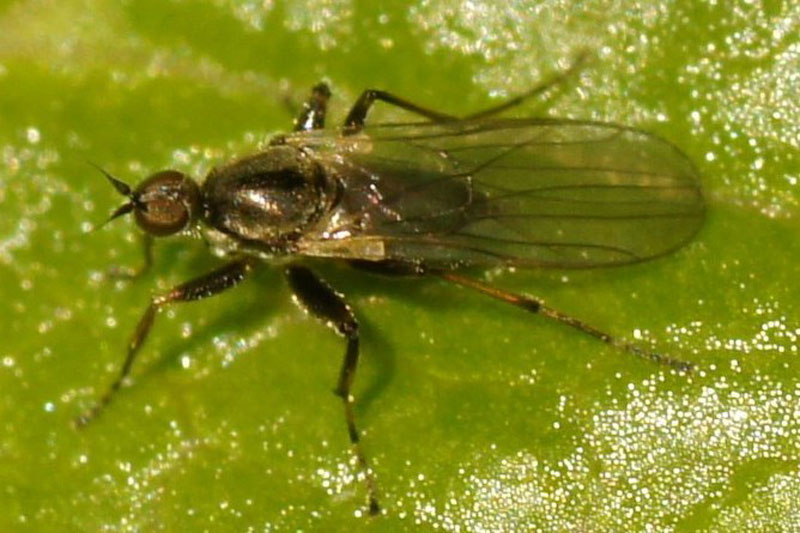
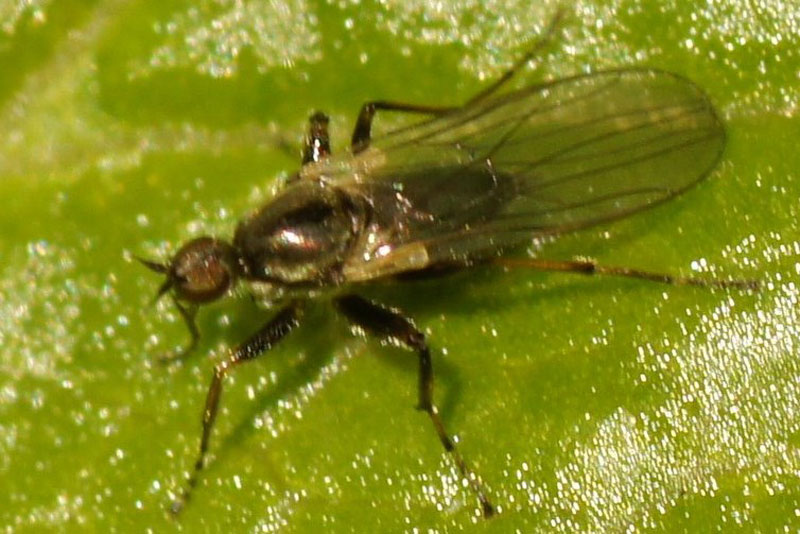
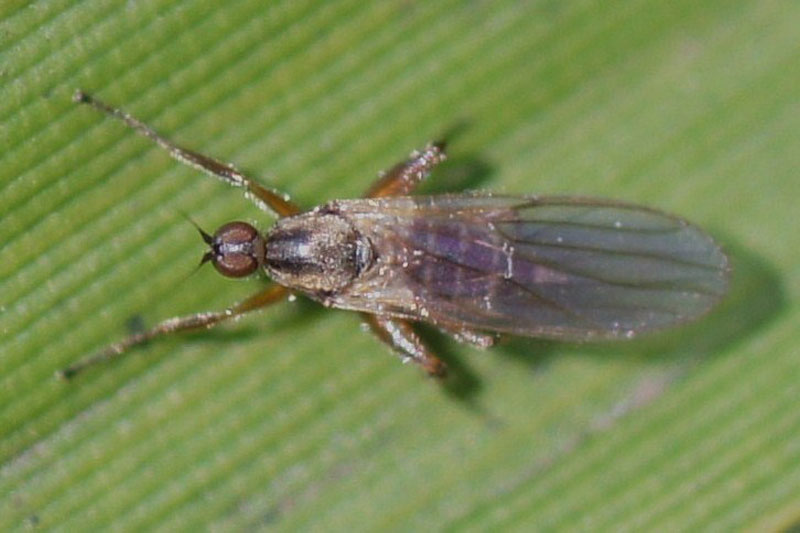
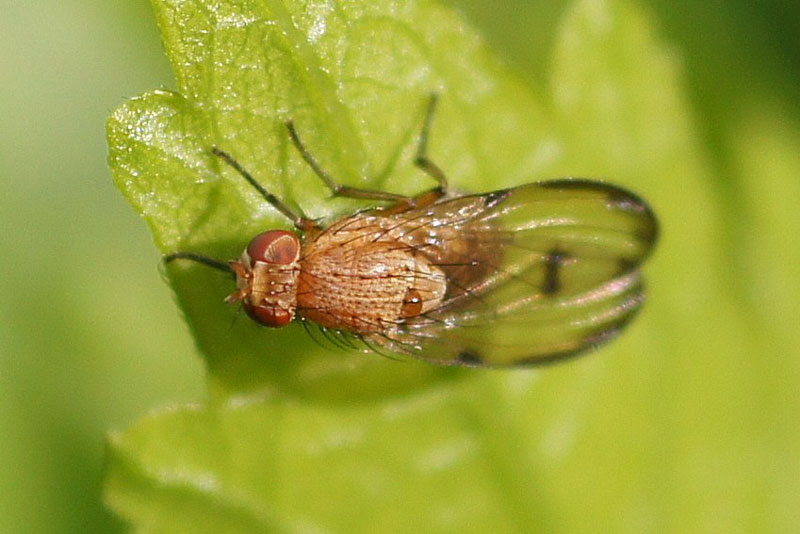
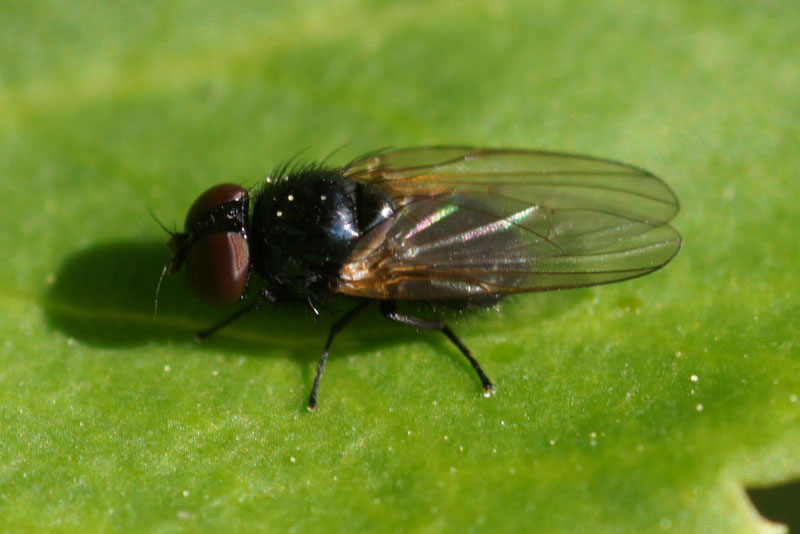
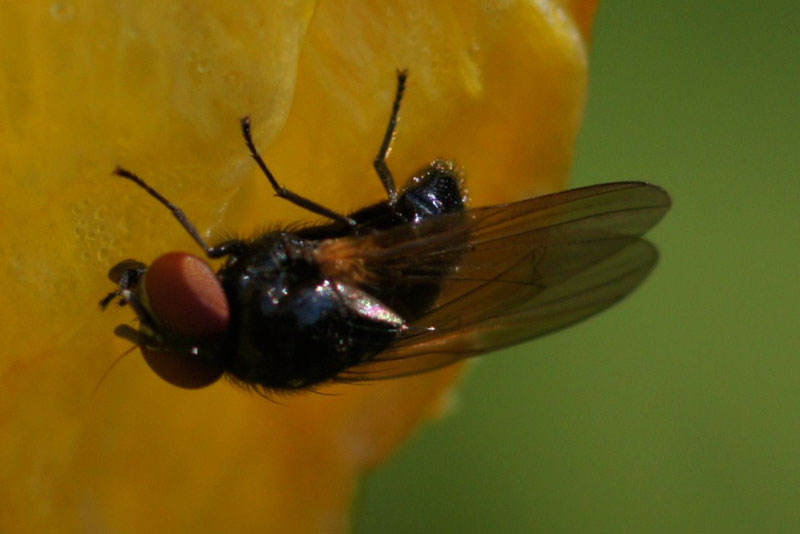
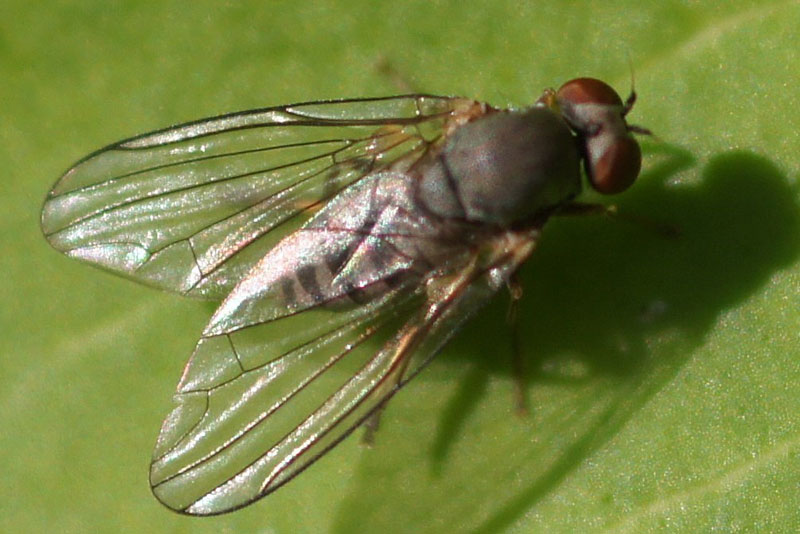
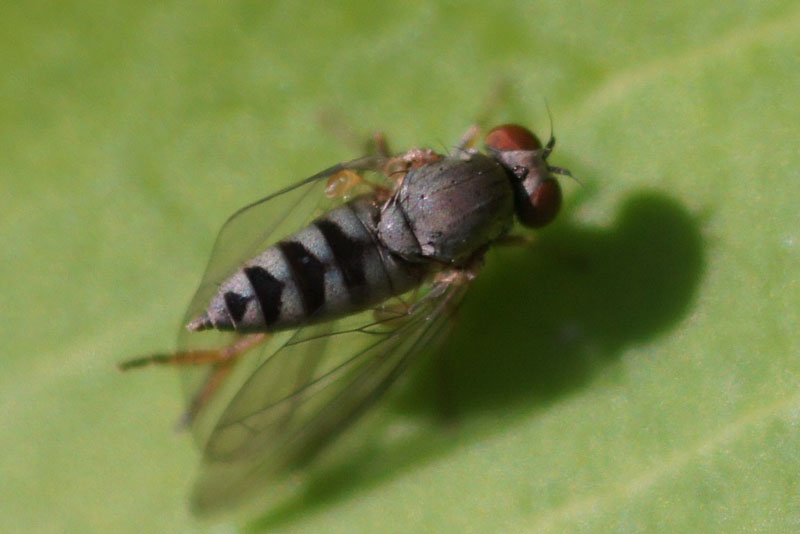
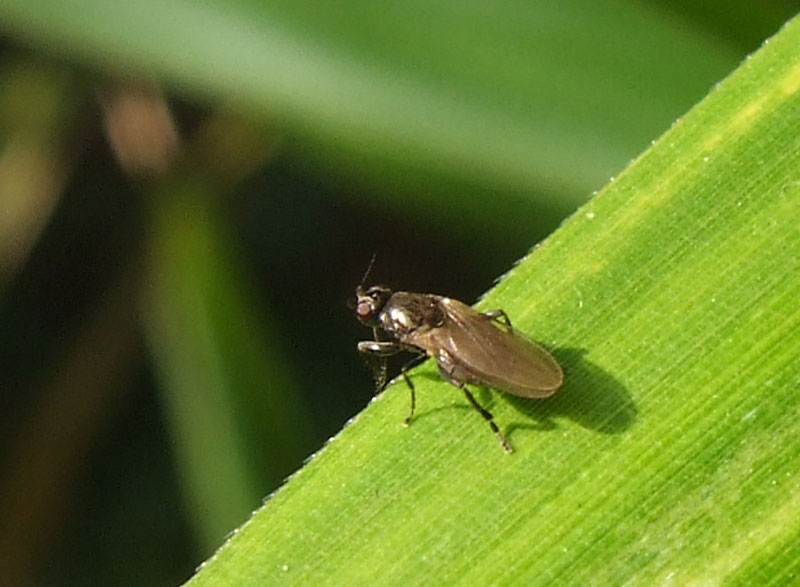
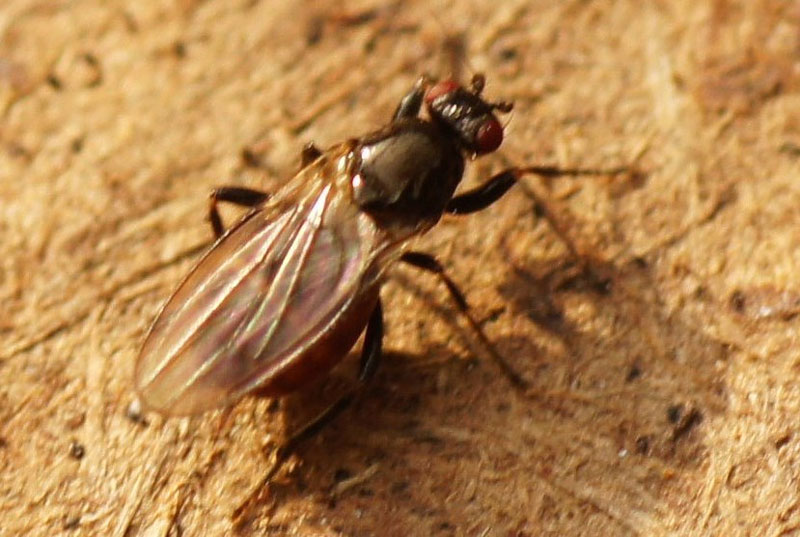
 Napomyza sp. Family miner flies (Agromyzidae).
Very small miner flies. About 2 - 3 mm. I had asked about these flies on Diptera and received
answer from Miloš from the Czech Republic:
I think the same as the fly on the site
http://aramel.fre...15-7.shtml
Phytobia lateralis. But I couldn't find
information about this species.
Answer: The fly on the site and this specimen isn't Cerodontha (Poemyza)
lateralis, rather is it Napomyza sp.
Miloš
Maybe Napomyza gymnostoma from Central Europe. This fly can be
harmful. Photos 3-7-2011. |
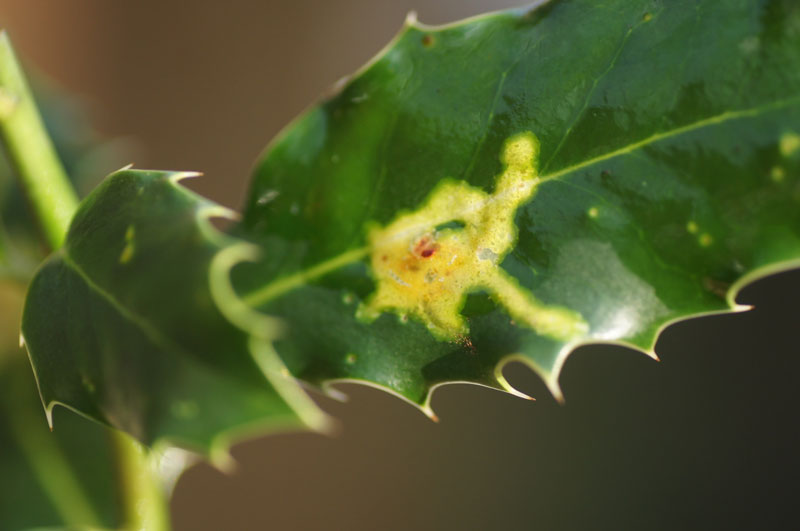
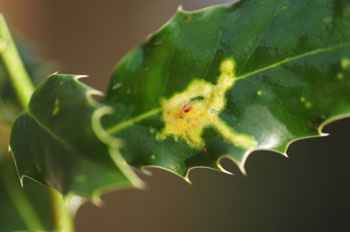 Holly leaf miner. (Phytomyza ilicis). Family miner flies
(Agromyzidae).
Holly leaf miner. (Phytomyza ilicis). Family miner flies
(Agromyzidae).
No picture of the 4 mm large dark holly leaf miner. In May, June the fly lays its eggs with an ovipositor
in the underside of the petiole or midrib of the young, yet soft leaf of
the holly (Ilex aquifolium). The young larvae tunnels within the midrib to
the leaf tip. In a leaf are one to a maximum of three mines. In December, January,
you can find the yellow sometimes purplish, irregular blotch on the holly leaf like
in the picture. Pupation is in the leaf.
Chickadees pick many larvae from the holly leaf. Photo 14-12-2014. |
Grassflies
(Chloropidae)
Although there are larger flies, most
are very small. 1 to 4 mm. Often yellowish, greenish. The larvae often feed on
living or dead organic matter. Some live on flowers and stems of grasses and they can be harmful.
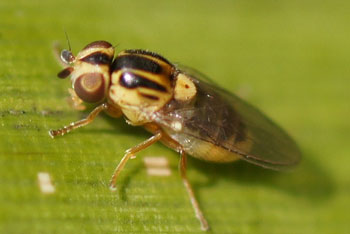 ... ...
 Grassfly spec.
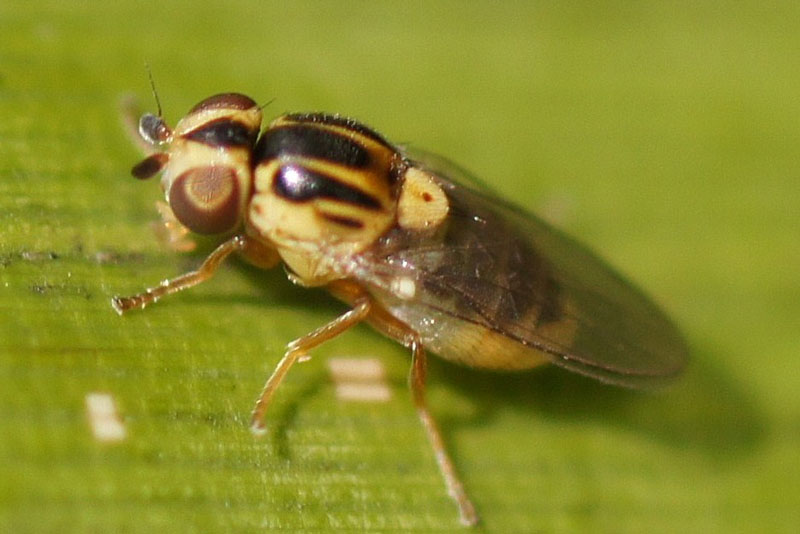
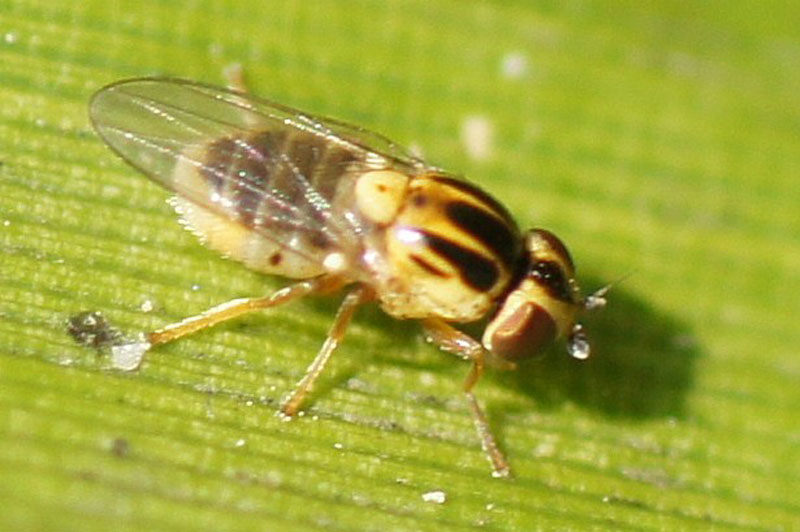
Thaumatomyia spec. Family Grassflies (Chloropidae).
Grassfly spec.
Thaumatomyia spec. Family Grassflies (Chloropidae).
The small flies in this family are very similar. (Therefore spec.) These
flies are yellow with black stripes, but there are also flies with other
colours. According to Jan Willem van Zuylen (translated): Thaumatomyia and Chlorops can be quite similar. One of the features to distinguish the two genera
is the scutellum (less or more spherical), which often don't show up well on the photographs.
The larvae of the
grass fly live in grass stems. Length: 2, 3 mm. March - November.
Photos
15-03-2012.
|
 .. ..
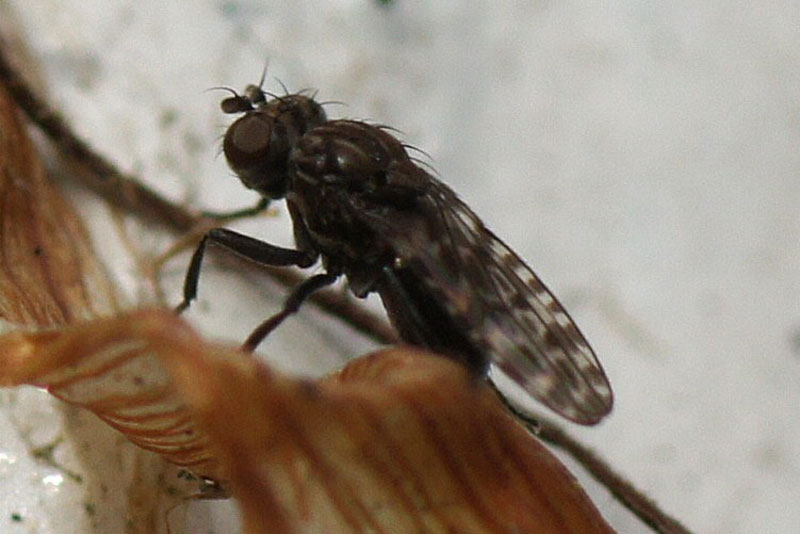
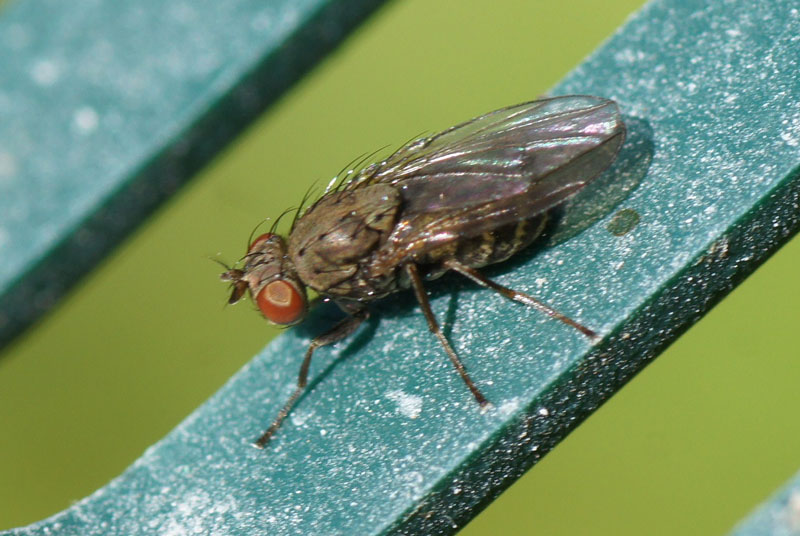
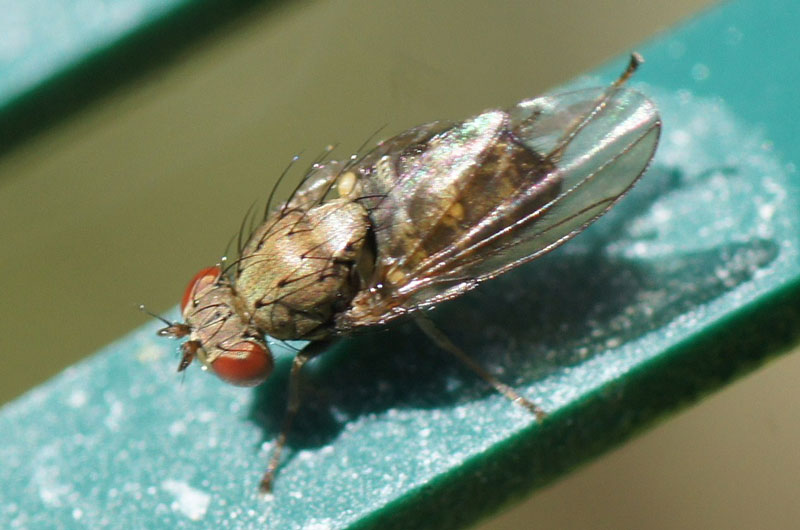
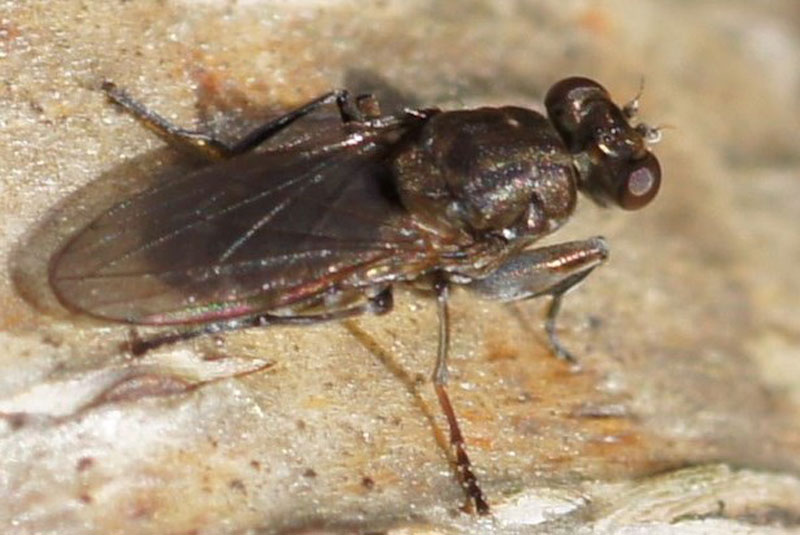
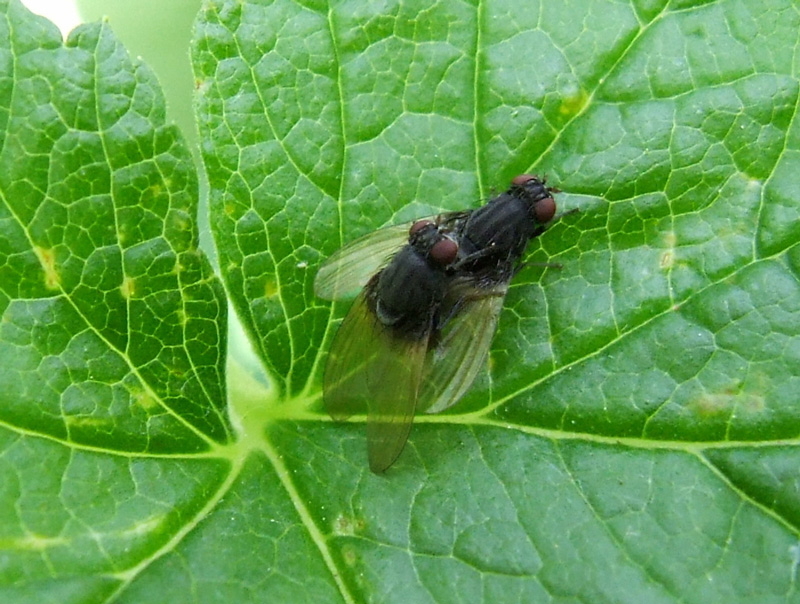
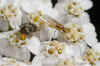 Meromyza spec. Family Grassflies (Chloropidae).
There are like always similar species. Photos 14-6-2011 and 16-6-2011 Together with a carpet beetle. |
 .. ..
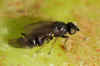 . .
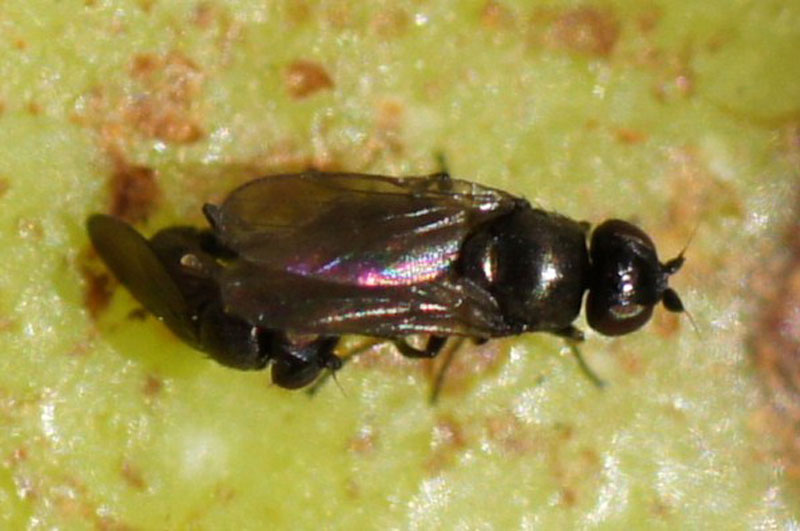
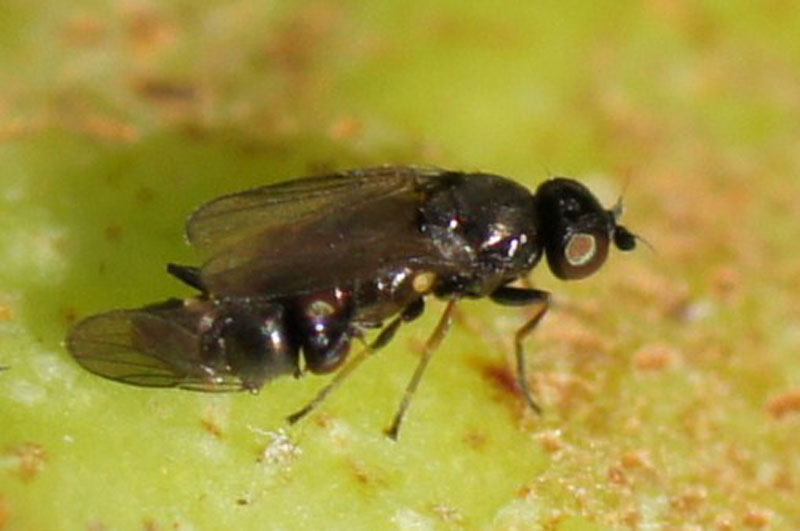
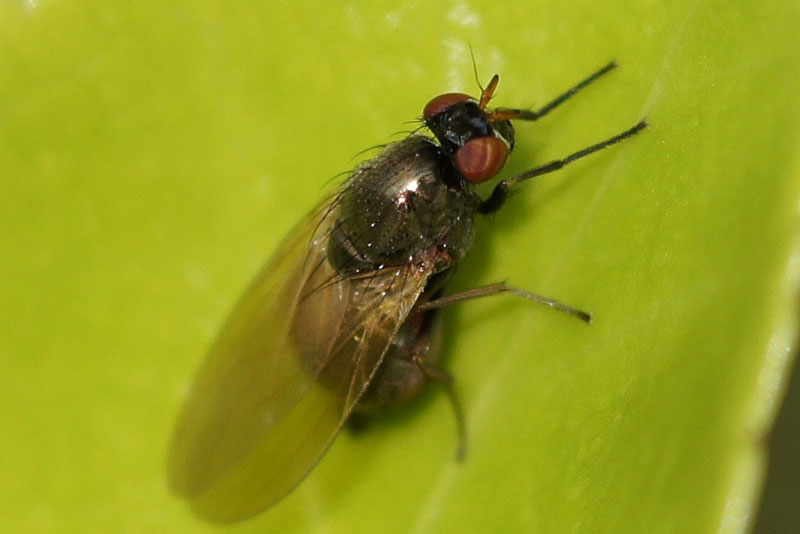
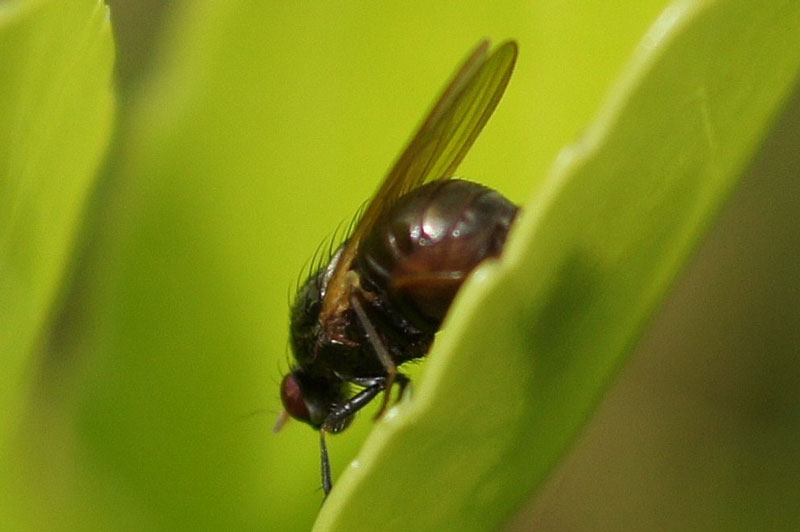
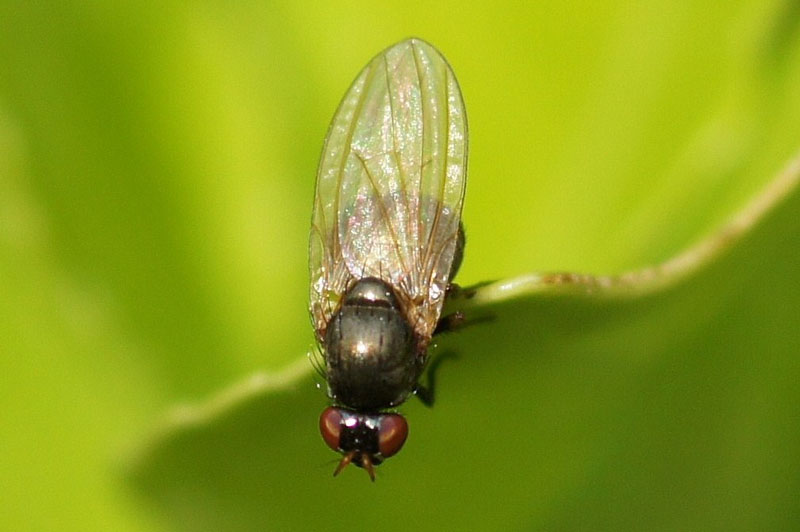
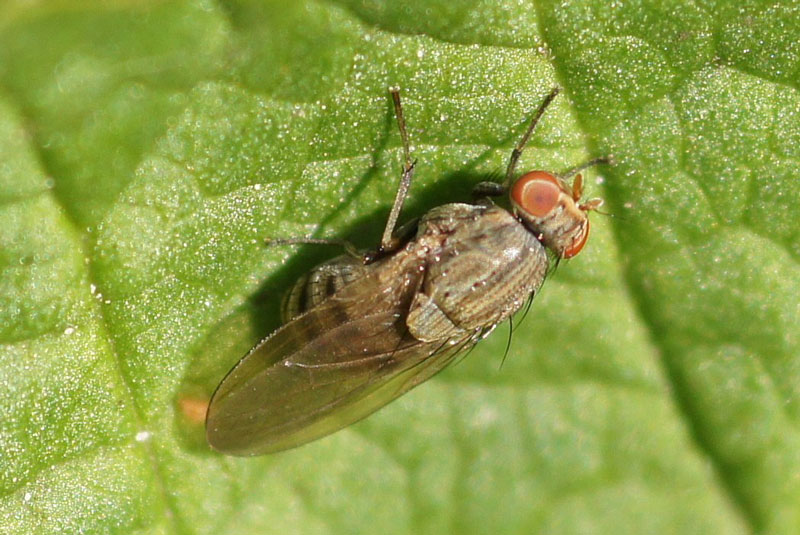
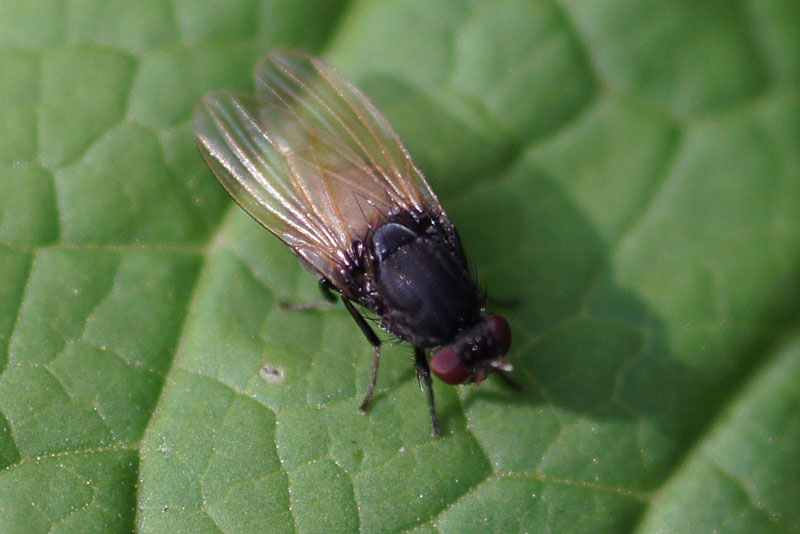
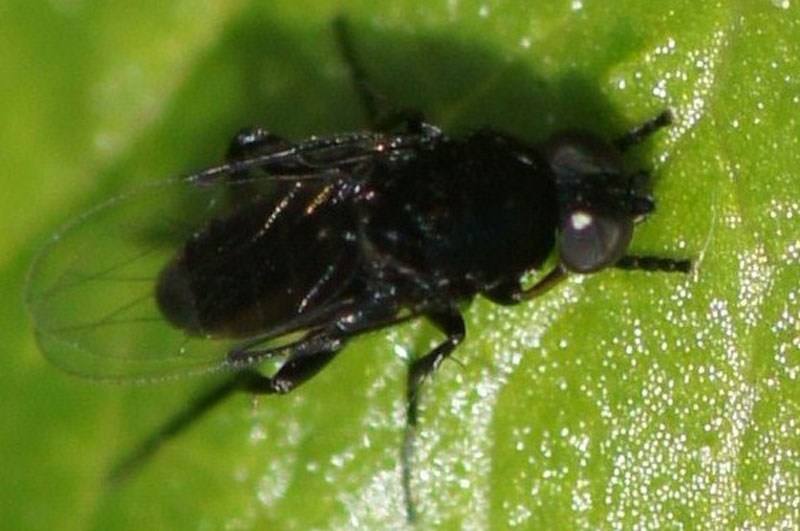
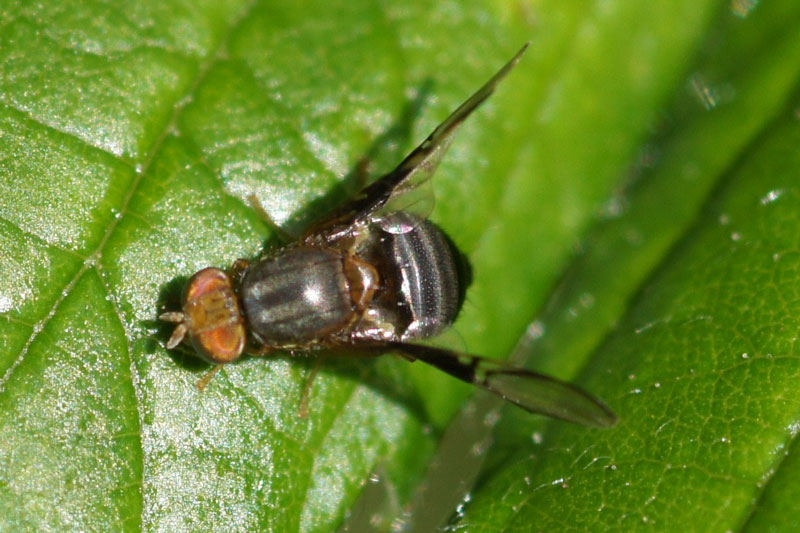
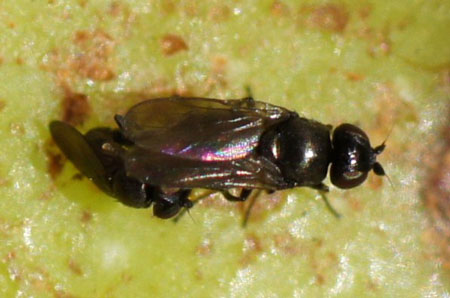
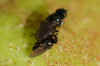 Oscinella. Family Grassflies (Chloropidae).
Frit Fly - Oscinella frit is possible. But it is very similar to Oscinella pulsilla Meigen and O. grossa Mesnil. This species is black and shiny.
About 3 mm. The larvae feed on various plants of the grass family. Photo's 13-9-2011.
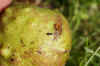 Here on a chestnut. So you can see how small they really are.
|
 .. ..
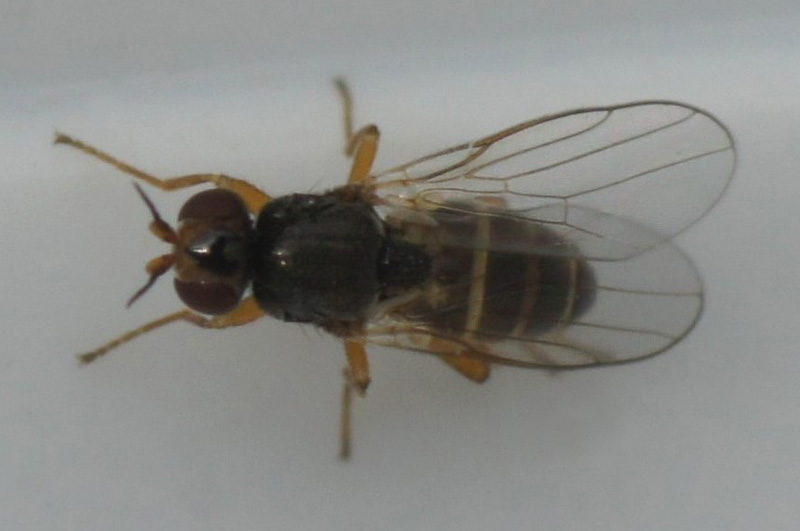
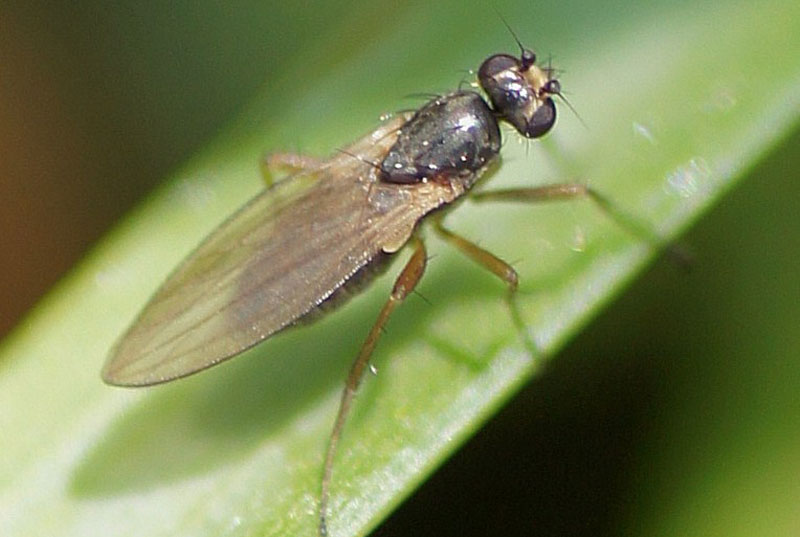
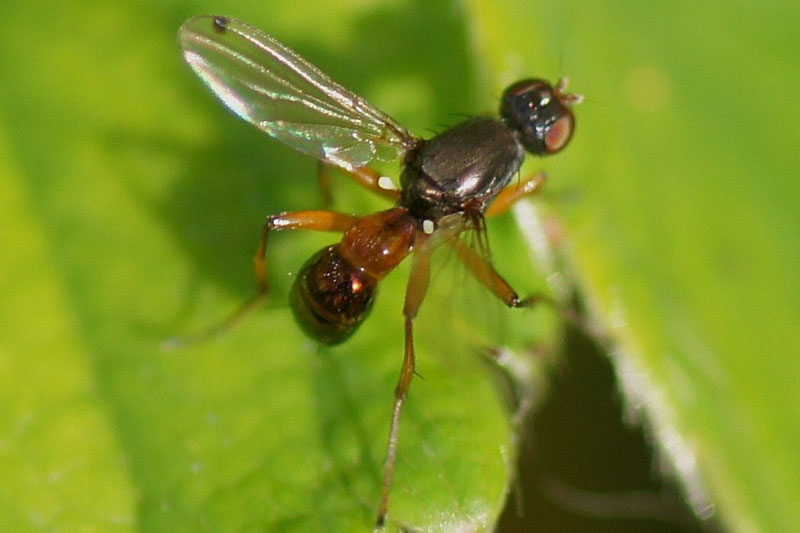
 Elachiptera cornuta. Family Grassflies (Chloropidae).
A dark fly with yellow-, orange-brown legs, antennae and a dark upper side of the abdomen. The arista (hair) on the antenna is very thick.
About 3-4 mm. Foto's 6-4-2018. |
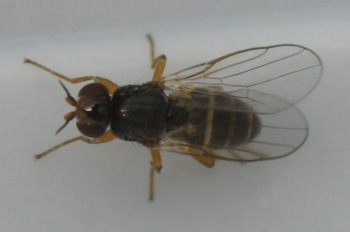 ... ...
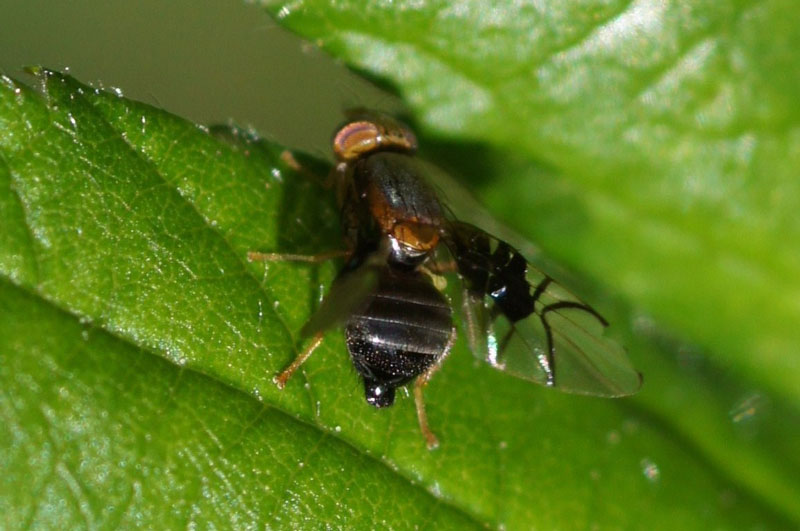
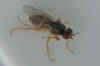 Elachiptera tuberculifera. Family Grassflies (Chloropidae).
A dark fly with yellow-, orange-brown legs, antennae, forehead and bands around the abdomen. The arista (hair) on the antenna is very thick.
About 3-4 mm. Photos 30-10-2016. |
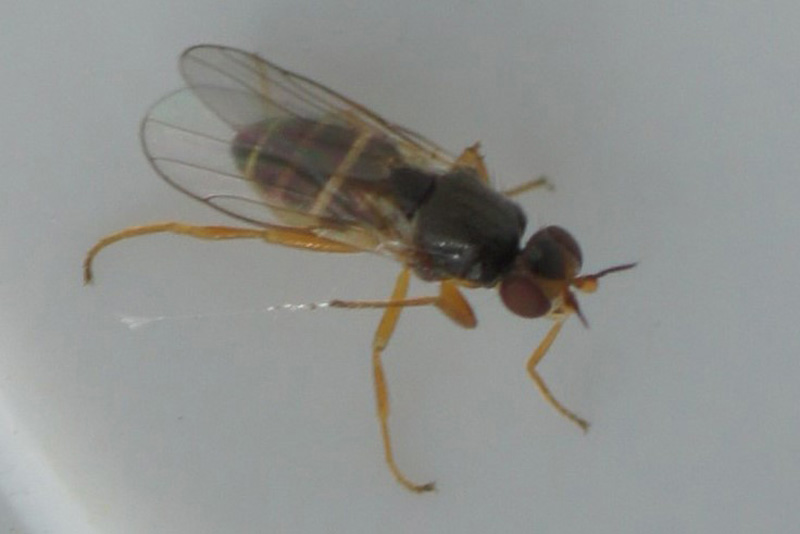
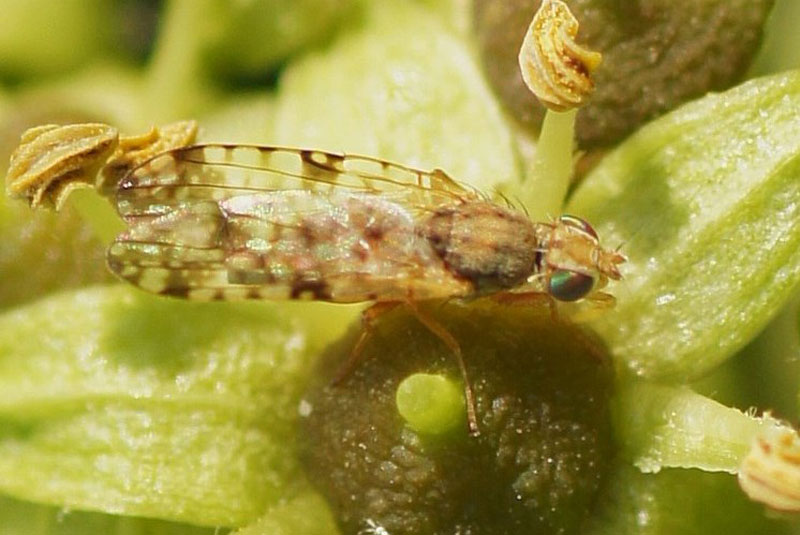
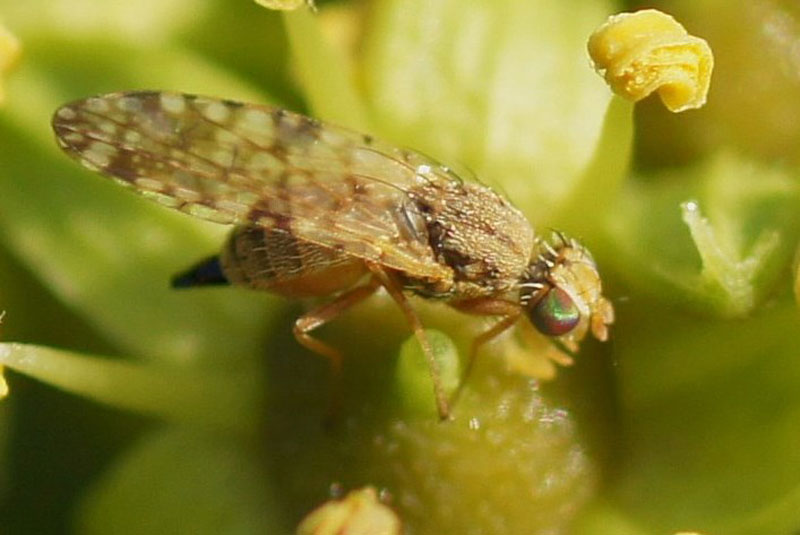
Golden-eyed Flies Cyromyidae.
In the Netherlands there are 2 genera of the family Goudoogvliegjes Chyromyidae. A third genus Aphaniosoma has not yet been found in the Netherlands.
1. Chyromya: Chyromya brittanica, Chyromya femorellum, Chyromya flava, Chyromya miladae, Chyromya
oppidana.
2. Gymnochiromyia: Gymnochiromyia flavella, Gymnochiromyia inermis, Gymnochiromyia mihalyii.
Very small, yellow-brown flies with green, gold-glossy eyes. The larvae are found in organic waste, rotting wood, etc.
An overview of the flies in the family on Waarneming.nl
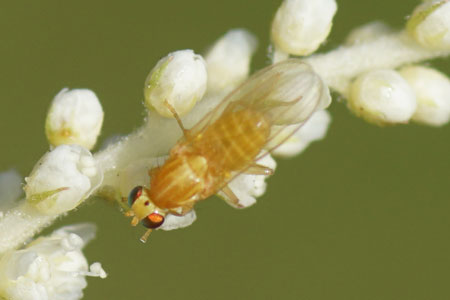 Chyromya spec. Family Chyromyidae
Species from this photo not possible. Elias de Bree thanks for the help with identification.
Photographed on the flowers of Goatbeard (Aruncus dioicus). Photo
25-6-2022. |
Clusiidae.
In the Netherlands in the family Clusiidae there are 6 species. Usually small flies (1.5 - 8mm). As far as known the larvae live in decaying wood of deciduous trees.
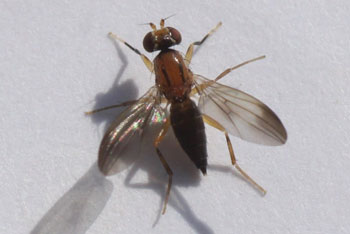 Clusiodes ruficollis. Family Clusiidae.
A slender fly with longish legs. The thorax is shiny light brown with two dark longitudinal stripes. The abdomen is dark.
Length about 4 mm. Photos 27-8-2013. |
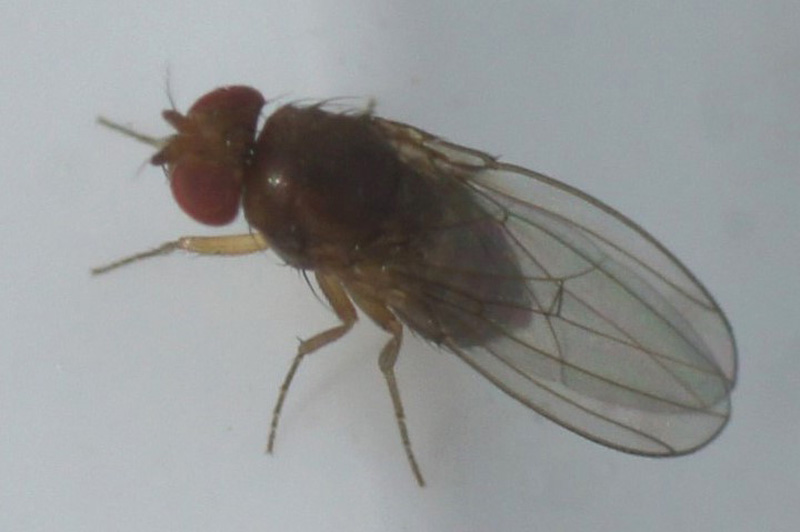
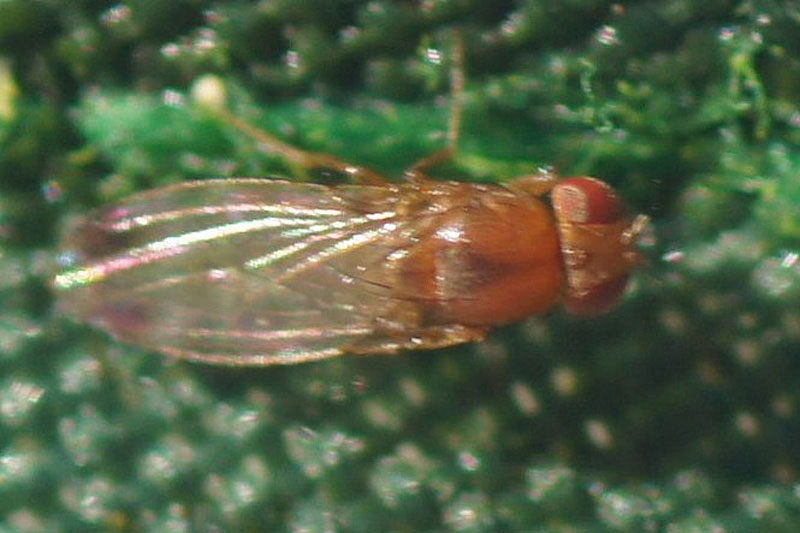
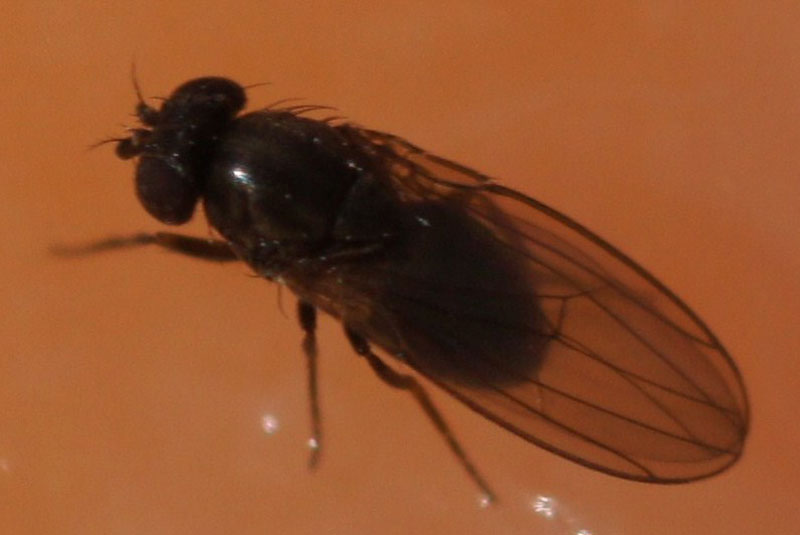
Drosophilidae
Very small flies, but there are also some larger species. Length 1.5 to 7 mm. The larvae of most species live in decaying organic material. Such as fruit, mushrooms. However, there are mineerders and predators.
Here the Dutch flies of this family: waarneming.nl/familie/view/371
 Drosophila spec. Family Drosophilidae. Photos 2-11-2016.
 |
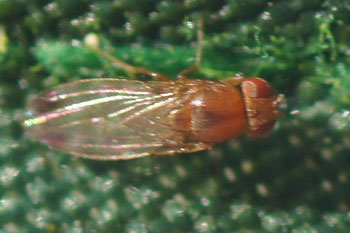 Spotted wing drosophila (Drosophila suzukii). Family Drosophilidae.
A yellowish brown fly. Male has a dark spot on the tip of the wings. That is why it is easier to recognize than the female. Females lay eggs in ripening fruits, which is not so fun for fruit growers. Originally from Asia, it can now also be found in North America and in Europe.
Male 2,6-2,8 mm. Female 3,2-3,4 mm. Photos 17-12-2017. |
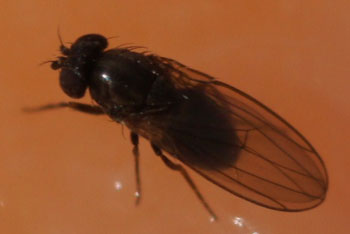 .. ..
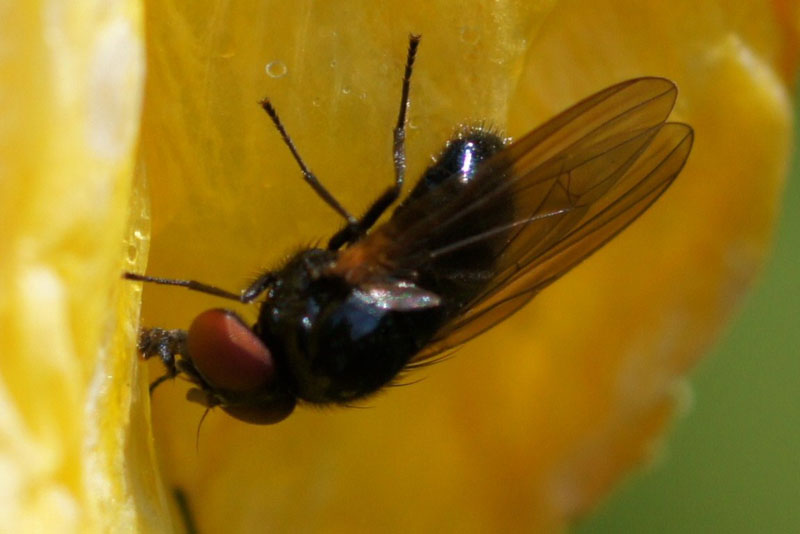
 Drosophila, maybe Drosophila subobscura. Family Drosophilidae.
Here on a watermelon. After the melon had been lying outside for one day, a lot of these flies appeared. Photos 2-4-2011. |
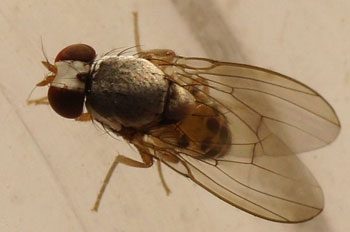 .. ..
 Leucophenga maculata. Family Drosophilidae.
A striking fly with a white head and a grey thorax with a white stripe on the side. The abdomen is light brown with dark brown spots. The legs and antennae are light brown.
Length about 4 mm. Photos 17-3-2015. |
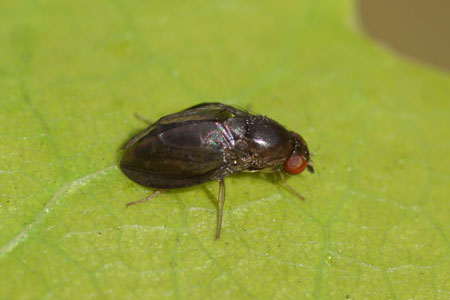 .. ..
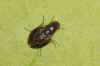 Stegana. Family Drosophilidae.
In the Netherlands the species Stegana coleoptrata, Stegana furta, Stegana hypoleuca, Stegana mehadiae, Stegana nigrithorax, Stegana similis.
Rare to very rare (Waarneming).
My fly could not be identified as a species. They are called beetle flies because of the shape of the wings, which makes them resemble a beetle. Photos
5-6-2023. |
Shore flies, brine flies
(Ephydridae)
The flies of the family Ephydridae are often found near seashores and
inland waters. They feed on algae, bacteria. They are tiny flies.
However there are also lager members of the family.
 .. ..
 . .
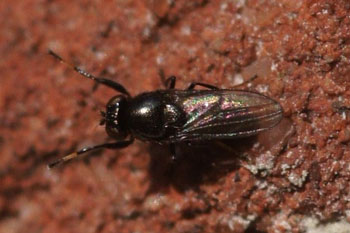
 Athyroglossa glabra. Family shore flies, brine flies
(Ephydridae).
Athyroglossa glabra. Family shore flies, brine flies
(Ephydridae).
The Athyroglossa glabra in this picture is about 2 to 3 mm. It spreads its front legs in a characteristic way. A shiny black fly with yellow on its legs. Photos 2-3-2011. |
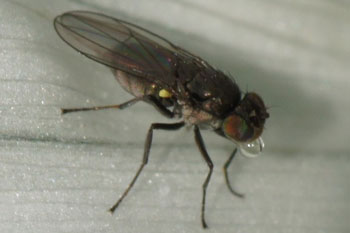 .. ..
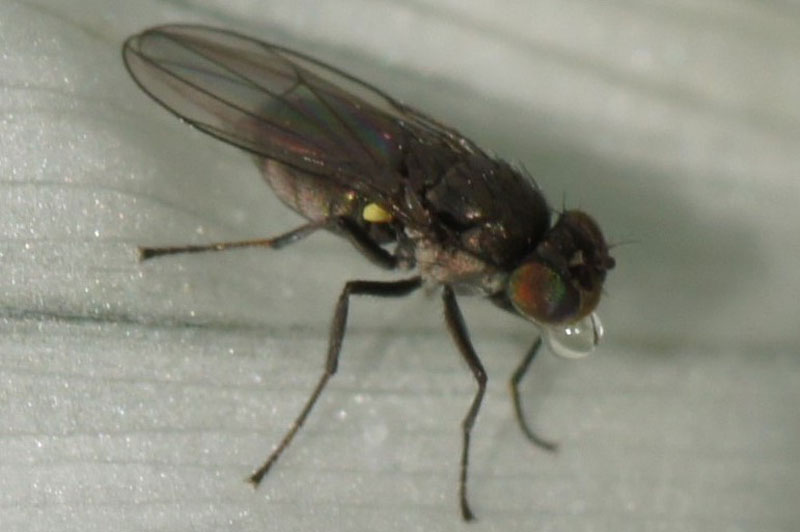
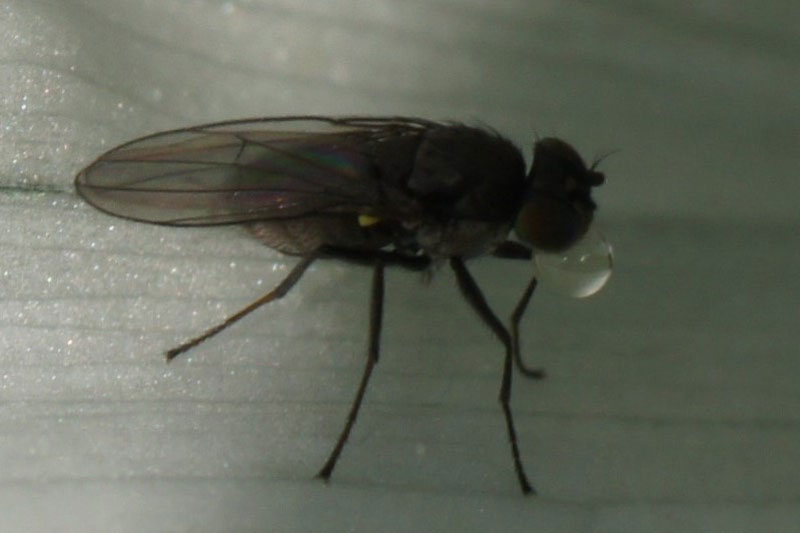
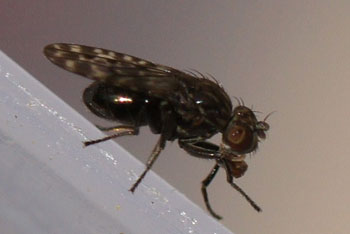
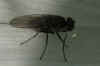 Hydrellia, probably Hydrellia maura. Family shore flies, brine flies (Ephydridae).
About 2 to 3 mm. A gray fly with striking yellow halters. (Jan Wind thanks for determination). Photos 7-7-2017. |
 .. ..
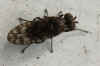 . .
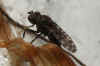 Limnellia quadrata. Family shore flies, brine flies (Ephydridae).
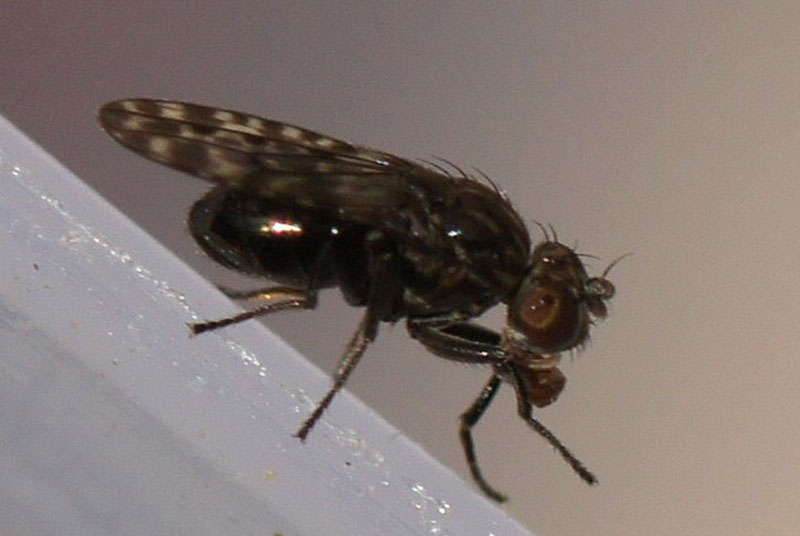
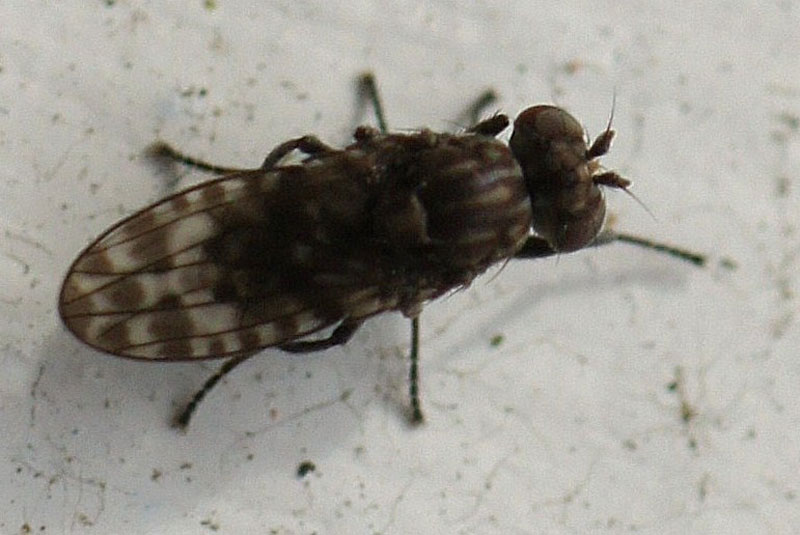
The Limnellia quadrata in this picture is about 3 mm. The thorax and wings have a distinctive pattern. If you see the fly, you don't notice. For it is too small.
Photos 23-02-2012. |
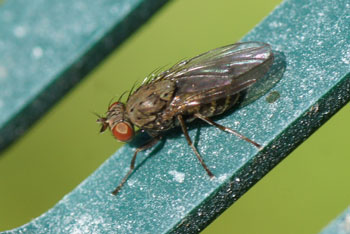 .. ..
 Notiphila spec. Family shore flies, brine flies (Ephydridae).
This gray-brown fly I noticed, when I took plants from the pond. I see them only near the pond. About 5 mm. Photos 30-6-2012.
|
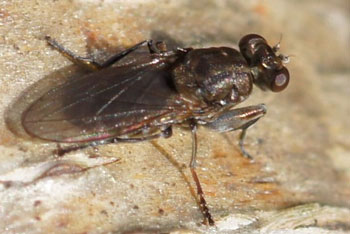 .. ..
 Ochthera spec. Family
shore flies, brine flies (Ephydridae). Not
in the garden, but near a dune lake about 4 km from our house.
Ochthera spec. Family
shore flies, brine flies (Ephydridae). Not
in the garden, but near a dune lake about 4 km from our house.
At this moment only Ochthera mantis is mentioned in the Dutch species. But there are
similar species and they maybe could occur in the Netherlands. (O.
manicata, pale O. arctica, O. schembrii)
A copper colored shiny fly. The thighs of the legs are swollen with thorns on the underside, so
it can hold its prey. It has the attitude of a praying mantis. Unfortunately
you can't see this on these pictures. They are are predaceous and feed on
midges.
The larvae of Ochthera feed on larvae. About 4-5 mm.
Foto's 5-3-2014.
|
Hybotidae
Family members 1 mm to about 6 mm. There are three subfamilies. Namely
Hybotinae, Ocydromiinae and Tachydromiinae. The arista is long. Slender legs. They
often run back and forth. So they are difficult to photograph. They are predators
of small insects.
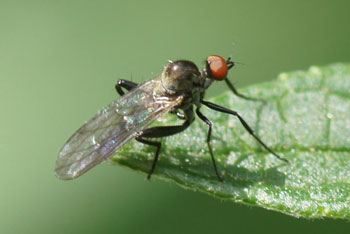 .. ..
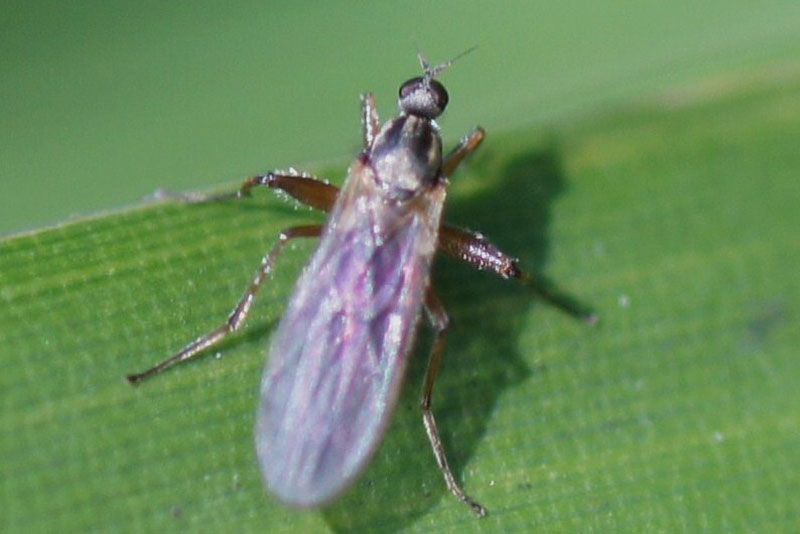
 Hybos culiciformis. Family Hybotidae.
Length about 3,5 - 5.5 mm. June - September. Photos 15-6-2014. |
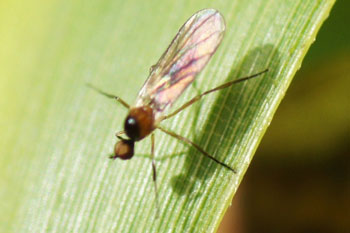 .. ..
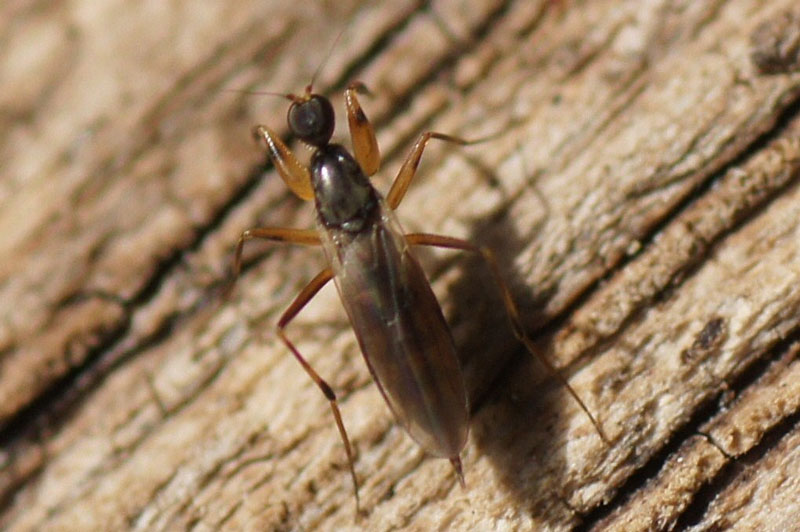
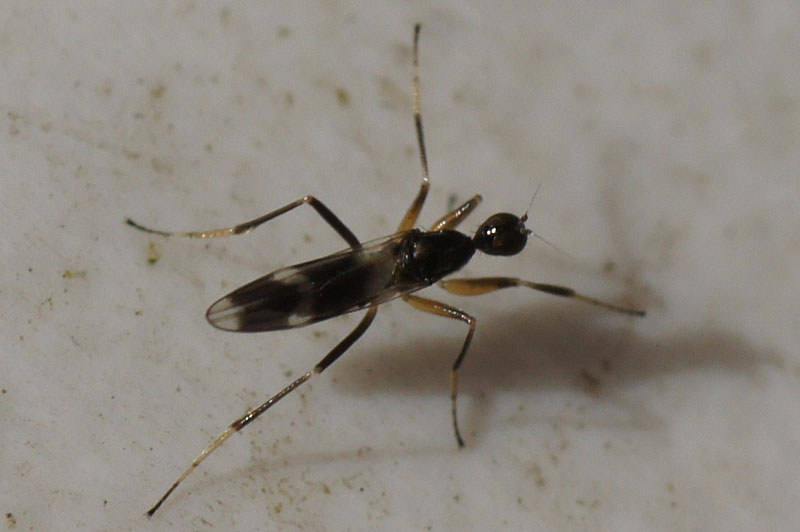
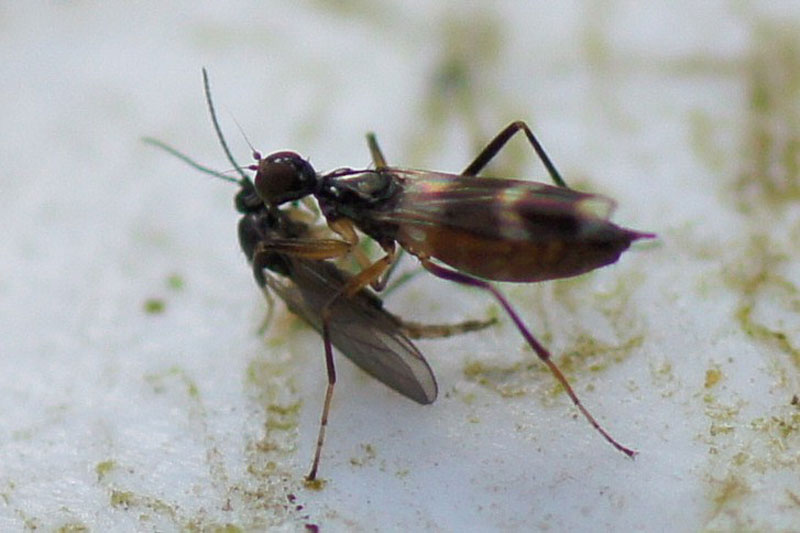
 Ocydromia glabricula. Subfamily Ocydromiinae. Family Hybotidae.
Striking black and orange. Length about 3-4,5 mm. Photos 19-10-2012. |
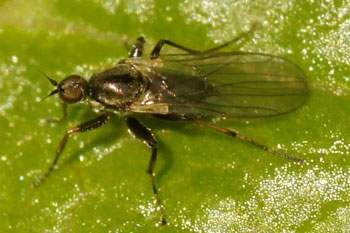 .. ..
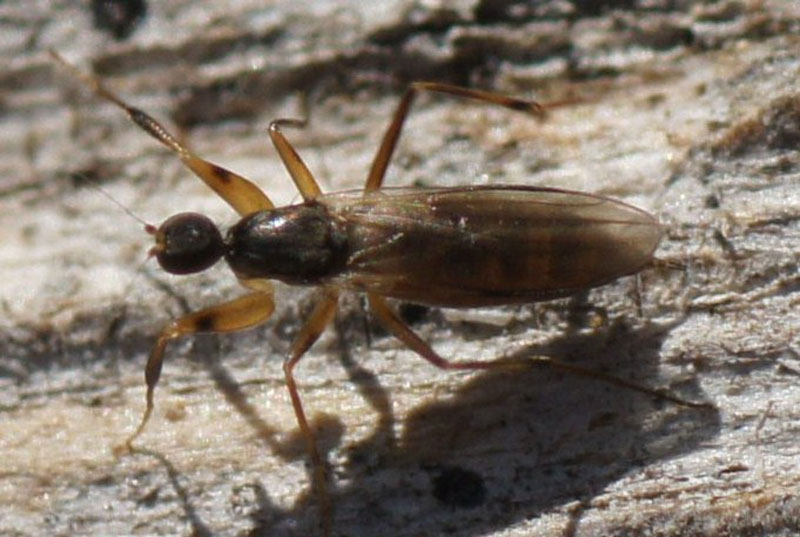
 Platypalpus. Subfamily Tachydromiinae.
Both species have an elongated black spot on the thorax, Thanks Niels-Jan. Length about 3-4 mm. Photos 14-4-2014. |
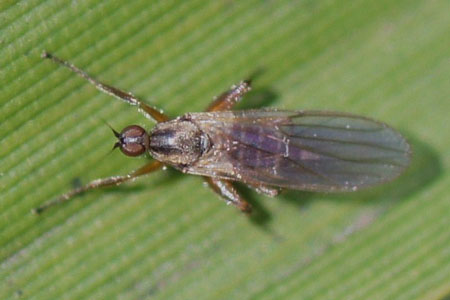 .. ..
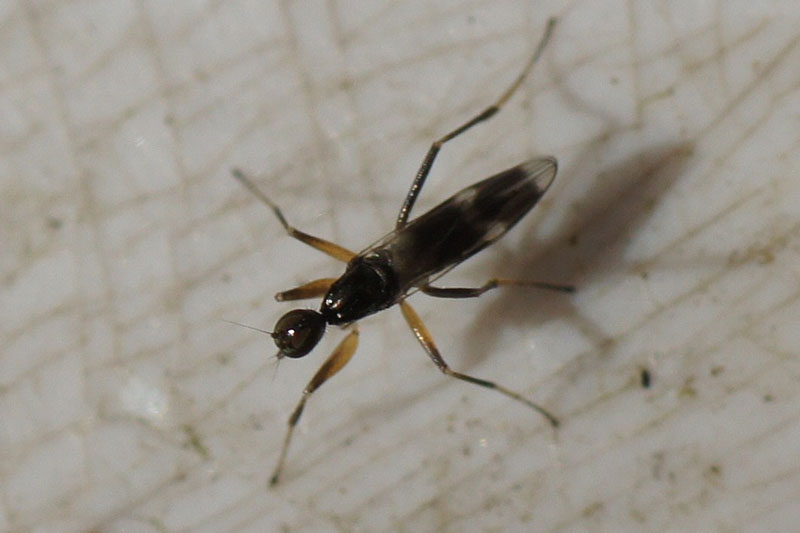
 Platypalpus spec. Subfamily Tachydromiinae. Family Hybotidae.
Length about 3-4 mm. Photos 30-12-2011. |
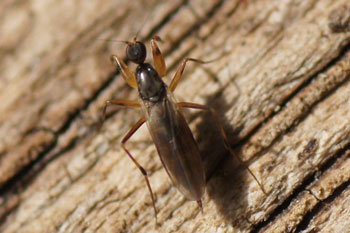 .. ..
 Tachypeza nubila. Subfamily Tachydromiinae. Family Hybotidae.
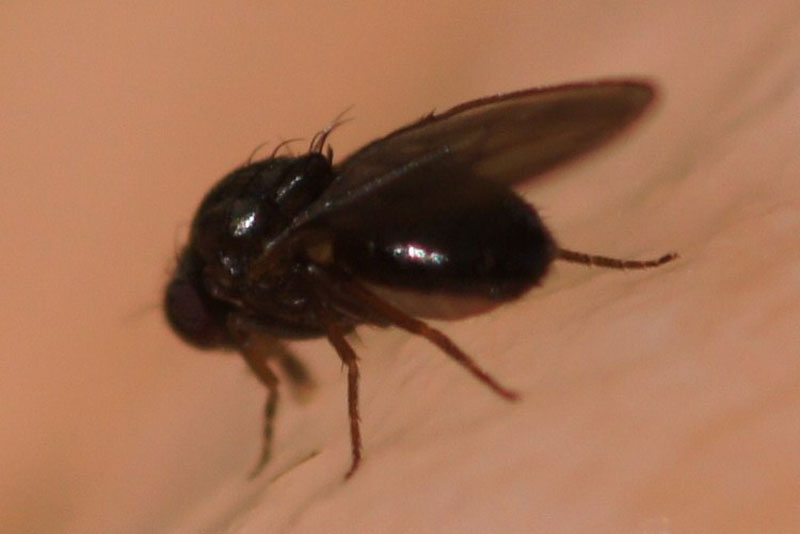
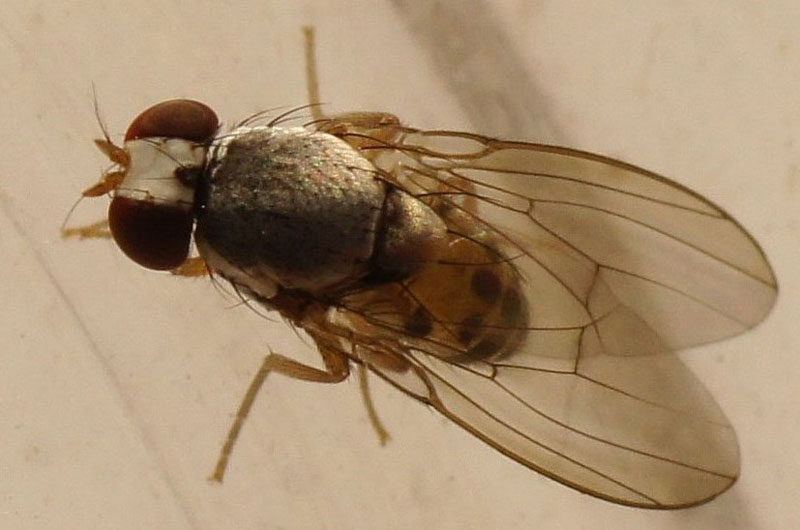
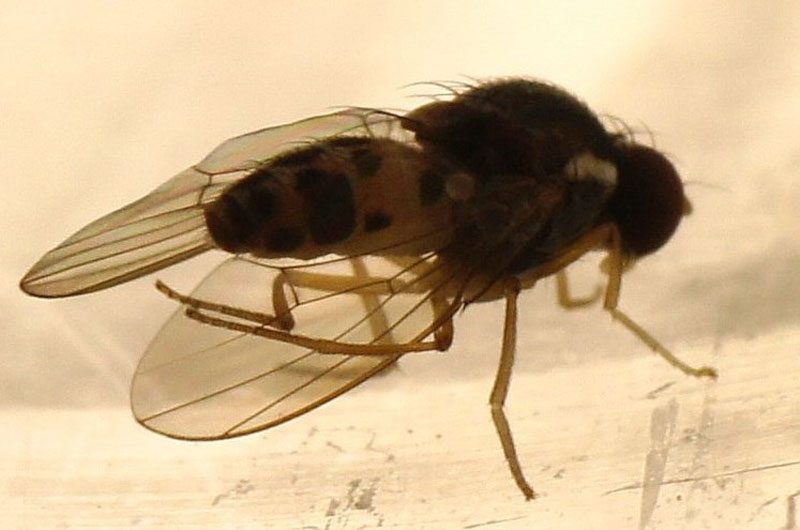
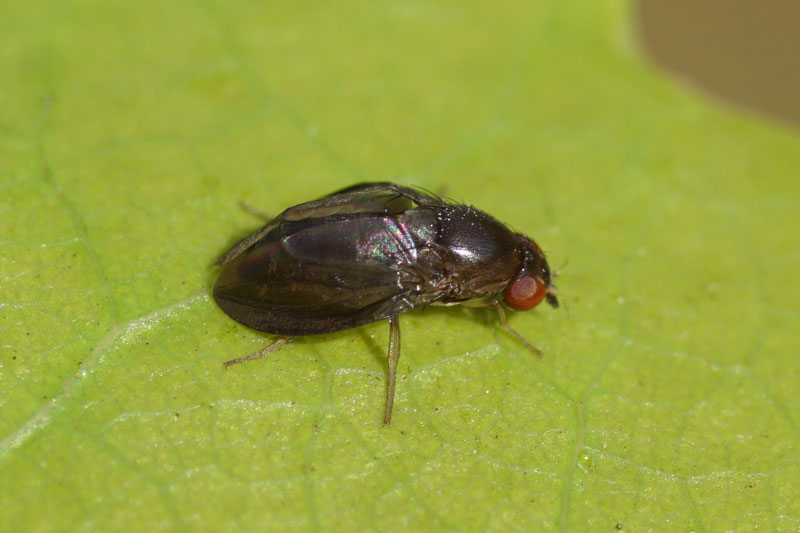
Lengt about 3-4 mm. Photos 24-9-2012. |
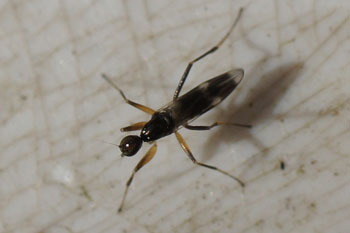 .. ..
 . .
 Tachydromia spec. Subfamily Tachydromiinae. Family Hybotidae.
In the Netherlands there are twelve native species. Length 3 mm. Photos 16-10- 2012. Last with prey. |
Lauxaniidae
The flies can be 2 to 7 mm. In the family are many different
species. Matt, but also glossy. Black, but also colored. Larvae of this family live in different places. In
fungi, decaying plants, in bird nests, sometimes they are leafminers.
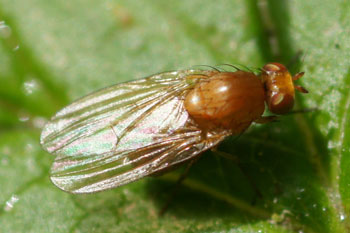 .. ..
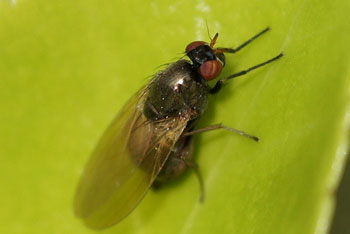
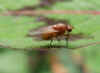 Lauxaniidae.
I don't know the species. Photos 11-6-2011, 18-10-2008. |
 .. ..
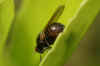 . .
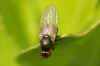 Calliopum spec. Family
Lauxaniidae.
Calliopum spec. Family
Lauxaniidae.
The two most common very similar species are Calliopum simillimum and
Calliopum aeneum. The stripes on the eyes are striking. Photos
2-10-2010. |
 .. ..
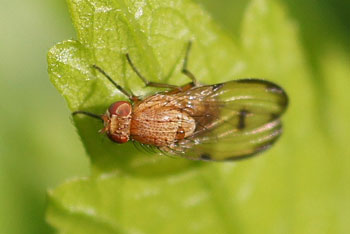
 Minettia fasciata. Family Lauxaniidae. Photos 12-6-2011.
 |
 .. ..
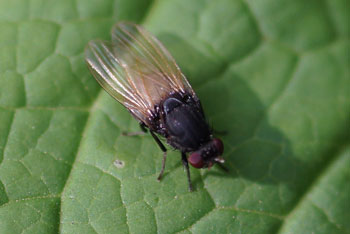
 Minettia inusta. Family Lauxaniidae.
Recognizable by the dark border and stripe on the wings. But........ Palloptera quinquemaculata, family Pallopteridae has the same colour and patterned wings.
Length about 4 mm. Europe. Photos 14-6-2011. |
 .. ..
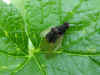 . .
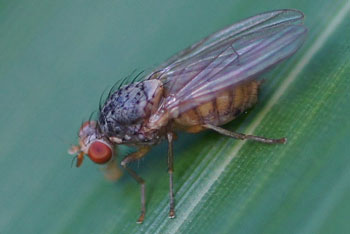
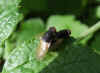 Minettia longipennis. FamilyLauxaniidae.
In May I see many Minettias in the garden. A dark fly with very light wings. Photos 24-6-2011 and 18-5-2009. |
 .. ..
 . .
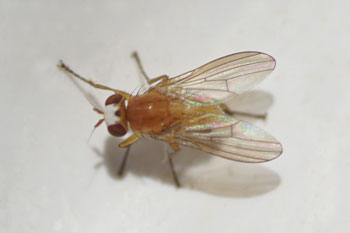
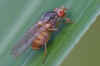 Pseudolyciella pallidiventris group. Family Lauxaniidae. Female.
Pseudolyciella pallidiventris, Pseudolyciella stylata en Pseudolyciella subpallidiventris are very similar. Thorax is grey. The scutellum is grey with pale bruin, the abdomen and antennae are pale brown. Legs are pale brown, grey. Photos 9-10-2013. |
 .. ..
 Sapromyza albiceps. Family
Lauxaniidae.
Sapromyza albiceps. Family
Lauxaniidae.
A pale orange yellow fly. It is recognizable by the
white face.
About 4 mm.
Photos 20-6-2018.
|
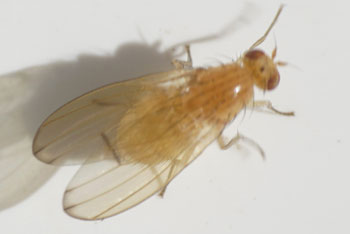 Tricholauxania
praeusta. Familly Lauxaniidae.
Tricholauxania
praeusta. Familly Lauxaniidae.
A pale orange yellow fly. It is recognizable by the dark cross vein and by the slightly dark rear edge with veins of the wings.
About 4 mm.
May-October. Photo 11-6-2018. |
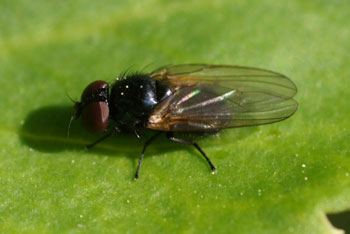
Lance flies, Lonchaeidae
Small but robustly built dark flies 3 to 6 mm. Larvae: Usually mold, under the bark of dead trees. But some species feed
on other plant material or even bait.
 .. ..
 . .
 Lance flies, Lonchaeidae
There are some very similar flies.
This fly has a beautiful shiny
metallic body. Photos 5-5-2010 and 12-8-2010. |
Lonchopteridae.
Slender flies with pointed wings. Length 2 to 5 mm. Long legs. Larvae
live in decaying organic material. Often in damp places.
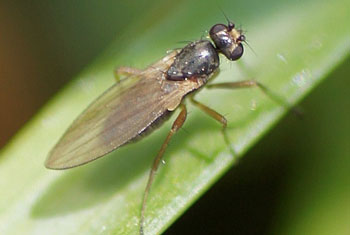 Lonchoptera lutea. Family Lonchopteridae.
Europe and parts of Asia.
Photos
23-3-2012. |
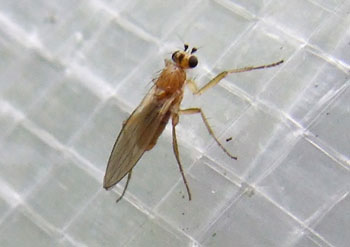 .. ..
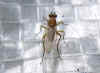 Lonchoptera spec. Family
Lonchopteridae.
Lonchoptera spec. Family
Lonchopteridae.
It isn't possible to indentify this fly. The photos are
taken some years ago. Photos 6-10-2008.
|
Trembling-wing
flies, Flutter flies, Pallopteridae
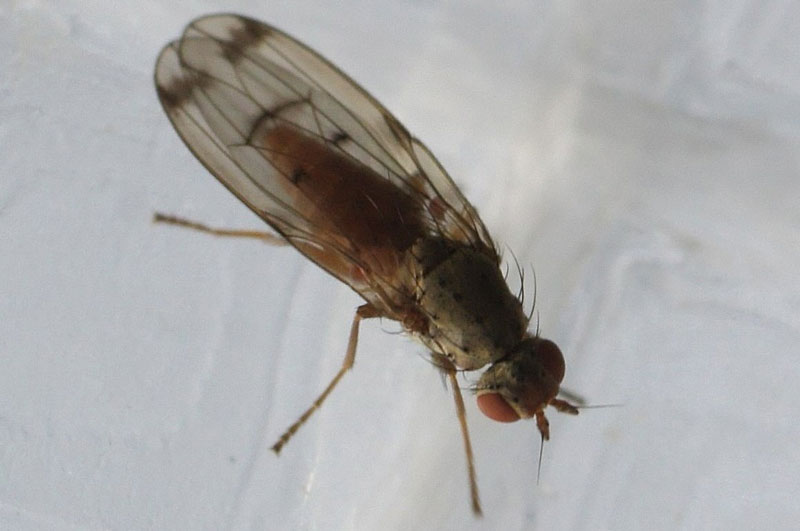
A characteristic of many flies in this family is gray
silvery white spot on the head. Many species have spotted wings. They often live in shady places. Size of the different species: 2.5 mm - 7 mm.We know little about the larvae. The larvae live under the bark of trees as predators of larvae of bark beetles and longhorn beetles. But there also seem to be species
on flower heads or in stems of Umbelliferae which feed on plant juices.
 .. ..
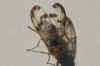 . .
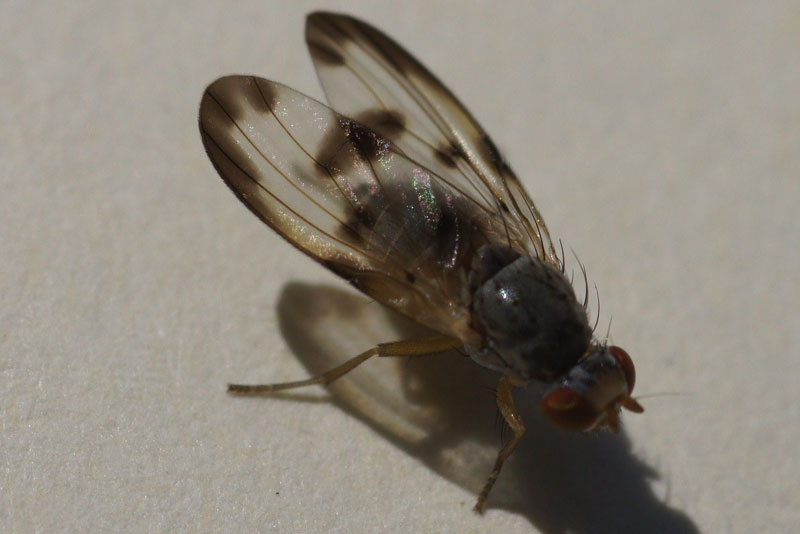
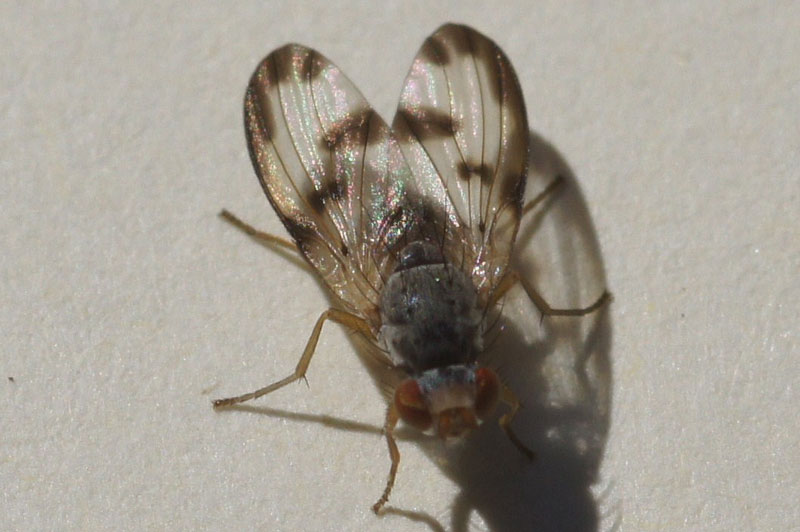
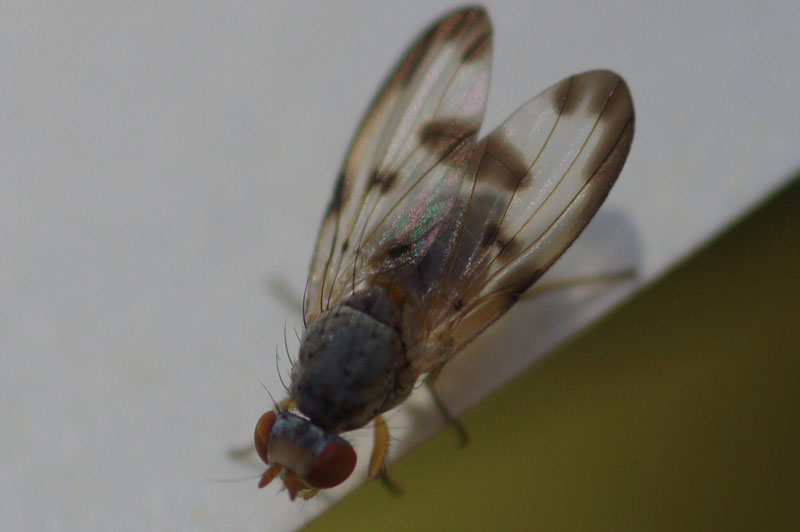
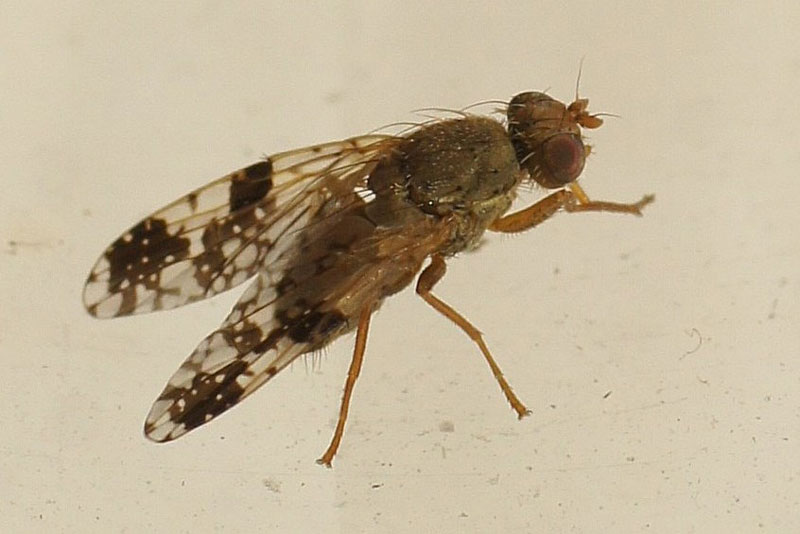
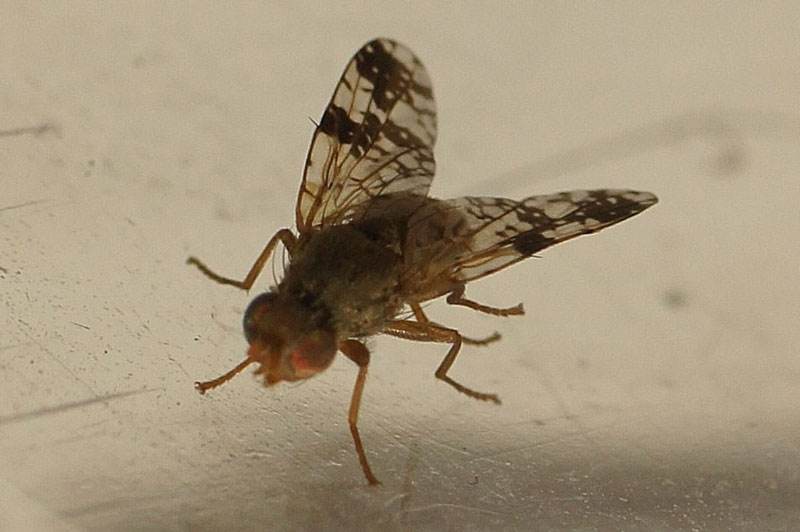
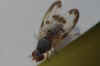 Palloptera umbellatarum. Family Pallopteridae.
I found this fly in the scullery. It was just sitting on the paper when I took it out.
Length about 4 mm. Europe. Photos 10-7-2010. |
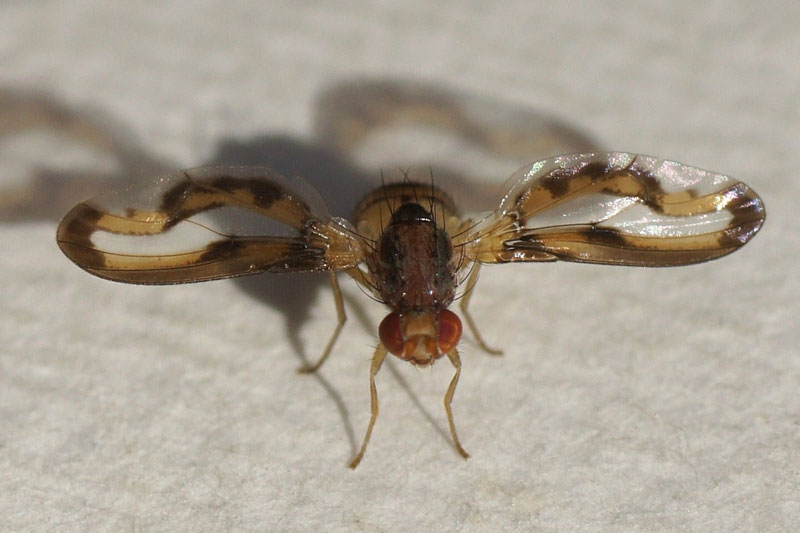
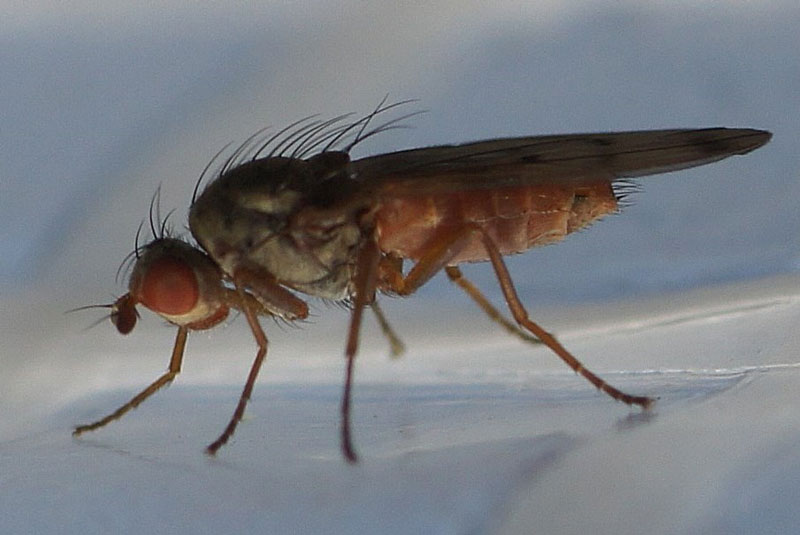
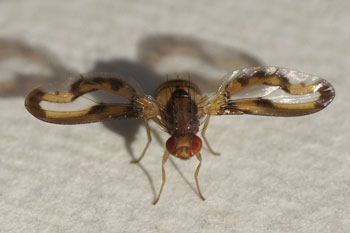 Looped Flutter Fly,
Palloptera
muliebris. Family Pallopteridae. Looped Flutter Fly,
Palloptera
muliebris. Family Pallopteridae.
This fly was also in our scullery. It often has its wings spread like the peacock flies, but it can fold the wings on its body like the Palloptera umbellatarum. The wing pattern is distinctive. The clear middle area of the wings is surrounded by light and dark brown markings.
Length about 5 mm. May - October. Europe. Photo 11-11-2012. Late in the year. |
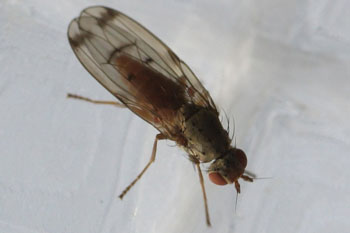 .. ..
 Palloptera
scutellata. Family Pallopteridae. Palloptera
scutellata. Family Pallopteridae.
The pattern of spots on the wings is similar to the Palloptera umbellatarum, but the wing edge is without shades. The same darkened transverse veins, but they are narrower darkened. In the middle of the wing edge, and nearly at the end of the wings is a dark spot. Thorax is grey, light brown abdomen, legs yellowish bruin. Until 2003 this species was unknown in the Netherlands. They are found from October to May. There are mainly found females. Length 5,5- 6 mm.
Larvae have been found in the stems of rushes, grasses and umbellifers. Photos 3-2-2016. |
Phorid
flies (Phoridae)
Flies from 0.5 mm to 6 mm. Striking are the circular antennas with a long arista and the veins of the wings
with the thick upper veins. The larvae live under different circumstances. (water, organic matter, parasitic ...)
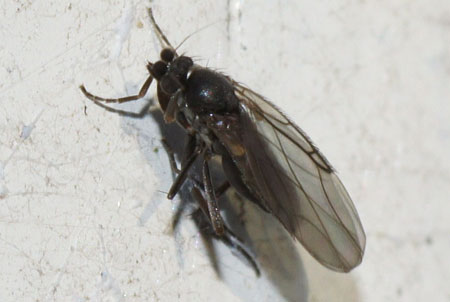 Phorid fly
spec. Family Phorid flies (Phoridae). Phorid fly
spec. Family Phorid flies (Phoridae).
I don't know the species. It was caught in a spider thread. The long legs have therefore a somewhat strange position. After I had taken the photo, I released it as a reward. Photo 15-1-2012. |
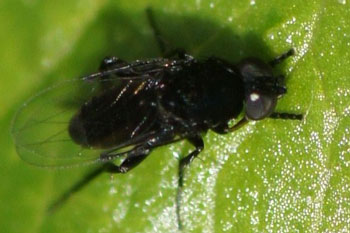 Phorid fly spec. Family Phorid flies (Phoridae).
If you see a small black fly, which runs to and fro on a leaf, you have great probability that it is family of this species. Photo 14-4-2012. |
Piophilidae
Small to medium flies (1,5-9 mm). Dutch species on Waarneming.
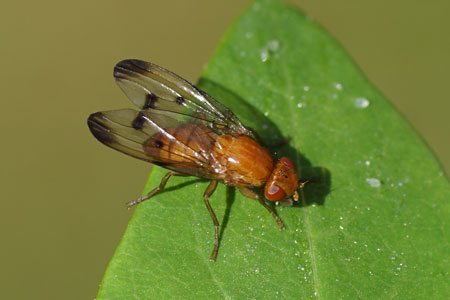 .. ..
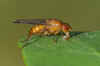 Neottiophilum praeustum.
Family Piophilidae.
Neottiophilum praeustum.
Family Piophilidae.
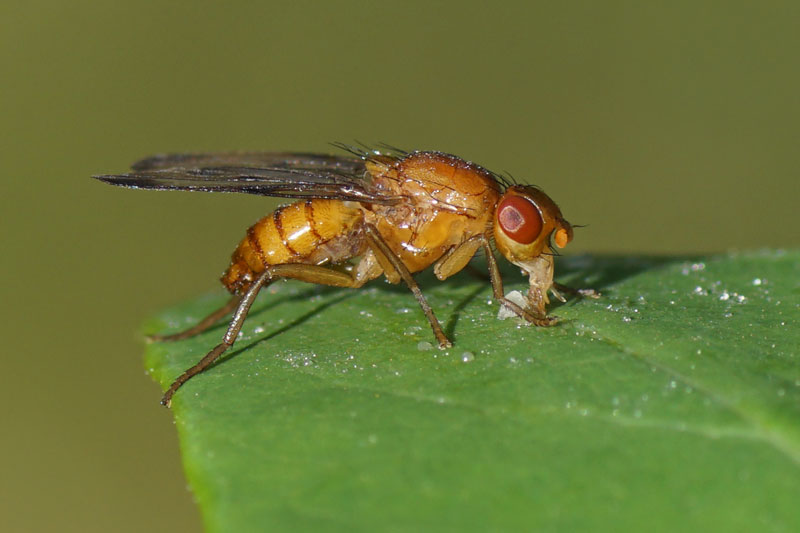
Quite rare in the Netherlands. Shiny orange, about 9 mm long. Wing dark tinted. There are a number of species with wings that resemble it (Palloptera quinquemaculata , Meiosimyza decempunctata, Minetta inusta, Suillia variegata). The larvae are parasites of birds and suck the blood of nestlings. May June. photos
3-6-2023. |
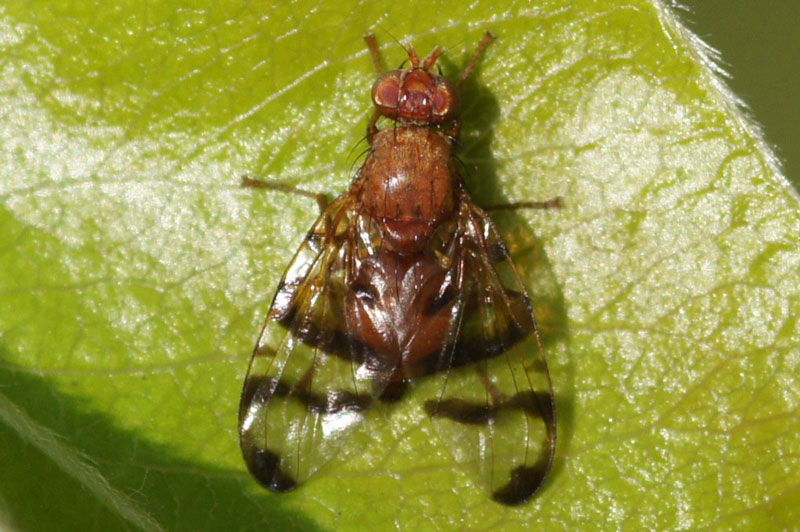
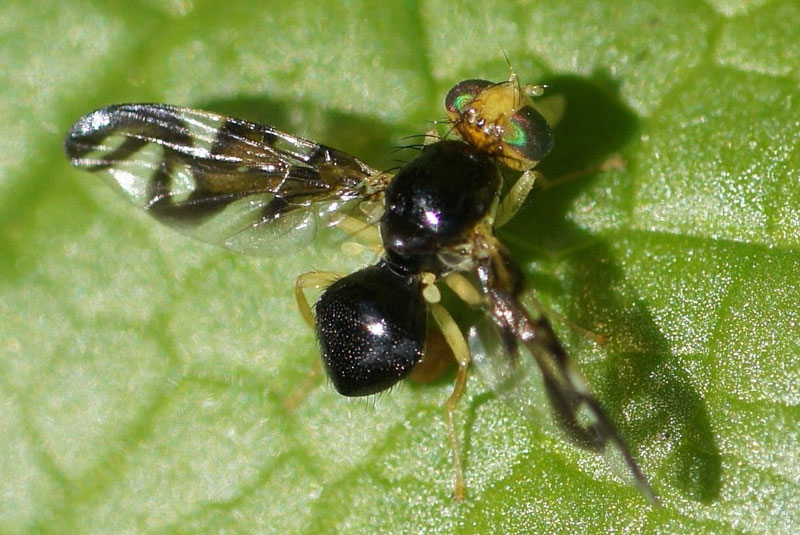
Signal flies (Platystomatidae).
Small to large dark flies (3-11 mm). They are dark and often with strikingly patterned wings. In Europe there are two genera. Platistoma (in the Netherlands only Platistoma seminationis) and Rivellia (in the Netherlands only Rivellia
syngenesiae).
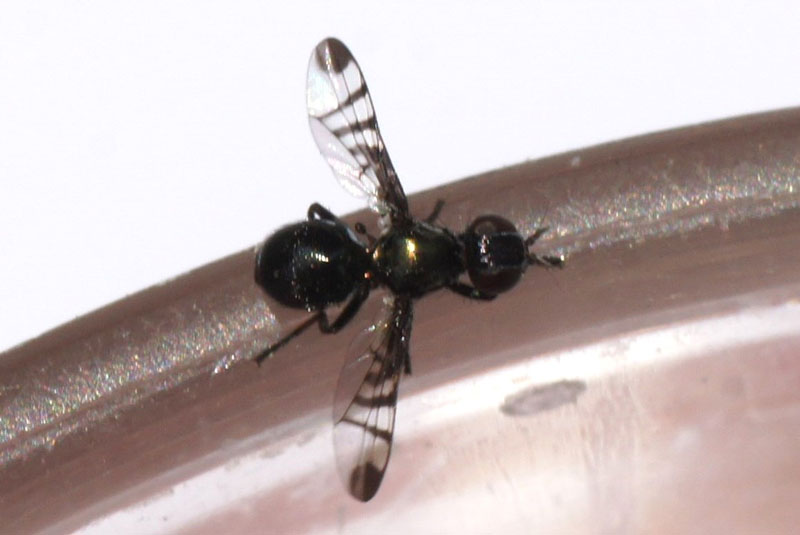
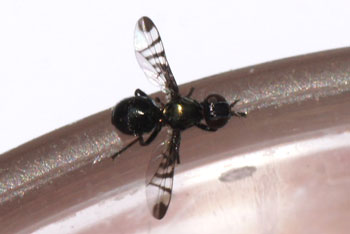 Rivellia
syngenesiae. Family signalflies (Platystomatidae). Rivellia
syngenesiae. Family signalflies (Platystomatidae).
A shiny black fly of about 4 mm, reminiscent of a nlack scavenger fly, but also to a peacock fly. The upper part of the wings has a black drawing. Photo 2-7-2015. |
Flat-footed flies (Platypezidae)
Flies from 1.5 mm to 6 mm. Slender or stocky flies (like
Protoclythia) Short legs. The male (sometimes female) have enlarged, flattened tarsus
segments.
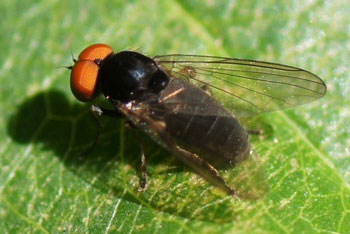 .. ..
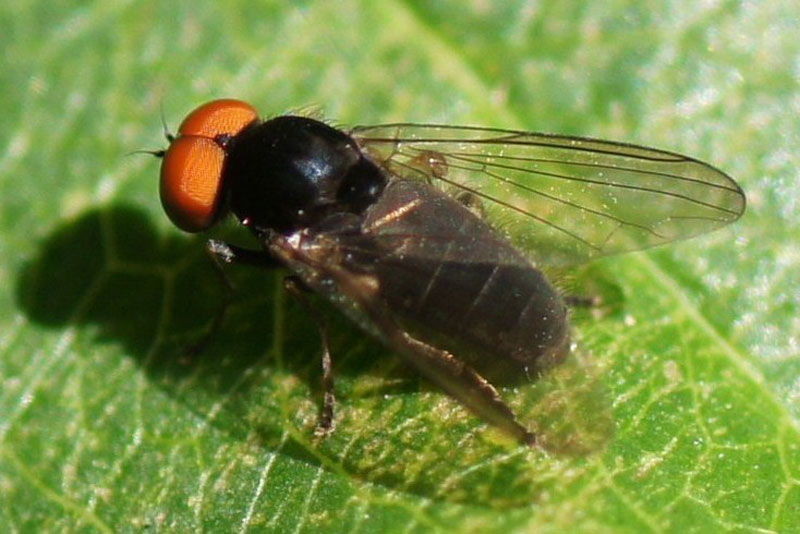
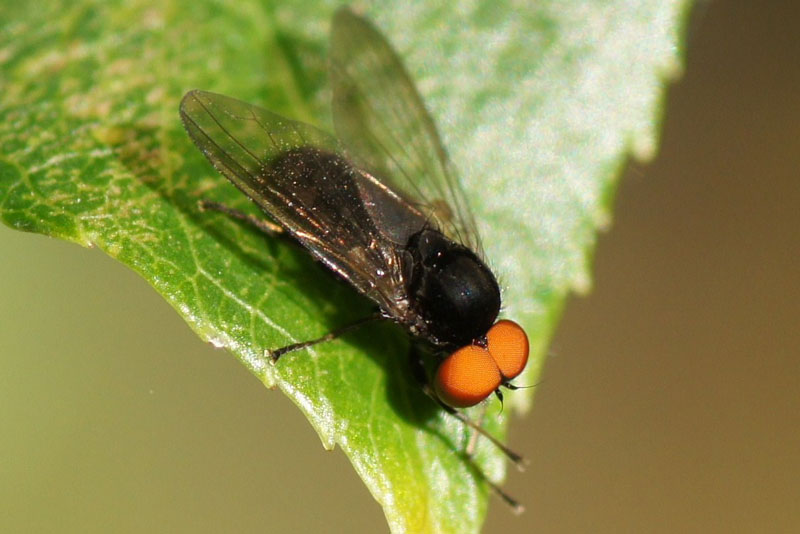
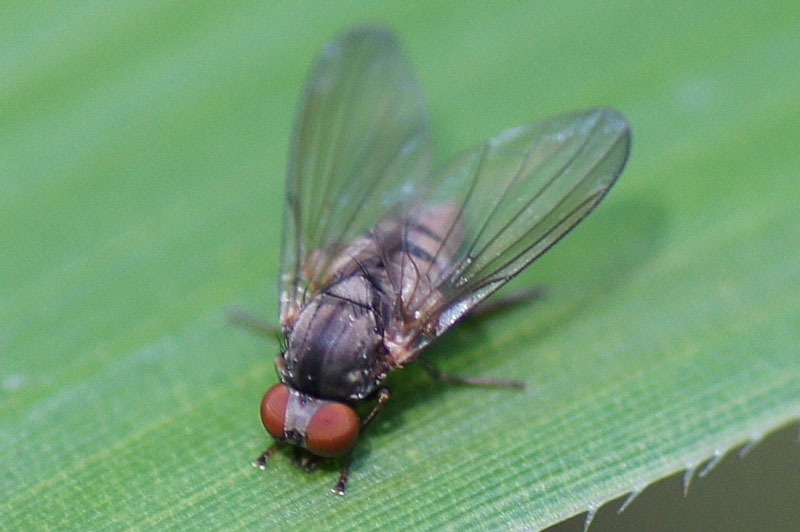
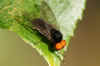 Male.
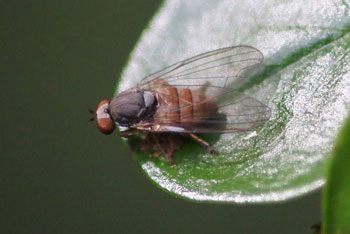
Male.  Female. Platypeza spec. (probably) Family flat-footed flies (Platypezidae).
The black fly has large bright orange eyes. You can see them walking back and forth on leaves.
In this family the males differ much in colour with females. But the males of many different species are very similar. possible to determine. Photos 11-10-2012, 22-10-2012. |
 .. ..
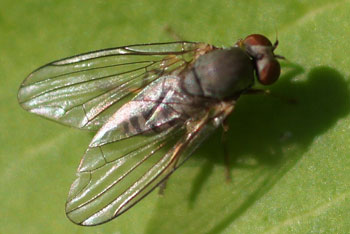
 Protoclythia rufa. Family flat-footed flies (Platypezidae). Protoclythia rufa. Family flat-footed flies (Platypezidae).
The M vein of the wing is forked. Approximately 3 mm. Photos 2-10-2010. |
 .. ..
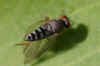 Protoclythia modesta. Family flat-footed flies
(Platypezidae). Protoclythia modesta. Family flat-footed flies
(Platypezidae).
This is a female Protoclythia modesta. The only
Platypeza-species in which the female has a partially black tergite 5 is P.
fasciata, but
it isn't this fly. Among others tergite 1 is black and the thorax isn't as plain gray. Moreover vein dm-cu
of Platypeza is closer to the wing edge than Protoclythia.
Thanks Menno. (I hope I have translated the explanation well!) Photos 30-10-2010. |
 .. ..
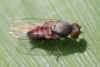 Agathomyia antennata. Family flat-footed flies
(Platypezidae).
Female. Agathomyia antennata. Family flat-footed flies
(Platypezidae).
Female.
It looks a lot like the Protoclythia modesta regard to the
grey colour and markings on the abdomen. But the wings don't have a forked M vein. Menno Reemer thanks for the help with the identification. Photos 1-7-2014. |
Black scavenger flies
or ensign flies (Sepsidae)
The larvae develop on dung or decaying plant and animal material. A
beautiful shining black fly with a body shaped like an ant.
 .. ..
 . .
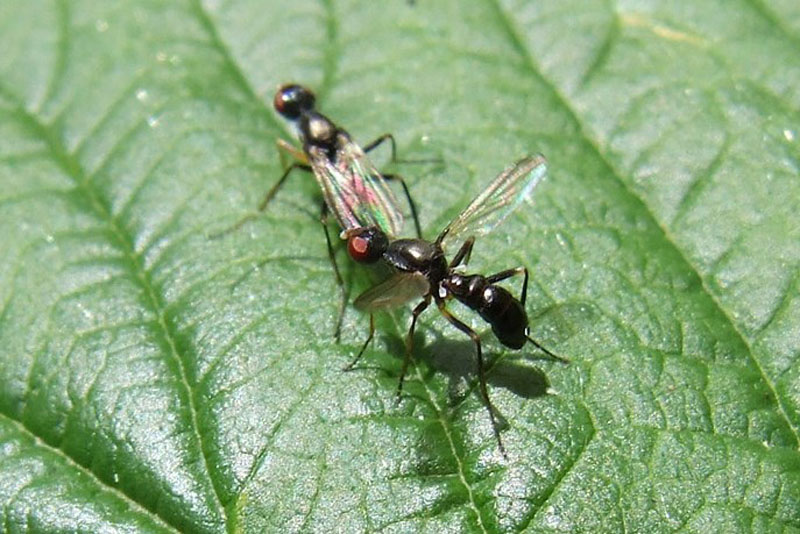
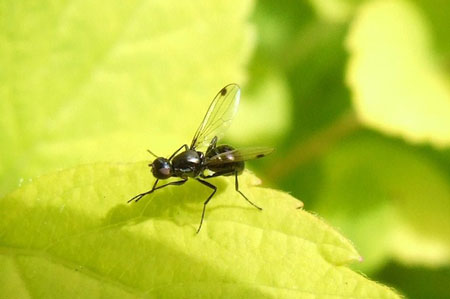
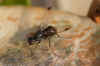 Black scavenger fly, ensign fly,
Sepsis spec. Family Black scavenger flies
or ensign flies (Sepsidae). Black scavenger fly, ensign fly,
Sepsis spec. Family Black scavenger flies
or ensign flies (Sepsidae).
Lesser
dung fly (Sepsis fulgens) is is the most common species. It has a
wing-waving habit. On the wing a dark spot.
German: Schwingfliegen. Photos 9-5-2009, 2-4-2011.
|
 .. ..
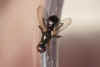 . .
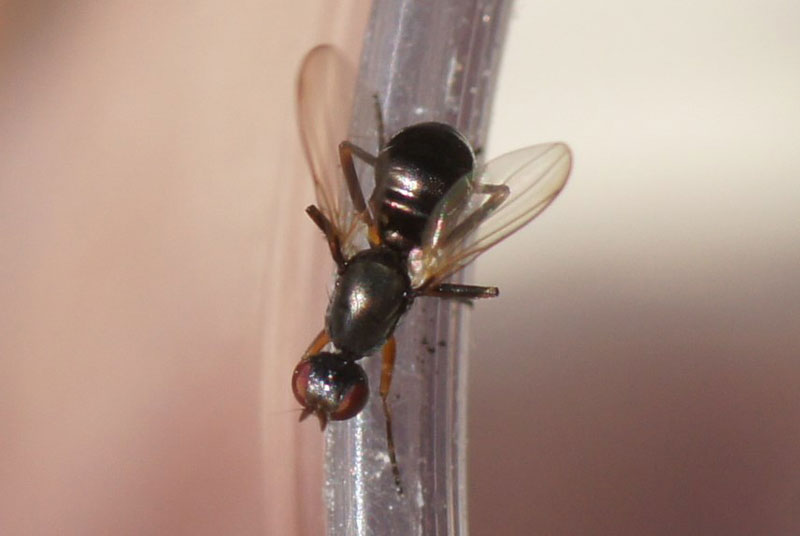
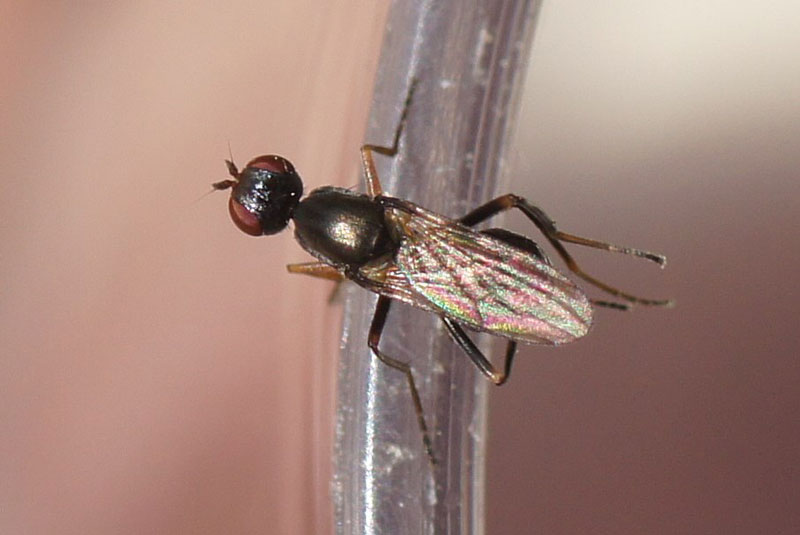
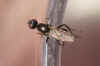 Nemopoda nitidula. Family Black scavenger flies
or ensign flies (Sepsidae). Nemopoda nitidula. Family Black scavenger flies
or ensign flies (Sepsidae).
A thought they were Themira spec. Larger species without the dark spot on the
wings.
But there is another species with wings without dark spots. Namely
Nemopoda nitidula. Thanks Niels-Jan. Look at (in
Dutch. I'm sorry.) forum
waarneming.
Photos 29-4-2009, 7-6-2013. |
 .. ..
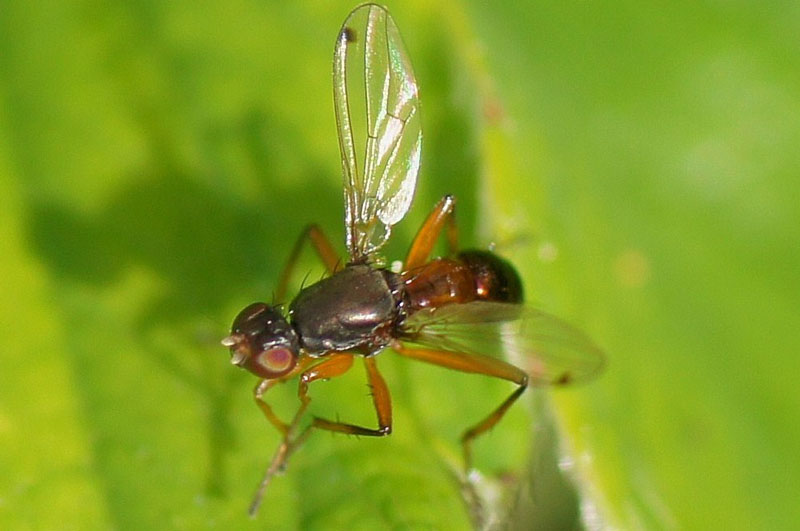
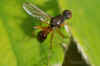 Sepsis punctum. Familie
wenkvliegen, wappervliegen, swingvliegen (Sepsidae). Sepsis punctum. Familie
wenkvliegen, wappervliegen, swingvliegen (Sepsidae).
Larger. Striking orange red.
Photos 27-3-2012. |
Peacock flies,
Fruit flies (Tephritidae)
Flies
of another family
Drosophilidae are also called "fruit fly". Tephritidae have
beautiful drawn wings. The females lay eggs in plants using their
"drill". A site with more species of Tephritidae: Tephritidae
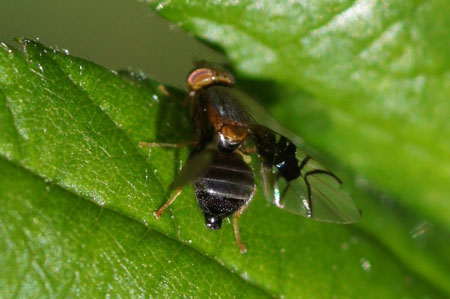 .. .. .
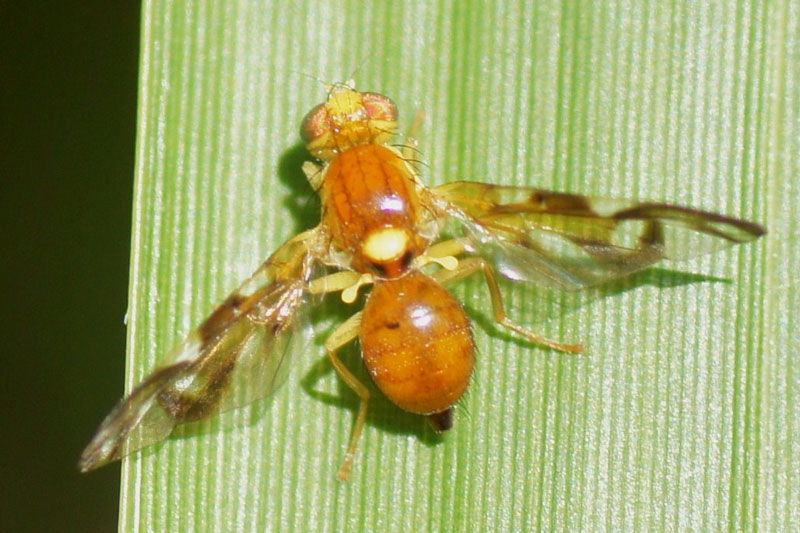
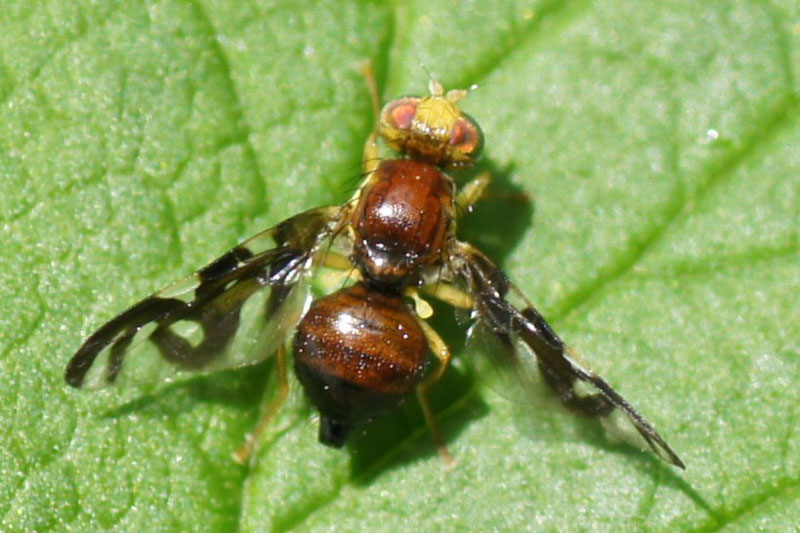
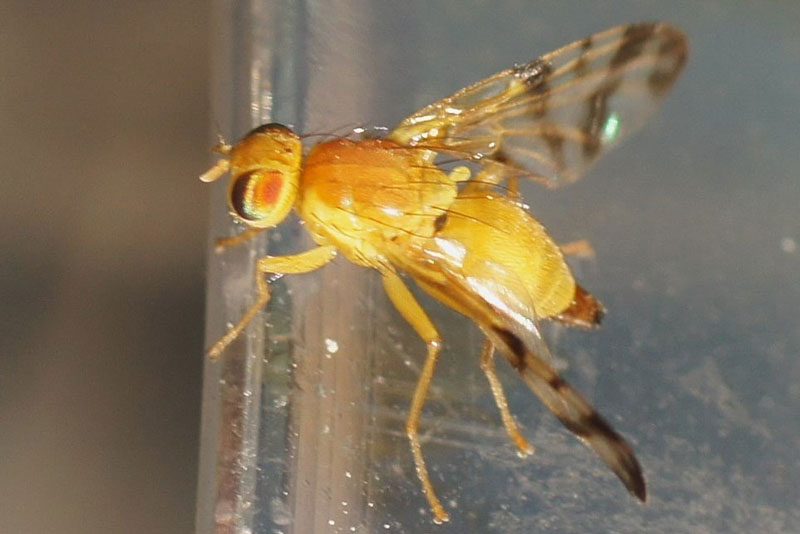
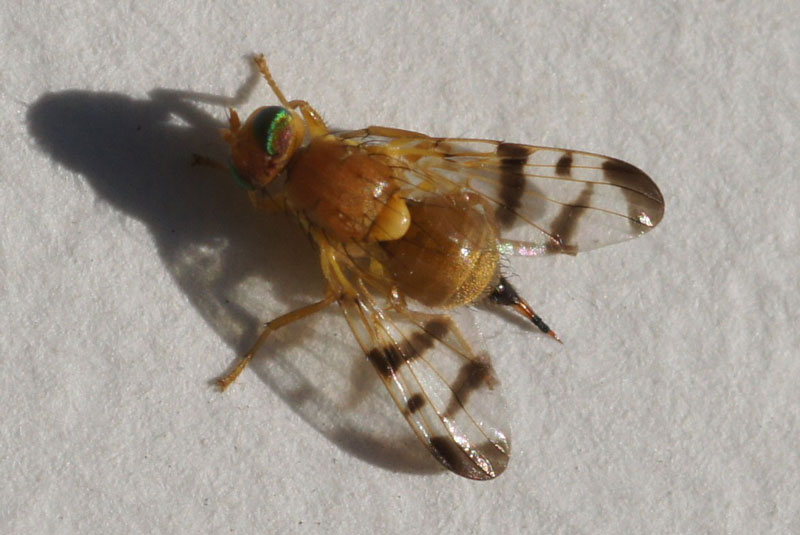
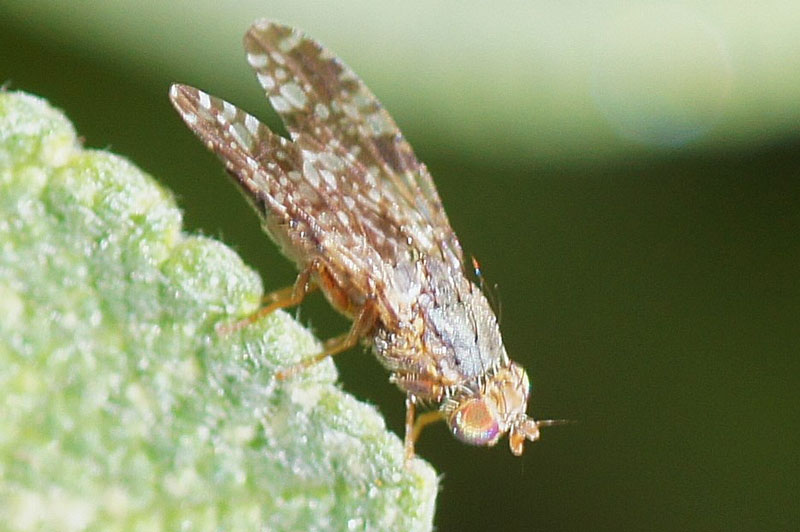
Anomoia purmunda. Family Peacock flies, fruit flies (Tephritidae).The base of the wing is dark. In the upper part you can see dark lines. .
Anomoia purmunda. Family Peacock flies, fruit flies (Tephritidae).The base of the wing is dark. In the upper part you can see dark lines.
Females drill holes in the fruit of the hawthorn and other members of the rose family, which they lay their eggs.
Lengte 4-5 mm. April-September. Photos 12-8-2010, 19-8-2011. German: Weißdorn-Bohrfliege. |
 .. ..
 .
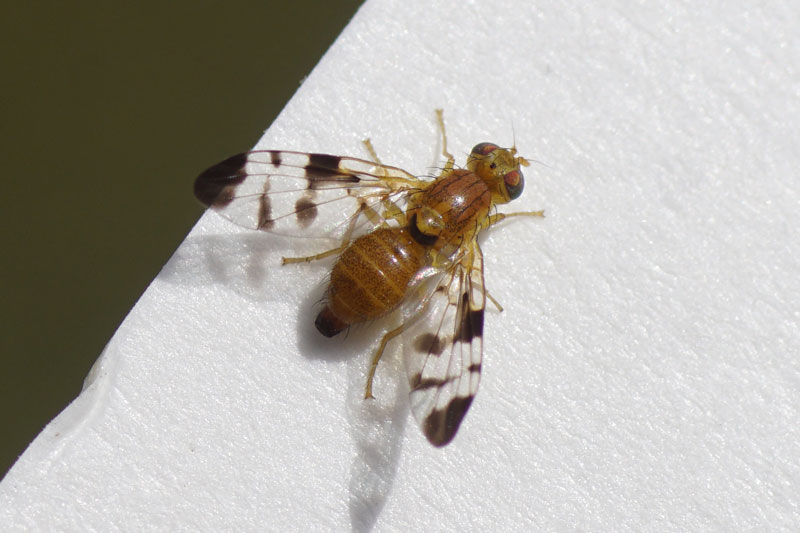
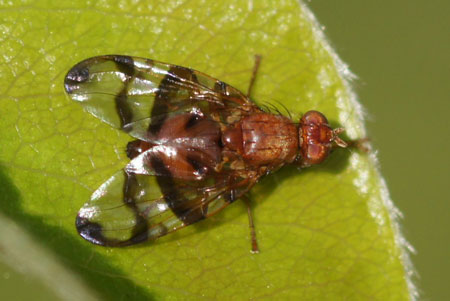
Chetostoma
curvinerve. Family Peacockflies, fruit flies (Tephritidae). According to John Smith: The biology of Chetostoma curvinerve is still unknown, suspected that the species lives as a parasite in the galls of sawflies on honeysuckle, Lonicera, probably also on alien and planted honeysuckles. I have in my garden the wild honeysuckle. .
Chetostoma
curvinerve. Family Peacockflies, fruit flies (Tephritidae). According to John Smith: The biology of Chetostoma curvinerve is still unknown, suspected that the species lives as a parasite in the galls of sawflies on honeysuckle, Lonicera, probably also on alien and planted honeysuckles. I have in my garden the wild honeysuckle.
There are not many observations. Probably, this is the most northerly sighting of this species (2011).
It is spread throughout the Mediterranean area. In 2000 was the first sighting in the Netherlands.
Length about 6 mm. For a peacockfly it is a very large fly. April-September. Photos 17-4-2011.
|
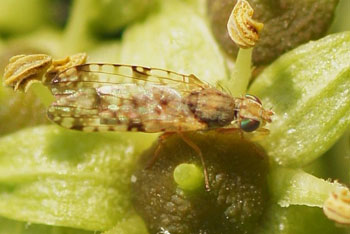 .. ..
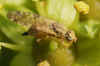 Dioxyna bidentis. Family
Peacockflies, fruitflies (Tepphritidae).
Dioxyna bidentis. Family
Peacockflies, fruitflies (Tepphritidae).
On flowers of the sunflower family (Compositae, Asteraceae). Here on ivy. Larvae develop in the flower heads.
Length 2.5-3 mm. June-November. Photos 19-9-2014. |
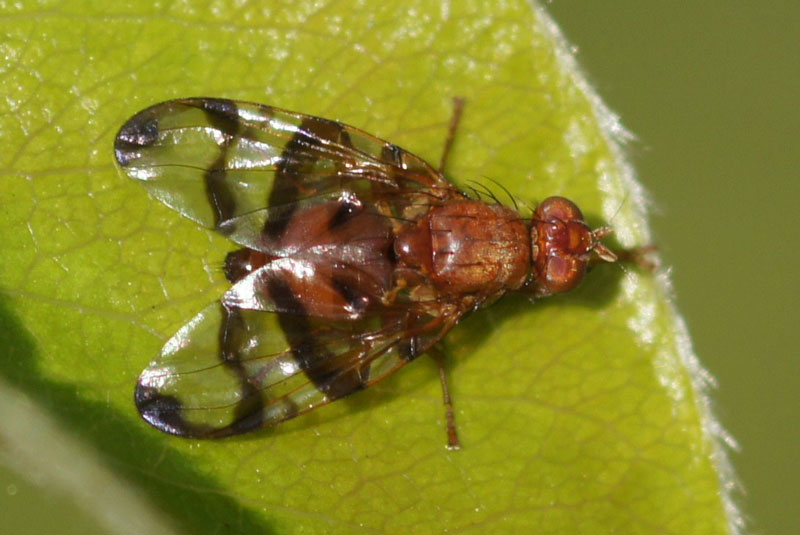
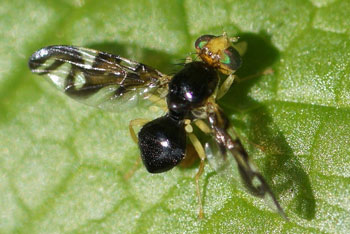 Euleia heraclei. Family Peacockflies, fruitflies (Tephritidae).
This fly is shiny black or shiny brown. Sometimes with a yellow scutellum. The legs and head are yellow.
The larvae mine in various plants of the carrot or parsley family (Apiaceae), such as giant hogweed (Heracleum), but also in celery, parsley and parsnip. That may damage them. The pupae overwinter in the soil.
Length 4 to 6 mm. Europe, Central Asia. Photo 16-4-2012.
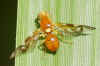
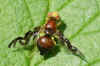 Photos 28-9-2012, 22-5-2013. The bodies have an other colour.
 |
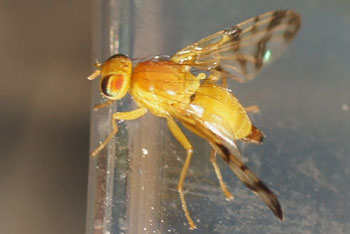 Rhagoletis alternata. Family Peacock flies, fruit flies (Tephritidae).
In the Netherlands there are 5 Rhagoletis soorten. R. altenera, R. batava R. cerasi, R. indifferens zeldzaam, Rhagoletis meigenii. There are about fifty species all over the world.
A yellow orange peacock fly. It looks like the Rhagoletis meigenii. However, the markings on the wings are slightly different.
The larva is found in cherries and rose hips.
Length about 4 mm. June-Augustust. Photo 22-7-2014. |
 .. ..
 European Cherry Fruit Fly ( Rhagoletis cerasi). Family Peacock flies, fruit flies (Tephritidae).
A black peacock fly with a yellow scutellum and a yellow stripe along the thorax.
The larvae in the fruits of cherry species (Prunus) as well as of honeysuckle (Lonicera) and common snowberry (Symphoricarpos albus). Harmful to the sweet cherry (Prunus avium) and sour cherry (Prunus cerasus).
The pupa overwinters. Length 3.5-5 mm. May-July. Photos 23-6-2016. |
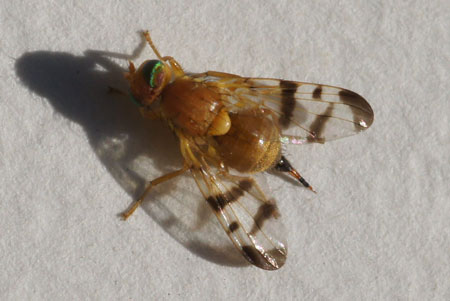 Rhagoletis
meigenii. Family Peacock flies, fruit flies (Tephritidae). Rhagoletis
meigenii. Family Peacock flies, fruit flies (Tephritidae).
In the Netherlands there are 5 Rhagoletis species. R. altenera, R. batava R. cerasi, R. indifferens rare.
Features: Pre-apical transverse band shorter, Runs from R4 +5 to the trailing edge of the wing. Yellow hairy head.
It can be found on barberry. Length about 4 mm. April - September. Photo 27-6-2011. |
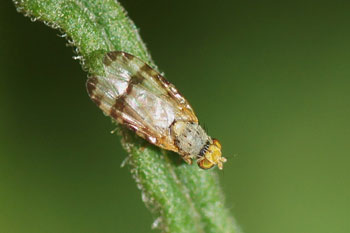 .. ..
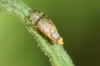 Sphenella
marginata. Family Peacockflies, fruitflies (Tephritidae). Sphenella
marginata. Family Peacockflies, fruitflies (Tephritidae).
This peacockfly has a grey thorax, a pale yellow scutellum and ayellow head. The wings have adark band in the middle and some dark spots.
I 've photographed the Sphenella on woodland ragwort.
Length 3-4 mm. Europe. Photos 8-7-2013. |
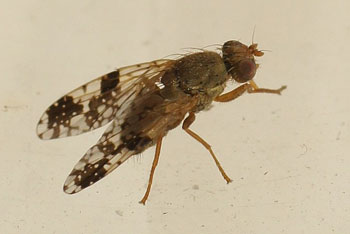 .. ..
 Tephritis bardanae. Family Peacockflies, fruitflies (Tephritidae).
The body is dark brown. The head, legs and antennae are yellowish brown. There are many species of Tephritis with these patterned wings. The differences are often small.
The larvae feed on burdock (Arctium).
Length 5-5,5 mm. Europe, West Asia. Photos 18-6-2013. |
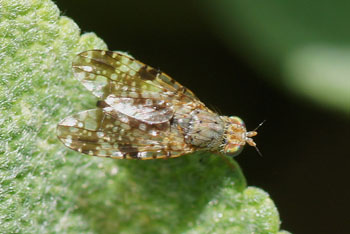 .. ..
 Tephritis vespertina. Family Peacockflies, fruitflies (Tephritidae).
The body is grey. The legs are yellowish brown. The patterned wings looks like the wings of T. bardanae, but are not the same.
The larvae feed on cat's ear (Hypochaeris) and sometimes with other species of the subfamily
Cichorioideae.
June-August. Length 3.5-4.5 mm.Photos 15-6-2014. |
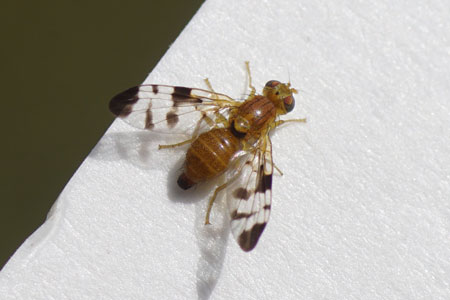 Trypeta zoe. Family Peacockflies, fruitflies
(Tephritidae).
Trypeta zoe. Family Peacockflies, fruitflies
(Tephritidae).
A yellow orange peacockfly.
Larvae mine the leaves of plants in the Asteraceae family. Photo
28-5-2023.
|
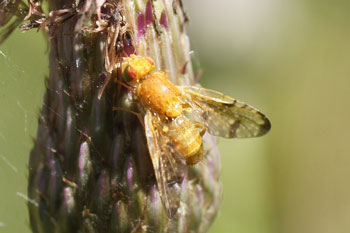 .. ..
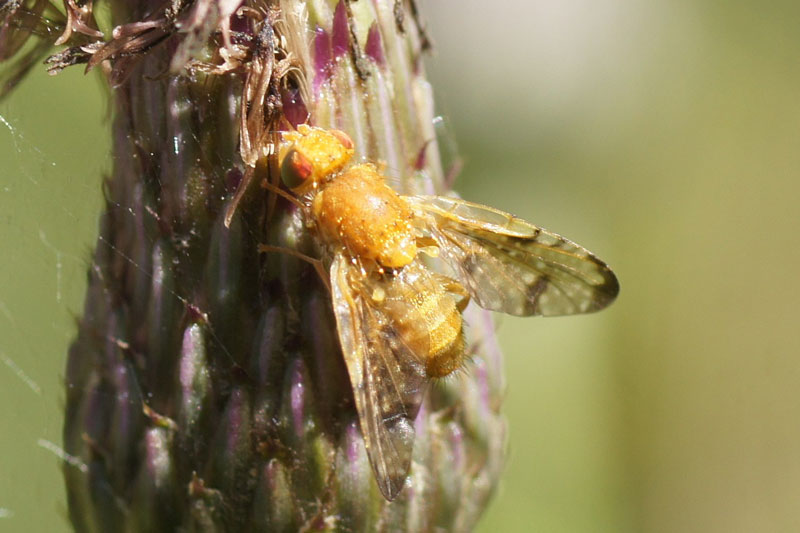
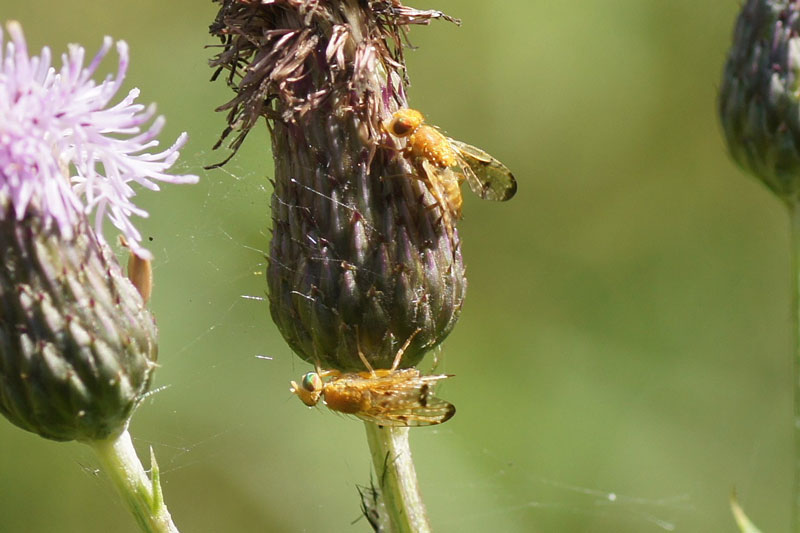
 Xyphosia miliaria. Family Peacockflies, fruitflies (Tephritidae). Not in the garden, but in the dunes about 4 km from
our house.
Xyphosia miliaria. Family Peacockflies, fruitflies (Tephritidae). Not in the garden, but in the dunes about 4 km from
our house.
A yellow orange peacockfly. On the flowers of thistles, where also the larvae live.
Length 4-8 mm. May - September. Photos 8-8-2014.
|
Opomyzidae
Slender flies. 2 to 5 mm. Colours are different. The larvae live in the stem of grass. Sometimes they are harmful.
 .. ..
 . .
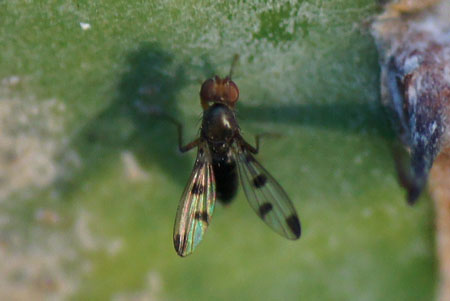
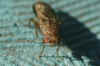 Opomyza germinationis. Family Opomyzidae.
Opomyza germinationis looks a lot like Opomyza petrei. To see the difference, the abdomen must be clearly visible. The abdomen of the Opomyza germinationis is for a large part dark. Only the last part is light brown. The abdomen of the Opomyza petrei
is light brown with dark longitudinal stripe on the side. The wings are
mottled. Approximately 3 mm.
The larvae live in grass stems.
Photos 27-9-2013. |
 .. ..
 . .
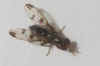 Geomyza tripunctata. Family
Opomyzidae.
Geomyza tripunctata. Family
Opomyzidae.
I saw this fly walking on an euphorbia in the garden. There are three spots on the wings. Hence the name
"tripunctata". The thorax of the Geomyza tripunctata is sometimes orange red. Then it is also possible, it is the in the Geomyza
nartshukae.
Eggs are laid at the base of grasses. The grass shoots and young leaves are eaten by maggots. They pupate after about 30 days.
Length up to 4 mm. May to November. Photos
16-10-2011,
5-4-2018. |
Small dung flies, lesser dung flies or lesser corpse flies (Sphaeroceridae)
There are very small flies in this family. From 0.7 to 5.5 mm.
Robust black flies. The first segment of the tarsus of the hind leg is swollen. The larvae live in decaying organic matter in dung and droppings. They
don't fly very well.
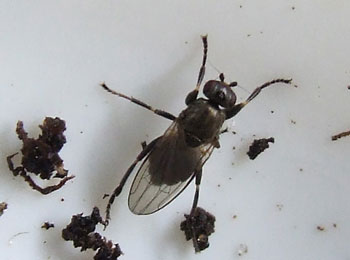 .. ..
 Small dung fly. Family
Sphaeroceridae. Family Small dung flies, lesser dung flies or lesser corpse flies
(Sphaeroceridae). Small dung fly. Family
Sphaeroceridae. Family Small dung flies, lesser dung flies or lesser corpse flies
(Sphaeroceridae). |
 .. ..
 . .
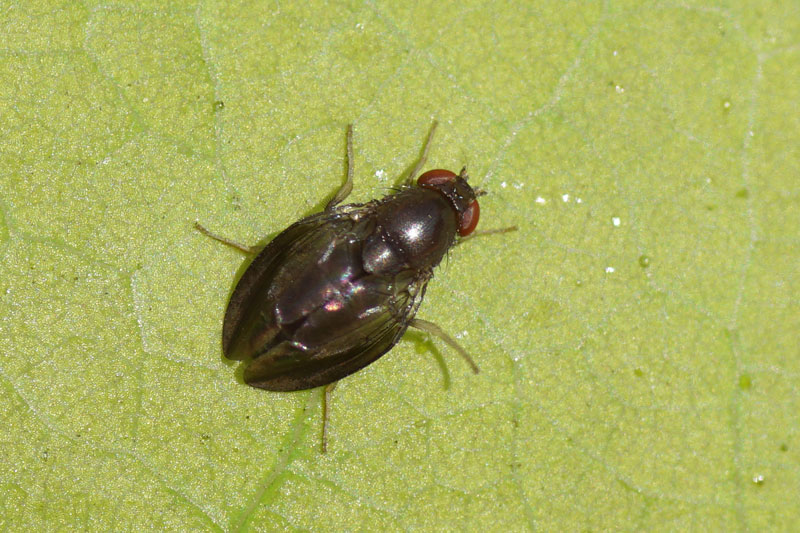
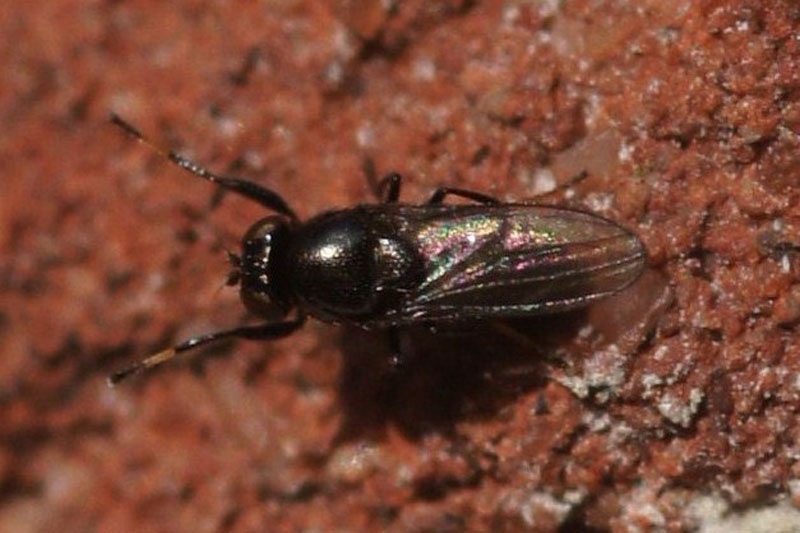
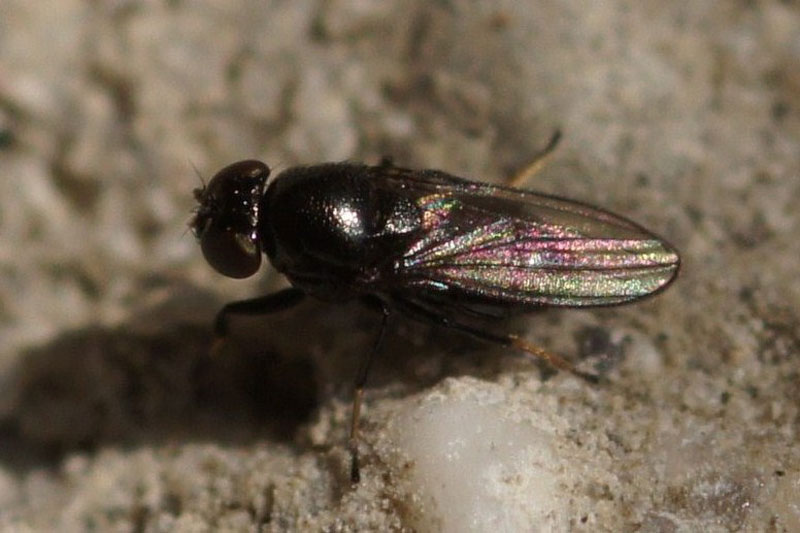
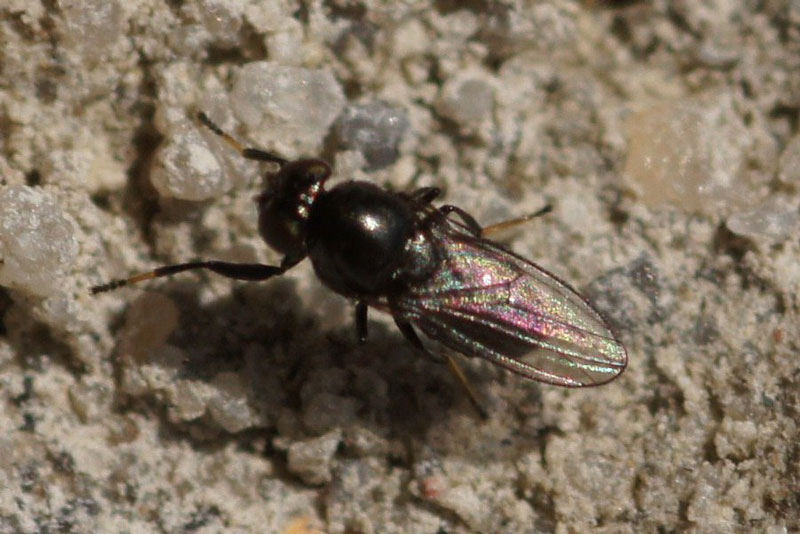
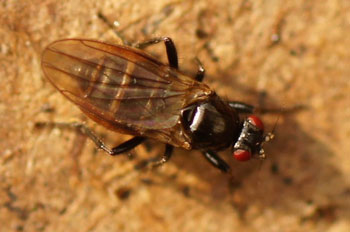
 Lotophila atra, maybe!! Subfamily
Copromyzinae. Family Small dung flies, lesser dung flies or lesser corpse flies
(Sphaeroceridae).
Lotophila atra, maybe!! Subfamily
Copromyzinae. Family Small dung flies, lesser dung flies or lesser corpse flies
(Sphaeroceridae).
A shiny dark fly with red eyes of about 3 mm, which can be found
on our compost heap.
According to Paul Beech: Copromyzinae. Perhaps Lotophila atra, but if you can get a specimen for me I can tell you more / for certain.
I did not sent fly. It's therefore uncertain. Thanks Paul!
In the last photo you can see the swollen first segment of the tarsus of
the hind leg. Photos 8-4-2013. |
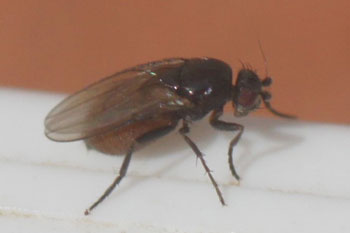 Small dung fly. Subfamily Limosininae. Family Small dung flies, lesser dung flies or lesser corpse flies
(Sphaeroceridae).
Small dung fly. Subfamily Limosininae. Family Small dung flies, lesser dung flies or lesser corpse flies
(Sphaeroceridae).
Unfortunately only
the subfamily.
Photo 12-2-2018. |
I want to thank everyone, who has helped me (waarneming.nl)
to identify. In particular, Joke van Erkelens, Robert Heemskerk, Mark van Veen,
Gerard Pennard, Niels-Jan Dek, Jan Willem van Zuijlen and Han Endt. With the determination of Tachinidae I have had
much help from Theo Zeegers and Chris Raper.
Nederlands /
Dutch
 
Subpage flies:
Tachinidae
Blow-flies
(Calliphoridae) House
flies (Muscidae) Soldierflies
(Stratiomyidae)
Root-Maggot
Flies (Anthomyiidae)
Small
flies Gnats
Subpage wasps, bees, bumblebees: Parasitica, Ichneumonidae
Sawflies
symphyta Bumblebees
Bee hotel
Subpage France: Insects
France
|