|
Australië, australia
 Nederlands /
Dutch Nederlands /
Dutch
Spring from 2007
On the first spring page I’ve made a general
description. On this page I want to describe and photograph a number of Spring flowering plants
more extensive.
 .. ..
 . .
 . .
 . .
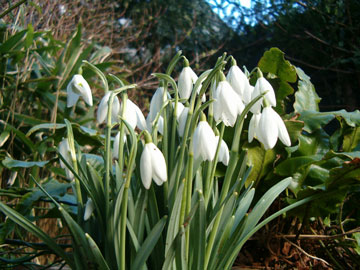
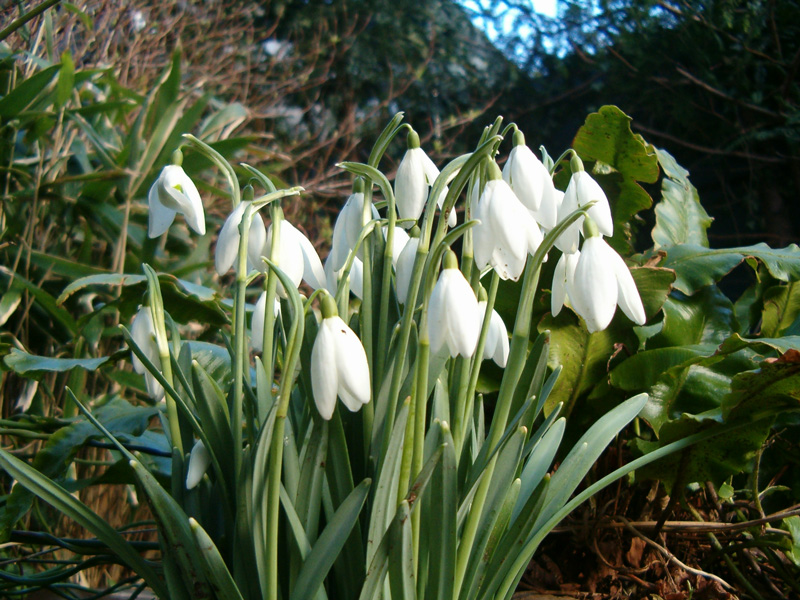
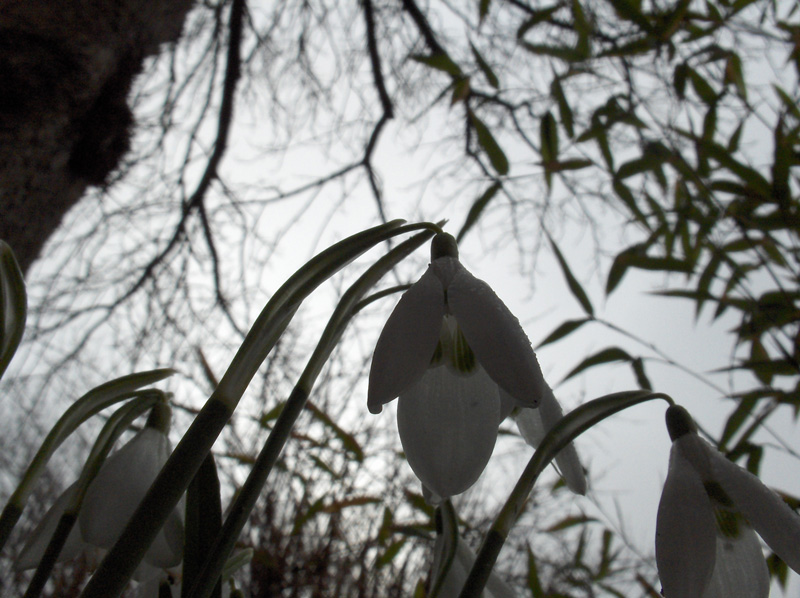
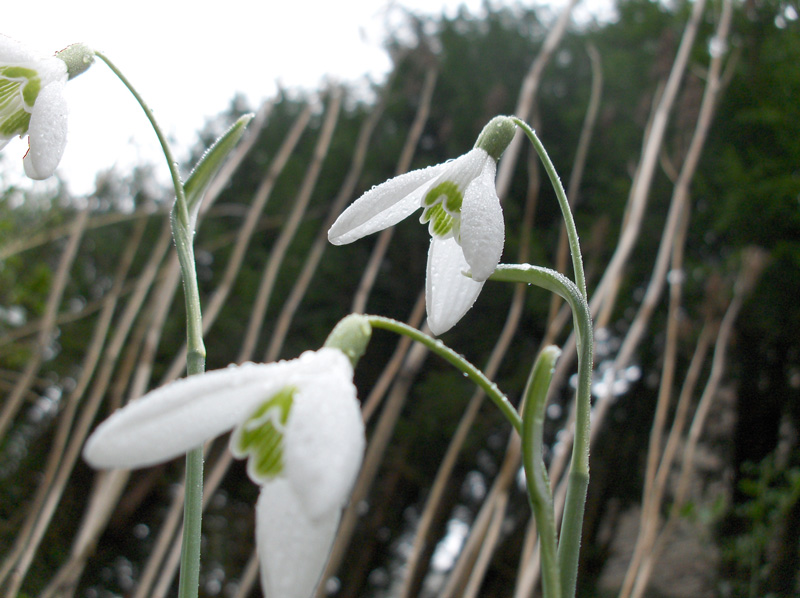
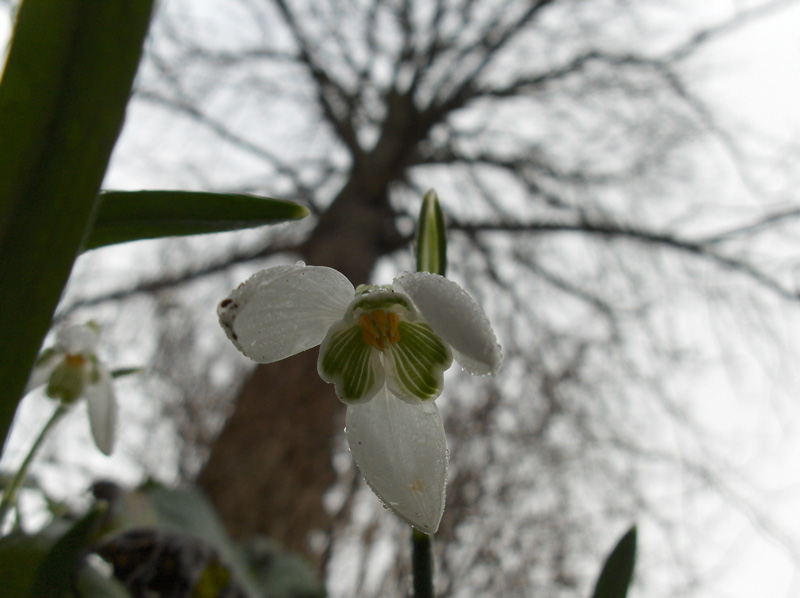
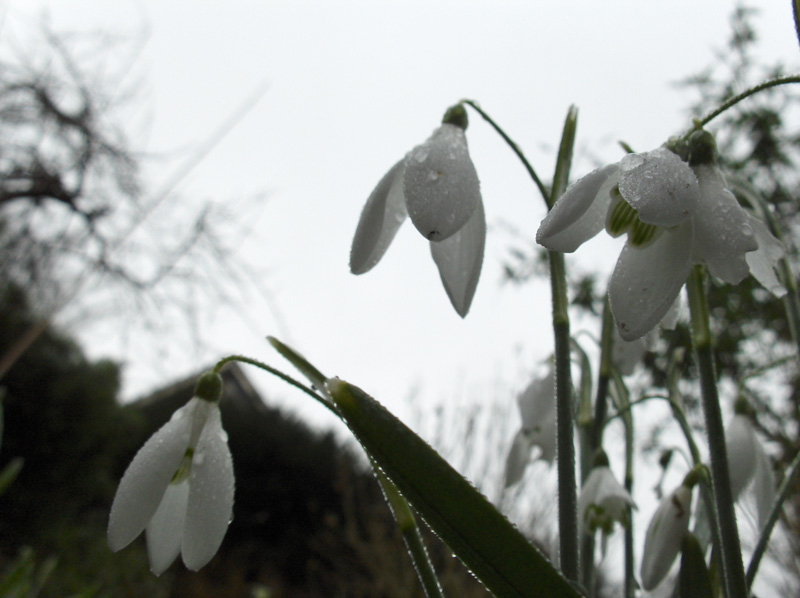
 Snowdrop (Galanthus nivalis). Amaryllis family (Amaryllidaceae).
 |
Bulbous plant. Bloom time: End winter, beginning spring. The
snowdrop is native to southeast Europe. They love fertile soil and
you can find them in deciduous
forests.
Did you know, in the wild there is in Holland a Spring Snowflake (Leucojum vernum) and Summer Snowflake (Leucojum aestivum? The Summer Snowflake (bloom time: April, May) grows in swampy grassland and reed beds. The
Spring Snowflake has been protected in the Netherlands, so it is
rare.
|
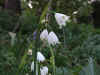
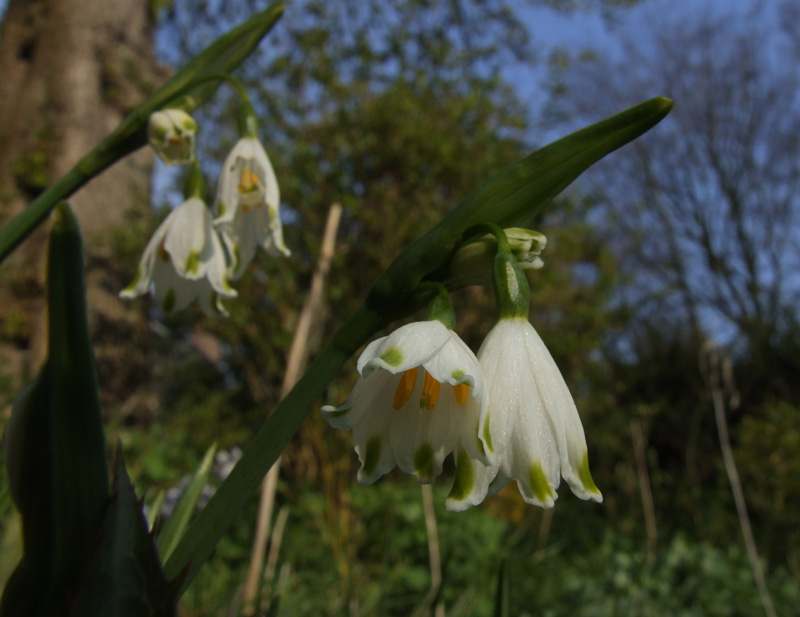
 Giant
Snowflake, Summer Snowflake (Leucojum Gravetye Giant). Amaryllis family
(Amaryllidaceae). Despite
its common name, summer snowflake blooms in March, May.
Giant
Snowflake, Summer Snowflake (Leucojum Gravetye Giant). Amaryllis family
(Amaryllidaceae). Despite
its common name, summer snowflake blooms in March, May.
In 2007 I bought some bulbs. The Giant Snowflake is larger and more robust than a
snowdrop. This snowflake bears up to eight white, green tipped bells.
Height: 30 - 50 cm. Rich, moist but well-drained soil. Native to South
West Asia. |
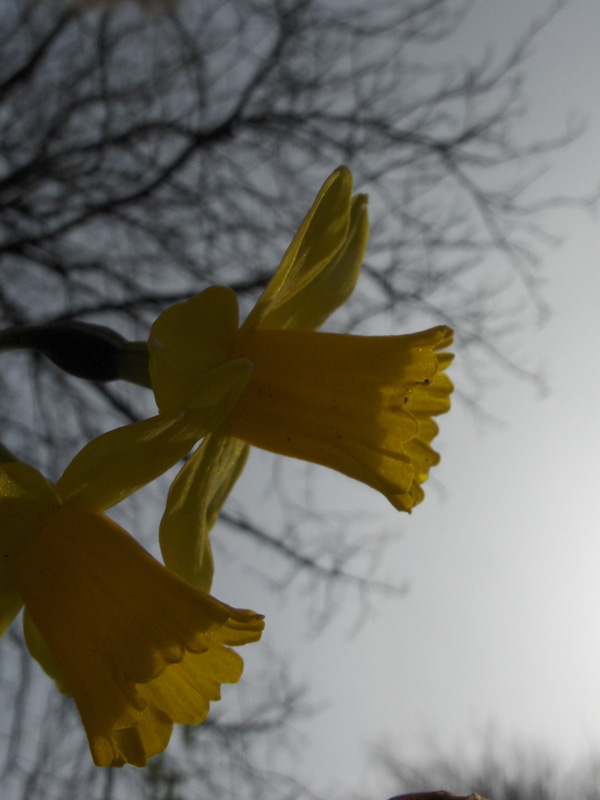
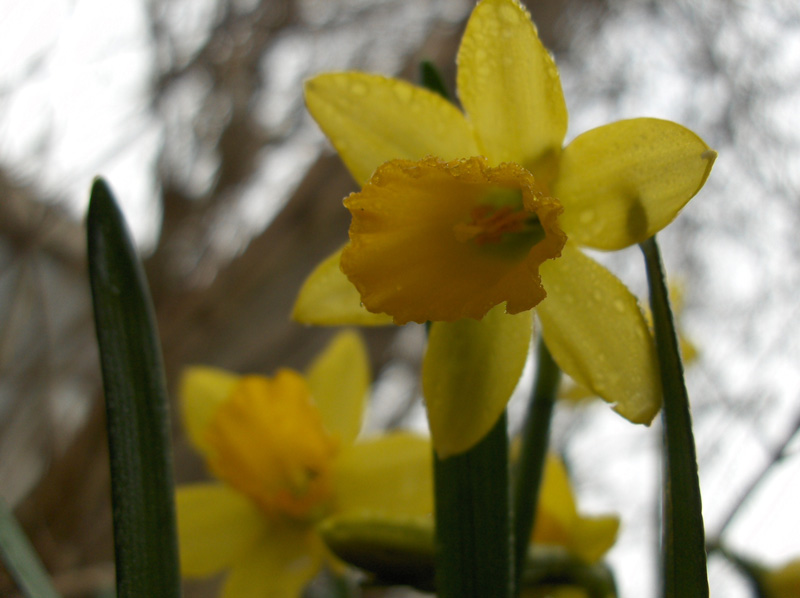
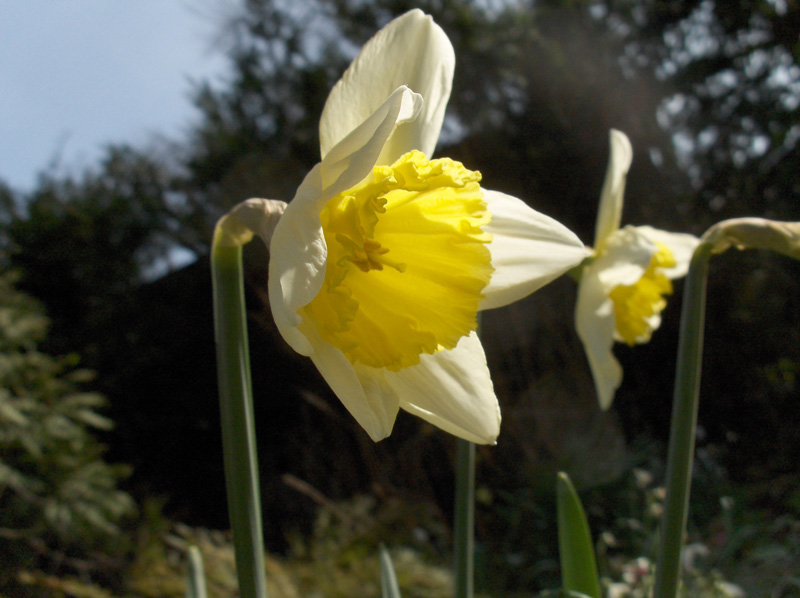
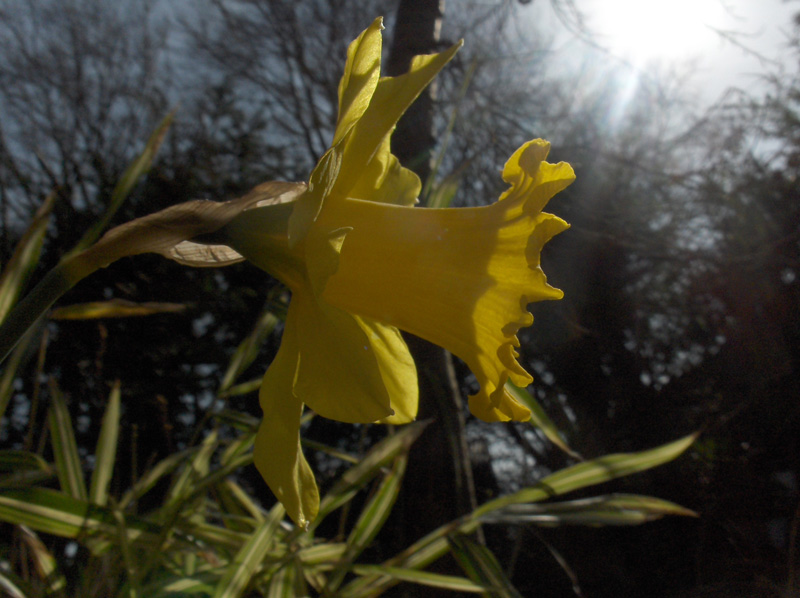
Trumpet daffodil
( Narcissus
cyclamineus Tête à tête) and (Narcissus pseudonarcissus major).
Amaryllis family (Amaryllidaceae).
The Trumpet daffodil is a bulbous plant. Nowadays there are many cultivars.
The daffodil blooms a little later, than
the snowdrop. During flowering they love, fertile
wet soil.
After flowering, when the leaves are withered, the soil has to be rather
dry. Bloom time III- IV.
First photo: Narcissus
cyclamineus ' Tête à tête'. A small species. Height 10 - 20 cm. I always buy some for our house. When they
have bloomed, they go into the garden. Here they bloom again next year. Narcissus cyclamineus is native to northwestern Portugal and Spain.
Last photos: Narcissus pseudonarcissus subspecie major. These are originally from southwestern Europe.
Narcissus pseudonarcissus subspecie pseudonarcissus: In the east and south of the Netherlands in damp grasslands and river valleys, but
they are very rare now. Usually you find escaped gardenplants.
|
 .. ..
 . .
 . .
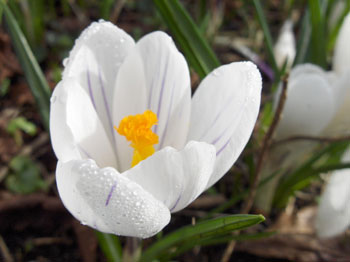
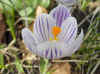
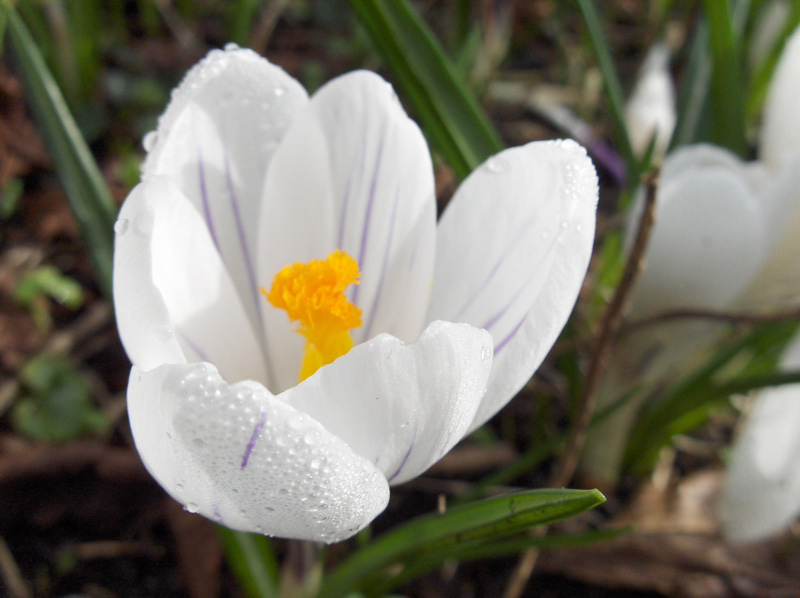
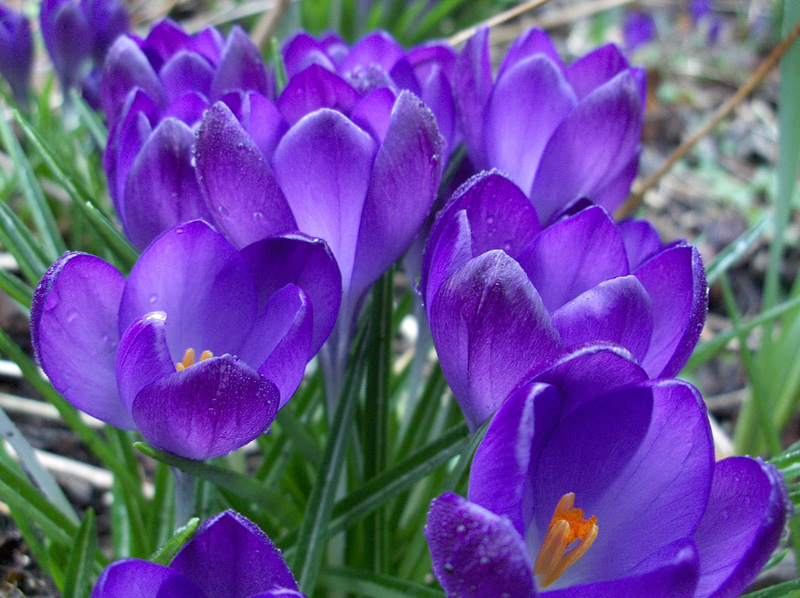
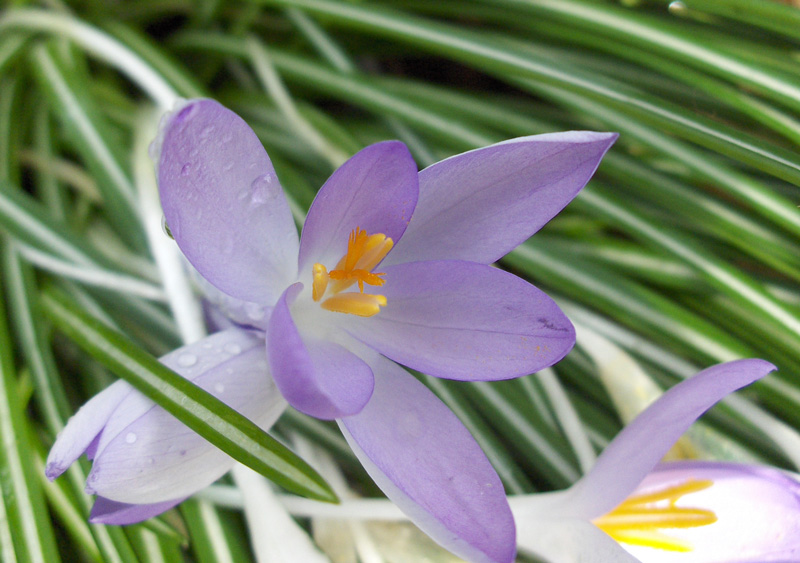
 Crocus.
Iris family (Iridaceae).
Crocus.
Iris family (Iridaceae).
|
The plants grow from corms. Corms are stems that are internally structured
with solid tissues. (Bulbs are made up of layered fleshy scales.) Native
to
central and southern Europe, North Africa, the Middle East, Central Asia
and western China. There are many species and cultivars.
Crocus is placed botanically in the iris family (Iridaceae). Some crocus species bloom in autumn
(autumn crocus)
Most crocus species prefer a sunny position and well-drained soil.
They reseed themselves freely. The crocus seed pods come above ground in
June. The seedlings grow very slowly, however and will not bloom for
several years.
|
 .. ..
 . .
 . .
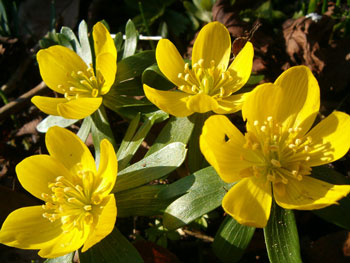
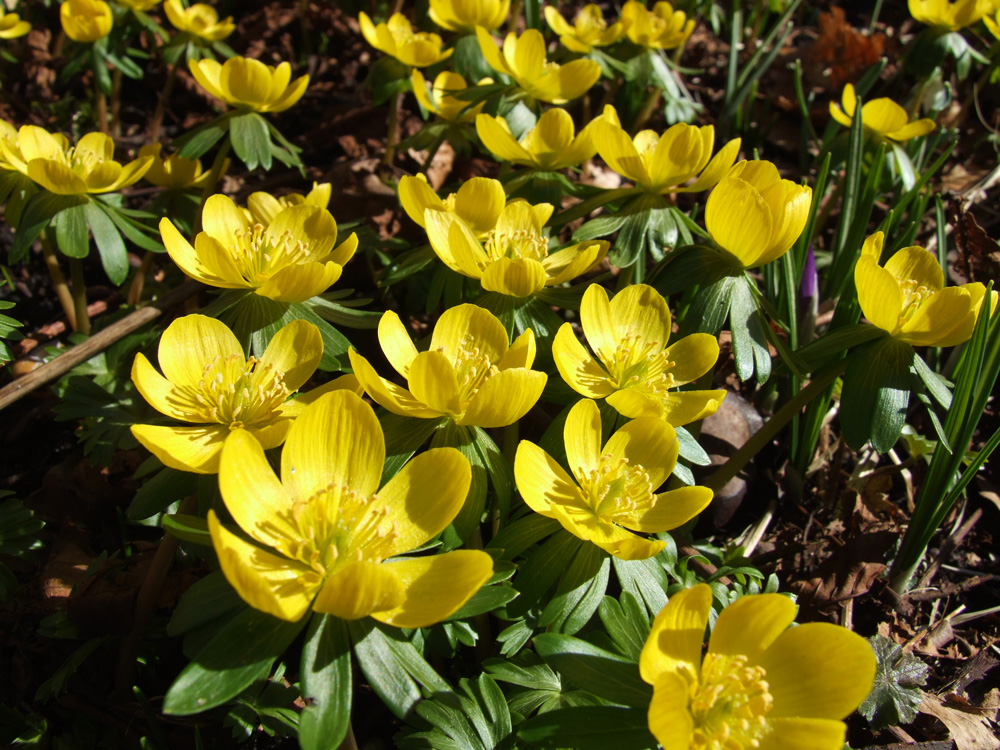
 Winter Aconite (Eranthis hyemalis). Buttercup family, crowfoot family (Ranunculaceae). Winter Aconite (Eranthis hyemalis). Buttercup family, crowfoot family (Ranunculaceae).
|
|
A tuberous plant. This
photograph is from February 2006 They bloom earlier than the snowdrops. The bloom time is short. I
was too late this year
with
the camera. They don’t like too dry soil. They reseed themselves. In
South-France and Italy they are found in wild.
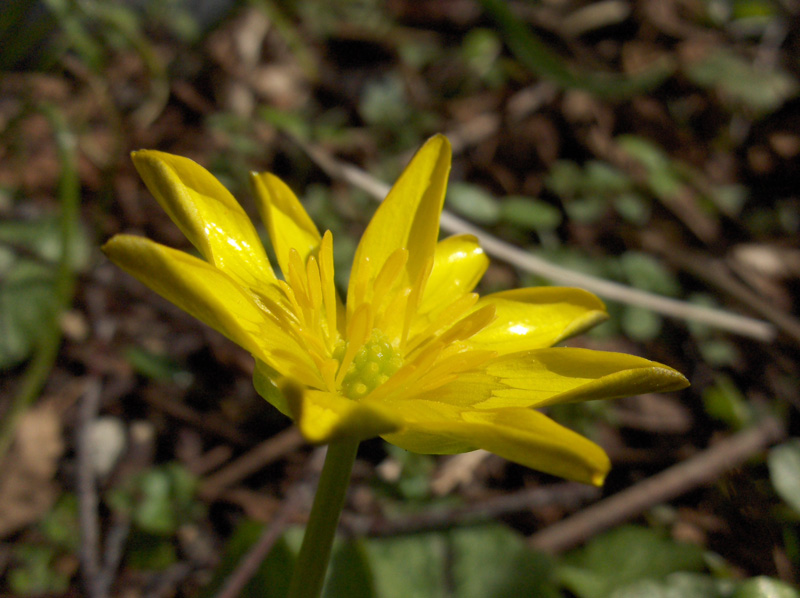
Pilewort
(Ficaria verna). Buttercup family, crowfoot family (Ranunculaceae).
I have also a picture of a family member. It’s a wild
plant, which appears in March. Because of the
many dark green horseshoe-shaped leaves
it is for other plants difficult to grow. In June it has disappeared. It
spreads itself by self-seeding and by bulbils.
|
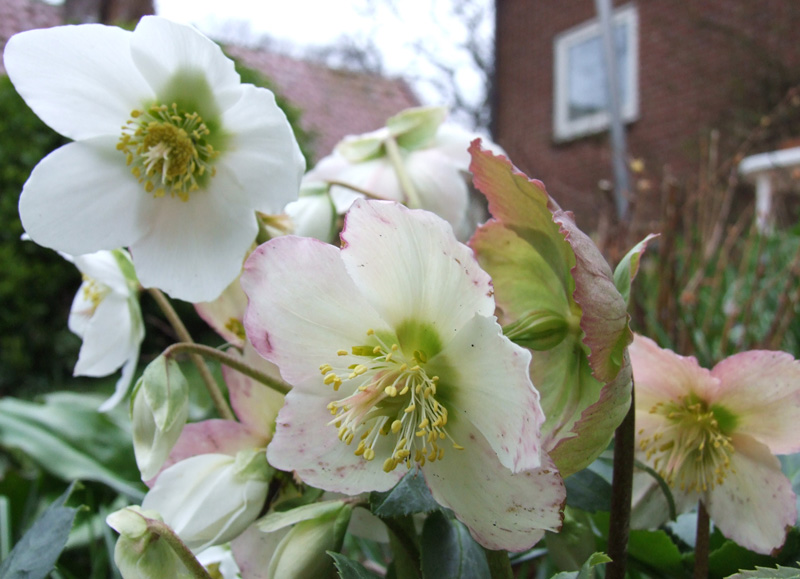
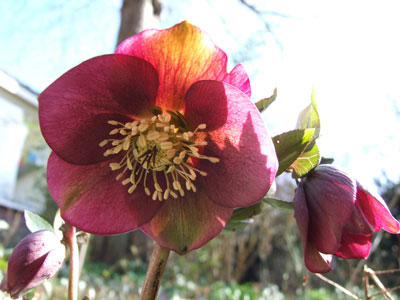 .. ..  Hellebore, (Helleborus).
Buttercup family or crowfoot family (Ranunculaceae).
Hellebore, (Helleborus).
Buttercup family or crowfoot family (Ranunculaceae).
|
The powder of the roots cause sneezing. The plant is poisonous.
Flowers : January - April. The plants are evergreen perennials and
have shiny, dark green leathery leaves. Heigth: 20 - 30 cm. Partial shade.
Rich, well-drained soil. Replanting is difficult.
Christmas Rose: Helleborus Niger has white flowers (Later light
pink or greenish) and a black rootstock. Native to mountainous
regions, particularly in the Alps and the Apennines. Despite being
called the Christmas rose, it flowers later (January, Febrary) in
the Dutch gardens.
Lenten Rose: Helleborus orientalis. There are many hybrids .
Flowers from pink to black. Lenten roses are the easiest Hellebores to
grow. Narive: From Bulgaria to Turkey.
|
 .. ..
 . .
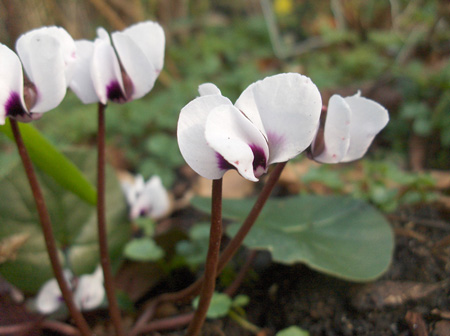
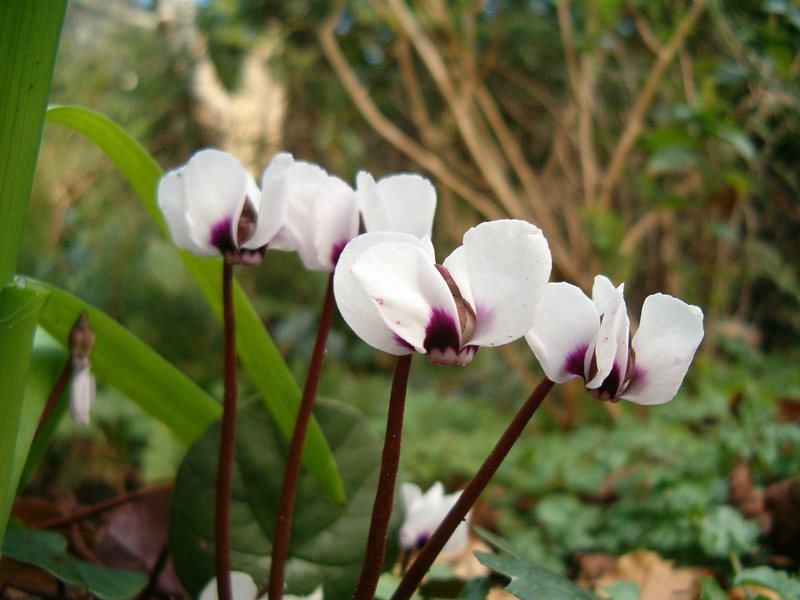
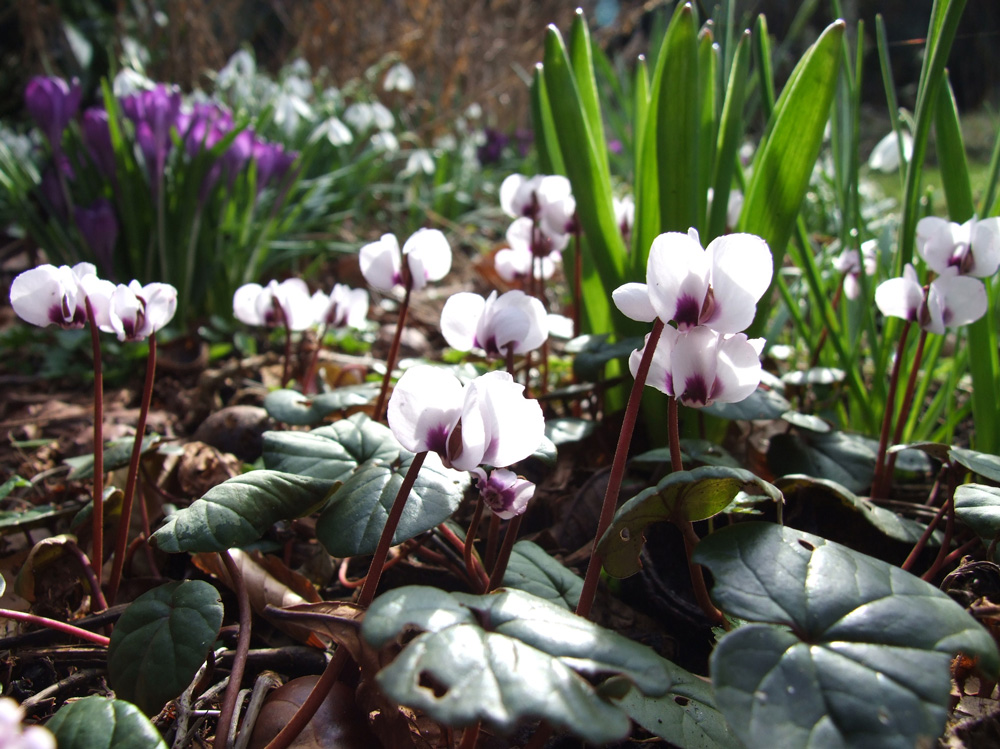
 Cyclamen coum.
Family Primulaceae.
Cyclamen coum.
Family Primulaceae.
|
A tuberous plant. It already starts blooming in January. This continues
up to April. It has instead of autumn flowering cyclamen round dark green
rounded leaves. They love humus-rich calcareous / lime soil.
Photo March 2010.
|
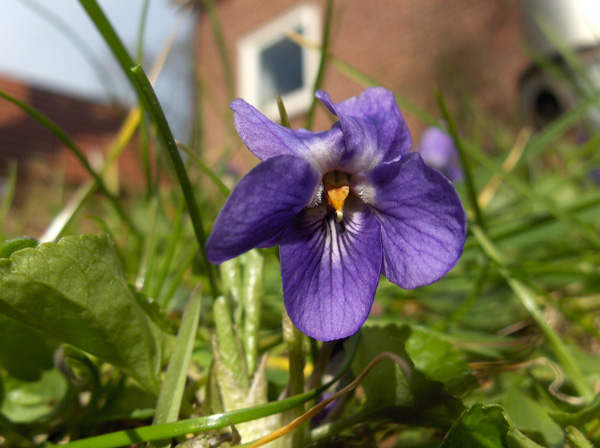
 Sweet
violet (Viola
odorato). Family Violaceae.
Sweet
violet (Viola
odorato). Family Violaceae.
|
In March they appear in the
garden. It has a rootstock. From
the rosette it has runners. It is also be found in the wild. They don’t
bloom for a long time. The booklet remains still above the ground.
The
flowers are small. You have to look from a small distance to see how
beautiful they are. Then you smell a delicious fragrance.
For the Greeks
it was because of the fragrance the flower of Aphrodite, the goddess of
love. The oil from the flowers is still used for fragrance articles.
|
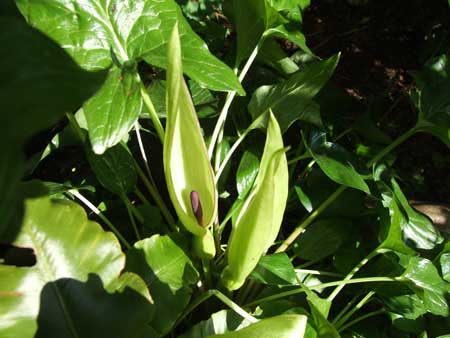 .. .. 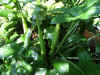 . .
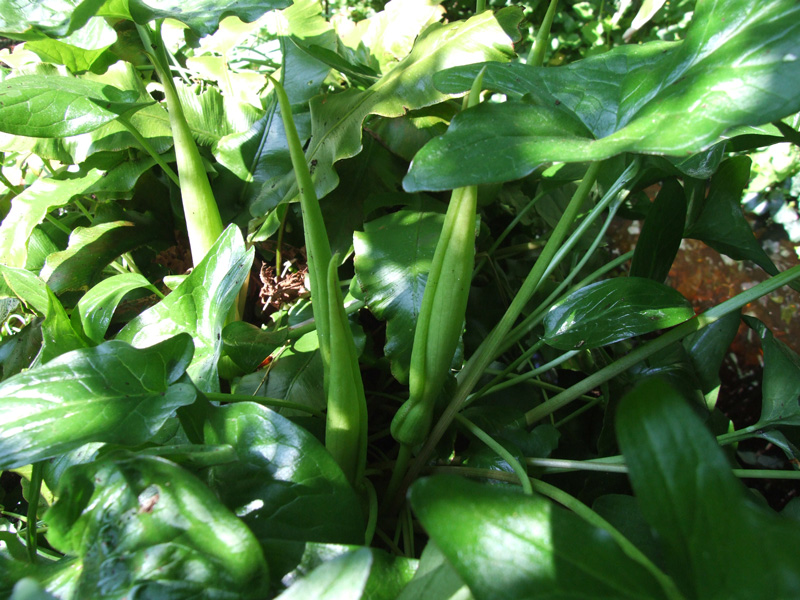
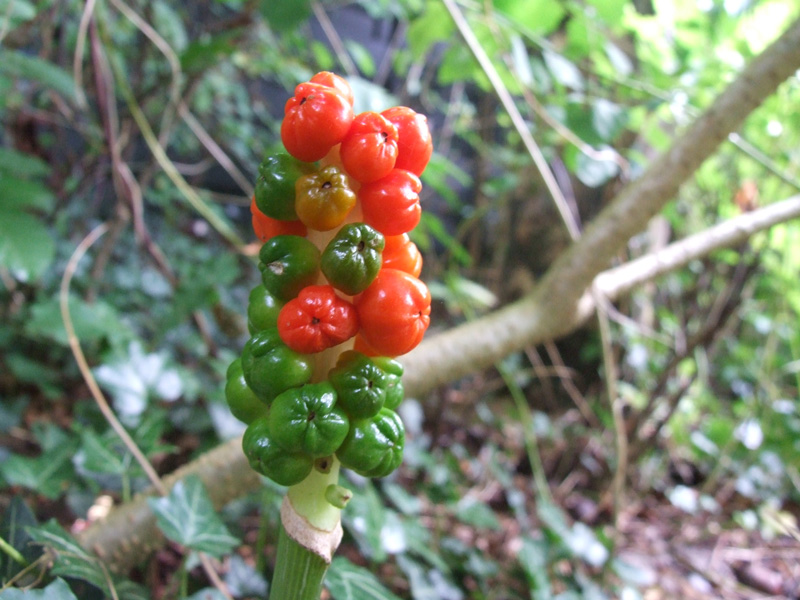
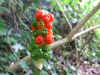 Wild arum, Lords and Ladies, Jack in the Pulpit
(Arum maculatum). Family Araceae.
Wild arum, Lords and Ladies, Jack in the Pulpit
(Arum maculatum). Family Araceae. |
This arum grows on various places in the garden. I've the plants for years,
but I don't know, how they came into the garden.
Wild arum isn't native. It is native to southern Europe. In Britain
and in the Netherlands you can find this Arum in wild now.
It likes moist, rich soil.
The plant is toxic.
Height 20 to 40 cm.
Left photo: May 21. Bloom time: April, May. In July it has red fruits
I hesitated between Wild arum (Arum maculatum) and Italian arum (Arum
italicum). But the spadix of the Wild arum (Arum maculatum) is purple-brown.
|
 .. ..
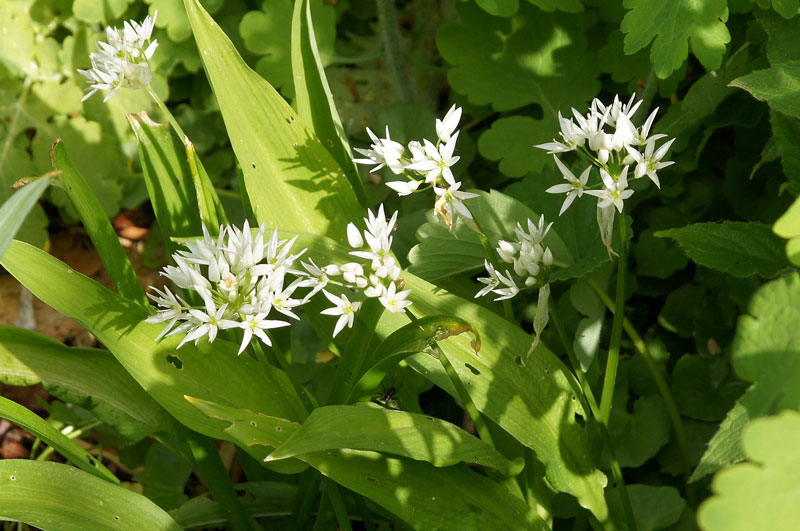
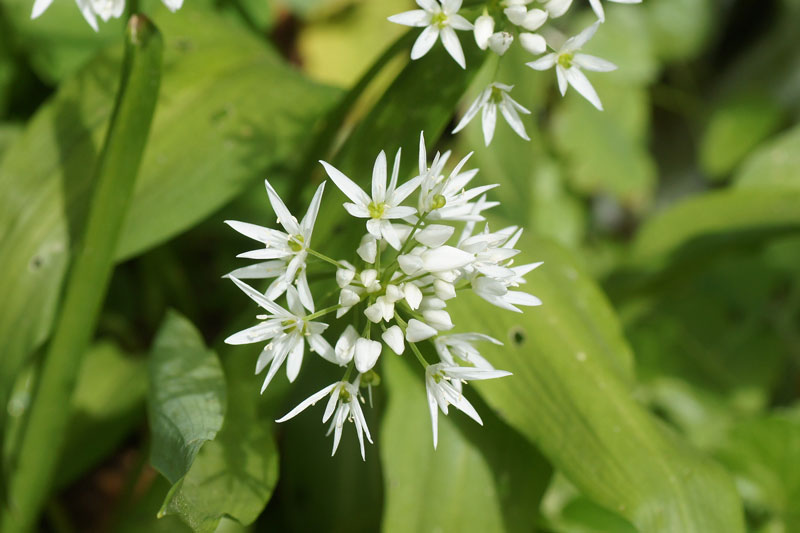
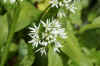 Wild garlic(Allium ursinum).
Amaryllis family (Alliaceae).
Wild garlic(Allium ursinum).
Amaryllis family (Alliaceae). |
Wild garlic is native to the Netherlands. In some areas it is rare. In the dunes and
my village "Bergen", it is a very common plant. I have some plants in the garden. They
prefer moist soil and shaded places. It is a perennial plant.
The leaves are oval and resemble the leaves of the lily of the valleys. The white flowers are forming a spherical shape..
The crushed leaves smell like onions and garlic and in some countries
they are used in food. Then you better not pick the poisonous leaves of the lily of the valleys.
The bulbs and flowers are also tasty.
Bloom time: April - June.
Height 20-40 cm. Europe, Asia Minor.
Photos 8-5-2013 and 10-5-2013.
|
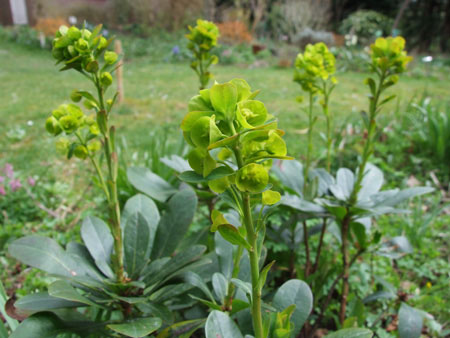 .. ..  Euphorbia
amygdaloides "robbiae" Family Euphorbia.
Euphorbia
amygdaloides "robbiae" Family Euphorbia. |
This Euphorbia is in the wild in northwest Asia Minor. It is a ground cover by its root suckers.
It is evergreen.
Calcareous dry sandy soil. Sun, partial shade.
Bloom time: April, May. Height 30 - 40 cm. Photo: April 11, 2010.
|
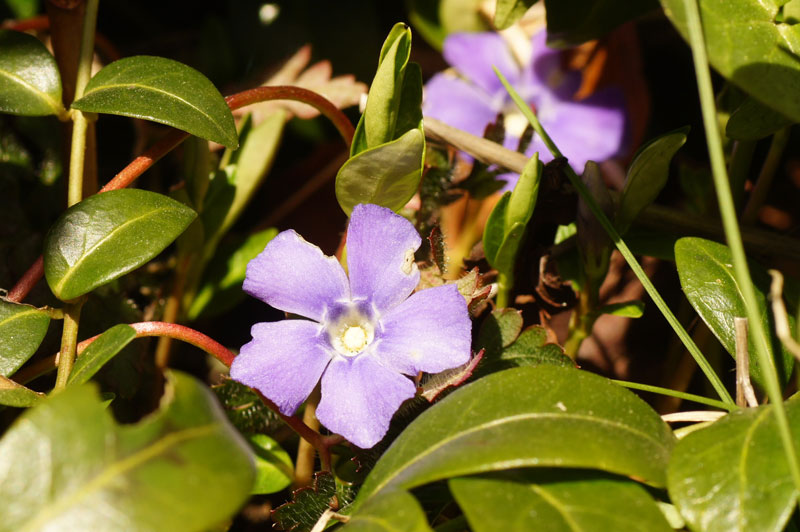
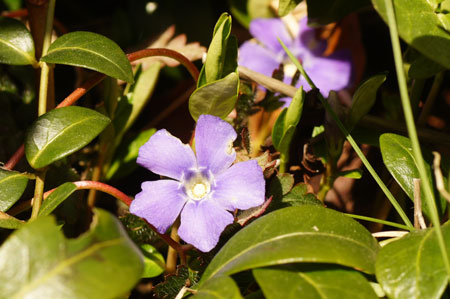 Lesser periwinkle, Dwarf periwinkle, Small periwinkle, Common periwinkle,
Creeping myrtle (Vinca Minor). Dogbane family (Apocynaceae).
Lesser periwinkle, Dwarf periwinkle, Small periwinkle, Common periwinkle,
Creeping myrtle (Vinca Minor). Dogbane family (Apocynaceae). |
The Lesser Periwinkle is native to the Mediterranean. Now you can find
it in the wild in the Netherlands.
Sun, partial shade or shade. In the sun it is blooming better. It is a excellent
evergreen groundcover with leathery, waxy leaves, but keep an eye on it, because
it is invasive! You can even cut periwinkle with the hedge trimmer.
The plant stays low to the ground and makes long shoots. I put it on this page, because it blooms in the
spring. (usually blue-violet flowers, but there are cultivars with other
colours)
Ordinary, slightly moist soil. The periwinkle is poisonous. Bloom time: March - June.
Height about 20 cm. Photo: April 5, 2013.
A family member is less the hardy, larger Greater periwinkle (Vinca major).
|
 .. ..
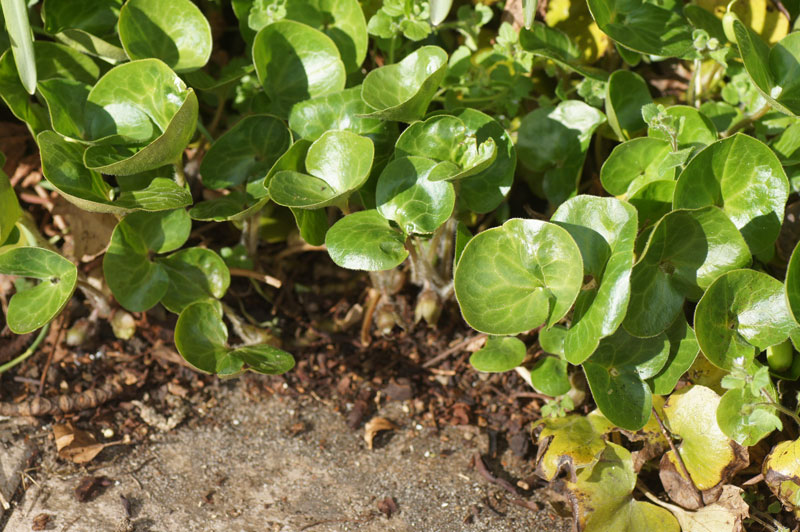
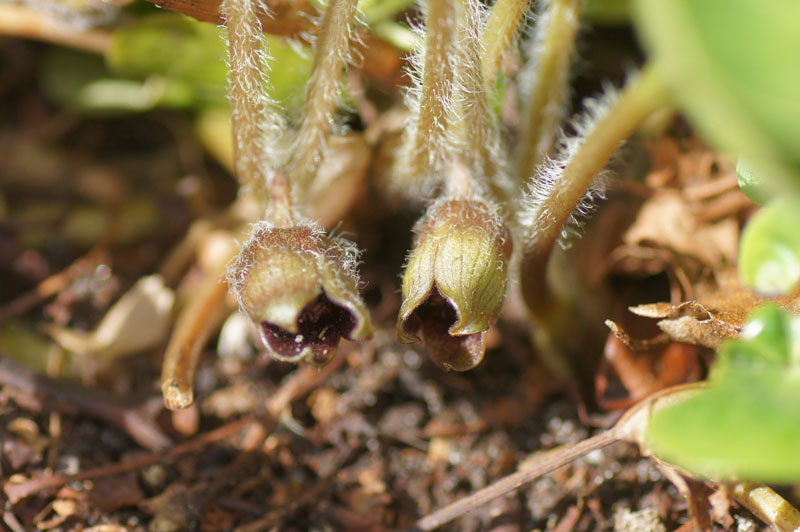
 Asarabacca, European Wild Ginger, Hazelwort, and Wild Spikenard
(Asarum europaeum). Birthwort family (Aristolochiaceae).
Asarabacca, European Wild Ginger, Hazelwort, and Wild Spikenard
(Asarum europaeum). Birthwort family (Aristolochiaceae). |
Like periwinkle Asarabacca is a good evergreen groundcover with leathery leaves. The beautiful glossy leaves are kidney shaped. In our garden
it isn't invasive. If you don't pay attention, you will never see the flowers. The purple bell-shaped flowers can be found close to the ground
under the leaves. In the picture they are not visible. That's why I posted a picture where
you can see them better. Not native. Asarabacca originates in Central and Southern Europe.
Bloom time: April - June. Shade, partial shade, slightly moist soil.
Height about 15 cm. Photos: April 27, 2013.
|
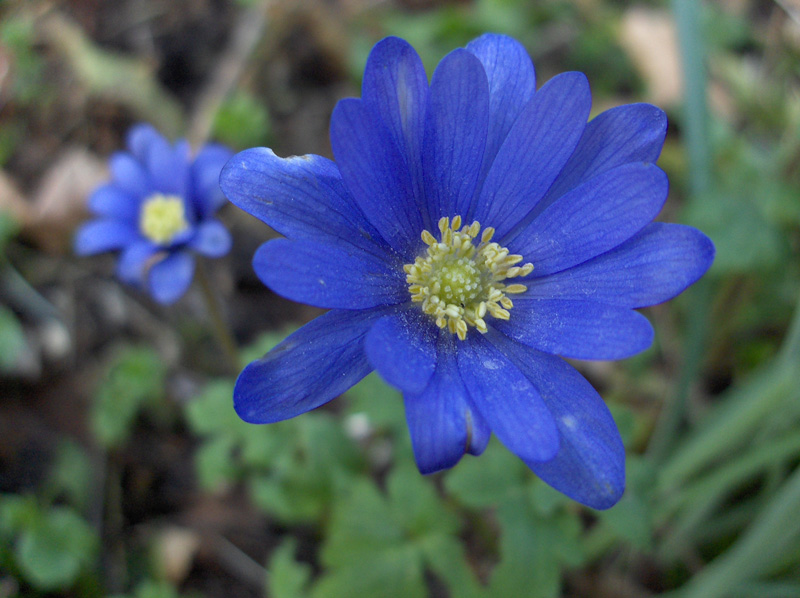
 Windflower
(Anemone blanda Atrocaerulea). Buttercup family or crowfoot family (Ranunculaceae).
Flowerbulb (tuber) for naturalization.
The flowers are blue.
Windflower
(Anemone blanda Atrocaerulea). Buttercup family or crowfoot family (Ranunculaceae).
Flowerbulb (tuber) for naturalization.
The flowers are blue.
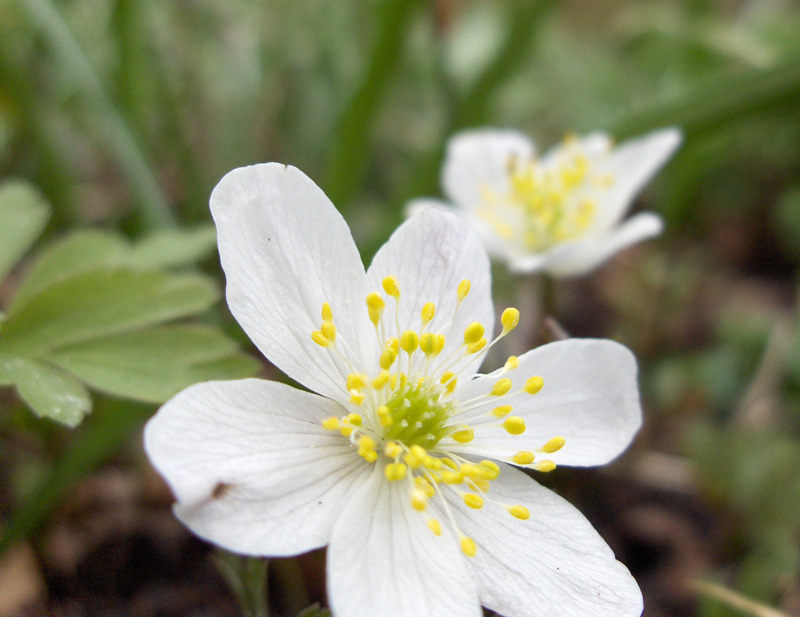
Wood
anemone (Anemone
nemorosa). Buttercup family or crowfoot family (Ranunculaceae).
A native plant. The plants
grow from underground stems called rhizomes. The seeds are also spread by ants. The ants like
the elaiosoom on the seeds. |
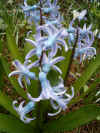
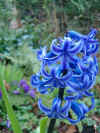
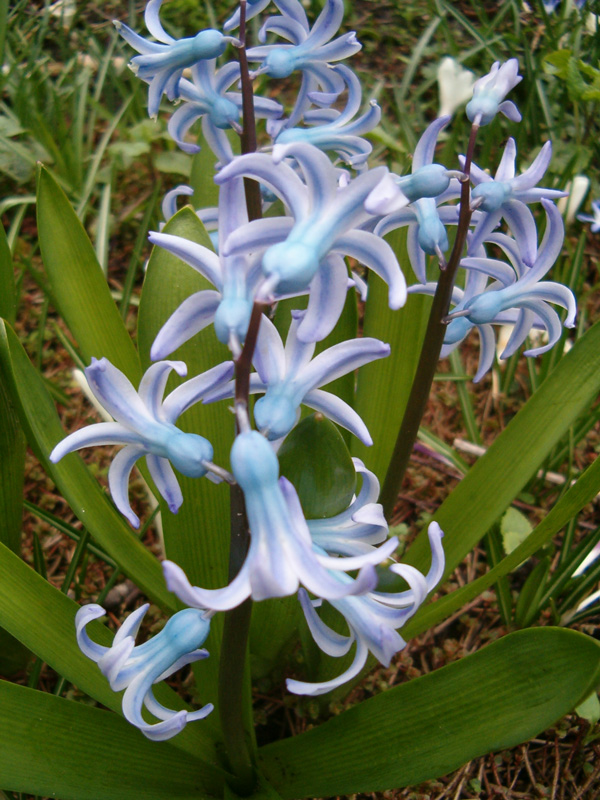
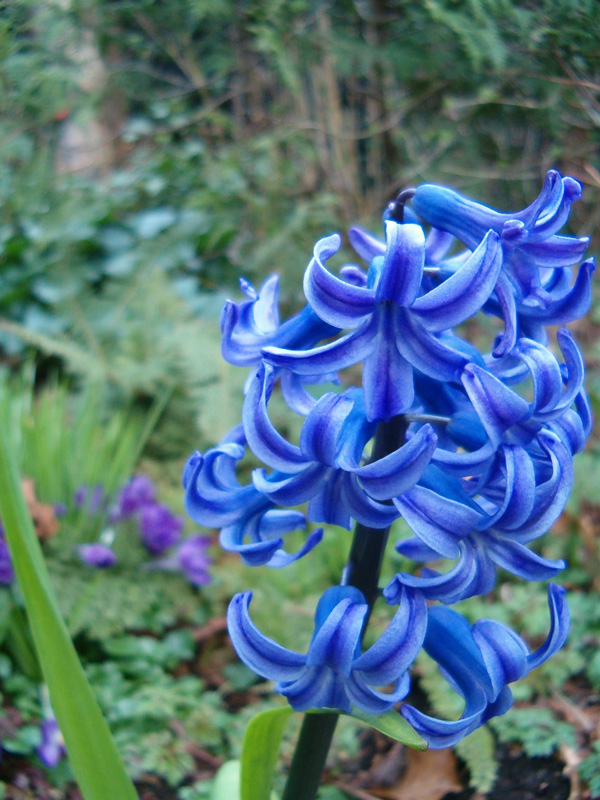
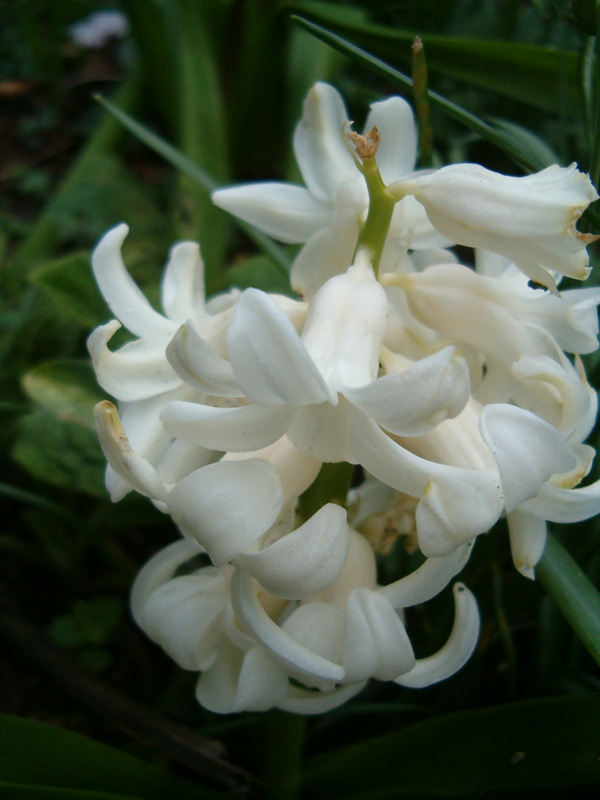
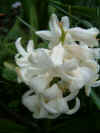 Hyacinth (Hyacinthus orientalis).
Family Asparagaceae.
Hyacinth (Hyacinthus orientalis).
Family Asparagaceae.
Native to Iraq and Syria.
They have been already introduced in the 16th century in Europe. What we
now see are cultivars. Flowers in the garden are every year a little
smaller. But I find them more natural. They can reseed themselves. Drained,
fertile soil.
|
Lily family ( Liliaceae) / Hyacinth family (Hyacinthaceae)
or familyAsparagaceae.
From wikipedia: Scilla (and other plants!) has most recently been classified as belonging to the family Asparagaceae, subfamily Scilloideae; the subfamily was formerly treated as a separate family, Hyacinthaceae.[5] Prior to that it was placed in the Hyacintheae tribe of the Liliaceae family.
In my books, many plant species belonging to the lily family, Liliaceae instead Asparagus Family. Very confusing.
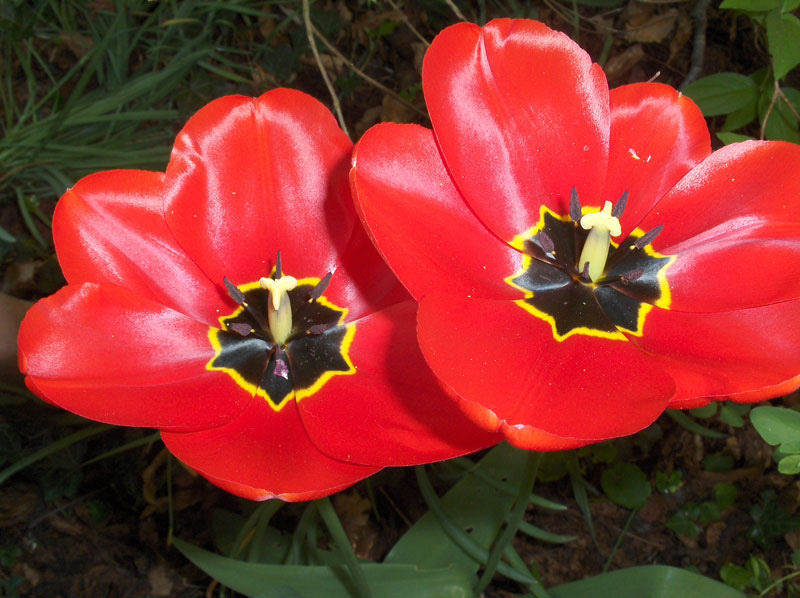
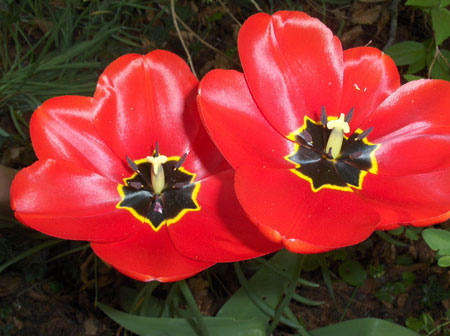 Tulips.(Tulipa). Family Liliaceae.
 |
The Netherlands is famous
for its cultivated tulips. As the photograph left. They are imported from
Turkey in the 16th century. Well
drained,
fertile soil.
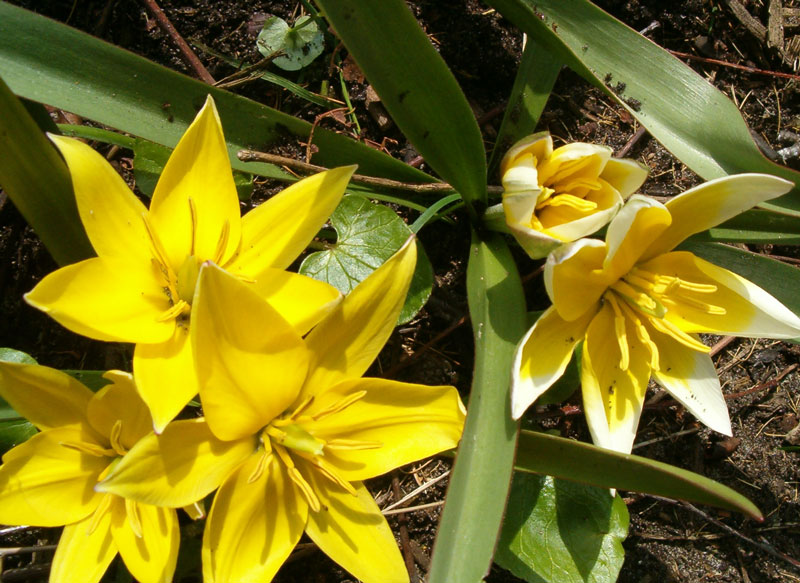
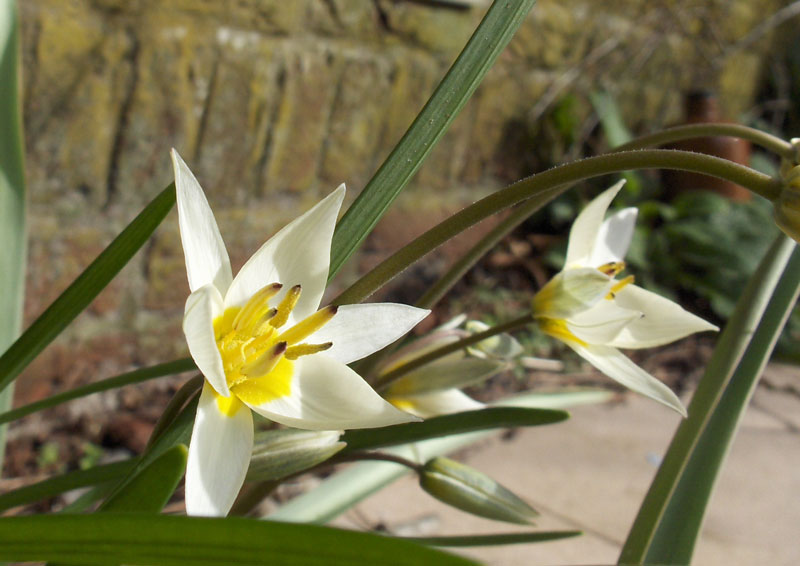
But I prefer the botanical tulips. These wild tulips are very easy to naturalize. Height 15 - 25 cm. Bloom time: lV - V.
Urumiensis: Iran. Tarda: Central Asia. Turkestanica: Turkey. Little
Princess and Little Beauty are cultivated species, but are also easy to
naturalise.
|
Urumiensis, Tarda, Turkestanica, Little
Princess, Little Beauty
|
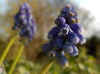
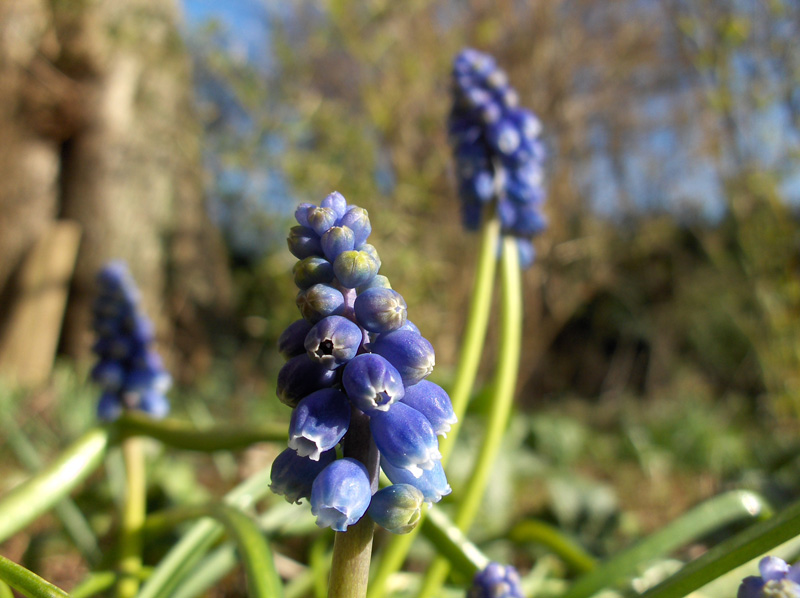
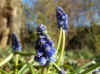 Grape
Hyacinth (Muscari).
Fam. Liliaceae. Now: subfamily Scilloideae. Family Asparagaceae. Around the Mediterranean they grow in the wild. At me they do
not multiply themselves very rapidly.
Grape
Hyacinth (Muscari).
Fam. Liliaceae. Now: subfamily Scilloideae. Family Asparagaceae. Around the Mediterranean they grow in the wild. At me they do
not multiply themselves very rapidly. |
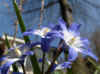
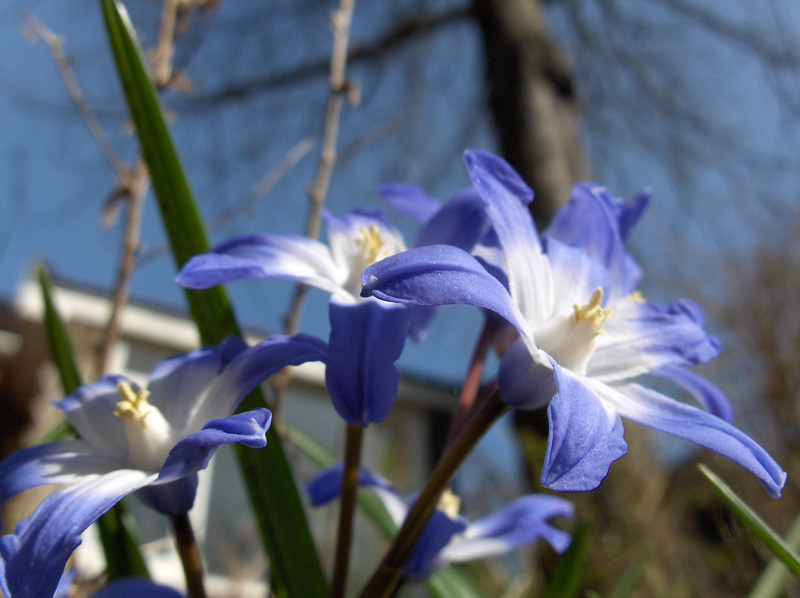
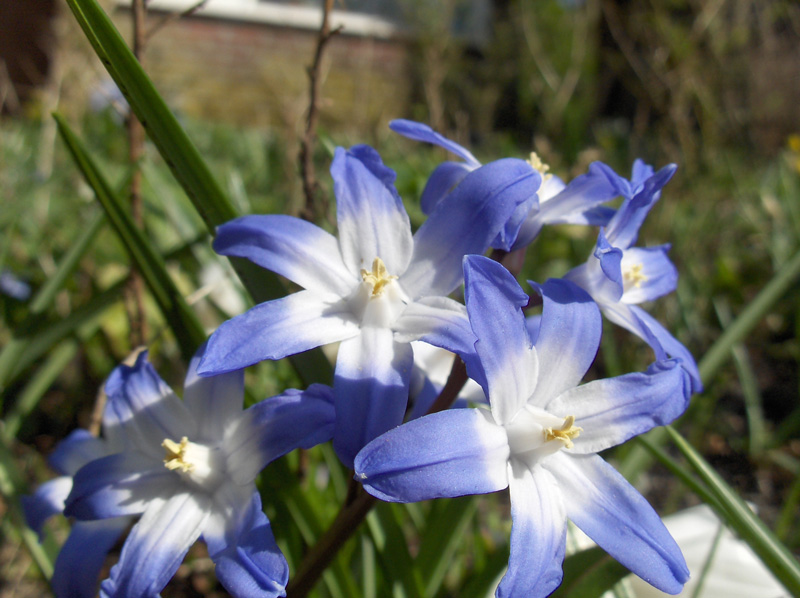
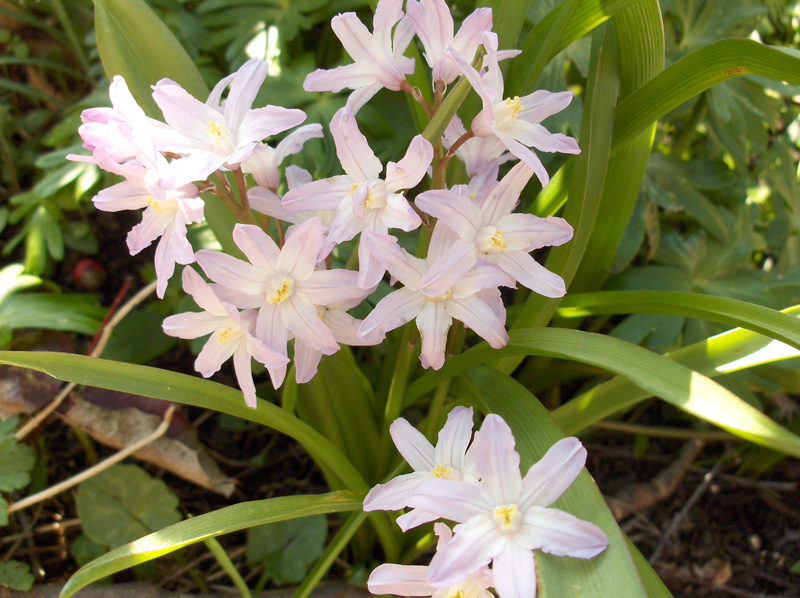
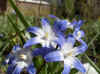 Glory of the Snow
(Chionodoxa
luciliae). Family Liliaceae. Now: subfamily Scilloideae. Family
Asparagaceae.
Native to Turkey. In Greek Chion means snow
and doxa celebrity. Ants are able to spread the seeds. Shade - sun.
Closely related to the Scilla.
Glory of the Snow
(Chionodoxa
luciliae). Family Liliaceae. Now: subfamily Scilloideae. Family
Asparagaceae.
Native to Turkey. In Greek Chion means snow
and doxa celebrity. Ants are able to spread the seeds. Shade - sun.
Closely related to the Scilla.
I’ve bought some years ago some plants. Now they
spread themselves everywhere. |
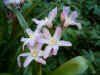
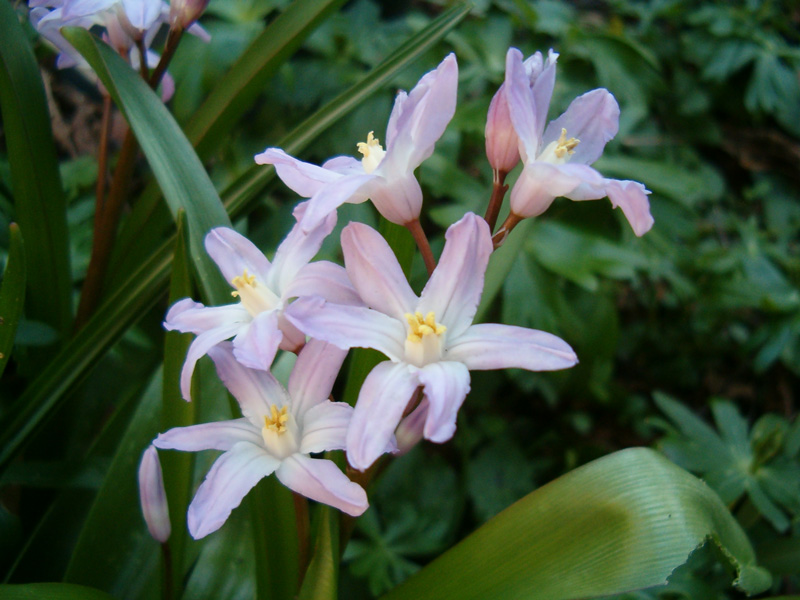
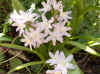 Glory of the Snow
(Chionodoxa
forbesii
"pink Giant").
Family Liliaceae. Now: subfamily Scilloideae. Family Asparagaceae. A much
larger plant, then the
snow celebrity. The leaves are also bigger. But if you look to the flowers,
you can see they are family. I have bought them last year.
Glory of the Snow
(Chionodoxa
forbesii
"pink Giant").
Family Liliaceae. Now: subfamily Scilloideae. Family Asparagaceae. A much
larger plant, then the
snow celebrity. The leaves are also bigger. But if you look to the flowers,
you can see they are family. I have bought them last year.
|
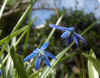
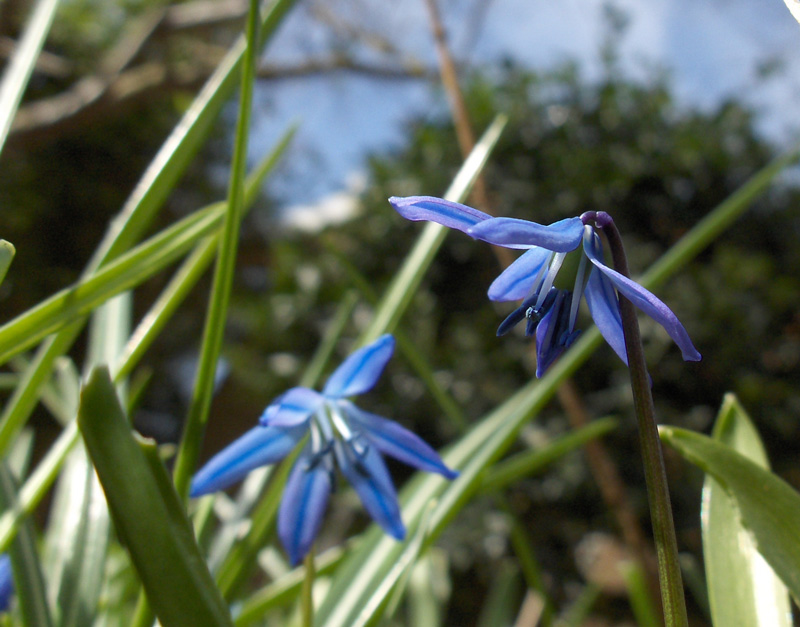
 Siberian Squill (Scilla siberica). Family Liliaceae.
Now: subfamily Scilloideae. Family Asparagaceae. Native to South Russia, Syria. A little later than the snowdrop. An easy plant. When
I came to live here 28 years ago, they were already there in large numbers.
Siberian Squill (Scilla siberica). Family Liliaceae.
Now: subfamily Scilloideae. Family Asparagaceae. Native to South Russia, Syria. A little later than the snowdrop. An easy plant. When
I came to live here 28 years ago, they were already there in large numbers.
|

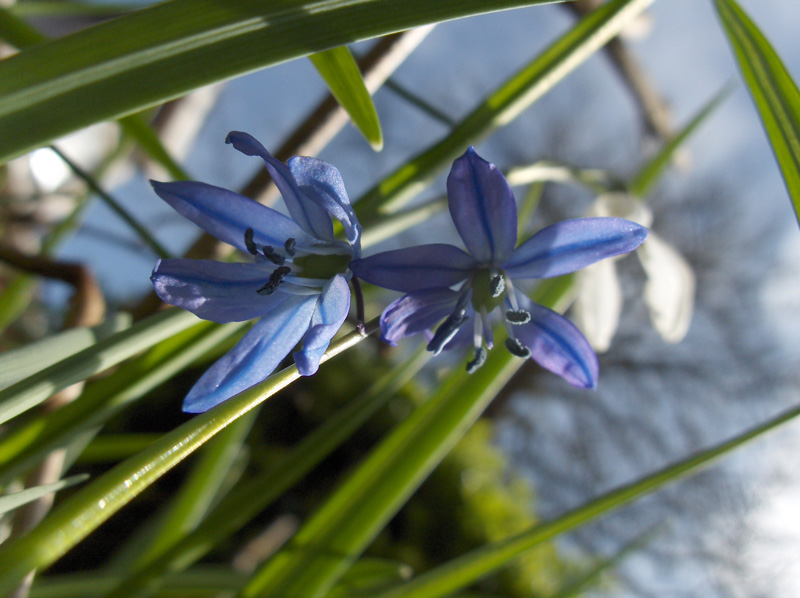
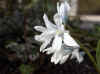 White Squill
(Scilla mischtschenkoana). Family Liliaceae. Now: subfamily
Scilloideae.
Family Asparagaceae.
Native to the Caucasus and
South-Russia It is no
cultivar. They spread themselves less rapidly, than the Siberian squill.
White Squill
(Scilla mischtschenkoana). Family Liliaceae. Now: subfamily
Scilloideae.
Family Asparagaceae.
Native to the Caucasus and
South-Russia It is no
cultivar. They spread themselves less rapidly, than the Siberian squill.
|
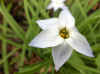
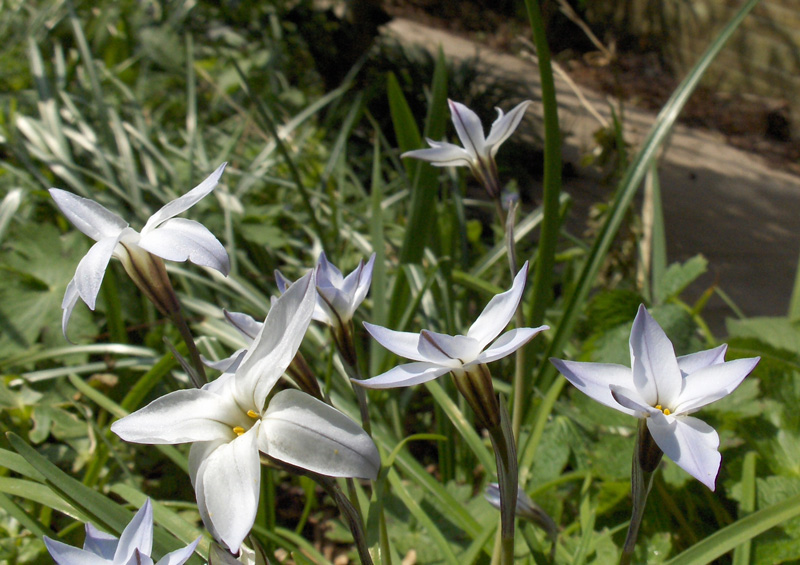
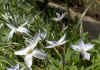 Spring Starflower, Springstar
(Ipheion uniflorum). Family Liliaceae. Now: Family Amaryllidaceae.
Blooming time: April-June. Sunny,
bulbous plant. Native to Mexico, Chile, Peru. It forms bulbils. Flowers smell of soap (with
a honey fragrance). The grass-like foliage has a smell of onions.
Spring Starflower, Springstar
(Ipheion uniflorum). Family Liliaceae. Now: Family Amaryllidaceae.
Blooming time: April-June. Sunny,
bulbous plant. Native to Mexico, Chile, Peru. It forms bulbils. Flowers smell of soap (with
a honey fragrance). The grass-like foliage has a smell of onions. |
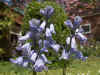
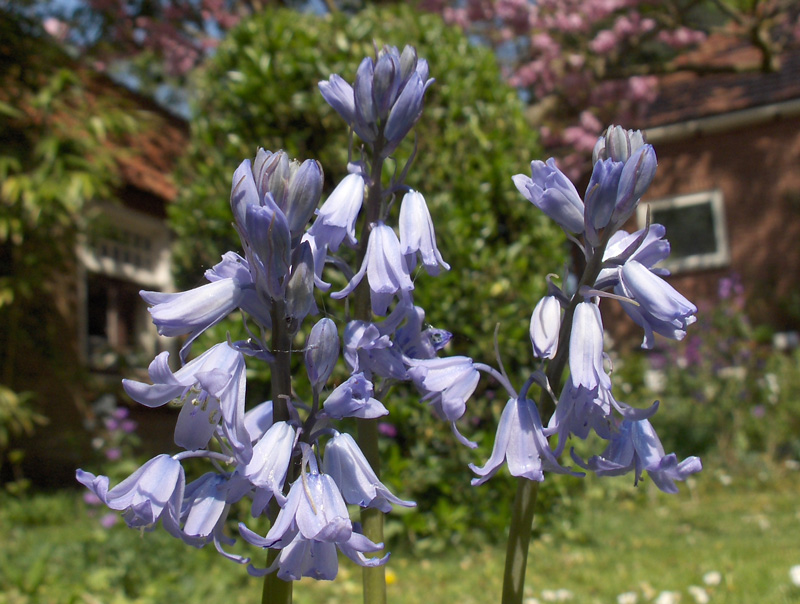
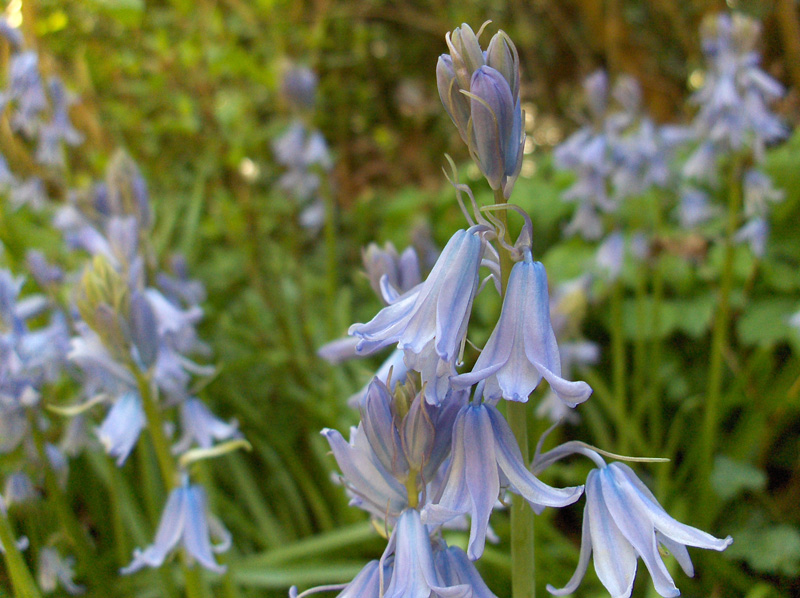
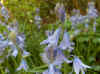 Wood Hyacinth, Spanish Bluebells
(Hyacinthoides hispanica. Previously classified as Scilla campanulata). Subfamily Scilloideae, family Asparagaceae.
These flowers are blue, but
there are also rose and white flowers. It flowers by the end of April,
beginning May as the latest of this group. It has a lot of
foliage, but that disappears rapidly after flowering. It looks like the Common
Bluebell.
Wood Hyacinth, Spanish Bluebells
(Hyacinthoides hispanica. Previously classified as Scilla campanulata). Subfamily Scilloideae, family Asparagaceae.
These flowers are blue, but
there are also rose and white flowers. It flowers by the end of April,
beginning May as the latest of this group. It has a lot of
foliage, but that disappears rapidly after flowering. It looks like the Common
Bluebell.
|
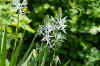
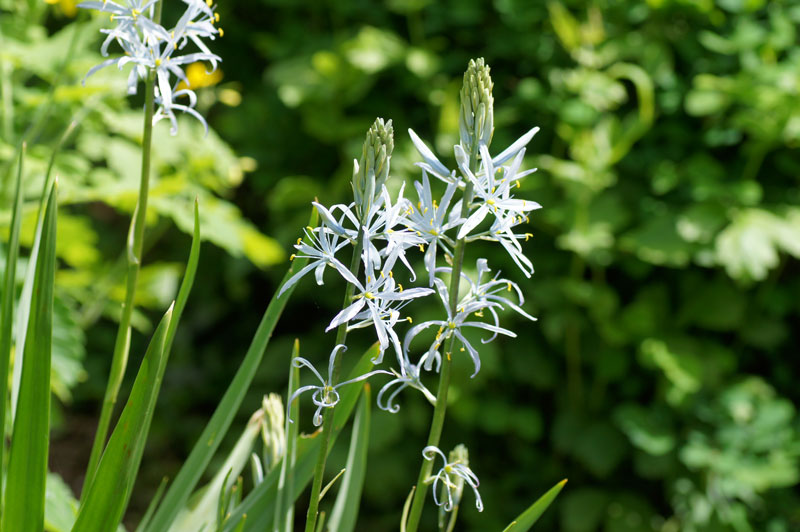
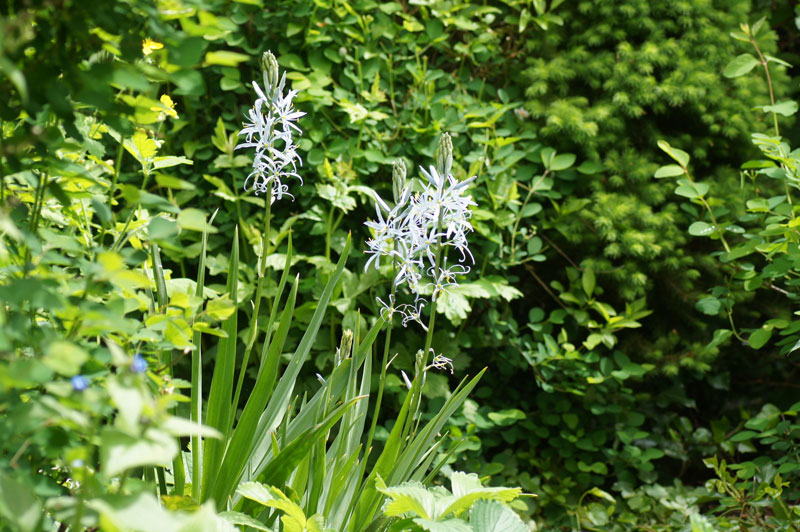
 Cussick's camas (Camassia cusickii). Family Liliaceae. Now:
subfamily Scilloideae. Family Asparagaceae. Bloom time: May-June.
Sunny. Native to North AmericaInheems in Noord Amerika, where it is believed that the Indians used this plant in their food preparations
Cussick's camas (Camassia cusickii). Family Liliaceae. Now:
subfamily Scilloideae. Family Asparagaceae. Bloom time: May-June.
Sunny. Native to North AmericaInheems in Noord Amerika, where it is believed that the Indians used this plant in their food preparations
Heigth 65 - 70 cm. It prefers fertile moist soil, but not too moist in the
winter. |
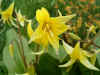 Trout Lily, Dogtooth Violet, Adder’s
tongue
(Erythronium
dens-canis) Family: Liliaceae. Bloom time: IV, V. Well-drained
humus
rich soil.
It is a common
wildflower of eastern Canadian woods. It should be in a sunny position in
spring. Shade or partial shade in the summer.
Trout Lily, Dogtooth Violet, Adder’s
tongue
(Erythronium
dens-canis) Family: Liliaceae. Bloom time: IV, V. Well-drained
humus
rich soil.
It is a common
wildflower of eastern Canadian woods. It should be in a sunny position in
spring. Shade or partial shade in the summer.
|
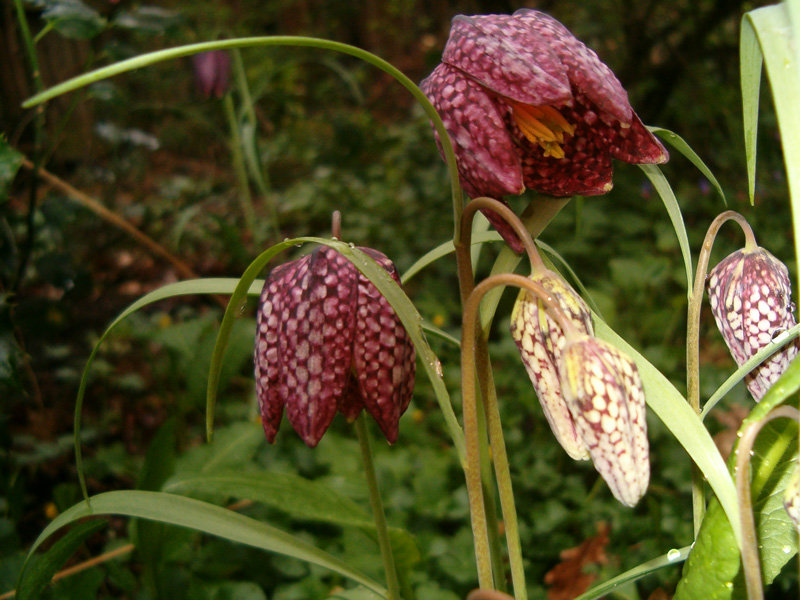
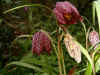 Snake's
Head, Fritillary, Checkered
Lily, Guinea Hen Flowers
(Fritillaria meleagris) Family: Liliaceae. Sun
or light shade.
Moist soil. Bloom time: V, VI. It ‘s native to Europe (in the Netherlands and Belgium rare and endagered.)
Requires consistently moist soil.
They are
self-seeding,
but I’ve read the new plants start flowering after eight years. The
seeds float.
Snake's
Head, Fritillary, Checkered
Lily, Guinea Hen Flowers
(Fritillaria meleagris) Family: Liliaceae. Sun
or light shade.
Moist soil. Bloom time: V, VI. It ‘s native to Europe (in the Netherlands and Belgium rare and endagered.)
Requires consistently moist soil.
They are
self-seeding,
but I’ve read the new plants start flowering after eight years. The
seeds float.
|
 Star of Bethlehem, sleepydick (Ornithogalum
umbellatum). Now
Family Asparagaceae.
It spreads by means of its bulbs
and sead. Full sun, partial
shade. Bloom time: V, VI. Starry white flowers in an umbel-like, terminal cluster. Slightly moist soil. (although it is quite dry in our garden).
Height 10 - 30 cm. The plant is poisonous. Native to Europe and East Asia.
Star of Bethlehem, sleepydick (Ornithogalum
umbellatum). Now
Family Asparagaceae.
It spreads by means of its bulbs
and sead. Full sun, partial
shade. Bloom time: V, VI. Starry white flowers in an umbel-like, terminal cluster. Slightly moist soil. (although it is quite dry in our garden).
Height 10 - 30 cm. The plant is poisonous. Native to Europe and East Asia. |
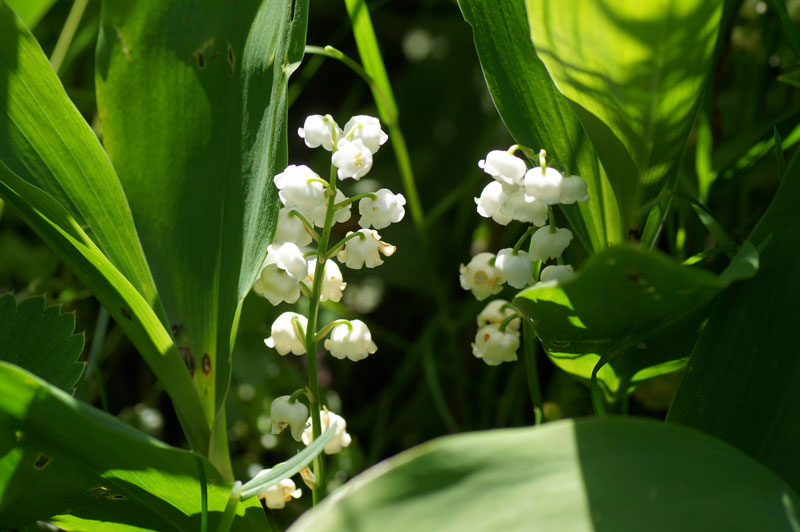
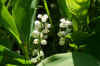 Lily of the Valley (Convallaria majalis).
Family: Liliaceae. Bloom time V - VI. Nice white, flagrant, bell-shaped flowers. This species also occurs in the wild. Moist, moderately rich soil, but in the dry soil in our garden they grow
well. It is invasive and it is spreading by the rhizomes. Height 15-30 cm.
The plant is toxic by glycosides. Photo 2-6-2013.
Lily of the Valley (Convallaria majalis).
Family: Liliaceae. Bloom time V - VI. Nice white, flagrant, bell-shaped flowers. This species also occurs in the wild. Moist, moderately rich soil, but in the dry soil in our garden they grow
well. It is invasive and it is spreading by the rhizomes. Height 15-30 cm.
The plant is toxic by glycosides. Photo 2-6-2013.
|
Other Spring flowering plants in my garden.
 Blue
bugle, Bugleherb,
Bugleweed, Common bugle, Ajuga (Ajuga reptans). Family Mints (Labiatae, Lamiaceae). It prefers moist soil. It
is a spreading evergreen ground cover that grows in a dense mat. Sun, partial shade. Bloom time: V, VI. Bugleweed
is easily propagated by separating the little plants that arise from the
spreading stolons. But it spreads also by self-seeding. Native
to Europe, western Asia. Photo 2-6-2013.
Blue
bugle, Bugleherb,
Bugleweed, Common bugle, Ajuga (Ajuga reptans). Family Mints (Labiatae, Lamiaceae). It prefers moist soil. It
is a spreading evergreen ground cover that grows in a dense mat. Sun, partial shade. Bloom time: V, VI. Bugleweed
is easily propagated by separating the little plants that arise from the
spreading stolons. But it spreads also by self-seeding. Native
to Europe, western Asia. Photo 2-6-2013.
|
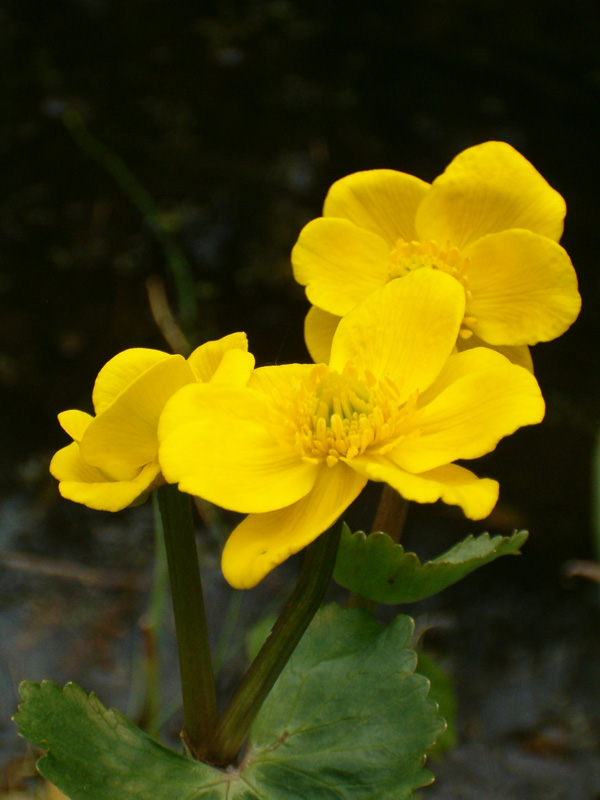
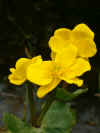 Kingcup or Marsh Marigold (Caltha palustris) A
swamp plant of Europe and North America. Of course near the pond. Full
sun to partial shade. Bloom time: IV - VII. Native to Europe.
Propagation: By division or from seed. It belongs to the Ranunculaceae (buttercup family.
Kingcup or Marsh Marigold (Caltha palustris) A
swamp plant of Europe and North America. Of course near the pond. Full
sun to partial shade. Bloom time: IV - VII. Native to Europe.
Propagation: By division or from seed. It belongs to the Ranunculaceae (buttercup family. |
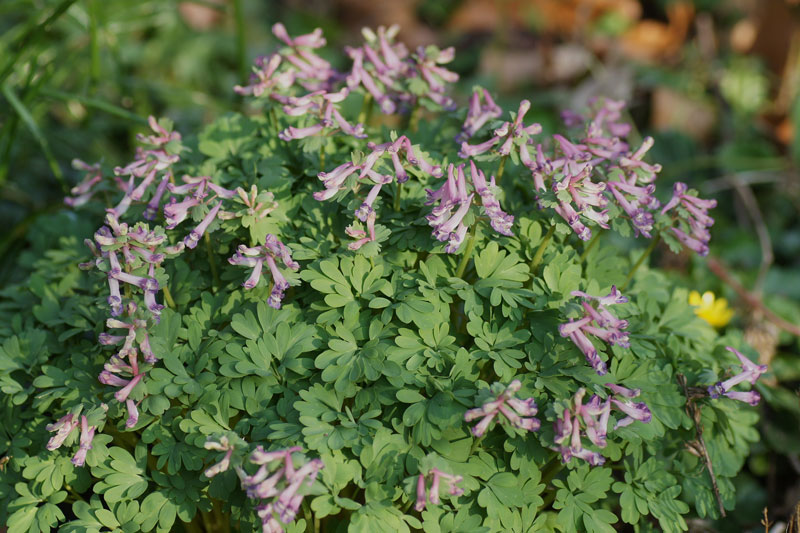
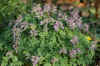 Fumewort (Corydalis solida, synoniem: Corydalis bulbosa). Family Papaveraceae. Bloom time III - IV.
Height 15 - 25 cm. It is very similar to hollow-root (Corydalis cava). A difference is that the
bracts are hand-shaped. This species occurs in southern Netherlands in the wild. Propagation by seed. It is a surprise, where it
is growing the next year. Partial shade, shade. Humus-rich, moist soil. Photo 22-3-2012.
Fumewort (Corydalis solida, synoniem: Corydalis bulbosa). Family Papaveraceae. Bloom time III - IV.
Height 15 - 25 cm. It is very similar to hollow-root (Corydalis cava). A difference is that the
bracts are hand-shaped. This species occurs in southern Netherlands in the wild. Propagation by seed. It is a surprise, where it
is growing the next year. Partial shade, shade. Humus-rich, moist soil. Photo 22-3-2012. |
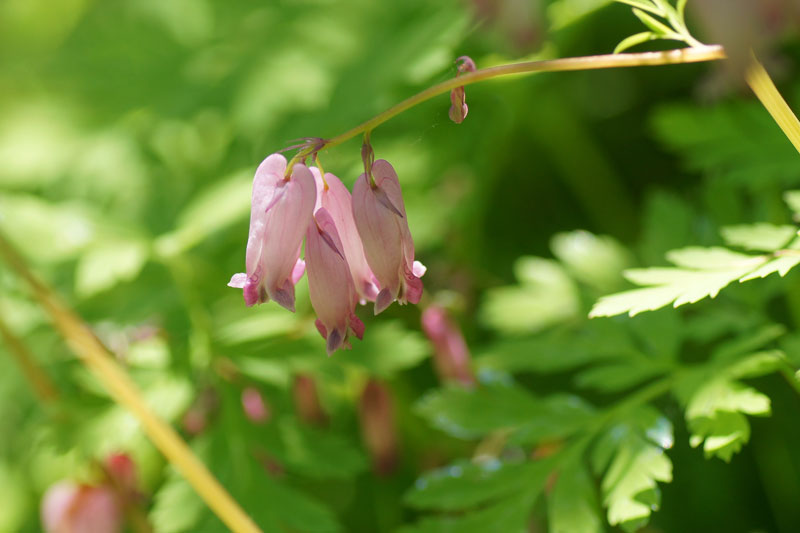
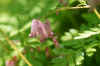 Western, wild or Pacific bleeding heart (Dicentra formosa).
Family Papaveraceae. Partial shade, moist
soil. It is spreading by the rhizomes. and forms clumps of fine foliage. Flowering time: A first flowering in the period late April - June and a second in August - September.
In the second flowering period we haven't many flowers. Hence, I place it
on the page with spring bloomers. Flower clusters with heart shaped pink flowers. Height about 30 cm. Native to America.
Photo 8-6-2013.
Western, wild or Pacific bleeding heart (Dicentra formosa).
Family Papaveraceae. Partial shade, moist
soil. It is spreading by the rhizomes. and forms clumps of fine foliage. Flowering time: A first flowering in the period late April - June and a second in August - September.
In the second flowering period we haven't many flowers. Hence, I place it
on the page with spring bloomers. Flower clusters with heart shaped pink flowers. Height about 30 cm. Native to America.
Photo 8-6-2013. |
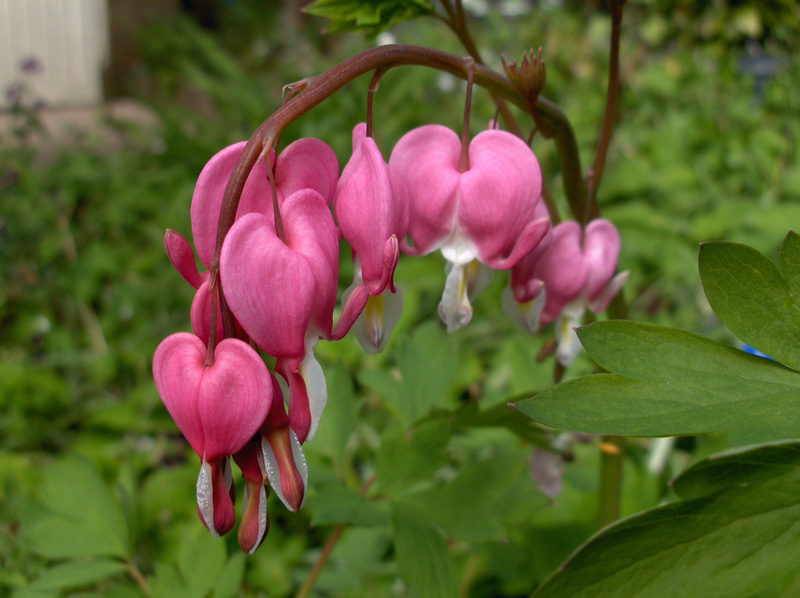
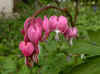 Bleeding heart, Venus's car, or lyre
flower (Dicentra
spectabilis). Family Papaveraceae. Partial
shade. Bloom
time IV, V. In June bleeding
hearts die back after blooming. Humus
rich, moist ,well-drained
soil. Native to
eastern Asia from Siberia south to Japan Bleading heart because the shape of a heart with a drop of blood descending. In Dutch: gebroken
hartje (broken heart) Aready a garden plant in the middle ages.
Bleeding heart, Venus's car, or lyre
flower (Dicentra
spectabilis). Family Papaveraceae. Partial
shade. Bloom
time IV, V. In June bleeding
hearts die back after blooming. Humus
rich, moist ,well-drained
soil. Native to
eastern Asia from Siberia south to Japan Bleading heart because the shape of a heart with a drop of blood descending. In Dutch: gebroken
hartje (broken heart) Aready a garden plant in the middle ages. |
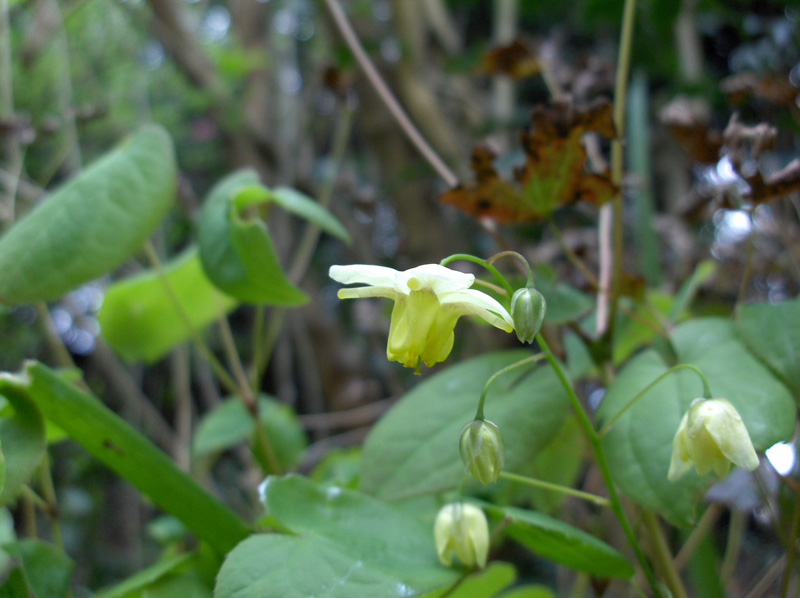
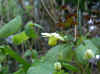 Bishop's
hat, Barrenwort
(Epimedium versicolor versicolor ' Sulphureum ') Family: Berberidaceae.
Part shade to full shade.
It’s a
groundcover, but it doesn't grow fast.
The flowers are small but very beautiful.
It
holds its foliage throughout the winter
Flowers sometimes bloom before plants leaf out.
Well-drained, somewhat moist soil. They
are propagated by dividing the roots.
Bishop's
hat, Barrenwort
(Epimedium versicolor versicolor ' Sulphureum ') Family: Berberidaceae.
Part shade to full shade.
It’s a
groundcover, but it doesn't grow fast.
The flowers are small but very beautiful.
It
holds its foliage throughout the winter
Flowers sometimes bloom before plants leaf out.
Well-drained, somewhat moist soil. They
are propagated by dividing the roots.
|
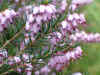 Winter
heath, Winter Flowering Heather, or Spring heath (Erica
carnea). Family
heath, heather (Ericaceae). It’s an evergreen
shrub wich already flowers in winter. Bloom time: XI - IV. The
plants can be pruned immediately after they have finished flowering. There
are many cultivars of winter heath. It is
tolerant of limestone as well as acidic soils.
Full sun or light shade. New plants by layering outer branches in the soil.
Winter
heath, Winter Flowering Heather, or Spring heath (Erica
carnea). Family
heath, heather (Ericaceae). It’s an evergreen
shrub wich already flowers in winter. Bloom time: XI - IV. The
plants can be pruned immediately after they have finished flowering. There
are many cultivars of winter heath. It is
tolerant of limestone as well as acidic soils.
Full sun or light shade. New plants by layering outer branches in the soil.
|
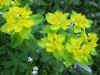 Euphorbia
polychroma. Spurge family (Euphorbiaceae). More information about this family.
Euphorbia
polychroma. Spurge family (Euphorbiaceae). More information about this family.
Bloom time: IV - V. Height about 40 cm. They have striking green coloured bracts. The flowers are (as with many other
euphorbias) small. They like calcareous soil, but it is not really necessary.
|
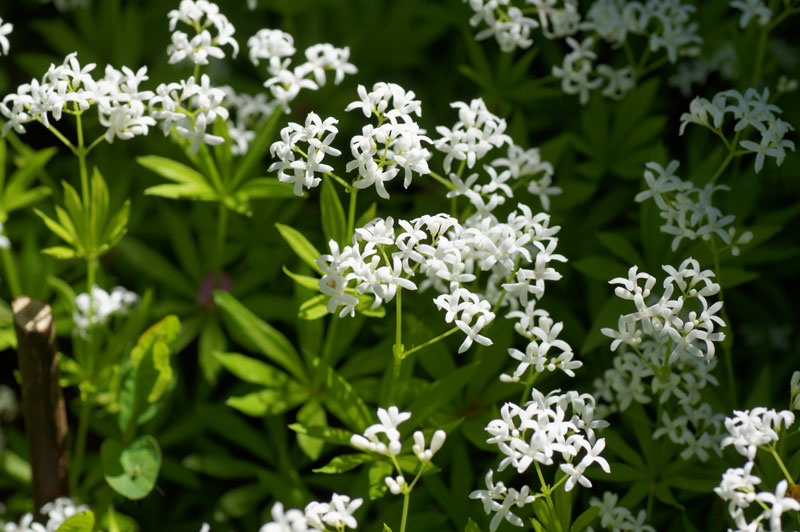
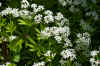 Sweet Woodruff (Galium odoratum). Family: Rubiaceae.
Bloom time: V - Vl.
Woodruff can spread both by seed and by means of
creeping stems. It is a real groundcover, but other plants are able to
grow through it. Sun,
half shade. Humus rich, well-drained soil. Height
15 cm. Native to Europe, North Africa and western Asia. But rare in the
Netherlands. They
smell of freshly mowed gras.When dried the grassy vanilla odor smells
stronger. The dried plants were used in the linen cupboard to protect from moths
and to lend their sweet odor to linen or clothing. Sweet woodruff was widely used in herbal medicine during the Middle Ages. It is
said Sweet Woodruff tea could calm the stomach. Photo 2-5-2013.
Sweet Woodruff (Galium odoratum). Family: Rubiaceae.
Bloom time: V - Vl.
Woodruff can spread both by seed and by means of
creeping stems. It is a real groundcover, but other plants are able to
grow through it. Sun,
half shade. Humus rich, well-drained soil. Height
15 cm. Native to Europe, North Africa and western Asia. But rare in the
Netherlands. They
smell of freshly mowed gras.When dried the grassy vanilla odor smells
stronger. The dried plants were used in the linen cupboard to protect from moths
and to lend their sweet odor to linen or clothing. Sweet woodruff was widely used in herbal medicine during the Middle Ages. It is
said Sweet Woodruff tea could calm the stomach. Photo 2-5-2013.
|
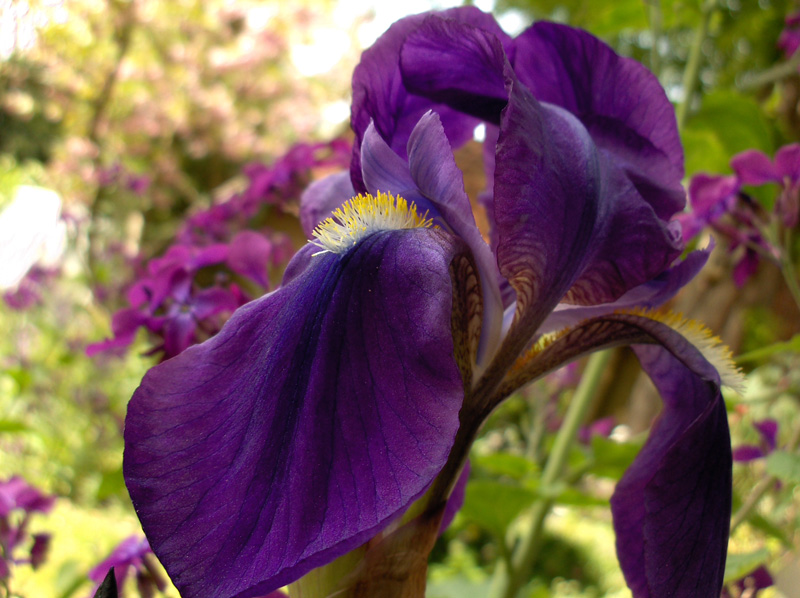
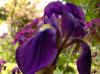 Rhizomatous iris, Bearded iris, German iris
(Iris germanica). Family: Iridaceae. Sun, partial shade. Flower has a “beard”.
This beard petals
form a landing-stage for a flying insect. Bloom time: V.. There are many species with different colours. German iris spreads by rhizomes. German iris is very easy to grow in
most any soil type. Iris have thick, fleshy rhizomes, that store food. The
rhizomes grow best when planted at or slightly below the soil surface with
feeder roots penetrating the soil below.
Rhizomatous iris, Bearded iris, German iris
(Iris germanica). Family: Iridaceae. Sun, partial shade. Flower has a “beard”.
This beard petals
form a landing-stage for a flying insect. Bloom time: V.. There are many species with different colours. German iris spreads by rhizomes. German iris is very easy to grow in
most any soil type. Iris have thick, fleshy rhizomes, that store food. The
rhizomes grow best when planted at or slightly below the soil surface with
feeder roots penetrating the soil below.
|
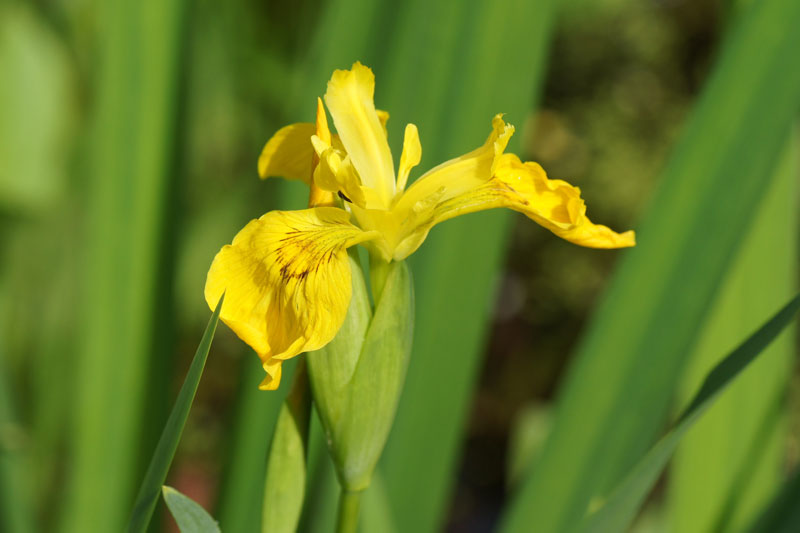
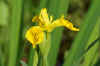 Yellow
iris and yellow
flag
(Iris pseudacorus).
Family: Iridaceae. Bloom
time: V, VI. The plant
spreads quickly, by both rhizome and water-dispersed seed. While
it is primarily an aquatic plant, the rhizomes can survive prolonged dry
conditions. So it can be invasive. Native
to Europe, western Asia and northwest Africa. Photo 12-6-2013.
Yellow
iris and yellow
flag
(Iris pseudacorus).
Family: Iridaceae. Bloom
time: V, VI. The plant
spreads quickly, by both rhizome and water-dispersed seed. While
it is primarily an aquatic plant, the rhizomes can survive prolonged dry
conditions. So it can be invasive. Native
to Europe, western Asia and northwest Africa. Photo 12-6-2013.
|
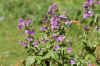
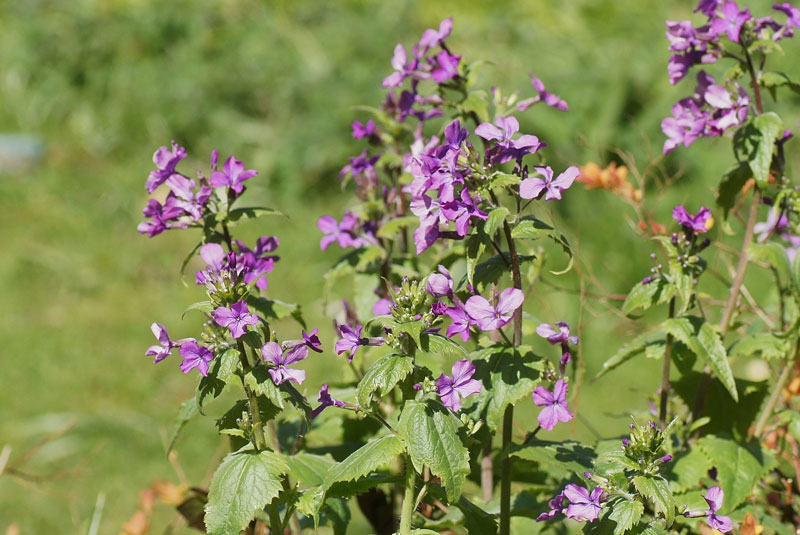
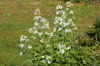 Annual honesty (Lunaria annua). Crucifers or cabbage family.
(Brassicaceae).
Annual honesty (Lunaria annua). Crucifers or cabbage family.
(Brassicaceae).
Annual or biennial. Sun, partial shade. Well-drained soil. Bloom time: V.
The Dutch name is "Judaspenning". The seed capsules resembles a penny. Judas betrayed Jesus for silver pennies.
The purple or white flowers don't smell. Yet they attract insects. Because they are
annual or biennial, they don't grow each year on the same place in the
garden. Honesty is easy to grow from seed.
Height 50-100 cm. Native to Southeast Europe.
|
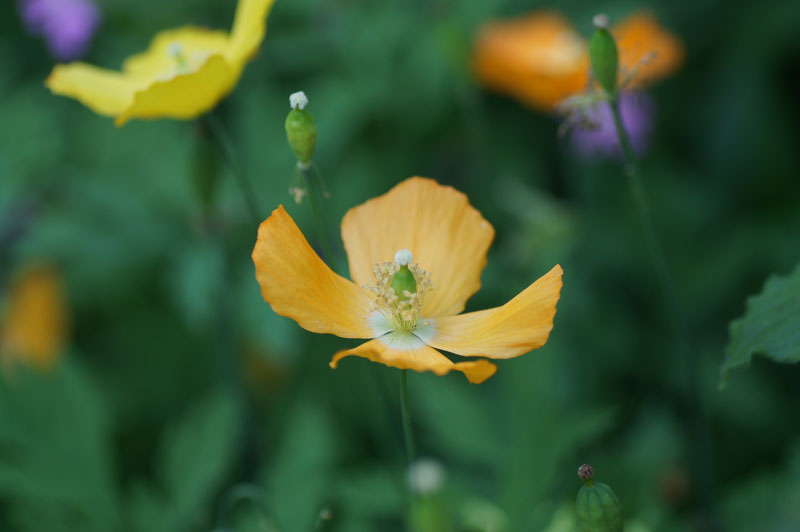
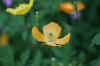 Welsh poppy (Meconopsis cambrica,
formely Papaver cambricum). Family Papaveraceae. Bloom time V -VI.
Flowers are yellow and orange. Height 15 -60 cm. Partial shade. Dry soil. Native to Western Europe.
Photo 6-6-2013.
Welsh poppy (Meconopsis cambrica,
formely Papaver cambricum). Family Papaveraceae. Bloom time V -VI.
Flowers are yellow and orange. Height 15 -60 cm. Partial shade. Dry soil. Native to Western Europe.
Photo 6-6-2013. |
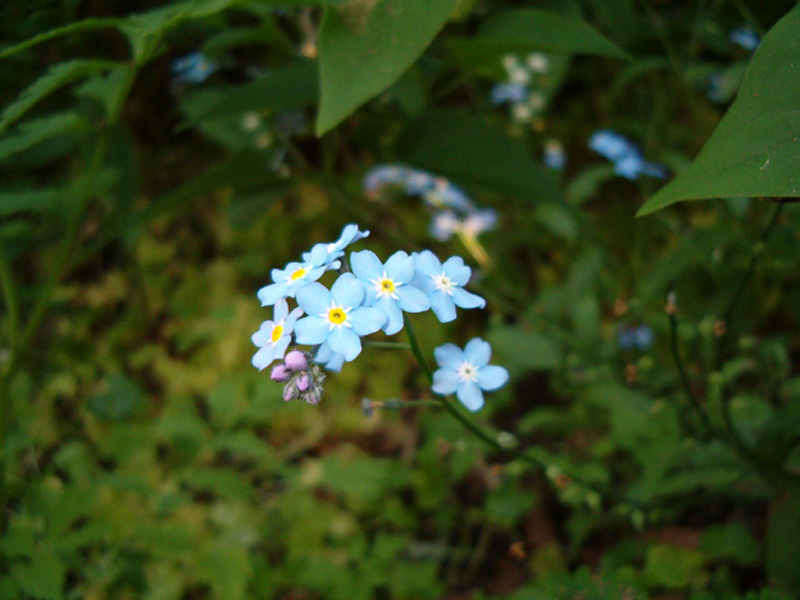
 Wood
Forget-me-not
(Myosotis sylvatica). Forget-me-not family (Boraginaceae). The plant doesn't live long, but
it reseeds itself. There
are also perennial species. Full sun, partial shade. Humus
rich soil.
Wood
Forget-me-not
(Myosotis sylvatica). Forget-me-not family (Boraginaceae). The plant doesn't live long, but
it reseeds itself. There
are also perennial species. Full sun, partial shade. Humus
rich soil.
|
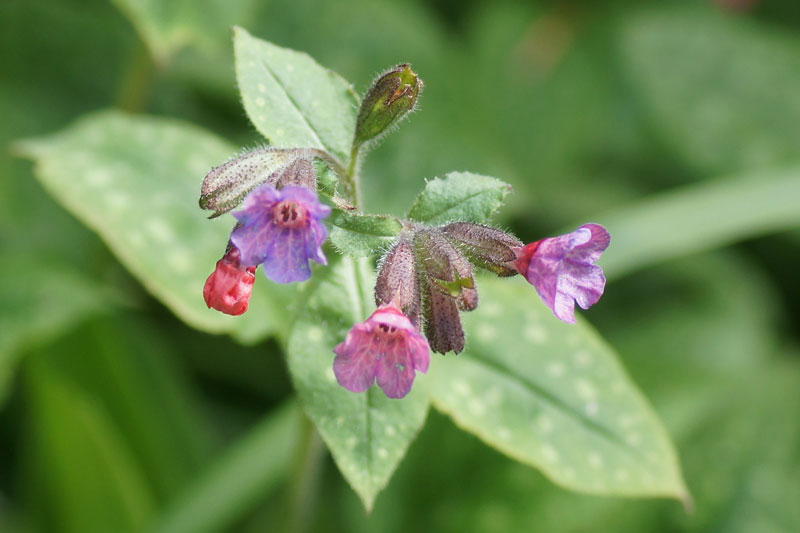
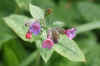 Lungwort (Pulmonaria).
Forget-me-not family (Boraginaceae). .
Moist soil. Height 20-40 cm. Hairy often variegated leaves. (Varies with cultivars) usually pink to violet blue flowers. Propagation:
The plant forms clumps that can be torn to multiply, also possible is by seeding or cuttings.
Photo
12-5-2013.
Lungwort (Pulmonaria).
Forget-me-not family (Boraginaceae). .
Moist soil. Height 20-40 cm. Hairy often variegated leaves. (Varies with cultivars) usually pink to violet blue flowers. Propagation:
The plant forms clumps that can be torn to multiply, also possible is by seeding or cuttings.
Photo
12-5-2013. |
Early thriving shrubs in my garden.
 Gold-Dust
Plant (Aucuba japonica). Dogwood family (Cornaceae). Bloom time: April.
They
will grow well in most soils.
Sun Exposure: Light shade to shade. Evergreen shrub.
Height: 3 m. The purple flowers are very small. Red berrys. Gold-dust plants have
male and female flowers on different plants. The specie on the photo has a
dark green foliage. The most gold-dust plants have variegated
leathery leaves.
It can be pruned the whole year. Cuttings
from terminal shoots can be taken in spring or summer.
Gold-Dust
Plant (Aucuba japonica). Dogwood family (Cornaceae). Bloom time: April.
They
will grow well in most soils.
Sun Exposure: Light shade to shade. Evergreen shrub.
Height: 3 m. The purple flowers are very small. Red berrys. Gold-dust plants have
male and female flowers on different plants. The specie on the photo has a
dark green foliage. The most gold-dust plants have variegated
leathery leaves.
It can be pruned the whole year. Cuttings
from terminal shoots can be taken in spring or summer. |
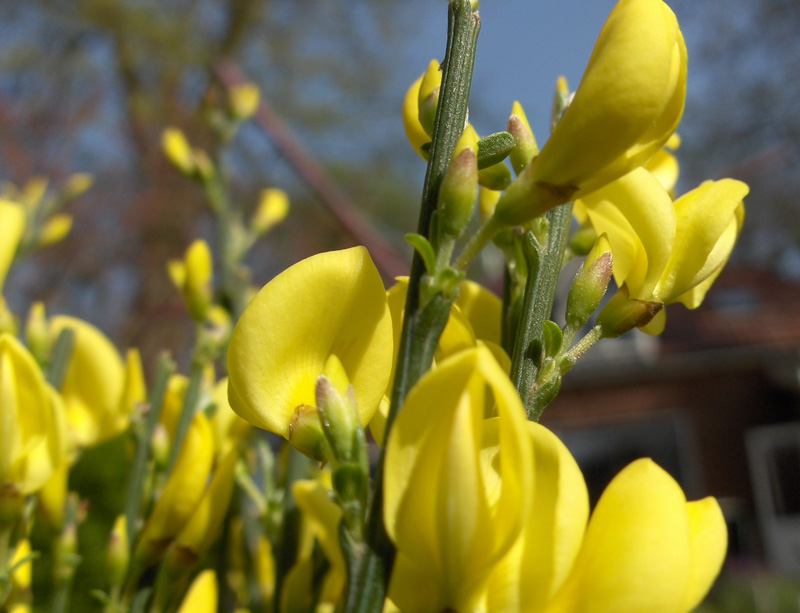
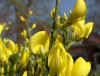 Broom (Cytisus praecox "allgold"). Legume, pea, bean family
(Leguminosae). Bloom
time: April May. Acidic sandy soil. Height1.75 m. This is a cultivar. For
many years I have had two shrubs. When they became old, I have taken them
away. This year I’ve bought two new ones.
Broom (Cytisus praecox "allgold"). Legume, pea, bean family
(Leguminosae). Bloom
time: April May. Acidic sandy soil. Height1.75 m. This is a cultivar. For
many years I have had two shrubs. When they became old, I have taken them
away. This year I’ve bought two new ones.
You can prune after flowering.
|
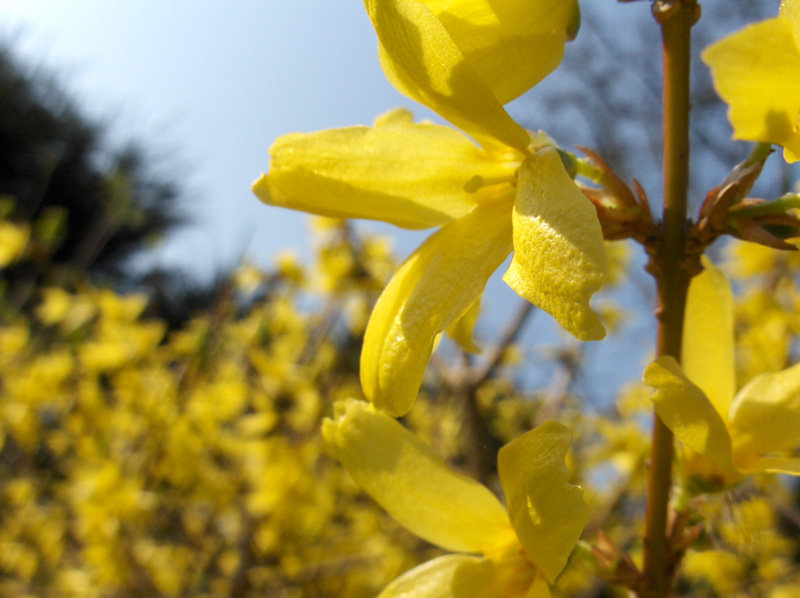
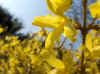 Forsythia
or Golden Bell
(Forsythia). Family
Oleaceae. Tall: 2m. They
will grow well in most soils. The soil should be well drained.
In March, April you can't overlook it. It has spectacular bright yellow star-like flowers
form on
prior year's growth, not on new growth. So, it's important to prune them
immediately after the flowers have bloomed. It is easy to take cuttings.
Forsythia
or Golden Bell
(Forsythia). Family
Oleaceae. Tall: 2m. They
will grow well in most soils. The soil should be well drained.
In March, April you can't overlook it. It has spectacular bright yellow star-like flowers
form on
prior year's growth, not on new growth. So, it's important to prune them
immediately after the flowers have bloomed. It is easy to take cuttings.
|

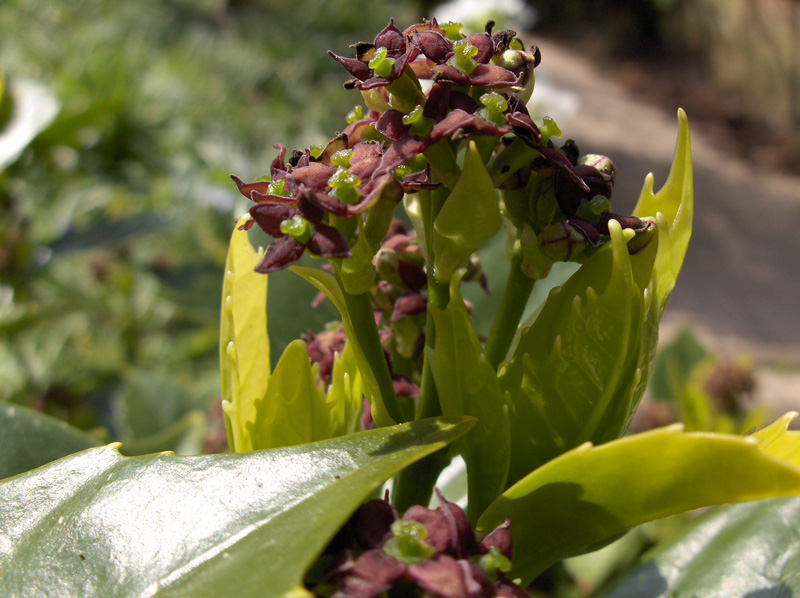
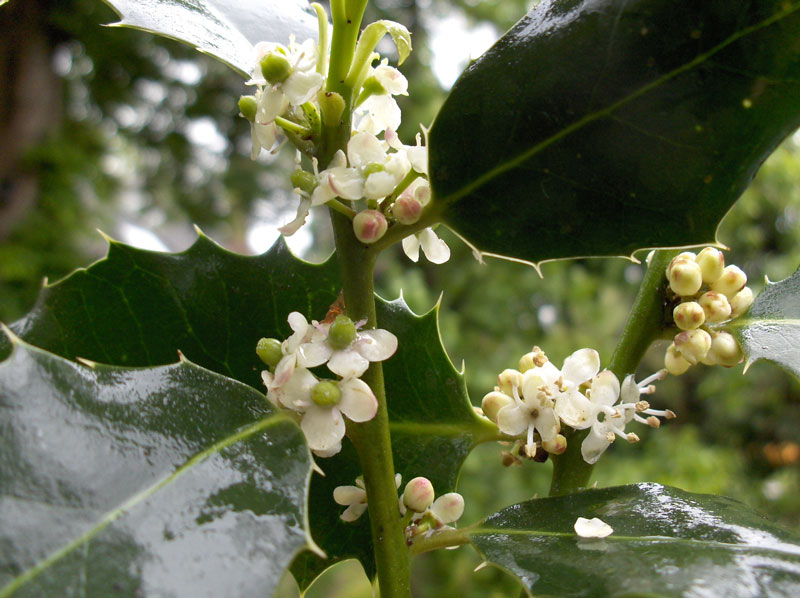
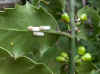 Holly (Hex aquifolium). Family Aquifoliacea. Bloom time: May. The flowers
are small. Hollys have like Gold-dust plants male
and female flowers on different plants. On
the photograph: Left: The shoot is from a female shrub. To the right:
From a male shrub. Holly
berries are mildly toxic.
Holly (Hex aquifolium). Family Aquifoliacea. Bloom time: May. The flowers
are small. Hollys have like Gold-dust plants male
and female flowers on different plants. On
the photograph: Left: The shoot is from a female shrub. To the right:
From a male shrub. Holly
berries are mildly toxic.
In my garden there are several wild holly species. It spreads by self-seeding. In the beginning it
is a shrub. Afterwards it gets the form of a tree. The
shrub can reach 10 m in height. Fortunately it grows slowly. You can prune it the
whole year.
The holly is an evergreen shrub. There are a lot of cultivars. The
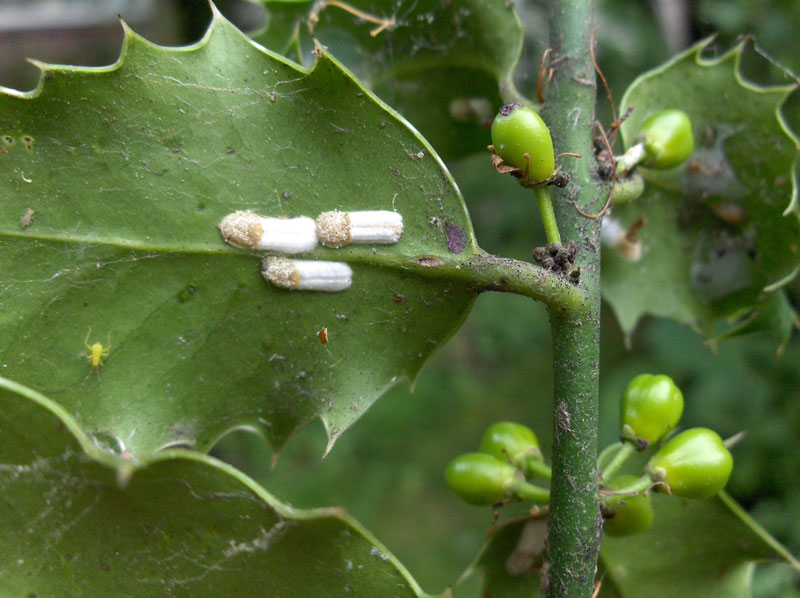
Holly will grow in almost any soil, provided it is not too wet. This year however they have many cushion scales (pulvani
floccifera). Adult
Pulvinaria produces in autumn a
white egg-sac which is clearly visible on the leaves.
The holly does not suffer. They are also in the bushes
in the neighbourhood.
The wood is heavy,
hard and white. It is used for wood-carving and inlay work.
|
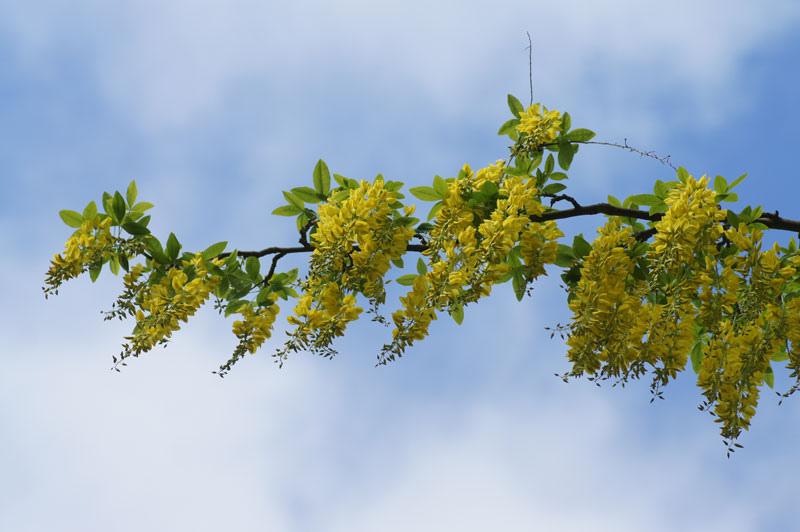
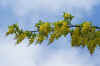 Common Laburnum, Golden Chain or Golden Rain (Laburnum anagyroides).
Legume, pea, bean family
(Leguminosae). Native to central and southern Europe. It is a small
deciduous tree. Height 7 m. The tree, but especially the pods are poisonous,
because of the substance cytisine. If it blooms, it has beautiful
pendulous clusters of golden-yellow flowers. Bloom time V - VI. Sun to partial shade.
Photo 4-6-2013.
Common Laburnum, Golden Chain or Golden Rain (Laburnum anagyroides).
Legume, pea, bean family
(Leguminosae). Native to central and southern Europe. It is a small
deciduous tree. Height 7 m. The tree, but especially the pods are poisonous,
because of the substance cytisine. If it blooms, it has beautiful
pendulous clusters of golden-yellow flowers. Bloom time V - VI. Sun to partial shade.
Photo 4-6-2013. |
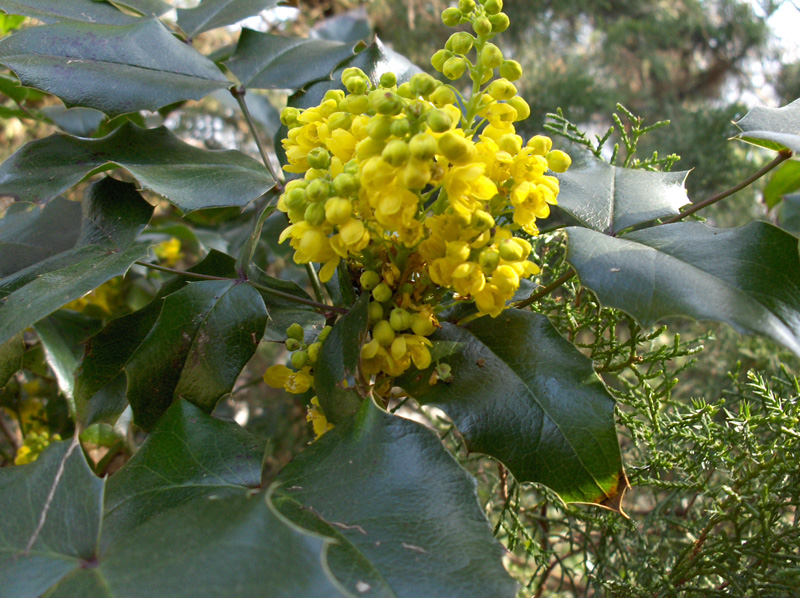
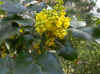 Oregon-grape
(Mahonia aquifolium). Family Berberidaceae. Bloom time: April. Tall 1.5
m. The flowers are followed by small purplish-black fruits. Oregon-grape is resistant to summer drought, tolerates poor soils.
Under the ground there are many runners. Sometimes it can be irritating. The
leaves of Oregon-grape are holly-like.
It is, however, useful for christmas
decoration, the shrub has evergreen foliage. Oregon-grape
is native to North America and Asia
Oregon-grape
(Mahonia aquifolium). Family Berberidaceae. Bloom time: April. Tall 1.5
m. The flowers are followed by small purplish-black fruits. Oregon-grape is resistant to summer drought, tolerates poor soils.
Under the ground there are many runners. Sometimes it can be irritating. The
leaves of Oregon-grape are holly-like.
It is, however, useful for christmas
decoration, the shrub has evergreen foliage. Oregon-grape
is native to North America and Asia
|
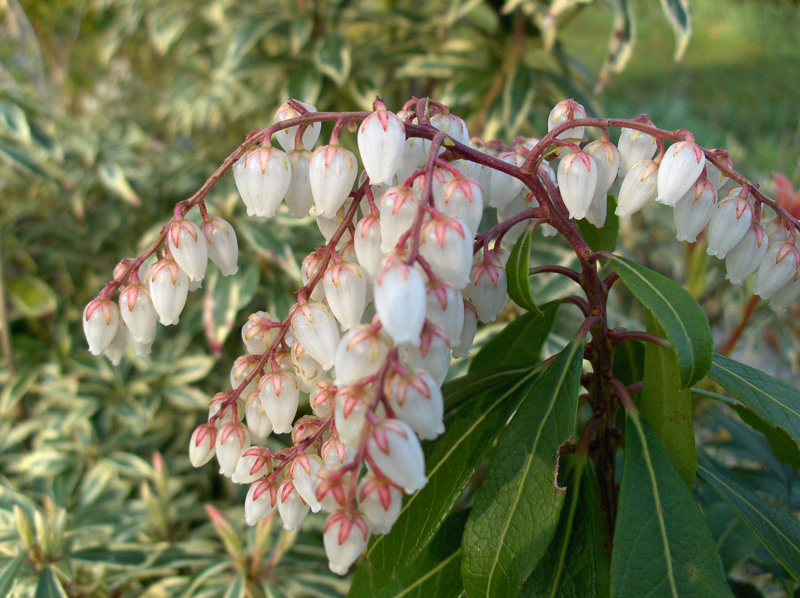
 Pieris (Pieris japonica variegata). Heath, heather family
(Ericaceae).
Of course it has
variagata foliage. (not in front of the photo). Bloom time March, April.
Maximum height 2m. Flowers look like flowers of Erica (family). Moist,
acid soil. So I
have used my compost, for the
soil was to sandy.
Cuttings: In August 10 cm long cuttings in sandy soil at a sheltered
shady spot. Next autumn they can on the place of destination.
Pieris (Pieris japonica variegata). Heath, heather family
(Ericaceae).
Of course it has
variagata foliage. (not in front of the photo). Bloom time March, April.
Maximum height 2m. Flowers look like flowers of Erica (family). Moist,
acid soil. So I
have used my compost, for the
soil was to sandy.
Cuttings: In August 10 cm long cuttings in sandy soil at a sheltered
shady spot. Next autumn they can on the place of destination.
|
 Redflower
currant (Ribes sanguineum). Family Grossulariaceae. Bloom time: March April. After a mild
winter the flowers are very early. An easy shrub, which you can prune. The shrub can reach 6 feet in height. They
will grow well in most soils.
This year the shrubs flowered less well. The yellow context on the
photograph is of a forsythia.
Redflower
currant (Ribes sanguineum). Family Grossulariaceae. Bloom time: March April. After a mild
winter the flowers are very early. An easy shrub, which you can prune. The shrub can reach 6 feet in height. They
will grow well in most soils.
This year the shrubs flowered less well. The yellow context on the
photograph is of a forsythia.
|
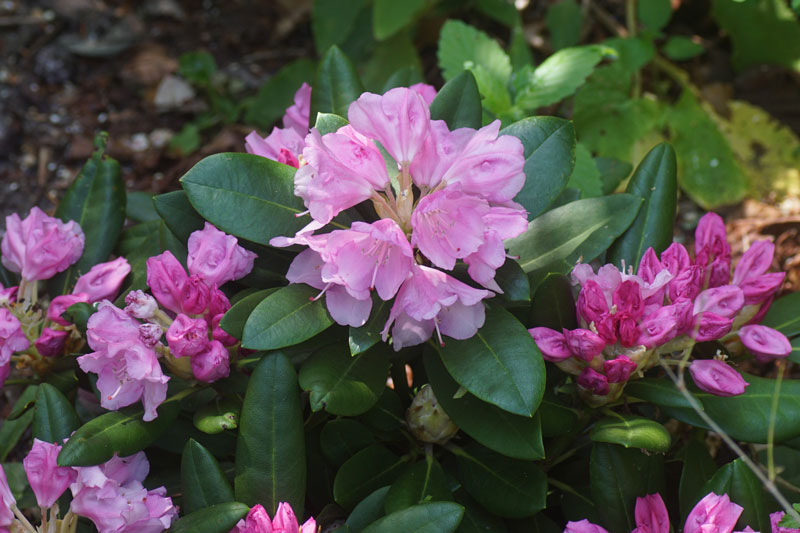
 Rhododendron yakushimanumHeather family (Ericaceae).
Bloom time:: May. Shadow, partial shade, but can also withstand the sun. Height: 1.5 m. A moist,
fertile soil. This Rhododendron is native to the Japanese island of Yaku -Shima. They remain more compact and smaller than the normal
Rhododenderon. We had
this shrub in the garden, but it died a long time ago after a renovation. In 2018 we bought two new shrubs. There are many cultivars of this species. Photo 18-5-2019.
Rhododendron yakushimanumHeather family (Ericaceae).
Bloom time:: May. Shadow, partial shade, but can also withstand the sun. Height: 1.5 m. A moist,
fertile soil. This Rhododendron is native to the Japanese island of Yaku -Shima. They remain more compact and smaller than the normal
Rhododenderon. We had
this shrub in the garden, but it died a long time ago after a renovation. In 2018 we bought two new shrubs. There are many cultivars of this species. Photo 18-5-2019. |
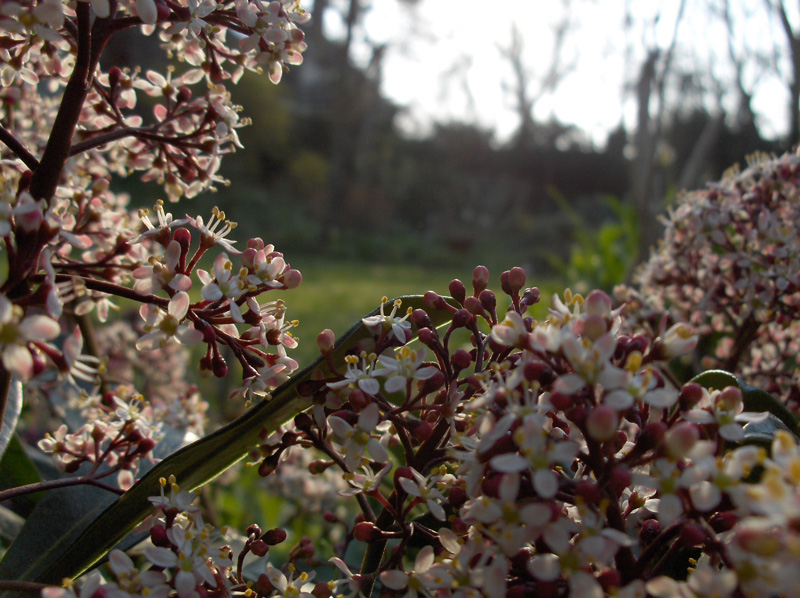
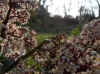 Skimmia japonika. Rue, citrus family (Rutaceae).
Bloom time: March April. Shade, half shade. Height: 1.5 m. A moist,
fertile soil.
There are male and female plants.
Skimmia japonika. Rue, citrus family (Rutaceae).
Bloom time: March April. Shade, half shade. Height: 1.5 m. A moist,
fertile soil.
There are male and female plants.
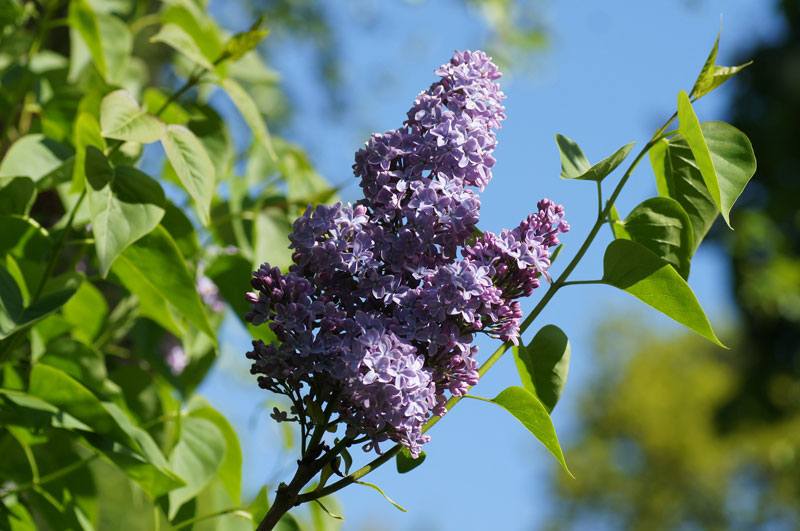
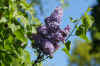 Lilac or Common Lilac
(Syringa vulgaris). Family Oleaceae. It
tolerates many soil types and does well in full sun or partial shade.
Bloom time: V. It has fragrant flowers. It is
a species of Syringa in the olive family Oleaceae, native to the
Balkan Peninsula in southeastern Europe. Requires repeated pruning to maintain desired height and improve form.
Shoots sprout up nearby and can be moved.
This lilac is a shoot (30 years ago) of a shrub at the
farm of my parents. Now you can buy many cultivars. Photo 27-5-2013
Lilac or Common Lilac
(Syringa vulgaris). Family Oleaceae. It
tolerates many soil types and does well in full sun or partial shade.
Bloom time: V. It has fragrant flowers. It is
a species of Syringa in the olive family Oleaceae, native to the
Balkan Peninsula in southeastern Europe. Requires repeated pruning to maintain desired height and improve form.
Shoots sprout up nearby and can be moved.
This lilac is a shoot (30 years ago) of a shrub at the
farm of my parents. Now you can buy many cultivars. Photo 27-5-2013
|
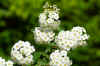
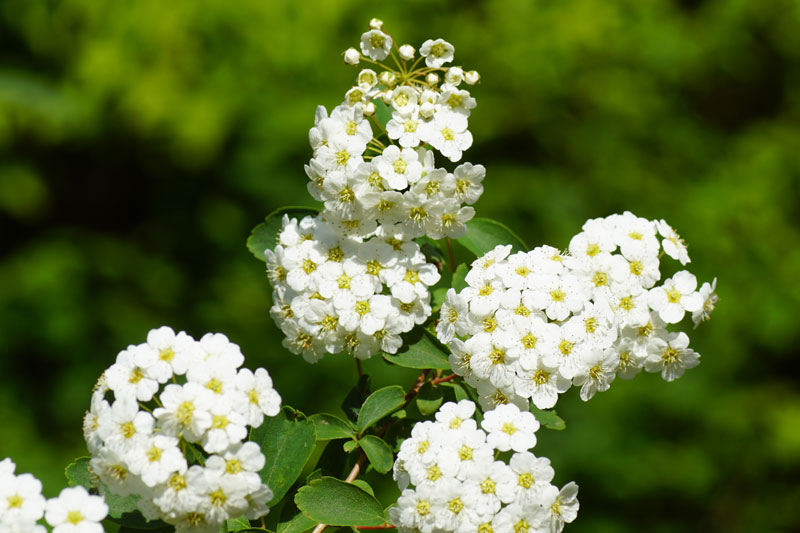
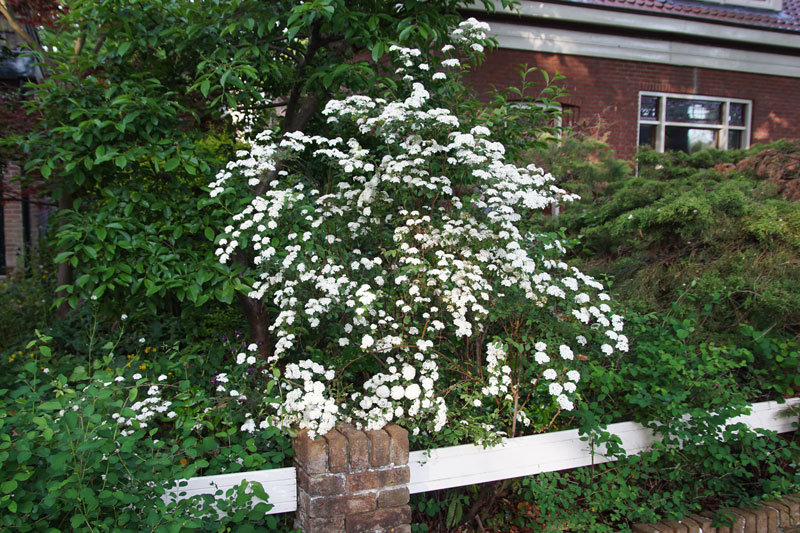
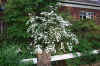 Spiraea nipponica snowmound. Rose family (Rosaceae).
Sun, partial shade. Normal soil. Bloom time: V, VI. Height: 1.7 m. Bright white flowers in dense semicircular umbels. The shrub can be pruned after flowering. Native to Japan.
Photos 15,16-5-2022.
Spiraea nipponica snowmound. Rose family (Rosaceae).
Sun, partial shade. Normal soil. Bloom time: V, VI. Height: 1.7 m. Bright white flowers in dense semicircular umbels. The shrub can be pruned after flowering. Native to Japan.
Photos 15,16-5-2022. |
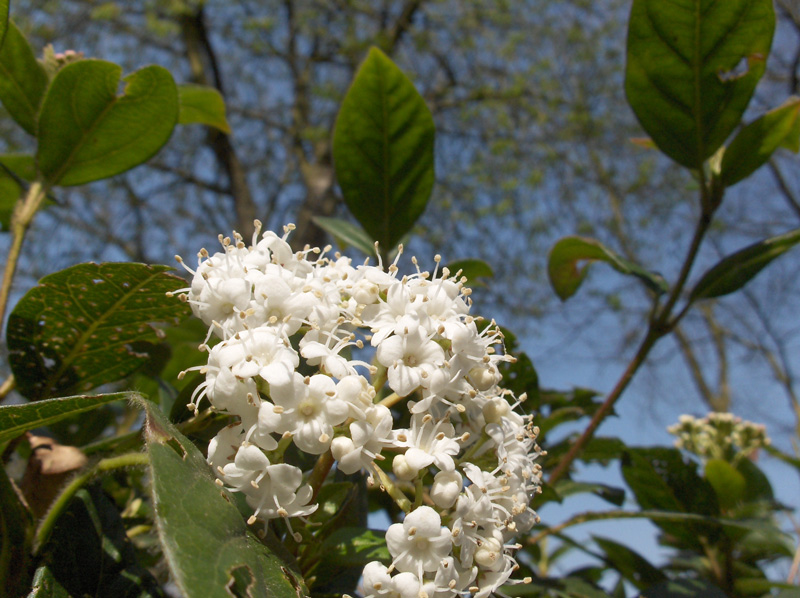
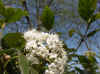 Laurustinus
(Viburnum tinus). Family Adoxaceae. Bloom
time: February - April. Height: 3m. Evergreen
shrub. After the
flowering in spring you can prune the laurustinus. Position:
Full sun to partial shade Native to the
Mediterranean region.
Viburnum Leaf Beetle can
cause much damage.
Laurustinus
(Viburnum tinus). Family Adoxaceae. Bloom
time: February - April. Height: 3m. Evergreen
shrub. After the
flowering in spring you can prune the laurustinus. Position:
Full sun to partial shade Native to the
Mediterranean region.
Viburnum Leaf Beetle can
cause much damage. |
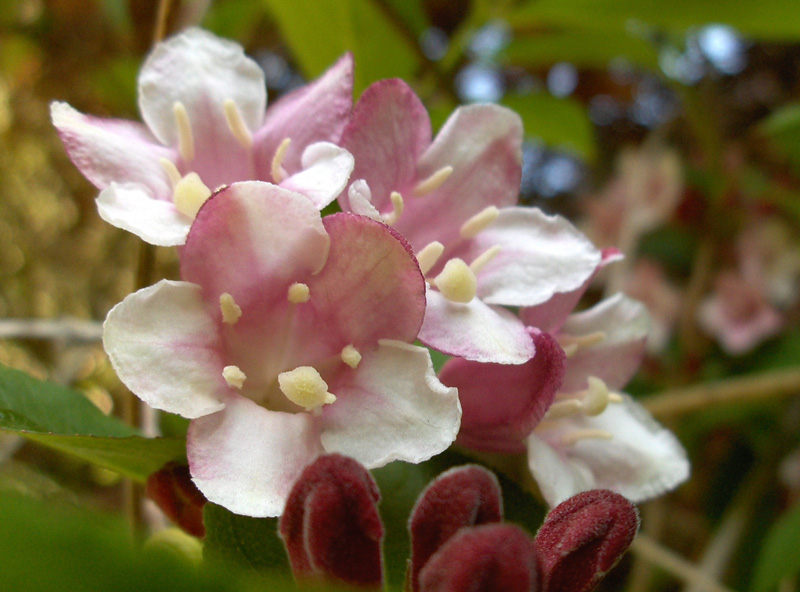
 Weigela
florida. Honeysuckle family (Caprifoliaceae). Bloom time May June. The shrub can reach 2 m in height.
About 30 years ago it looks old. I am careful with prune else I fear for
it does not survive. Propagation:
take in October cuttings (30 cm) A year later they have roots.
Weigela
florida. Honeysuckle family (Caprifoliaceae). Bloom time May June. The shrub can reach 2 m in height.
About 30 years ago it looks old. I am careful with prune else I fear for
it does not survive. Propagation:
take in October cuttings (30 cm) A year later they have roots.
|
Nederlands /
Dutch
 
Subpage Summerflowers: Summer
flowering shrubs.
|















.jpg)
.jpg)

.jpg)