|
Subpage flies:
Tachinidae
Blow-flies
(Calliphoridae) House
flies (Muscidae)
Soldierflies
(Stratiomyidae)
Root-Maggot
Flies (Anthomyiidae)
Small
flies Gnats
 Nederlands /
Dutch Nederlands /
Dutch
Soldier flies (Stratiomyidae)
Family: Soldier flies (Stratiomyidae)
There are 45 species in the Netherlands. The flies have a preference for
flowers of the family Apiaceae.
Characteristic: Wings with a small round discal
cell. On the scutellum, there often are some spines. (So it gots its name
"soldier fly") There are no bristles on the body. Like the
hover flies the soldier flies
resemble bees or wasps. Round discal cell:
Very clear in the photo of the Black Colonel ( Odontomyia tigrina).
|
Subfamily Beridinae.
 Larva of a Beris spec. Genus Beris.
Subfamily Beridinae. Family: Soldierflies (Stratiomyidae). Photo 28-11-2016.
Larva of a Beris spec. Genus Beris.
Subfamily Beridinae. Family: Soldierflies (Stratiomyidae). Photo 28-11-2016. |
 .. ..
 Beris vallata. Genus Beris. Subfamily
Beridinae.
Family: Soldierflies (Stratiomyidae).
Beris vallata. Genus Beris. Subfamily
Beridinae.
Family: Soldierflies (Stratiomyidae).
The thorax is black, the abdomen is orange.
Similar to Beris clavipes. Length 5 - 6 mm.
May - September. Photos 17-6-2012.
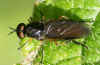 If you look closely, you see the spines on the
scutellum.
If you look closely, you see the spines on the
scutellum.
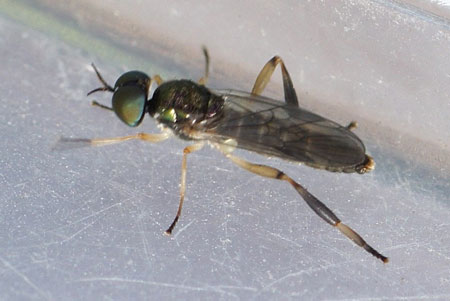
Next: Photo 1-7-2012 of a male Beris vallata (Similar to B. cavipes). The hind legs are thick. (near the feet)
|
 .. ..
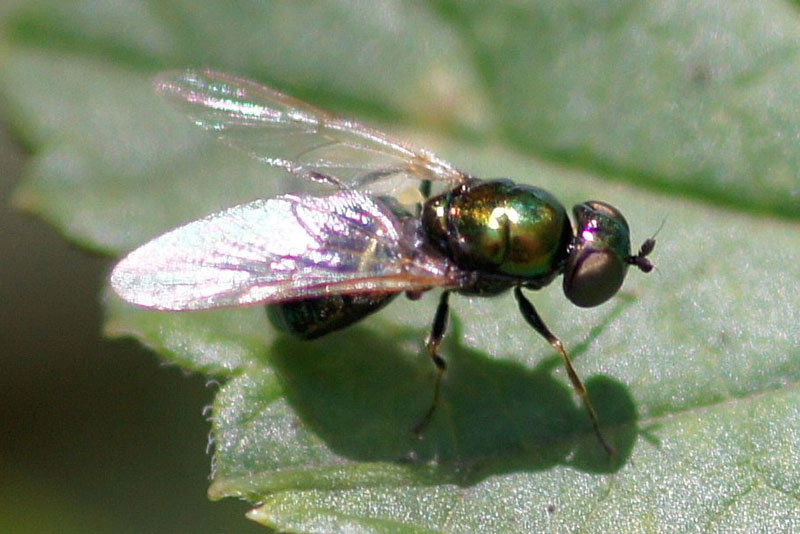
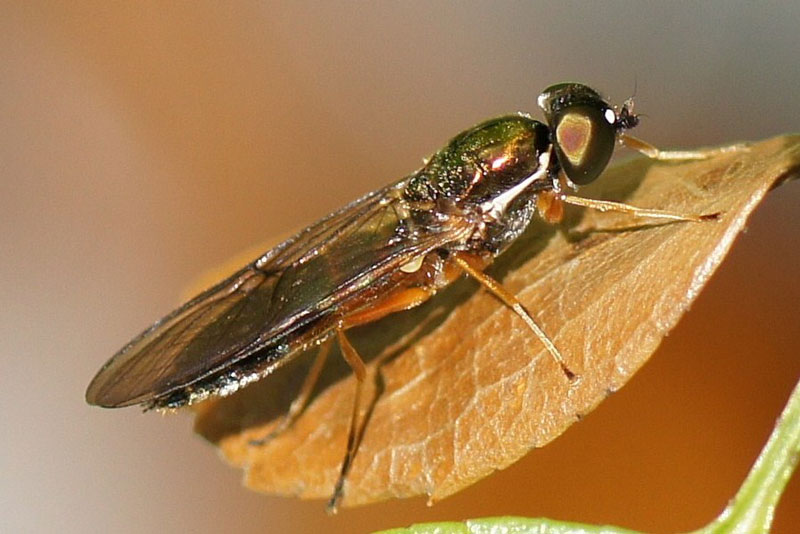
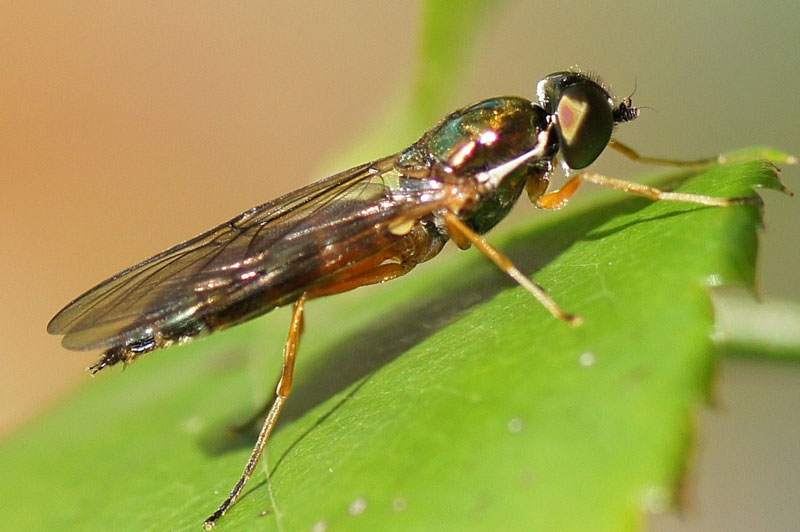
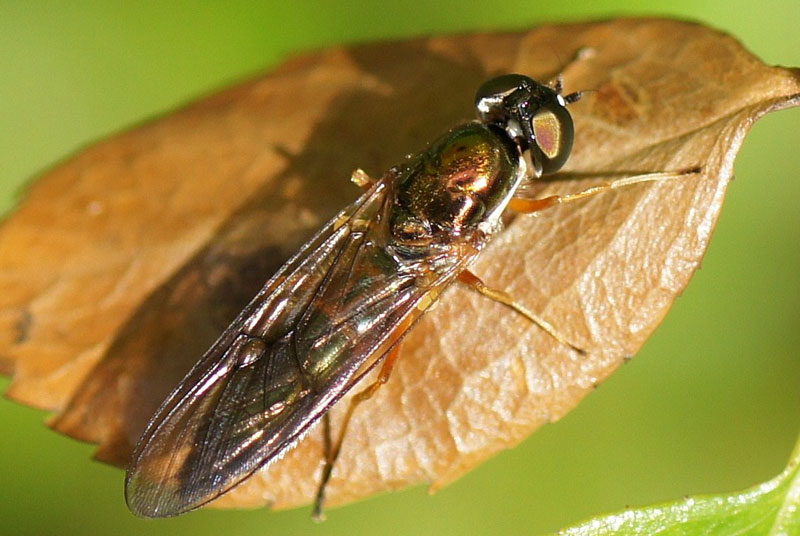
 Dull four-spined legionnaire (Chorisops
tibialis). Male. Subfamily
Beridinae.
Family: Soldierflies (Stratiomyidae).
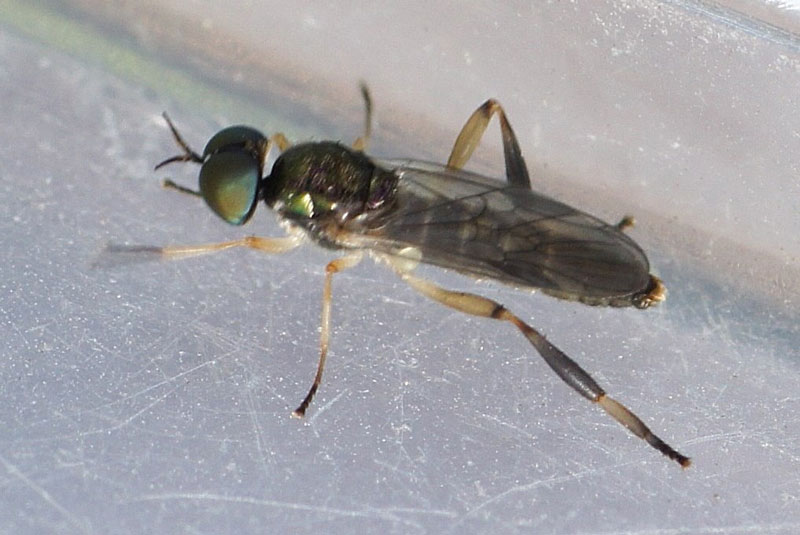
Dull four-spined legionnaire (Chorisops
tibialis). Male. Subfamily
Beridinae.
Family: Soldierflies (Stratiomyidae).
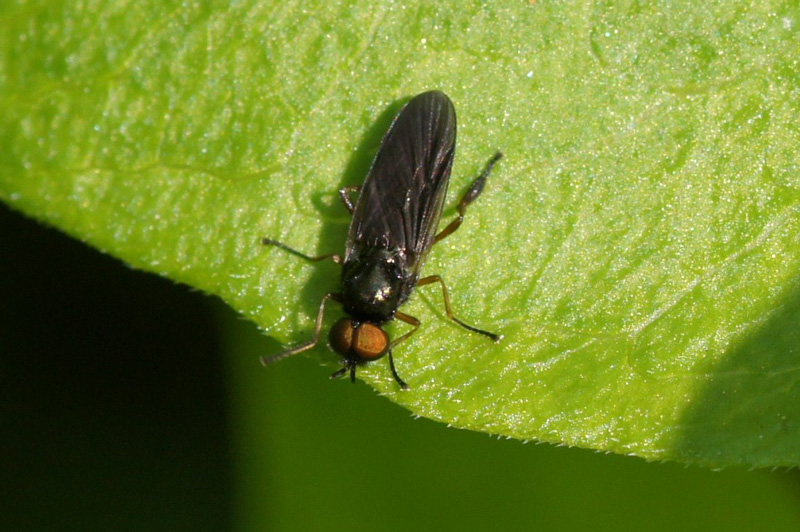
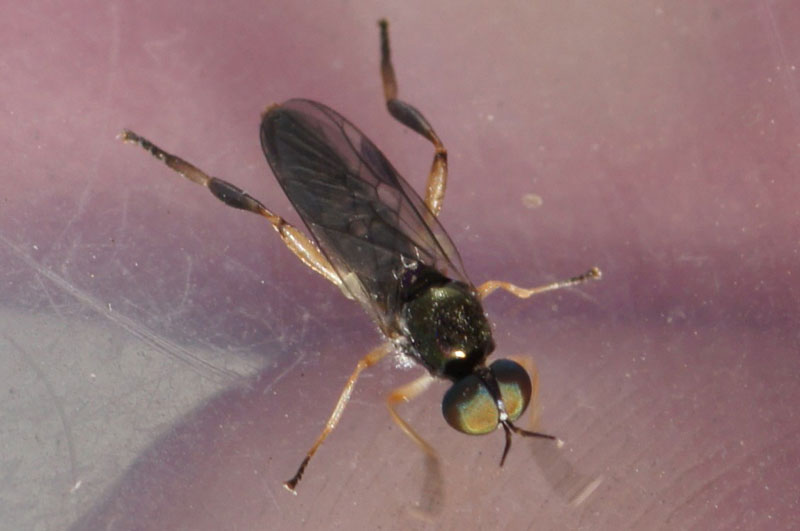
The thorax is shiny green. The legs are yellow and partly black. Length 5 to 6.5 mm.
In late June - early September.
It looks like the in the Netherlands rare Chorisops nagatomii. Photos
8-7-2015.
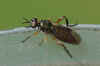 Chorisops tibialis, female. 17-8-2023
|
Subfamily Pachygastrinae.
 .. ..  Pachygaster
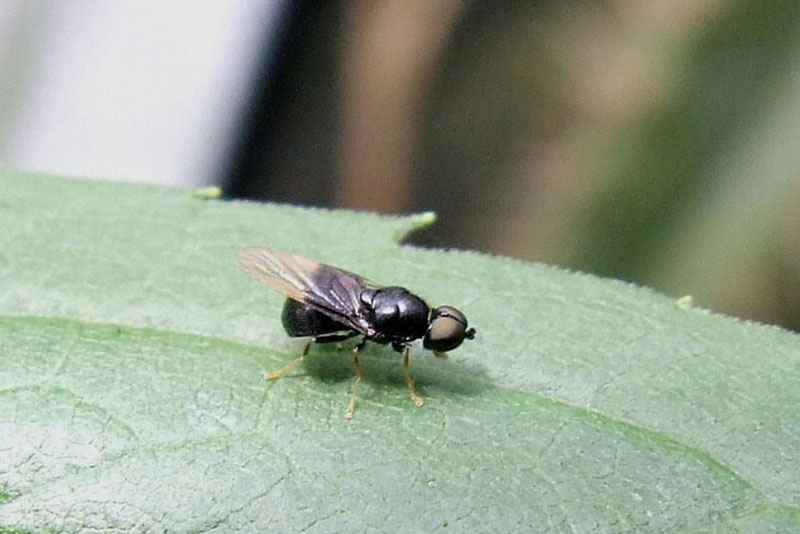
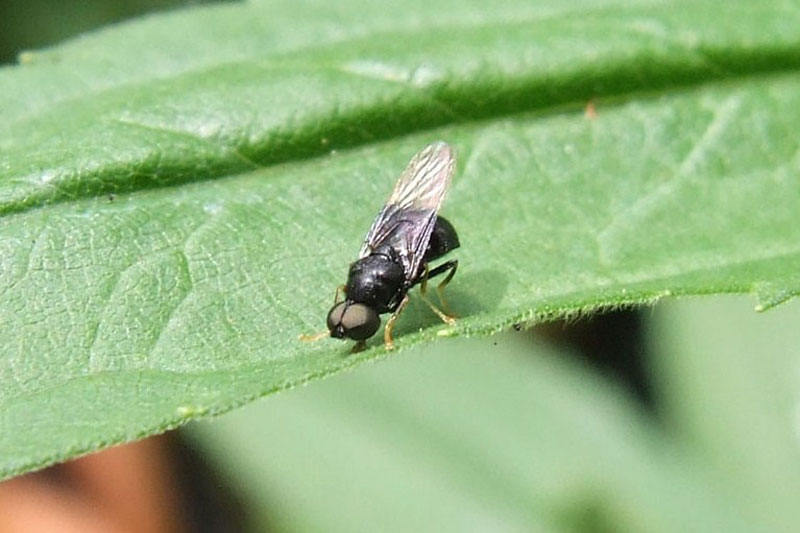
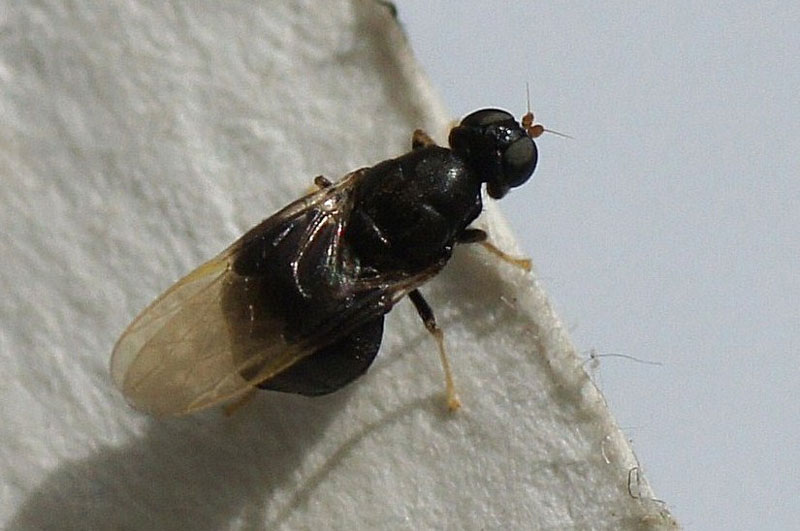
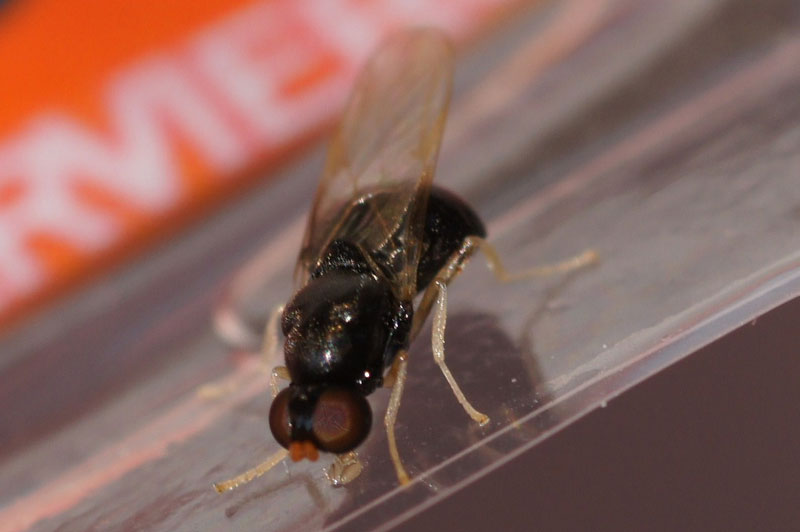
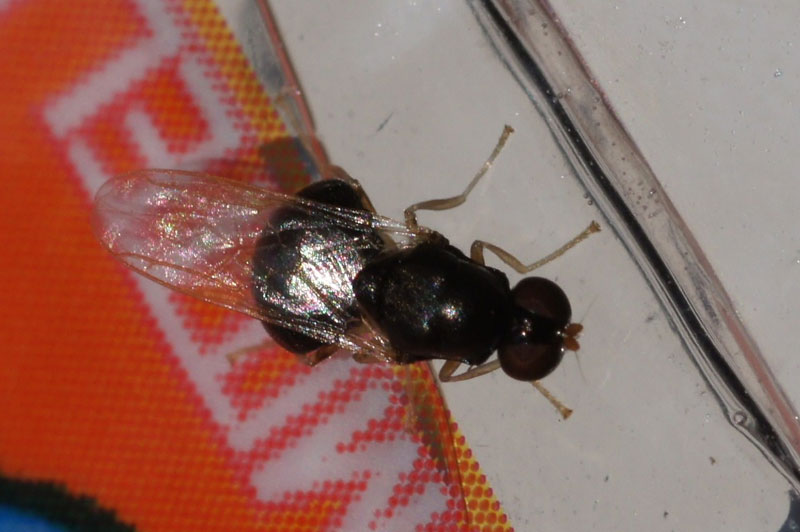
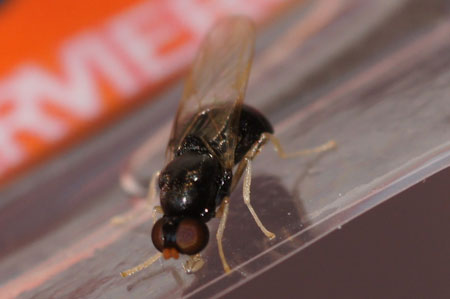
leachii. Genus Pachygaster. Subfamily Pachygastrinae.
Family: Soldierflies (Stratiomyidae).
Pachygaster
leachii. Genus Pachygaster. Subfamily Pachygastrinae.
Family: Soldierflies (Stratiomyidae).
The larvae live in decaying wood, decaying plant stems, in leaf litter.
This is a female, recognizable by the bright orange antennae.
Length 3 - 3,5 mm. Photos 27-6-2010.
|
Subfamily Sarginae.
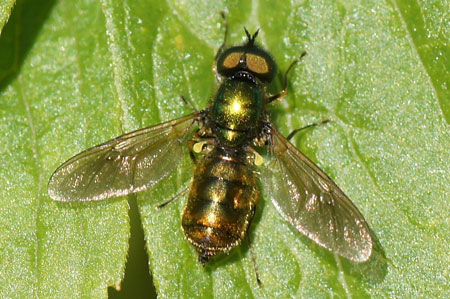 .. ..
 Chloromyia formosa male Genus Chloromyia. Family: Soldierflies
(Stratiomyidae).
Chloromyia formosa male Genus Chloromyia. Family: Soldierflies
(Stratiomyidae). |
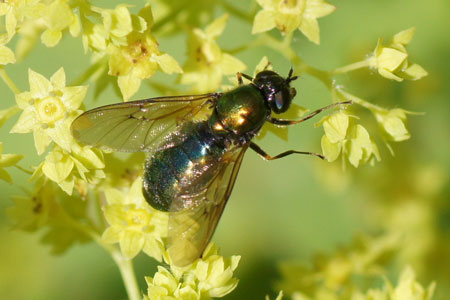 .. ..
 Chloromyia formosa female Genus Chloromyia.
Family: Soldierflies (Stratiomyidae).
Chloromyia formosa female Genus Chloromyia.
Family: Soldierflies (Stratiomyidae). |
|
Broad Centurion Soldier Fly (Chloromyia formosa). Genus
Chloromyia.
Subfamily Sarginae.
Family: Soldierflies (Stratiomyidae).
The male has shiny yellow gold abdomen. Females have a metallic
blue green abdomen. The legs are black with yellow knees.
Length 7- 9 mm. April - August.
The larvae live in damp soil, compost and leaf litter and they feed on
decaying vegetable matter. Photos 6-6-2011, 26-6-2012.
|
 .. ..
 . .
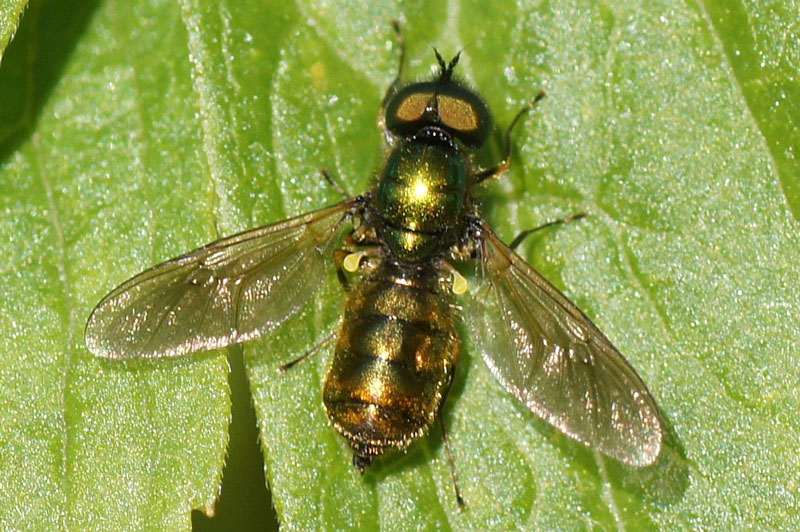
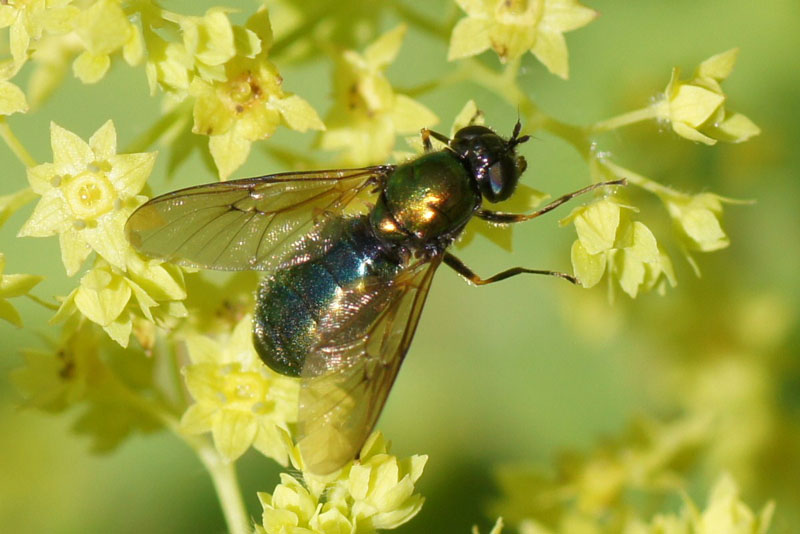
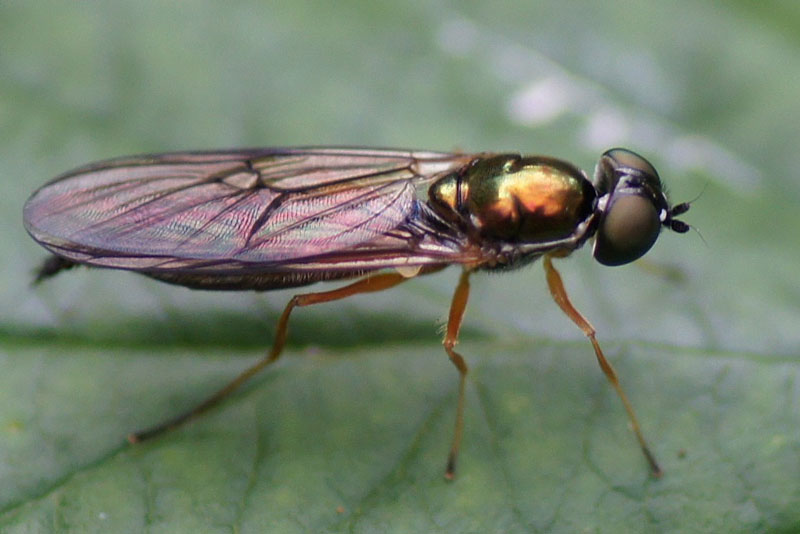
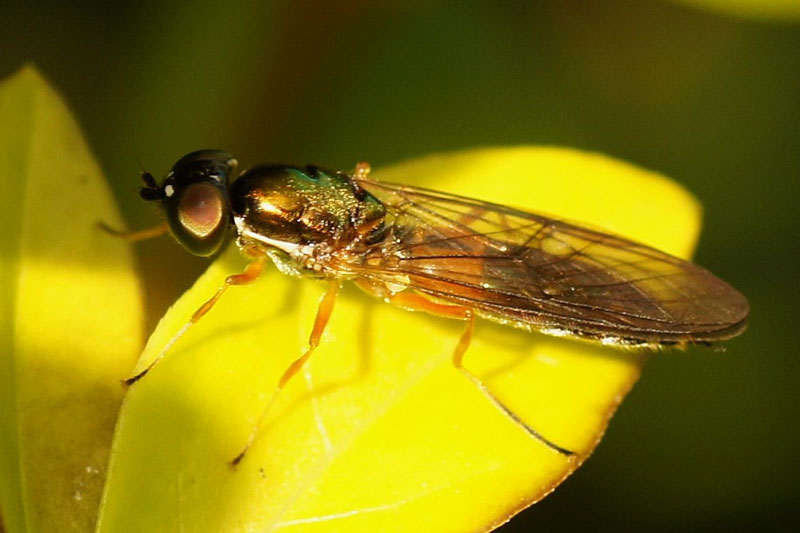
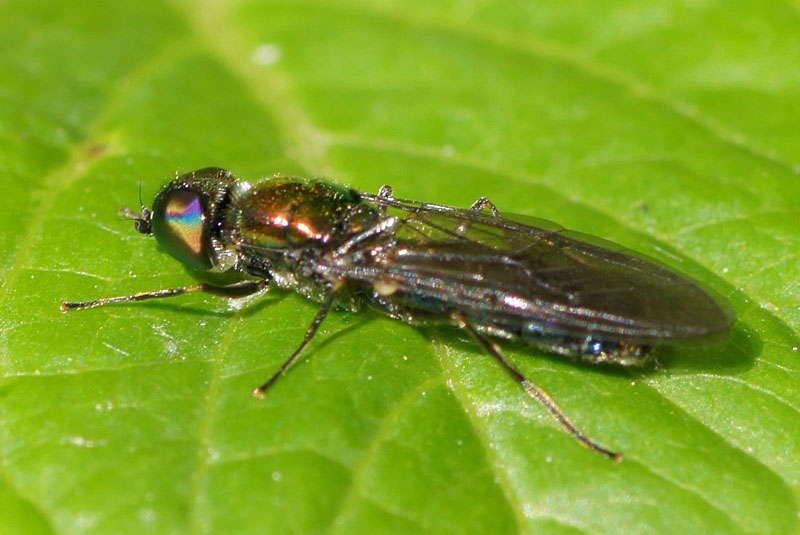
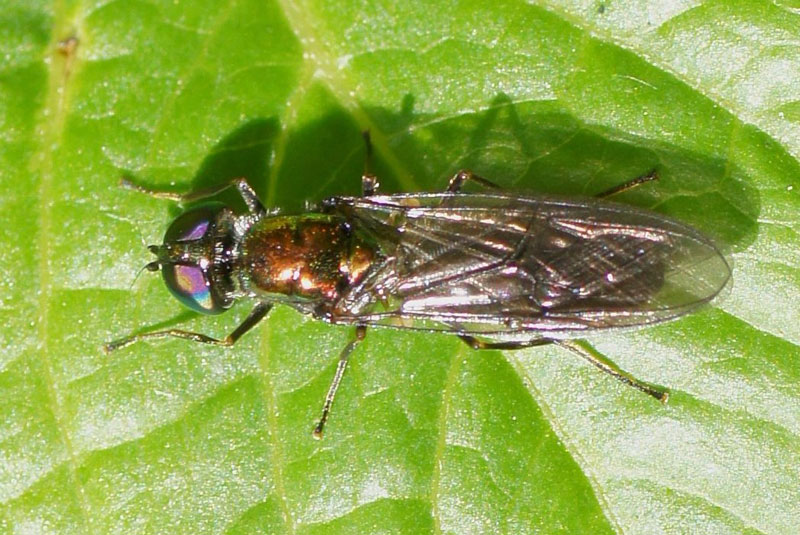
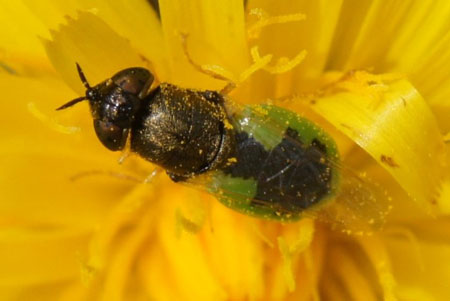
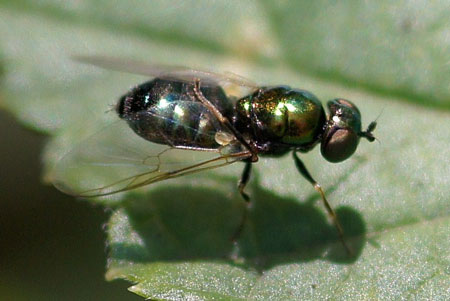
 Black-horned gem (Microchrysa polita) female
|
 .. ..
 . .
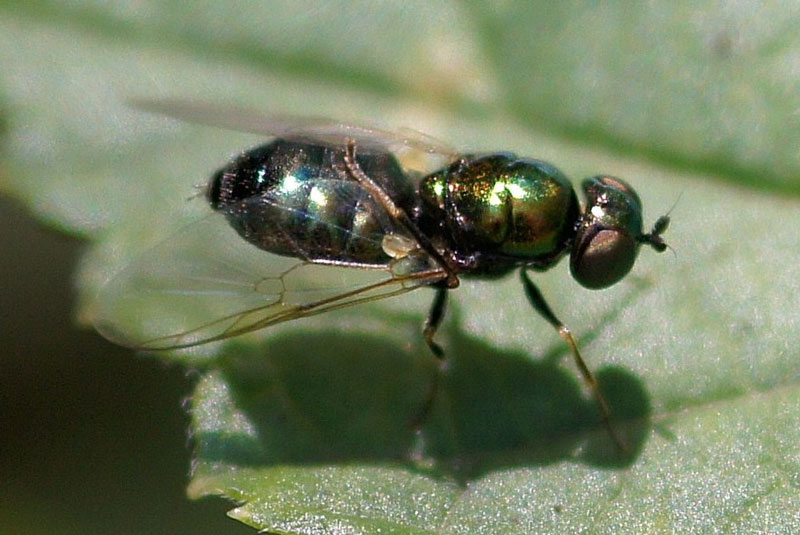
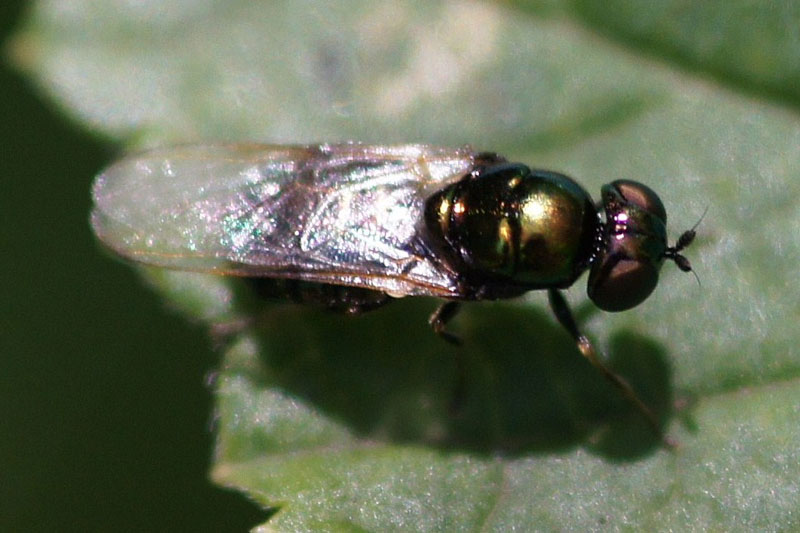
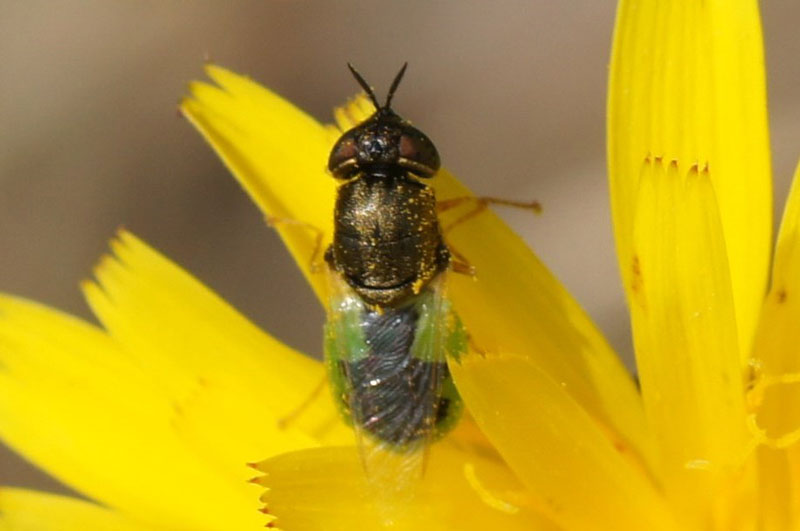
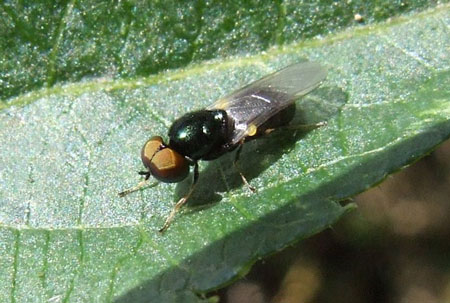
 Black-horned gem (Microchrysa polita) male
|
|
Black-horned gem (Microchrysa polita). Genus
Microchrysa. Subfamily Sarginae. Family:
Soldierflies (Stratiomyidae).
The adult of this soldier fly is small and bright metallic green.
The male has red eyes.
In the large photo the female has spread the wings. But mostly the wings
are folded.
March - September.
Length 4,5 -5,5 mm
Larvae live in organic matter, compost heaps. The flies in our garden are
also near the compost heap.
|
 .. ..
 . .
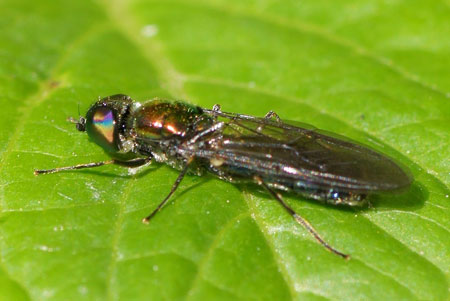
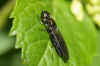 Iridescent centurion (Sargus iridatus). Genus
Sargus. Subfamily Sarginae. Family: Soldierflies (Stratiomyidae).
Iridescent centurion (Sargus iridatus). Genus
Sargus. Subfamily Sarginae. Family: Soldierflies (Stratiomyidae).
A long, slender
soldier fly. The wings can be darkened slightly, but not as much as in the
Sargus cuprarius. It can be recognized by the white hairs behind the head.
Length 6 - 11 mm.
April - October.
Photos 8-7-2015.
|
Subfamily Stratiomyinae.
 .. ..  Black Colonel (Odontomyia tigrina).
Genus Odontomyia. Subfamily Stratiomyinae. Family: Soldierflies
(Stratiomyidae).
Black Colonel (Odontomyia tigrina).
Genus Odontomyia. Subfamily Stratiomyinae. Family: Soldierflies
(Stratiomyidae).
A shiny black fly with yellow on the underside of the abdomen and the legs. The female has sometimes also yellow spots on the side of the body. Those females
looks like the female of the Odontomyia argentata.
They are often seen on plants near water. In our garden near the pond.
April - August. Length 7.5 to 11.5 mm. Photos 29-5-2010.
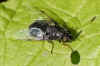 female, photo 19-5-2022.
|
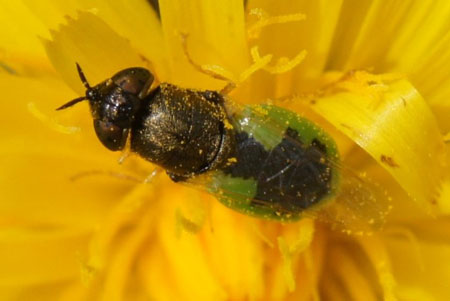 .. .. 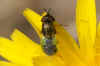 . .
 Common Green Colonel ( Oplodontha viridula).
Genus Oplodontha. Subfamily Stratiomyinae. Family: Soldierflies
(Stratiomyidae). In the dunes about 4 km
from our house.
Common Green Colonel ( Oplodontha viridula).
Genus Oplodontha. Subfamily Stratiomyinae. Family: Soldierflies
(Stratiomyidae). In the dunes about 4 km
from our house.
The edge of the abdomen is green, sometimes yellow,
white. The center of the abdomen is black. Head, thorax and scutellum dark bronze. On the eye are dark spots. It looks like the average larger (8-12 mm) Odontomyia angulata and Odontomyia
hydroleon.
June - August Length: 6-9 mm. Photos 26-6-2014. |
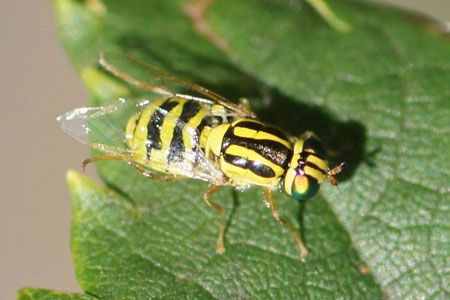 Three-lined soldier (Oxycera trilineata). Genus
Oxyceraa. Subfamily Stratiomyinae. Family Soldierflies (Stratiomyidae). Photographed about 300
meter from our house.
Three-lined soldier (Oxycera trilineata). Genus
Oxyceraa. Subfamily Stratiomyinae. Family Soldierflies (Stratiomyidae). Photographed about 300
meter from our house.
A soldierfly with light green spots. But sometimes
they (like the three-lined soldier on this photo) are yellow. The thorax is green (yellow) black striped (longitudinal stripes). The abdomen
is green (yellow) striped, but they are transverse. A yellow scutellum. At the front of the head two wide green (yellow) stripes.
Common in stagnant water.
May - August. Length: 5 - 7 mm. Photos 1-8-2013.
|
Family Wood soldier flies, Xylomyidae.
The family Wood soldier flies (Xylomyidae) is closely related to the family
Soldierflies (Stradiomyidae).
In the Netherlands are two species. The other is the very rare Xylomya maculata.
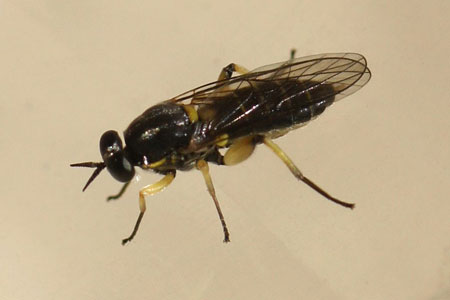 .. ..
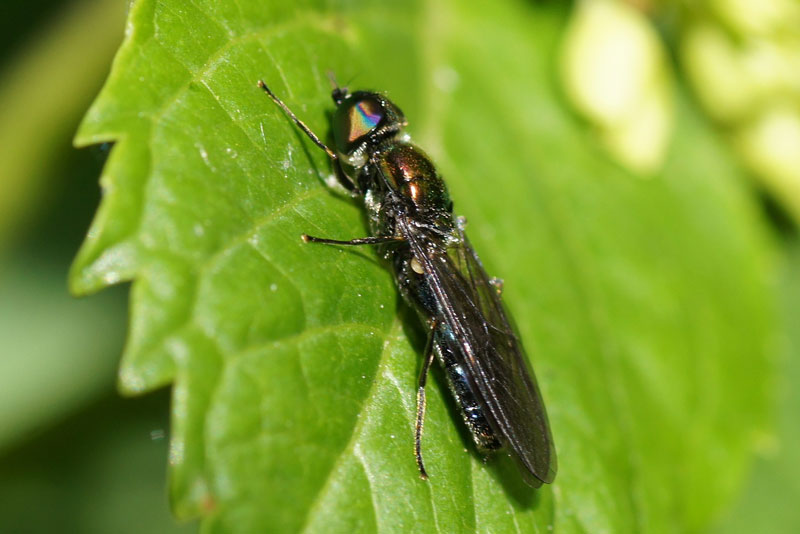
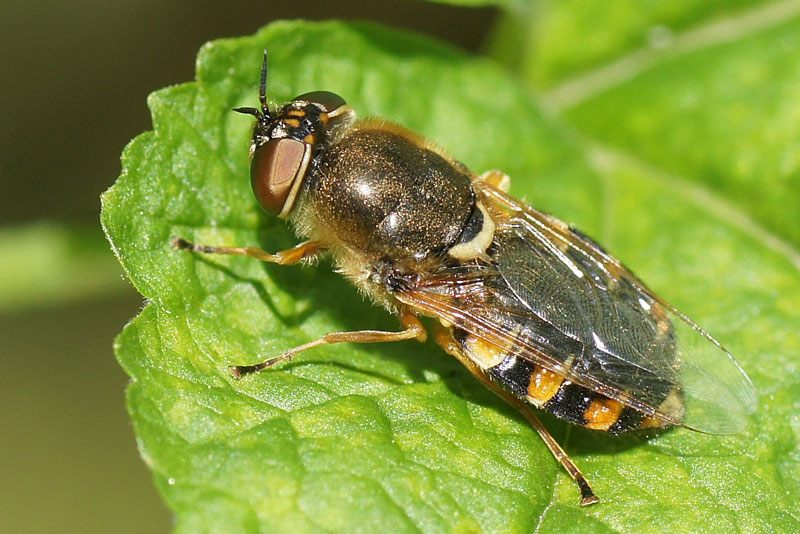
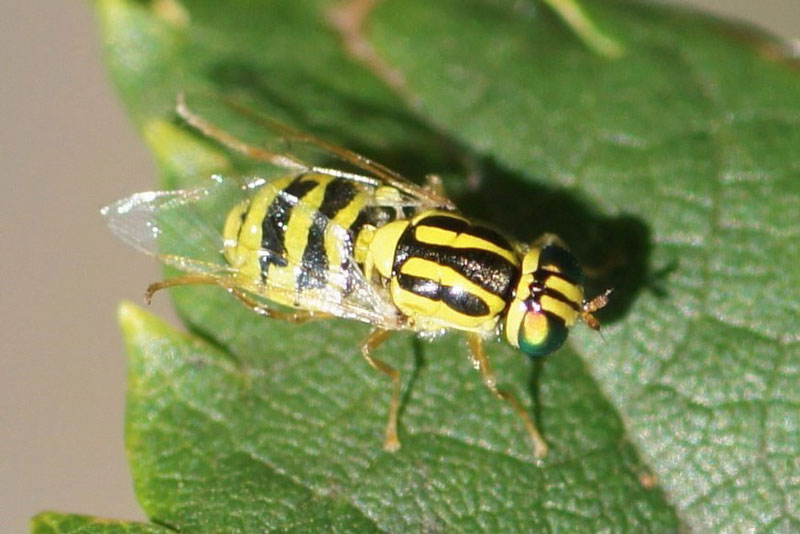
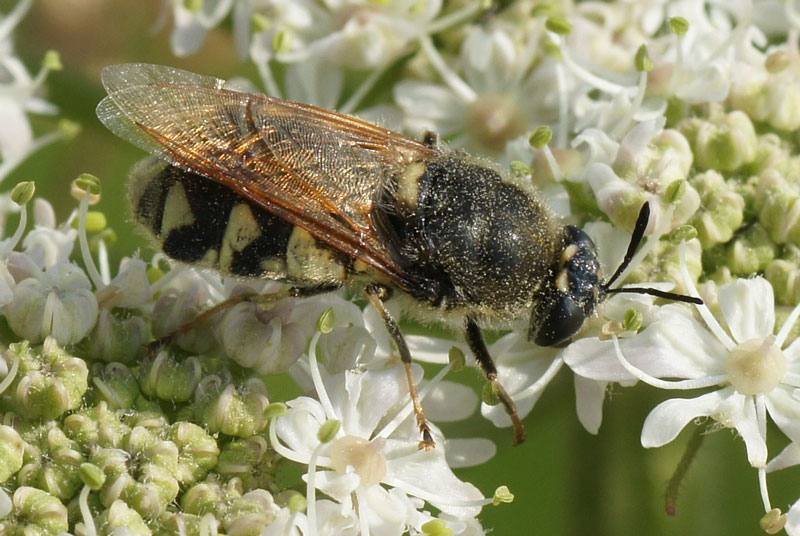
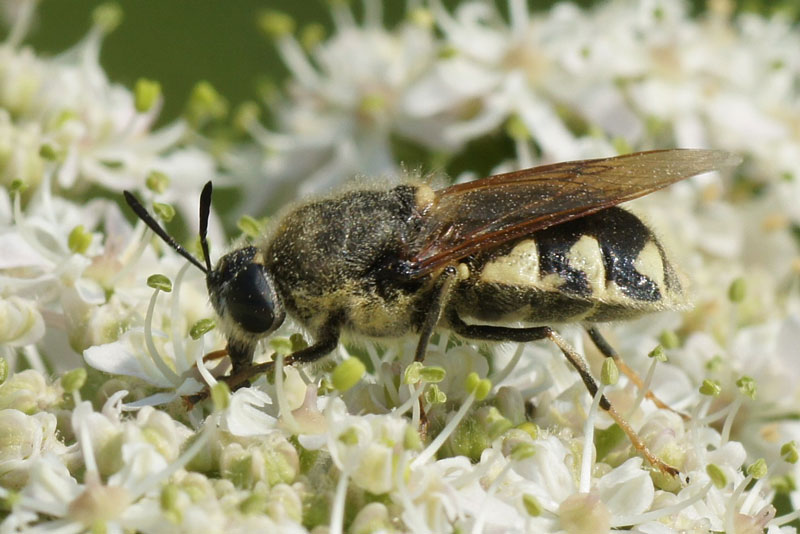
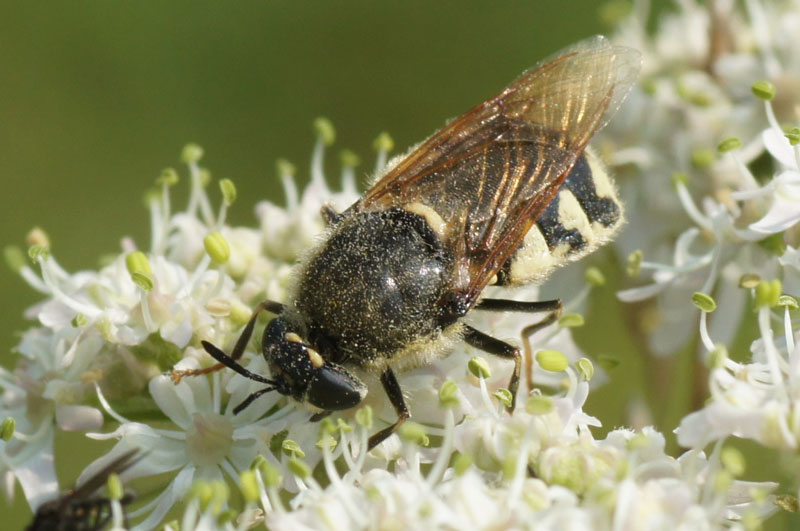
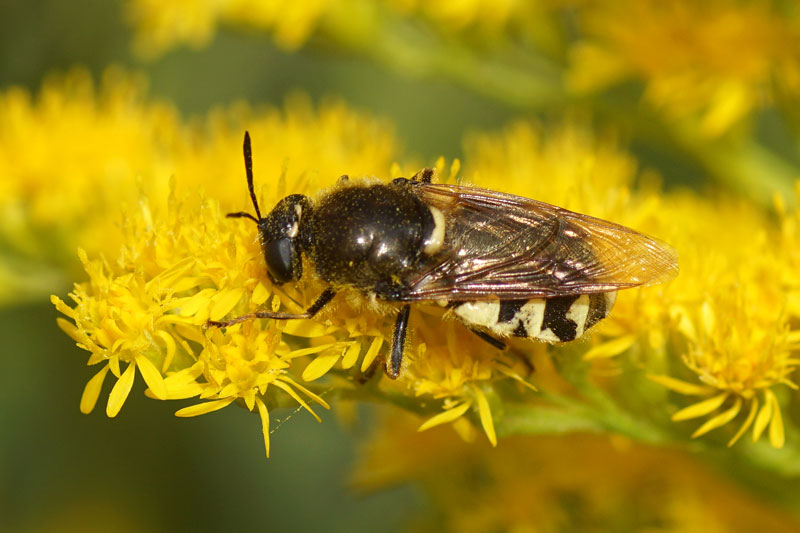
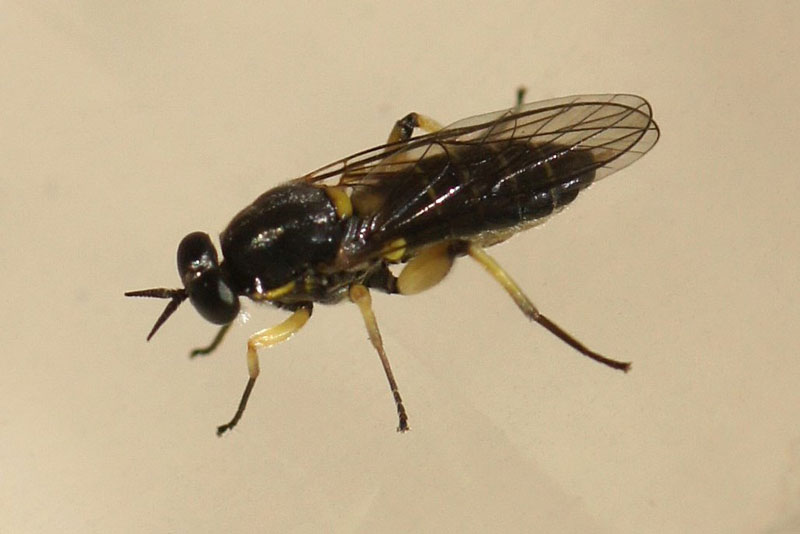
 Solva marginata.
Family: Wood soldier flies (Xylomyidae).
Solva marginata.
Family: Wood soldier flies (Xylomyidae).
A shiny dark fly with yellow legs and yellow shield. Also on the side of the thorax are yellow stains. Thus he resembles some sawflies and parasitic wasps. The abdomen have narrow yellow bands. Part of the thorax is hairy.
The larvae live under the bark of trees.
May - August. Length: 6 - 11 mm. Photos 6-7-2013. |
All soldierflies of the Netherlands on the Dutch forum "Waarneming"
information
in Dutch and photos.
I want to thank everyone, who has helped me (waarneming.nl)
to identify. In particular, Joke van Erkelens, Robert Heemskerk, Mark van Veen,
Gerard Pennard and Han Endt.
Nederlands /
Dutch
 
Subpage flies:
Tachinidae
Blow-flies
(Calliphoridae) House
flies (Muscidae) Soldierflies
(Stratiomyidae)
Root-Maggot
Flies (Anthomyiidae)
Small
flies Gnats
Subpage wasps, bees, bumblebees: Parasitica, Ichneumonidae
Sawflies
symphyta Bumblebees
Bee hotel
|