|
Subpage flies:
Tachinidae
Blow-flies
(Calliphoridae) House
flies (Muscidae) Soldierflies
(Stratiomyidae)
Root-Maggot
Flies (Anthomyiidae)
Small
flies Gnats
 Nederlands /
Dutch Nederlands /
Dutch
House flies
Muscidae
Family House
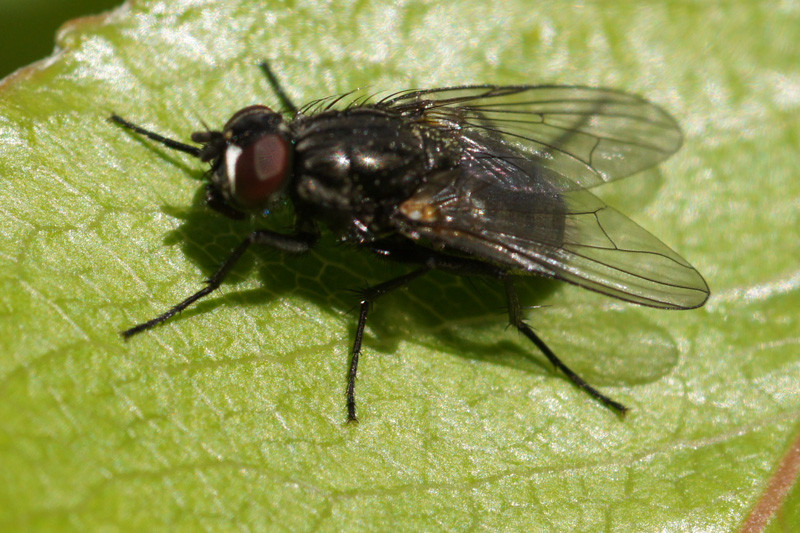
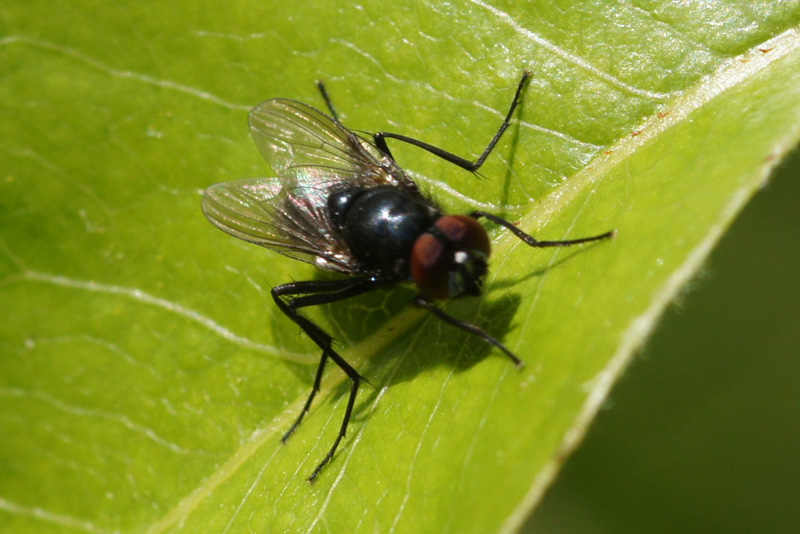
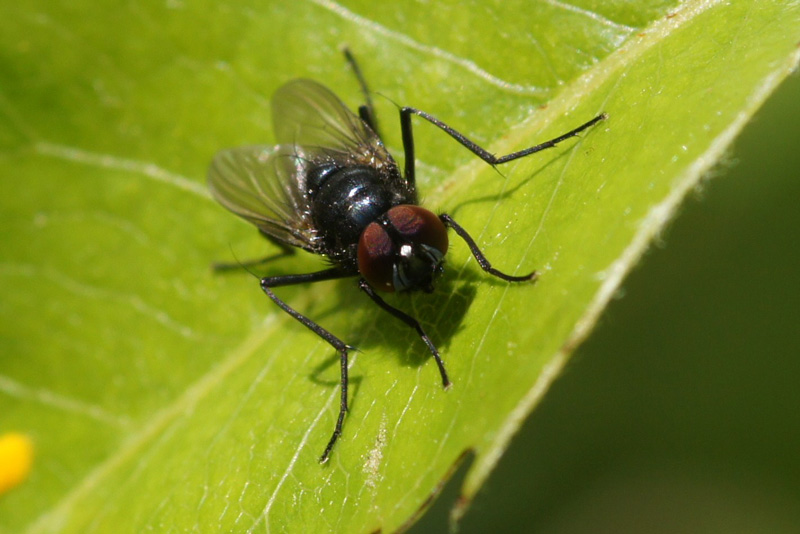
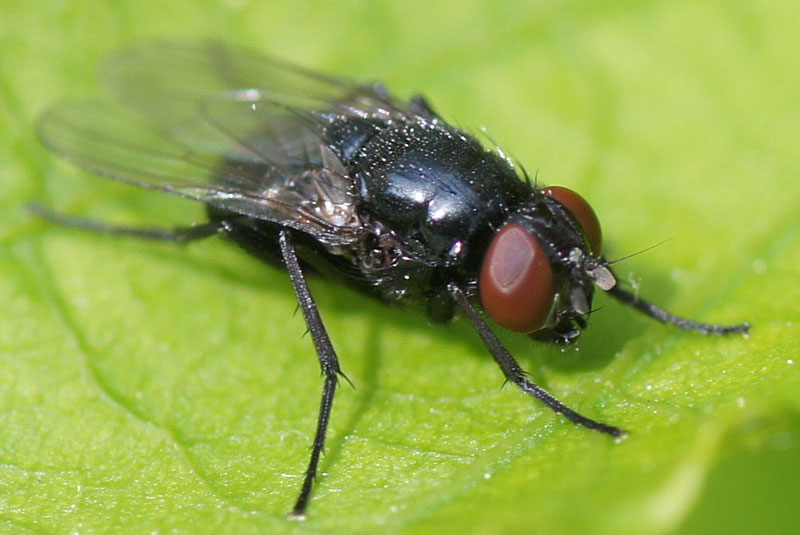
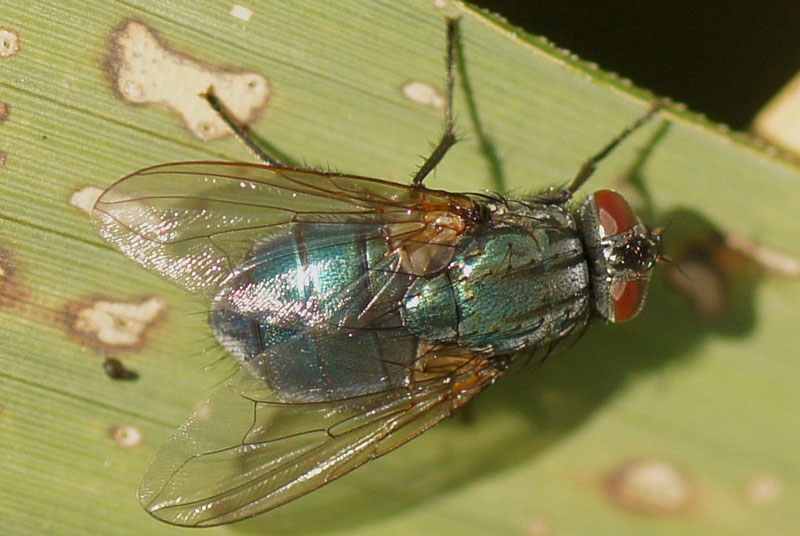
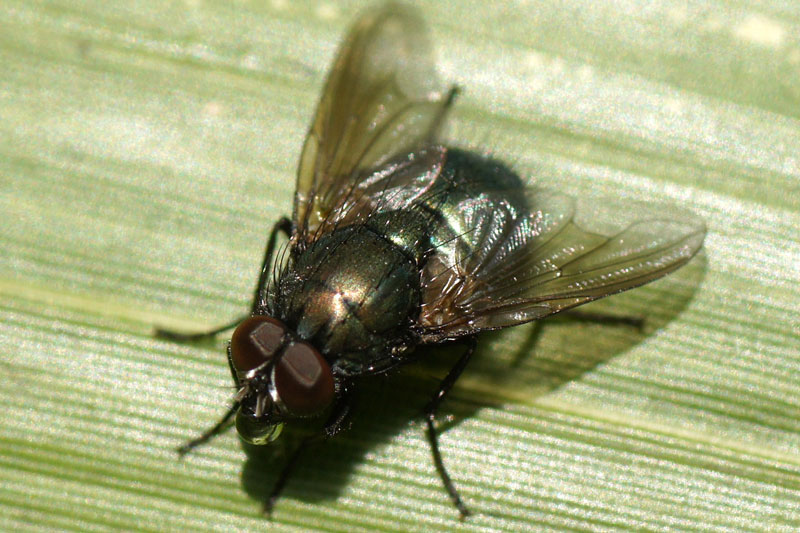
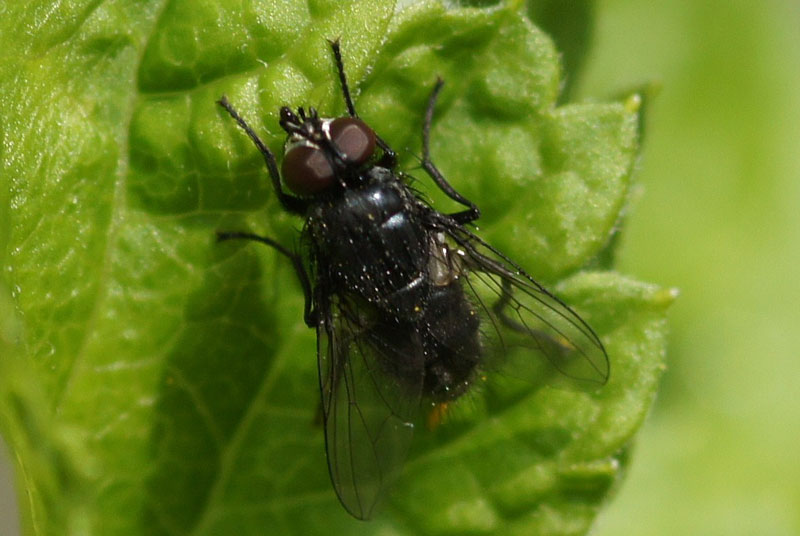
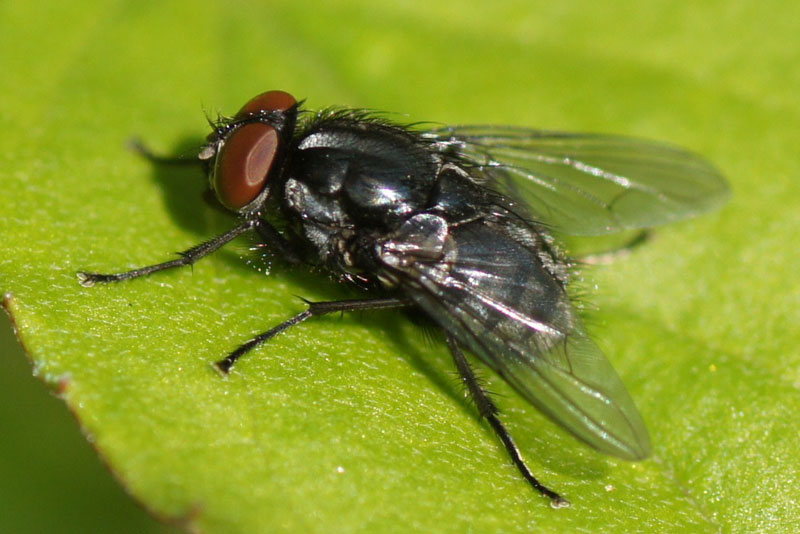
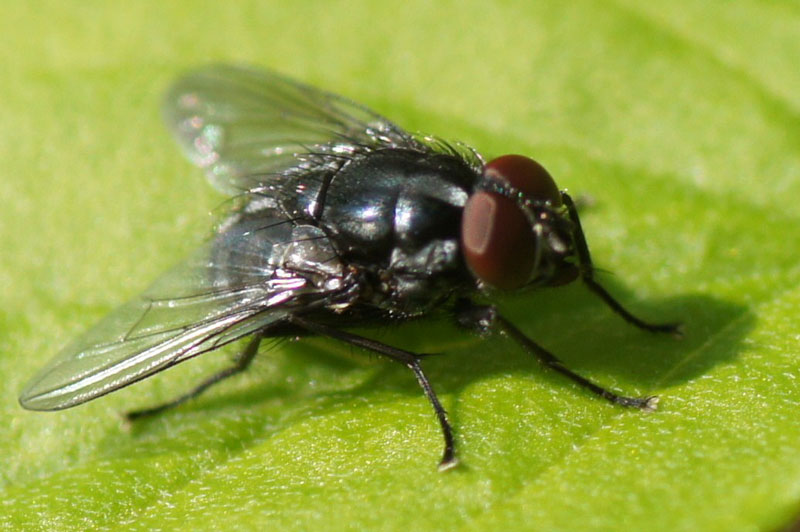
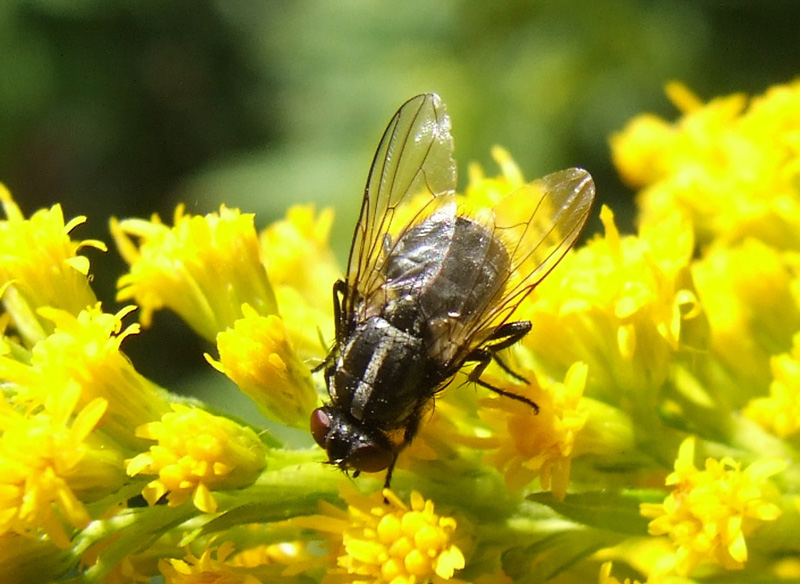
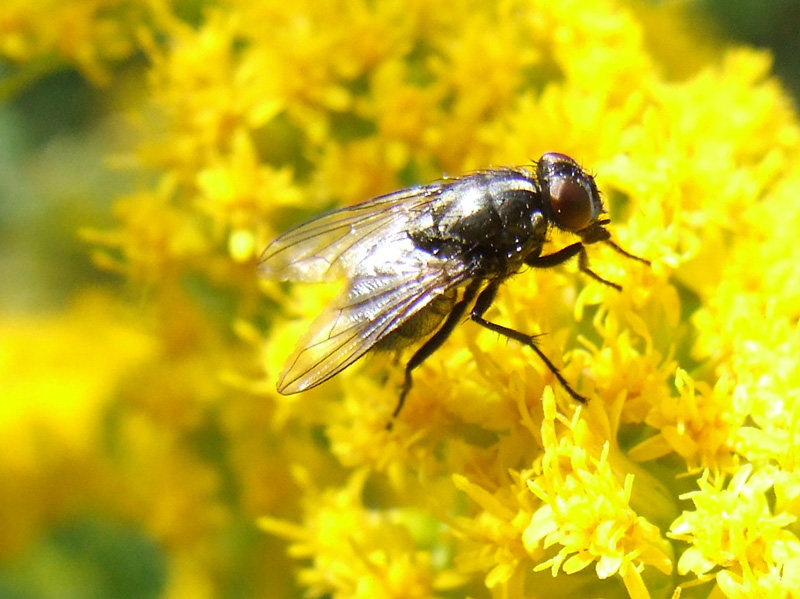
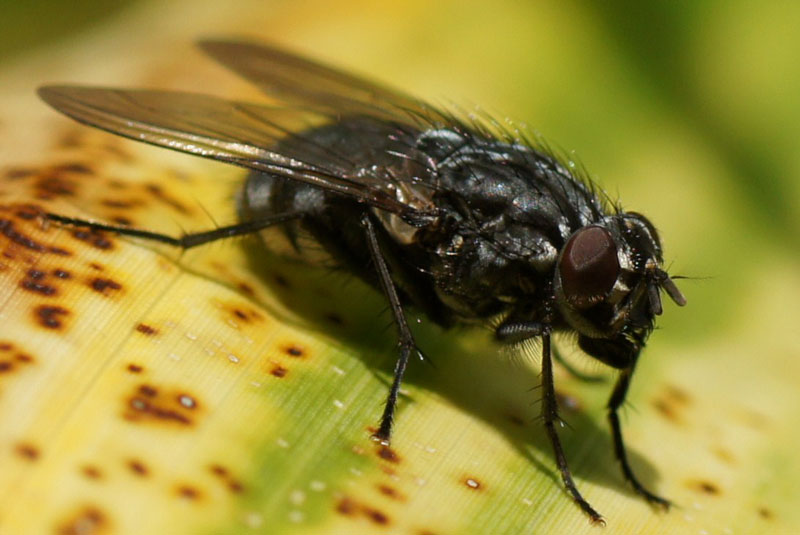
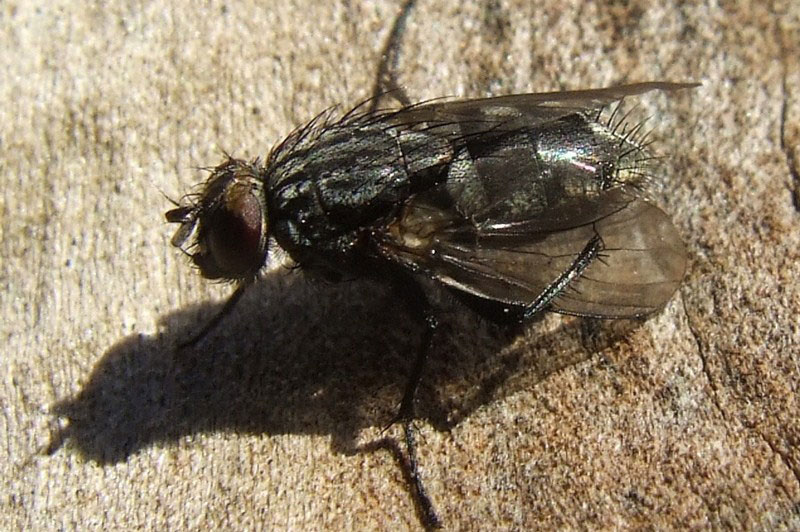
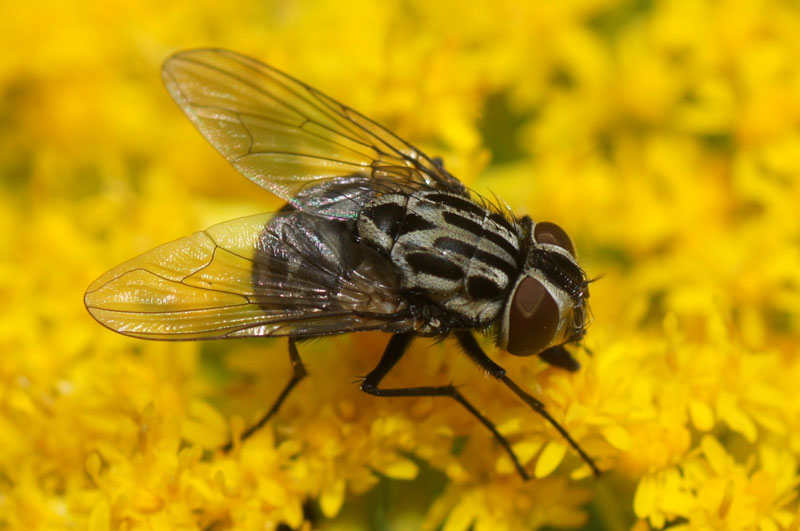
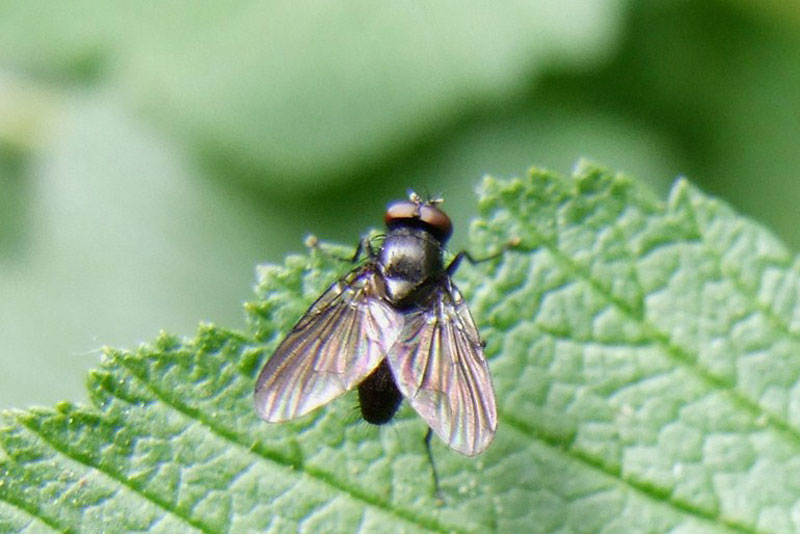
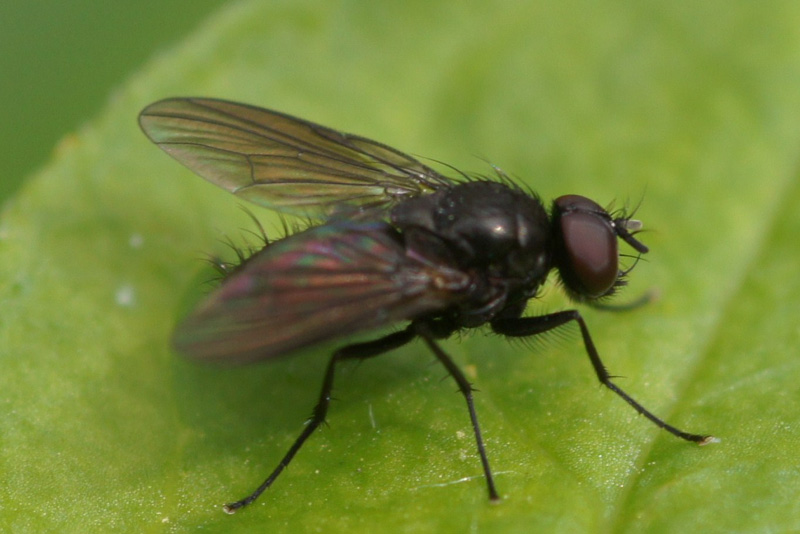
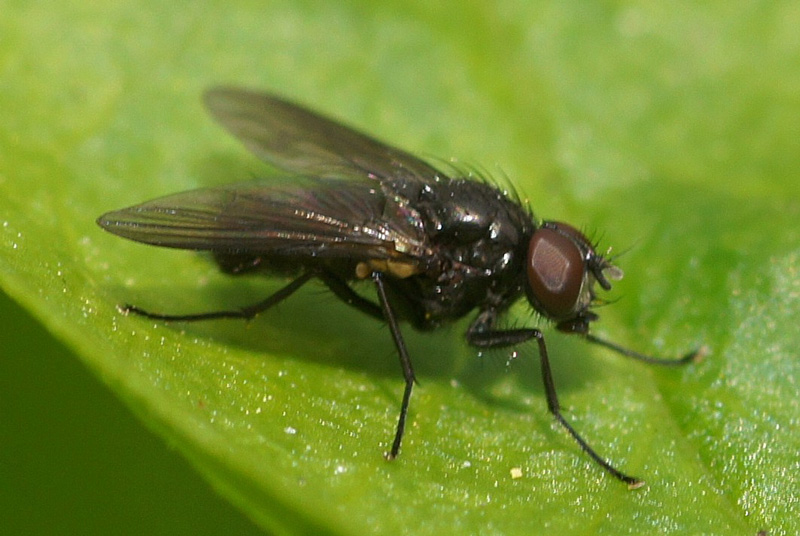
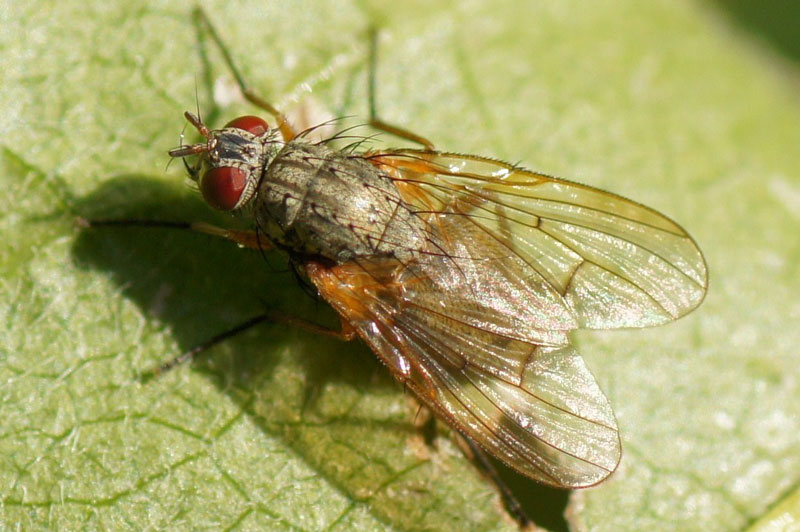
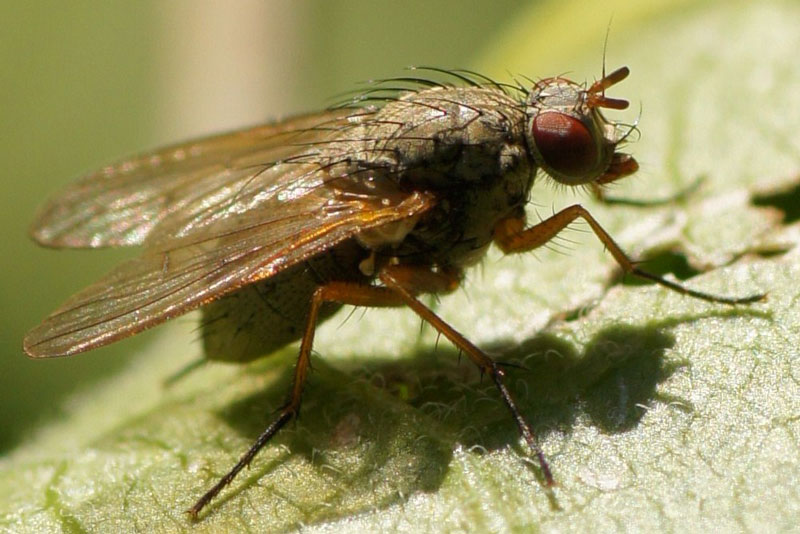
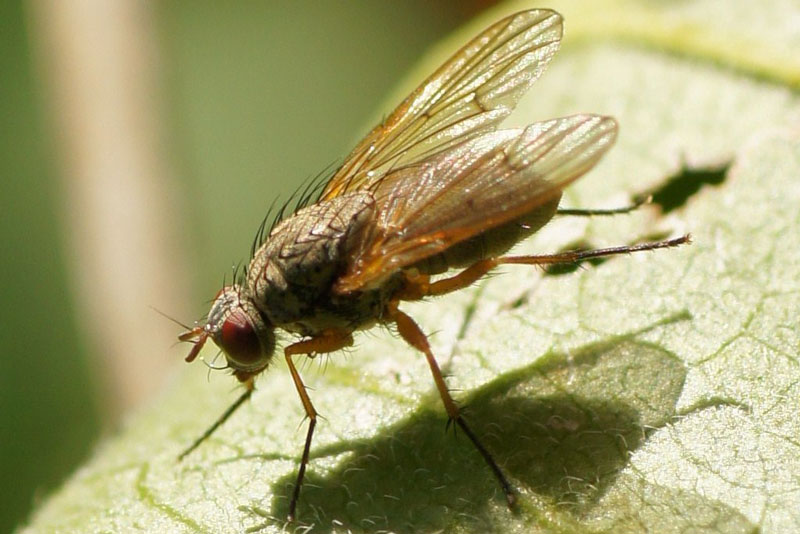
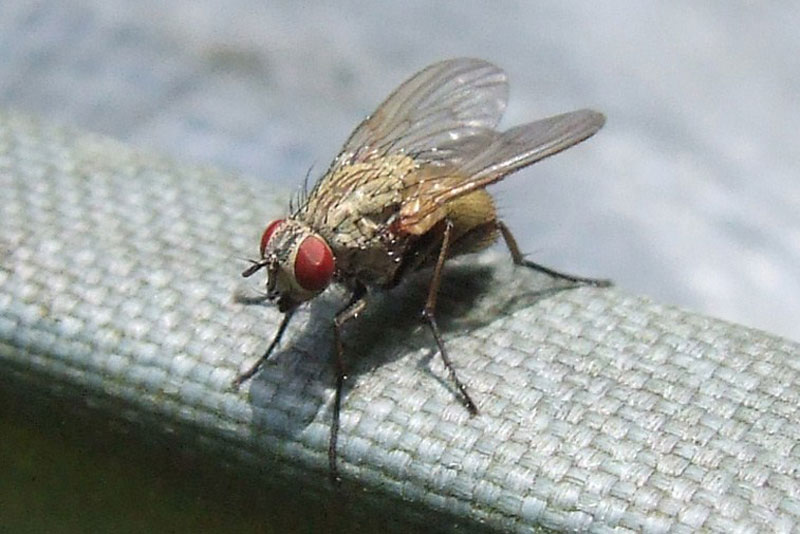
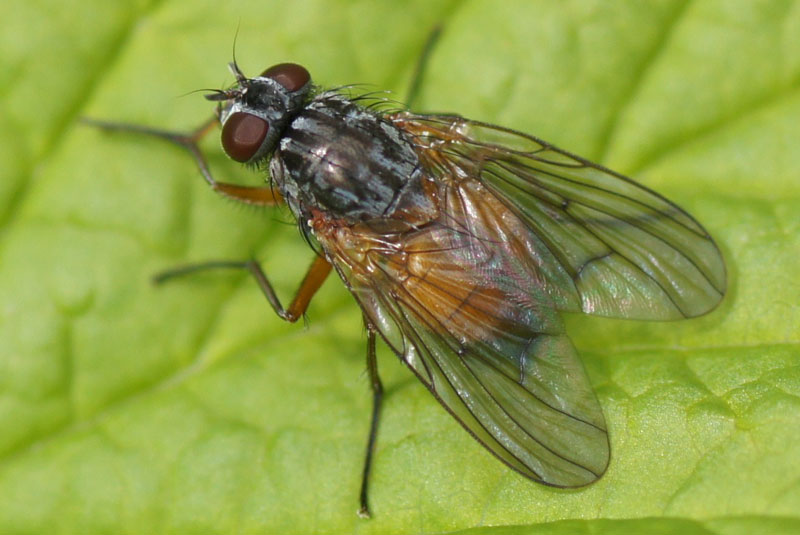
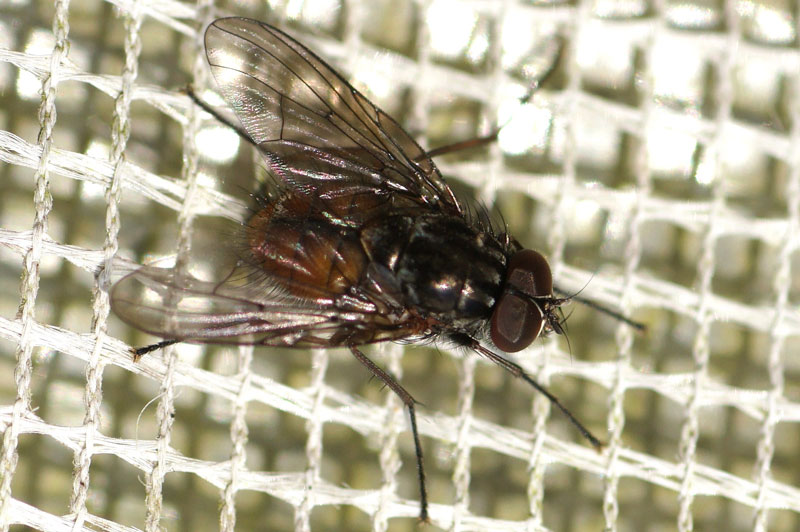
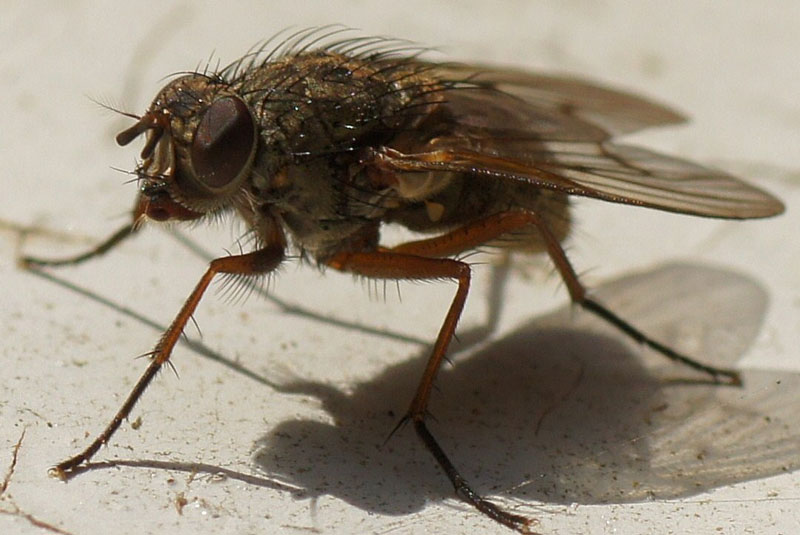
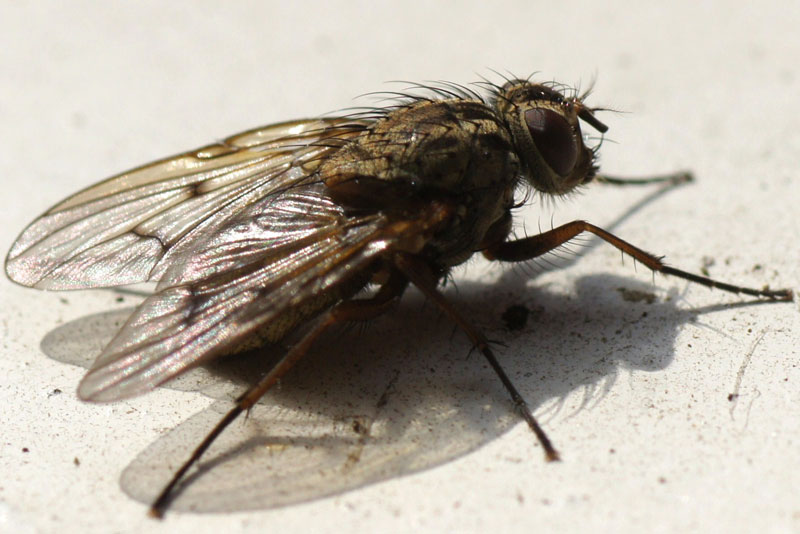
flies (Muscidae) This is a large family. In Europe, approximately 600 known species. Worldwide, there are 4000.
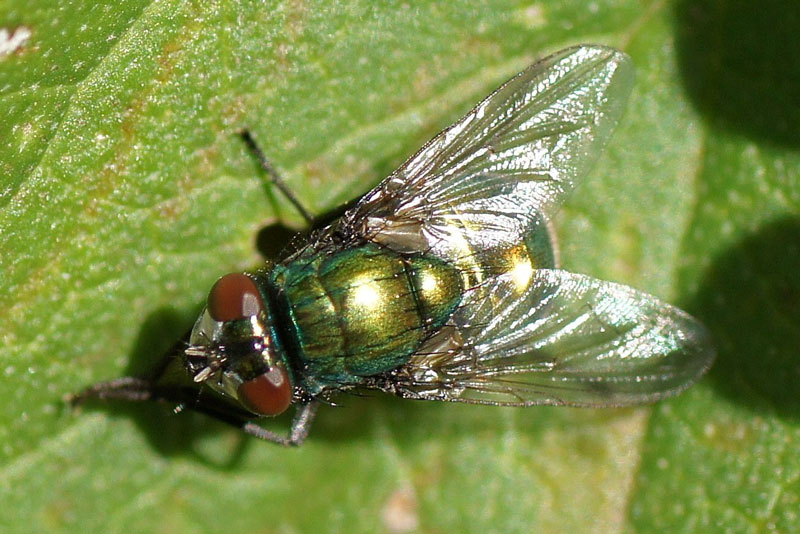
The colour often is grey to black. But as you can see
on this page, there also are flies with other colours such as bright green and blue.
Sometimes they look like blowflies (Calliphoridae)
There are species that absorb liquids, blood-sucking species and robber flies.
Many flies feed on pollen and honey. The larvae mainly feed on decaying
material or manure.
Muscidae genera: Achanthiptera, Atherigona, Azelia, Brontaea, Coenosia, Dexiopsis, Drymeia, Eudasyphora, Graphomya, Haematobia, Haematobosca, Hebecnema, Helina, Hydrotaea, Limnophora, Limnospila, Lispe, Lispocephala, Lophosceles, Macrorchis, Mesembrina, Morellia, Musca, Muscina , Mydaea, Myospila, Neolimnophora, Neomyia, Orchisia, Phaonia, Poli prophetess, Potamia, Pseudocoenosia, Pyrellia, Schoenomyza, Spanochaeta, Spilogona, Stomoxys, Thricops, Villeneuvia. (In Europe about 45 genera)
|
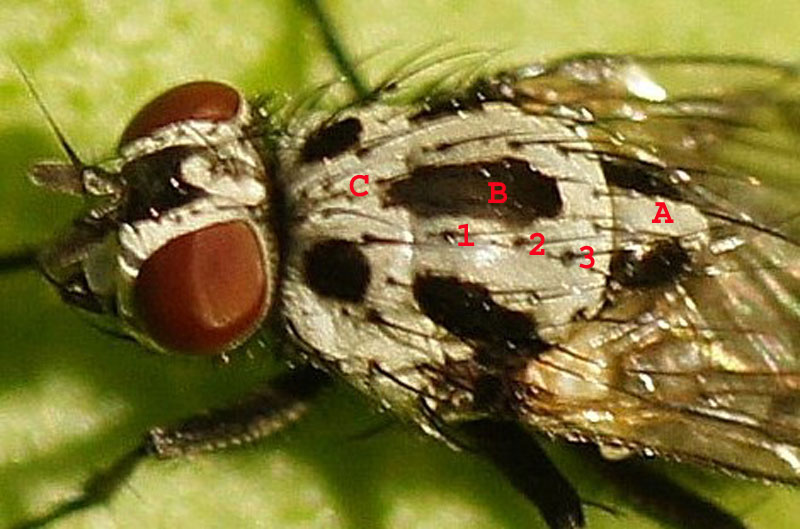
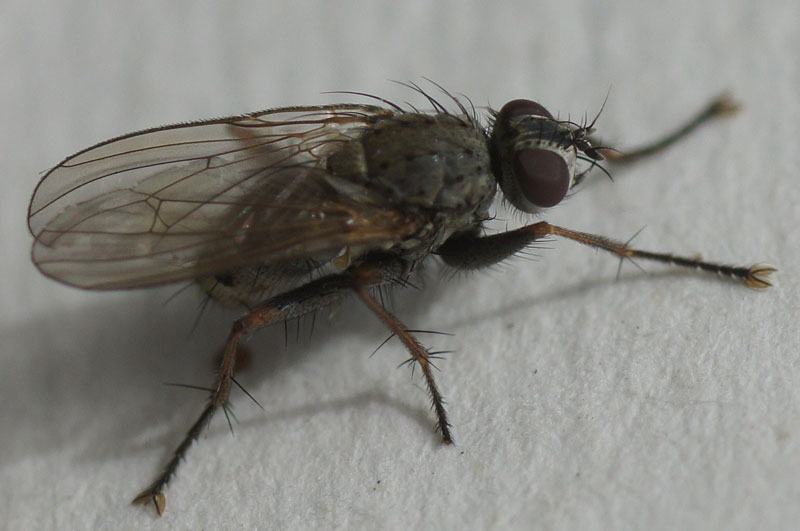
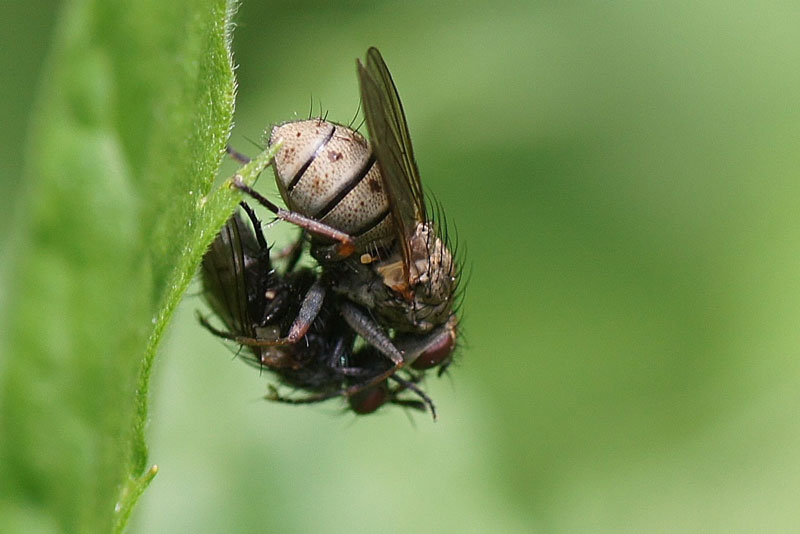
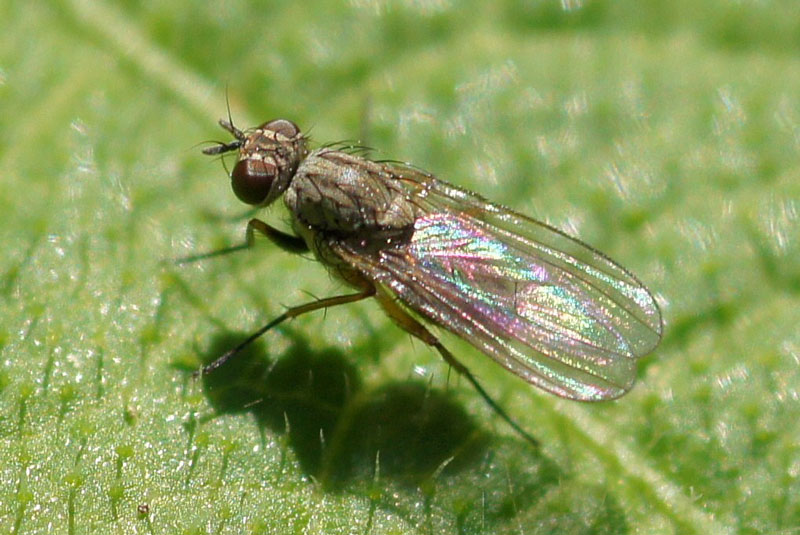
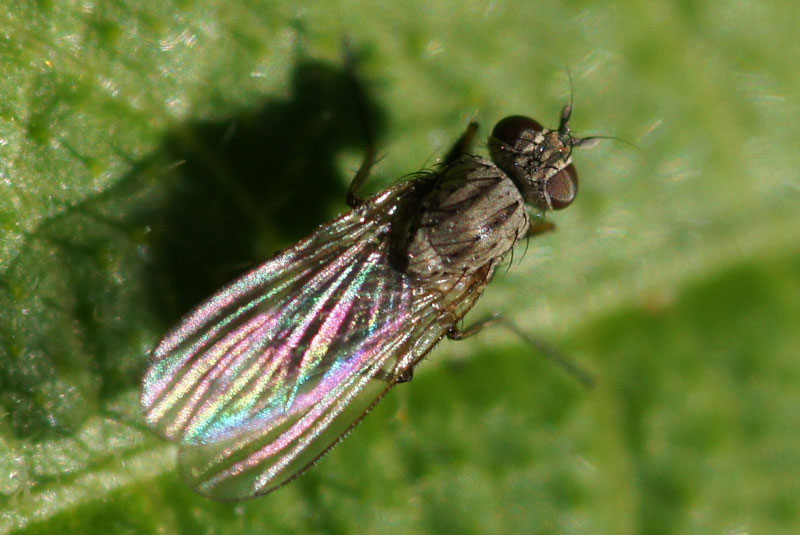
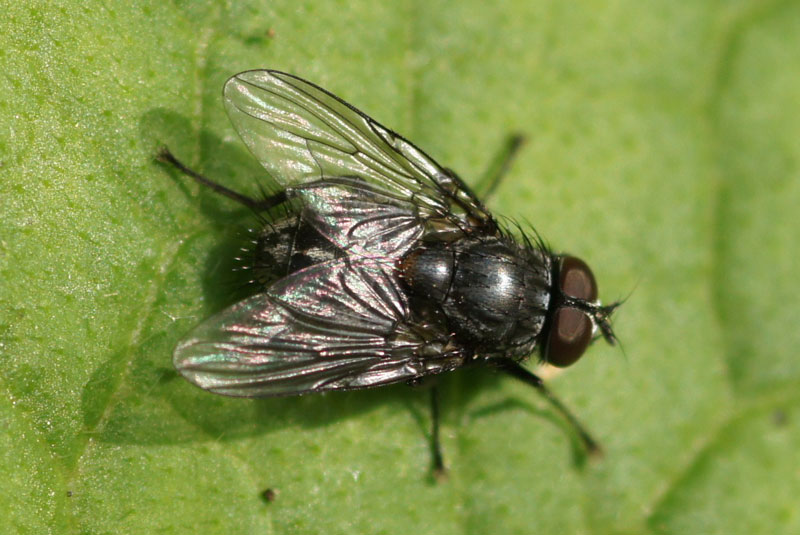
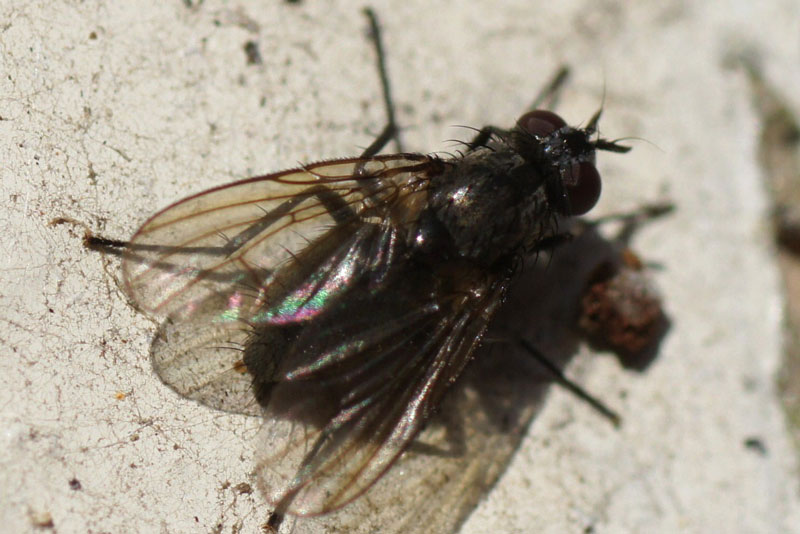
 Anthomyia procellaris. Family Root-Maggot Flies (Anthomyiidae).
|
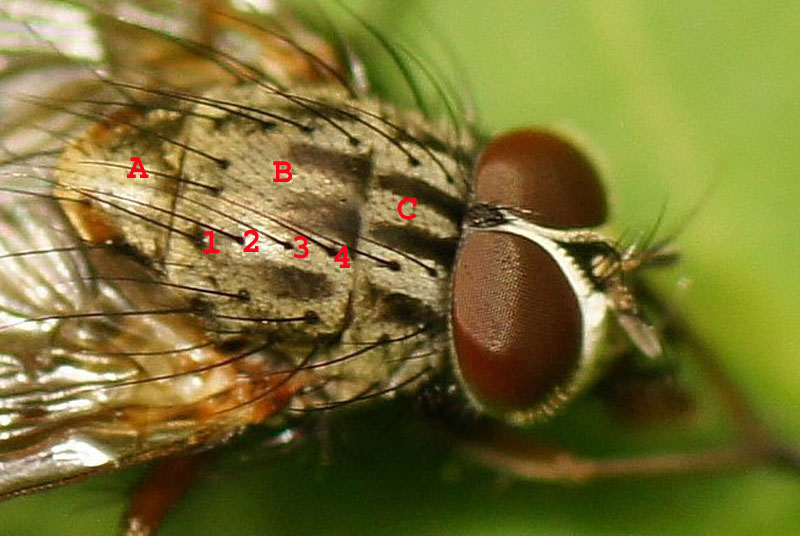
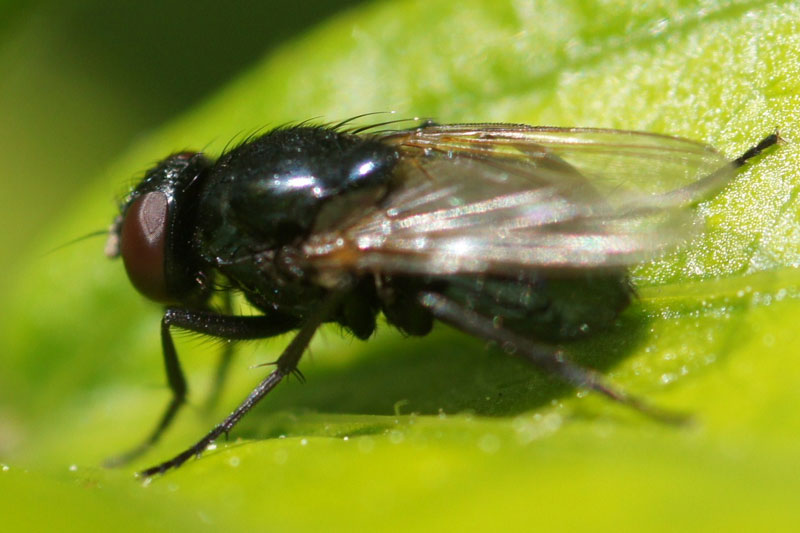
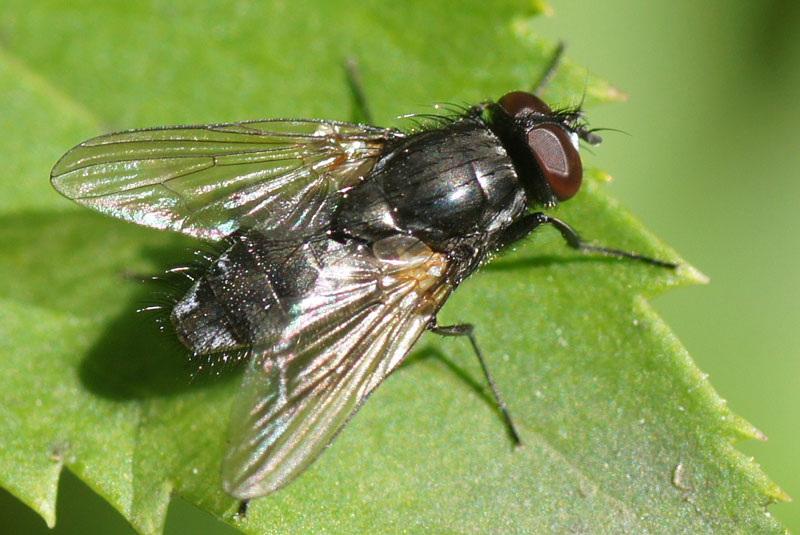
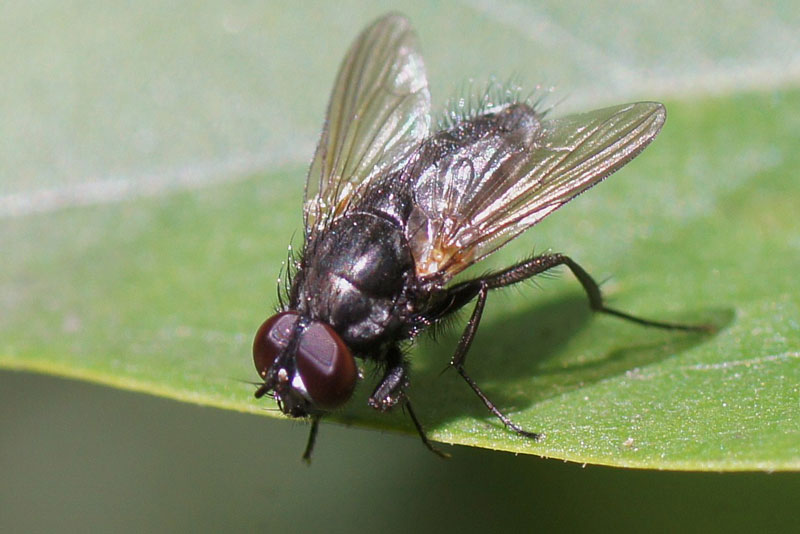
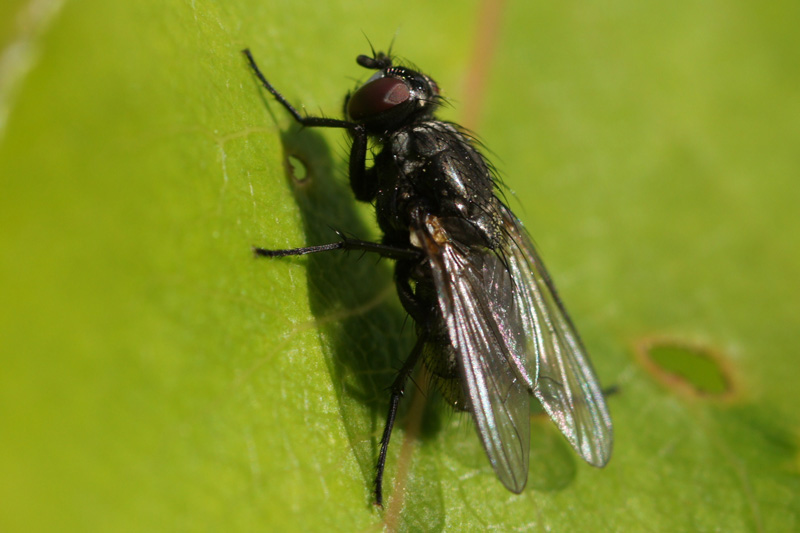
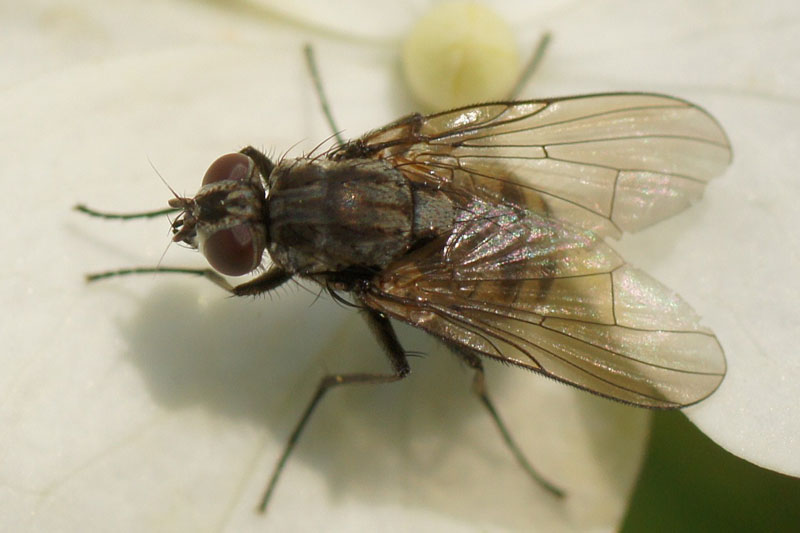
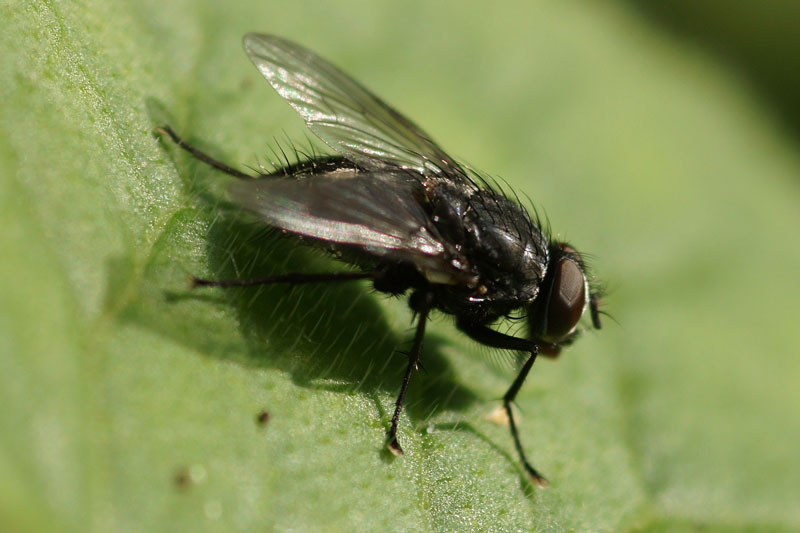
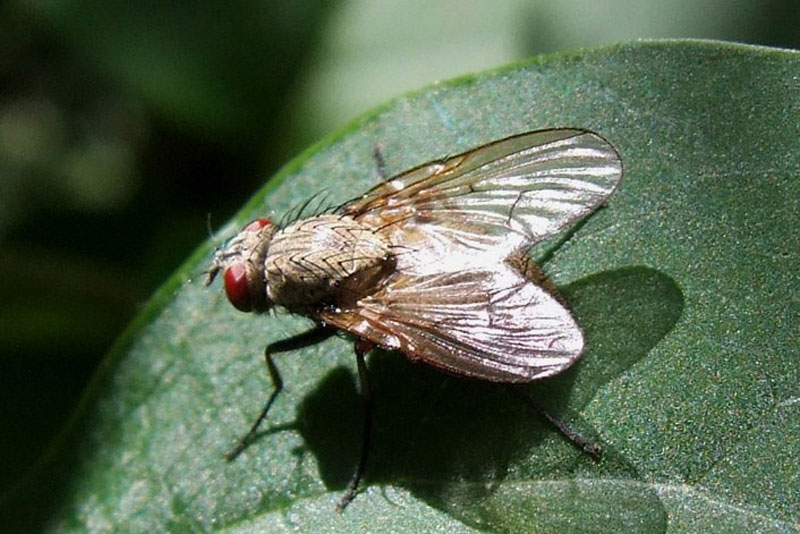
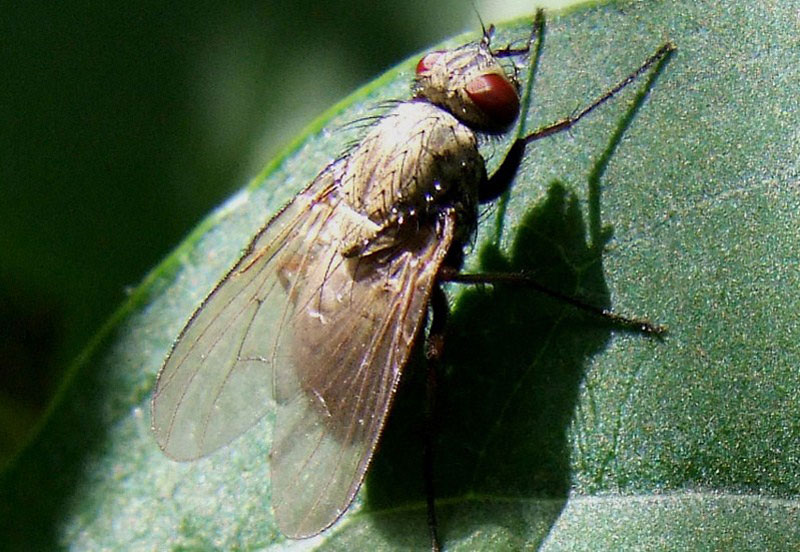
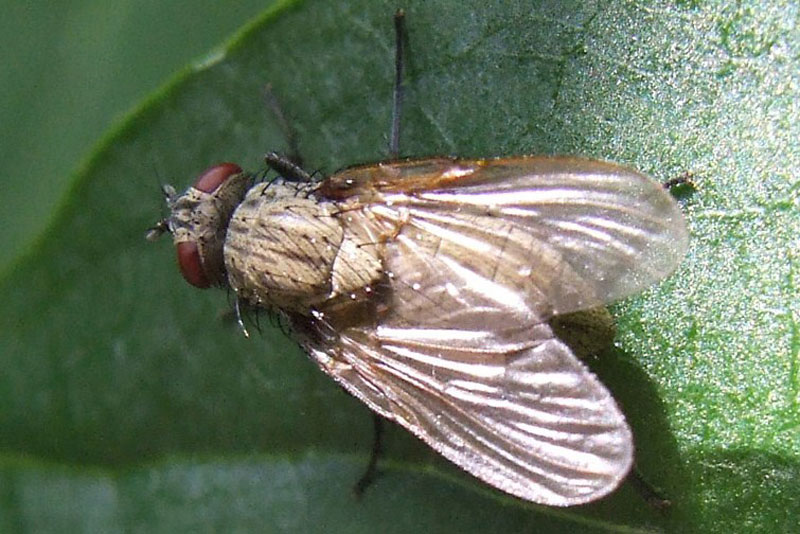
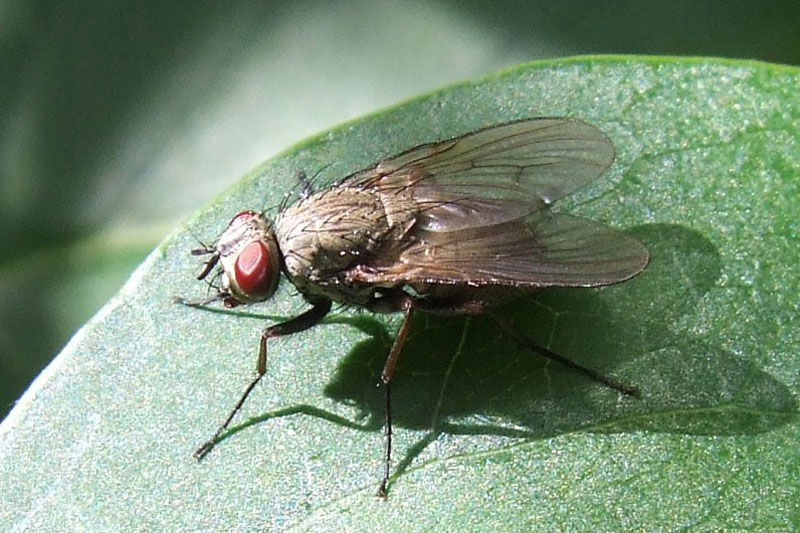
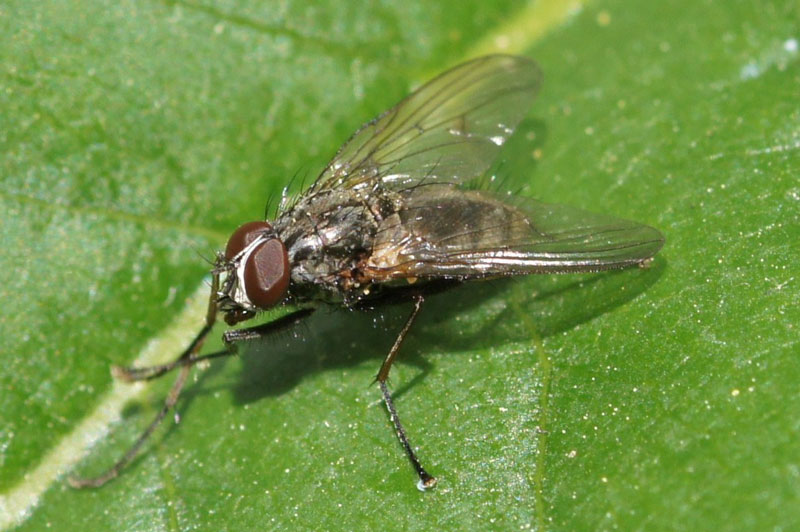
 Phaonia errans.
Family House
flies (Muscidae).
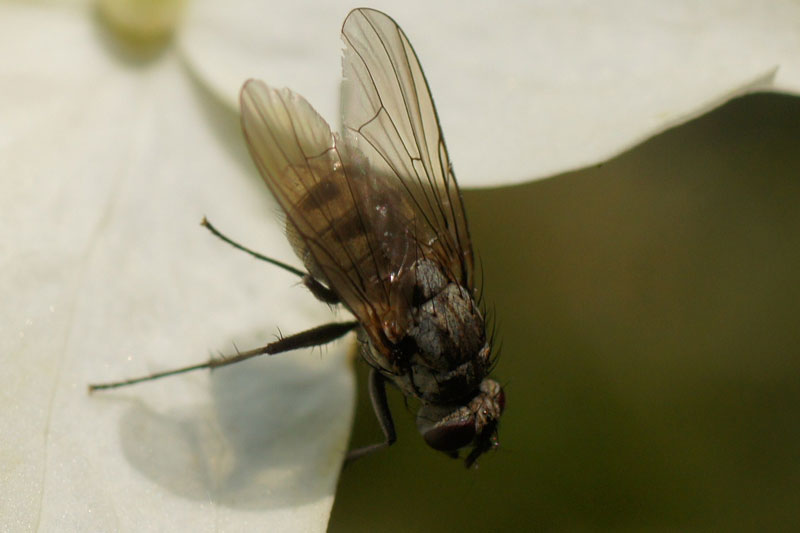
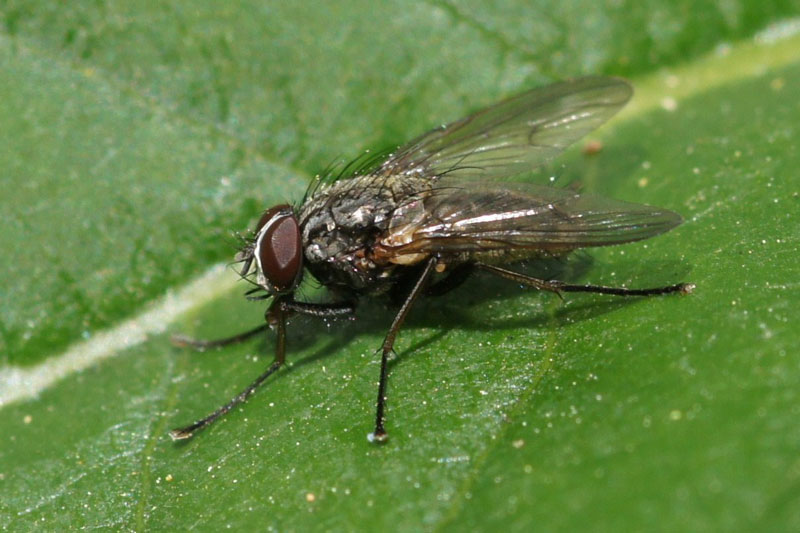
Phaonia errans.
Family House
flies (Muscidae).
|
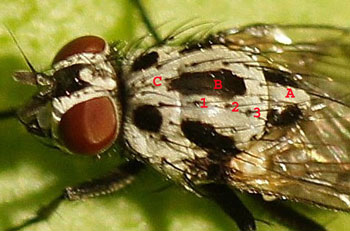
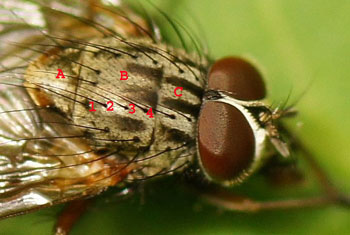
| A = scutellum B = scutum
C = prescutum
1, 2, 3 / 1, 2, 3, 4 = dorsal central hairs.
Difference between Root-Maggot flies (Anthomyiidae) and
a house flies (Muscidae). The flies in these two families are quite similar. An important difference is that the
root-maggot fly never has more than three dorsal central hairs on the scutum,
while the house fly has three or four central dorsal hairs. |
There are some subfamilies. On this page: Azeliinae,
Coenosiinae, Muscinae, Mydaeinae and Phaoniinae. These
subfamilies are divided into tribes.
Subfamily Azeliinae.
Tribe Azeliini.
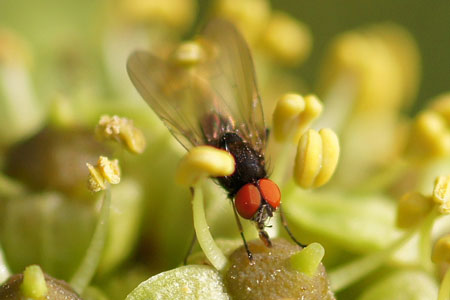 .. ..  . .
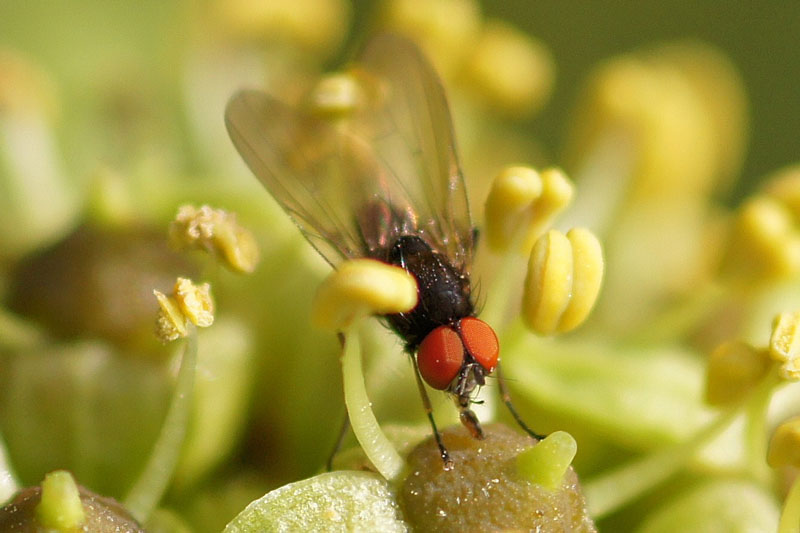
 Azelia spec. Genus
Azeliinae.
Tribe Azeliini. Subfamily
Azeliinae. Family House
flies (Muscidae).
Azelia spec. Genus
Azeliinae.
Tribe Azeliini. Subfamily
Azeliinae. Family House
flies (Muscidae).
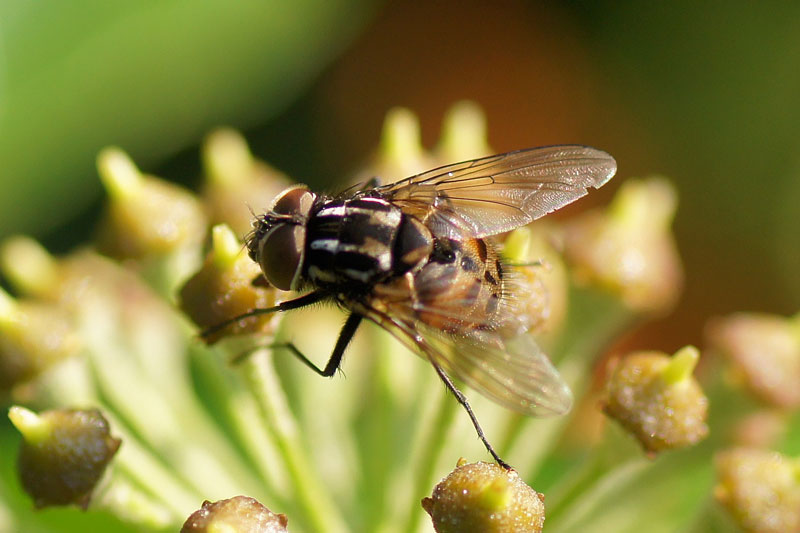
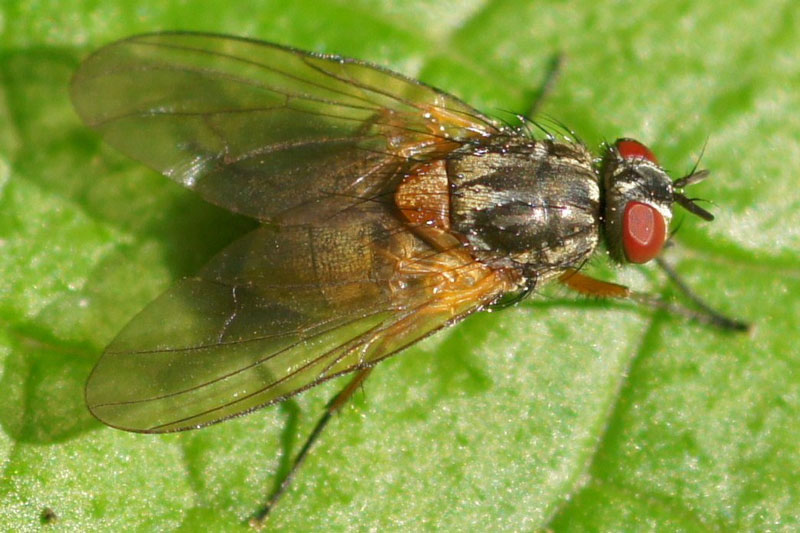
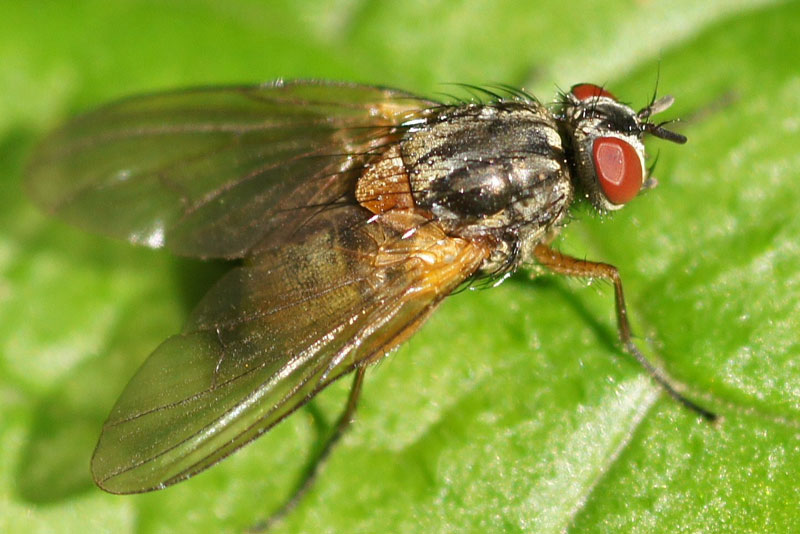
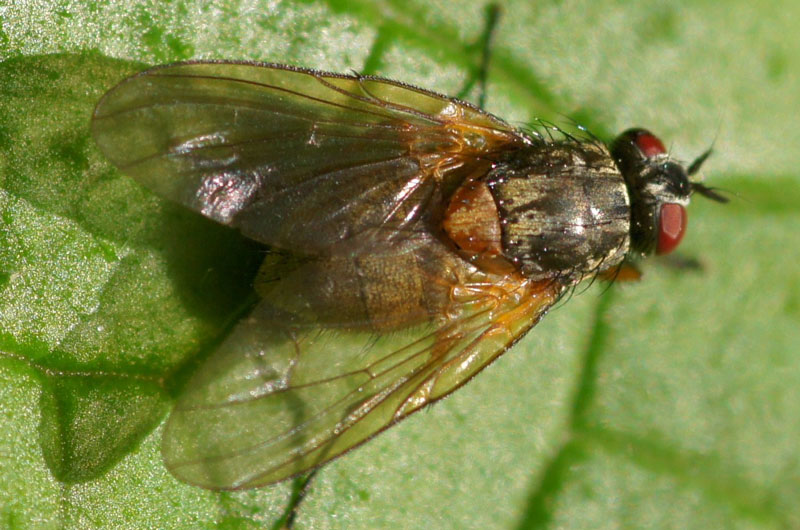
The flowers of an ivy bush. They are small flies
(about 4 mm) with beautiful orange eyes.
There are some similar species. Photo 29-9-2010.
|
 .. ..  . .
 . .
 Azelia cilipes. Genus Azeliinae. Tribe
Azeliini. Subfamily Azeliinae. Family House
flies (Muscidae).
Azelia cilipes. Genus Azeliinae. Tribe
Azeliini. Subfamily Azeliinae. Family House
flies (Muscidae).
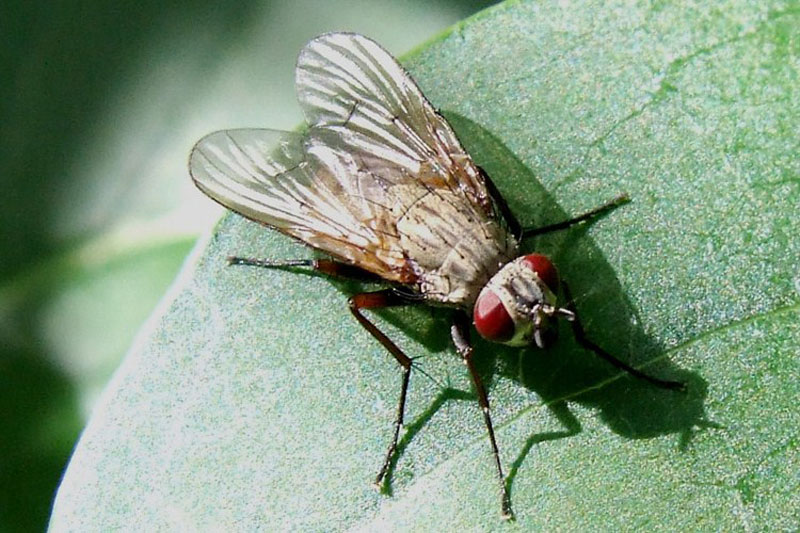
In the same ivy. This fly is easier to identify.
Photo 29-9-2010.
|
Genus Hydrotaea.
Flies of the family Hydrotaea are often found on manure near the farmes. The larvae live in dung, and are carnivores. They also eat the larvae of the
housefly.
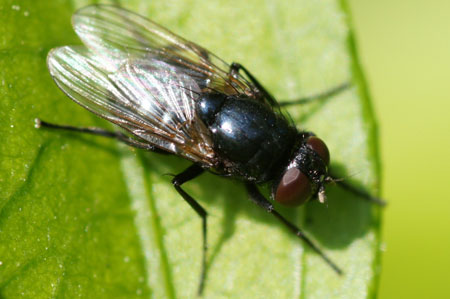 .. ..
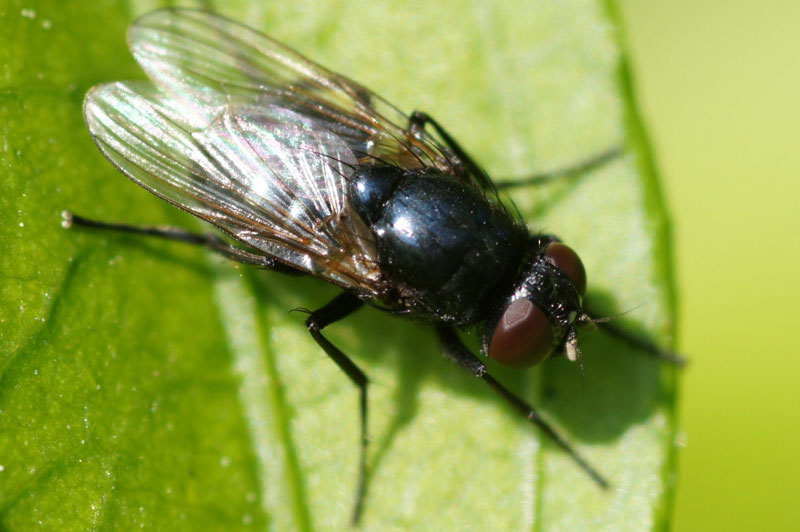
 Black dump fly (Hydrotaea
aenescens,
formely Ophyra aenescens). Genus: Hydrotaea. Tribe Azeliini. Subfamily
Azeliinae. Family House
flies (Muscidae).
Black dump fly (Hydrotaea
aenescens,
formely Ophyra aenescens). Genus: Hydrotaea. Tribe Azeliini. Subfamily
Azeliinae. Family House
flies (Muscidae).
A black, shiny fly.
Native to the United States, Central and South America. In the 20th century, they
moved to Europe.
The black dump fly is used as as a biological control agent for house
flies. The larvae are predators of many larvae of house flies.
At the farms black dump flies tend to stay in the manure pits. They do not attempt to feed or rest
on animals or humans.
Photos 22-6-2010.
|
 .. ..
 Male.
Male.
 . .
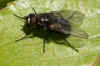 Female. Hydrotaea dentipes. Genus:
Hydrotaea. Tribe Azeliini. Subfamily Azeliinae. Family House
flies (Muscidae).
Female. Hydrotaea dentipes. Genus:
Hydrotaea. Tribe Azeliini. Subfamily Azeliinae. Family House
flies (Muscidae).
A dark, shiny fly. A little lighter-coulored with more drawing than the
other flies of the genus Hydrotaea on this page. Photos
17-6-2012, 15-5-2010.
|
 .. ..  . .
 Hydrotaea diabolus. Genus:
Hydrotaea. Tribe Azeliini. Subfamily Azeliinae. Family House
flies (Muscidae).
Hydrotaea diabolus. Genus:
Hydrotaea. Tribe Azeliini. Subfamily Azeliinae. Family House
flies (Muscidae).
Another dark flight. A striking feature is the long hair at the end of the femur (knee).
Photos 15-5-2010.
|
 .. ..
 . .
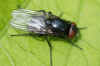 . .
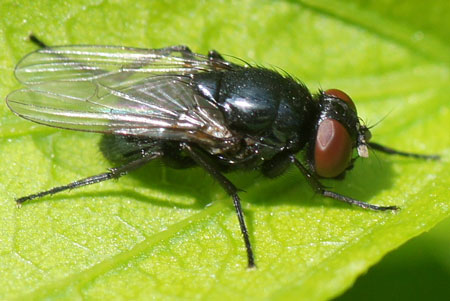
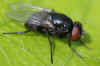
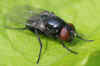 Hydrotaea ignava. Genus:
Hydrotaea. Tribe Azeliini. Subfamily Azeliinae. Family House
flies (Muscidae).
Hydrotaea ignava. Genus:
Hydrotaea. Tribe Azeliini. Subfamily Azeliinae. Family House
flies (Muscidae).
Shiny black flies. They keep
the wings on each other.
They look like the Hydrotaea aenescens.
Photos 8-6-2012.
|
Genus Thricops.
 .. ..
 . .
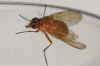 . .
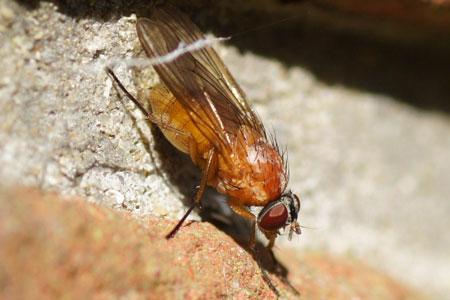
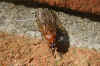
 Thricops diaphanus, synonym
Thricops varians. Genus Thricops. Tribe Azeliini. Subfamily Azeliinae.
Family House
flies (Muscidae). Thricops diaphanus, synonym
Thricops varians. Genus Thricops. Tribe Azeliini. Subfamily Azeliinae.
Family House
flies (Muscidae).
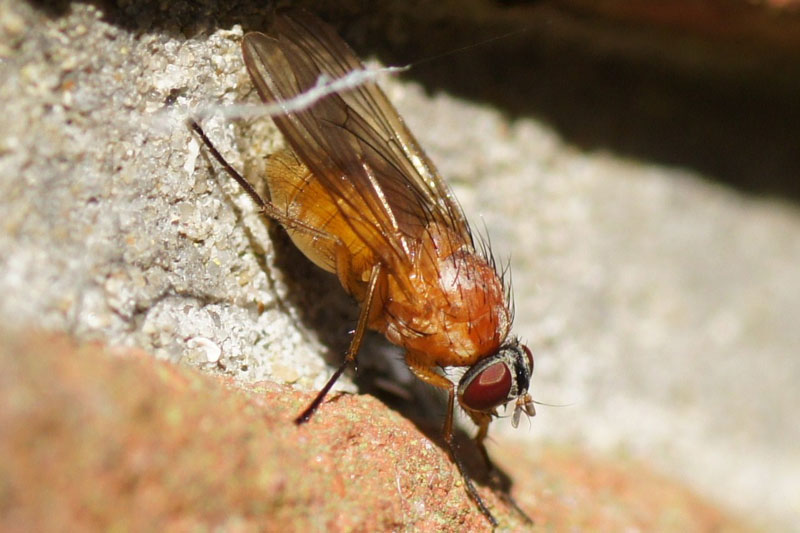
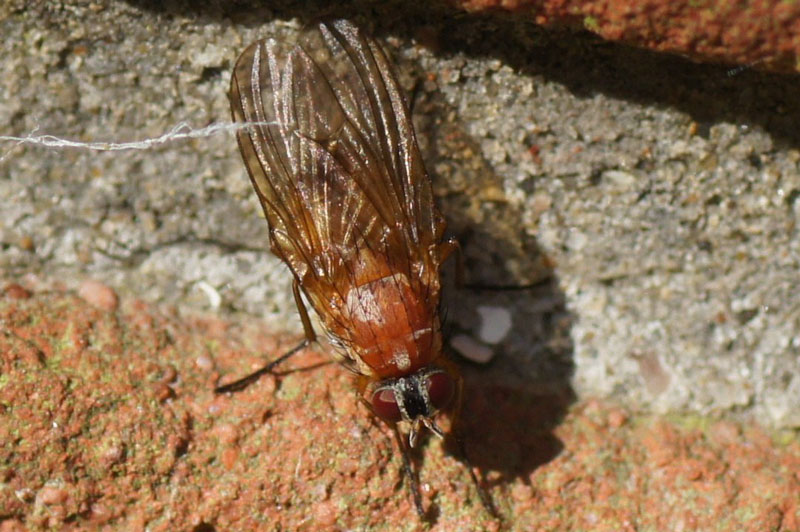
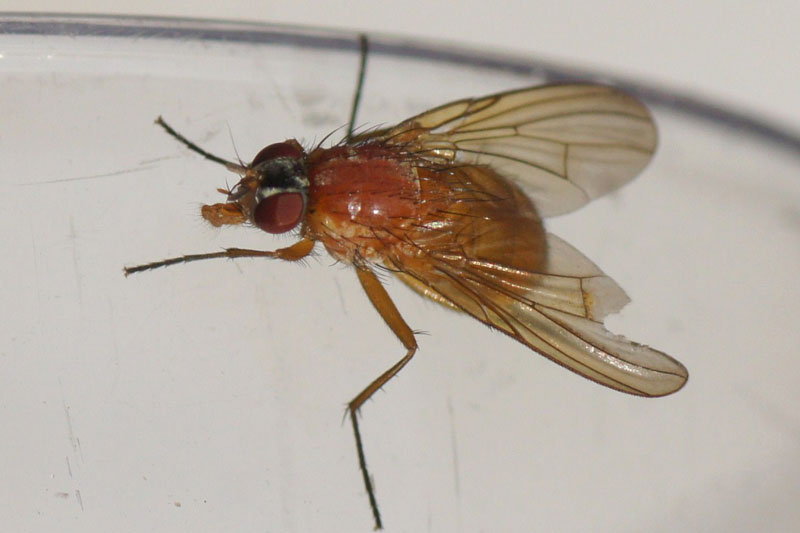
Here in the sun on the wall. I see this fly not often, whereas
it is clearly recognized by the orange colour. On the thorax near the head
it has white stripes. On the head between the eyes is a dark stripe.
It looks a bit like the Phaonia pallida. But that fly is on the head between the eyes orange.
Palaearctic. Photos 18-10-2011, 31-10-2012.
|
Subfamily Coenosiinae.
Tribe Coenosiini.
Genus Coenosia.
The flies in this genus are robber flies.
 .. ..
 . .
 . .
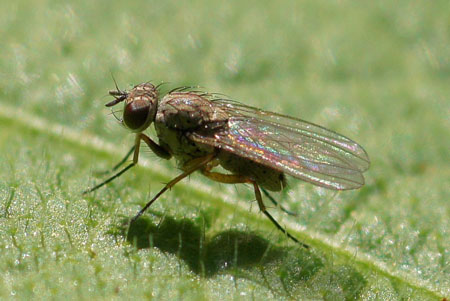
 Coenosia spec. Genus
Coenosia. Tribe Coenosiini. Subfamily Coenosiinae. Family House
flies (Muscidae). Coenosia spec. Genus
Coenosia. Tribe Coenosiini. Subfamily Coenosiinae. Family House
flies (Muscidae).
This Coenosia
is much smaller than the Coenosia tigrina. (About 3 - 4 mm) These small
flies are not to determine from a photo. Photos
11-10-2010.
|
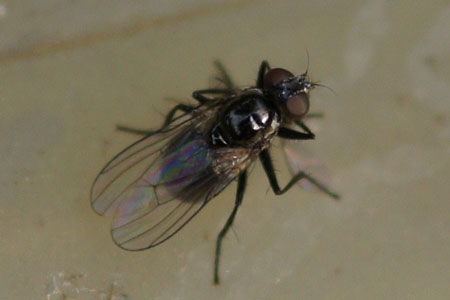 .. ..
 Coenosia atra. Genus
Coenosia. Tribe Coenosiini. Subfamily Coenosiinae. Family House
flies (Muscidae). Coenosia atra. Genus
Coenosia. Tribe Coenosiini. Subfamily Coenosiinae. Family House
flies (Muscidae).
This
Coenosia
is even smaller
(about 3 mm),
but is
remarkable. I
had not recognized
it as Coenosia.
(Thanks
Niels-Jan
)
A shiny
black fly.
The legs
are black. The
side of the
thorax is pale.
Photo 24-8-2011, 20-8-2012. ( A year later
with a prey).
|
 .. ..
 . .
 . .
 . .
 Coenosia agromyzina. Genus
Coenosia. Tribe Coenosiini. Subfamily Coenosiinae. Family House
flies (Muscidae). Coenosia agromyzina. Genus
Coenosia. Tribe Coenosiini. Subfamily Coenosiinae. Family House
flies (Muscidae).
Again
about 3 mm.
On the
photo, it holds
a prey.
I had
expected it would be spec.
Explanation Joke van Erkelens (translated): The (dark thickened) Costa
of Coenosia agromyzina runs just a little further or R 4 +5 vein.
For all other species Coenosia: The costa runs to vein M1. Photos 2-10-2011, 5-11-2011.
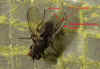 Explanation (ader = vein. Verdikte donkere costa = dark thickened
costa)
Explanation (ader = vein. Verdikte donkere costa = dark thickened
costa)
|
Genus Limnophora.
 .. ..
 . .
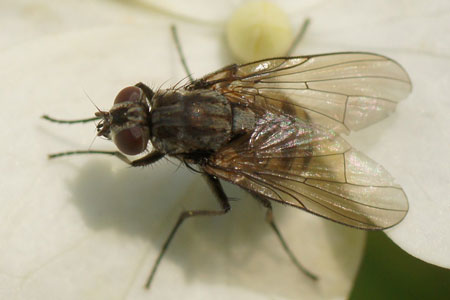
 Limnophora maculosaFamily House
flies (Muscidae). Limnophora maculosaFamily House
flies (Muscidae).
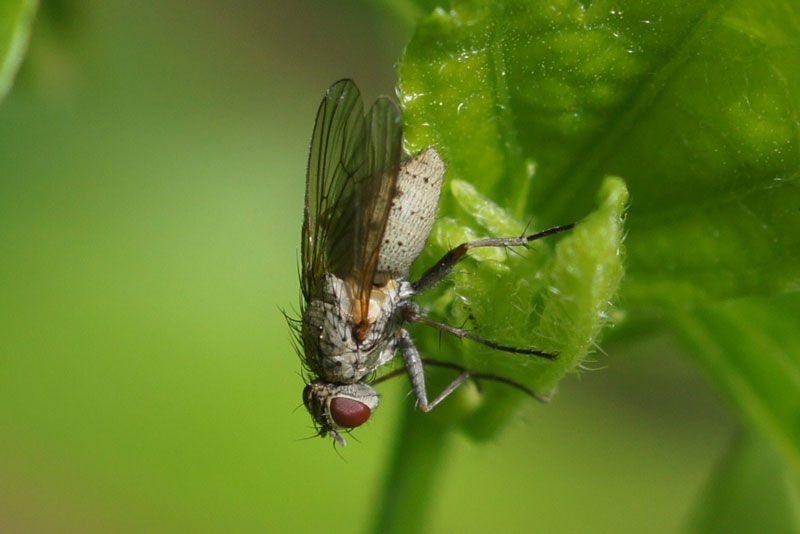
A gray fly with dark spots on the abdomen. Photos 26-06-2012.
Joke van Erkelens: 2 orbital hairs centrals + 2 + 3 dorsal posterior dorsal hairs on the middle shin... = female Limnophora
maculosa. (transleted)
|
Genus Lispocephala.
 .. ..
 . .
 . .
 Lispocephala brachialis. Genus
Lispocephala. Tribe Coenosiini. Subfamily Coenosiinae. Family House
flies (Muscidae). Lispocephala brachialis. Genus
Lispocephala. Tribe Coenosiini. Subfamily Coenosiinae. Family House
flies (Muscidae).
A small fly. About 4, 5 mm.
A gray thorax, abdomen orange. Orange legs, but the thigh of the front legs is gray. The first segment of the antenna is orange,
About the lifestyle is not much known.
Central and southern Europe, North Africa. Photos 20-3-2011.
|
Subfamily Muscinae.
Tribe Muscini.
Genus Eudasyphora
Genus Eudasyphora.
There are 3 known species Eudasyphora in Europe (E.cyanella / E.cyanicolor / E. zimini). In the Netherlands Eudasyphora cyanella is the best known species.
Genus Mesembrina.
 .. ..  . .
 Noon fly (Mesembrina
meridiana). Genus Mesembrina. Tribe Muscini. Subfamily Muscinae.
Family House
flies (Muscidae). Noon fly (Mesembrina
meridiana). Genus Mesembrina. Tribe Muscini. Subfamily Muscinae.
Family House
flies (Muscidae).
In the Netherlands, a general fly. Near Bergen (NH)
it is not often observed.
A beautiful, large, shiny black fly. The face and wing bases are
coloured orange.
These flies are usually seen sunbathing on walls and trees.
The larvae of noon flies are found in manure. They feed on other fly larvae.
Of the genus Mesembrina it is the only species in the Netherlands. Length: 9 - 13 mm.
April - October.
Photos 28-10-2012.
|
Genus Morellia.
 .. ..
 Morellia
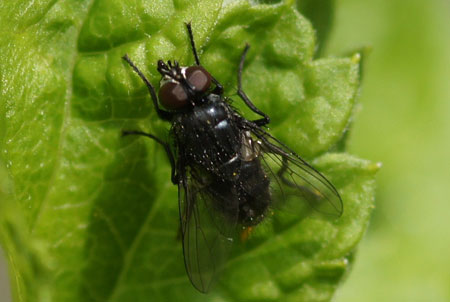
aenescens.
Male. Genus Morellia. Tribe Muscini. Subfamily Muscinae.
Family House
flies (Muscidae). Morellia
aenescens.
Male. Genus Morellia. Tribe Muscini. Subfamily Muscinae.
Family House
flies (Muscidae).
A shiny dark fly. In the Netherlands there are three species. Morellia
aenescens, Morellia hortorum and Morellia simplex.
Especially Morellia aenescens and Morellia simplex are quite similar. The
hindtibia of the male is strongly curved. This visible on the first photo. The females are
on a photo similar.
The thorax of Morellia aenescens and Morellia simplex is dark. In front of the thorax, the three white
stripes of this fly are very vague.
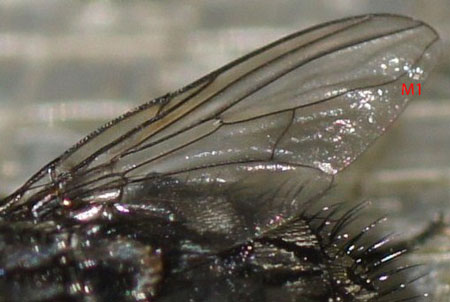
The slight bend in the middle of the vein M1 Morellia is very characteristic.
Photo 22-8-2011.
|
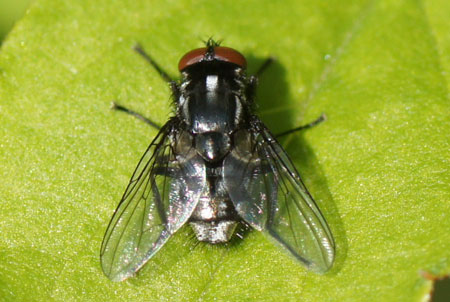 .. ..  . .
 Morellia hortorum. Male.
Genus Morellia. Tribe Muscini. Subfamily Muscinae.
Family House
flies (Muscidae). Morellia hortorum. Male.
Genus Morellia. Tribe Muscini. Subfamily Muscinae.
Family House
flies (Muscidae).
It was approved as Morellia hortorum by connoisseurs. For me it is still a difficult species.
Photos 12-4-2012. |
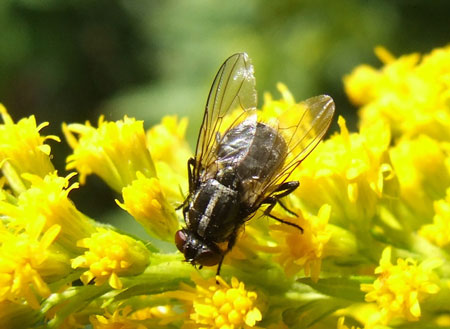 .. ..
 Morellia hortorum,
Morellia aenescens or Morellia simplex. Female. Genus
Morellia.
Family House
flies (Muscidae). Morellia hortorum,
Morellia aenescens or Morellia simplex. Female. Genus
Morellia.
Family House
flies (Muscidae).
Polietes domitor is also similar but the vein M1
of this fly isn't bend at the end.
Photo 23-8-2009.
|
Genus Musca.
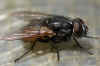
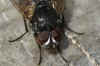
In the Netherlands we have: Face fly (Musca autumnalis), house fly (Musca domestica), Musca
osiris and Musca tempestiva..
The best known are the face fly and the house fly. The differences between the species are small.
 .. ..
 . .
 Male. Male.
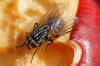 . .
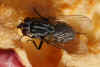 Female. Face fly, autumn house-fly. (Musca
autumnalis). Genus Musca. Tribe Muscini. Subfamily Muscinae.
Family House
flies (Muscidae).
Female. Face fly, autumn house-fly. (Musca
autumnalis). Genus Musca. Tribe Muscini. Subfamily Muscinae.
Family House
flies (Muscidae).
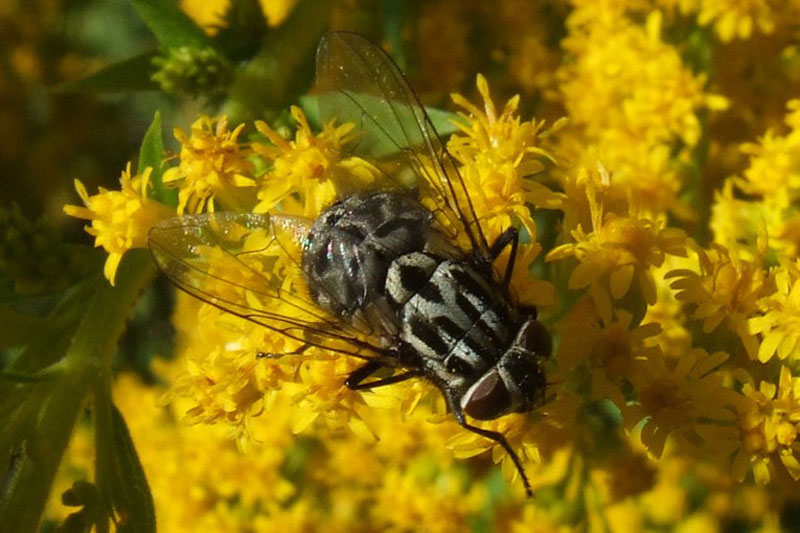
Males and females differ. Females: Gray with 4 dark stripes on the
thorax and with a grey-black pattern on the abdomen. Males: The thorazx
and scutellum are darker. On the abdomen light brown spots.
Autumn house-fly, but not only in autumn. In winter you can find them in houses where they will
overwinter. In spring they become active again..
In summer cattle and horses don't like them, because they feed on manure juices. But thy also feed on plant sugars.
Two generations. Larvae in fresh cattle manure. Photos March 2012.
|
 .. ..
 . .
 . .
 Female. House fly (Musca domestica). Genus
Musca. Tribe Muscini. Subfamily Muscinae.
Family House
flies (Muscidae).
Female. House fly (Musca domestica). Genus
Musca. Tribe Muscini. Subfamily Muscinae.
Family House
flies (Muscidae).
In 2013 I succeeded for the first time to take a
picture of a housefly. It's less common than the face fly.
Difference with autumn fly: The black part between the eyes of the female housefly
is broader. There is more distance between the eyes of the housefly males and thus
the black part between the eyes of the males is also broader.
It can also be confused with the Lesser housefly (Fannia canicularis)
which is from a different family and is described on my page "flies". The fly in this picture is darker, but they can
be lighter gray.
Probably originally from the southern Palearctic region, but now you can
find the housefly like humans almost all over the world. Especially in the colder areas
it needs our homes to survive the winter. The housefly is an omnivore and can therefore
stay alive in our houses. Photos 6-10-2013.
German: Stubenfliege. French: La mouche domestique.
|
Genus Neomyia.
 .. ..
 . .
 . .
 Neomyia
cornicina. Genus Neomyia. Subfamily Muscinae. Genus Musca. Family House
flies (Muscidae). Neomyia
cornicina. Genus Neomyia. Subfamily Muscinae. Genus Musca. Family House
flies (Muscidae).
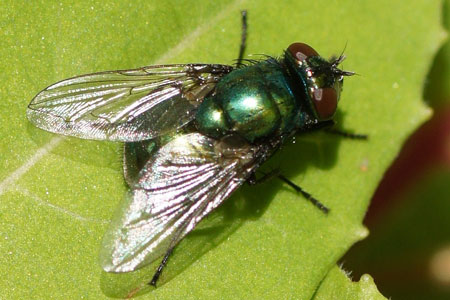
An other a shiny green housefly. You can recognize the neomyia on the
shiny green top of the head.
In the Netherlands there are the similar species Neomyia cornicina and Neomyia
viridescens.
Photos
24-11-2011, 4-10-2012, 19-10-2012,
28-10-2012.
|
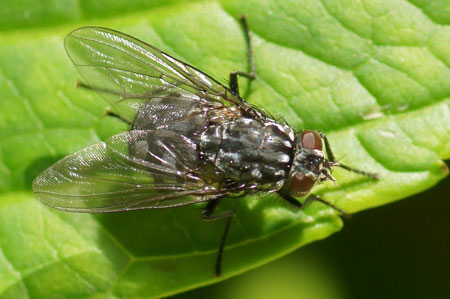
Genus Polietes.
In the Netherlands there are three species: Polietes domitor, Polietes lardaria
en Polietes meridionalis.
 .. ..
 . .
 Polietes lardaria. Genus
Polietes. Subfamily Muscinae. Family House
flies (Muscidae). Polietes lardaria. Genus
Polietes. Subfamily Muscinae. Family House
flies (Muscidae).
Black gray and white with
a blue tint. Length 7.5-13 mm
The larvae can be found in the manure.
April - November. Photos 28-9-2012, 3-10-2012.

|
 .. ..
 Polietes meridionalis. Genus
Polietes. Subfamily Muscinae. Family House
flies (Muscidae). Polietes meridionalis. Genus
Polietes. Subfamily Muscinae. Family House
flies (Muscidae).
Black gray and white with
a blue tint. Difference with
Polietes lardaria: Yellow,
gold instead of gray, white:
Front spiraculum (breathing
hole) the front
part of the cheeks. Length 7.5-13 mm.
The larvae can be found in the manure.
May - November. But 2014 I saw in February already a Polietes. Photos 6-6-2012.

|
Tribe Reinwardtiini.
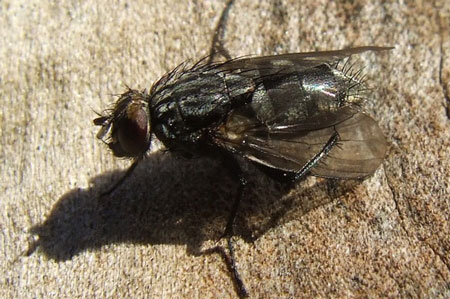
Genus Muscina.
 .. ..
 . .
 . .
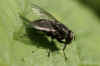 . .
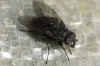
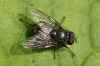
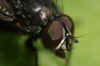 Muscina levida. Genus
Muscina. Tribe Reinwardtiini. Subfamily Muscinae. Family House
flies (Muscidae). Muscina levida. Genus
Muscina. Tribe Reinwardtiini. Subfamily Muscinae. Family House
flies (Muscidae).
Black antennae and black legs. On the scutellum a yellow brown spot.
Other members of the family are M. pascuorum, M. prolapsa en M.stabulans.
Length 6 - 11 mm.
May - October. Photos
18-3-2009, 22-9-2010, 30-9-2012. |
Tribe Stomoxyini.
Genus Stomoxys
 .. ..
 . .
 Stablefly (Stomoxys calcitrans).
Genus Stomoxys. Tribe Stomoxyini. Subfamily Muscinae. Family House
flies (Muscidae). Stablefly (Stomoxys calcitrans).
Genus Stomoxys. Tribe Stomoxyini. Subfamily Muscinae. Family House
flies (Muscidae).
It resembles the common housefly, but it is a biting
fly. It sucks blood from mammals and sometimes from people. Mostly from
the legs.
Another difference is that it is sitting with the head upwards, while a
common housefly
keeps its head low on a vertical surface.
It has four dark stripes on the thorax.
It keeps its wings wide, when it is sitting.
You can find it oft near the stables. Hence the name.
The larvae live in manure and decaying organic
matter.
Length 5 - 8 mm.
April - October. Photos 29-8-2009.
|
Subfamily Mydaeinae.
Genus Graphomya.
 .. ..  . .
 Graphomya
maculata, synonym Graphomya minor. Genus Graphomya. Subfamily Mydaeinae. Family House
flies (Muscidae). Graphomya
maculata, synonym Graphomya minor. Genus Graphomya. Subfamily Mydaeinae. Family House
flies (Muscidae).
It was thought, that there
were two very similar different species. Now it is assumed that it's the
same species.
A beautiful fly. The colour is gray, to reddish brown. Photos 30-8-2009, 24-9-2011,
26-8-2012.
|
Genus Hebecnema.
 .. ..  . .
 . .
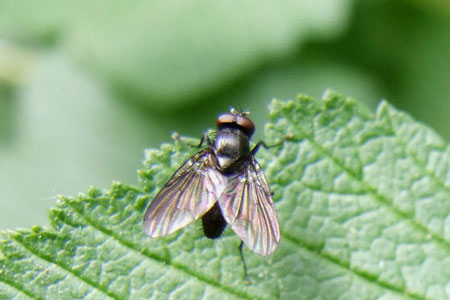
 Hebecnema vespertina Familie
Hebecnema. Subfamily Mydaeinae. Family House
flies (Muscidae). Hebecnema vespertina Familie
Hebecnema. Subfamily Mydaeinae. Family House
flies (Muscidae).
A shiny dark brown fly.
There are three species in the Netherlands with different characteristics.
This small fly is difficult to identify.
If the halteres brown / black: Hebecnema nigra
If the halteres are yellow .....
With hairless eyes: Hebecnema vesper tina With hairy eyes: Hebecnema umbritica
The halteres are yellow. The eyes hairless. So Hebecnema vesper tina.
This information I have from Joke van Erkelens. (Thanks Joke) There were other features. But then it becomes very complicated.
Photos: May 2009, 2010.
|
Genus Mydaea.
 .. ..
 . .
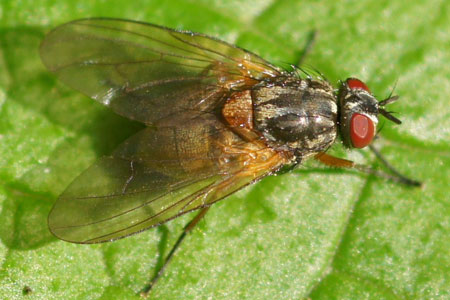
 Mydaea corni
Genus Mydaea. Subfamily Mydaeinae. Family House
flies (Muscidae). Other name: Mydaea scutellaris Mydaea corni
Genus Mydaea. Subfamily Mydaeinae. Family House
flies (Muscidae). Other name: Mydaea scutellaris
An entirely yellow orange scutellum. The abdomen are a mixture of gray, yellow, brown.
Length: about 9 mm. Foto 17-10-2010.
|
Subfamily Phaoniinae.
Tribe Phaoniini.
Genus Helina
 .. ..
 . .
 . .
 . .
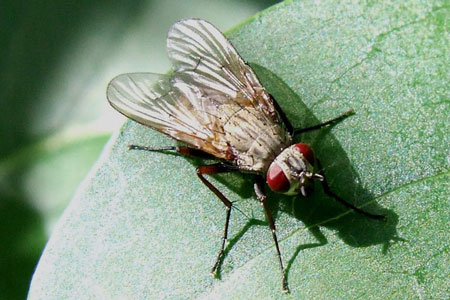
 Helina cf. confinis.
Genus Helina. Tribe Phaoniini. Subfamily Phaoniinae.
Family House
flies (Muscidae). Not quite sure!!!!!
Helina cf. confinis.
Genus Helina. Tribe Phaoniini. Subfamily Phaoniinae.
Family House
flies (Muscidae). Not quite sure!!!!!
Tibia 1 has a posterior seta and tibia 2 has 2-3
posterior seta. H. confinis(female) has vague spots on the abdomen and the eyes are not
hairy.
Because I can't see the hairs on the bactibia, H. confinis is not
entirely sure. The differences of Helina species are very small. Helina pertusa par
example maybe would be possible .
Thanks for the information Joke van Erkelens. Tibia: shin.
Seta: bristle.
Posterior: Coming after in order; following.
Photos 6-7-2009. |
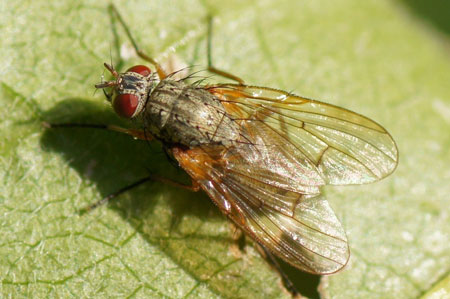 .. ..  . .  . .  Helina impuncta. Genus Helina. Tribe
Phaoniini. Onderfamilie Phaoniinae. Familie Echte
Vliegen (Muscidae).
Helina impuncta. Genus Helina. Tribe
Phaoniini. Onderfamilie Phaoniinae. Familie Echte
Vliegen (Muscidae).
This is not easy, for at the left it has 4 dorso centrals and at the right
it has 3 dorso centrals. The fly has lost a hair! Photos 7-7-2009, 6-10-2012.
|
 .. ..
 Helina depuncta. Genus
Helina. Tribe Phaoniini. Subfamily Phaoniinae. Family House
flies (Muscidae).
Helina depuncta. Genus
Helina. Tribe Phaoniini. Subfamily Phaoniinae. Family House
flies (Muscidae).
Explanation of Joke van Erkelens:
The combination of crossveins obscured yellow legs + 3 + dorso exchange
can only with H.depuncta.
(at least from the Dutch species.)
H.impuncta + H. pertusa also have darkened the crossveins + yellow legs
... but both dorso Centrals 4.
According to Joke, there are more differences
in characteristics between the flies, but that's very complicated.
June - October.
Photos 9-10-2012.
|
 .. ..
 . .
 Helina reversio.
Genus Helina. Tribe Phaoniini. Subfamily Phaoniinae. Family House
flies (Muscidae). Not quite certain!
Helina reversio.
Genus Helina. Tribe Phaoniini. Subfamily Phaoniinae. Family House
flies (Muscidae). Not quite certain!
Dark spots on the abdomen.
|
 .. ..
 . .
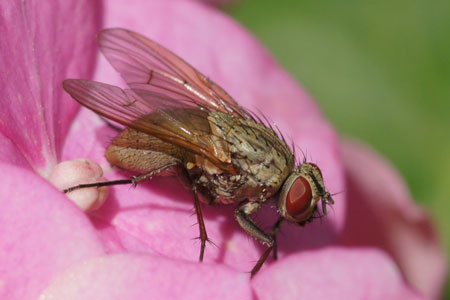
 Helina setiventris. Genus
Helina. Tribe Phaoniini. Subfamily Phaoniinae. Family House
flies (Muscidae). Not quite certain!
Helina setiventris. Genus
Helina. Tribe Phaoniini. Subfamily Phaoniinae. Family House
flies (Muscidae). Not quite certain!
|
Genus Phaonia.
Informaton
about many species.
 .. ..
 . .
 . .
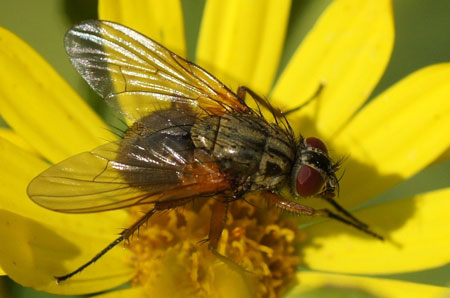
 Phaonia angelicae. Genus Phaonia. Tribe
Phaoniini. Subfamily Phaoniinae. Family House flies (Muscidae).
Phaonia angelicae. Genus Phaonia. Tribe
Phaoniini. Subfamily Phaoniinae. Family House flies (Muscidae).
Orange legs. And orange on the first part of the
wings. Photos 24-8-2009.
|
 .. ..
 . .
 . .
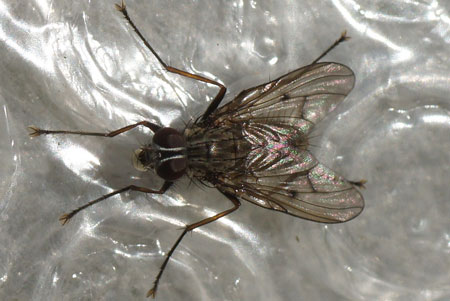
 Phaonia fuscata. Genus Phaonia.
Tribe Phaoniini. Subfamily Phaoniinae. Family
House flies (Muscidae).
Phaonia fuscata. Genus Phaonia.
Tribe Phaoniini. Subfamily Phaoniinae. Family
House flies (Muscidae).
This phaonia looks like Phaonia tuguriorum, but it has longer legs and a
narrower abdomen. The scutellum is grey. The legs are brown.
Length 6 - 9 mm.
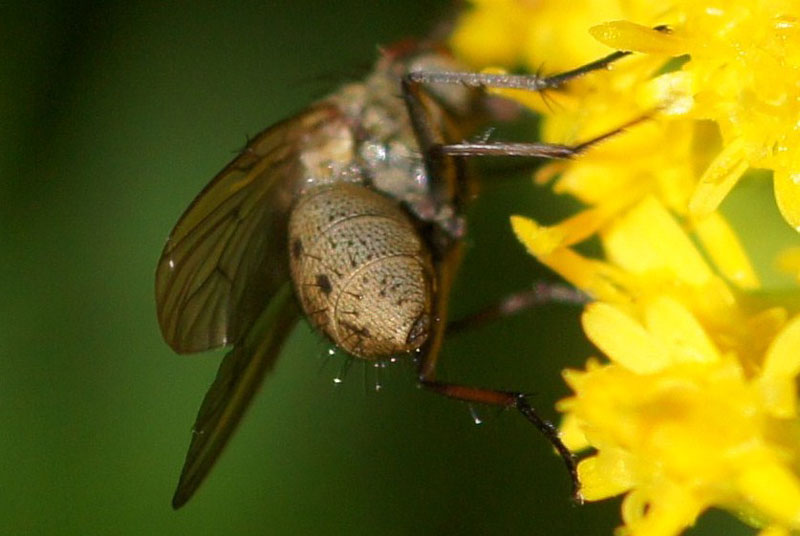
The fly on the first photograph is blowing bubbles. It is often to be seen.
Why they do it, is not entirely sure. A theory is: It is as an aid
to digestion. Photos 11-04-2012, 12-04-2012.
|
 .. ..
 . .
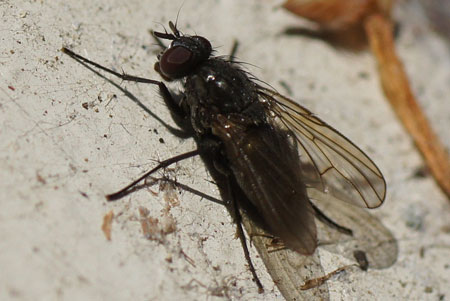
 Probably: Phaonia halterata. Genus Phaonia. Tribe
Phaoniini. Subfamily Phaoniinae. Family
House flies (Muscidae).
Probably: Phaonia halterata. Genus Phaonia. Tribe
Phaoniini. Subfamily Phaoniinae. Family
House flies (Muscidae).
A dark grey phaonia with dark halteres. Photos 9-10-2012.
|
 .. ..  . .
 Phaonia palpata. Genus Phaonia. Tribe
Phaoniini. Subfamily Phaoniinae. Family
House flies (Muscidae).
Phaonia palpata. Genus Phaonia. Tribe
Phaoniini. Subfamily Phaoniinae. Family
House flies (Muscidae).
Photos 28-5-2010. Female 11-10-2012.
|
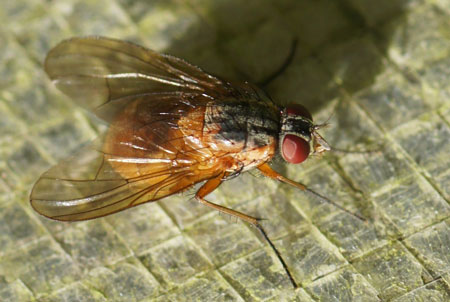 .. ..
 Phaonia rufiventris. Genus Phaonia. Tribe
Phaoniini. Subfamily Phaoniinae. Family House flies (Muscidae).
Phaonia rufiventris. Genus Phaonia. Tribe
Phaoniini. Subfamily Phaoniinae. Family House flies (Muscidae).
The thorax of the Phaonia rufiventris is for the most part is gray.
The thorax is near the scutellum and along the side orange. The abdomen, scutellum and legs (except the lower part) are orange.
Phaonia rufiventris is very similar to Phaonia subventa
and Phaonia bitincta. Photos 28-9-2012.
|
 .. ..
 . .
 . .
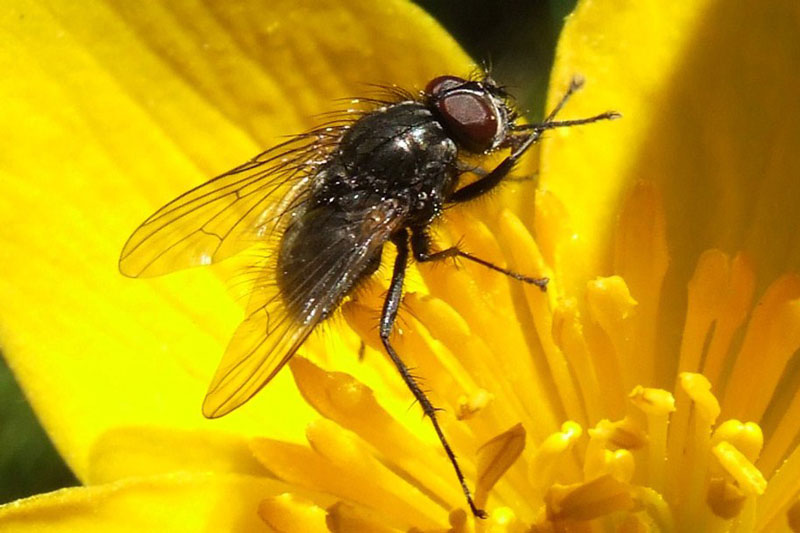
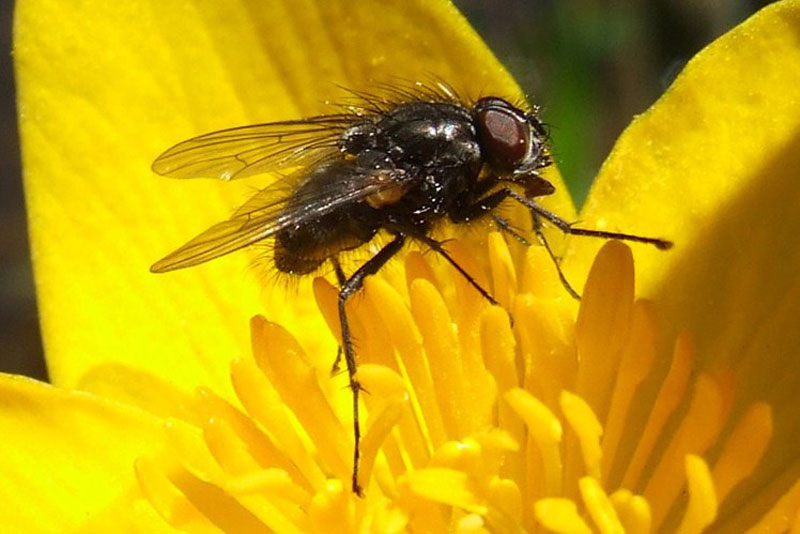
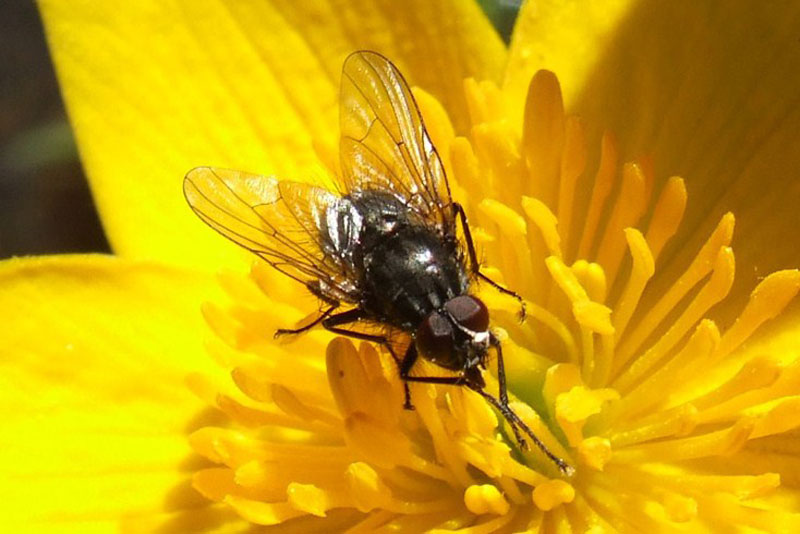
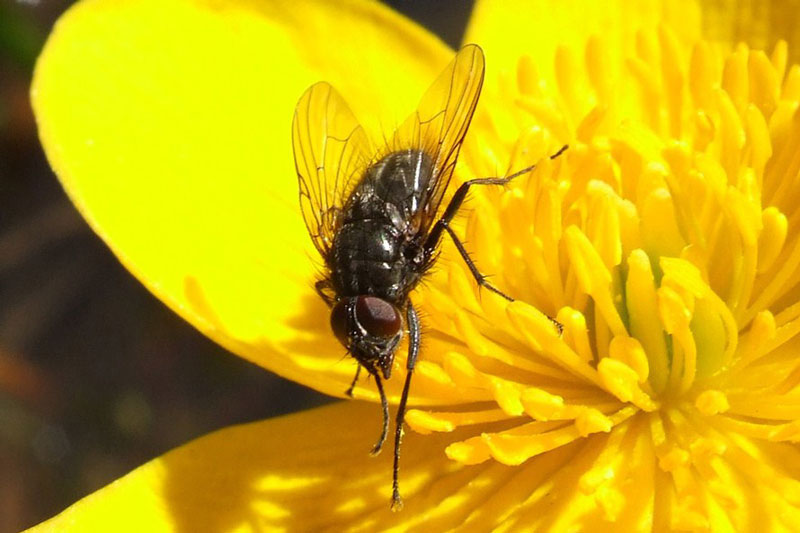
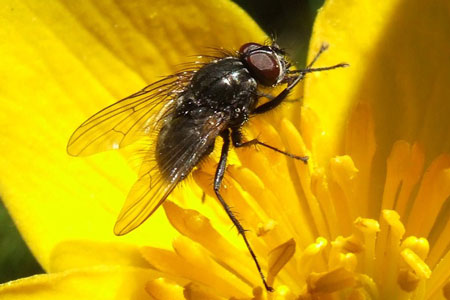
 Phaonia serva. Genus Phaonia.
Tribe Phaoniini. Subfamily Phaoniinae. Family
House flies (Muscidae).
Phaonia serva. Genus Phaonia.
Tribe Phaoniini. Subfamily Phaoniinae. Family
House flies (Muscidae).
On a kingcup, marsh marigold . Photos 23-4-2010.
|
 .. ..
 . .
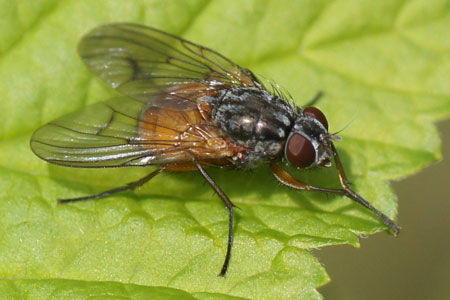
 Phaonia subventa. Genus Phaonia. Tribe
Phaoniini. Subfamily Phaoniinae. Family
House flies (Muscidae).
Phaonia subventa. Genus Phaonia. Tribe
Phaoniini. Subfamily Phaoniinae. Family
House flies (Muscidae).
On the orange abdomen is a black mark. You can find it from March until it
is freezing.
Phaonia subventa is very similar to Phaonia rufiventris and P.
bitincta.
The scutellum of these species is totally orange. Photos 20-4-2012, 20-3-2012.
|
 .. ..
 . .
 . .
 Phaonia tuguriorum. Genus
Phaonia. Tribe Phaoniini. Subfamily Phaoniinae. Family
House flies (Muscidae).
Phaonia tuguriorum. Genus
Phaonia. Tribe Phaoniini. Subfamily Phaoniinae. Family
House flies (Muscidae).
The cross veins of the wings are darkened.
Recognizable by the reddish-brown legs. The lower part of the legs is dark.
The abdomen is gray. The scutellum is reddish at the tip. Antenna segment 1 and 2 are brown. The third is black.
Februari - December.
Length 6 - 8 mm. Photos 17-02-2012, 20-02-2012.
|
 .. ..
 . .
 . .
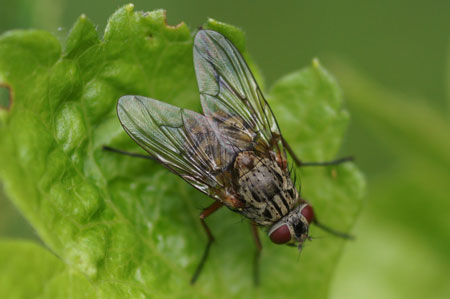
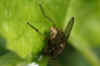
 Phaonia valida.
Genus Phaonia. Tribe Phaoniini. Subfamily Phaoniinae. Family
House flies (Muscidae).
Phaonia valida.
Genus Phaonia. Tribe Phaoniini. Subfamily Phaoniinae. Family
House flies (Muscidae).
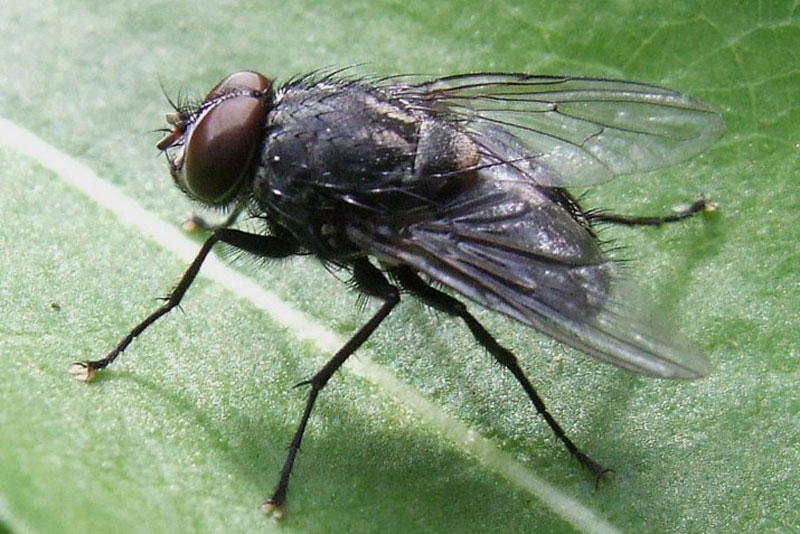
Phaonia valida looks like Phaonia Erran.
Vein R4+5 in the wing runs into an arc at the end and this vein of P.errans
is straighter. (The vein, which ends at the top of the wing.)
The vein M1 has at the end a weak arc. In the wing of P. Erran M1 is
straighter. Photos 3-7-2010, 30-9-2012.
|
I want to thank everyone, who has helped me (waarneming.nl)
to identify. In particular, Joke van Erkelens, Robert Heemskerk, Mark van Veen,
Gerard Pennard and Han Endt.
Nederlands /
Dutch
 
Subpage flies:
Tachinidae
Blow-flies
(Calliphoridae) House
flies (Muscidae) Soldierflies
(Stratiomyidae)
Root-Maggot
Flies (Anthomyiidae) Small
flies Gnats
Subpage wasps, bees, bumblebees: Parasitica, Ichneumonidae
Sawflies
symphyta Bumblebees
Bee hotel
|