|
 Nederlands /
Dutch Nederlands /
Dutch
Weeds and wild plants in the
garden.
What is a weed? It is a wild plant that bother you, because it grows and
reproduces aggressively. Often the plant may stay on
the places in the garden, where they don't bother other plants. I also can enjoy of these plants. There are a number of species which are very popular in insects.
Nettle is a host of different caterpillars of beautiful butterflies.
Some wild plants have their own place in the garden and are listed in the page
"summer bloomers".
Sometimes it was difficult for me to choose on which page I would place the
plant.
It
is only a beginning. Next year I will take more photos.
They are arranged alphabetically by Latin name.
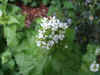
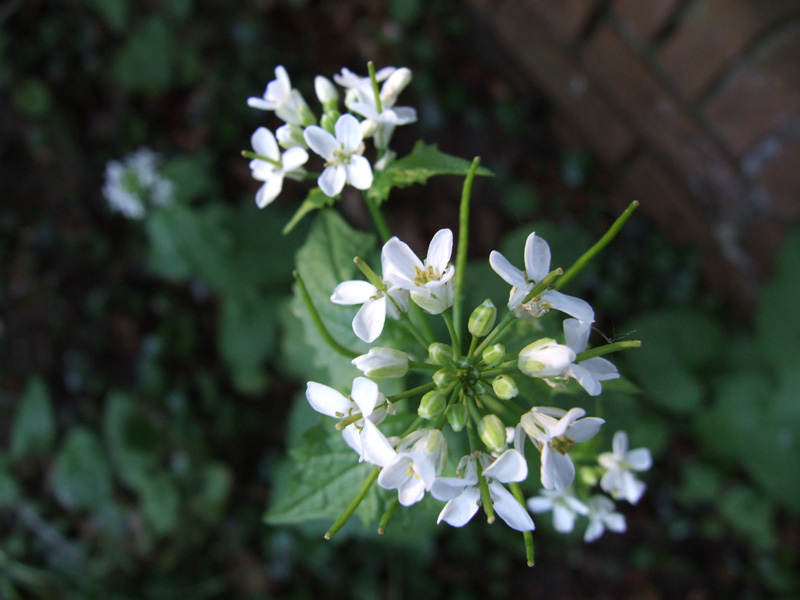
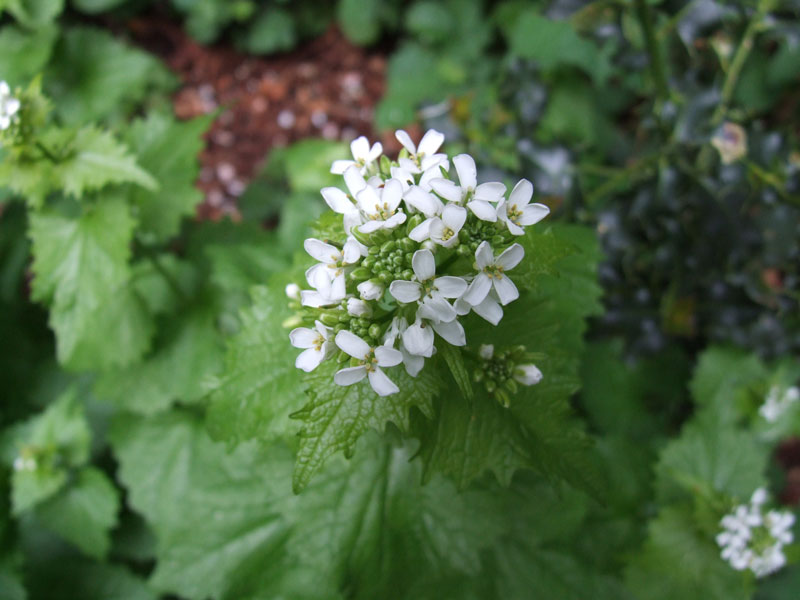
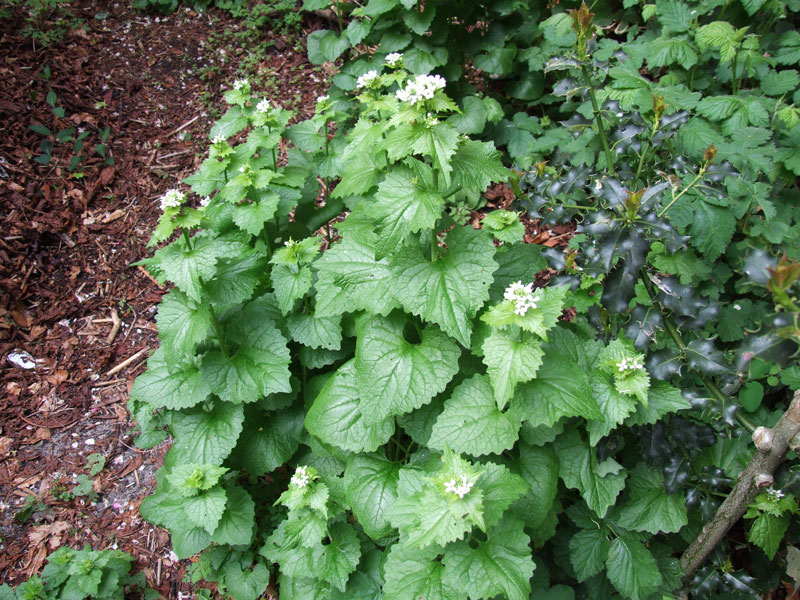
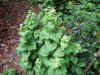 Garlic mustard, Jack-by-the-hedge, Garlic
Root, Hedge Garlic, Sauce-alone, Jack-in-the-bush,
Penny Hedge, Poor Man's Mustard (Alliaria petiolata or Alliaria
officinalis). Mustard family (Brassicaceae).
Garlic mustard, Jack-by-the-hedge, Garlic
Root, Hedge Garlic, Sauce-alone, Jack-in-the-bush,
Penny Hedge, Poor Man's Mustard (Alliaria petiolata or Alliaria
officinalis). Mustard family (Brassicaceae).
A species with many names. When you crush the leaves, they smell like
garlic, but it is not related to garlic. (glucoside sinigrine) The flowers
are visited by bees and hover flies. Plants are often found growing along
the edge of forests. In our garden they grow very well. On a few
places I let them grow. It is the host of the caterpillar of the orange
tip. Kitchen Herb. A herbaceous biennial plant (sometimes an annual plant).
Bloom time: April to June.
Europe and West Asia. Introduced in North Americas as a culinary herb. It
is an invasive species now. |
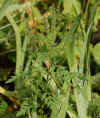
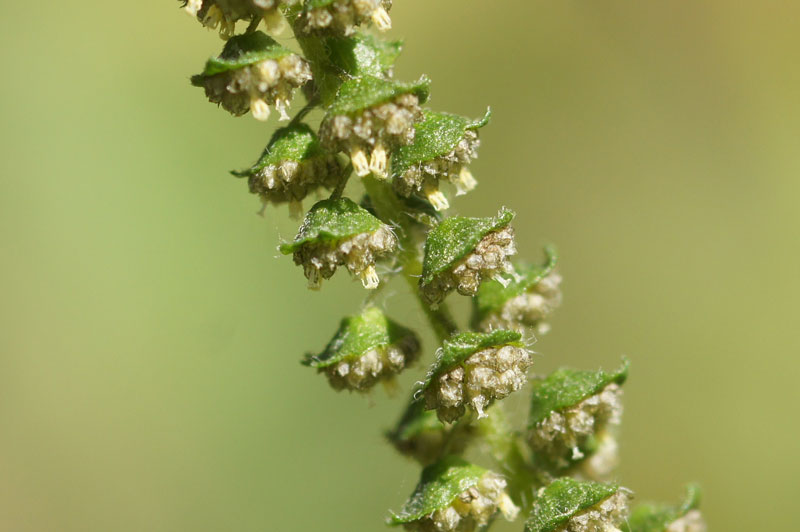
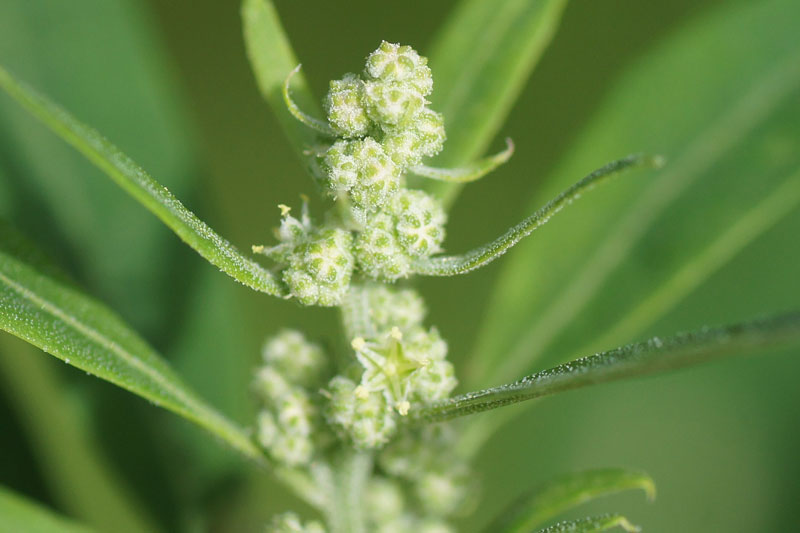
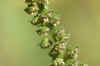 Common Ragweed, Annual ragweed, Bitterweed, Blackweed,
Hay Fever Weed (Ambrosia artemisiifolia). Family compositae (Asteraceae).
Common Ragweed, Annual ragweed, Bitterweed, Blackweed,
Hay Fever Weed (Ambrosia artemisiifolia). Family compositae (Asteraceae).
Sun, moderately rich to rich soil. Flowering Time: IX-X.
An annual plant native plants in the Netherlands. The plant is unisexual.
It is a major cause of hay fever. Because it blooms late, the period that
people suffer will be longer. There are two other species in the
Netherlands. Namely Cuman ragweed, Perennial ragweed or Western
ragweed (Ambrosia psilostachya) and Buffalo
Weed, Great Ragweed, Giant Ragweed, Bitterweed (Ambrosia
trifida)
It is recommended to remove the plant from the garden before it gets
seeds.
The seeds are also found in birdseed. Probably we have got the plant in our garden
by birdseed.
Height 20 to 150 cm.
Native to North America. Photo 8-9-2010. |
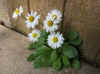
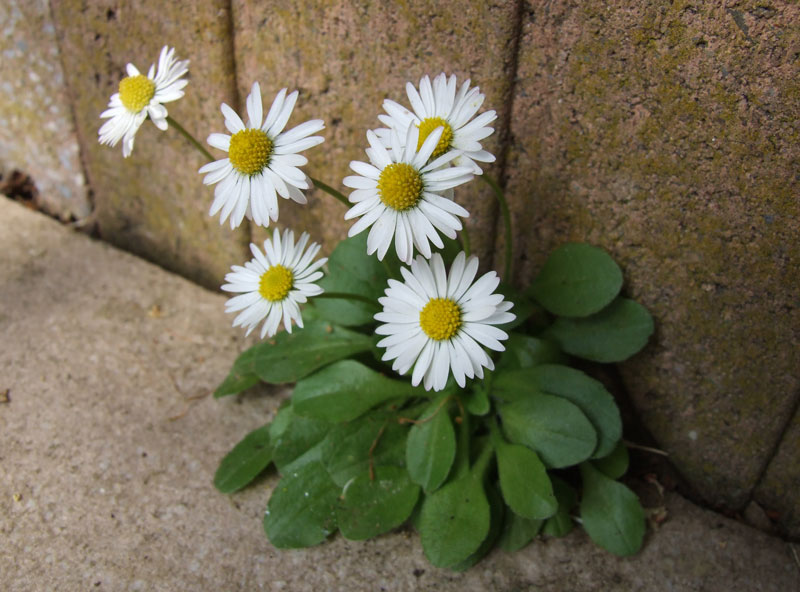
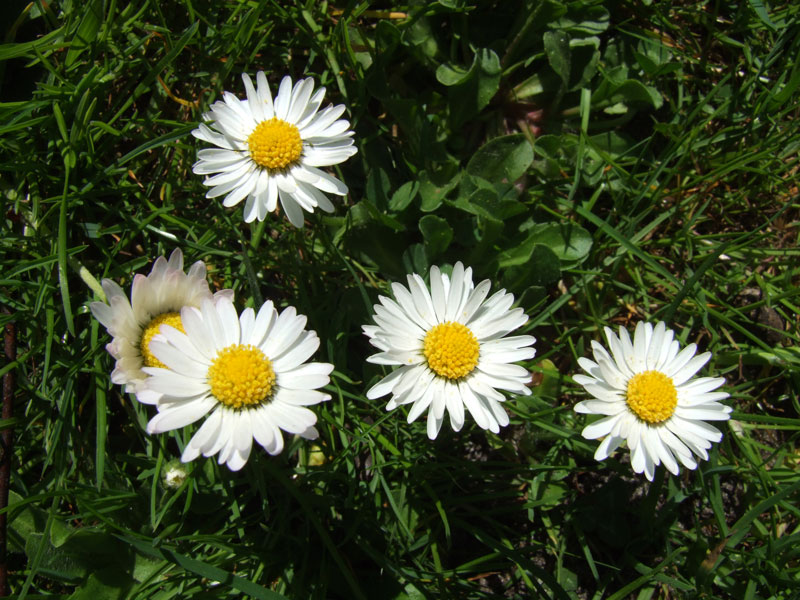
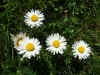 Daisy, Common Daisy, Lawn Daisy (Bellis
perennis).
Family Asteraceae or Compositae.
Daisy, Common Daisy, Lawn Daisy (Bellis
perennis).
Family Asteraceae or Compositae.
In the garden you see them mostly in the lawn. White flowers. The low leaf rosettes
escape the lawnmower. The Daisy has short creeping rhizomes.
Native to Europe and southwest Asia. Naturalized in North America and
South America |
 Larger
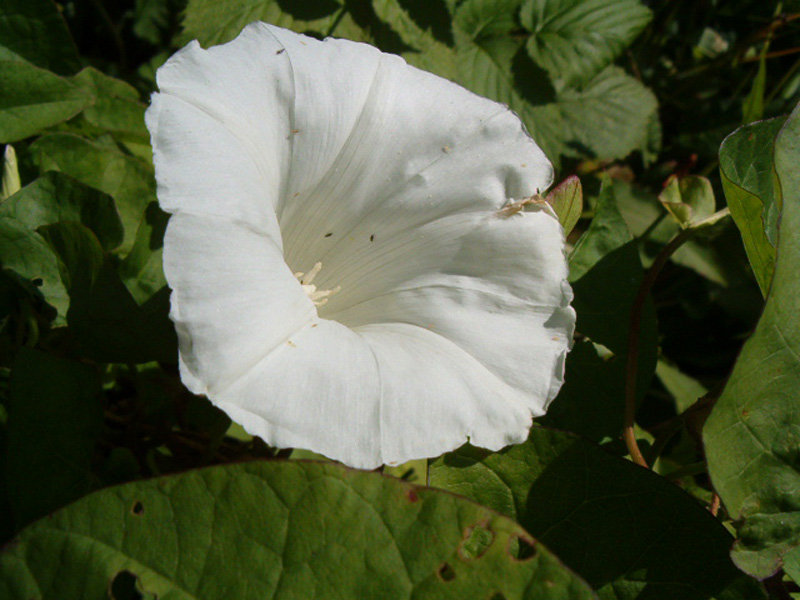
Bindweed, Hedge
Bindweed, or Rutland beauty (Calystegia sepium). Family
Convolvulaceae.
Larger
Bindweed, Hedge
Bindweed, or Rutland beauty (Calystegia sepium). Family
Convolvulaceae.
Bloom time: Vl-lX.
It is
gardenweed. It twines around the garden
plants. But the flowers are beautiful, so at
some places I let it grow. It can reach a height of 3 m. It is difficult
to remove because of the system of branched rhizomes. It prefers moist soil and grows towards the sun.
A Species with a subcosmopolitan distribution.
|
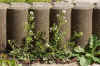
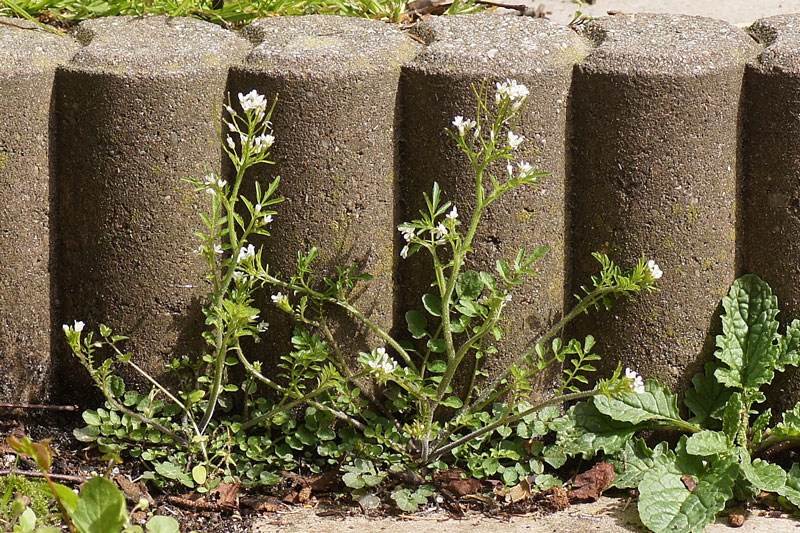
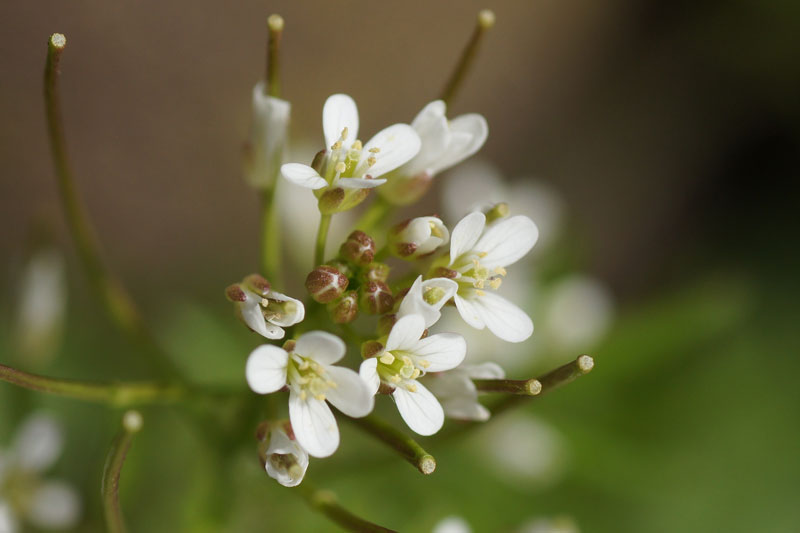
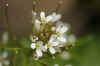 Wavy Bittercress (Cardamine flexuosa). Mustards,
crucifers or cabbage family. (Cruciferae or Brassicaceae).
Wavy Bittercress (Cardamine flexuosa). Mustards,
crucifers or cabbage family. (Cruciferae or Brassicaceae).
Annual . Bloomtime IV -
VIII.
It is a plant with a basal rosette, pinnate leaves and small white flowers.
Resembles Hairy Bitter cress (Cardamine hirsuta). A difference is, that
the seed-pods are a little higher or as high as the flowers. (Hairy Bitter cress:
lower) It likes wet, rich soil. In my garden it grows in pots with plants
on the terrace and on open spots in the garden. It's not very weedy in our
garden.
Height 5-40 cm. Europe, Asia, North-America.
Photos 12-4-2012. |
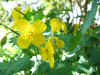
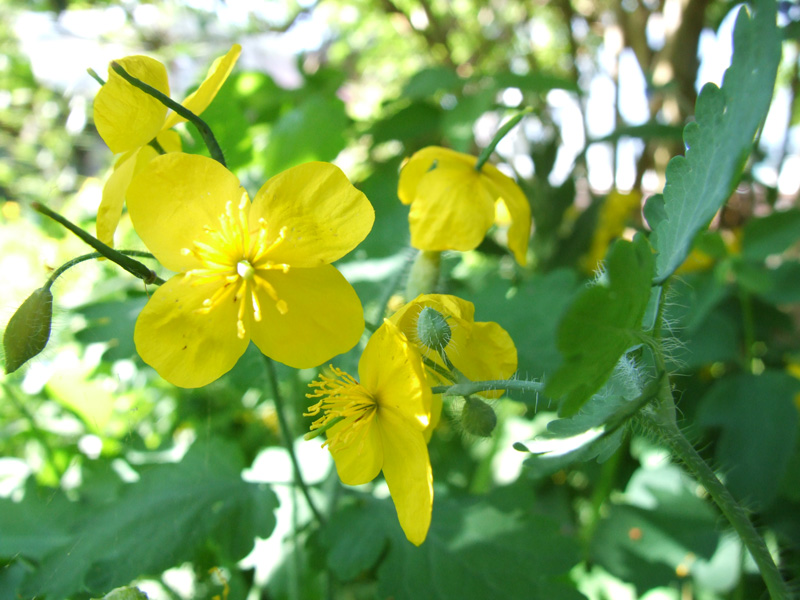
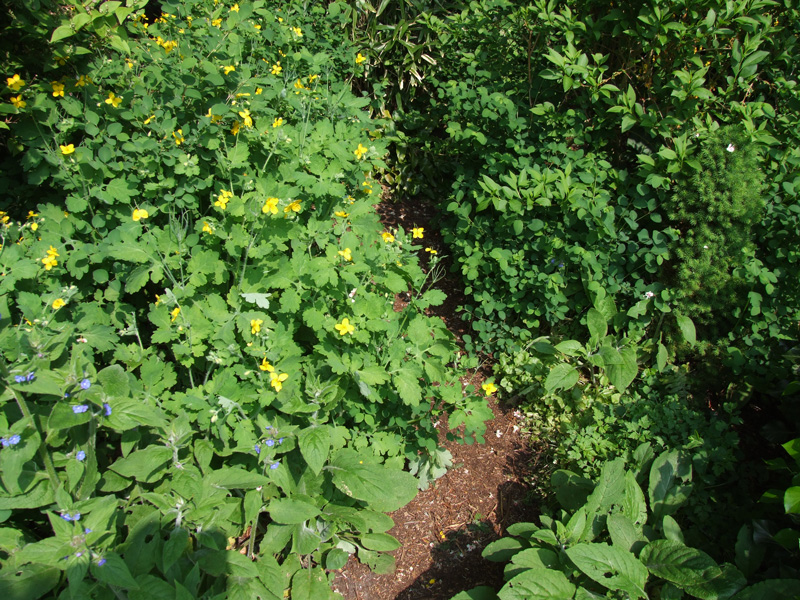
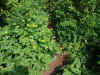 Greater celandine, tetterwort, swallow wort,
felonwort. (Chelidonium majus). Family Papaveraceae.
Greater celandine, tetterwort, swallow wort,
felonwort. (Chelidonium majus). Family Papaveraceae.
An orange yellow latex contains alkaloids. It was used against warts.
(For me it was not a success) Today is also used in medicines. A
perennial plant. The seeds possess an elaiosome,
which attracts ants to disperse the seeds. Under some shrubs, they
may stay in the garden. They grow very well. I have taken a photo.
On other places I remove the plants. The thick rhizome is difficult to
remove.
Most of Europe and in Central and North Asia.
Bloom time:
May-autumn. |
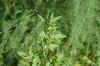
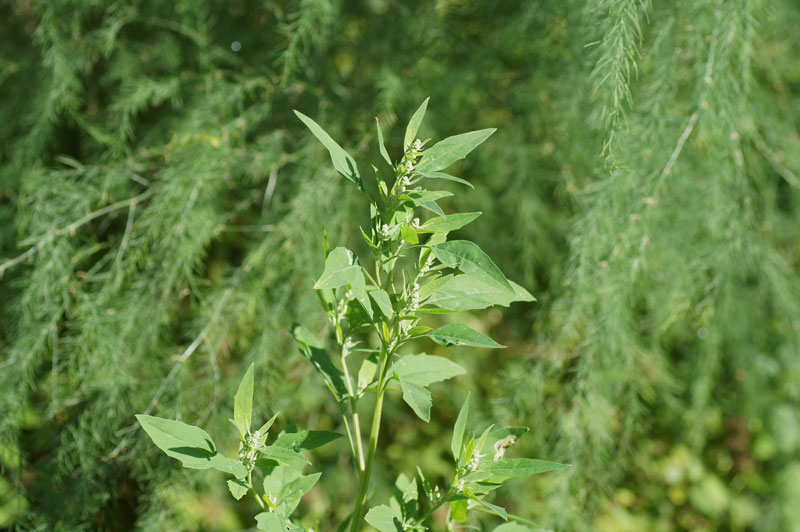
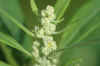 Lamb's quarters, melde,
white goosefoot (Chenopodium album). Subfamily Chenopodioideae.
Amaranth family (Amaranthaceae).
Lamb's quarters, melde,
white goosefoot (Chenopodium album). Subfamily Chenopodioideae.
Amaranth family (Amaranthaceae).
Annual. Bloomtime VI - X.
The shape of the leaves is variable: Oblong, oval, diamond-shaped with a smooth or
toothed edge. The leaves are green, but they look grey green because of whitish crystals. Clusters of small flowers. The seeds (nuts) contain
oil and were used for making bread. The leaves taste like spinach, but contain more oxalic
acid so you can't eat too much.
It grows well in rich soil. In our garden is not a problem. You can easily pull it out.
Height 15-150 cm.
Native to Europe, Middle Asia. But now
all over the world.
Photos 15-8-2013, 16-8-2013. |
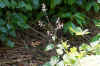
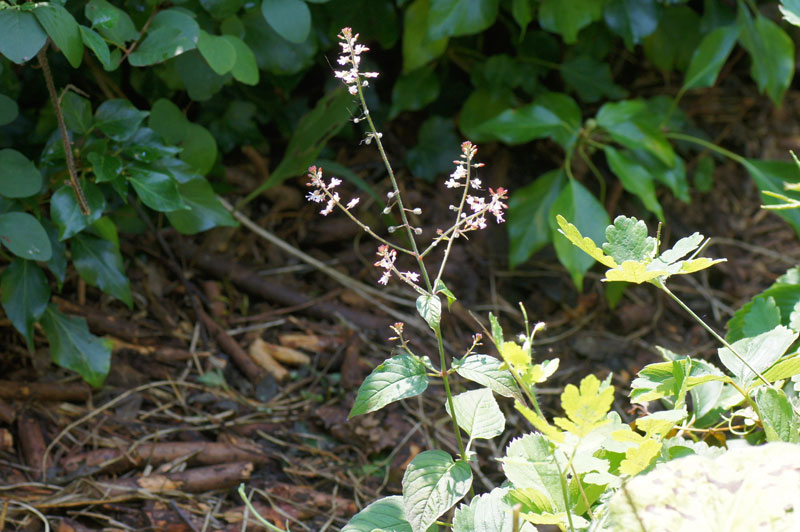
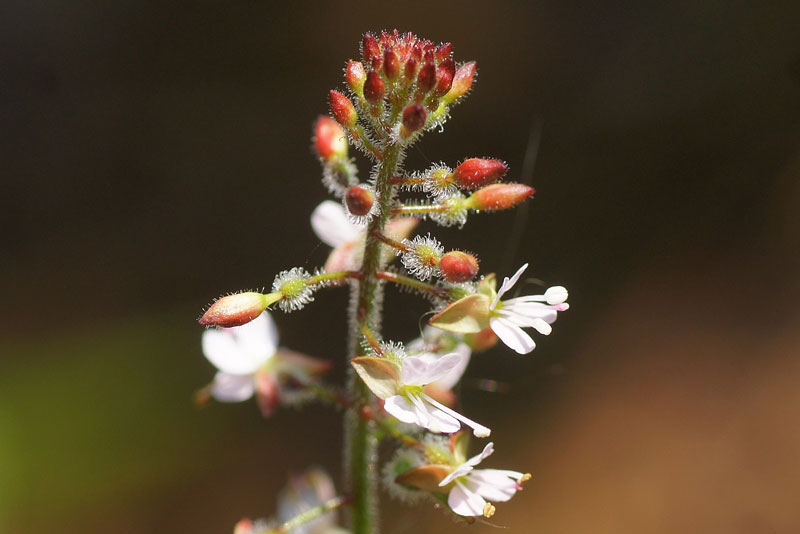
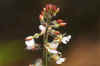 Enchanter's nightshade ( Circaea lutetiana).
Willowherb family, evening primrose family (Onagraceae).
Enchanter's nightshade ( Circaea lutetiana).
Willowherb family, evening primrose family (Onagraceae).
A perennial.
Bloomtime IV-X.
In winter the plant dies down to the rhizome. Small but beautiful white flowers. The fruits have curved hairs,
so they stay stuck to the fur of animals.
A woodland plant that I saw in the garden in 2014 under a shrub for the
first time.
Height 20-60 cm. Native to Europe, Asia.
Photos 26-7-2014. |

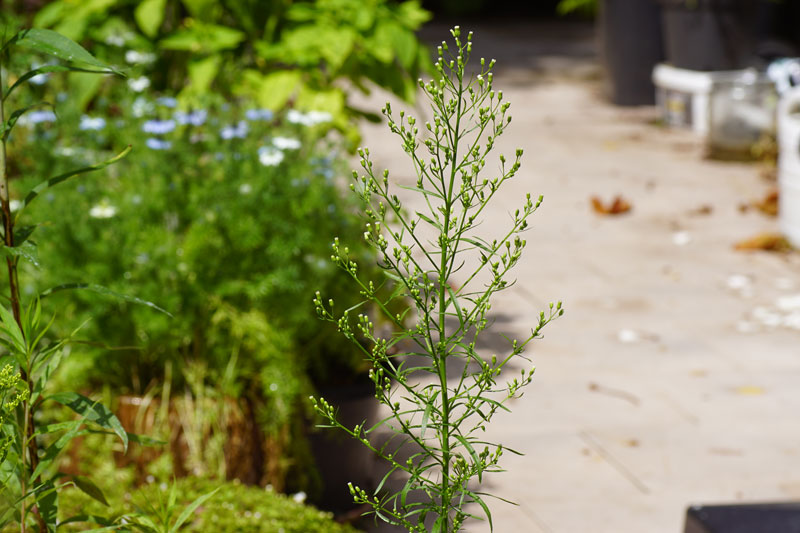
 Canadian horseweed
(Conyza canadensis) Family Asteraceae or Compositae.
Canadian horseweed
(Conyza canadensis) Family Asteraceae or Compositae.
Numerous small flower heads, with many seeds with tufts of white or brown
hairs and wind dispersed. So I won't leave them. Height up to approximately 1 m.
Bloom time VII-IX. Annual. Sun. Dry, moderately fertile to fertile soil.
Native to North America. Brought to Europe in the 17th century. Similar to
Conyza bilbaoana and Conyza sumatrensis. Photos 17-7-2019, 20-7-2019. |
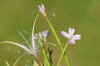
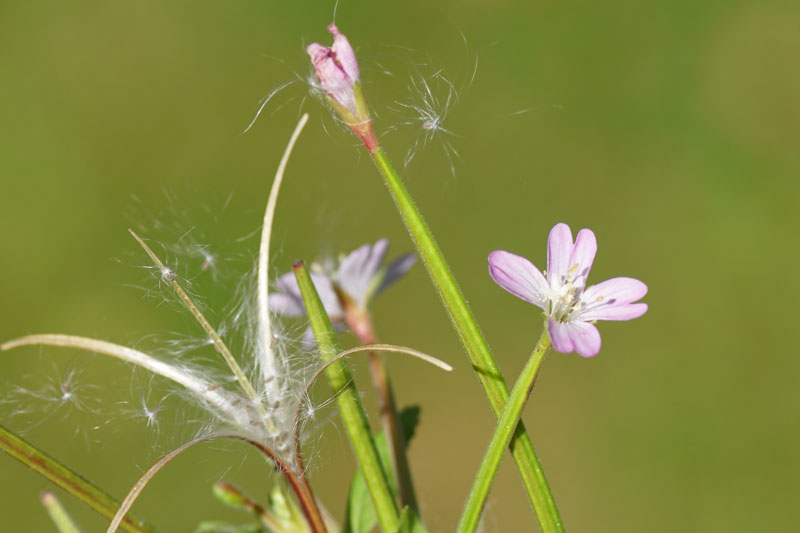
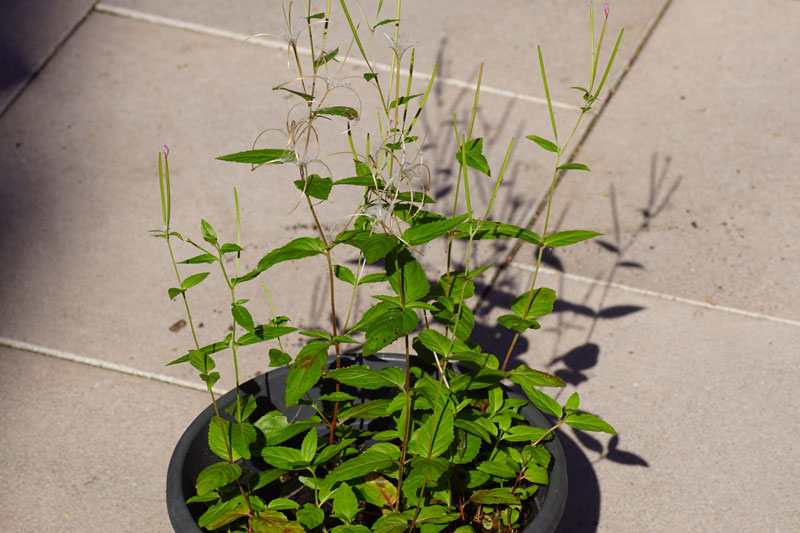
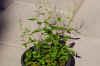 Broad-leaved Willowherb
(Epilobium montanum). Willowherb family (Onagraceae).
Broad-leaved Willowherb
(Epilobium montanum). Willowherb family (Onagraceae).
A perennial.
Bloomtime VI -IX. Difficult to identify due to similar Epilobium species.
Especially on the edges of forests. Fairly common in the Netherlands. With us they like pots where the original plants have disappeared. No annoying weeds. Usually I leave it on. It is easy to remove.
Height 10-80 cm.
Photos 6-9-2023. Native to Europe, Central and East Asia, introduced to North America, Japan and New Zealand. |
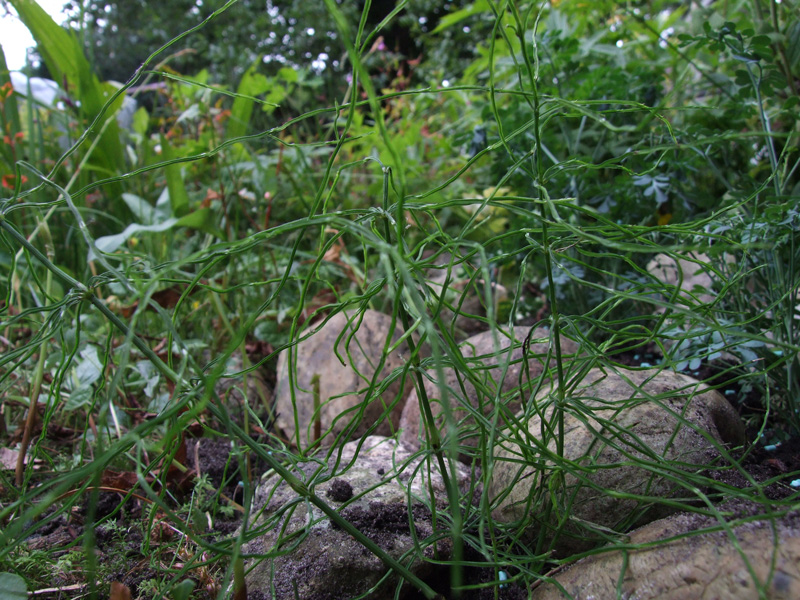
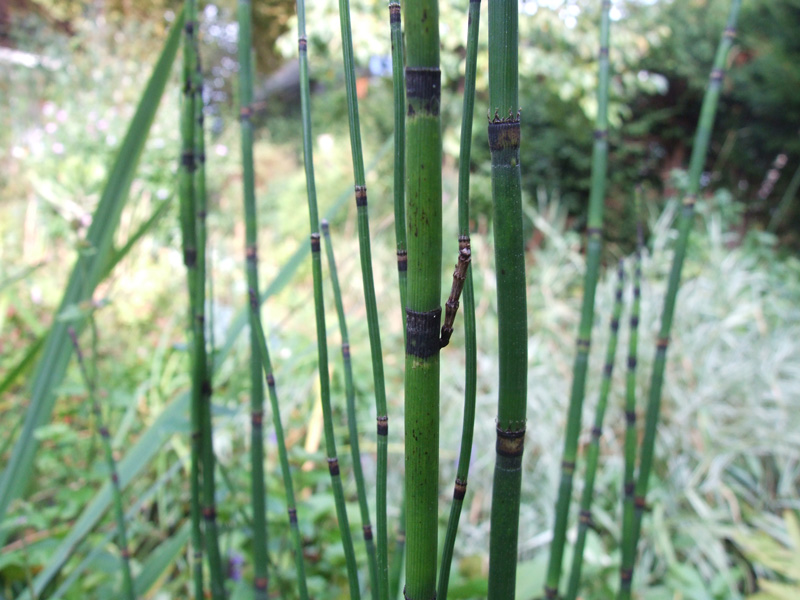
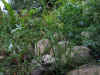 Field Horsetail or Common Horsetail (Equisetum
arvense). Family horsetails (Equisetaceae).
Field Horsetail or Common Horsetail (Equisetum
arvense). Family horsetails (Equisetaceae).
A perennial Like ferns horsetails (Equisetaceae) reproduce with spores. It
lacks flowers.
In spring there appear fertile, light brown, cone-bearing stems.
They are unbranched. Sterile stems start to grow
after the fertile stems have wilted. (after about two weeks) The stem
has whorls of long branches, with rounded ridges.
Every year there are some plants in our garden, but they don't give
trouble. Because of the many ferns they don't get much light. The soil is
rather dry. It prefers moist soil.
It can be very difficult to control. You have to remove the plants
before they have spores. But the reproduction also is by the roots.
The roots are tuber-bearing and rhizomatous.
It is
toxic to some plants and animals. (e.g. grasses and horses)
Europe, China, Japan, North America, New Zealand. |
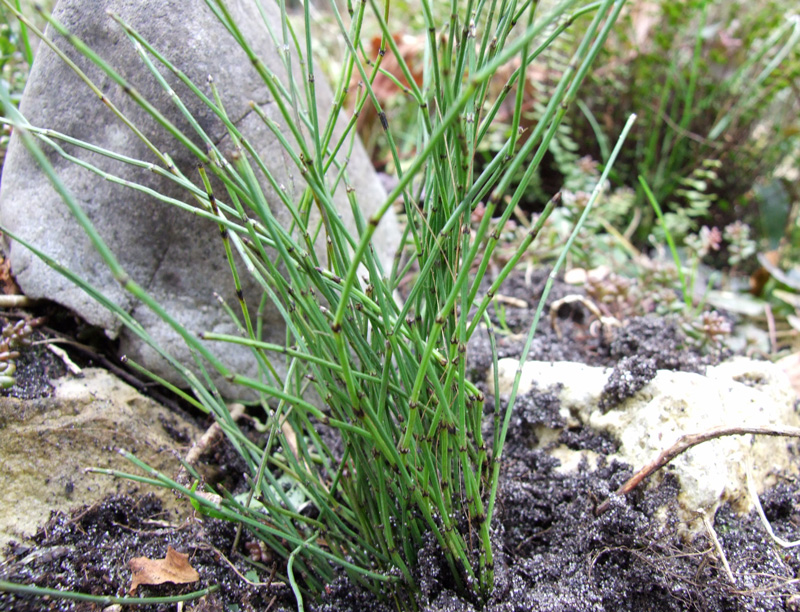
 Small Horsetail, dwarf scouringrush
(Equisetum scirpoides).
Small Horsetail, dwarf scouringrush
(Equisetum scirpoides).
Origin: North America.
I put it on this page, though I bought it. I have many regrets. I had
planted the horsetail near the pond. But in short time, it had spread to
other parts of the garden and formed a dense mat. The roots are tiny, fibrous rhizomes that are
impossible to pull out completely. In the (small) rock garden I had to
remove all stones to get rid of it.
The garden centers should place a warning because of its invasiveness.
The bigger member of the family
Equisetum hyemale Japonica (80 to 100 cm) gave the first years no problems in our garden,
but now I have to remove some of them far from the pond.
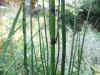 Equisetum hyemale Japonica
 |
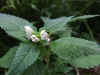
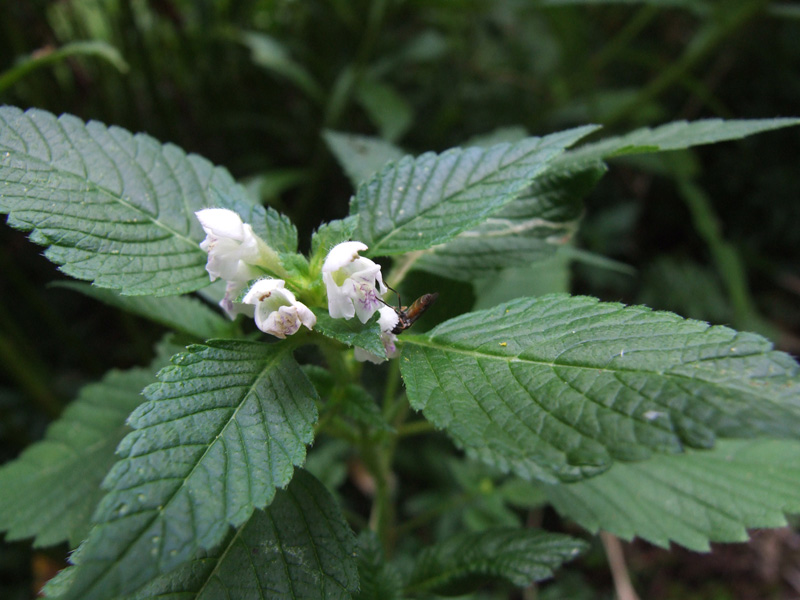
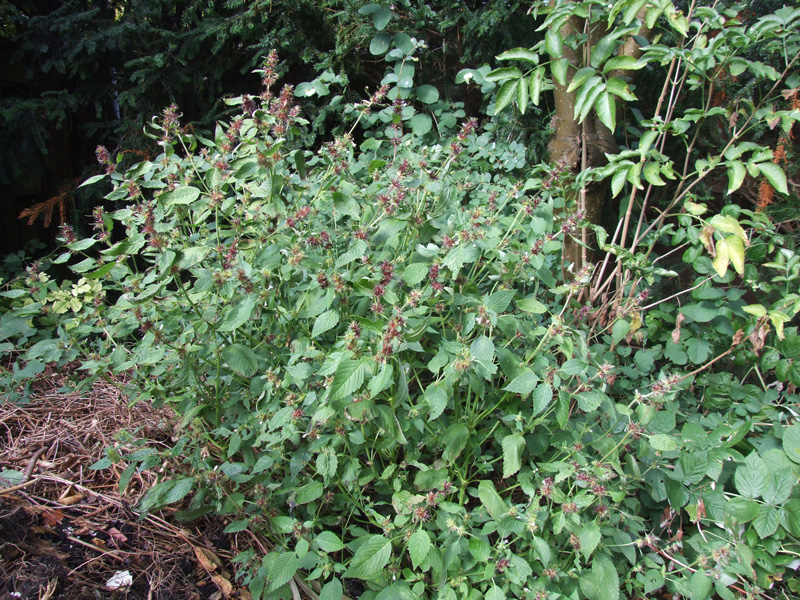
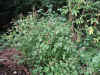 Common Hemp-nettle (Galeopsis tetrahit). Mint
family (Lamiaceae,
Common Hemp-nettle (Galeopsis tetrahit). Mint
family (Lamiaceae,
Labiatae). Bloom time: VII-X. The plant has white or pink flowers marked with dark blotches on the
lower lip. The stems have bristly hairs. The leaves resemble those of a
nettle.
On moist to rather dry, nitrogen-rich soil. In forests, along roads and
water sides, but also in grain fields. ( the farmers are not happy.) Sun,
half shade.
I 've read, Lacewing like to lay their eggs on Common Hemp-nettle.
Native to Europe and Asia. But from 1800 also in North America. |
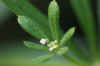
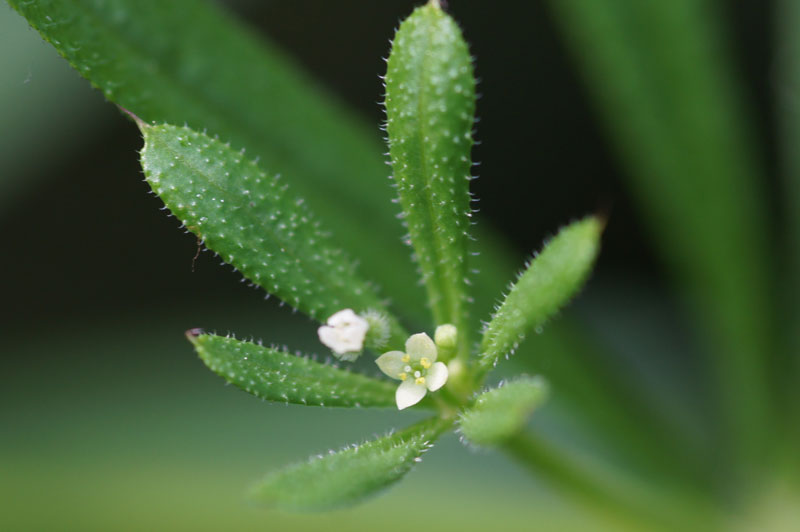
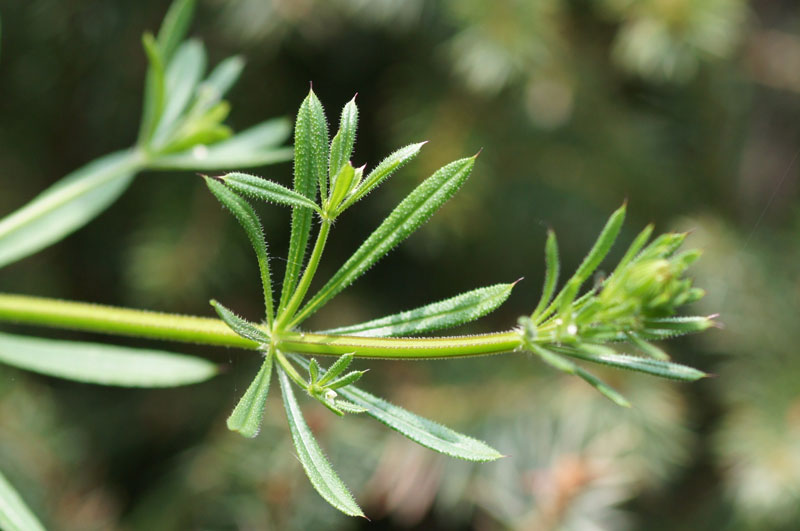
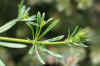 Cleavers, Clivers, Goosegrass, Stickywilly, Stickyweed, Stickyleaf, Catchweed, Robin-run-the-hedge and Coachweed (Galium aparine). Family Rubiaceae.
An annual plant. Bloom time V-X. Small white flowers. (2 mm) fruits, The small fruits have like the plant
hooked hairs. They cling to animal to disperse. The hooked hairs on
the square, weak stems and leaves of the plant cling to other plants like hedgerows.
They use them for support and climb to reach sunlight. It is a
fast-growing plant. I pull them up as much as possible.
Both sun and shade. The plant likes fertile, moist soil.
Native to North America and Eurasia. |
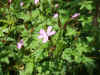
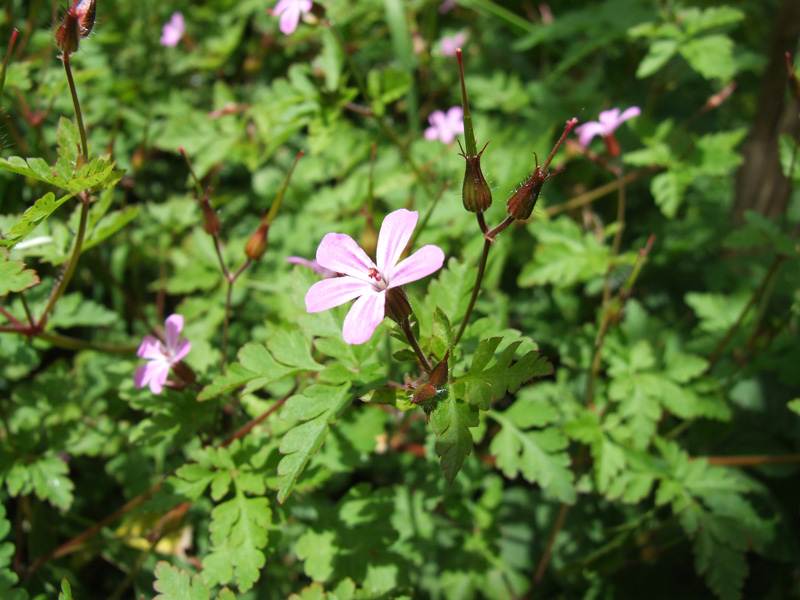
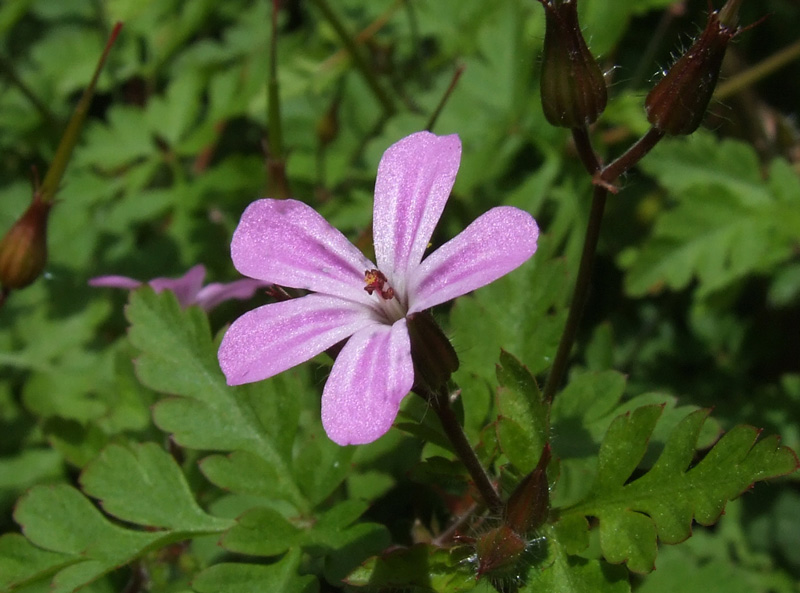
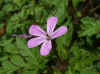 Herb Robert, Red Robin, Robert Geranium
(Geranium robertianum). Family Geraniaceae.
Herb Robert, Red Robin, Robert Geranium
(Geranium robertianum). Family Geraniaceae.
Bloom time V - IX An
annual or biennial plant.
A nice plant which can grow properly. The plants are easy to remove.
They may stay on some shady spots in the garden.
On a dry place the leaves turn red in autumn. The whole plant has an
strange aroma, you always recognize.
The name may come from St. Robert or Rupert the Archbishop of Salzburg from the
7th century. German: Ruprecht-Storch Schnabel.
It was used to halt bleeding. Native to Europe, Asia, North America, and North Africa. |
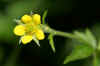
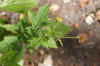
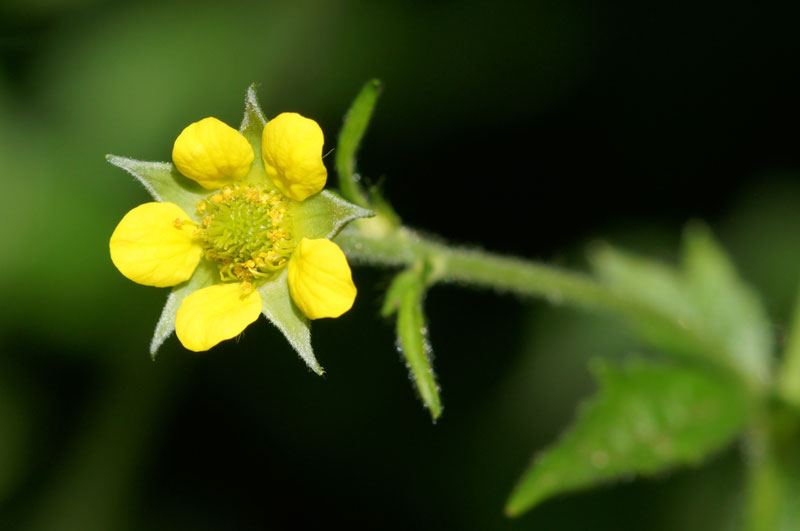
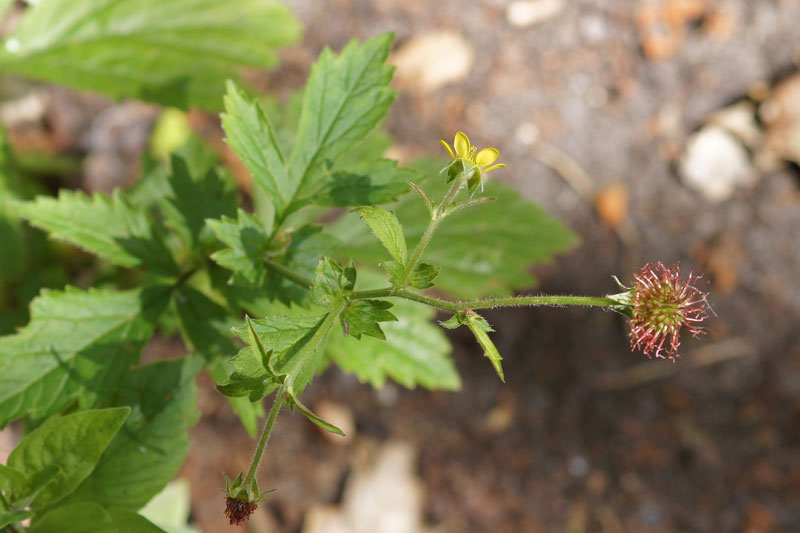
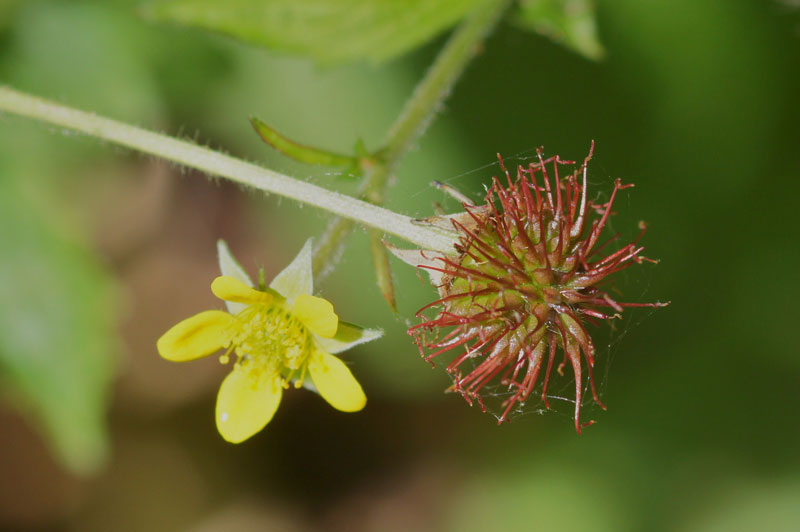
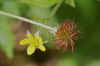 Wood
Avens, Herb Bennet, Colewort, St. Benedict's herb (Geum urbanum). Rose
family (Rosaceae).
Wood
Avens, Herb Bennet, Colewort, St. Benedict's herb (Geum urbanum). Rose
family (Rosaceae).
These plants prefer normal nitrogen-rich soil. Height 30 to 60 cm. Bloom time: V - VIII.
Perennial
The fruits have hook shaped spines, making them caught in the fur of animals. Thus, they easily spread. In our garden it is not a difficult plant.
The root smells like cloves. The root contains eugenol. This is a disinfecting substance. They used to be dried and used to drive to fly, but
they are also used to improve the taste of beer. It contains plant essential oils and tannins and bitter substances.
The plant (root) was used to expel evil spirits.
Large parts of Europe and North Africa along the Mediterranean Sea.
German: Echte Nelkenwurtz. French: Benoite commune.
|
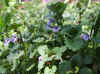 Ground-ivy (Glechoma hederacea) Mint
family (Lamiaceae, Labiatae).
Ground-ivy (Glechoma hederacea) Mint
family (Lamiaceae, Labiatae).
Bloom time V-VI. Perennial and very
aromatic. Shade, half shade. An evergreen creeper with stems that root at the nodes. In our garden
these weedy plants are very difficult to control. The leaves of ground-ivy
are a good remedy against irritation caused by stinging nettle. You have
to rub them on that spot.
Formerly it was used in the brewery. Now it is replaced by hops.
Native to Europe and Southwestern Asia. Introduced to North America. |
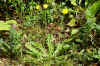
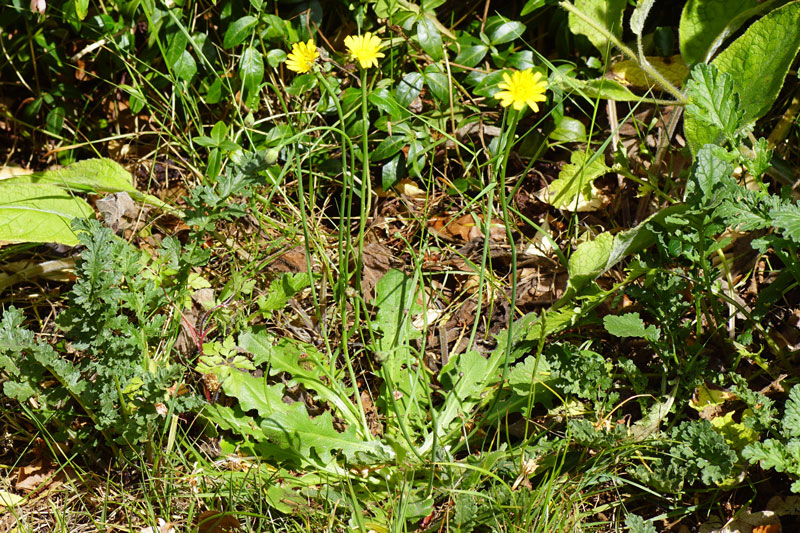
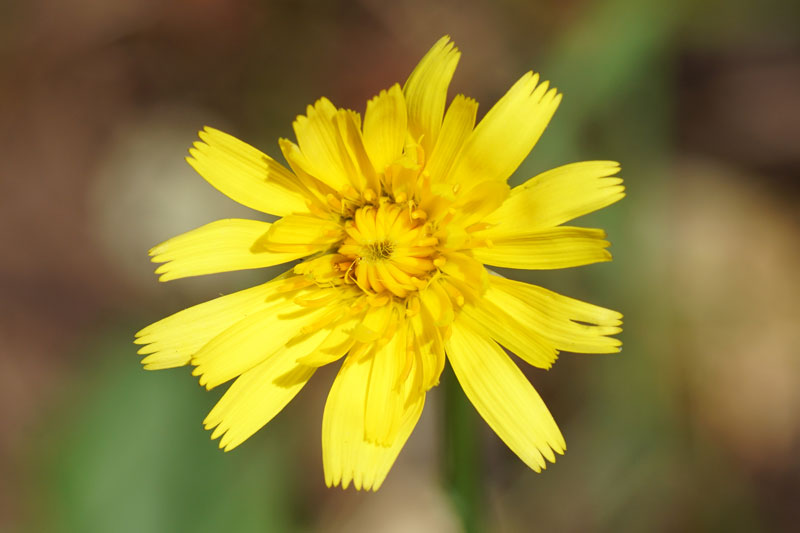
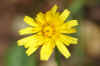 Catsear, flatweed, cat's-ear, hairy cat's
ear or false dandelion (Hypochaeris radicata)
Aster family (Asteraceae or Compositae).
Catsear, flatweed, cat's-ear, hairy cat's
ear or false dandelion (Hypochaeris radicata)
Aster family (Asteraceae or Compositae).
Perennial. Bloontime
VI - IX.
Leaf rosette like the dandelion. Flower heads with yellow ray flowers (long on the outside).
It grows in dry to moist, nutrient-rich soil. Open spaces in grassland, roadsides. With us on the edge of the lawn. Sun. As long as he doesn't multiply too much, he can stay there.
Height 15-80 cm.
Photos 6-6-2020. Europe, Southwest Asia. Now in temperate regions of all continents. |
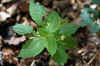
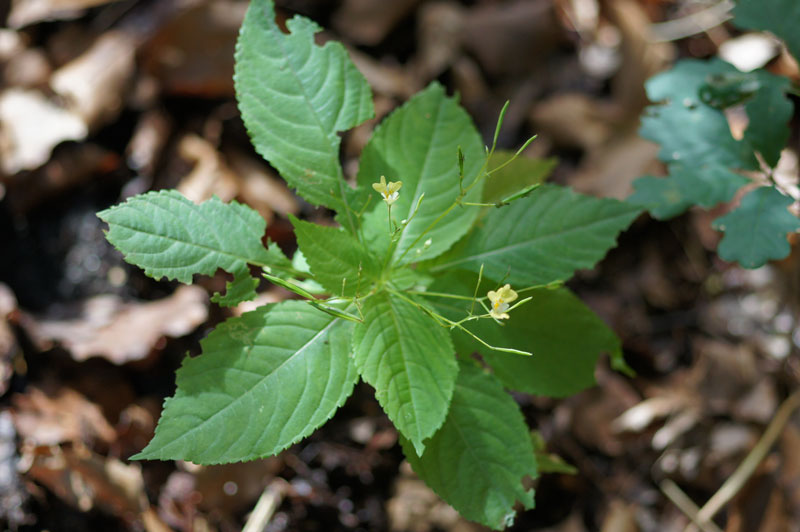
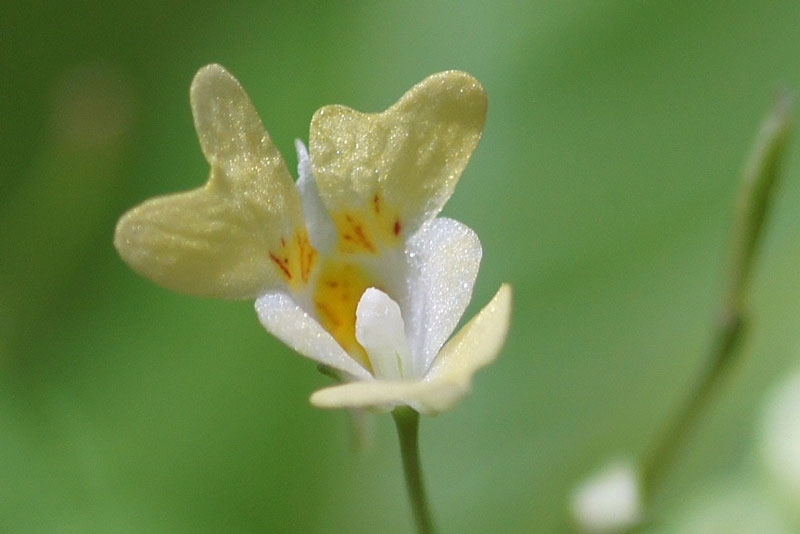
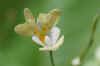 Small
Balsam, Small Flowered Touch me not (Impatiens parviflora). Balsam family
(Balsaminaceae).
Small
Balsam, Small Flowered Touch me not (Impatiens parviflora). Balsam family
(Balsaminaceae).
Bloom time: VI-X.
Height up to1 m. (in our garden are much lower)
Moist, shady places. In our garden it grows under the yew. If you look
closely to the small flowers, you can see how beautiful they are. When
the capsules mature, they "explode" and
send
their
seeds away. The
plants are much easier to remove than the Himalayan Balsam.
Native to Central Asia. But now also in Europe and North America. Photo:
3-9-2010
|
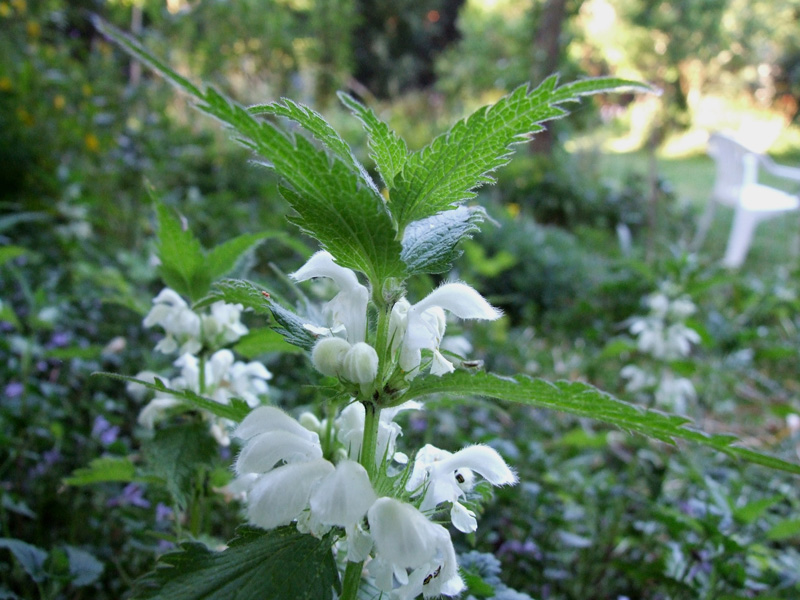
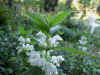 White Dead-nettle, bee nettle (Lamium album) Mint
family (Lamiaceae, Labiatae).
White Dead-nettle, bee nettle (Lamium album) Mint
family (Lamiaceae, Labiatae).
Bloom time IV-XI. Half shade, sun. A
herbaceous perennial plant. The softly hairy leaves appear similar to those of the Stinging nettle,
but thy don't have stinging glandular hairs. Hence their name "dead
nettle". The seeds possess an elaiosome,
which attracts ants to disperse the seeds. Height 60 cm. Thin rootstocks
with runners.
Native to Europe en Asia. |
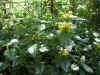
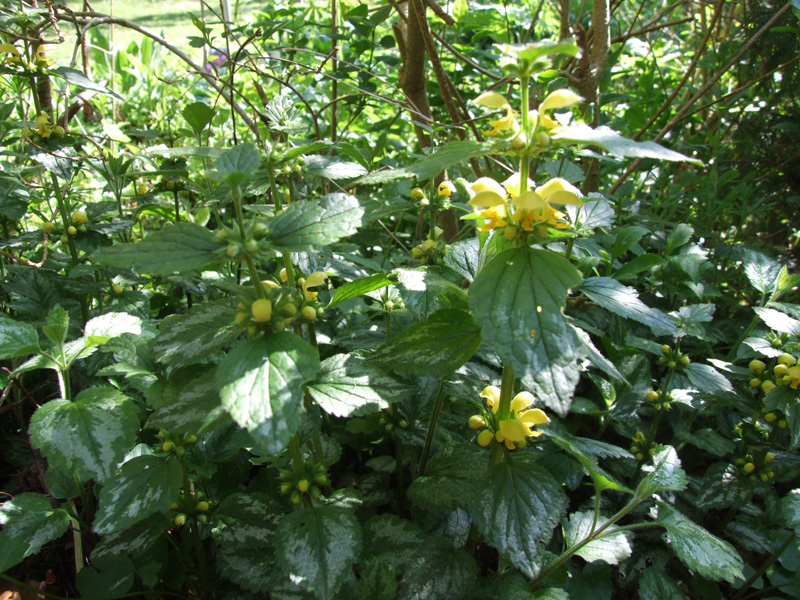
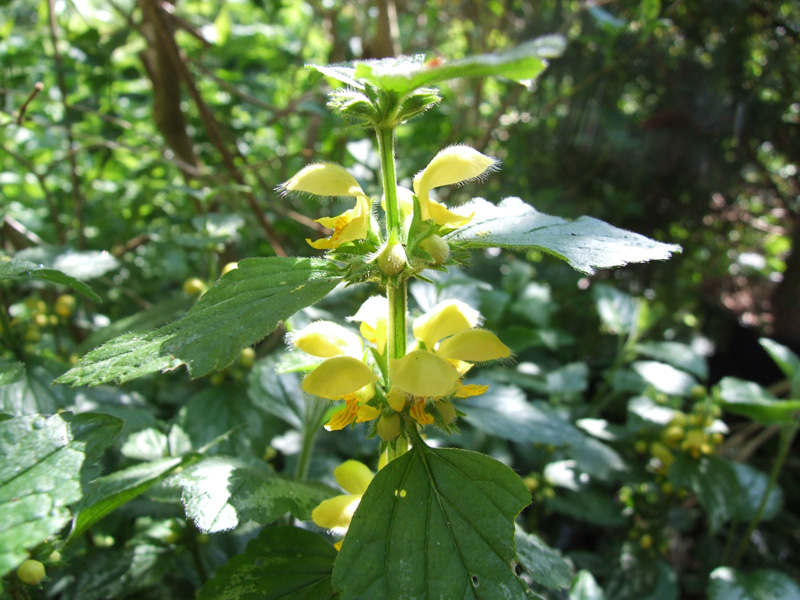
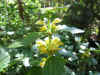 Yellow Archangel (Lamiastrum galeobdolon subsp.
argentatum). Mint
family (Lamiaceae, Labiatae).
Yellow Archangel (Lamiastrum galeobdolon subsp.
argentatum). Mint
family (Lamiaceae, Labiatae).
It is a subspecies of the Yellow Archangel. Argentatum points to the
silver on the leaves.
Bloom time: V-VI. Shade, half shade. Height 20 - 60 cm. It is a
ground cover. It can be invasive, but it is a beautiful plant on shady
spots.
Native to Eurasia |
 Red dead-nettle, purple dead-nettle, purple archangel (Lamium
purpureum). Mint
family (Lamiaceae, Labiatae).
Red dead-nettle, purple dead-nettle, purple archangel (Lamium
purpureum). Mint
family (Lamiaceae, Labiatae).
Bloom time III - X Annual. Part shade, sun. The seeds are dispersed by ants. (ant bread) Height 20-30 cm. Europe and Asia. Native to Europe, North Africa and northern Asia. Introduced in North America in particular. |
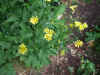
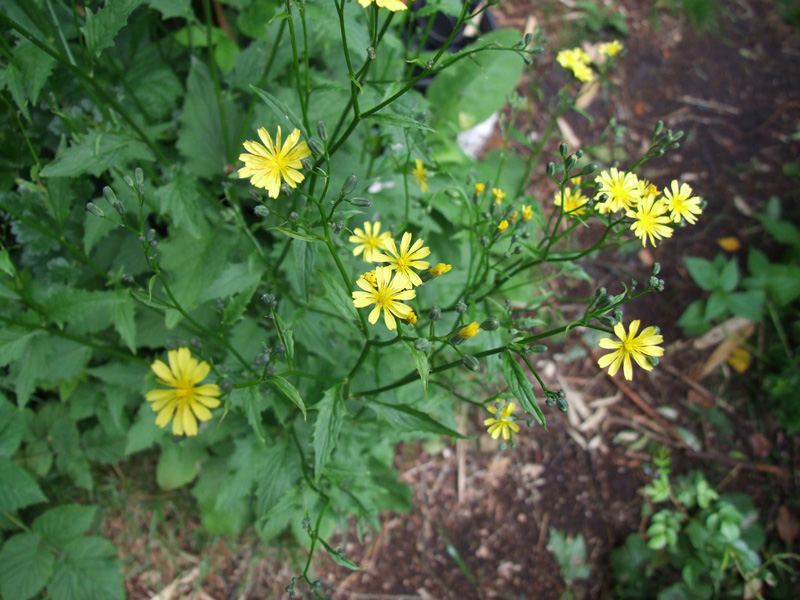
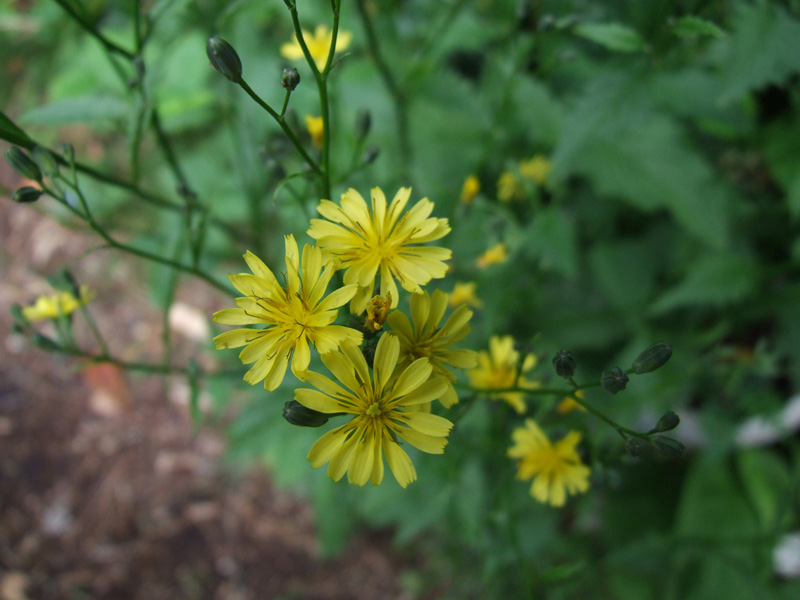
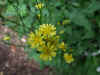 Nipplewort (Lapsana communis).
Family Asteraceae or Compositae.
Nipplewort (Lapsana communis).
Family Asteraceae or Compositae.
Bloom time VI-X. An annual or biennial
plant.
Nippleworts have many small flowerheads. A height of 120 cm is possible,
but there are also smaller plants in my garden (Especially in
September).
The leaves of Nipplewort used to be eaten as a salad. The taste seems to
be nutty. But I've never tried.
Native to Europe, North Africa and West Asia . Naturalized in America,
Australia and New Zealand. |
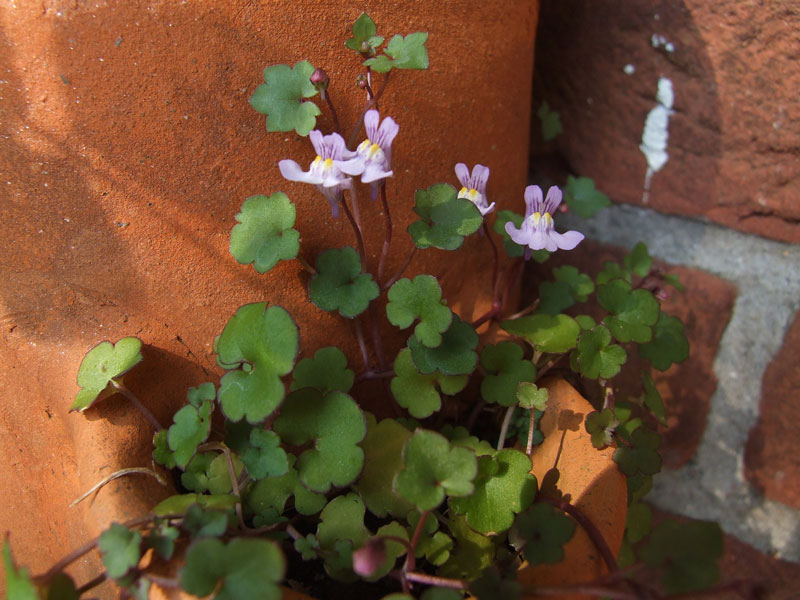
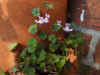 Ivy-leaved Toadflax, Kenilworth Ivy (Linaria
cymbalaria / Cymbalaria muralis)
Figwort family (Scrophulariaceae).
Ivy-leaved Toadflax, Kenilworth Ivy (Linaria
cymbalaria / Cymbalaria muralis)
Figwort family (Scrophulariaceae).
Sun, half shade. Bloom time V-IX.
Perennial.
In our garden, it grows along the wall and in a wall pot. Native to the mountains of northern Italy and Yugoslavia.
But now it has been naturalized over almost the whole of Europe and
parts of America, North Africa, Australia, New Zealand. (Escaped from the
gardens) Sometimes you can find it at a garden nursery (in the
Netherlands). The plant grows on walls and rocks, where it root in the
cracks in the rocks. The creeping stems root at the nodes. The flower
moves after fertilization away from the light and buries the seed between
the stones. In the wall pot I like Ivy-leaved Toadflax very much. |
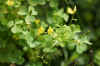
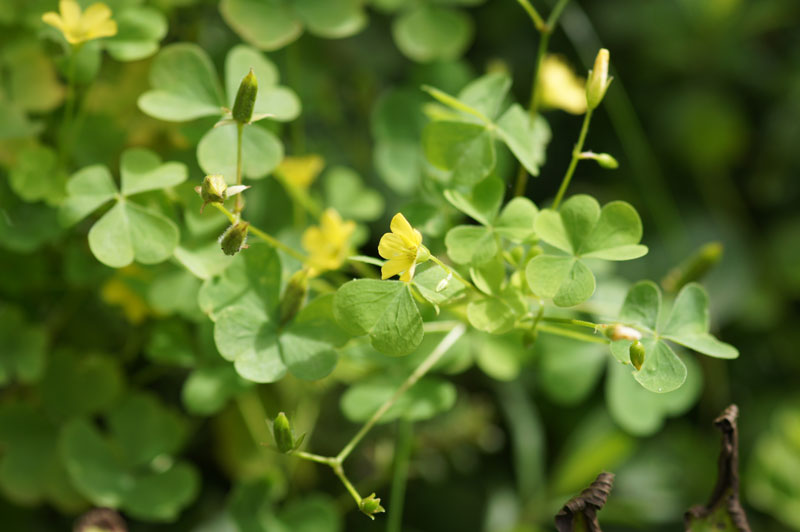
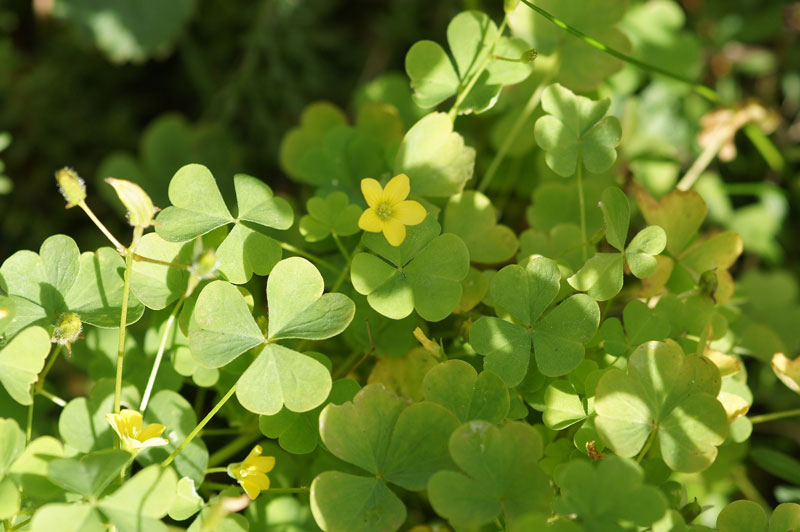
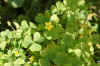 Common yellow woodsorrel, common yellow oxalis, upright
yellow-sorrel, lemon clover. sourgrass, pickle plant (Oxalis stricta, Oxalis fontana
Oxalis europaea). Wood sorrel family Oxalidaceae). Many names for a plant.
Common yellow woodsorrel, common yellow oxalis, upright
yellow-sorrel, lemon clover. sourgrass, pickle plant (Oxalis stricta, Oxalis fontana
Oxalis europaea). Wood sorrel family Oxalidaceae). Many names for a plant.
The plant also spreads by underground runners (rhizomes).
Perennial or annual. Height 10 to 30 cm. Flowering from June to October.
The leaves resemble those of clover. Yellow woodsorrel fold its leaves up
at nigh but also when it is to is dry or cold. The oxalic acid in the leaves protects the leaves against predation
It prefers moist soil, sun, partial shade.
Native to North America. Since 17th and 18th centuries in Europe.
German: Aufrechter Sauerklee. French: Oxalis droit,
Oxalis d'Europe. |

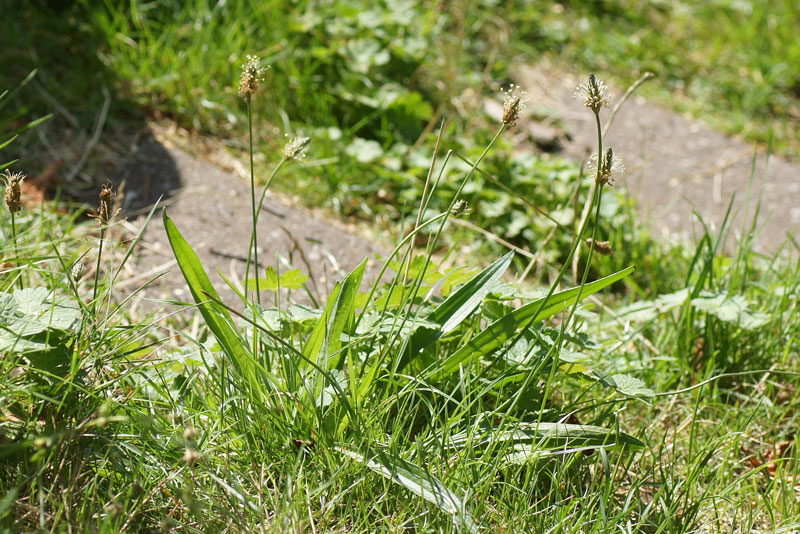
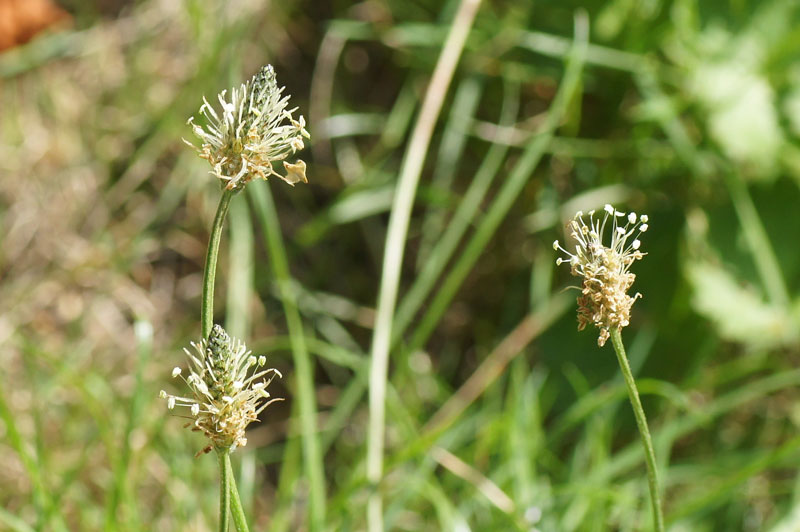
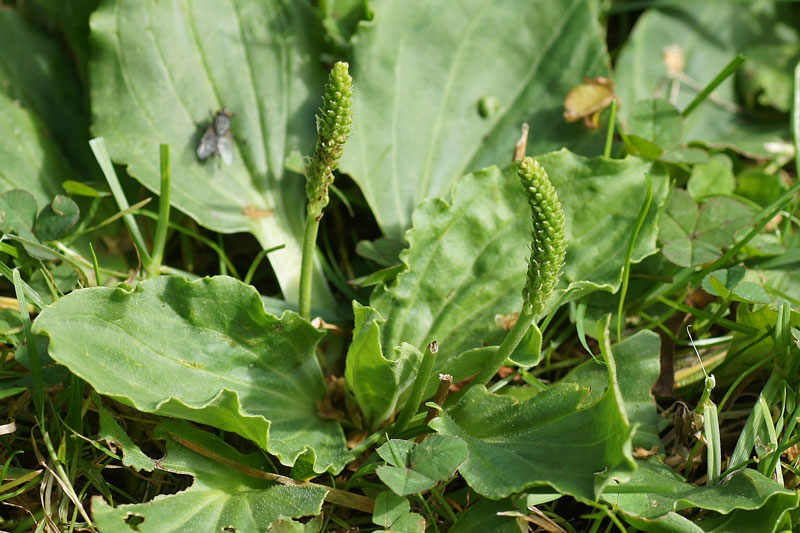
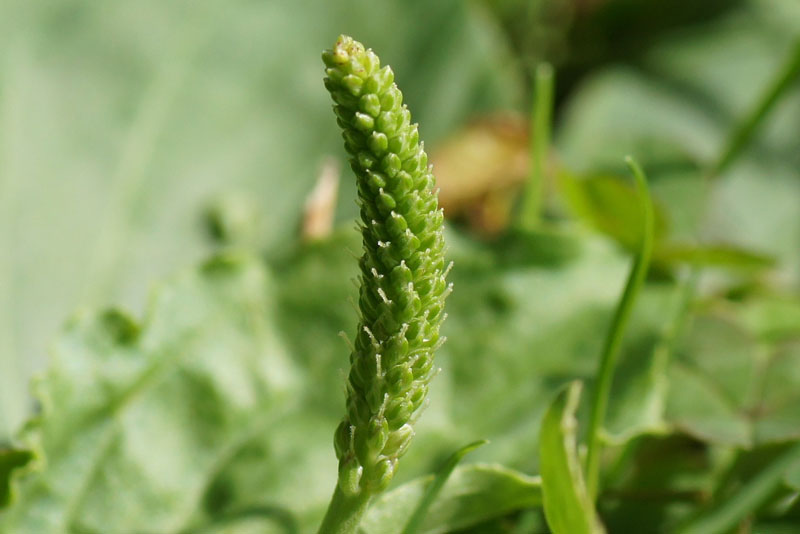
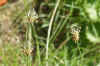 English plantain, narrowleaf plantain, ribwort plantain, ribleaf, buckhorn
plantain, buckhorn, lamb's tongue (Plantago lanceolata). Plantain family
(Plantaginaceae).
English plantain, narrowleaf plantain, ribwort plantain, ribleaf, buckhorn
plantain, buckhorn, lamb's tongue (Plantago lanceolata). Plantain family
(Plantaginaceae).
Annual. Bloomtime IV-X. Lanset shaped leaves in a rosette. The flower spike is brown green with protruding white anthers.
It grows well in rich soil. They grow also in poor soil, but they are smaller. I have some on the edge of the lawn. Non-toxic. Rabbits
like them.
Height 5 - 45 cm.
Photos 10-8-2014. Native to Europe, but now spread worldwide. German:
Spitzwegerich, Spießkraut, Lungenblattl, Schlangenzunge.
French: Plantain lancéolé, Plantain étroit.
|
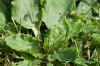
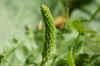 Broadleaf plantain, Greater plantain
(Plantago major). Plantain family (Plantaginaceae).
Broadleaf plantain, Greater plantain
(Plantago major). Plantain family (Plantaginaceae).
Annual. Bloomtime V-XI.
Broad-elliptic or ovate leaves in a rosette. The flower spikes are green-yellow. There
are two subspecies: Plantago major subsp. major (smaller) and Plantago major
subsp. intermedia (narrow leaves)
They only grow in our lawn. By mowing they remain low. They can withstand mowing. If there are too many I get them out of the lawn, which is not so easy. Non-toxic. Rabbits
like them.
Height 10 - 25 cm. Sometimes higher.
Photos 18-8-2014. Native to Europe, but now spread worldwide. German:
Breitwegerich, Große Wegerich.
French: Grand plantain.
|

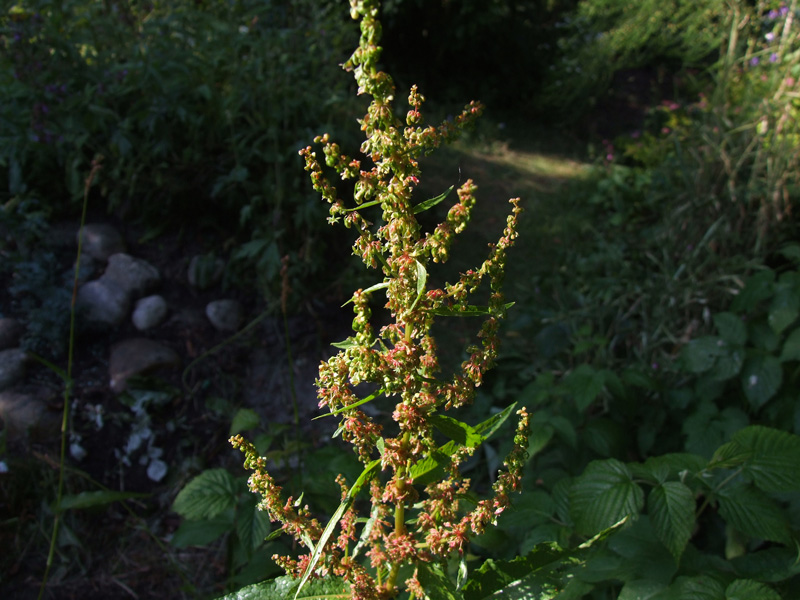
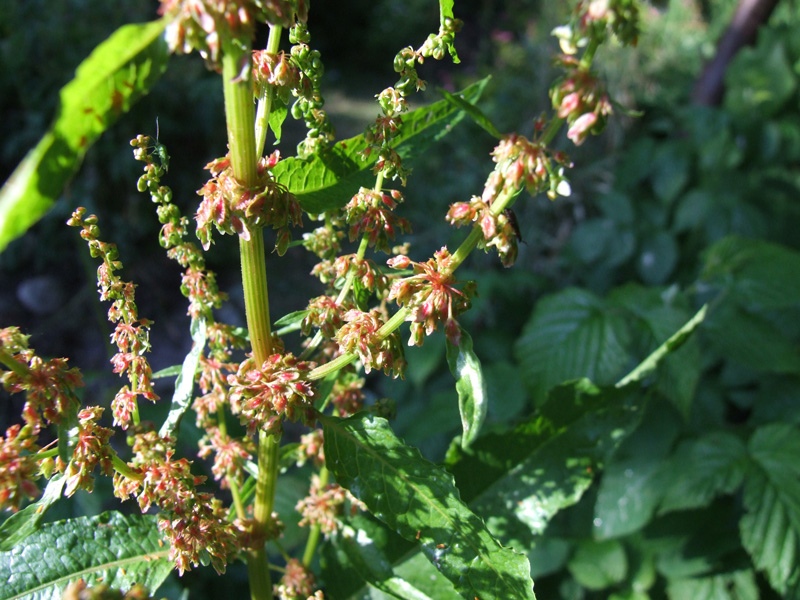
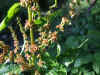 Broad-leaved Dock, Bitter Dock, Bluntleaf Dock, Dock
Leaf, Butter
Dock (Rumex obtusifolius). Knotweed family, smartweed family (Polygonaceae).
Broad-leaved Dock, Bitter Dock, Bluntleaf Dock, Dock
Leaf, Butter
Dock (Rumex obtusifolius). Knotweed family, smartweed family (Polygonaceae).
Bloom time VI-IX. Perennial. Reproducing only by seed. Moist, rich soil. Usually I get them away. That's not so easy because of
the large tap-root system.
The top leaves are narrower and smaller than the bottom leaves. The large,
broad leaves are oval and have a heart shaped base.
Height 80 -
150 cm.
Native to Europe but can now also be found in the United States |
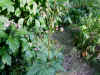
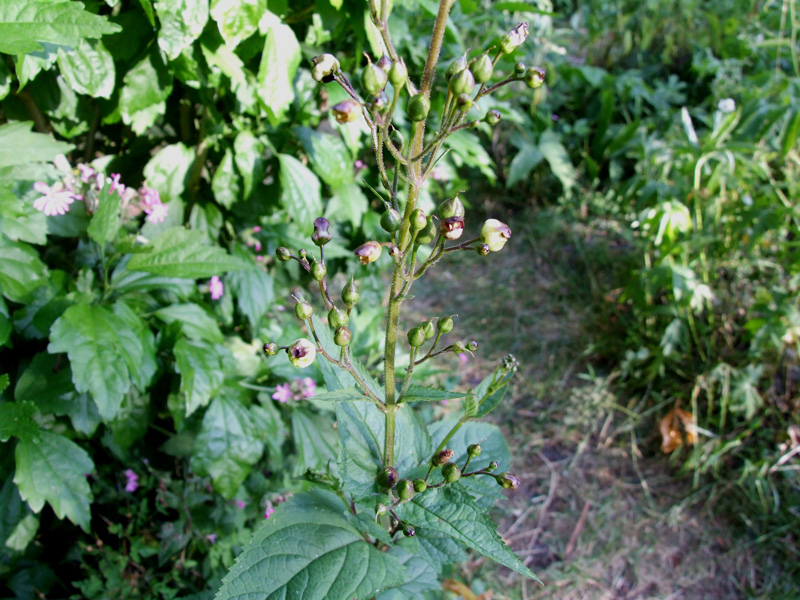
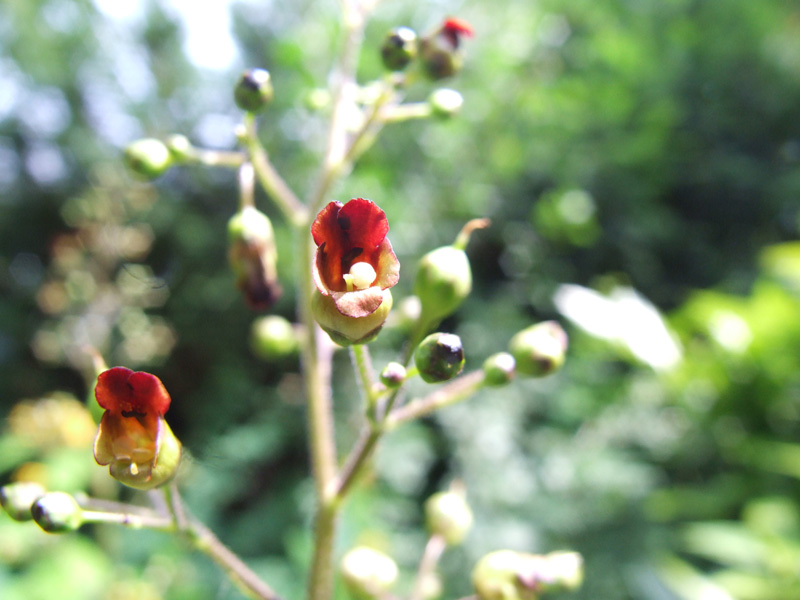
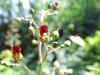 Common
figwort, woodland figwort, Knotted Figwort,
throatwort, Carpenter's Square, Kernelwort (Scrophularia nodosa).
Figwort family (Scrophulariaceae).
Common
figwort, woodland figwort, Knotted Figwort,
throatwort, Carpenter's Square, Kernelwort (Scrophularia nodosa).
Figwort family (Scrophulariaceae).
Bloom time VII-IX. A perennial herbaceous plant. Height about 50-90 cm.
I like them at some spots in the garden.
It has a short, knotted rhizome. Hence the name knotted figwort. The
scientific affix 'nodoso' relates also to the roots.
It prefers damp and shady places. Loamy, fertile soil. The plant
has an erect, square, hairless stem with leaves in opposing positions. The
small flowers are visited by wasps and bees. These flowers have green
lower lips and purple upper lips.
Common figwort was used in medicine to treat skin complaints.
Native to Europe and Asia (to Central Asia) |
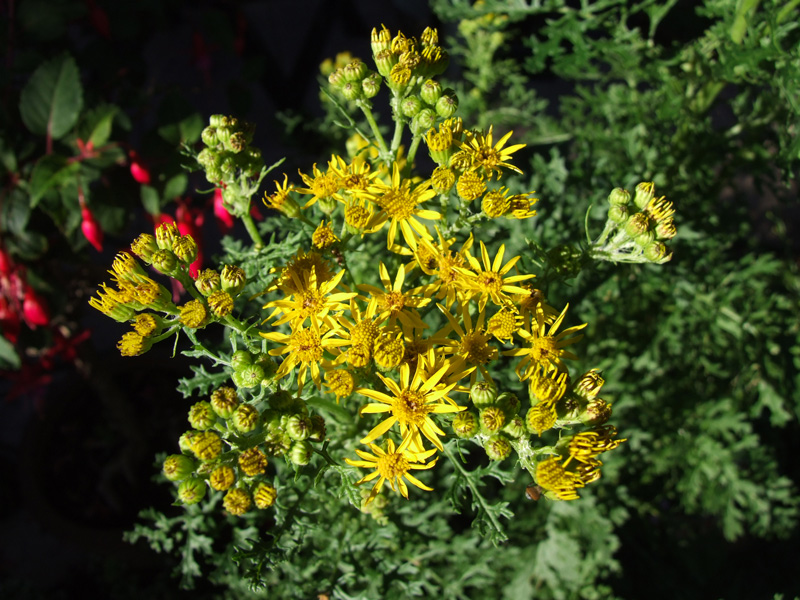
 Common Ragwort (Senecio
jacobaea, Jacobaea vulgaris). Family Asteraceae or
Compositae.
Common Ragwort (Senecio
jacobaea, Jacobaea vulgaris). Family Asteraceae or
Compositae.
Bloom time: Vll-X. This is a biennial weed, but it is beautiful in the garden and you can find
many insects on the flowers. It starts to bloom around St-Jacob (July 25)
The alkaloids in the plant are poisonous especially to horses, but also to other
animals. Normaly it is not eaten by animals, but the alkaloids remains in hay.
There are no meadows near my garden and I only have two plants.
The place where it appears, is a surprise. The plant favours well-drained soils
but will grow in most ground conditions. A dense grass sward provides less of an
opportunity for the seeds to germinate. They are spread by the wind. |
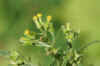
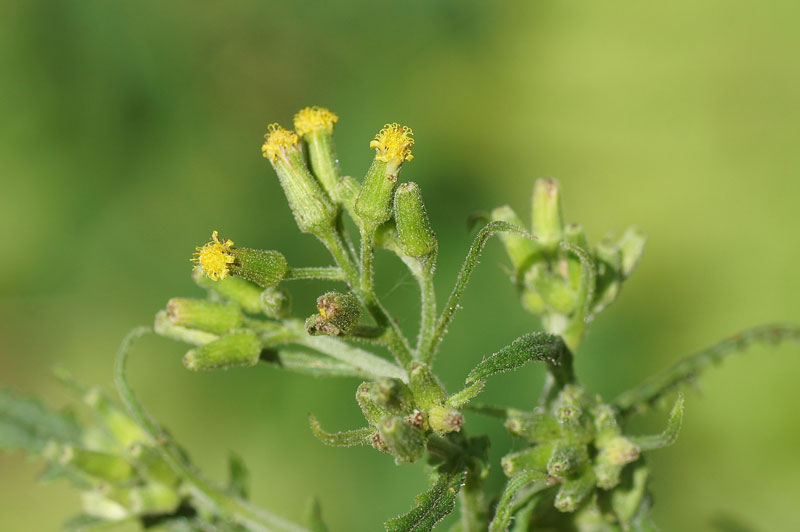
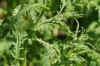 Woodland Ragwort (Senecio sylvaticus).
Family Asteraceae or Compositae.
Woodland Ragwort (Senecio sylvaticus).
Family Asteraceae or Compositae.
Bloom time:
VII-IX. Annual.
The leaves are pinnately incised. Panicles with small flower heads with short yellow ray flowers.
It grows on calcareous, dry humus-rich soil. Sun, partial shade.
Height 15-90 cm.
Photos 8-7-2013. Europa, North America. |
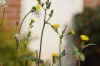
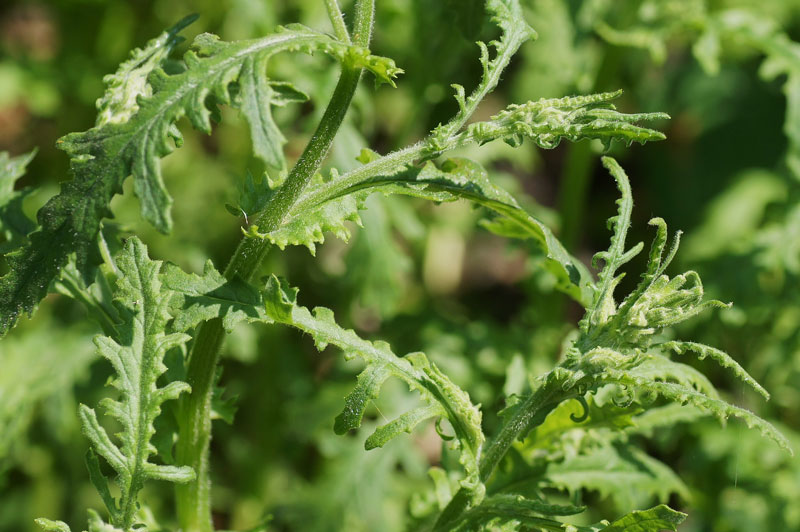
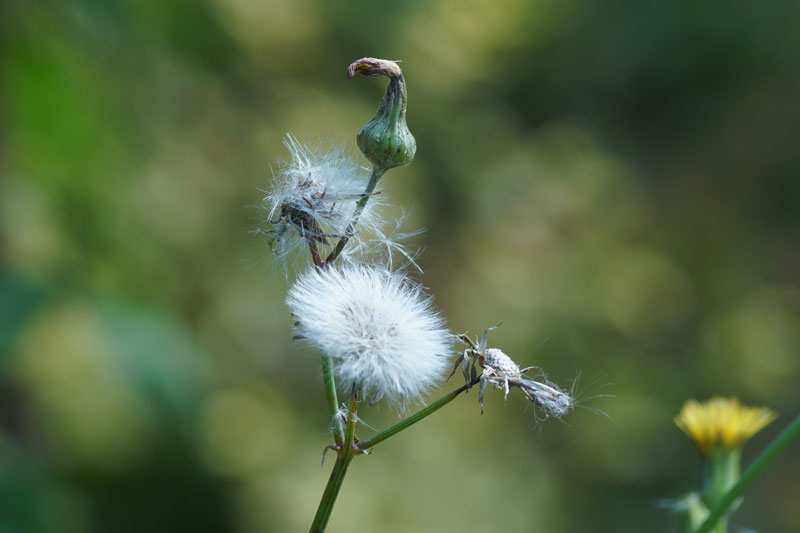
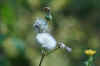 Common sowthistle, sow thistle, smooth sow thistle, annual sow thistle, hare's colwort, hare's thistle, milky tassel, milk thistle, soft thistle, or swinies
(Sonchus oleraceus). Family Asteraceae or
Compositae.
Common sowthistle, sow thistle, smooth sow thistle, annual sow thistle, hare's colwort, hare's thistle, milky tassel, milk thistle, soft thistle, or swinies
(Sonchus oleraceus). Family Asteraceae or
Compositae.
Perennial.
Preference for moist, nutrient-rich soil. Sun, partial shade.
The plant has large elongated leaves.
Each flower heads consist many tiny, yellow ray flowers.
A taproot. Height approximately up to 150 cm. Bloom time VII-X.
native to Europe, North Africa and Asia. Introduced in other parts of the world. Photos 28-8-2019. |
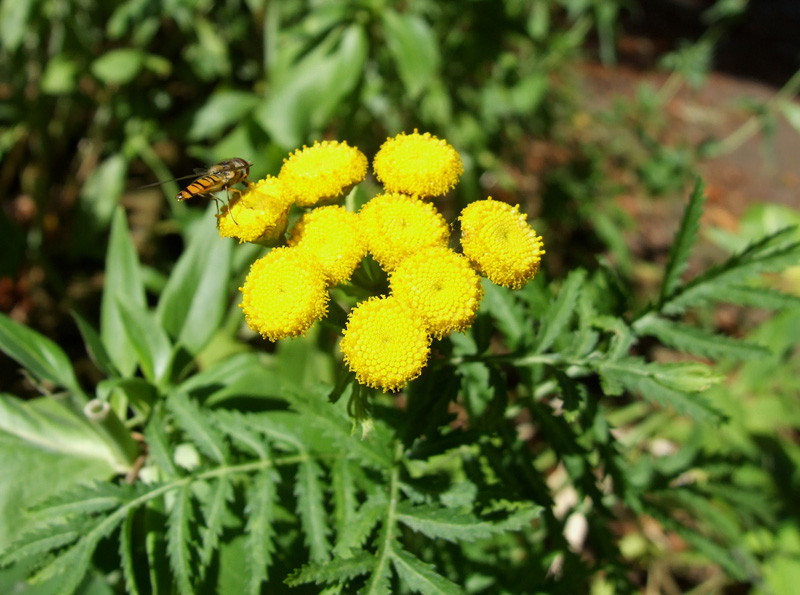
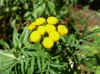 Tansy, Common Tansy, Bitter Buttons, Cow Bitter, Mugwort,
Golden Buttons (Tanacetum vulgare, Chrysanthemum vulgare). Aster family
(Asteraceae or Compositae).
Tansy, Common Tansy, Bitter Buttons, Cow Bitter, Mugwort,
Golden Buttons (Tanacetum vulgare, Chrysanthemum vulgare). Aster family
(Asteraceae or Compositae).
Perennial.
This plant is already for years in the front garden and I am glad it isn't
invasive. Perhaps the soil is to dry. It prefers moist to slightly
dry conditions. Full or partial sun.
A plant with deeply divided leaves and yellow, button-like
flowers. Height about 40-150 cm. Bloom time VII-VIII.
Common tansy is a toxic
plant.
Native to Europe and Asia. Introduced to other parts of the world. To
the U.S. from Europe as a medicinal plant and as an ornamental plant. But it has become invasive. |
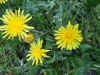
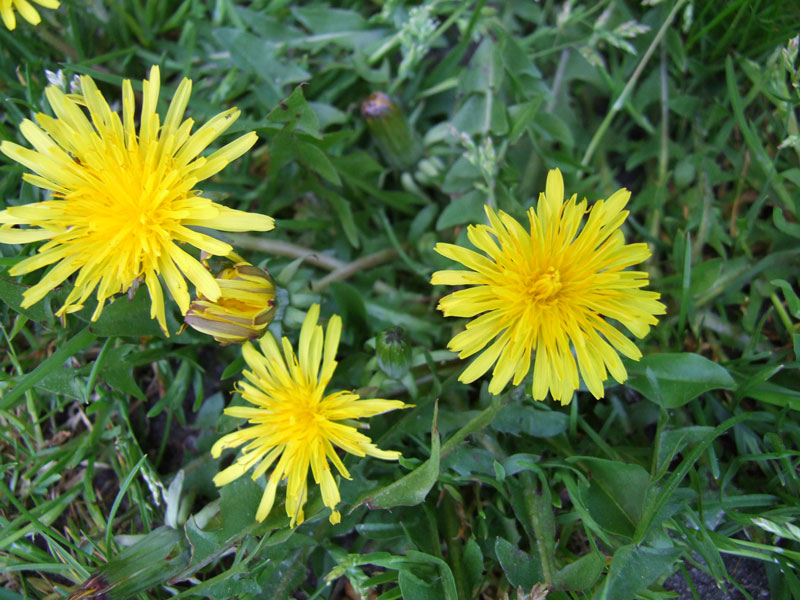
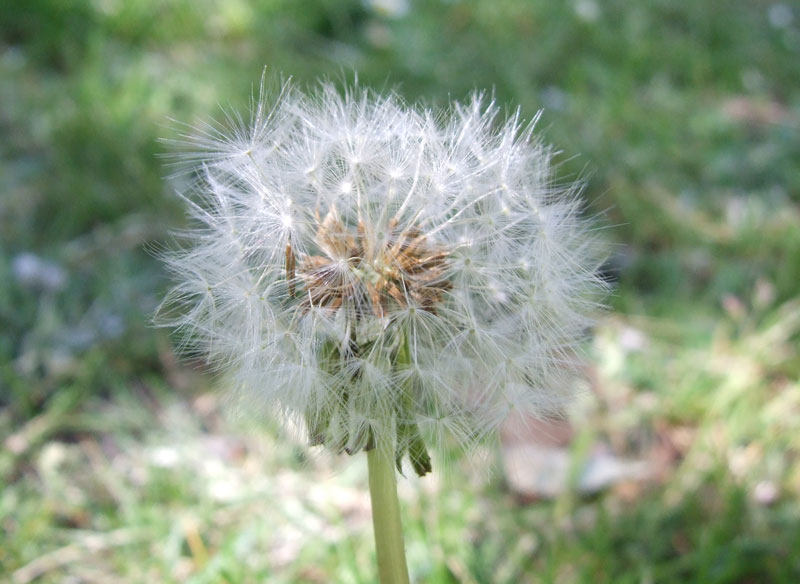
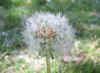 Dandelion, common dandelion, lion's tooth, blowball (Taraxacum
officinale).
Aster family (Asteraceae or Compositae).
Dandelion, common dandelion, lion's tooth, blowball (Taraxacum
officinale).
Aster family (Asteraceae or Compositae).
From half April. Perennial.
Dandelion has long, lance-shaped leaves. That's why it got in Old French
the name "Dent-de-lion" (means lion's tooth).
Rabbits, horses and many other animals likes dandelions. Because of the
long taproot, they are difficult to remove. It
will regenerate, when you don't remove the taproots completely. When the flowers
appear, I try to remove them all out of the
lawn. The leaves form a rosette can't be killed by mowing
Each flower heads consist many tiny ray flowers. There
are no disk flowers. To spread in the wind, the seed has a kind of
parachute.
I've read there are
many species of dandelion. But they are very similar.
Dandelion contains homeopathic substances (bitter compounds) to
improve gal and liver functioning. From the latex rubber can be
made. In the Second World War the Soviet Union made rubber extracted from
a Russian dandelion. Now there are experiments again with the Russian
dandelion. Native to Europe and Asia. Now the dandelion is naturalized all over the
world (North America, southern Africa, South America, Australia etc.) |
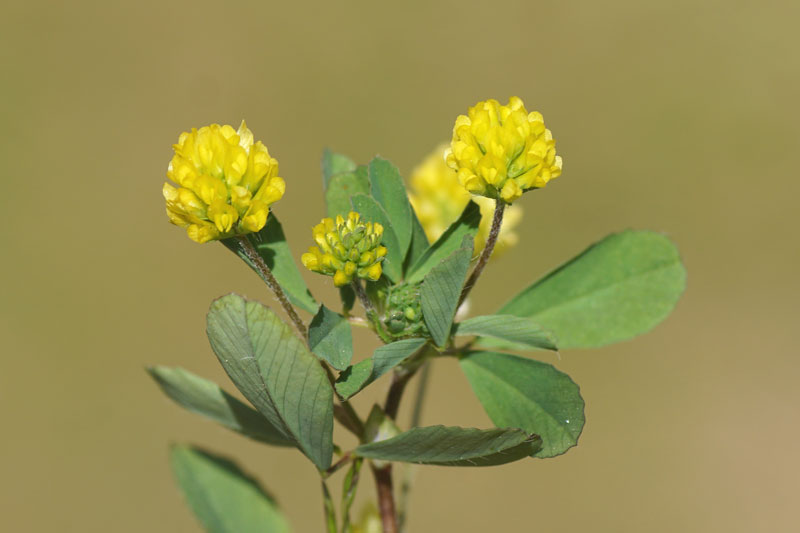
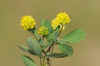 Lesser trefoil, suckling clover little hop clover, lesser hop trefoil (Trifolium
dubium)
Legume family, pea family, bean family or pulse family (Leguminosae or
Fabaceae). Lesser trefoil, suckling clover little hop clover, lesser hop trefoil (Trifolium
dubium)
Legume family, pea family, bean family or pulse family (Leguminosae or
Fabaceae).
Annual. Bloomtime V-X. Height 5-30 cm. It is a creeping plant. Grows wide. Small yellow flowers in the shape of balls. In grassland, lawn, roadsides. In 2023 I saw them for the first time in different places in the lawn. Maybe because I didn't mow much due to the drought and it has a little more chance to grow.
Photo 5-6-2023 Native to Europe. But it can now be found in many areas of the world. |
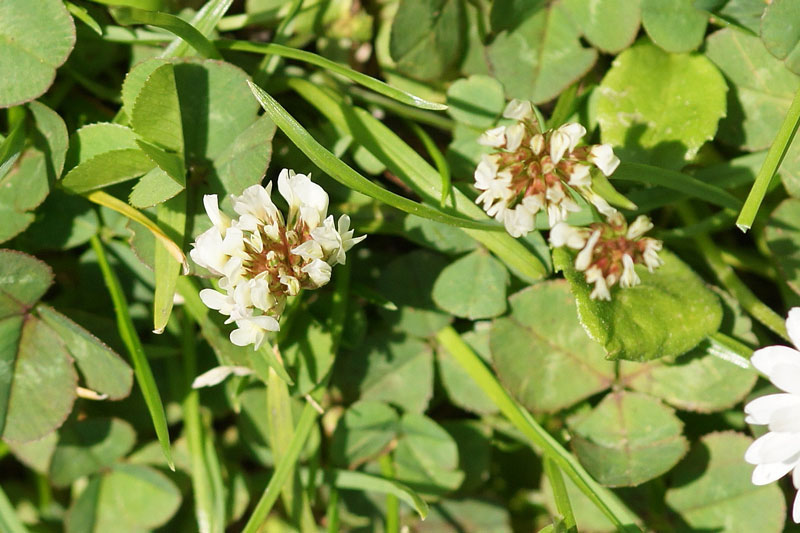
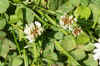 White clover (Trifolium repens).
Legume family, pea family, bean family or pulse family (Leguminosae or
Fabaceae).
White clover (Trifolium repens).
Legume family, pea family, bean family or pulse family (Leguminosae or
Fabaceae).
Perennial. Bloomtime V-X.
The leaf is divided into three parts. Sometimes four. It brings luck, it is said.
In grassland, lawns, roadsides. The clover in the picture grows with daisies in my lawn field. I do not mind. In the garden I see none. It is a creeping plant. White, fragrant flowers in rounded clusters. It can be sown as green manure
for example with flax and barley. The nitrogen fixation of white clover is high.
Photo 12-6-2011 Native to Europe. But now it grows in many regions of the world. |
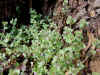
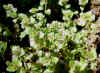 Ivy-leaved Speedwell (Veronica
hederifolia). Figwort family (Scrophulariaceae).
Ivy-leaved Speedwell (Veronica
hederifolia). Figwort family (Scrophulariaceae).
Annual. Bloomtime III, IV.
It's a weed in the most garden. But it is for a short time
The thick and hairy leaves are ivy-shaped. The plant grows along the
ground. It has lilac or blue, tiny flowers on long stalks. Native to Europe, North Africa and the temperate parts of Asia. |
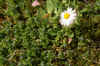
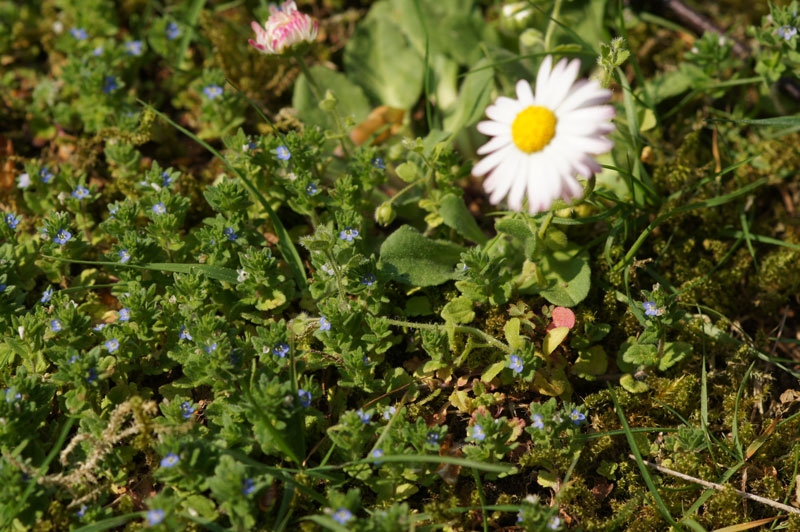
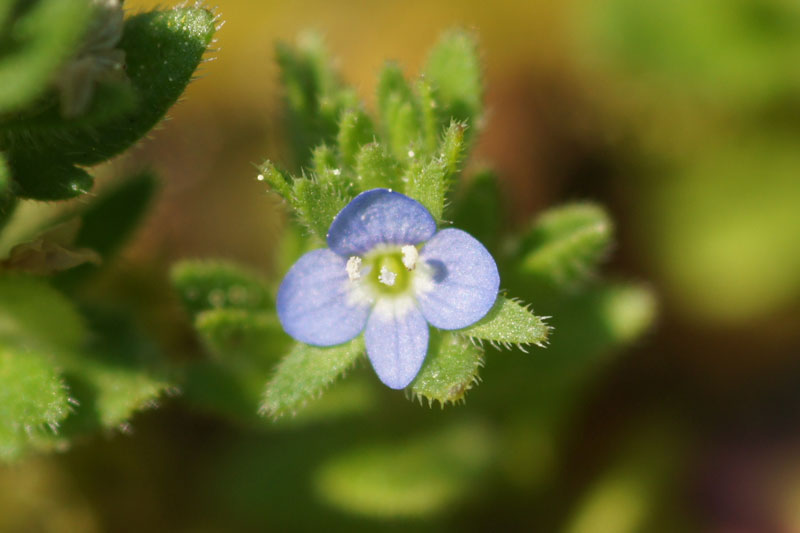
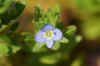 Corn Speedwell, Common Speedwell, Speedwell, Rock Speedwell, Wall Speedwell
(Veronica arvensis). Figwort family (Scrophulariaceae).
Corn Speedwell, Common Speedwell, Speedwell, Rock Speedwell, Wall Speedwell
(Veronica arvensis). Figwort family (Scrophulariaceae).
Annual. Bloomtime IV-X. The lower leaves are round (to oblong) with rounded teeth. The leaves near
the flowers are much more narrow. Small blue flowers.
It grows well in not too heavy soil. For example in my lawn. But it is not a troublesome weed. In this picture the lawn was suffering from prolonged drought.
Height 2-30 cm.
Photo 25-4-2011. Native to Africa, Asia and Europe.
German: Feld-Ehrenpreis French: Véronique
des champs
|
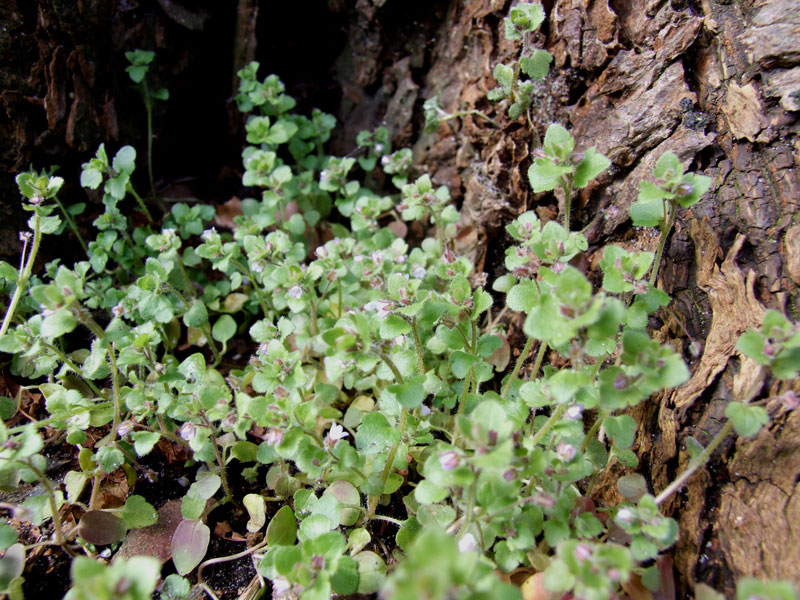
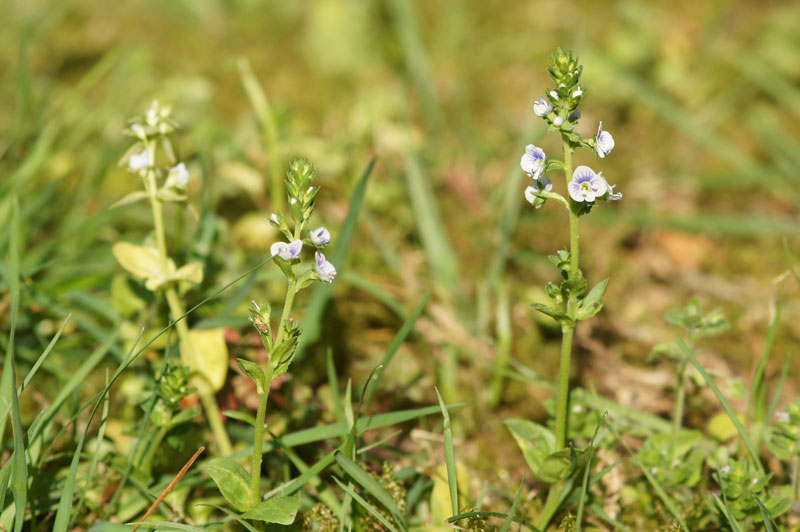
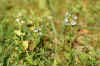 Thyme-leaved speedwell
(Veronica serpyllifolia) Figwort family (Scrophulariaceae).
Thyme-leaved speedwell
(Veronica serpyllifolia) Figwort family (Scrophulariaceae).
Perennial. Bloomtime IV-X.
The creeping and rooting. stems turn upwards. White ore pale blue flowers
(4 - 6 mm) sometimes with dark blue lines. The hairless leaves are rounded.
They prefer moist, fertile soil.
Height 5-25 cm. Photo 25-4-2011. German:
Quendel-Ehrenpreis.
French: Veronique à feuilles de serpolet.
|
 Photo Clematis "Miss
Bateman".
Photo Clematis "Miss
Bateman".
Summer flowering shrubs, bushes are on
a subpage.Subpage: Summer
flowering shrubs.
Nederlands /
Dutch
 
|