|
Subpage beetles:
Ground
beetles (Carabidae)
Leaf
beetles (Chrysomelidae)
Snout
beetles, weevils Longhorn
beetles, similar to longhorn beetles
Ladybirds,
Ladybugs, Coccinellidae
Rove
beetles (Staphylinidae)
Small
beetles
 Nederlands /
Dutch Nederlands /
Dutch
Longhornbeetles in the garden
Longhorn
beetles or long-horned
beetles (Cerambycidae).
There are more than 20000 species on the world. In the Netherlands it’s
a lot less.
Several larvae are
boring into wood. Several species can cause extensive damage to either
living trees or to wood in buildings (the old house borer Hylotrupes
bajulus ).
The Longhorn
beetles feed on flowers, pollen and leaves.
They have long antennae.
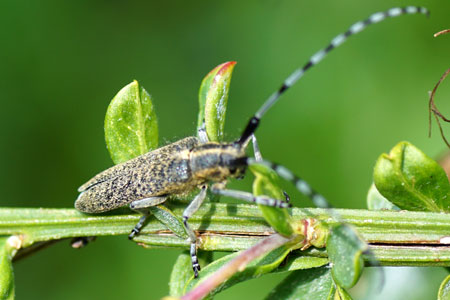 Golden-bloomed grey longhorn beetle (Agapanthia villosoviridescens). Family Longhorn
beetles or long-horned
beetles (Cerambycidae).
Not in the garden, but in the dunes about 4 km from
our house
Golden-bloomed grey longhorn beetle (Agapanthia villosoviridescens). Family Longhorn
beetles or long-horned
beetles (Cerambycidae).
Not in the garden, but in the dunes about 4 km from
our houseA dark head and thorax with three longitudinal stripes. Antennas with black and white rings. A brownish-yellow finely marbled elytra.
Beetle larvae can be found in the stems of many different types of plants. Longhorn beetles prefer thistles.
May-July. Length 10-22 mm. Europe, Caucasus, Kazakhstan, the Near East, Russia and Turkey. Photo 12-6-2020.
|
 .. ..
 . .
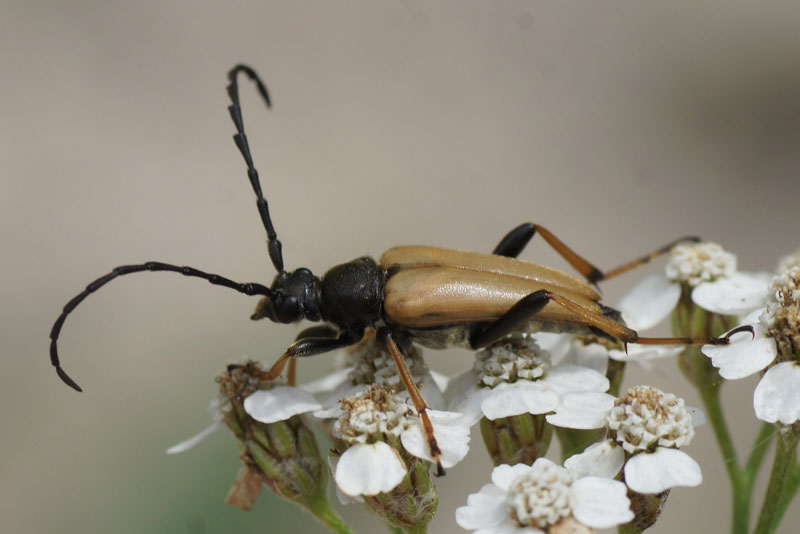
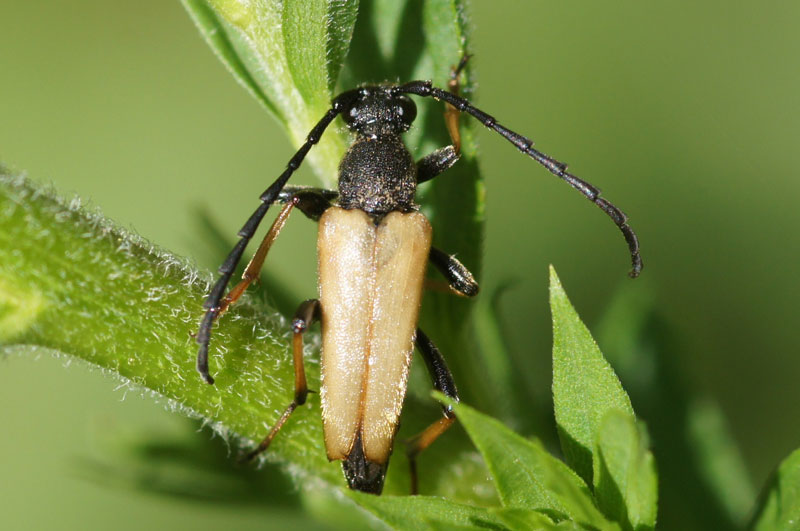
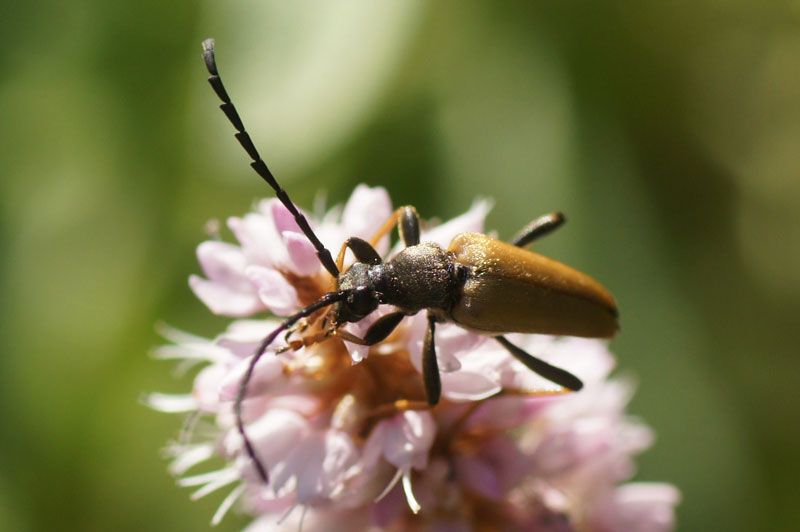
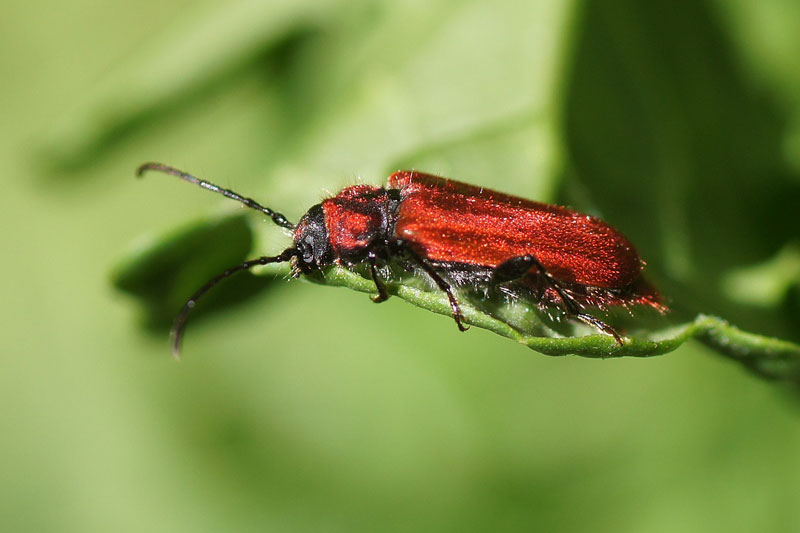
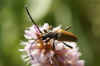 Stictoleptura rubra.
Synonym: Corymbia rubra and Leptura rubra.
Family Longhorn
beetles or long-horned
beetles (Cerambycidae).
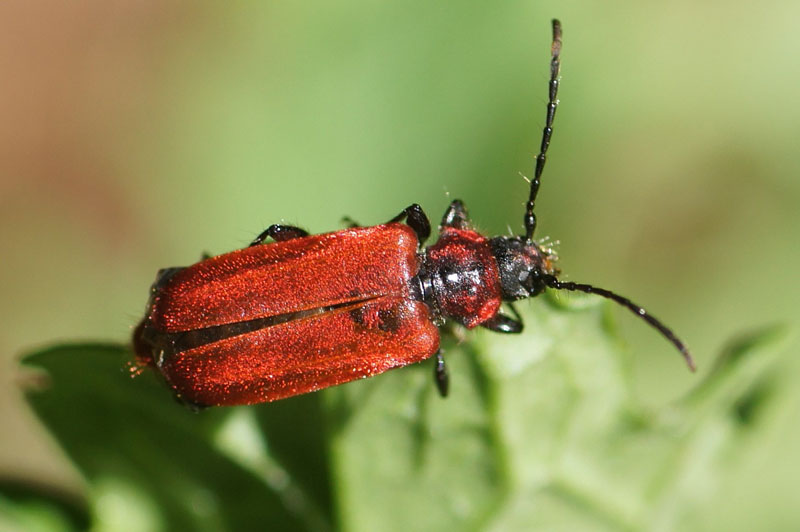
Stictoleptura rubra.
Synonym: Corymbia rubra and Leptura rubra.
Family Longhorn
beetles or long-horned
beetles (Cerambycidae).
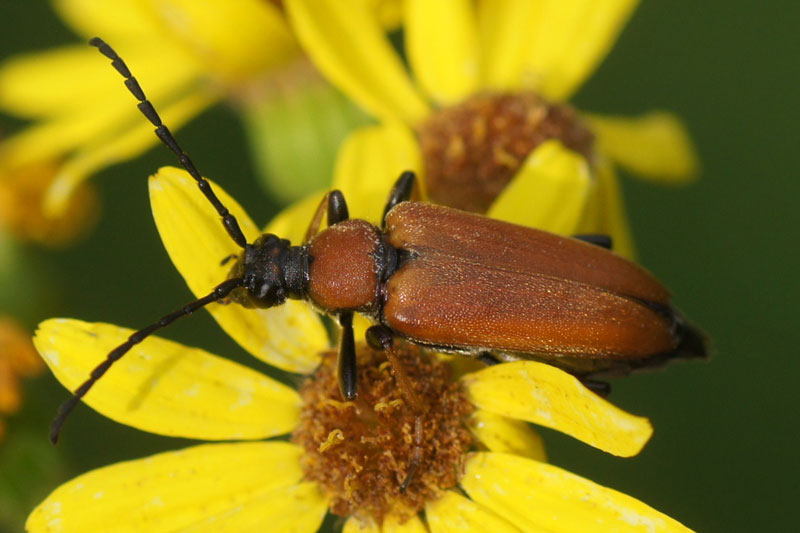
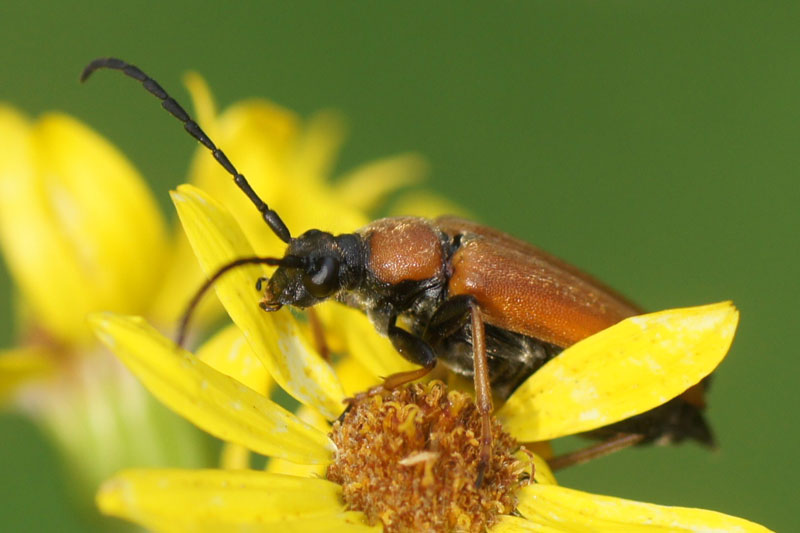
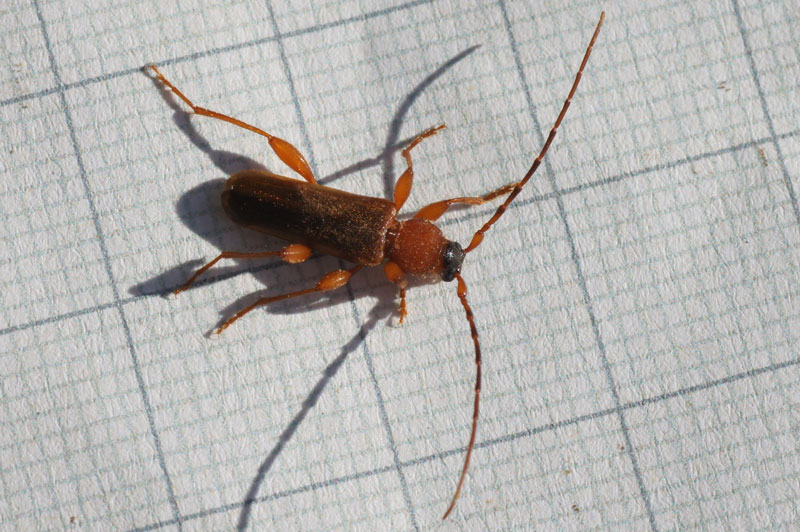
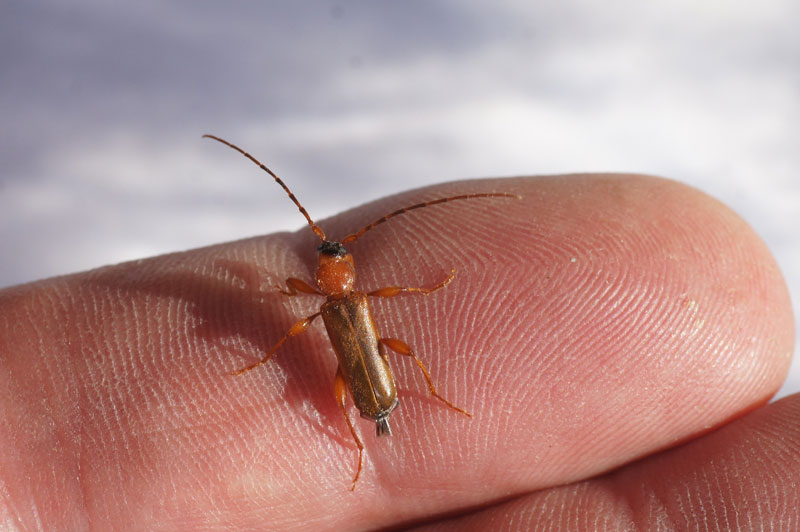
The males have yellowish-brown (sometimes very light) wing covers. The torax is black. The females (photographs below) have
red wing
covers.
The torax is red too and it is larger.
The larvae of
this beetle live for several years in
dead wood of pine and fir trees,
Length :10-20 mm. May - September.
Native in
Europe,
North Africa, and Asia. Photos 7-8-2012, 18-8-2012, 31-7-2010.
German: Rothalsbock, Gemeiner Bockkäfer. French: Lepture rouge.
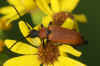
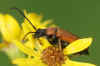 Corymbia rubra female. Photos 13-8-2012.
|
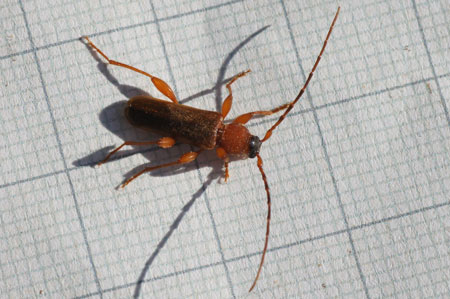 .. ..
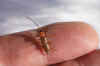 Tanbark borer, violet tanbark beetle (Phymatodes testaceus).
Family
Longhorn
beetles or long-horned
beetles (Cerambycidae).
Tanbark borer, violet tanbark beetle (Phymatodes testaceus).
Family
Longhorn
beetles or long-horned
beetles (Cerambycidae).
These longhorn beetles vary greatly in colour. Their elytra are yellow to brown, black, blue or even purple. Thick thighs but thin legs. The pronotum is dark red to yellowish or red.
The larvae live in the wood of dead trees. They are found in the bark, and under the bark in the sapwood. They are in the wood for the fireplace, but not in the wood of houses, because no bark is around it. Mostly oak, but also beech, hornbeam and fruit trees. The beetles live daytime hidden under the bark or in cracks and are active in the evenings.
June - July. Length 8-16 mm.
Europe, Asia, the Caucasus, North Africa and now in North America.
Photos 1-7-2015. German: Variable
Schönbock, Veränderlicher Scheibenbock, Rotgelber Scheibenbock. French: Phymatode variable ou Longicorne variable.
|
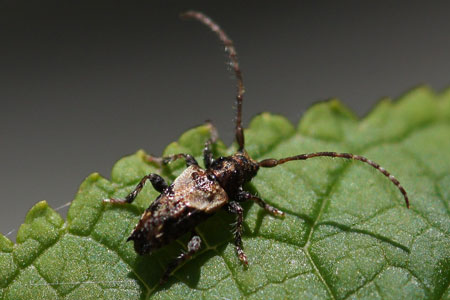 .. ..  . .
 Lesser thorn-tipped longhorn
beetle (Pogonocherus hispidus). Family
Longhorn
beetles or long-horned
beetles (Cerambycidae).
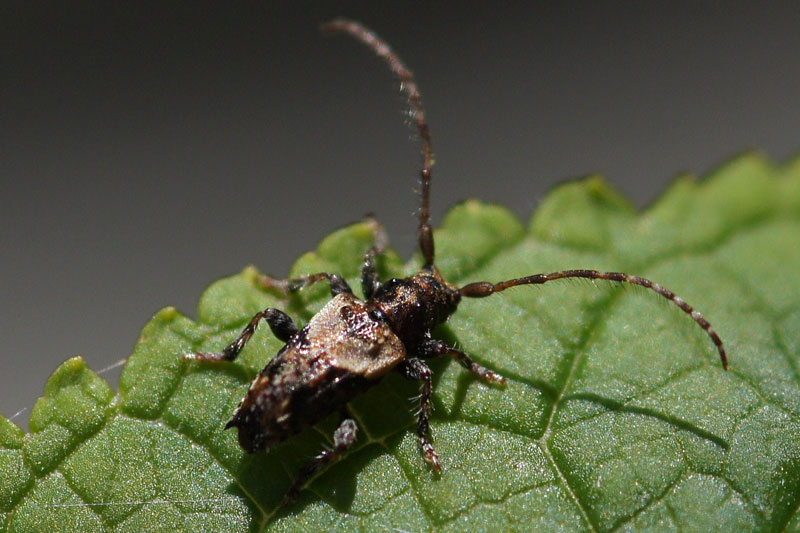
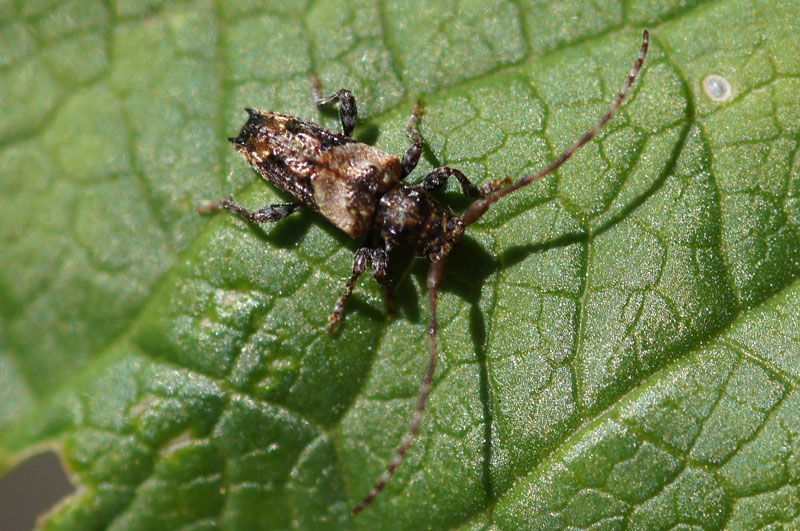
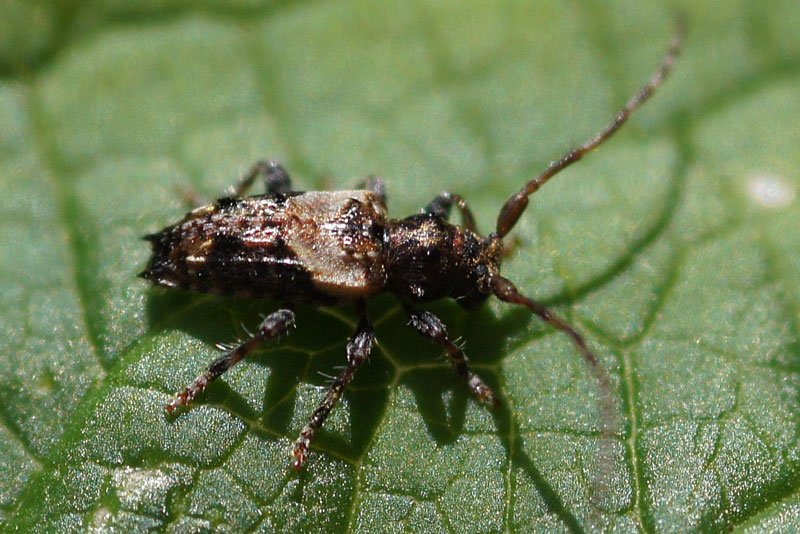
Lesser thorn-tipped longhorn
beetle (Pogonocherus hispidus). Family
Longhorn
beetles or long-horned
beetles (Cerambycidae).
This is a small beetle. At the tip of each elytron it has a thorn like tooth. The light band on
the elytrons is also striking. On the pronotum has two shiny bumps. It looks like the P. hispidulus
(rare in the Netherlands). The other family members don't have the thorn like tooth at the end of the
elytron.
It lives on various deciduous trees.
Throughout the year. Especially in May and late August.
Length 4 to 6.5 mm The beetle in the picture is about 4 mm.
Europe, North Africa.
Photos 20-6-2011 German: Dornige Wimperbock.
|
 .. ..  . .
 . .
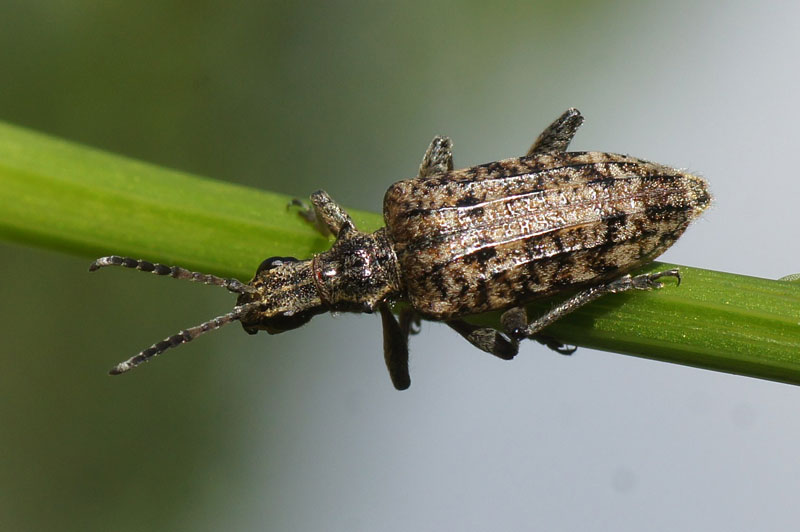
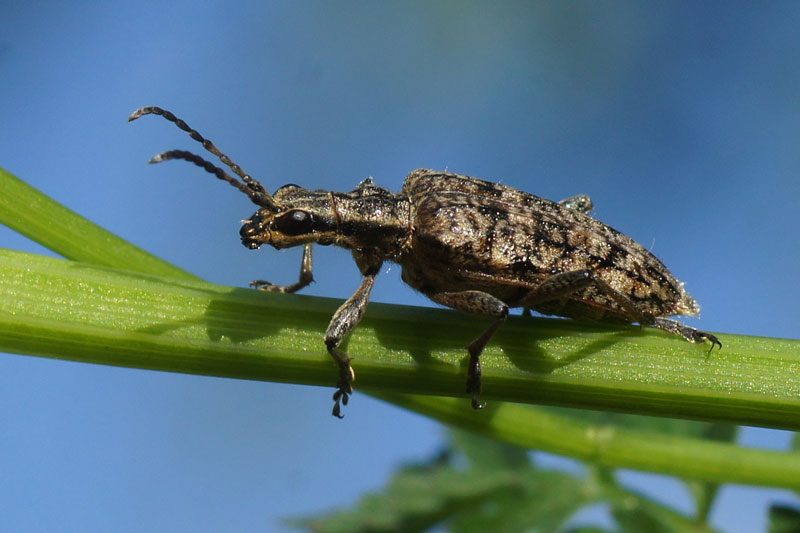
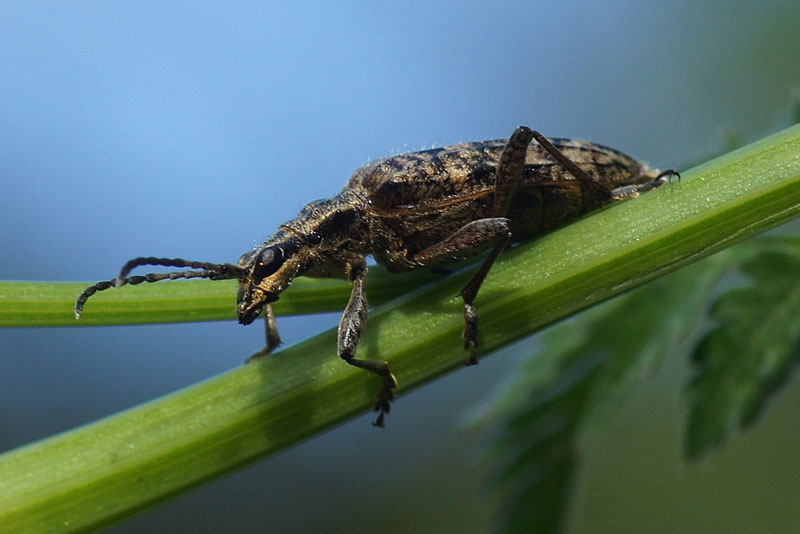
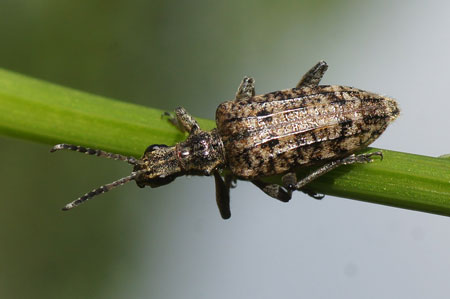
 Ribbed Pine Borer (Rhagium inquisitor). Family Longhorn
beetles or long-horned
beetles (Cerambycidae).
Ribbed Pine Borer (Rhagium inquisitor). Family Longhorn
beetles or long-horned
beetles (Cerambycidae).
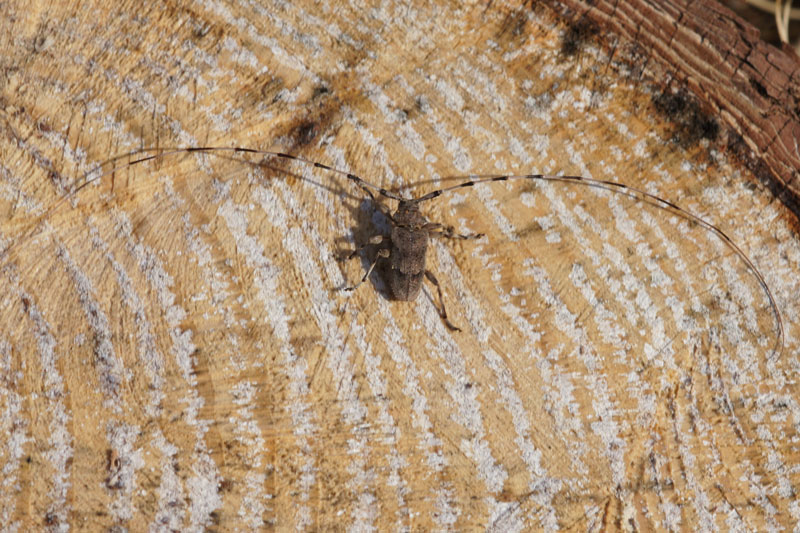
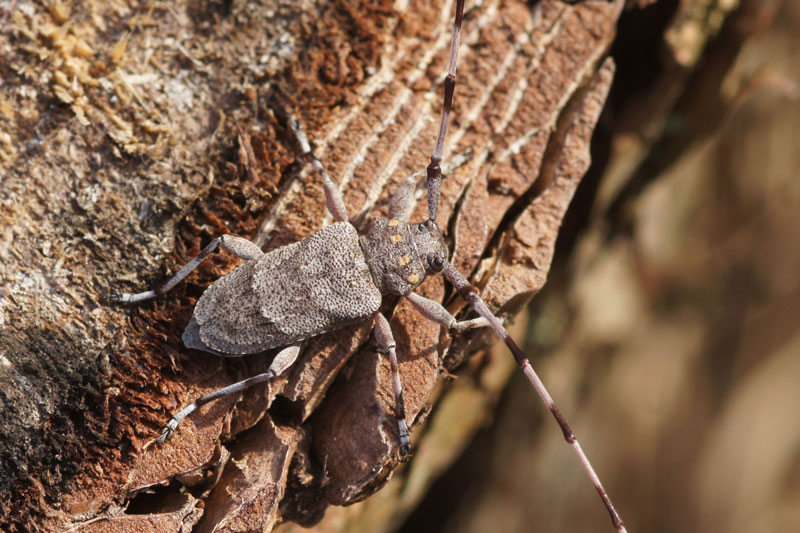
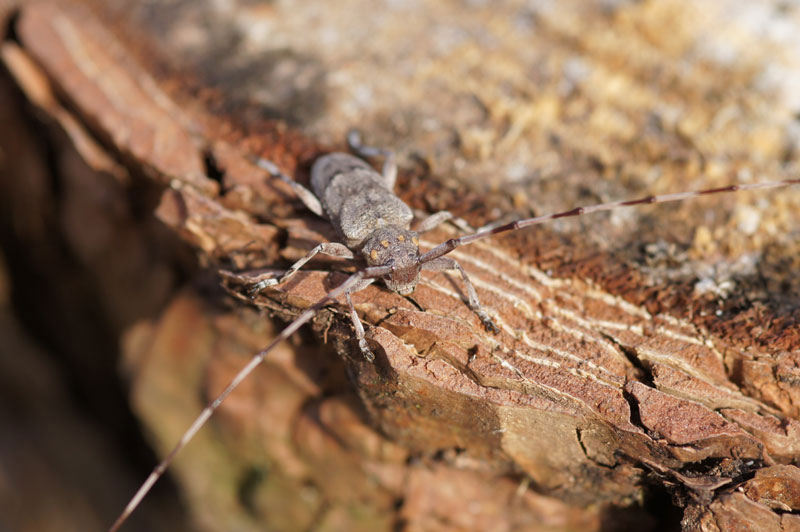
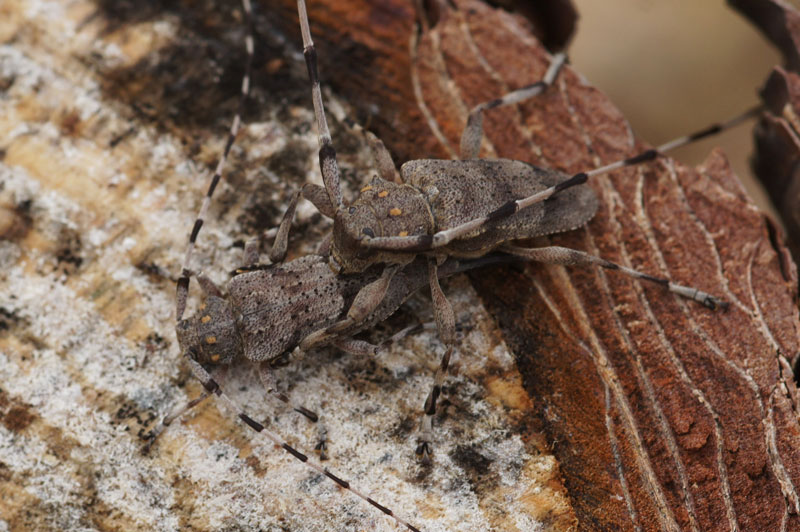
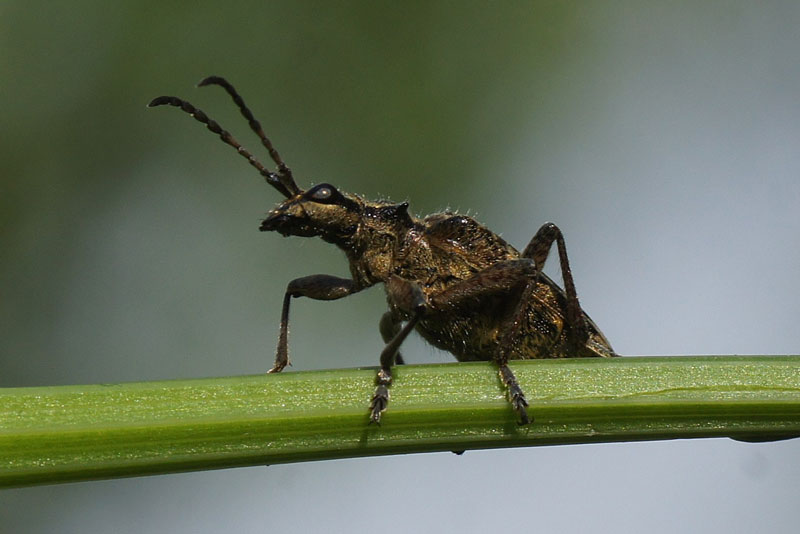
The colour of the elytra of this beetle is black to dark gray. On the
elytra it has yellow-brown hairs. On the places without ore with less
hairs you see yellowish to reddish brown cross bands and spots. The pronotum
has a spine on each side. The antennae are short for a longhorn beetle.
On sandy soils, in the dunes. The larvae develop under the bark of conifers, but also of birch, alder, beech and oak.
Food beetle: Parts of flowers and tree resin.
April - August. Length 10 - 21 mm. Photos 22-5-2013.
Europe, Siberia, the Caucasian mountains, the northern Asia. German:
Schrotbock.
|
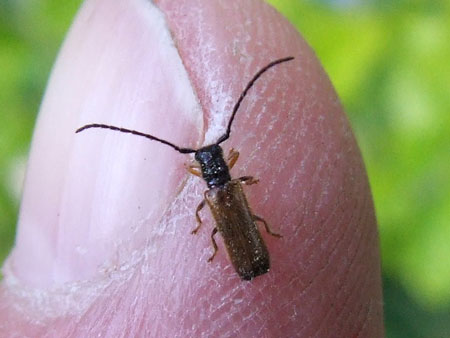 .. ..
 Tetrops praeustus, Tetrops praeusta. Family
Longhorn
beetles or long-horned
beetles (Cerambycidae).
Tetrops praeustus, Tetrops praeusta. Family
Longhorn
beetles or long-horned
beetles (Cerambycidae).
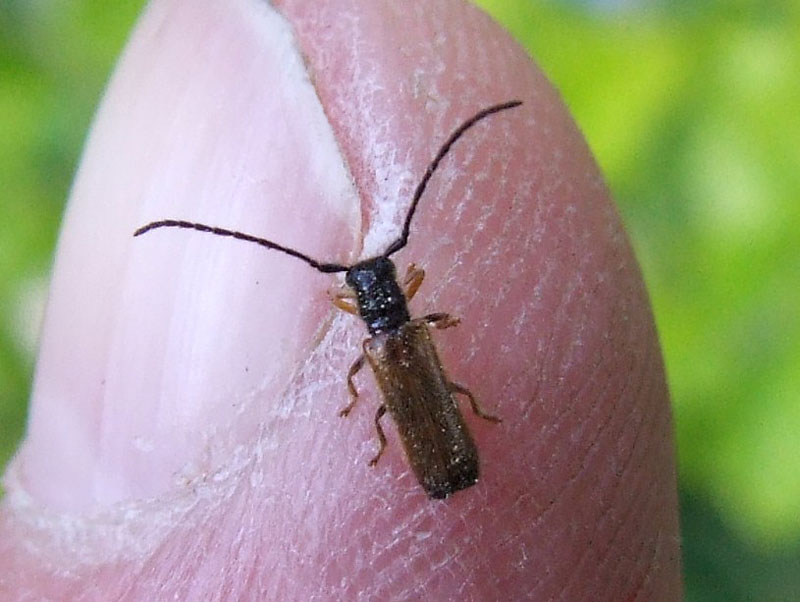
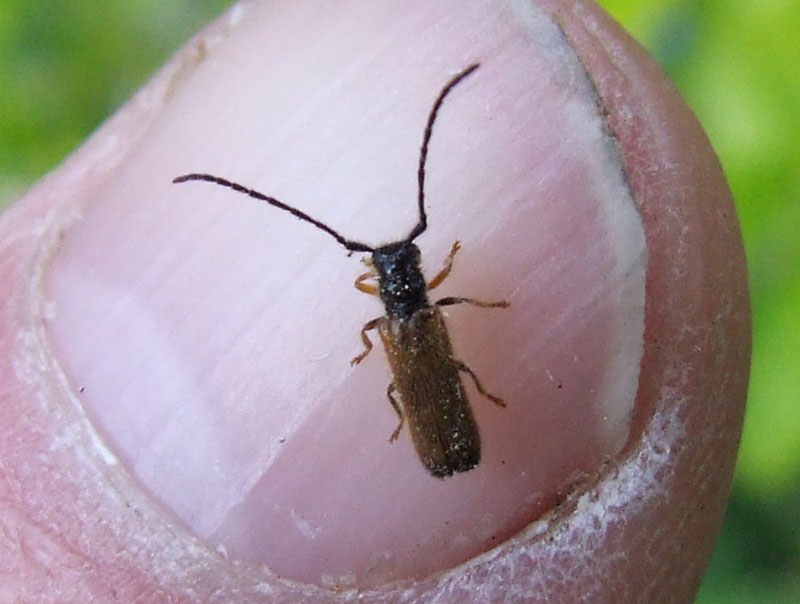
A tiny beetle. It is common in the Netherlands, but of course you are it easily overlooked. It has a black neck shield with a yellow brown carapace.
The end of the carapace is dark. The front legs are paler than the other
legs. You can just see that it's a hairy beetle. (short hair)
It is mainly found on Prunus species, but also on hawthorn. The larvae live under bark of small
dead branches, of apple, rowan, hawthorn etc. The development takes 1 to 2 years.
Tetrops starkii is very similar. But this beetle is only found in southern
Limburg. And
it is very rare.
May - June.
Length 3 - 6 mm.
Europe, North Africa. Recently introduced in eastern North America.
Photos 3-5-2011 German: Starks Pflaumenbock.
|
On the page "Insects
in France"
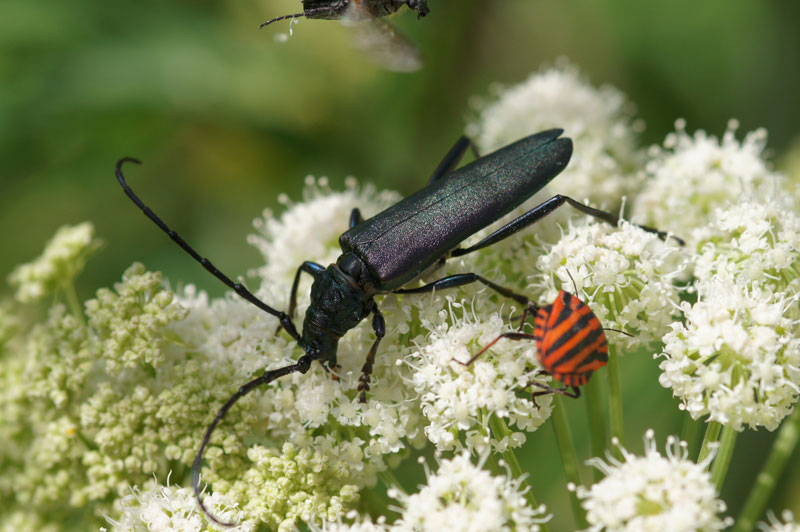
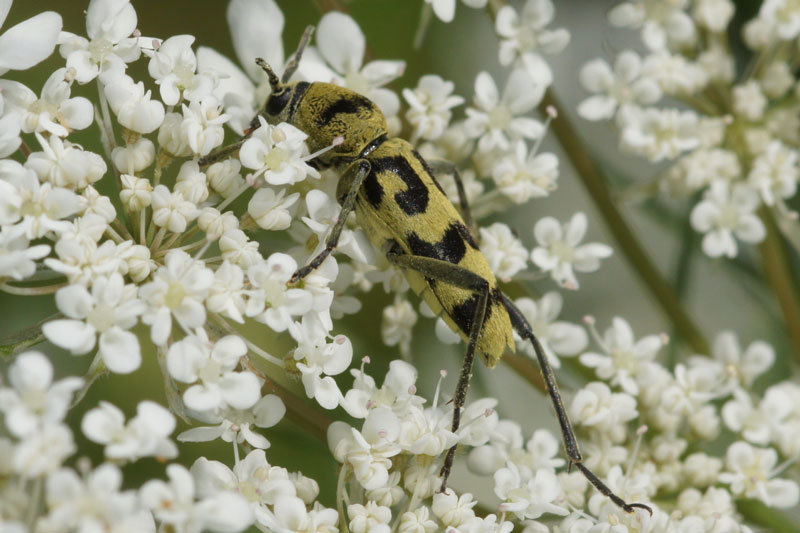
| 1. Musk beetle (Aromia moschata). 2. Chlorophorus trifasciatus. 3. Chlorophorus varius. |
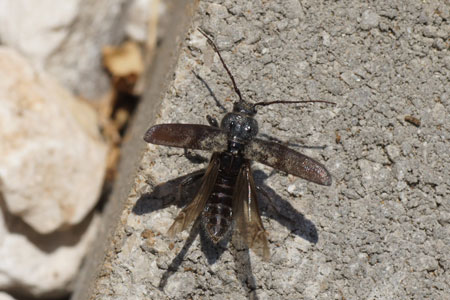
Some longhorn beetles I photographed in 2015 in Croatia..
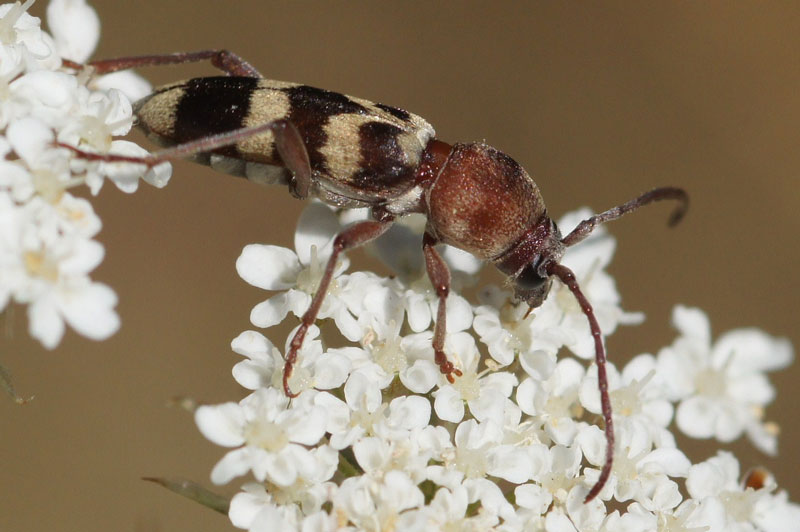
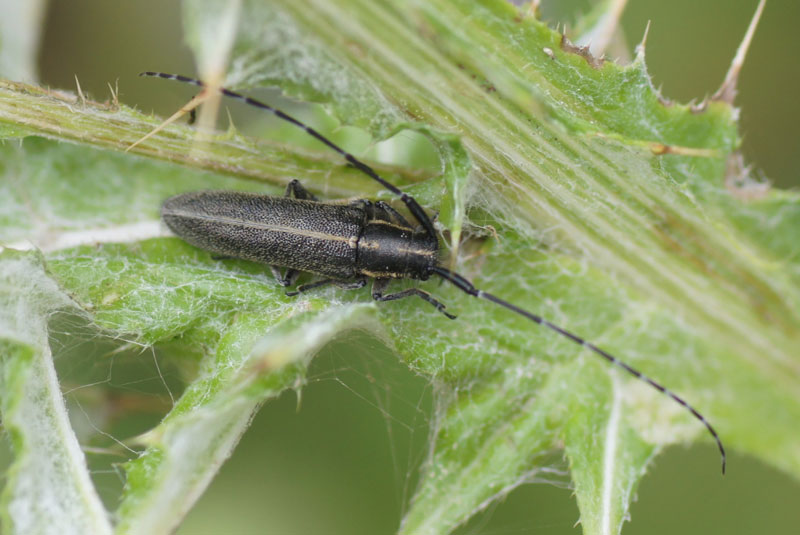
| 1. Agapanthia cardui or Agapanthia pannonica 2.
Agapanthia cynarae 3. Clytus rhamni probably |
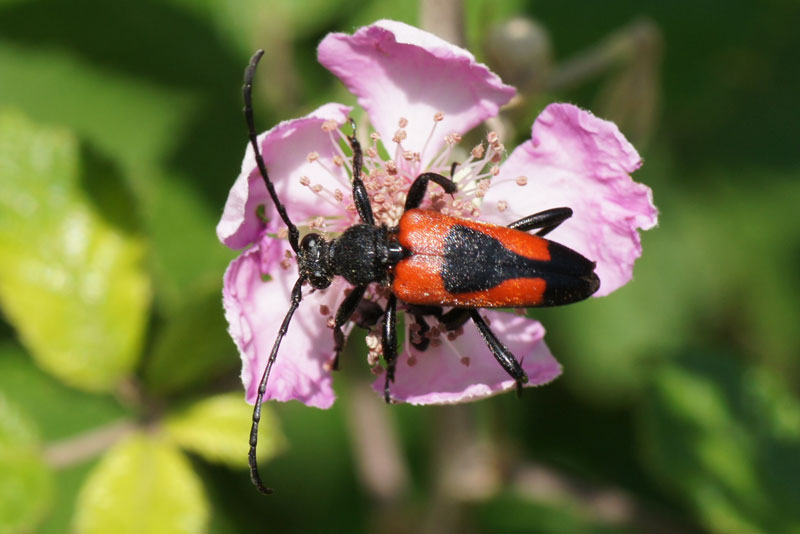
| 4. Stictoleptura cordigera Synonym:
Brachyleptura cordigera, Corymbia cordigera |
 .. ..
 Old house borer
(Hylotrupes bajulus). Family
Longhorn
beetles or long-horned
beetles (Cerambycidae). Old house borer
(Hylotrupes bajulus). Family
Longhorn
beetles or long-horned
beetles (Cerambycidae).
Photographed in Croatia. This is the longhorn beetle,
which has caused such a bad name to the longhorn beetles.
The larva is also living in wood of houses and can cause damage. (Especially to roofs) It has a preference for sandy soils and coniferous trees.
A black beetle with a spotty, white-grey hairs on the shields. The pronotum also with
white-grey hairs and with some bald, shiny black spots.
Length about 7-21 mm. June August.
Originating in Europe, but having been spread in timber and wood products.
Now it almost cosmopolitan and has been found in Southern Africa, Asia, the Americas,
Australia. Photos 6-6-2015.
|
Beetles similar to Longhorn beetles
 .. ..
 . .
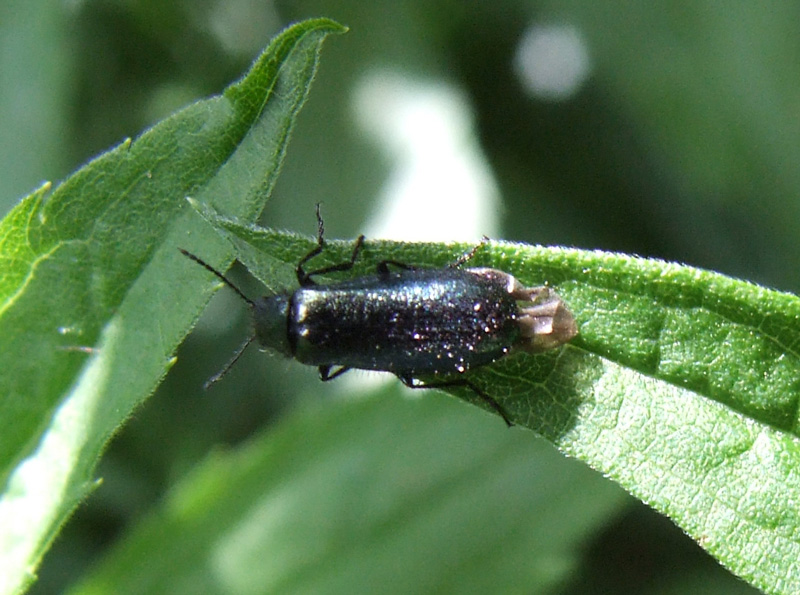
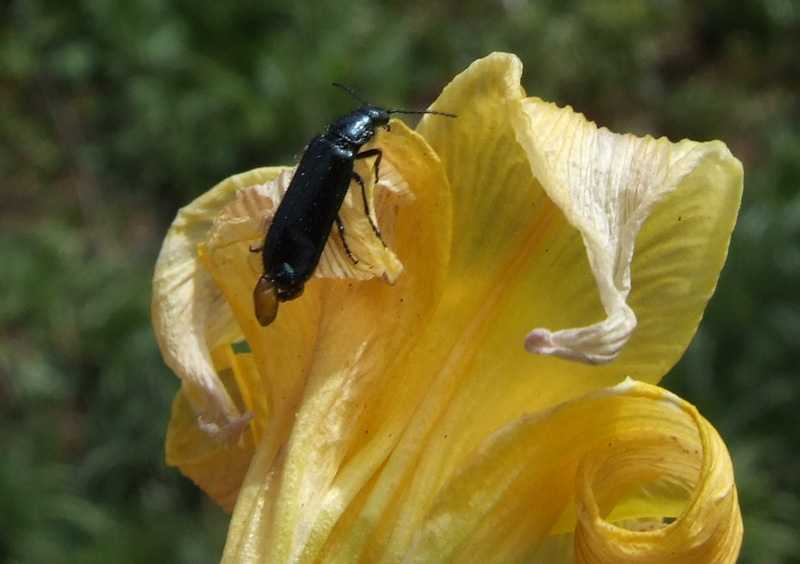
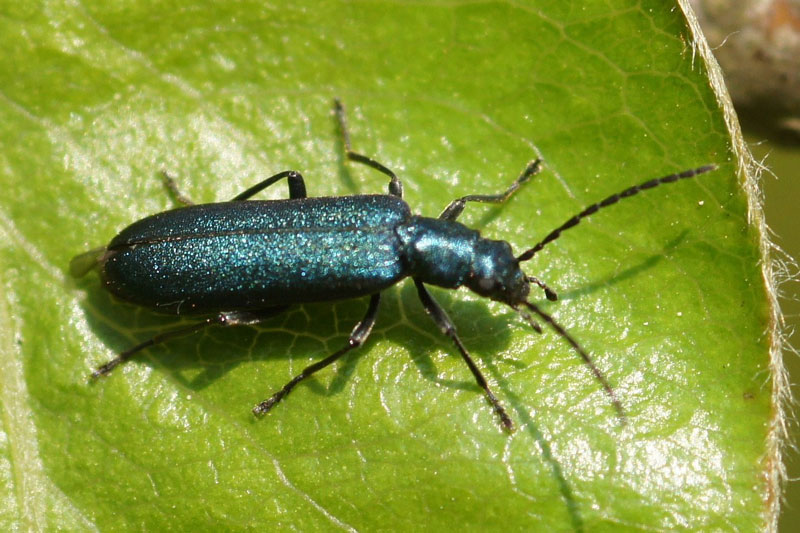
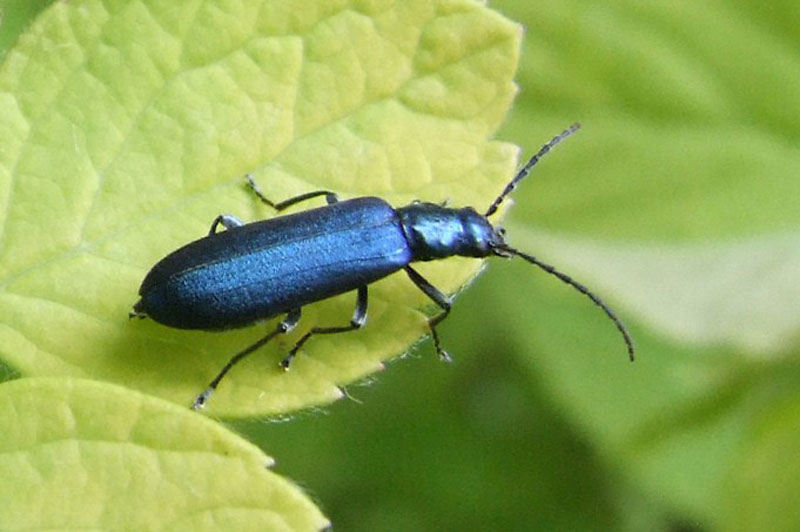
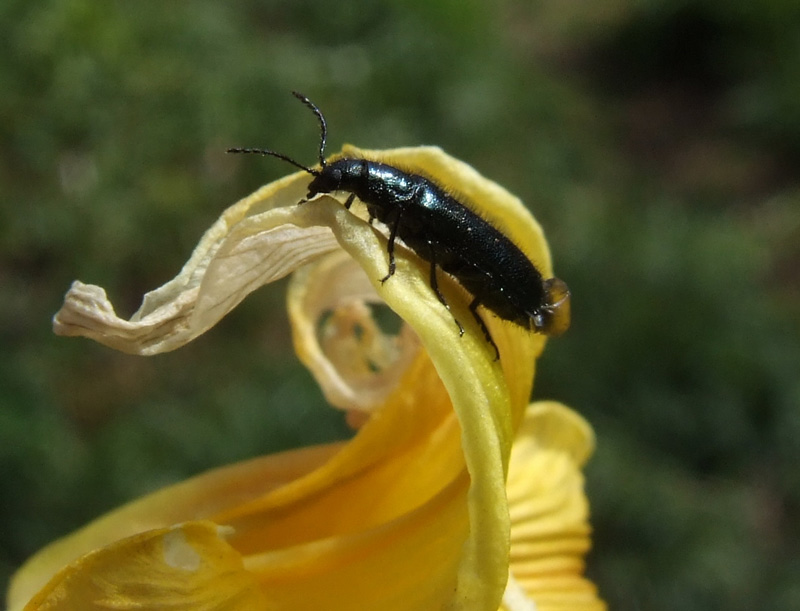
 Dasytes caeruleus Synonym Dasytes cyaneus.
Family Dasytidae, Melyridae.
Dasytes caeruleus Synonym Dasytes cyaneus.
Family Dasytidae, Melyridae.
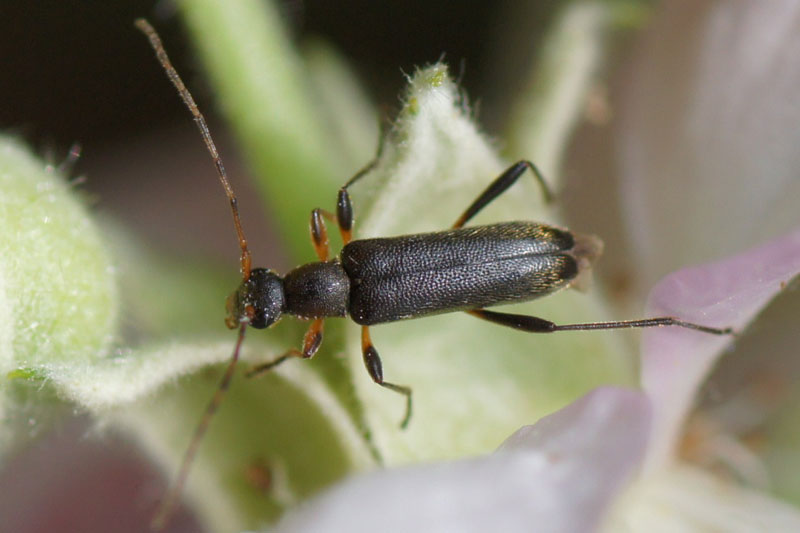
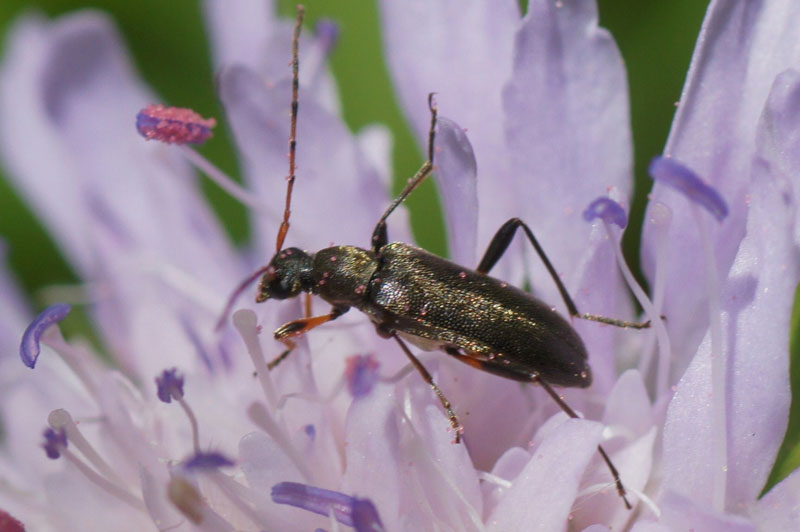
It looks like a small longhorn beetle and has a dark blue metallic sheen. Legs and antennae are black.
They have very fine and short hair.
The antennae of the females are shorter than the antennae of the males
Here
you see the Dasytes on a Trout
Lily (Erythronium dens-canis). The photo was taken in April. May to August. Length 5 mm.
The larvae are white, six-legged and hairy. They live in rotten
wood and are predatory. The beetle emerges in spring.
Europe (except north), North Africa. German: Blaue Wollhaarkäfer.
|
 .. ..
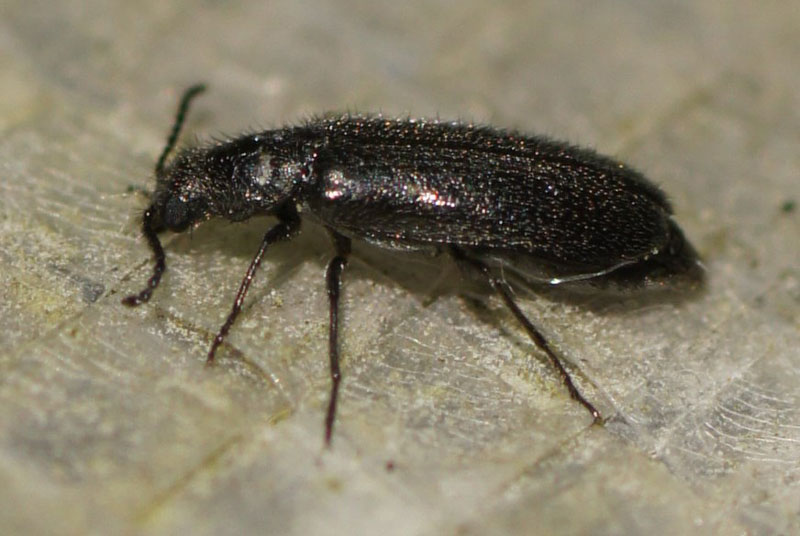
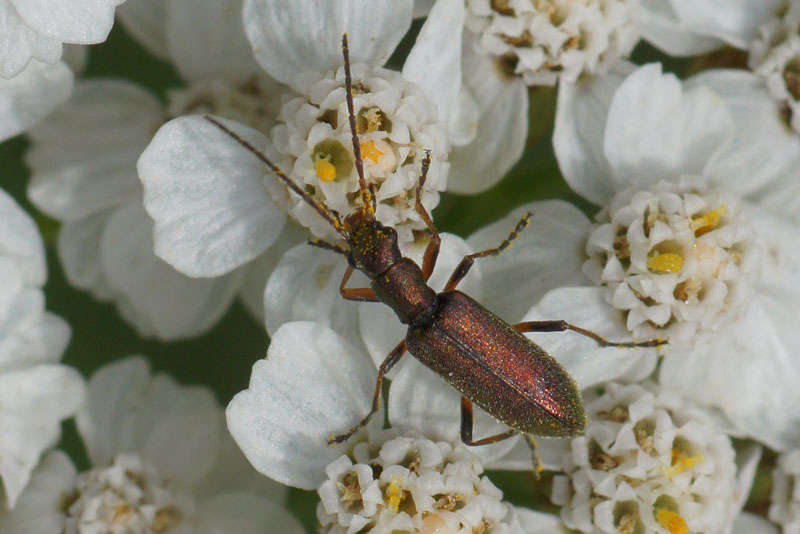
 Dasytes aerosus.
Family Dasytidae, Melyridae.
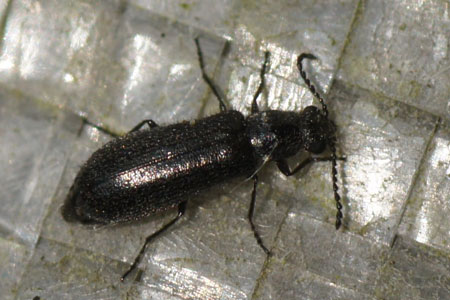
Dasytes aerosus.
Family Dasytidae, Melyridae.
Not as shiny blue as a Dasytes cyaneus. I'm
not quite sure for it also looks like a Dasytes niger.
Length about 5 mm. Photos 6-6-2013.
|
 .. ..
 . .
 . .
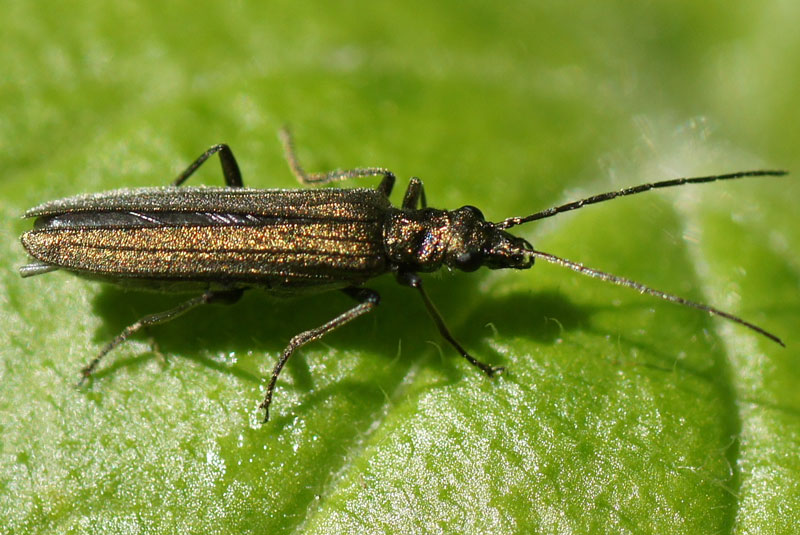
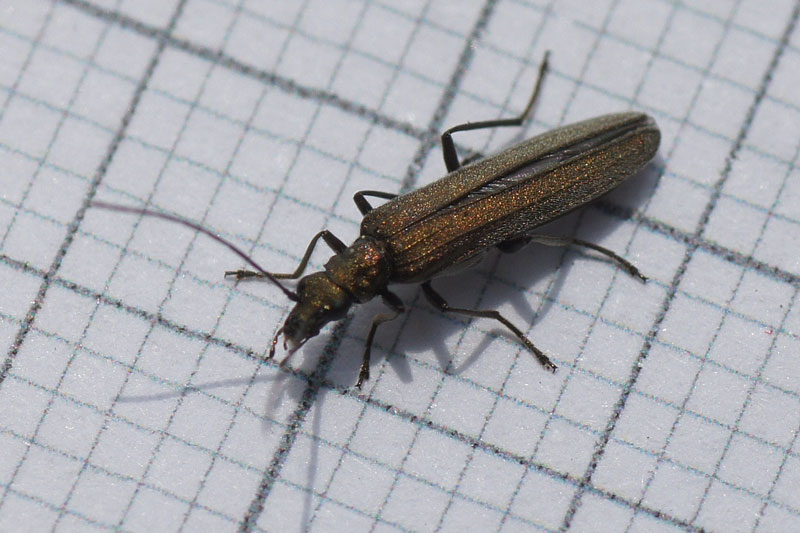
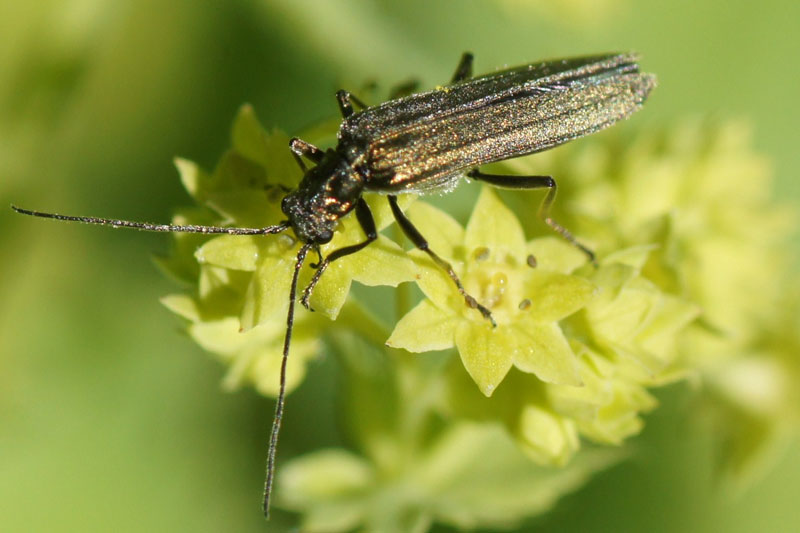
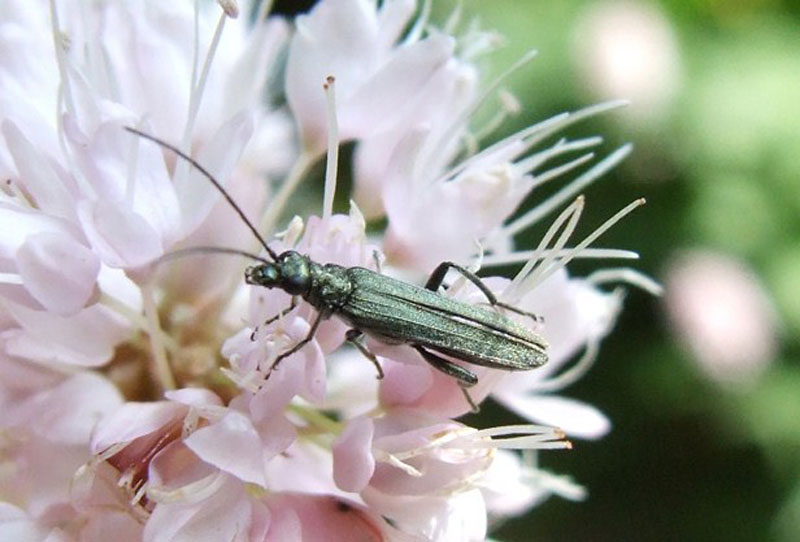
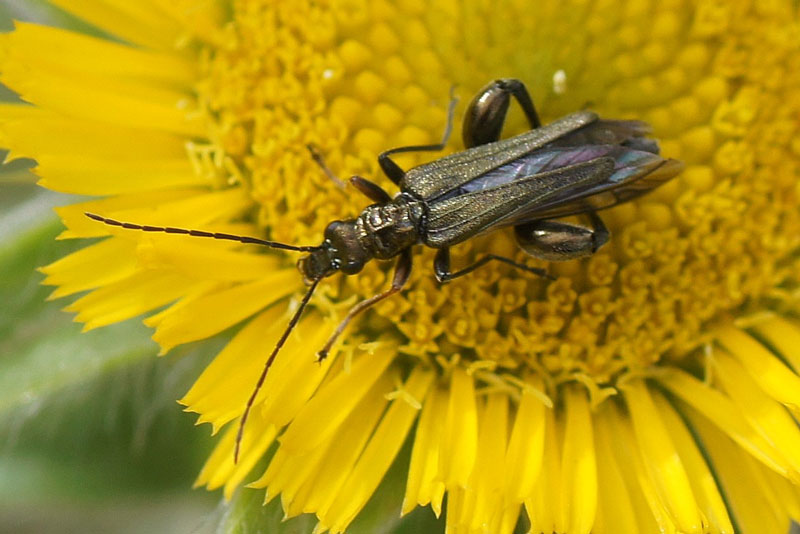
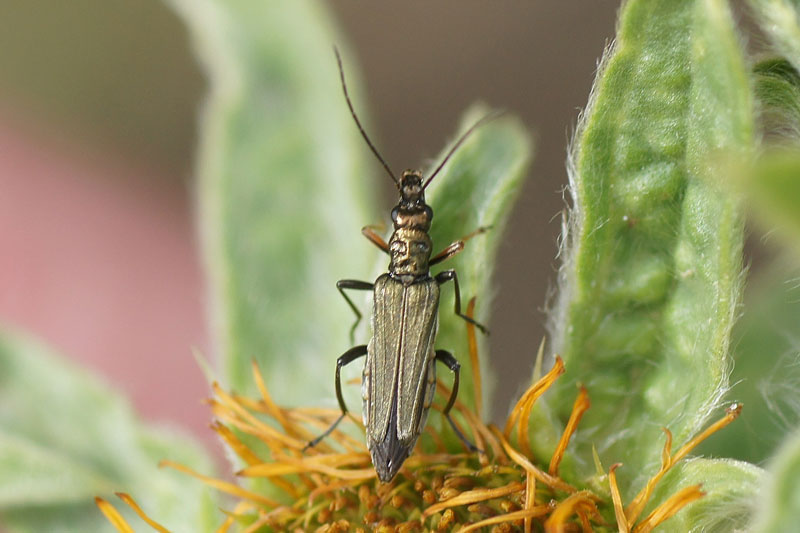
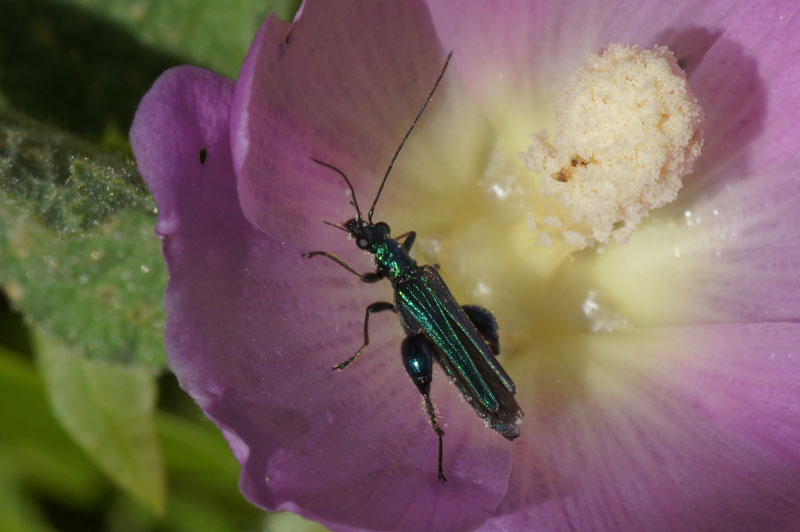
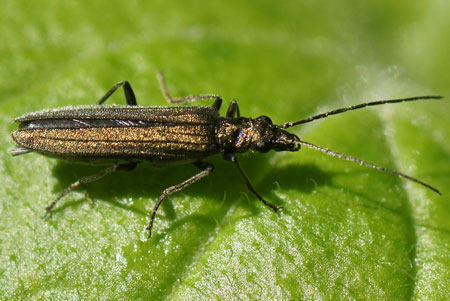
 Oedemera lurida or Oedemera virescens. Family Oedemeridae.
They are metallic-green, blue. Many males of this
family have very thick thighs.
They are found on flowers, where they are feeding on pollen. The larvae develop in plant stems.
Length 5 - 9 mm. Europe, North Africa, Asia. Photos 6-4-2008 and June 2012.
German: Grünliche Scheinbockkäfer.
|
 .. ..
 . .
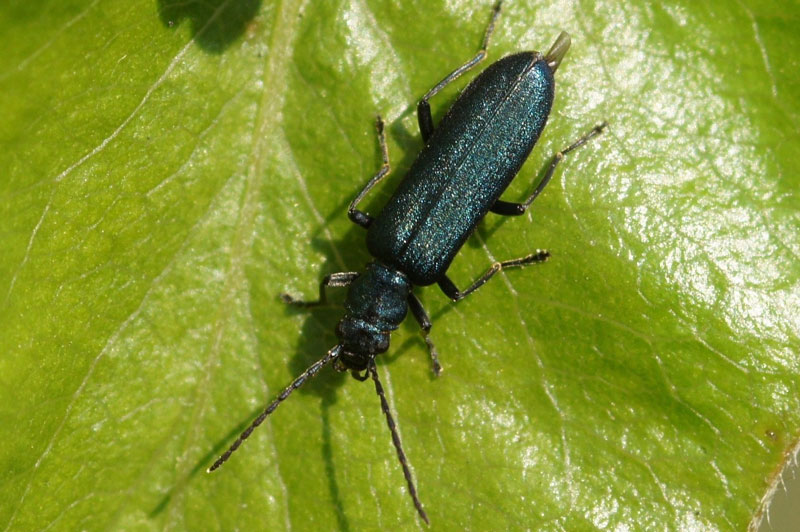
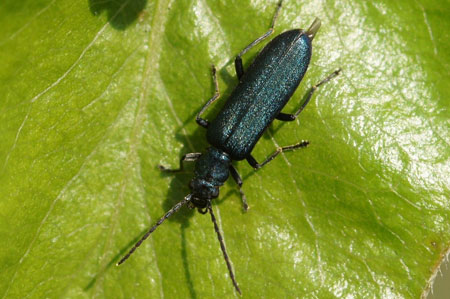
 Ischnomera cyanea. Family Oedemeridae.
An other species is Ischnodema caerulea. Synonyms are
Asclera cyanea, Asclera coerulescens and Asclera coerulea.
A beautiful coloured blue beetle. Photos 20-4-2011, 29-4-2009. German: Blaugrüner
Scheinbock.
|
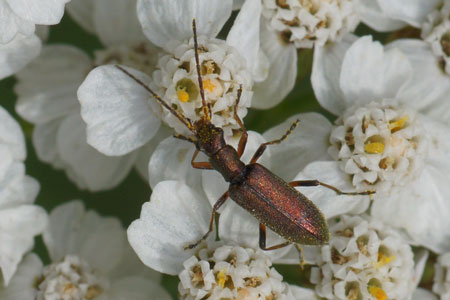 Chrysanthia geniculata synonym Chrysanthia nigricornis. Family
Oedemeridae. Not in the garden, but in the dunes about 4 km from
our house.
Chrysanthia geniculata synonym Chrysanthia nigricornis. Family
Oedemeridae. Not in the garden, but in the dunes about 4 km from
our house.
Metallic blue, green or copper coloured beetle. The legs are orange with dark. The larvae are found in decaying spruce, on which they feed. The beetles feed on pollen.
Length 5 - 8 mm. Europe. Photo 7-8-2012.
|
Some Oedemeridae I photographed in 2015 in Croatia..
| 1. Oedemera flavipes male
2. Oedemera flavipes female 3.
Oedemera nobilis male |
I want to thank everyone, who has helped me (waarneming.nl)
to identify. In particular, Jan Cuppen and Theodoor Heijerman.
(translated the Dutch longhorn beetles) by Theo Zeegers and Theodoor
Heijerman. Now on internet:
Longhorn
beetles determination based on this book "De Nederlandse boktorren".
It is in Dutch but there are also many photos
of the Dutch species.
Nederlands /
Dutch
 
Subpage beetles:
Ground
beetles (Carabidae)
Leaf
beetles (Chrysomelidae)
Snout
beetles, weevils Longhorn
beetles, similar to longhorn beetles
Ladybirds,
Ladybugs, Coccinellidae
Rove
beetles (Staphylinidae)
Small
beetles
Subpage France: Insects
France
|