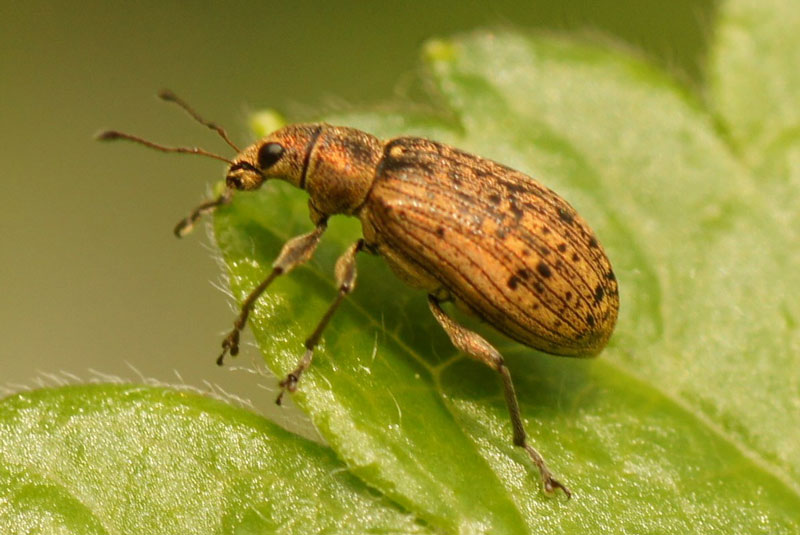
|
Subpage beetles:
Ground
beetles (Carabidae)
Leaf
beetles (Chrysomelidae)
Snout
beetles, weevils Longhorn
beetles, similar to longhorn beetles
Ladybirds,
Ladybugs, Coccinellidae
Rove
beetles (Staphylinidae)
Small
beetles
 Nederlands /
Dutch Nederlands /
Dutch
Snout beetles, weevils (Curculionoidea) in the garden
Snout beetles, weevils
(Curculionoidea) have the name from the extended snout. The antennae are often bent. They are
herbivores and can be harmful. The main family is the family Curculionidae.
Other families are: Apionidae, Attelabidae, Urodontidae, Anthribidae and
Nemonychidae.
Family Curculionidae.
Subfamily
Ceutorhynchinae.
 .. ..
 . .
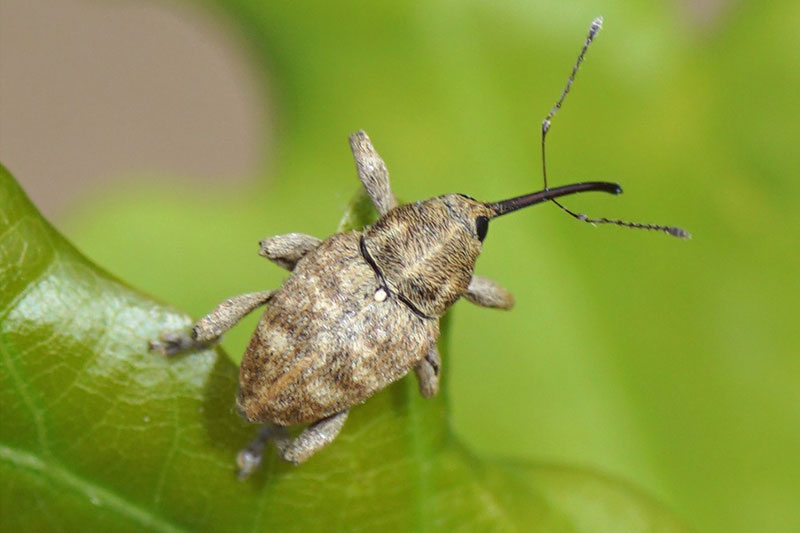
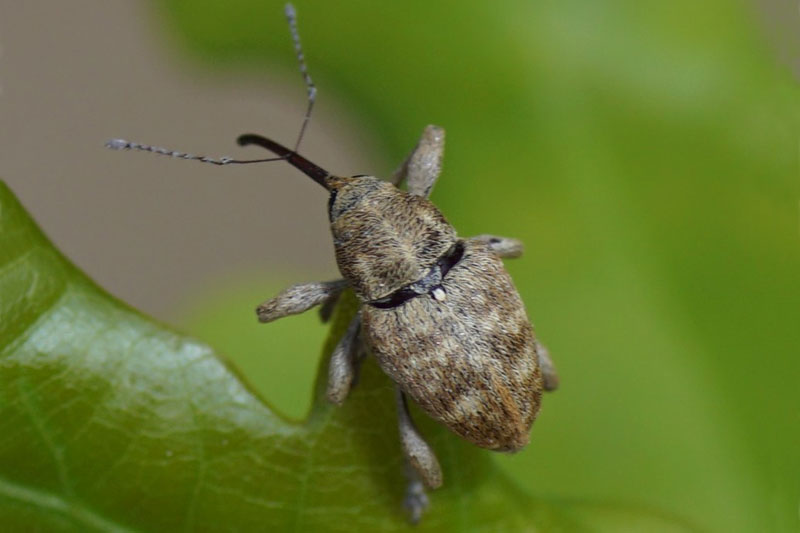
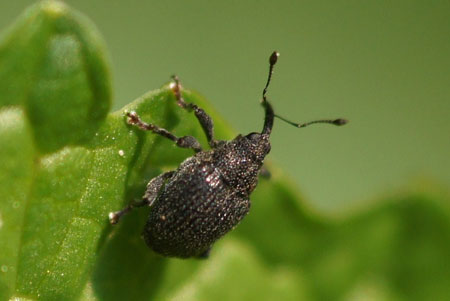
 Ceutorhynchus alliariae. Tribe Ceutorhynchini. Subfamily
Ceutorhynchinae.
Family Curculionidae.
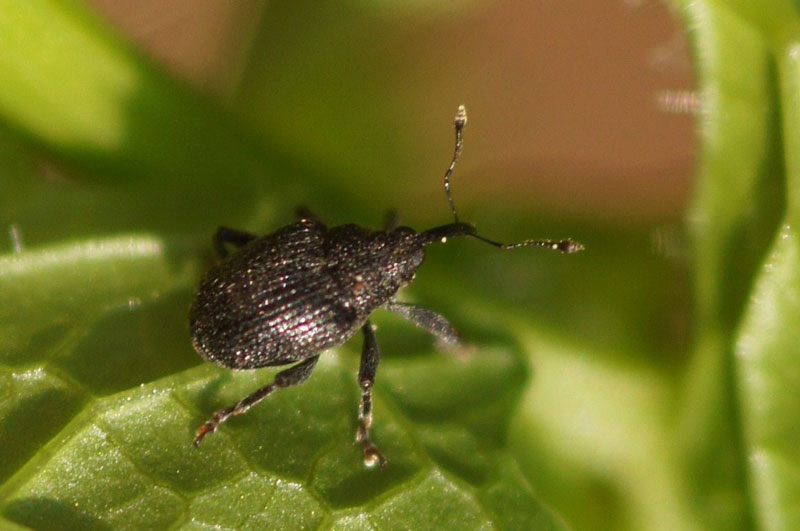
Ceutorhynchus alliariae. Tribe Ceutorhynchini. Subfamily
Ceutorhynchinae.
Family Curculionidae.
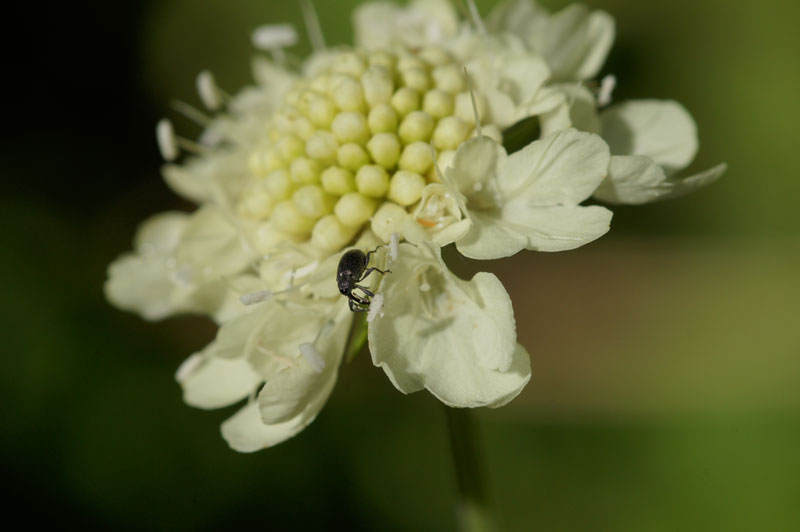
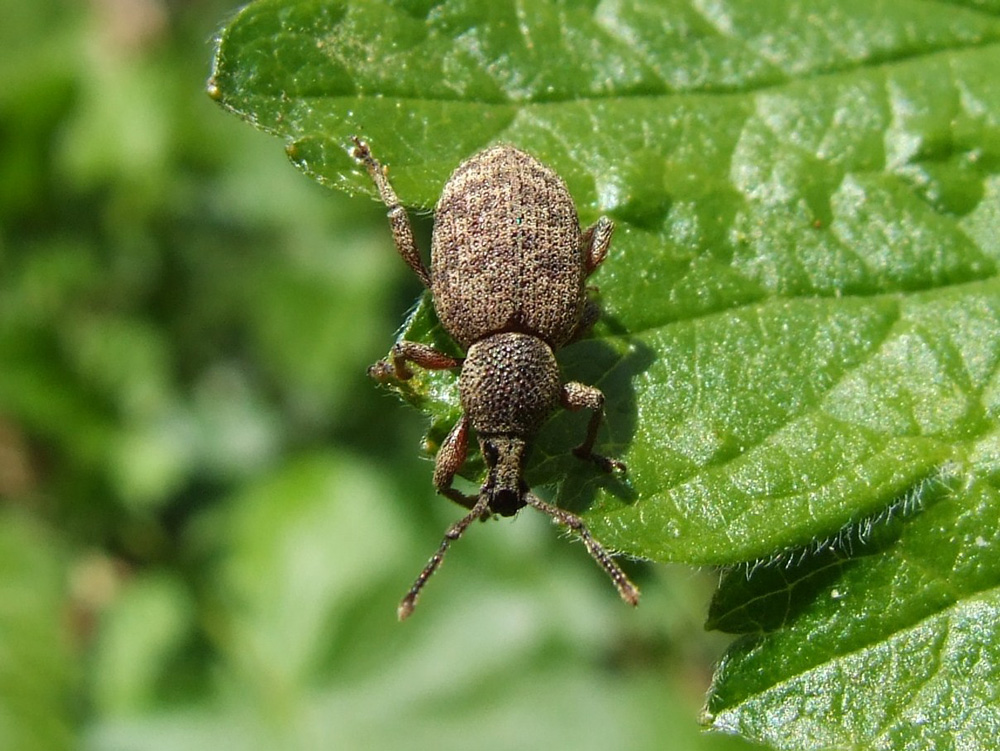
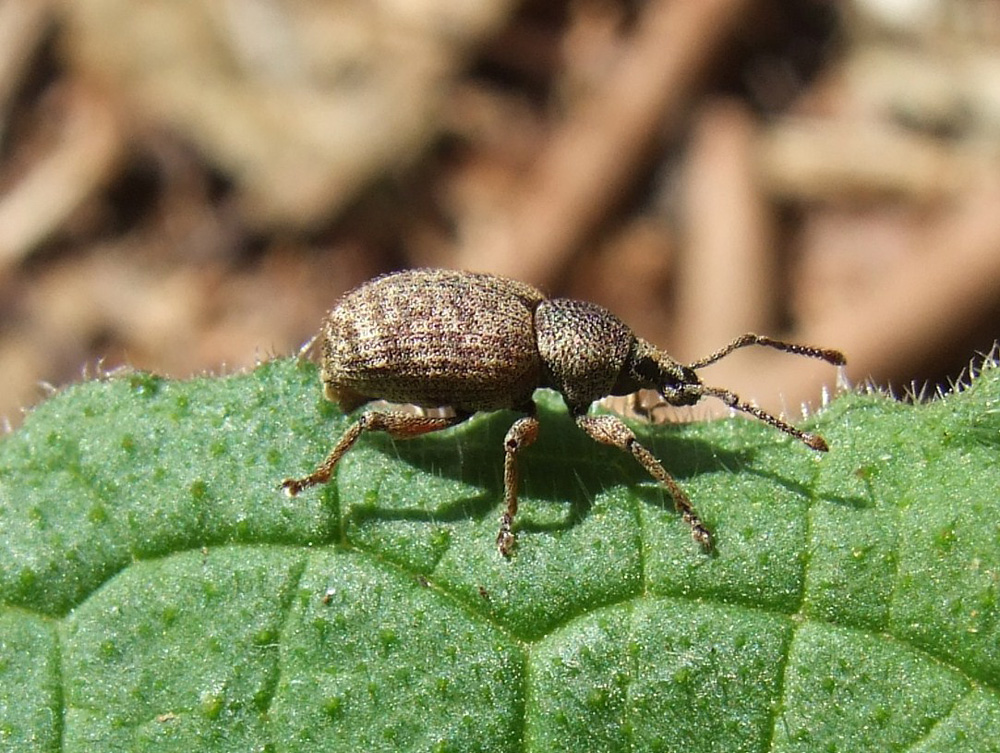
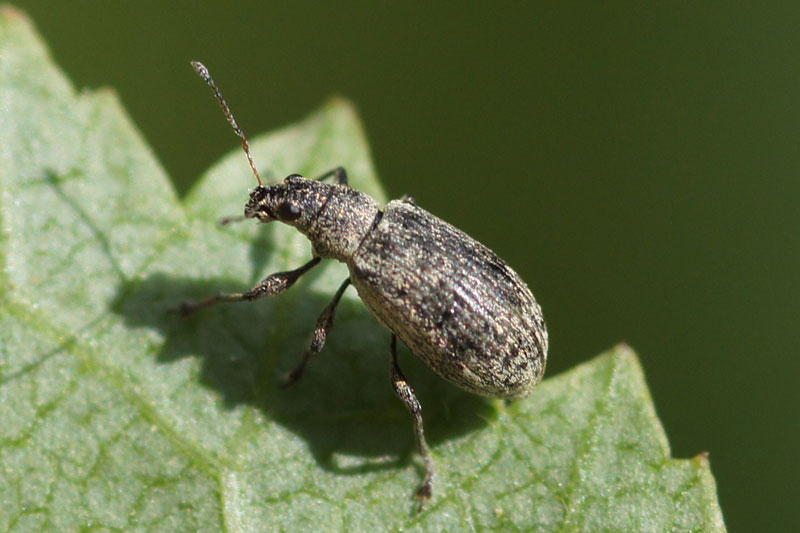
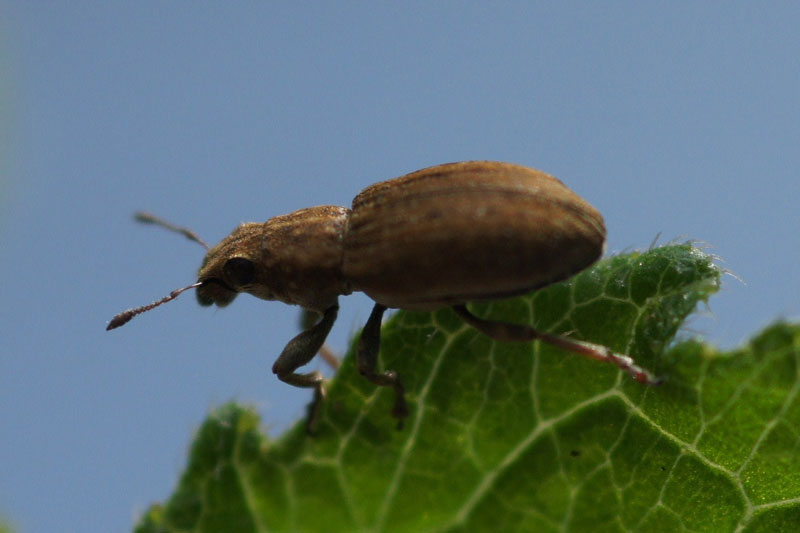
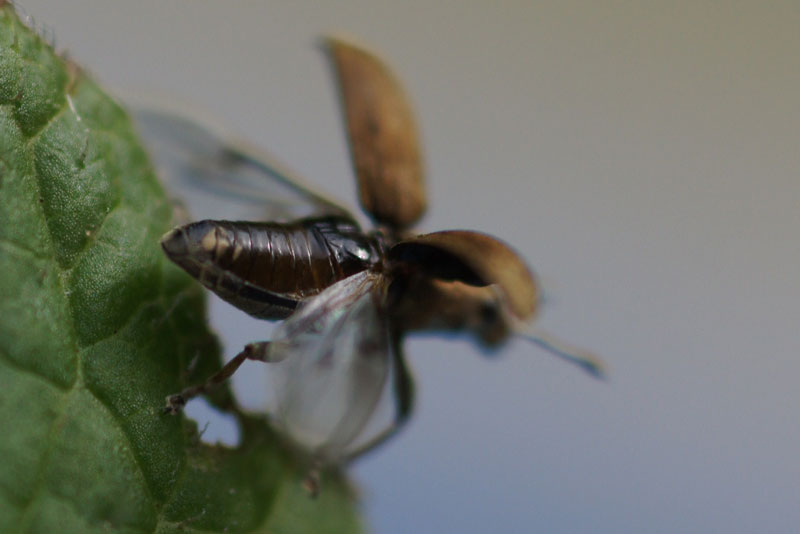
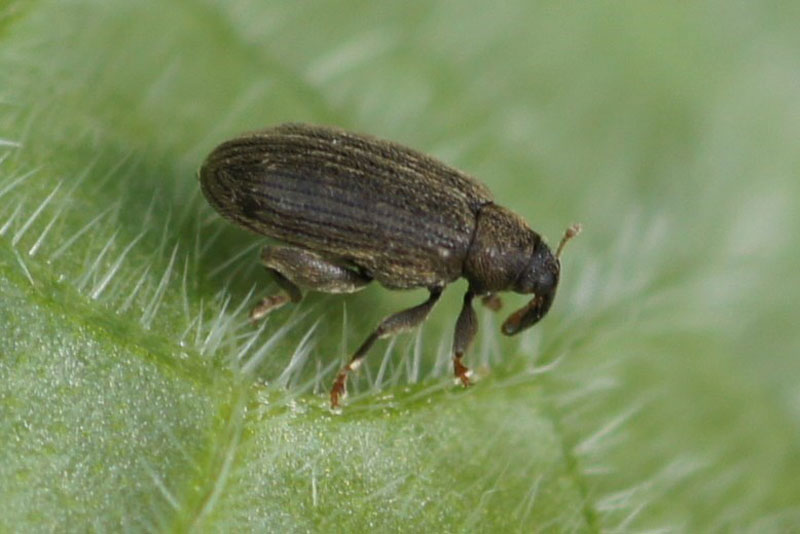
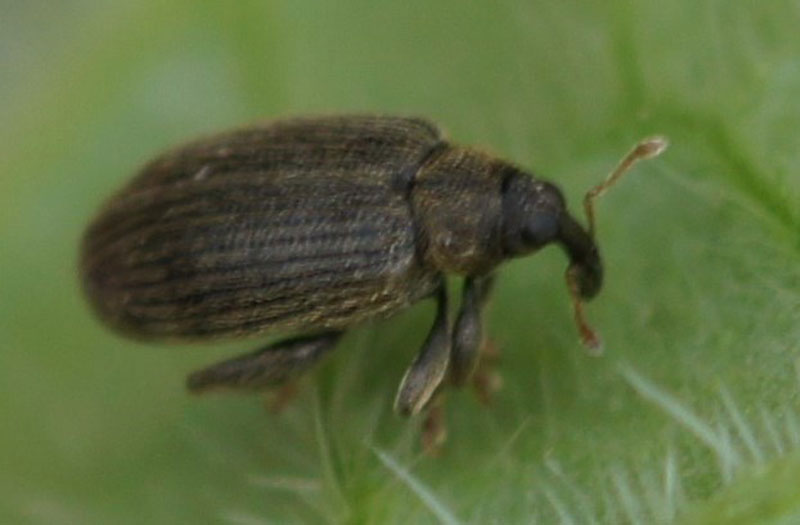
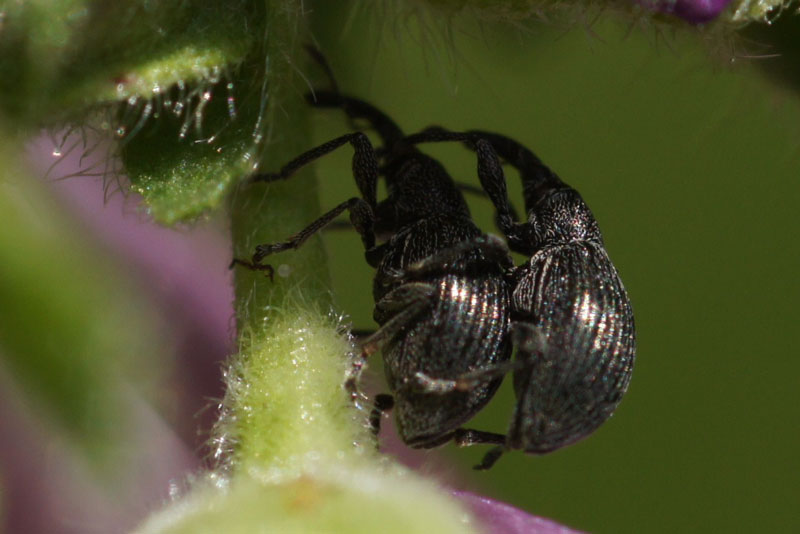
The beetle sitting here on a Garlic mustard. They feed on the leaves. The larvae develop inside the stems.
In America, Garlic mustard is an invasive plant seen and they are pleased with this beetle.
They can be biological control agents for garlic mustard.
The adult beetle overwinters in the leaf litter. Length
about 3 mm. Photo:
24-4-2011. |
 .. ..
 . .
 . .
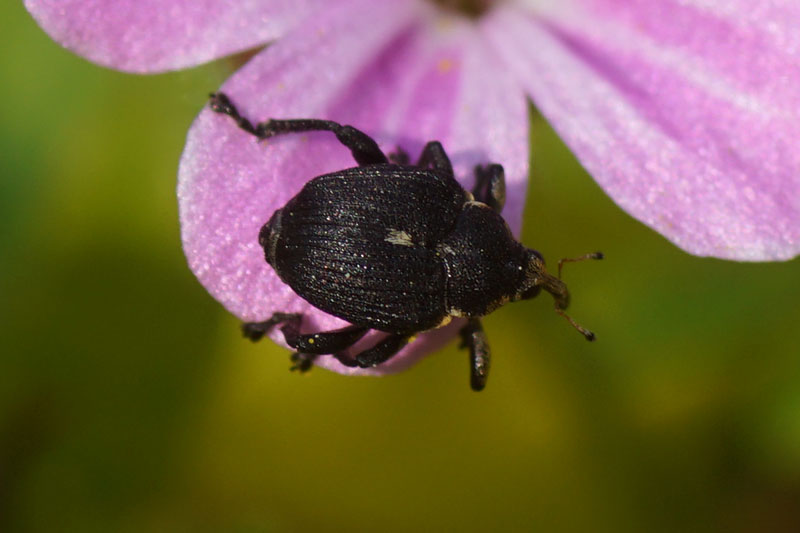
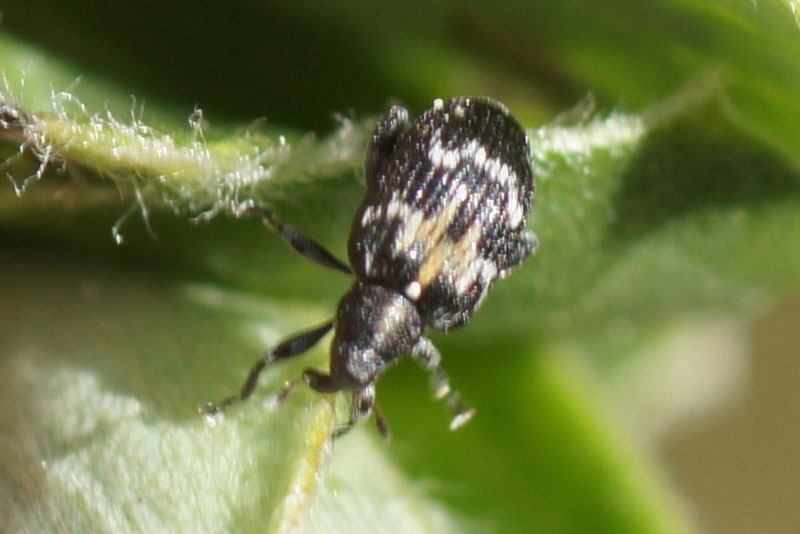
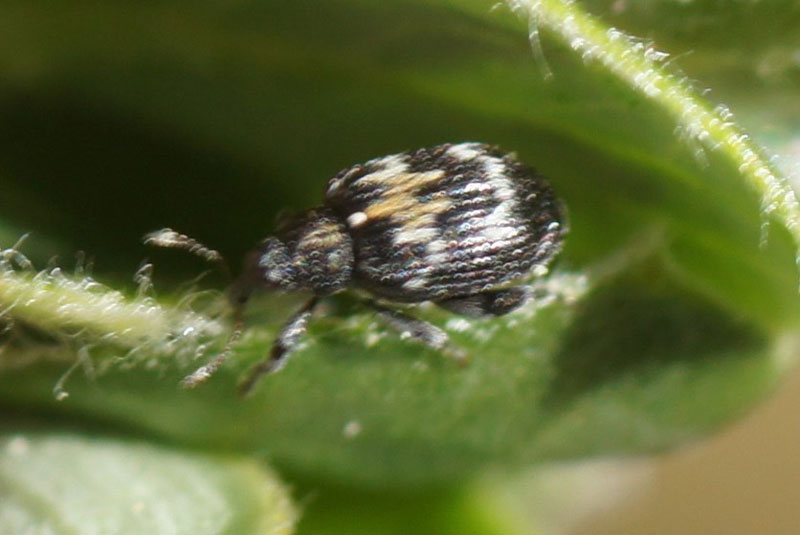
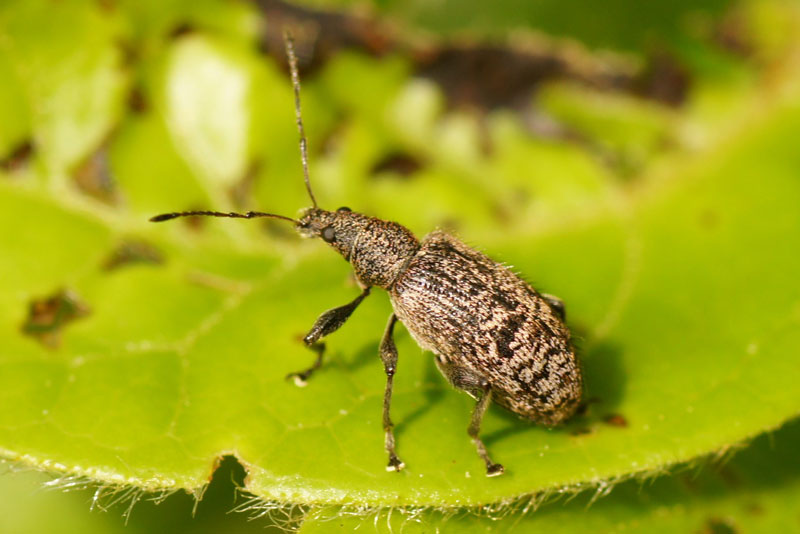
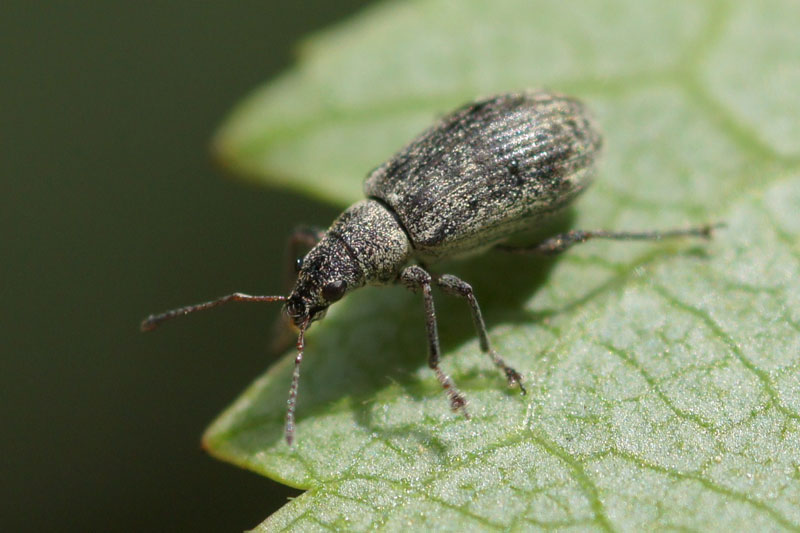
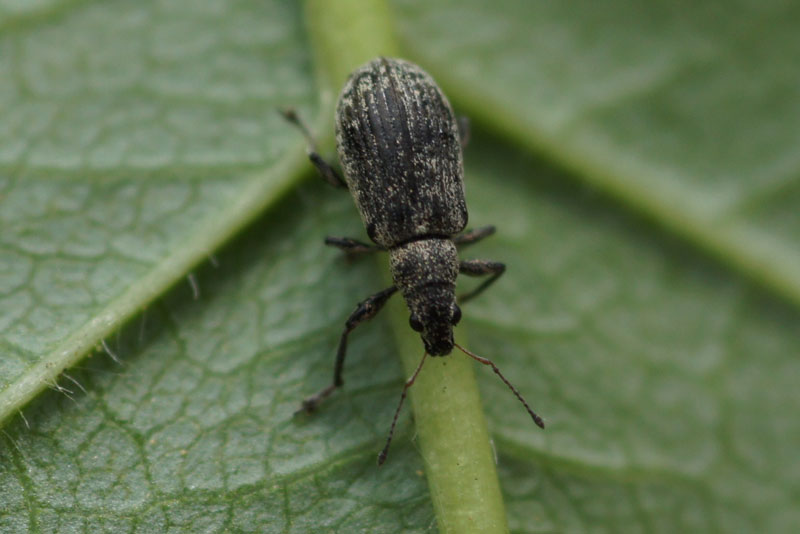
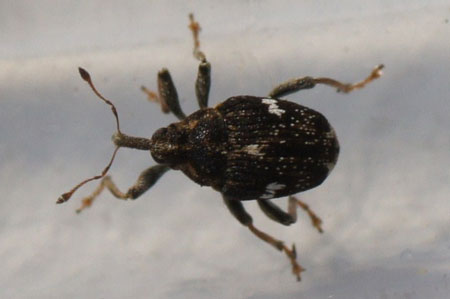
 Mogulones asperifoliarum. Tribe Ceutorhynchini. Subfamily
Ceutorhynchinae.
Family Curculionidae.
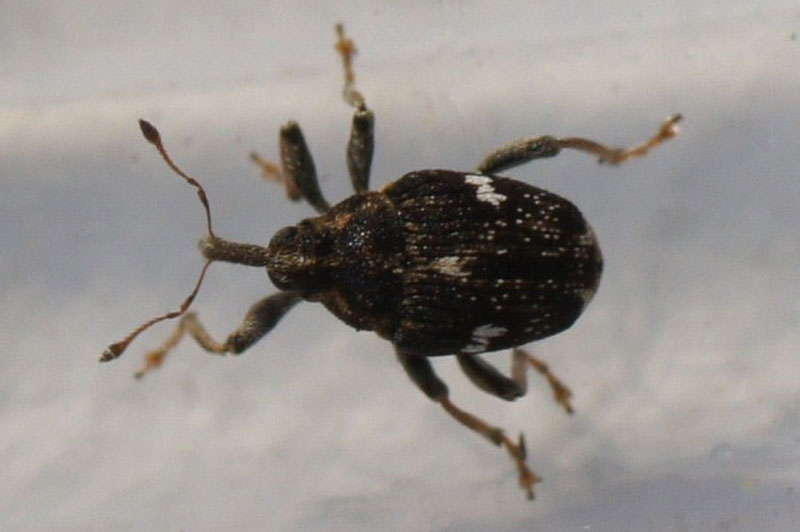
Mogulones asperifoliarum. Tribe Ceutorhynchini. Subfamily
Ceutorhynchinae.
Family Curculionidae.
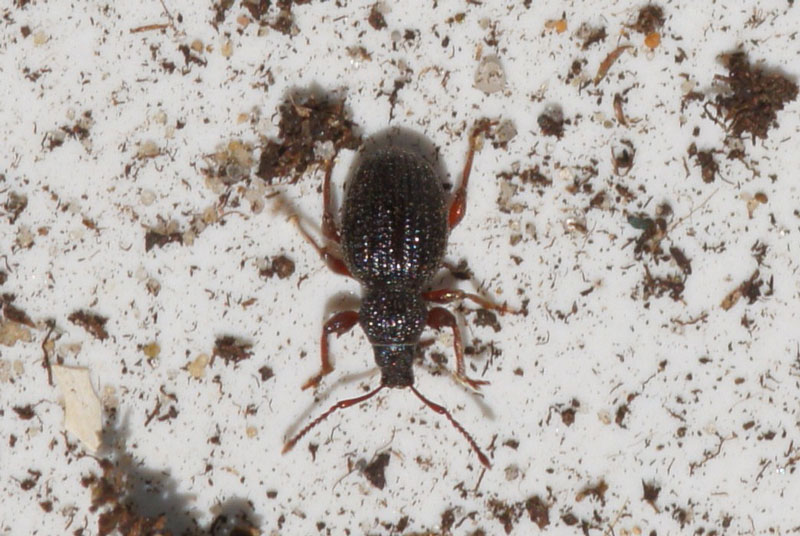
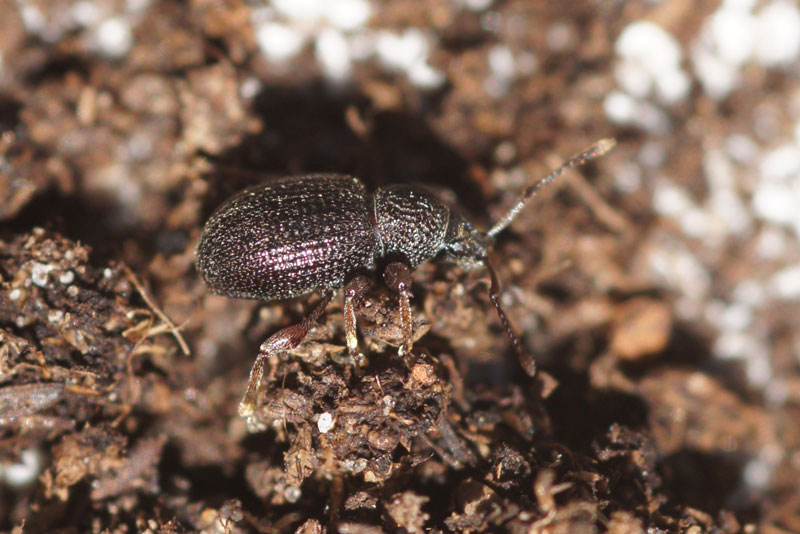
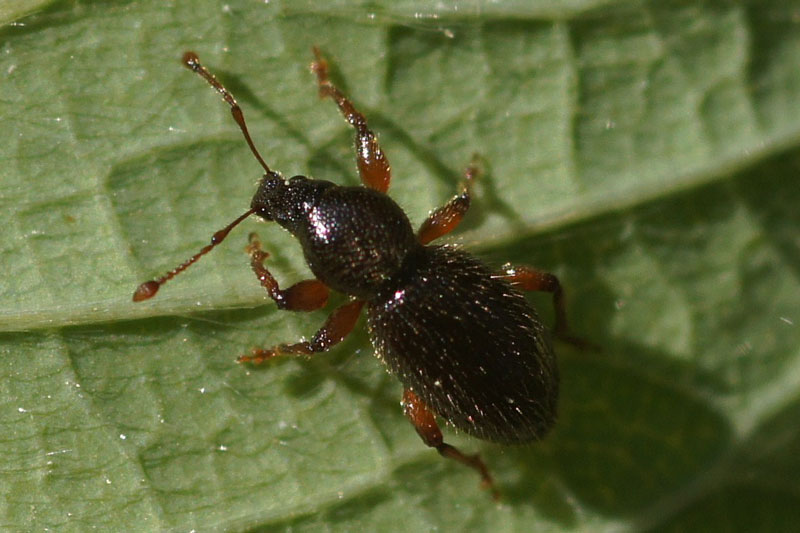
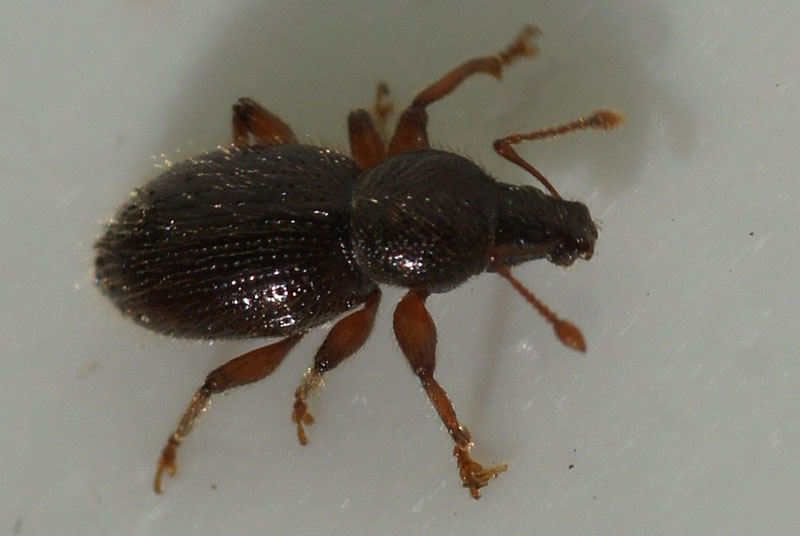
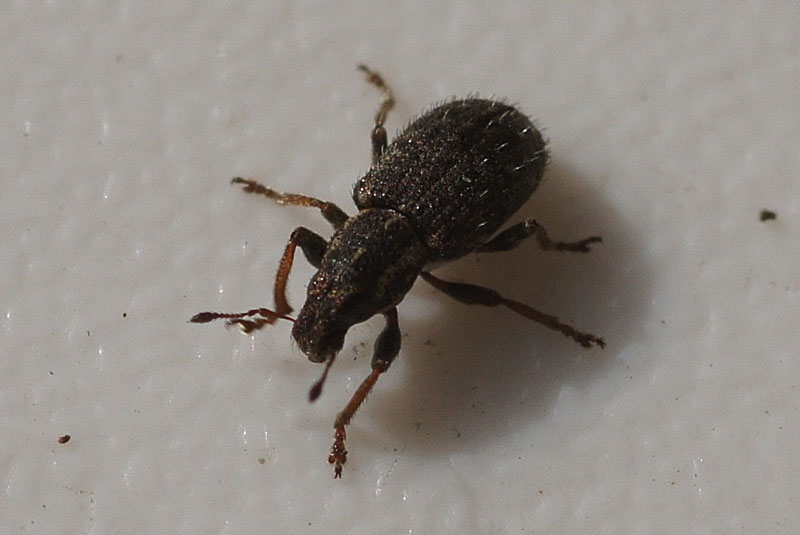
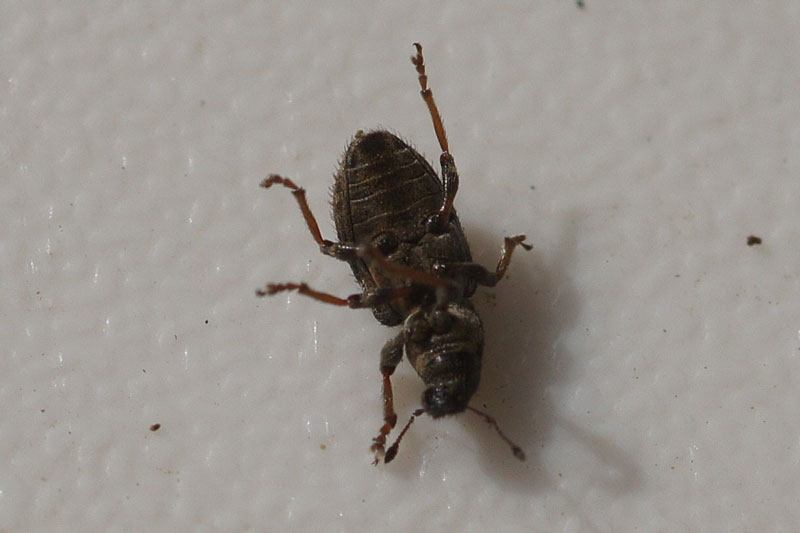
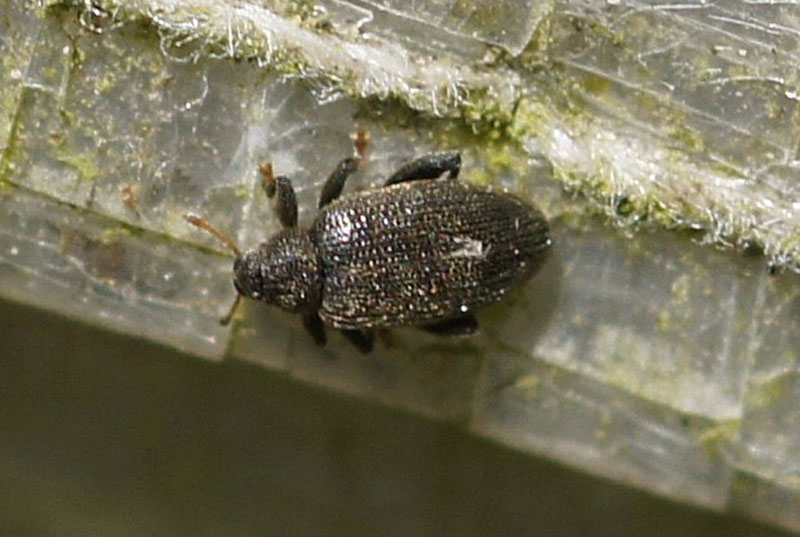
A dark brown weevil. In the middle of the elytra near the
pronotum and on the side of the elytra it has white spots. Length
2,2-2,9 mm. Photo:
24-4-2011. |
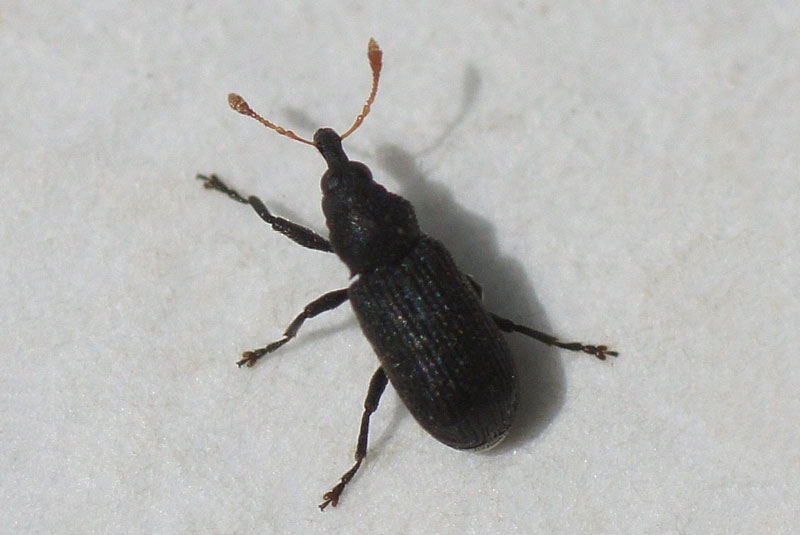
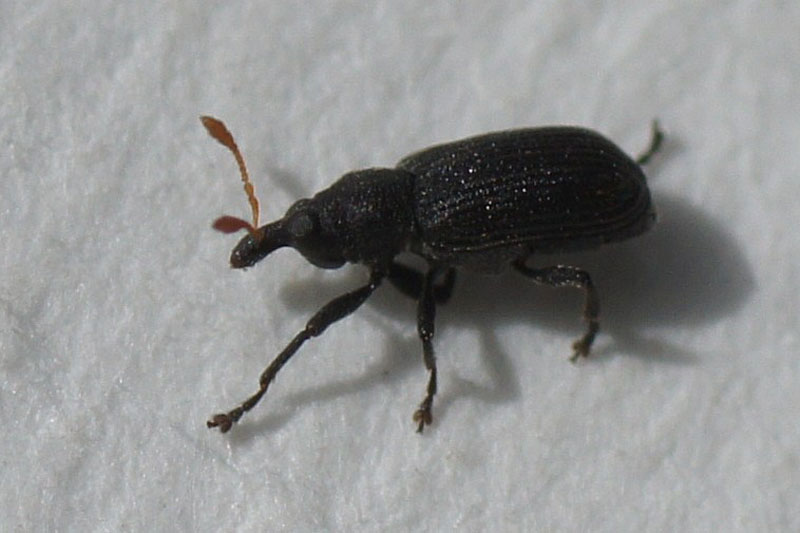
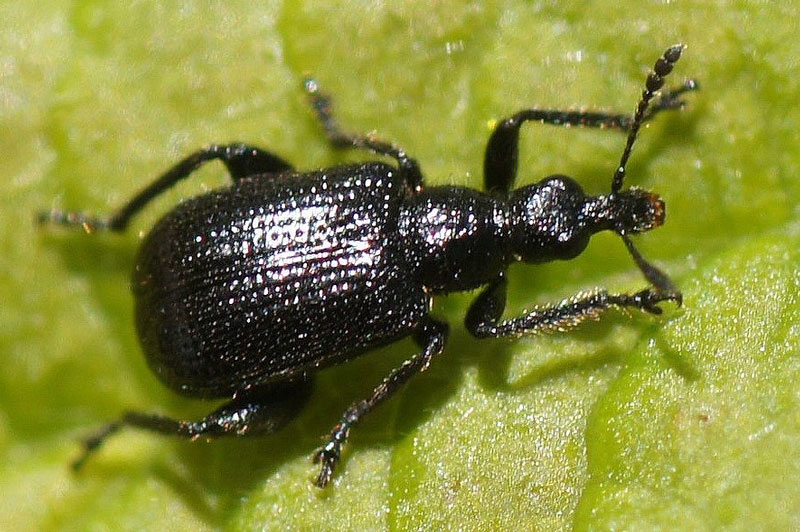
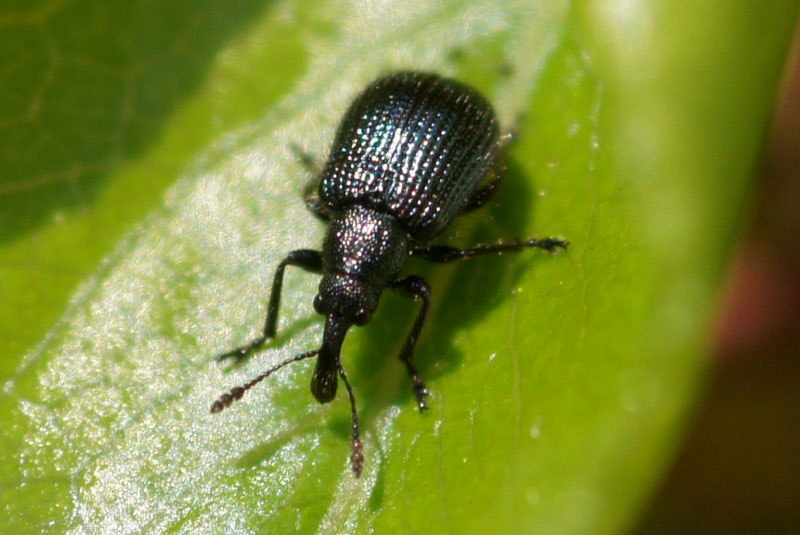
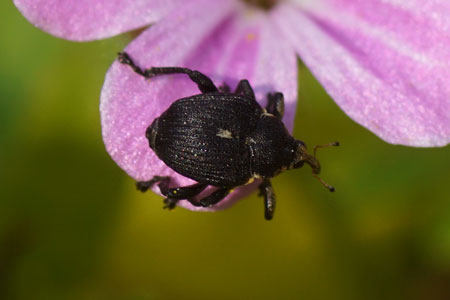 Iris weevil, Iris seed weevil - Mononychus punctumalbum. Tribe Mononychini. Subfamily
Ceutorhynchinae.
Family Curculionidae.
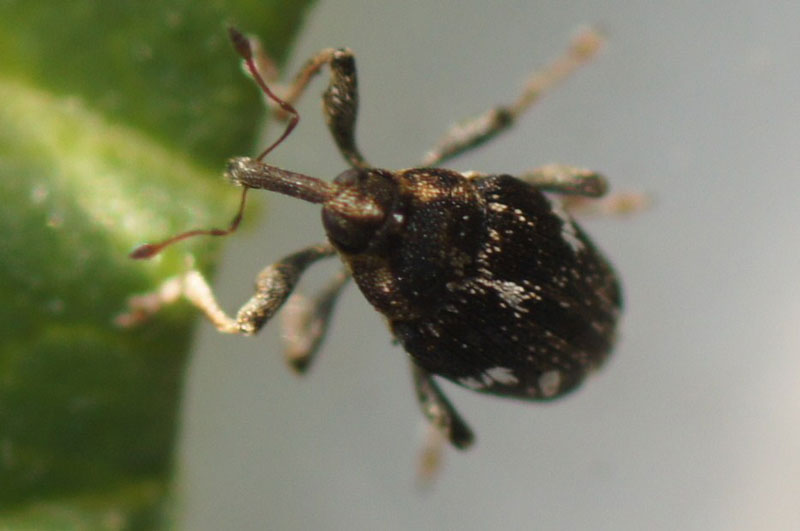
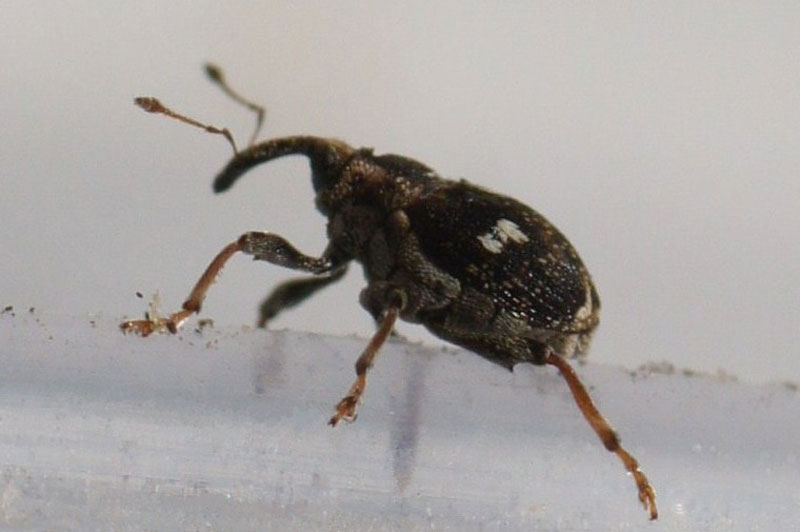
Iris weevil, Iris seed weevil - Mononychus punctumalbum. Tribe Mononychini. Subfamily
Ceutorhynchinae.
Family Curculionidae.
A black weevil. A white spot in the middle near the pronotum. Paler underside, snout and antennae.
It lives on Iris. Adult beetles in May and June feed on Iris leaves. The eggs are laid in the seeds of the developing seed pods. The new generation of weevils appears in August and September. They overwinter in leaf litter. Size 3,.9-5,1mm. Photo 13-5-2024.
 26-5-2024.
Some time later I saw another beetle on an iris that had been eaten by snails. 26-5-2024.
Some time later I saw another beetle on an iris that had been eaten by snails.
|
Subfamily
Cossoninae.
 .. ..
 . .
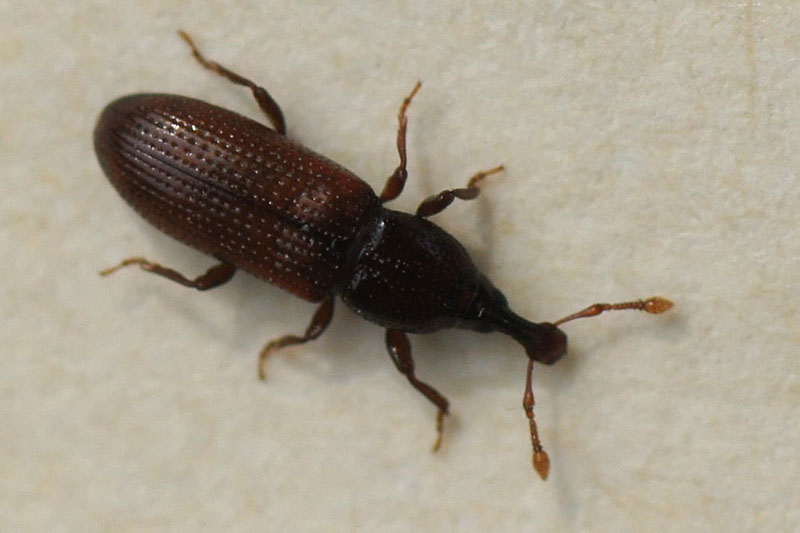
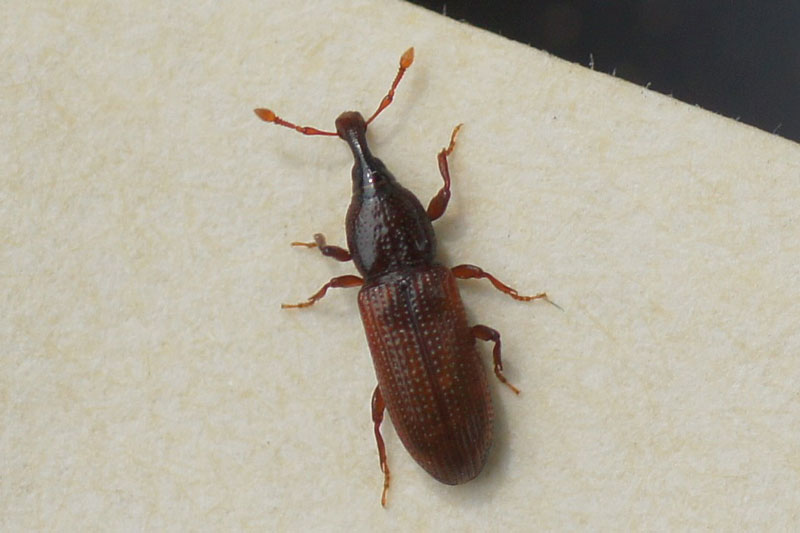
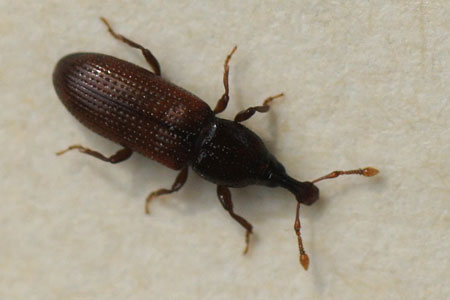
 Cossonus linearis. Subfamily
Cossoninae. Family
Curculionidae.
Cossonus linearis. Subfamily
Cossoninae. Family
Curculionidae.
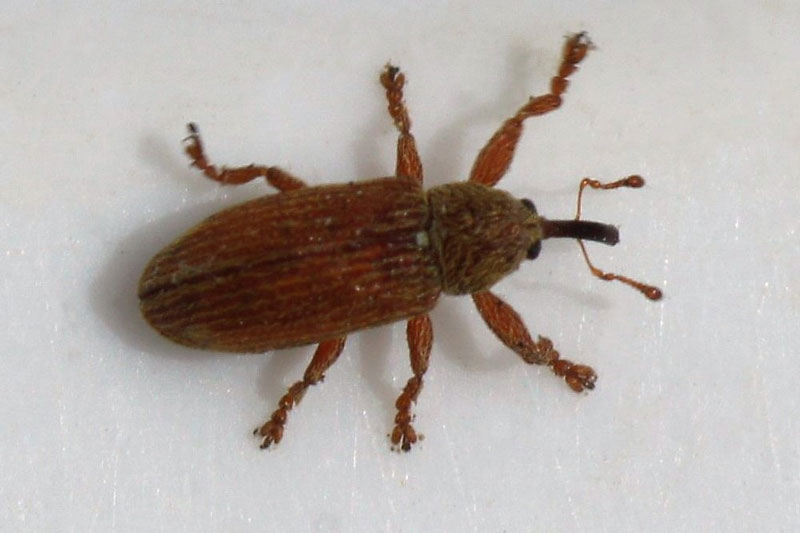
The body is flat and elongated. The elytra are brown, the pronotum and head are black, the antennae brown.
The punctuation of the elytra in straight lines. Linearis: striped elytra.
The adult beetle feeds on decaying wood.
The larva is under the bark of trees such as willow and poplar.
Length 4-6 mm.
Europe.
Photos 18-6-2013. German: Gemeine
Faulholzrüssler, Schlanker Faulholzrüssler; Flacher Schaufelrüssler,
Schlanker Rindenrüssler. |
Subfamily
Curculioninae.
 .. ..
 . .
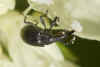 . .
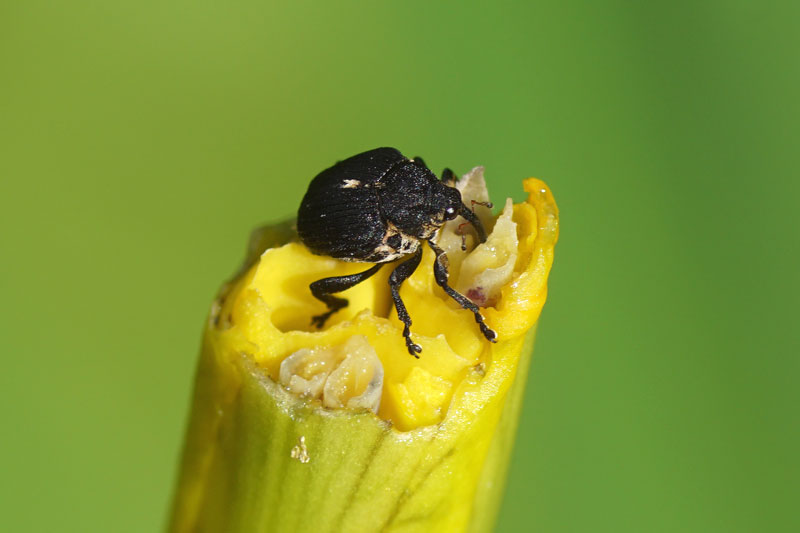
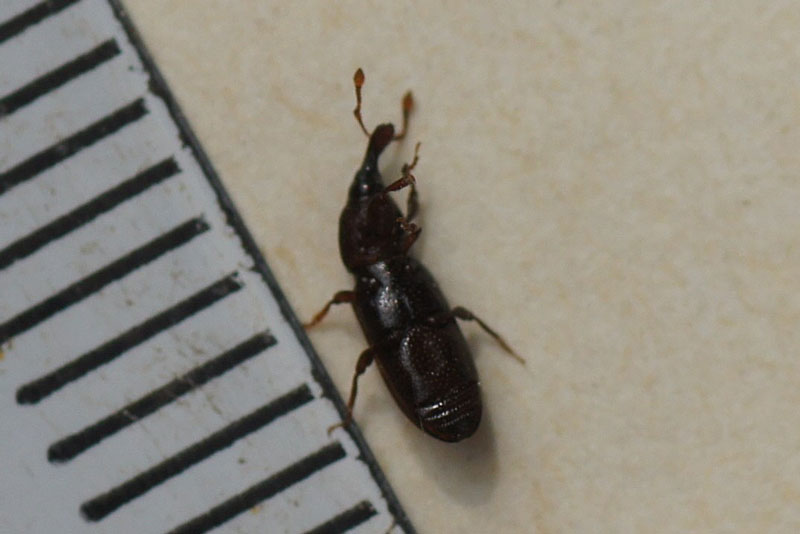
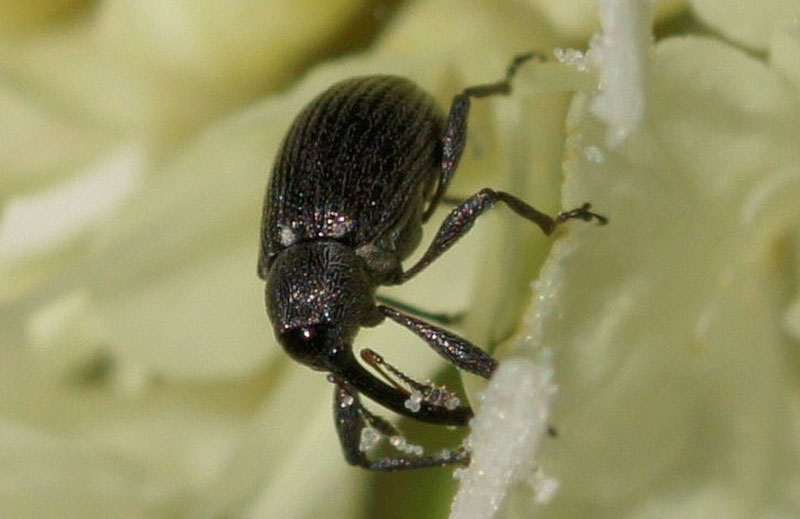
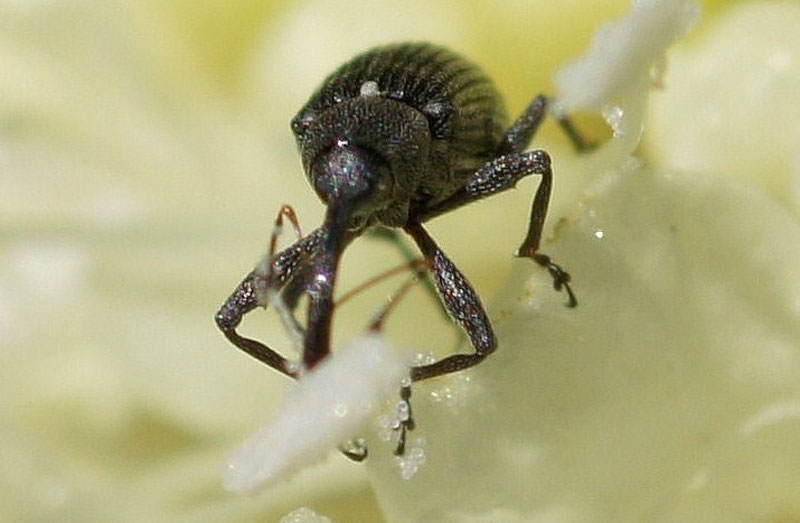
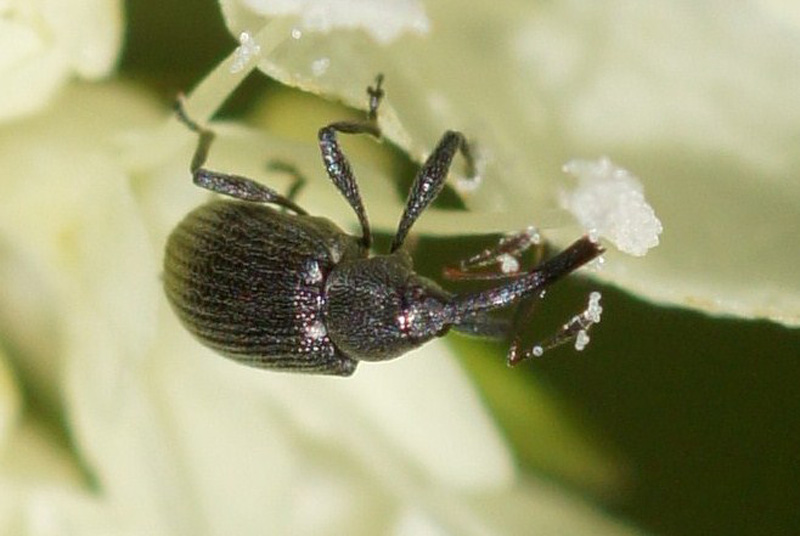
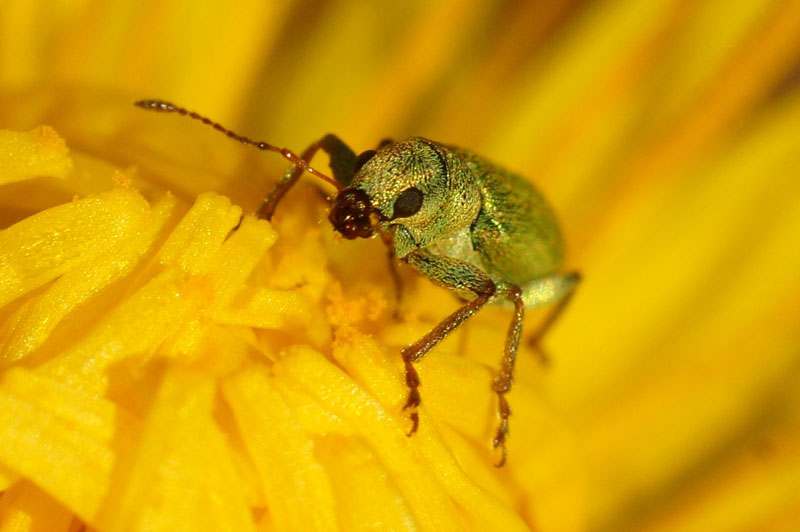
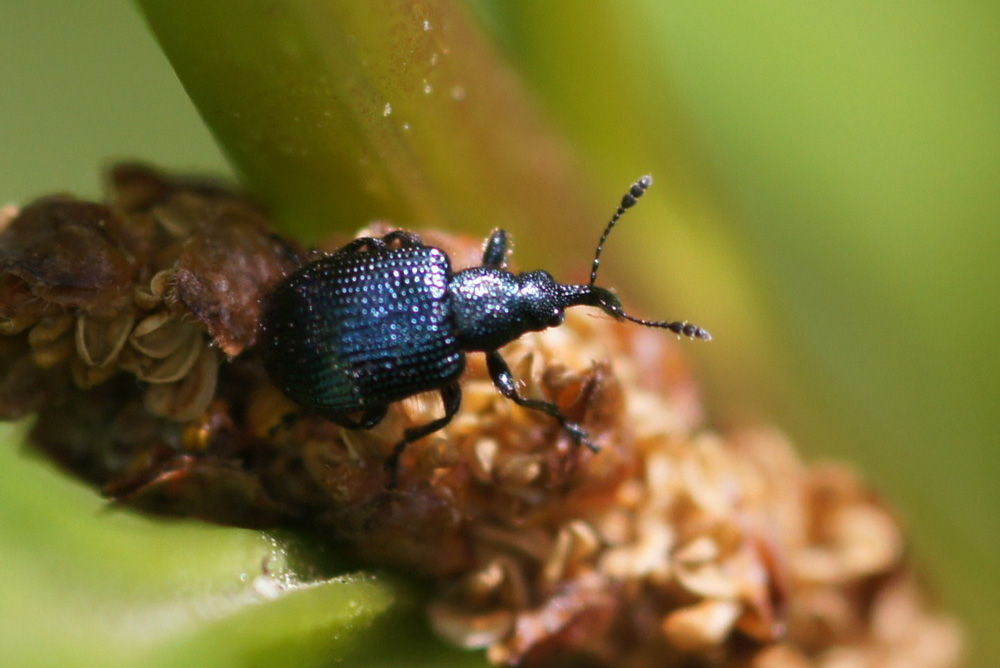
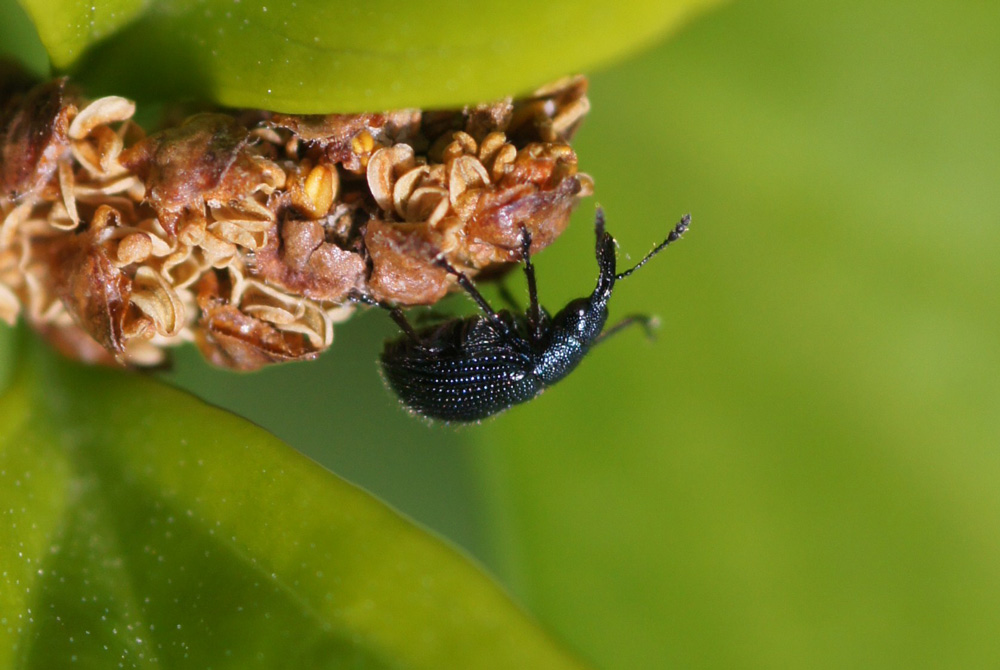
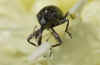
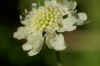 Strawberry
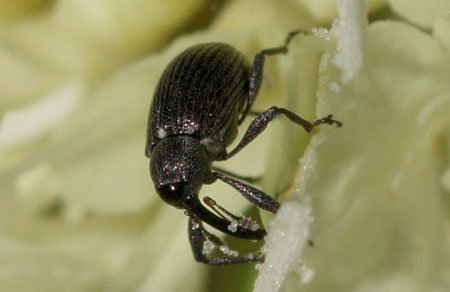
blossom weevil (Anthonomus rubi). Tribe
Anthonomini.
Subfamily
Curculioninae. Family Curculionidae.
Strawberry
blossom weevil (Anthonomus rubi). Tribe
Anthonomini.
Subfamily
Curculioninae. Family Curculionidae.
On these photos the weevil eats the pollen. But it seems to be a pest for the strawberry and raspberry plants in Europe.
Beetles eat the leaves. The females lay one egg in the bud, where the larva develops.
The beetle overwinters.
Length 2-3 mm. Photos 11-8-2016. German: Erdbeerblütensteche. |
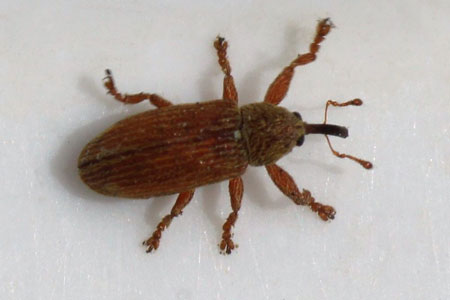 .. ..
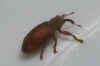 Brachonyx pineti. Tribe
Anthonomini.
Subfamily
Curculioninae. Family Curculionidae. Not in
the garden but in the dunes about 4 km from our house.
Brachonyx pineti. Tribe
Anthonomini.
Subfamily
Curculioninae. Family Curculionidae. Not in
the garden but in the dunes about 4 km from our house.
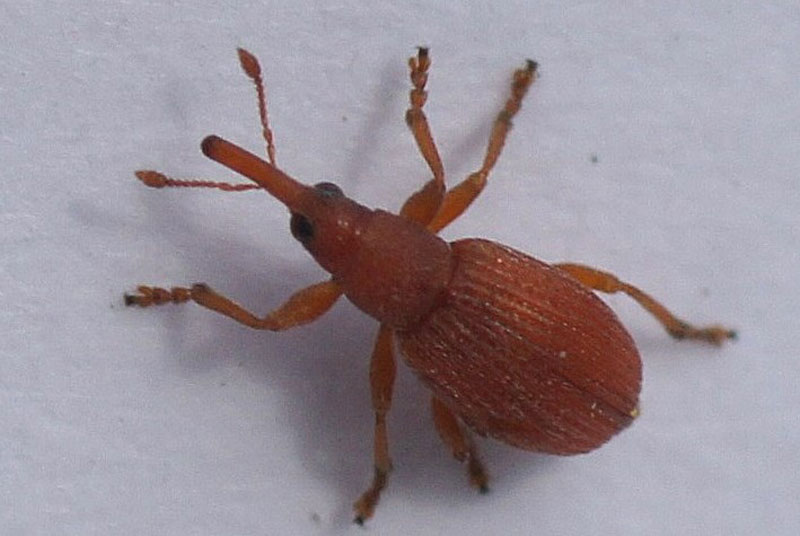
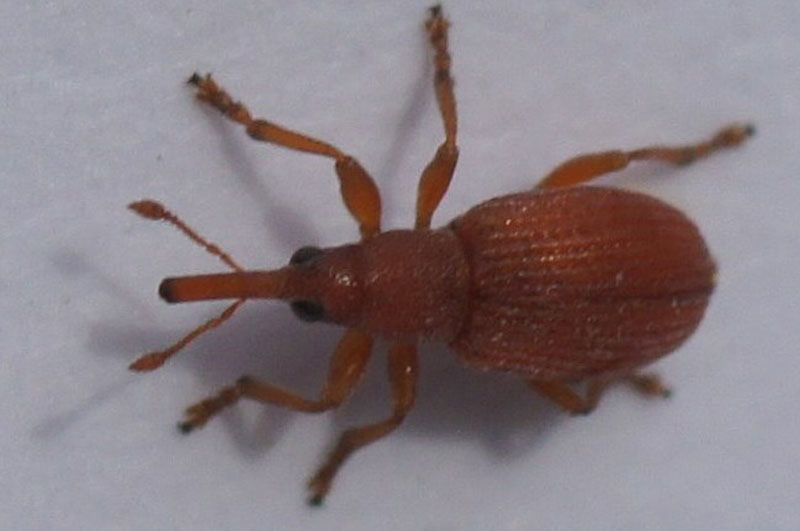
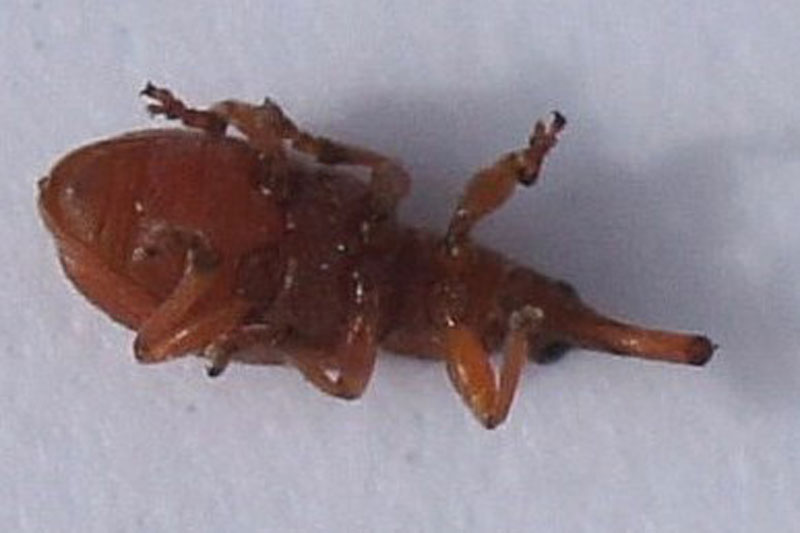
A brown-red weevil.
They live in pines. The larvae mine in the pine needles.
The beetle overwinters.
April-October. Length 2,3-2,6 mm. Photos 28-9-2016. |
Tribus Cionini.
You also see Stereonychus in the sister group tribus Mecinini.
 .. ..
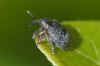 Ash weevil (Stereonychus fraxini). Tribe Cionini. Subfamily
Curculioninae. Family
Curculionidae.
Ash weevil (Stereonychus fraxini). Tribe Cionini. Subfamily
Curculioninae. Family
Curculionidae.
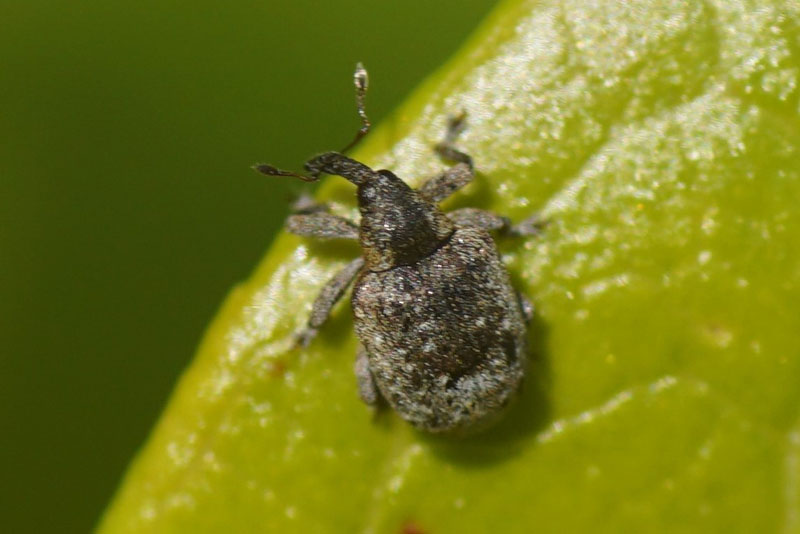
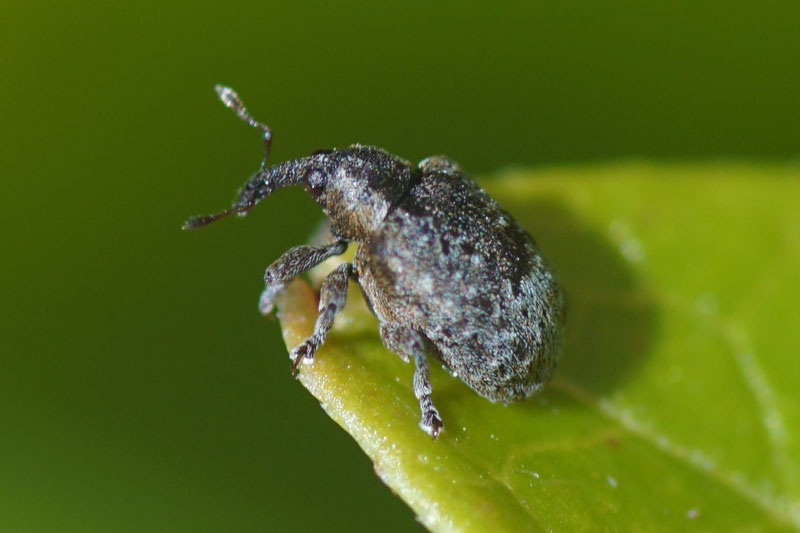
Dark brown or black. The top is covered with gray, gray and black scales. The center of the neck shield usually with a wide dark longitudinal band. Tarsi with one claw. The adult beetle hibernates in the litter layer. One generation in a year.
Size 2.5-3.1 mm. Lives on ash, but also on maple Europe, North Africa. Photos 29-5-2019. |
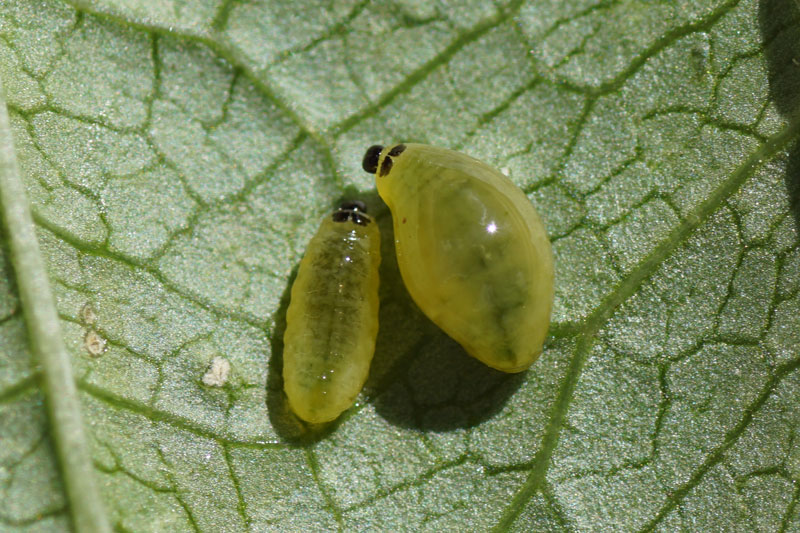
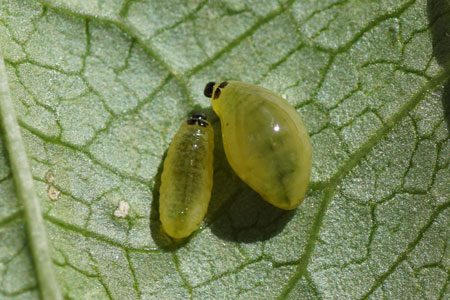 Cionus. Larvae. Tribe Cionini. Subfamily Curculioninae. Family
Curculionidae.
Cionus. Larvae. Tribe Cionini. Subfamily Curculioninae. Family
Curculionidae.
Larvae, which were on Common figwort (Scrophularia nodosa). I did not recognize them as weevil larvae until Arp Kruithof emailed me. Thanks Arp. Cionus alauda, Cionus hortulanus, Cionus scrophulariae and Cionus tuberculosus are found onfigworts. I have no idea which one it is. Photo 11-7-2020. |
Tribe Curculionini.
 .. ..
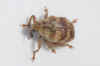 . .
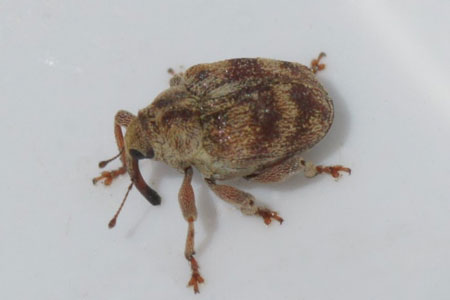
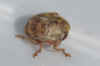 Coeliodes trifasciatus. Tribe Curculionini.
Subfamily
Curculioninae. Family Curculionidae. Not in
the garden but in the dunes about 4 km from our house.
Coeliodes trifasciatus. Tribe Curculionini.
Subfamily
Curculioninae. Family Curculionidae. Not in
the garden but in the dunes about 4 km from our house.
There are some similar species of the genus Coeliodes. Coeliodes trifasciatus is recognized by the red snout with a black end (Outside the Netherlands more species).
Size 2.5-2.9 mm.
Live on oak (German: Gebänderter Eichenrüssler). Photos 26-6-2017. |
 .. ..
 . .
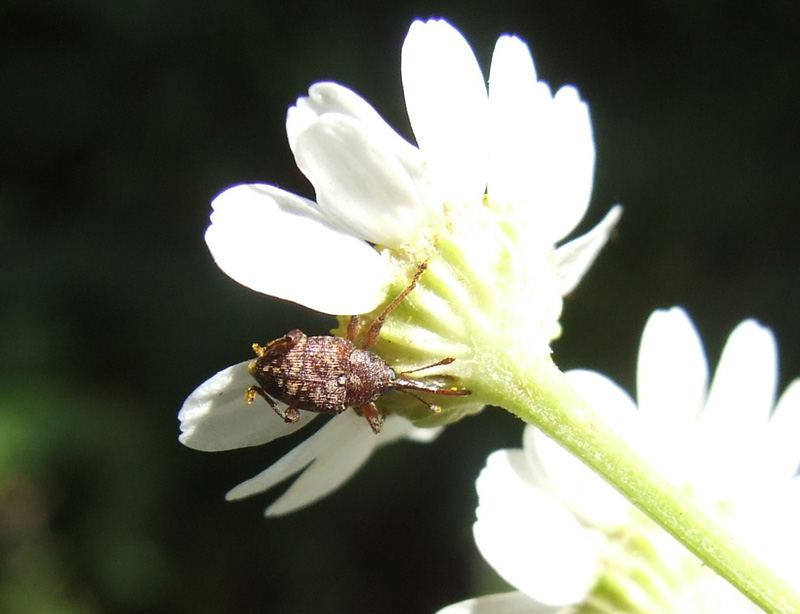
 Curculio betulae maybe Curculio rubidus. Tribe
Curculionini.
Subfamily
Curculioninae. Family Curculionidae.
Curculio betulae maybe Curculio rubidus. Tribe
Curculionini.
Subfamily
Curculioninae. Family Curculionidae.
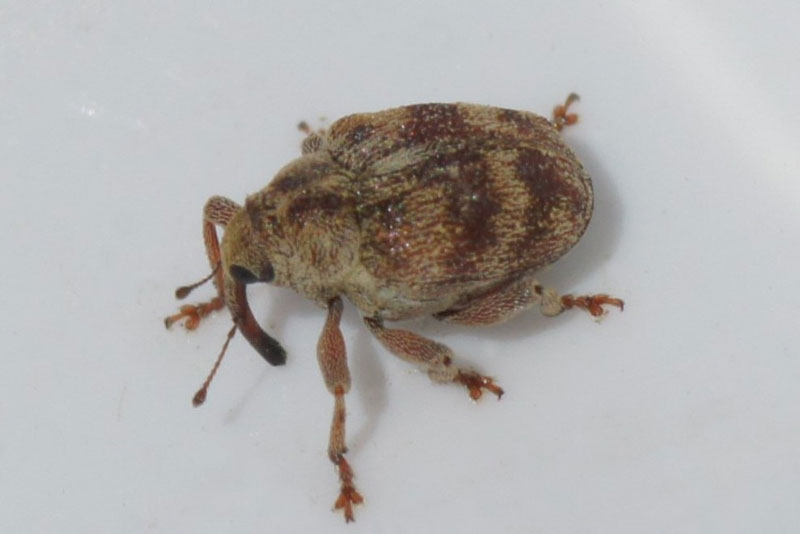
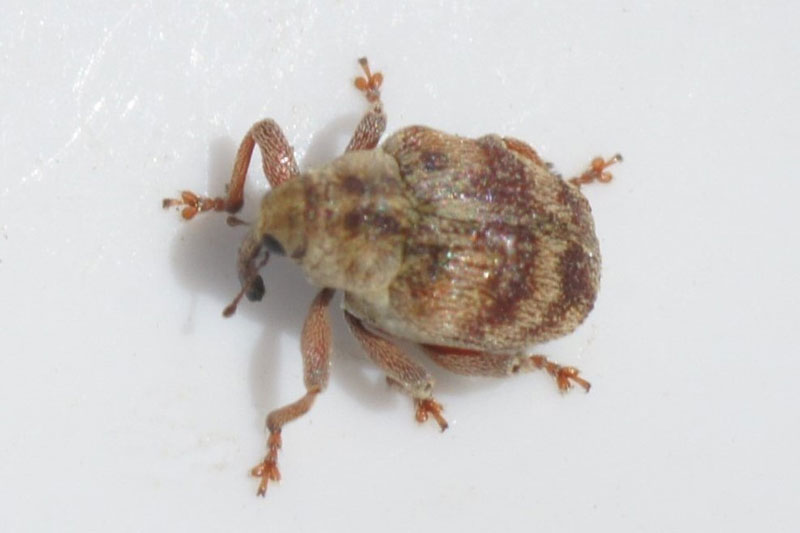
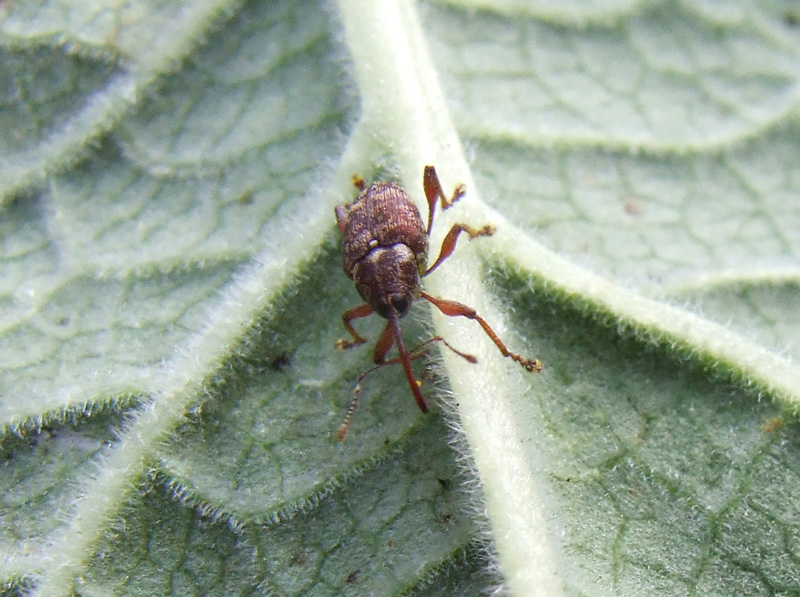
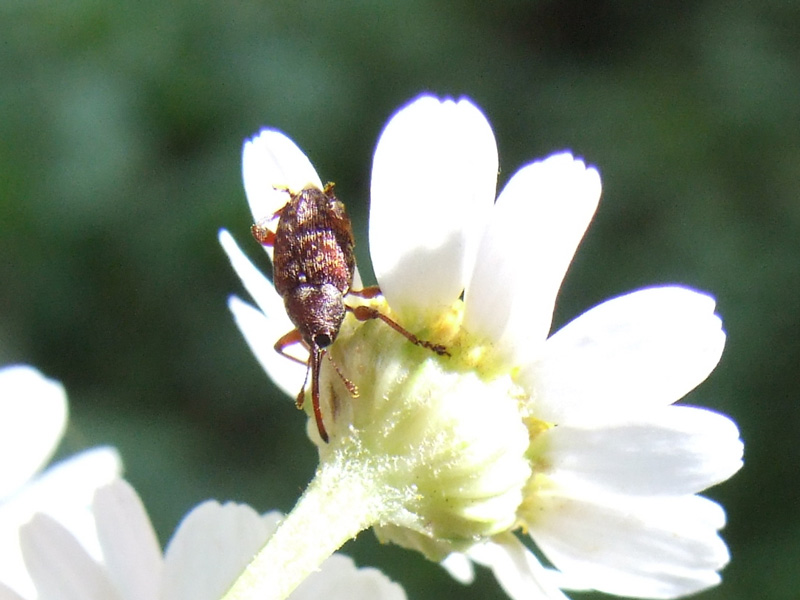
First I thought it was an Acorn Weevil (or Acorn Borer) (Curculio
glandium) or Curculio nucum). Theodoor Heijerman recognized this Curculio.
Size 4 mm.
A Borer because the female disposes one or two eggs in a fruit. First it drills a hole in the
fruit. The larva eats from inside.
When the fruit falls, the larva chews its way out. It
overwinters in the ground. In spring it pupates.
Here it is on the flower of feverfew.
It eats pollen and nectar. |
 .. ..
 . .
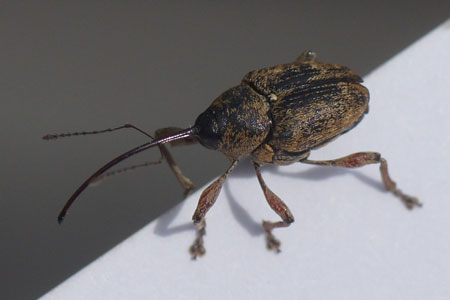
 Nut weevil (Curculio nucum) or Acorn weevil (Curculio glandium). Tribe
Curculionini. Subfamily
Curculioninae. Family Curculionidae.
Nut weevil (Curculio nucum) or Acorn weevil (Curculio glandium). Tribe
Curculionini. Subfamily
Curculioninae. Family Curculionidae.
Nut weevil (Curculio nucum): The larva lives in the hazelnuts from the hazel. The beetle sucks with the snout or rostrum juices from plant parts of plants from the rose family. Europe, North America.
Acorn weevil (Curculio glandium). The larva of this weevil of course occurs in acorns.
Photos 7-9-2013.
German: Haselnussbohrer and Eichelbohrer, Gewöhnliche
Eichelbohrer.
French: Balanin des noisettes and Charançon du chêne.
|
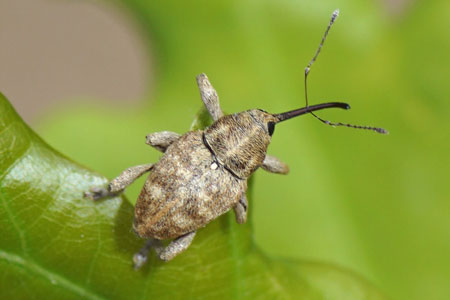 .. ..
 Curculio nucum. Female. Tribe Curculionini. Subfamily
Curculioninae. Family Curculionidae.
Curculio nucum. Female. Tribe Curculionini. Subfamily
Curculioninae. Family Curculionidae.
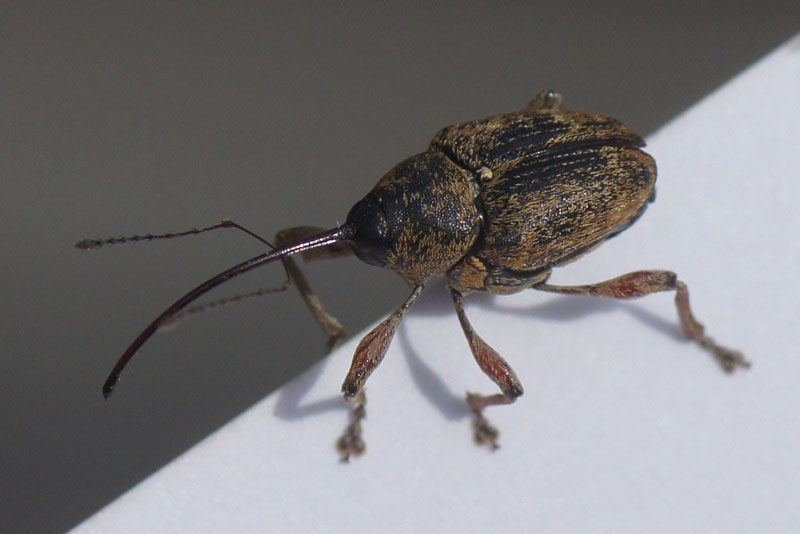
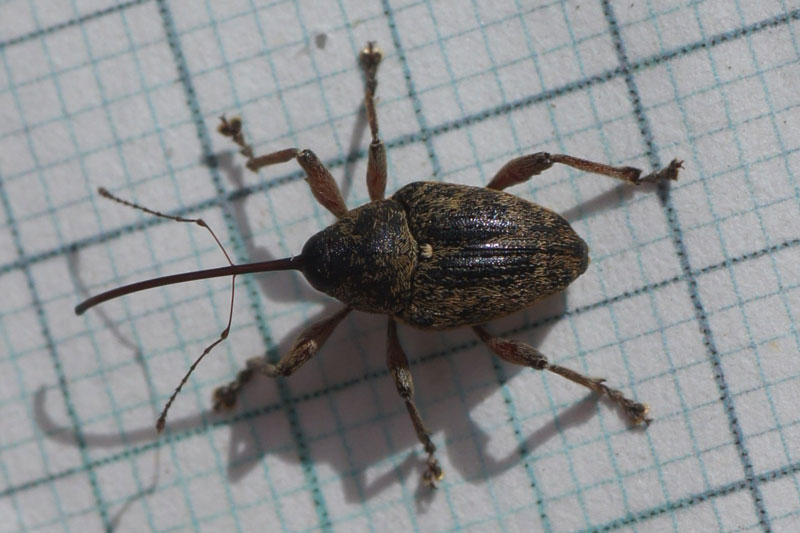
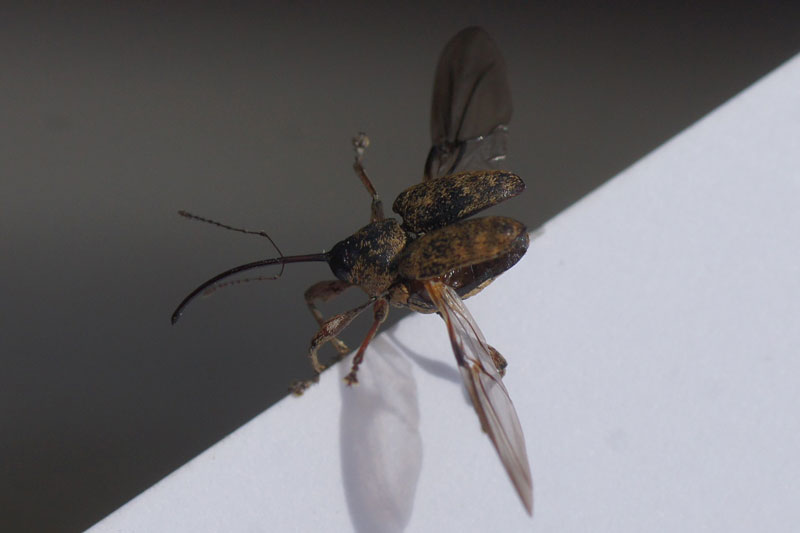
Elongated, strongly tapering elytra, pronotum largely dark brown, usually with a central and lateral lighter longitudinal stripe, elytra light brown with two or three dark transverse bands. Light, white, elongated scutellum. The larva of this weevil is found in acorns. Beetles feed on the leaves. Length 5.9-9 mm. April-October. Europe, Asia Minor. Photos 22-7-2022. |
Tribe Rhamphini.
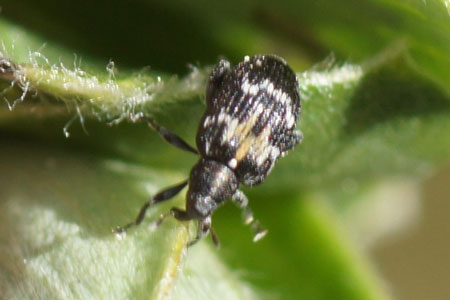 .. ..
 Tachyerges salicis synoniem Rhynchaenus salicis. Tribe
Rhamphini. Subfamily
Curculioninae. Family Curculionidae. Not in
the garden but in the dunes about 4 km from our house.
Tachyerges salicis synoniem Rhynchaenus salicis. Tribe
Rhamphini. Subfamily
Curculioninae. Family Curculionidae. Not in
the garden but in the dunes about 4 km from our house.
A black weevil with on the elytra two white wavy lines of white hairs. Near the pronotum are yellowish hairs.
The larvae are leaf miners of leaves from the willow family (Salicaceae). Poplar and willow.
Length about 2.5 mm.
Photos: 5-5-2014. |
Subfamily
Entiminae.
Tribe Brachyderini.
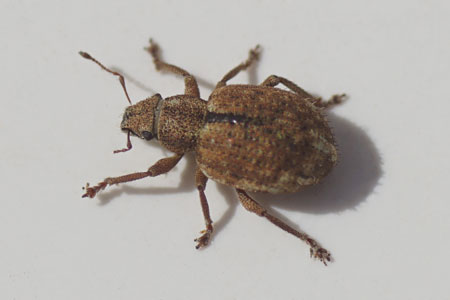 .. ..
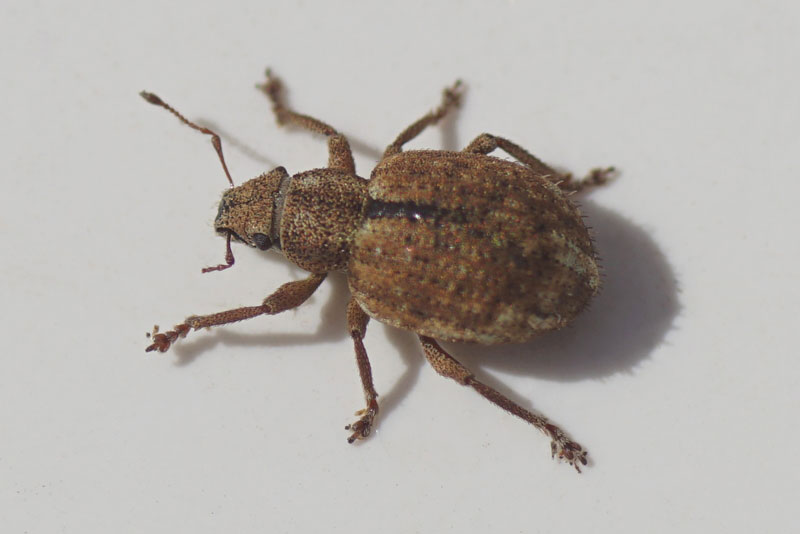
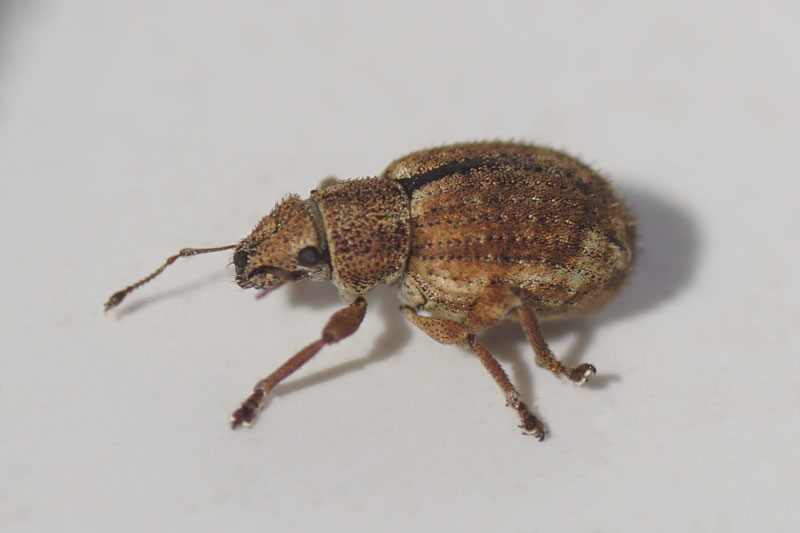
 Strophosoma melanogrammum. Tribe Brachyderini. Subfamily
Broad-nosed Weevils (Entiminae). Family Curculionidae.
Not in the garden but in the dunes about 3 km from
our house.
Strophosoma melanogrammum. Tribe Brachyderini. Subfamily
Broad-nosed Weevils (Entiminae). Family Curculionidae.
Not in the garden but in the dunes about 3 km from
our house.
The black elytra are covered with brown-bronze scales. These scales are missing in the middle at the base, so that a black wide line becomes visible. It is easily recognizable by this line.
Length: 4-5.5 mm.
In many trees such as pine, fir, birch, rowan and oak. They feed on needles, leaves, buds and young shoots.
The eggs are deposited on the ground. Larvae after 10-15 days. They feed on the roots of herbaceous plants.
They can be found throughout the year. Especially in April and in autumn.
Europe.
Photos 5-10-2018. |
Tribe Cneorhini.
 .. ..
 . .
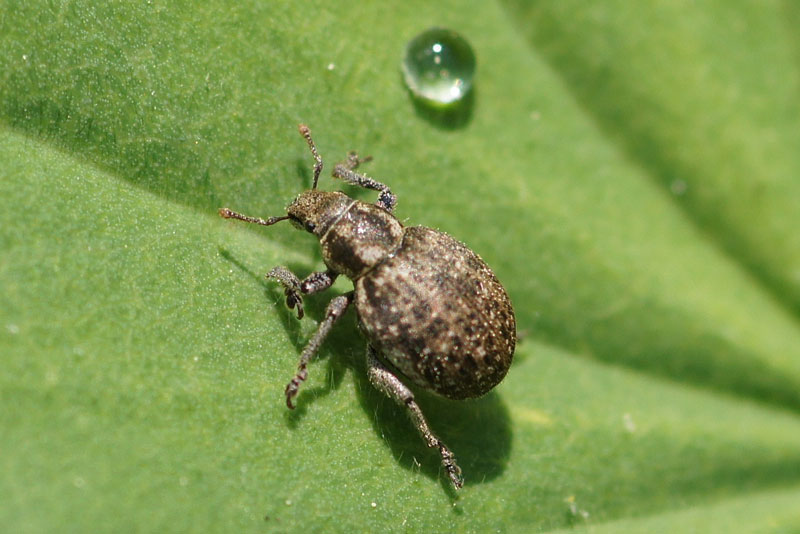
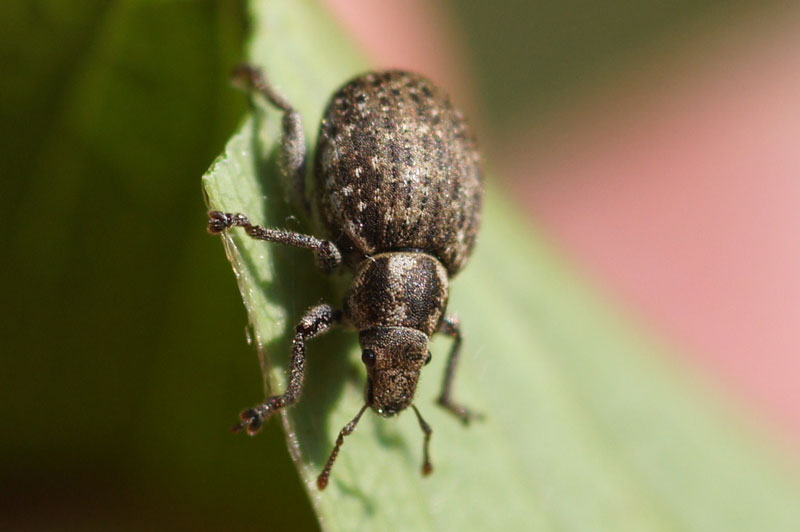
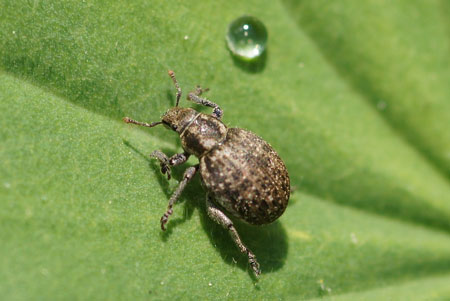
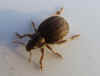
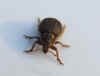
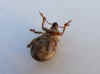
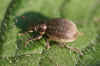 Philopedon plagiatus. Tribe
Cneorhini. Subfamily
Broad-nosed Weevils (Entiminae). Family Curculionidae.
Philopedon plagiatus. Tribe
Cneorhini. Subfamily
Broad-nosed Weevils (Entiminae). Family Curculionidae.
This
snout beetle I often see in my garden. When
you try to catch it, it prefers to fall down.
Length: 4-6 mm.
Sandy soils. Oft along the coast in the dunes. It lives of various grasses.
Western and Central Europe.
April, Mai, June.
There are similar snout beetles like species of the family
Strophosoma. Photos
April 2011 Photos
below: April 2009.German: Graue Kugelrüßler.
|
Tribe Otiorhynchini.
 .. ..
 Strawberry Root Weevil
(Otiorhynchus ovatus). Tribe Otiorhynchini. Subfamily Broad-nosed Weevils
(Entiminae).
Family Curculionidae.
Strawberry Root Weevil
(Otiorhynchus ovatus). Tribe Otiorhynchini. Subfamily Broad-nosed Weevils
(Entiminae).
Family Curculionidae.
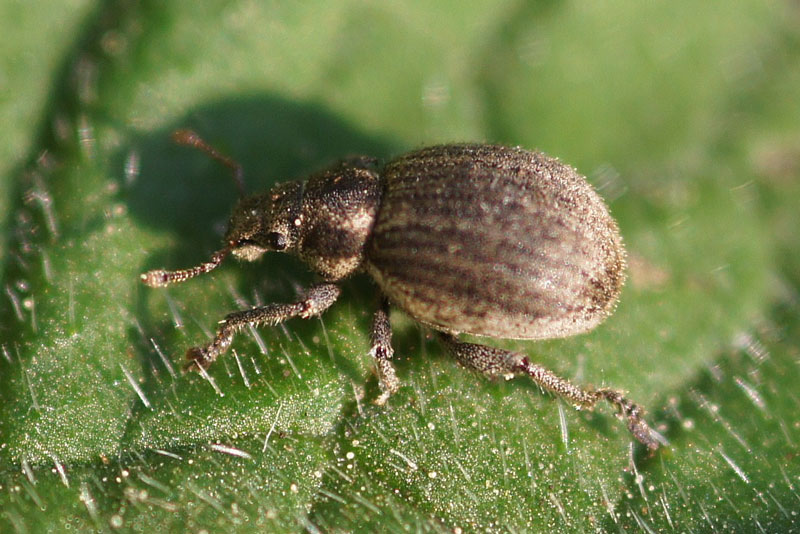
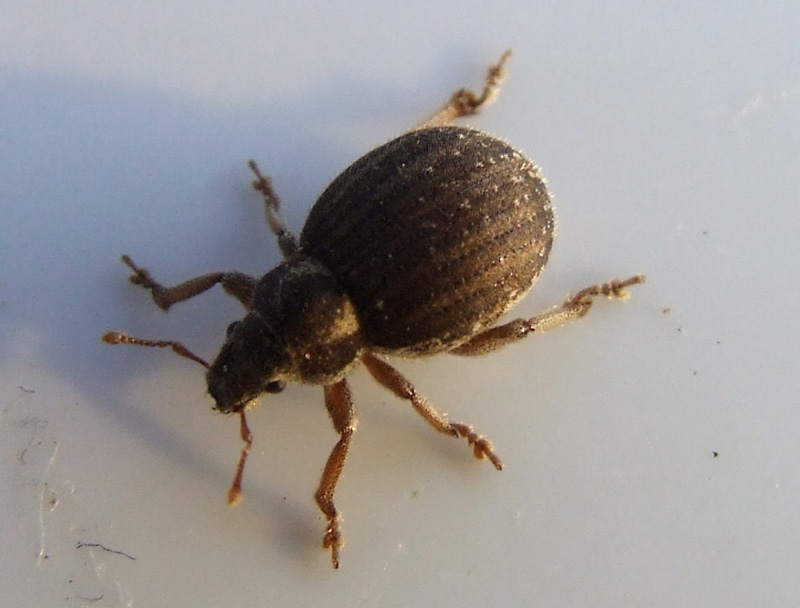
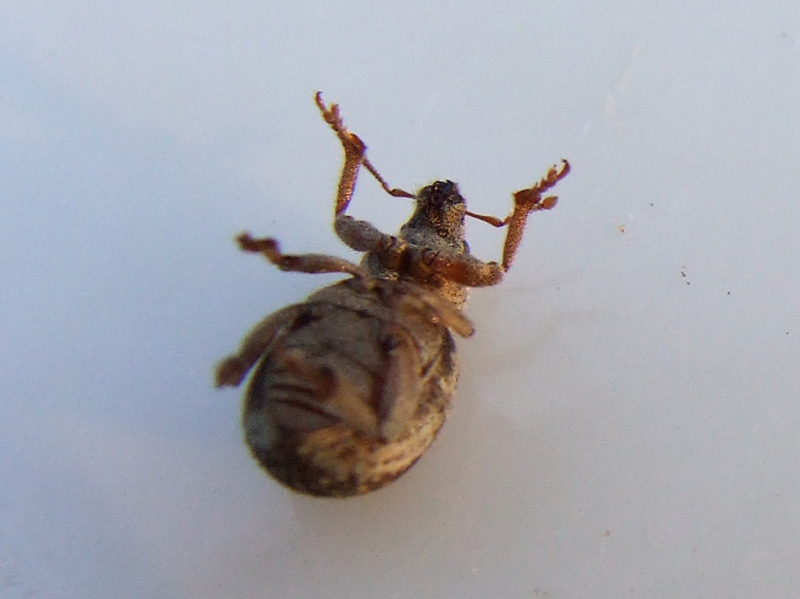
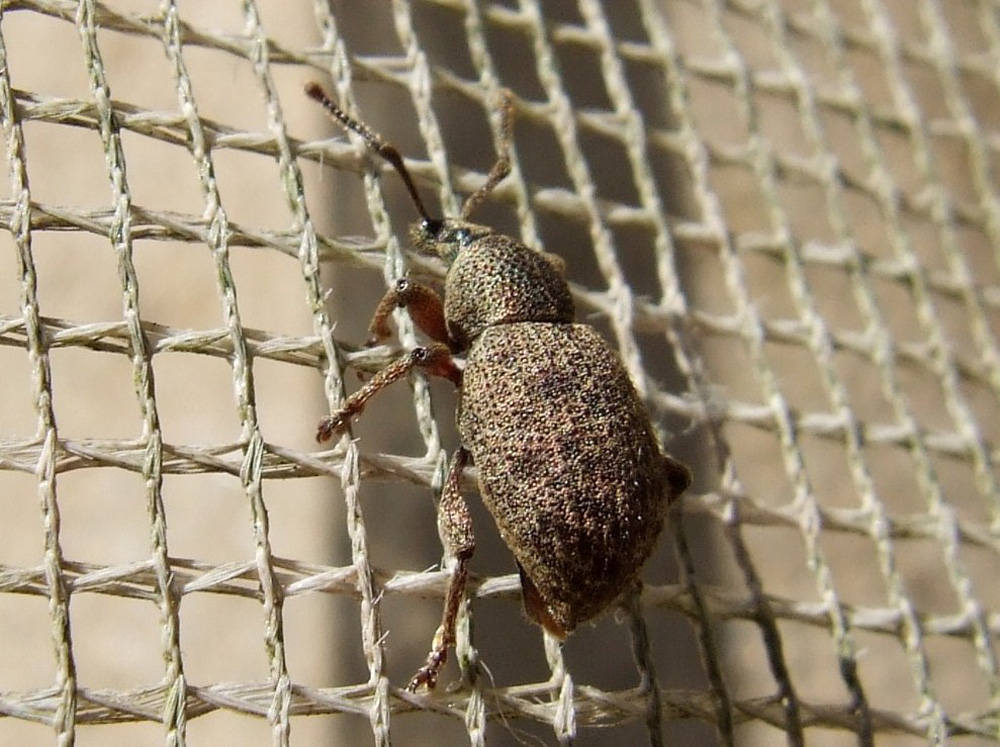
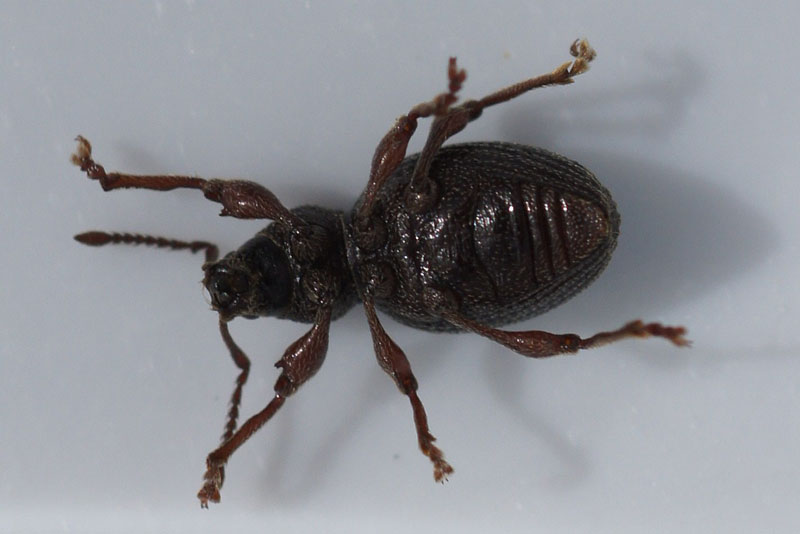
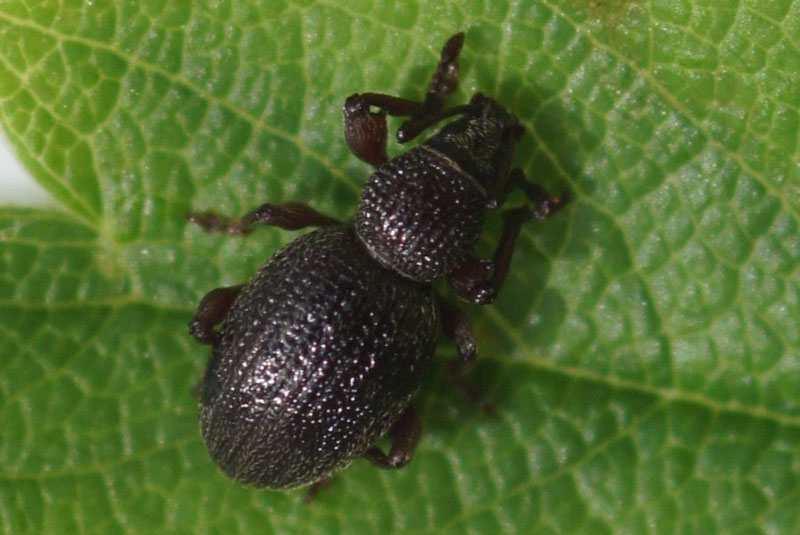
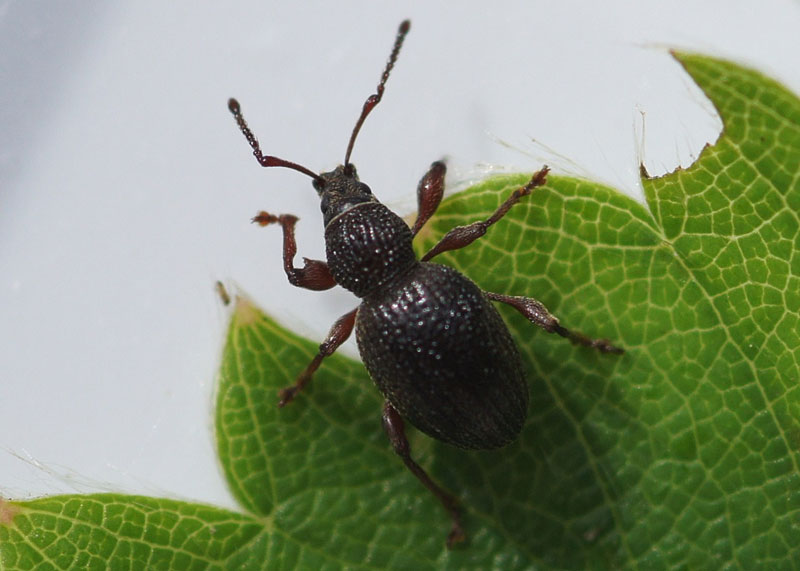
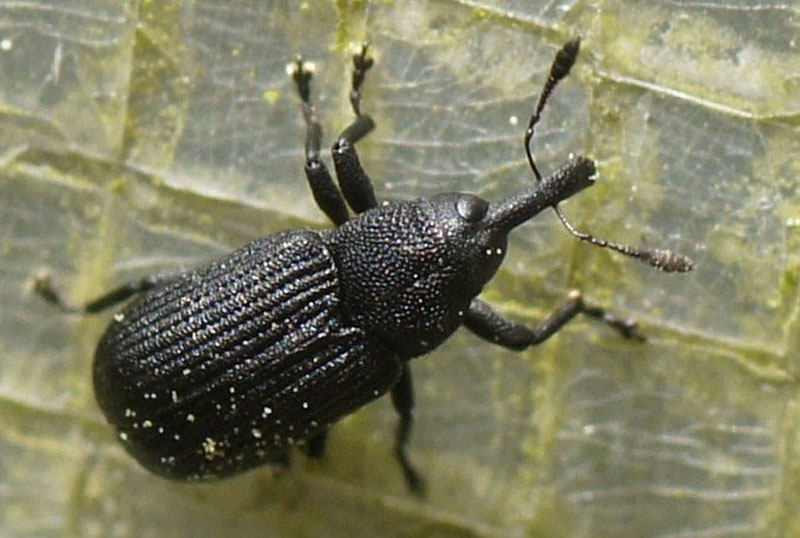
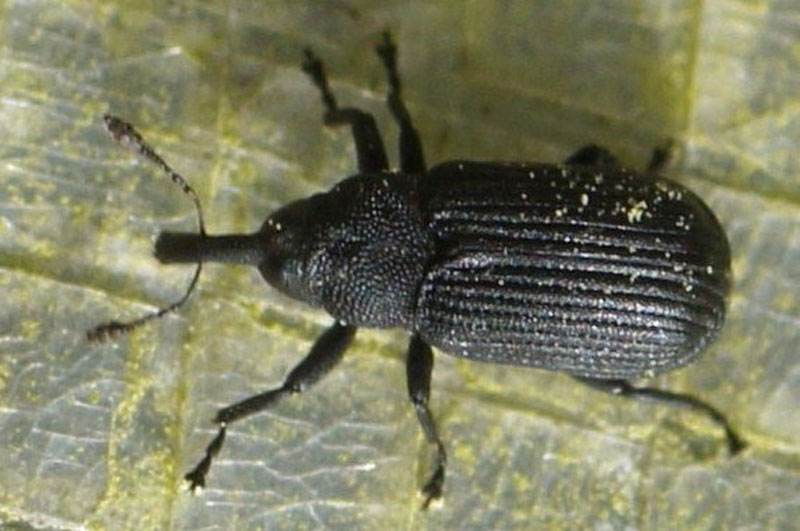
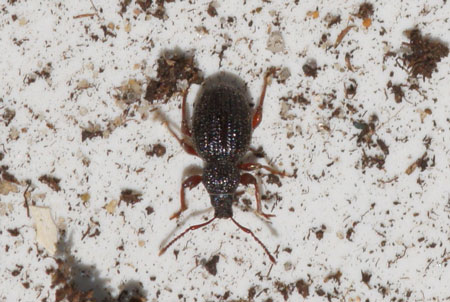
Dark brown to black with red legs and antennae. They can not fly.
The plants you can find the beetle include strawberry, raspberry, rhododendron, grape, and peppermint.
The white, legless larva feed on the roots of these plants. As they get older, they
feed on the leaves ..
Length 5 to 7 mm. Photos 4-6-2010. German: Erdbeerwurzelrüsselkäfer
, Kleiner Schwarzer Rüsselkäfer French: Le charançon de la racine du
fraisier.

 Photos 12-9-2010.
|
 .. ..
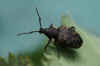 . .
 Black vine weevil (Otiorhynchus sulcatus). Tribe
Otiorhynchini. Subfamily
Broad-nosed Weevils (Entiminae). Family Curculionidae.
Black vine weevil (Otiorhynchus sulcatus). Tribe
Otiorhynchini. Subfamily
Broad-nosed Weevils (Entiminae). Family Curculionidae.
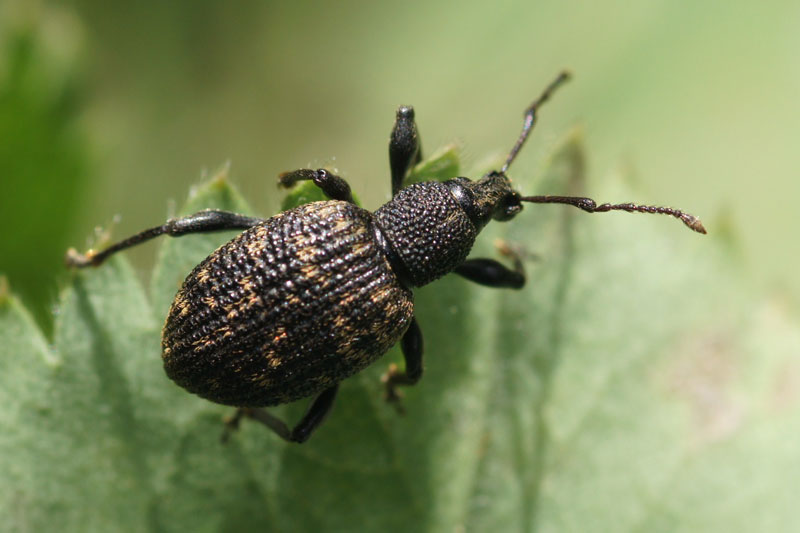
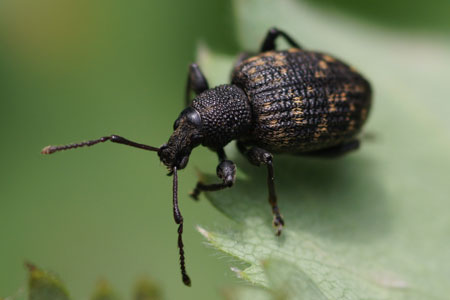
A black weevil with light spots (light yellow hairs) on the back.
This weevil can't run and fly. For a beetle it can be quite old. Even a few years.
It feeds on leaves of different plant species.
The larvae are white and they are a pest for many plants. In my garden it is not
a problem. But in flower pots, it can be a pest. Also on a plant nursery, they are not happy with
black vine weevils. The larvae feed on the roots of plants like conifers, rhododendrons, strawberry
plants. Also potted plants like fuchsia, Kalanchoë.
A natural pesticide by the pest is a nematode. They eat the larva from the inside.
The larva overwinters.
Length 9 to 11 mm
Native to Europe, but they are also common in North America. German: Gefurchte
Dickmaulrüssler,
Breitmaulrüssler French: L'otiorhynque de la vigne. |
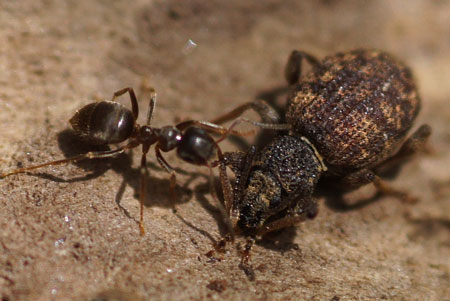 .. ..
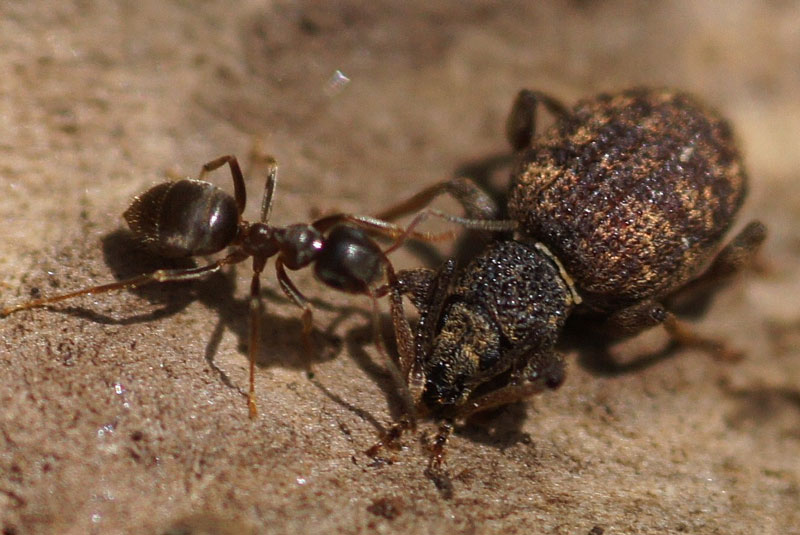
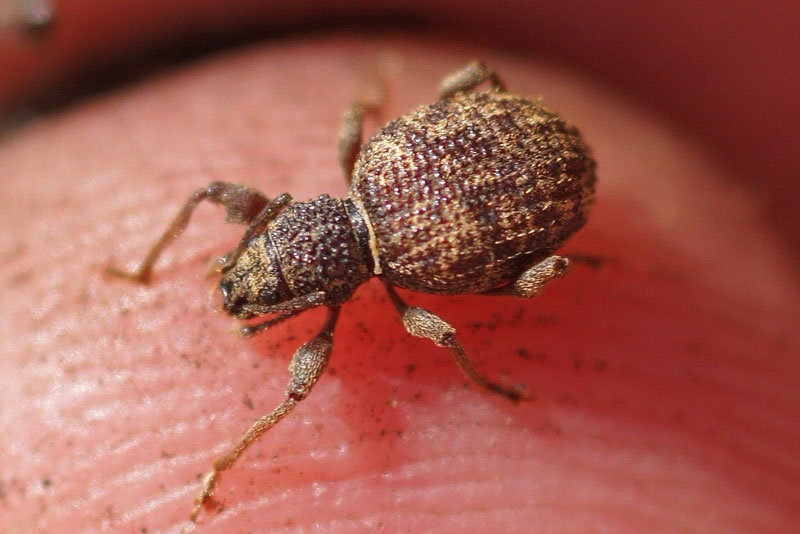
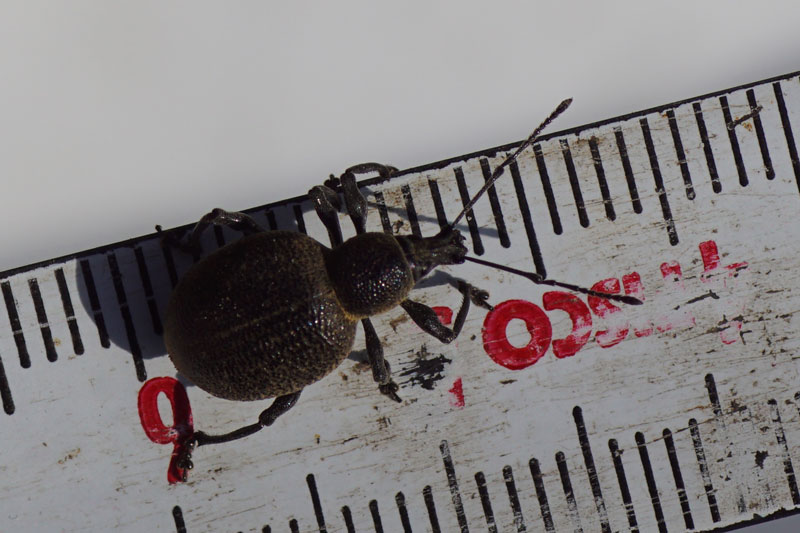
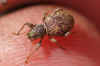 Otiorhynchus crataegi Subfamily Broad-nosed Weevils (Entiminae).
Tribe Otiorhynchini. Family
Curculionidae.
Otiorhynchus crataegi Subfamily Broad-nosed Weevils (Entiminae).
Tribe Otiorhynchini. Family
Curculionidae.
An exotic species or the Netherlands. (Native: Southeast Europe, Italy)
This weevil I found under a piece of wood. It did not look healthy, but it
was alive. The antennas it kept together. An ant took a look.
The species lives in shrubs and privet, lilac and cotoneaster. The larva can be found in the roots of the bushes.
Length 5-6 mm.
Photos 2-4-2011.
|
 .. ..
 . .
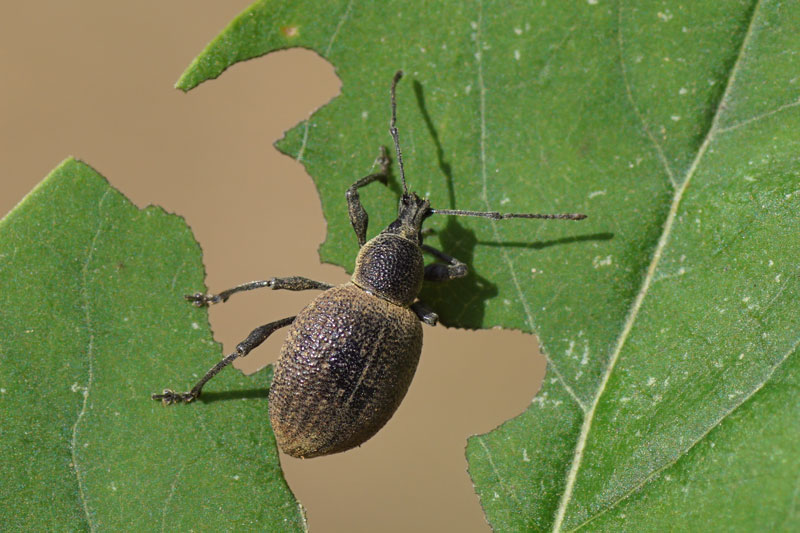
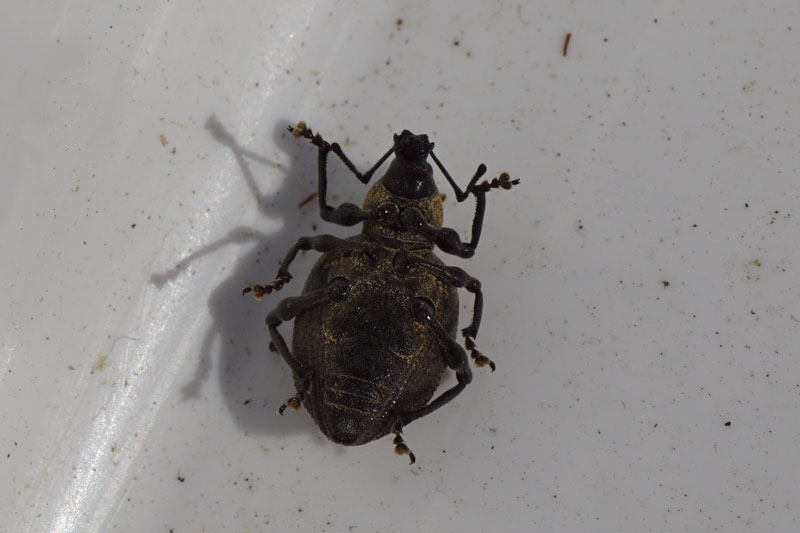
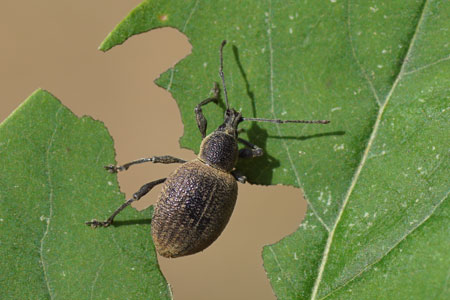
 Otiorhynchus apenninus. Subfamily Broad-nosed Weevils (Entiminae).
Tribe Otiorhynchini. Family
Curculionidae. Likely, but uncertain as it has not been confirmed by an expert.
Otiorhynchus apenninus. Subfamily Broad-nosed Weevils (Entiminae).
Tribe Otiorhynchini. Family
Curculionidae. Likely, but uncertain as it has not been confirmed by an expert.
Looks like the Otiorhynchus sulcatus. It is slightly larger and lacks the yellow spots on the back. Black and somewhat yellowish. The back is wider. I found him while pruning the lilac bush. Kept it in a container, where it ate the leaves, as shown in the photo. Nearby is a young cherry laurel. The plant from which it got its Dutch name, because it is harmful to it. The larvae in particular can be harmful because they feed on the roots.
It is an exotic from southern Europe, which has settled in the Netherlands for several years. In the south it is known to eat many different types of plants.
Photos 28-6-2023, 3-7-2023. |
Tribe Polydrusini.
Much information about Phyllobius.
Determination tabel Phyllobius.
 .. ..
 . .
 . .
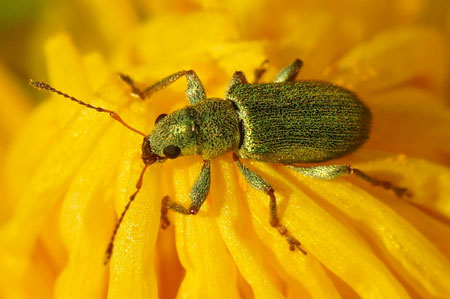
 Pachyrhinus
lethierryi. Tribe Polydrusini.
Subfamily Entiminae. Family Curculionidae.
Rare in the Netherlands!
Pachyrhinus
lethierryi. Tribe Polydrusini.
Subfamily Entiminae. Family Curculionidae.
Rare in the Netherlands!
They have a broader head than the Polydrusus and shorter snout.
Host Plants on which they are found are conifers in the cypress family (Cupressaceae) trees as
Chamaecyparis, Cupressus sempervirens, Thuja occidentalis.
Originally Italy. South of France, but it is going more and more towards the north of Europe. First sighting in the Netherlands in 2007 in New Zealand. Most likely they are distributed by the transport of food plants.
Length about 4 - 5 mm.
Photos 12-4-2014. |
 .. ..
 . .
 . .
 . .
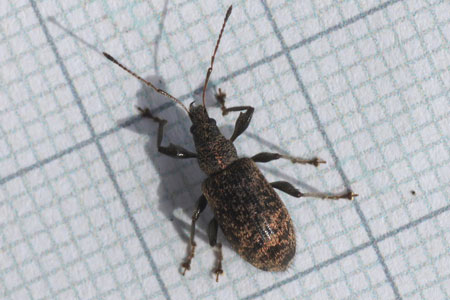
 Phyllobius pilicornis. Tribe Polydrusini. Subfamily Entiminae.
Family Curculionidae. Exotic.
Rare in the Netherlands!
Phyllobius pilicornis. Tribe Polydrusini. Subfamily Entiminae.
Family Curculionidae. Exotic.
Rare in the Netherlands!
When I found this weevil in 2013, Theodoor Heijerman (biologist and expert on weevils) to
was studing this species. In 2015 he wrote a report together with Silvia
Hellingman. (Entomological
berichten 75: 110-117). I have used the information he has given.
It is an exotic species, which has been observed for the first time in 2009 in the Netherlands. Up to now they have been found in the western Netherlands. With me
it feeds on field maple (Acer campestre) and elm (Ulmus), but there are more food plants.
It can fly. It is notable that there is up to now only females are found.
The scales are irregularly distributed over the elytra, resulting in a mottled impression. The scales are gray, gray-brown with a coppery sheen.
Length 7 to 9 mm.
It is native to the Balkan Peninsula. But it also occurs in other adjacent countries, such as Austria and the whole of Turkey. In those areas
live other semilar species.
Photos 12-5-2014, 11-5-2015. Top left: 6-6-2013. My first Phyllobius pilicornis. |
 .. ..
 . .
 . .
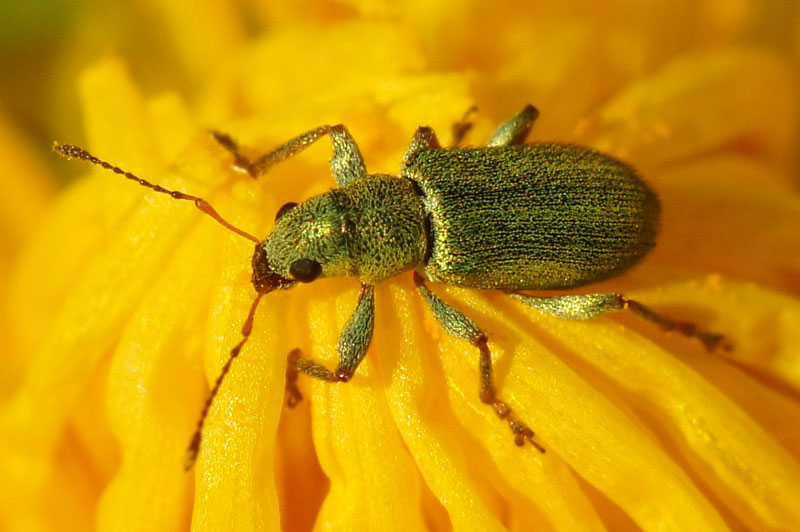
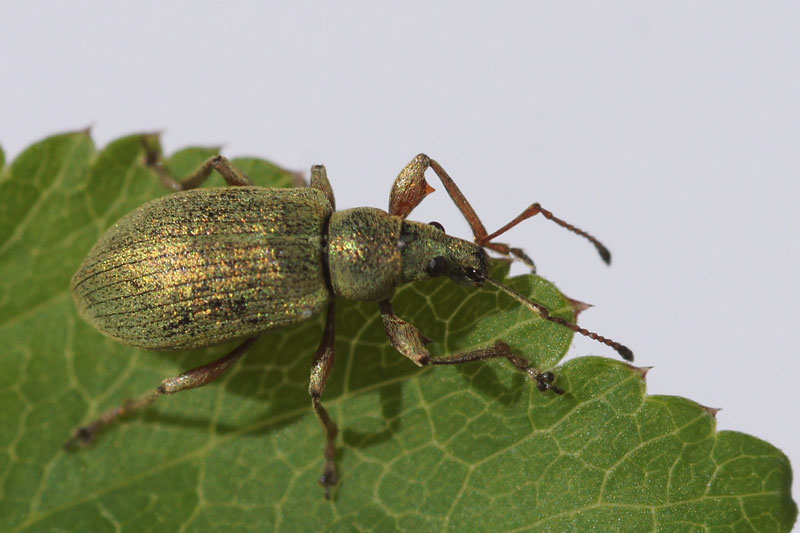
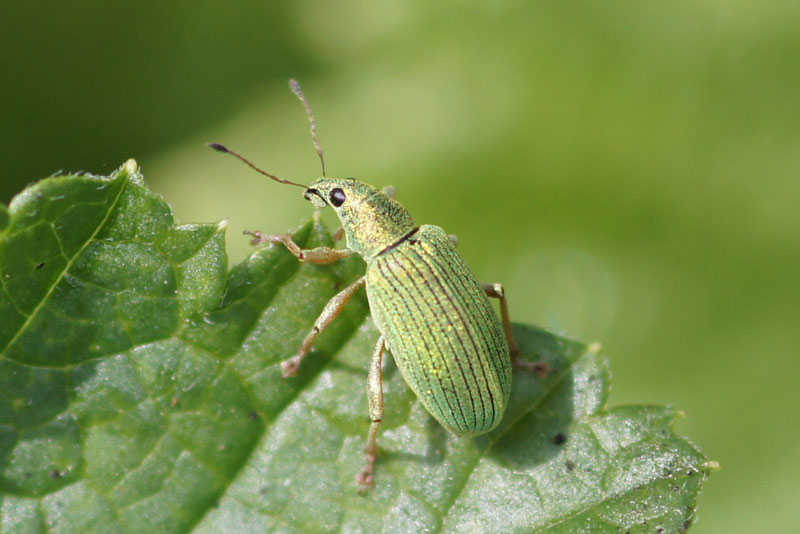
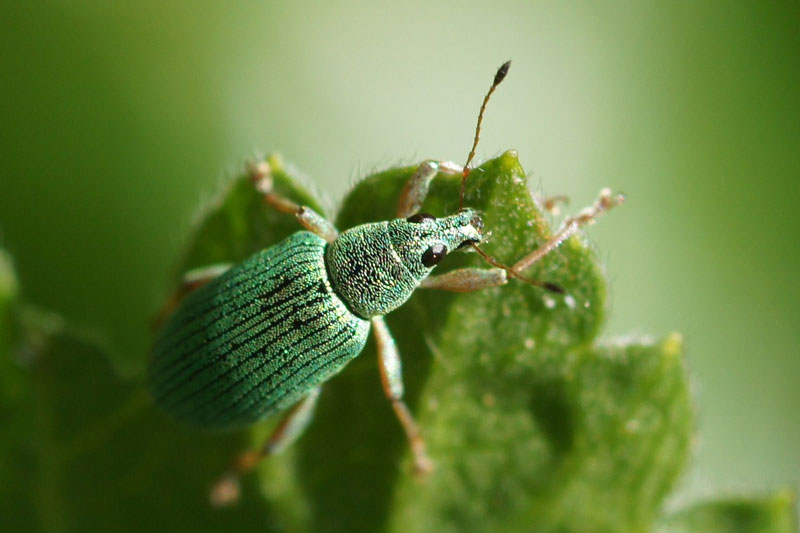
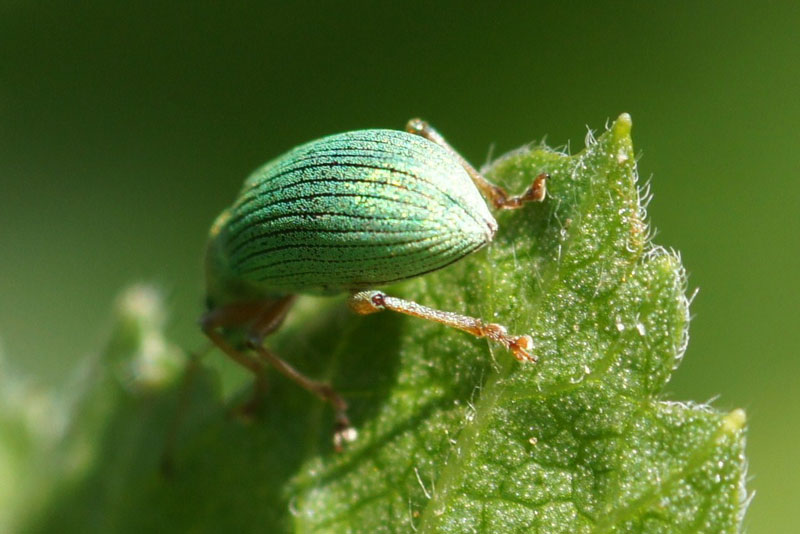
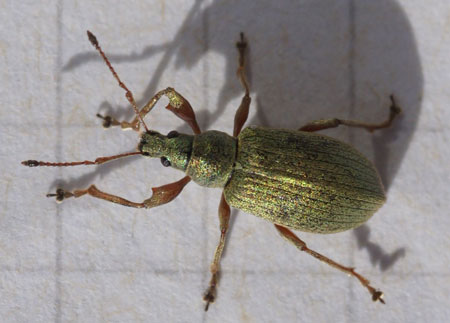
 Green Nettle Weevil
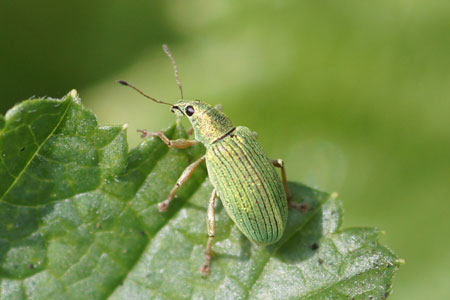
(Phyllobius pomaceus). Tribe Polydrusini. Subfamily Entiminae.
Family Curculionidae.
Green Nettle Weevil
(Phyllobius pomaceus). Tribe Polydrusini. Subfamily Entiminae.
Family Curculionidae.
In the roadside about 100 m from our house.
A difference between the species and Phyllobius Polydrusus is the location of the antennas on the head.
A green weevil. The green colour is because of the green metallic scales
on a black skin.
The thighs have a distinctive tooth.
Host plants are nettles. Similar species you can find on nettles are Phyllobius
virideaeris and Phyllobius roboretanus.
April-June. Length 7-9 mm.
Europe, North Asia.
Photos 9-4-2014. |
 .. ..
 . .
 . .
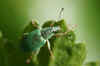 . .
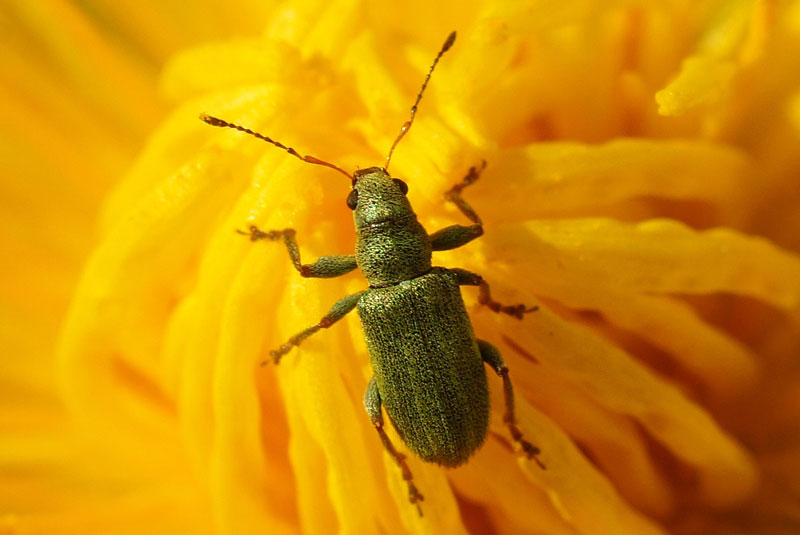
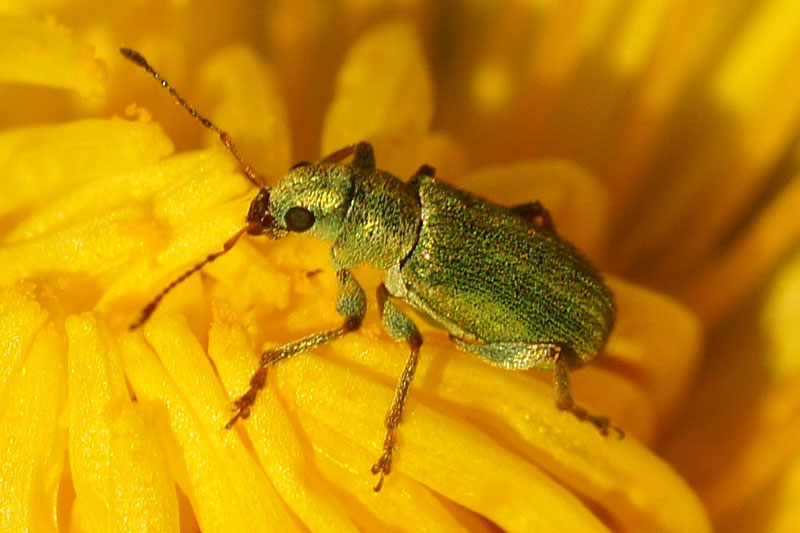
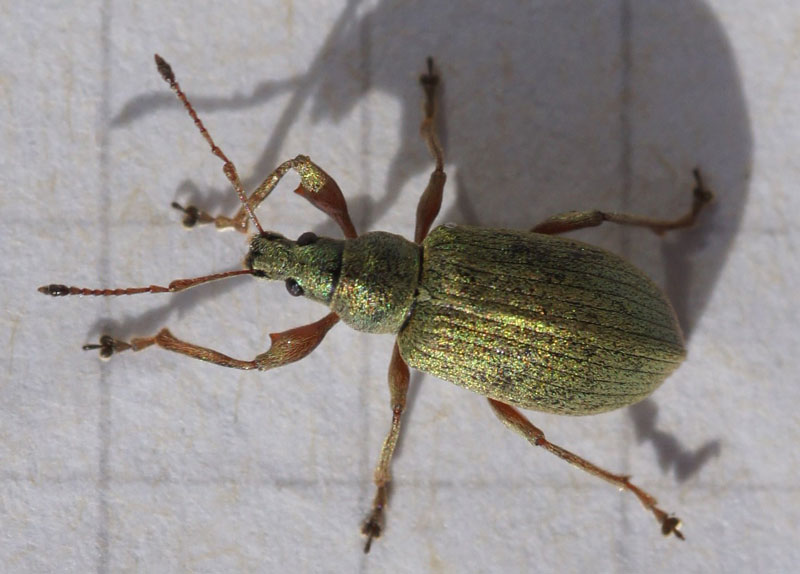
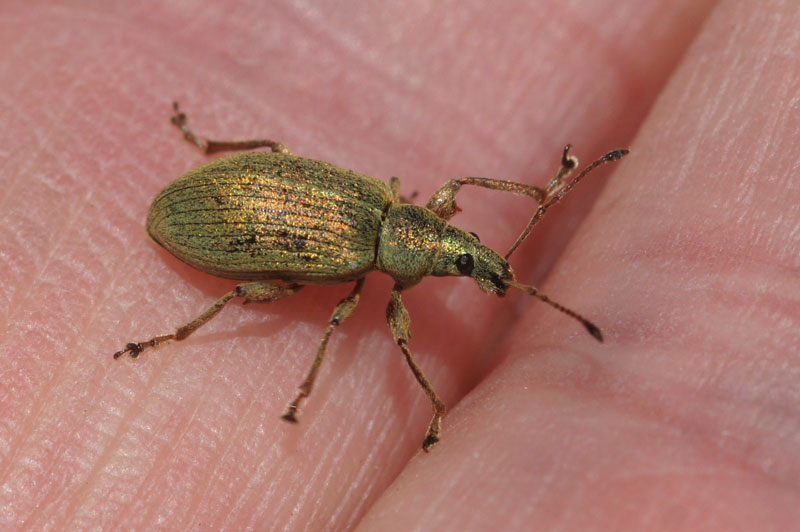
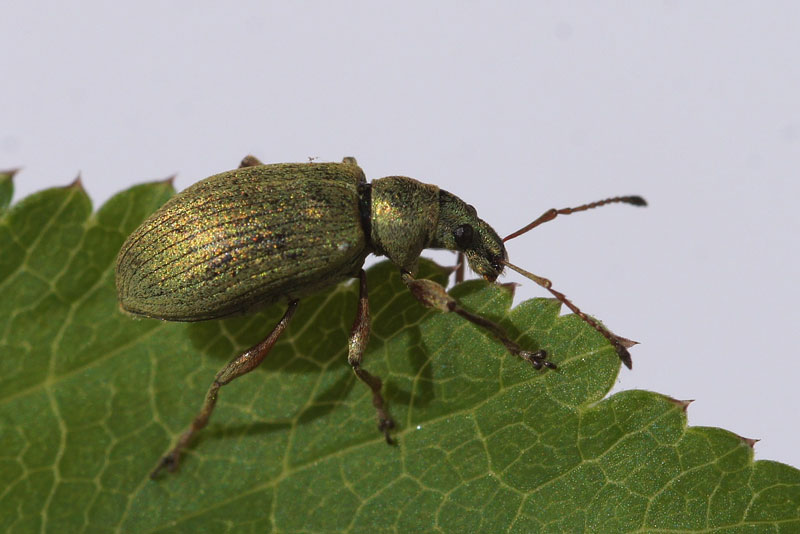
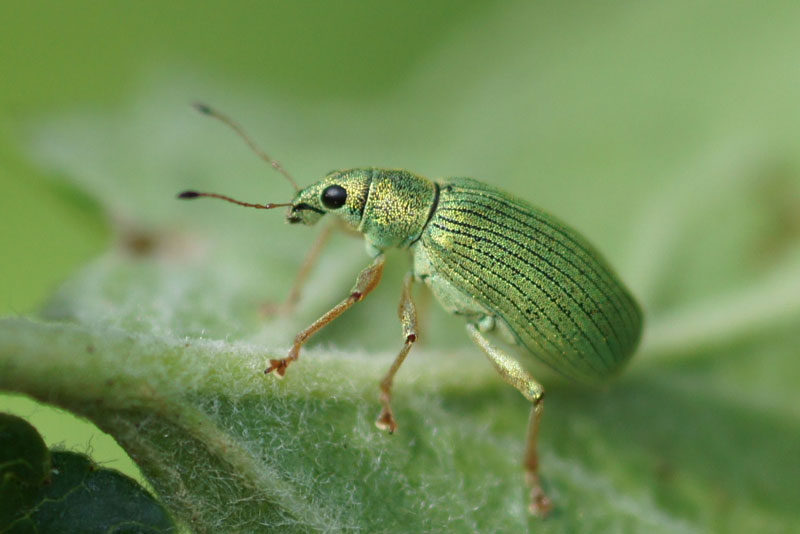
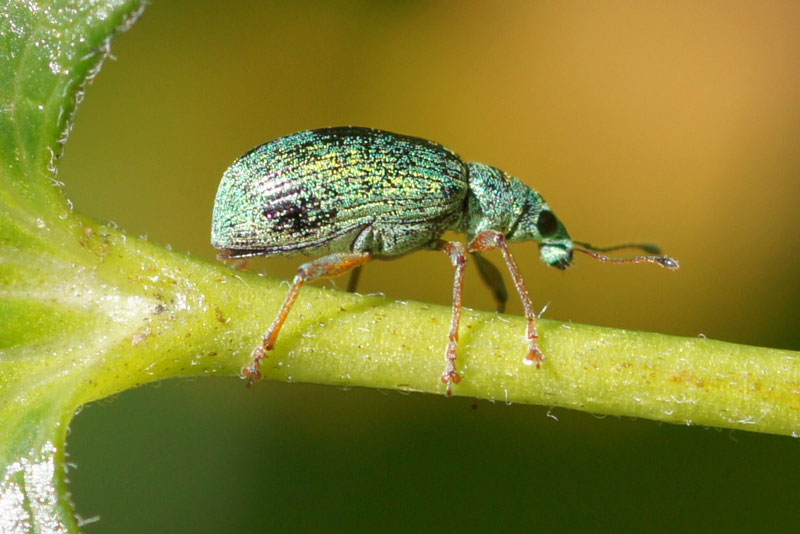
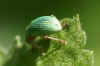 Polydrusus formosus synonym Polydrusus
sericeus. Tribe
Polydrusini.
Subfamily Entiminae. Family Curculionidae.
Polydrusus formosus synonym Polydrusus
sericeus. Tribe
Polydrusini.
Subfamily Entiminae. Family Curculionidae.
When they are young, they have a beautiful green colouring. It changes in
grayish green when they are old. The green colour is because
of the green metallic scales on a black skin.
You can find this species in
birches. In my garden I find them in the bay shrubs near the birch.
They feed on leaves of trees and bushes such as birch,
apple, strawberry. They are no pest in my garden.
The larvae feed on roots.
Europe. In America (Green immigrant leaf weevil)
since 1906 (first found in New York)
April - July.
|
 .. ..
 . .
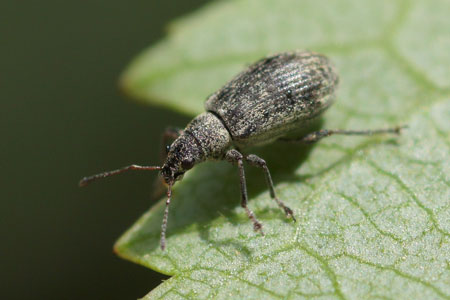
 Polydrusus cervinus, Polydrosus cervinus. Tribe
Polydrusini.
Subfamily Entiminae. Family Curculionidae.
Polydrusus cervinus, Polydrosus cervinus. Tribe
Polydrusini.
Subfamily Entiminae. Family Curculionidae.
This species is brownish rather than green and
more blotchy. It has the same length and the same bands running over the elytra
as the Polydrusus
sericeus. It has a preference for birch, but
lives also in other shrubs. I see them on the same place in the garden as its family. But less often.
A common species in Europe.
Photos 15-5-2012.
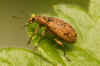 Photo
22-4-2014. This Polydrusus cervinus is browner. Photo
22-4-2014. This Polydrusus cervinus is browner. |
Tribe Sciaphilini.
 .. ..
 . .
 . .
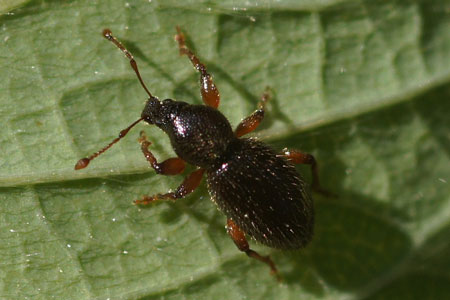
 Hairy Spider Weevil, Hairy broad-nosed weevil, Juniper Root Weevil
(Barypeithes pellucidus). Tribe Sciaphilini. Subfamily Broad-nosed Weevils
(Entiminae). Family Curculionidae.
Hairy Spider Weevil, Hairy broad-nosed weevil, Juniper Root Weevil
(Barypeithes pellucidus). Tribe Sciaphilini. Subfamily Broad-nosed Weevils
(Entiminae). Family Curculionidae.
Recognizable by its broad snout. It is a dark beetle. In the sun it is dark glossy brown. Erect hairs on the carapace.
It feeds on many different kinds of plants (such as the strawberry) and tree leaves.
Damage, however is important. Length 3, 4 mm.
Photos: 23-5-2010. |
Tribe Sitonini.
 .. ..
 . .
 . .
 Clover
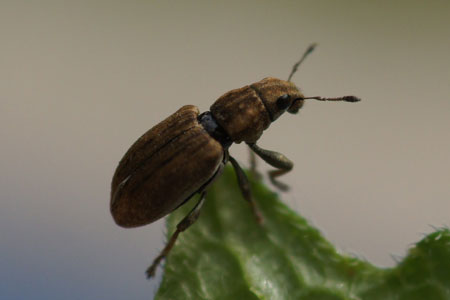
root weevil (Sitona lepidus). Tribe Sitonini. Subfamily
Entiminae. Family Curculionidae.
Clover
root weevil (Sitona lepidus). Tribe Sitonini. Subfamily
Entiminae. Family Curculionidae.
This weevil walked on my arm.
It is a European beetle, which feed on several species of clovers. It is
found now also in other parts of the world.
The beetle feeds on clover leaves.
The larvae eat the roots. Length: 4-5 mm.
There is written a lot about this pest on the internet, but nothing in Dutch. Particularly in New Zealand
it is a pest.
The clover weevil was first identified in New Zealand in 1996.
Photo 9-8-2010. |
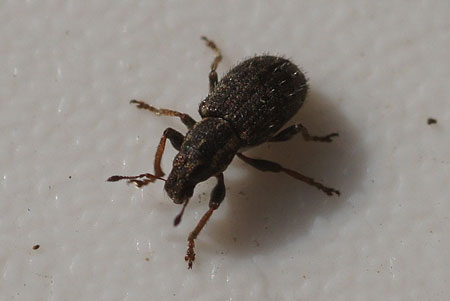 .. ..
 . .
 . .
 Clover Root Curculio (Sitona hispidulus).
Tribe Sitonini. Subfamily Entiminae. Family Curculionidae.
Clover Root Curculio (Sitona hispidulus).
Tribe Sitonini. Subfamily Entiminae. Family Curculionidae.
Harmful in Trifolium (clover) and Medicago (alfalfa) crops. So no problem for my garden. The larvae feed on the roots. The adult beetles eat the leaves. The damage is not too bad under normal growing conditions.
A difference from the other species sitona are the long erect bristles on the elytra.
The adults overwinter in the soil or leaf litter and are active in the autumn and spring.
In spring the eggs are deposited on the soil in spring. Length 4-5 mm.
Eurasia (Origin)
and America. Photo 22-9-2010. |
Subfamily Mesoptiliinae.
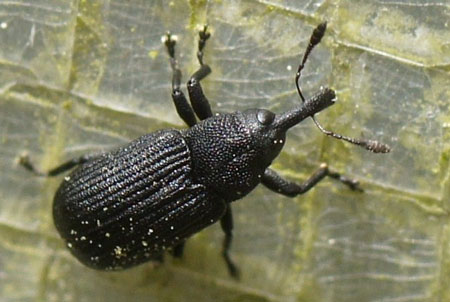 .. ..
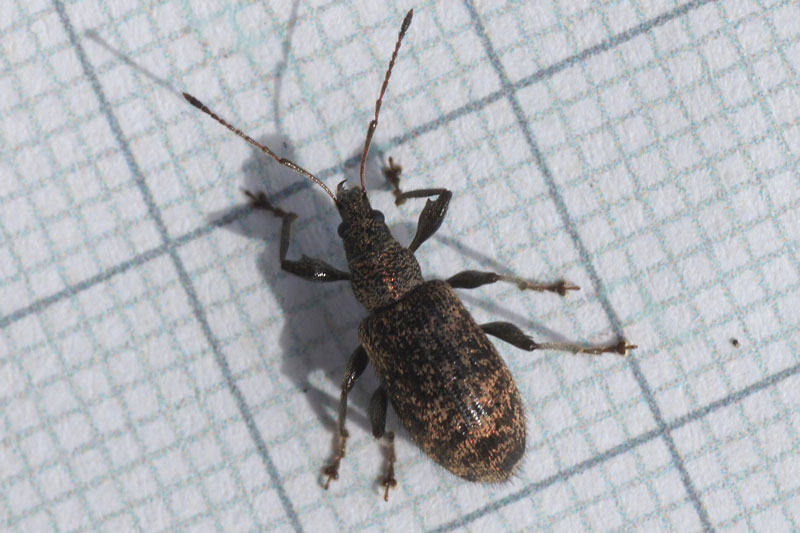
 Magdalis spec. Tribe Magdalini. Subfamily Mesoptiliinae. Family
Curculionidae.
Magdalis spec. Tribe Magdalini. Subfamily Mesoptiliinae. Family
Curculionidae.
Larvae of magdalis mine in bark of trees.
It would be Magdalis cerasi but from a photo it isn't certain. About 3 mm.
The squares are 2 mm.
Photos 8-6-2012.
|
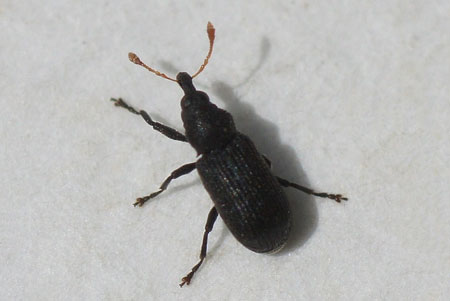 .. ..
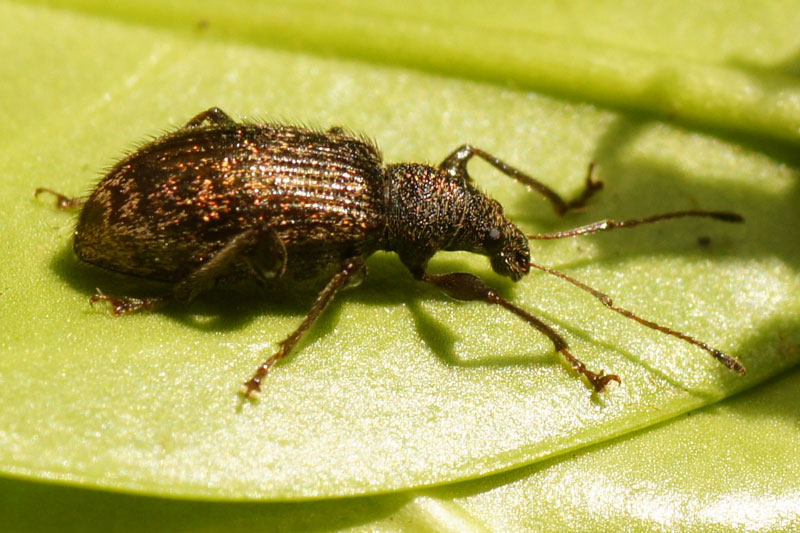
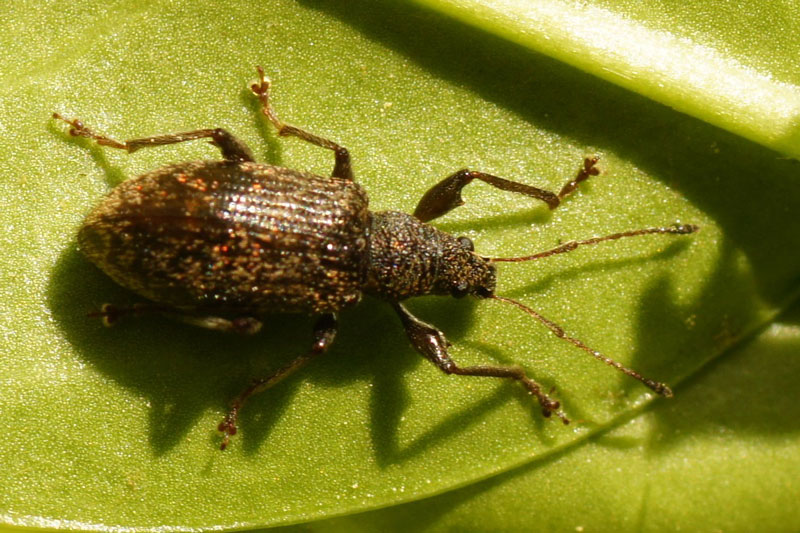
 Magdalis spec. Tribe Magdalini. Subfamily Mesoptiliinae. Family
Curculionidae.
Magdalis spec. Tribe Magdalini. Subfamily Mesoptiliinae. Family
Curculionidae.
It can be magdalis
ruficornis, m. barbicornis, m. flavicornis of m.
fuscicornis.
This magdalis has light antennas. But there are different species with light antennas.
After a stormy night I found it the next day on the window. It is missing two legs.
About 3 mm.
Photos 17-6-2012.
|
Subfamily Nanophyinae.
 .. ..
 . .
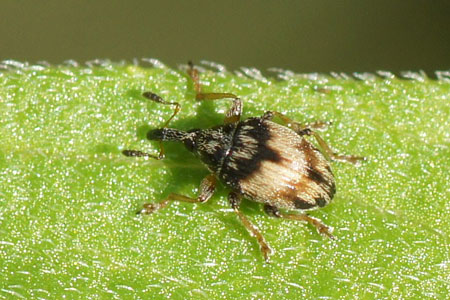
 Nanophyes marmoratus. Subfamily
Nanophyinae. Family Curculionidae.
Nanophyes marmoratus. Subfamily
Nanophyinae. Family Curculionidae.
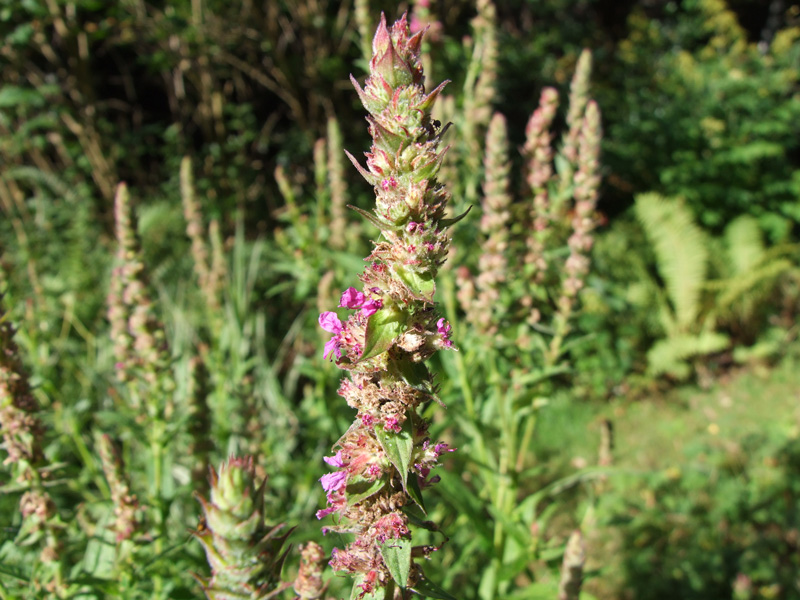
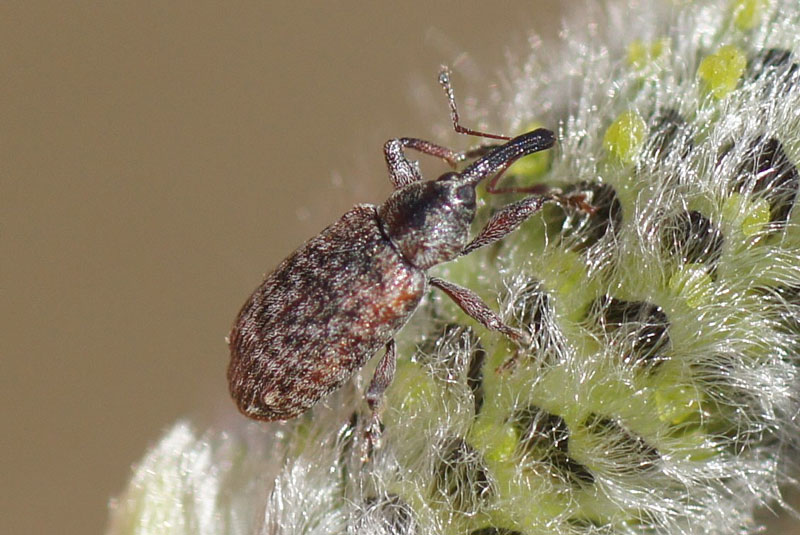
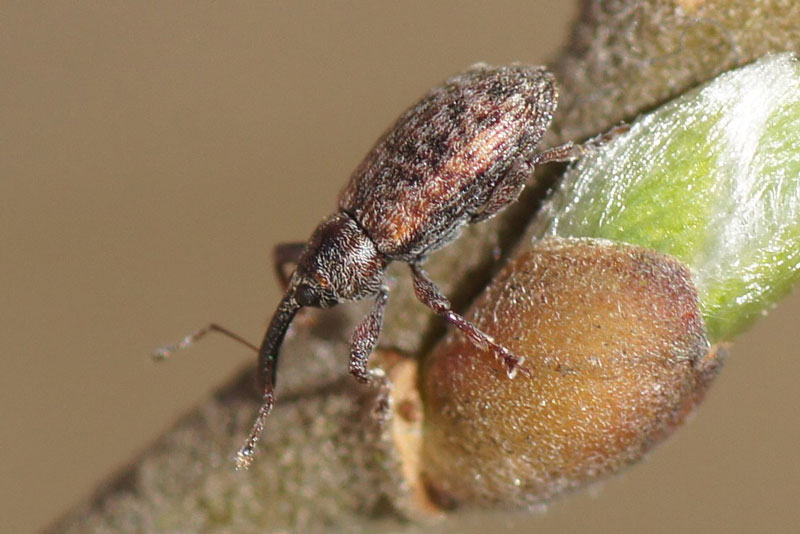
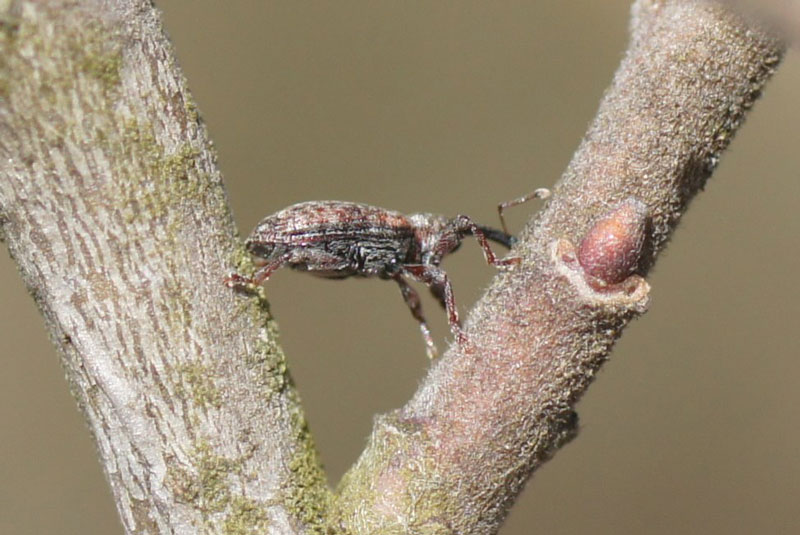
A very small weevil
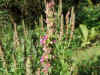
in purple loosestrife
(Lythrum salicaria).
They are feeding on youngest leaves and flower parts. Eggs are laid singly into the tips of flower buds. Attacked
buds remain closed and often drop to the ground. In August appears a new generation of beetles. This
generation hibernates in the leaf litter. The development from egg to adult snout beetle lasts a
month.
 Photos 2008.
Measuring 1,5-2 mm !!
Nanophyes marmoratus is widespread in Europe. But it is also common in America now. In fact I could find more information on the American sites. There it is used as a biological control
agent, for in America purple loosestrife is an invasive weed.
Photos June, July 2012. |
Subfamily Notarinae.
 .. ..
 . .
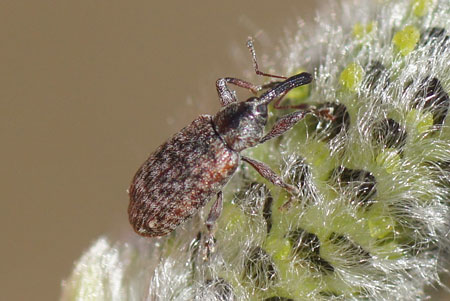
 Dmaybe dorytomus taeniatus.
Subfamily Notarinae. Family
Curculionidae. Not in the garden but in the dunes about 4 km from
our house.
Dmaybe dorytomus taeniatus.
Subfamily Notarinae. Family
Curculionidae. Not in the garden but in the dunes about 4 km from
our house.
Here it walked on a flower of a willow. The antenna is quite far to the front of the snout. Some family members are
very similar.
Length about 3-
4,5 mm.
Photos 20-4-2013.
|
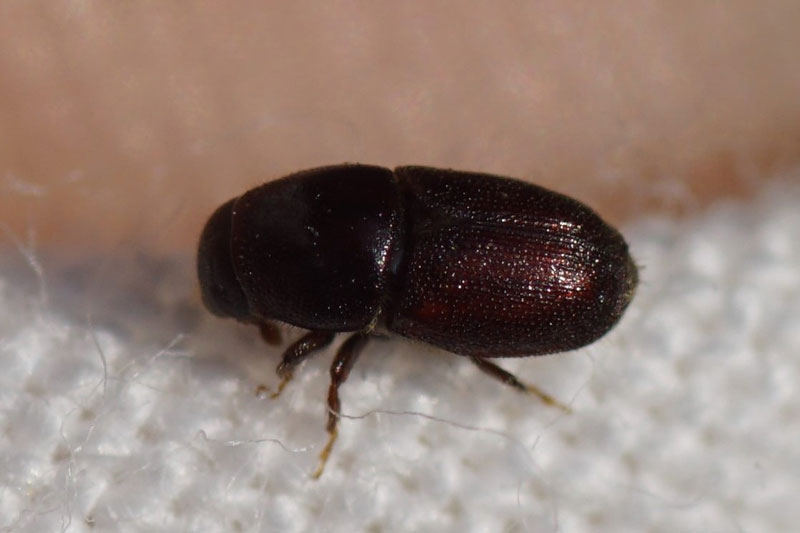
Subfamily Scolytinae.
Scolytinae was considered a distinct family Scolytidae. The larva eats from the wood grain under the bark of trees, creating a corridor system, which can be very harmful to a tree.
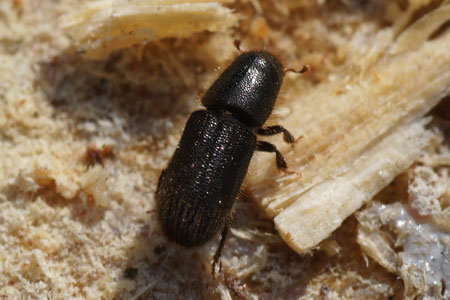 .. ..
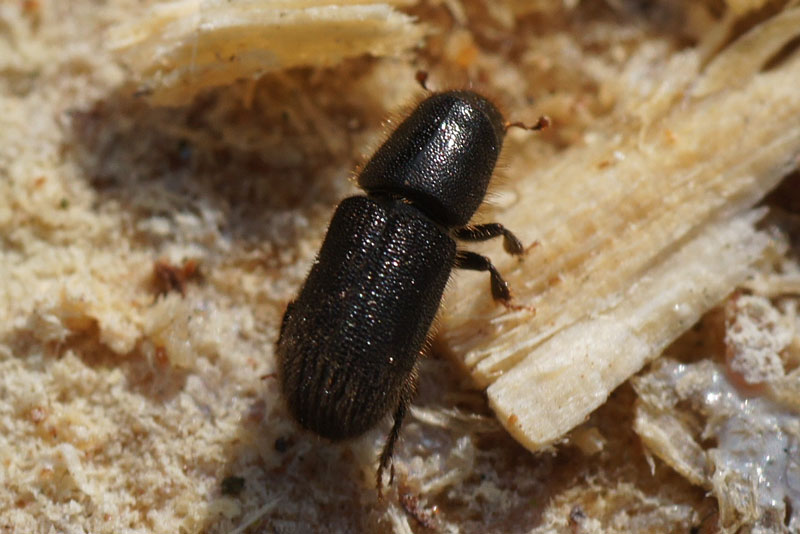
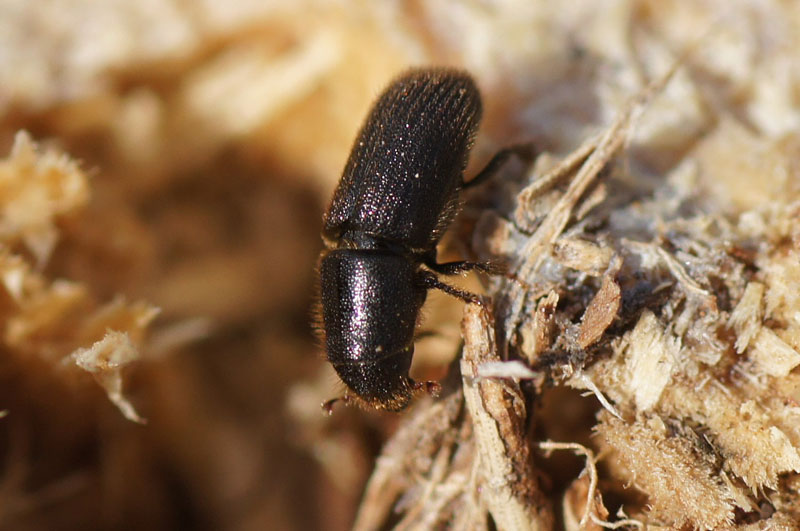
 Hylurgus ligniperda.
Subfamily Scolytinae. Family
Curculionidae.
Not in the garden but in the dunes about 4 km from
our house.
Hylurgus ligniperda.
Subfamily Scolytinae. Family
Curculionidae.
Not in the garden but in the dunes about 4 km from
our house.
A cylindrical, black-brown beetle with
dense yellowish or reddish hairs that are particularly noticeable on the posterior slope of the elytra and on the front of the head. You
don't recognize them as a weevil. There are more beetles from other families with the same way of life, having
this form.
I found some of them on a stump of a recently felled pine. They also have
pines as a host. (Stressed or recently felled trees, freshly cut logs, stumps, slash and even
seedlings) Larvae feed on the inner bark along the stem, roots and root collar.
They overwinter under the bark. They can fly well.
Length about 4-6 mm.
Native to Europe, North Africa. Introduced in Africa, Asia, South America, Oceania and the United States.
Photos: 10-4-2015. |
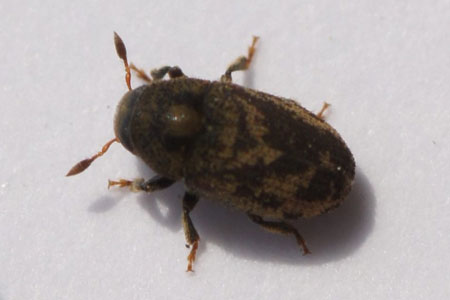 .. ..
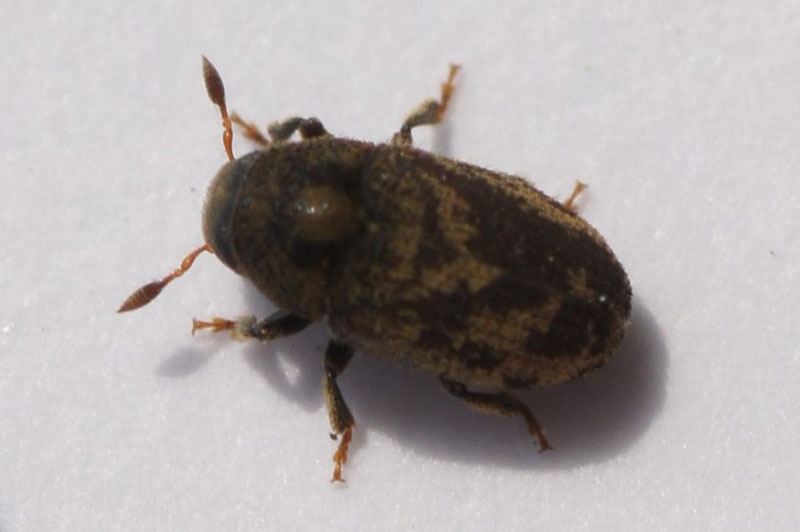
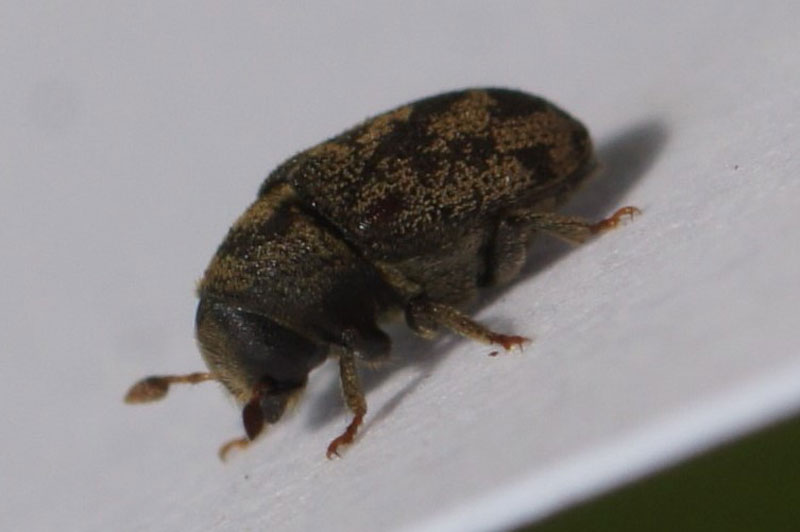
 Ash Bark Beetle (Leperisinus fraxini).
Subfamily Scolytinae. Family
Curculionidae.
Ash Bark Beetle (Leperisinus fraxini).
Subfamily Scolytinae. Family
Curculionidae.
A cylindrical beetle with yellow brown and brown spots. He occurs on ashes, but also on other deciduous trees like maple, apple, pear.
The adult beetle overwinters. The new generation will appear in July and August.
Length: 2.5-3 mm.
Photos 11-5-2017. German: Bunte
Eschenbastkäfer.
|
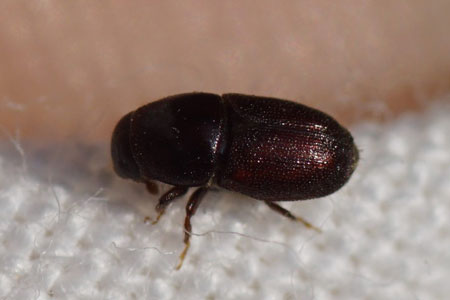 Scolytus.
Onderfamilie Scolytinae.
Subfamily Scolytinae. Family
Curculionidae.
Scolytus.
Onderfamilie Scolytinae.
Subfamily Scolytinae. Family
Curculionidae.
A cylindrical beetle. I don't know the species. In the Netherlands the following species are: Scolytus scolytus (on elm), Scolytus carpini
(especialy on hop-hornbeam), Scolytus mali (on apple), Scolytus pygmaeus (on elm), Scolytus intricatus (on oak), Scolytus ratzeburgii (on birch), Scolytus multistriatus (on elm), Scolytus rugulosus (on fruit trees). Eggs are deposited under the bark of the tree. The larvae make corridors between the bark and the wood. They are small. The beetle in the photo was 2-3 mm. Photos 30-6-2019. |
Subfamily Rhynchaeninae.
 .. ..
 . .
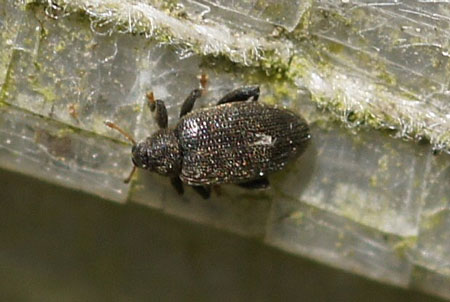
 Beech weevil Rhynchaenus fagi / Orchestes fagi.
Subfamily Rhynchaeninae. Family Curculionidae.
Beech weevil Rhynchaenus fagi / Orchestes fagi.
Subfamily Rhynchaeninae. Family Curculionidae.
They
live mainly
on the leaves of
the beech,
but also
on some other
leaves of deciduous
trees. These
leaves
are eaten. On
the leaf
the female
lays
an
egg near
the main vein
of the leave.
When larva hatches from the egg,
it
mines
the leaf towards
the outside of
the leaf.
The adult beetle
overwinters.
A dark
snout beetle
that can
jump.
The tarsus is brown.
About 2,5 mm. Photos 18-6-2011, 8-4-2014.
German: Buchenspringrüssler, Schwarzer Buchenrüssler. |
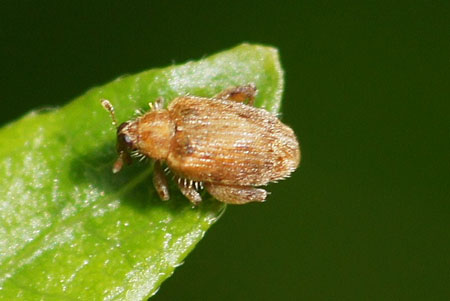 .. ..
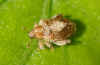 Oak flea weevil Rhynchaenus quercus / Orchestes quercus. Subfamily
Rhynchaeninae. Family Curculionidae.
Oak flea weevil Rhynchaenus quercus / Orchestes quercus. Subfamily
Rhynchaeninae. Family Curculionidae.
The larvae of this beetle start a mine near the main vein of the leaf
of the oak. The first part goes into the vein. Then he goes toward the outside and top of the leaf.
A small brown snout beetle that can jump.
The adult beetle overwinters. Larvae: May-June. About 2,5 mm.
Photos 19-6-2011.
|
Family Apionidae.
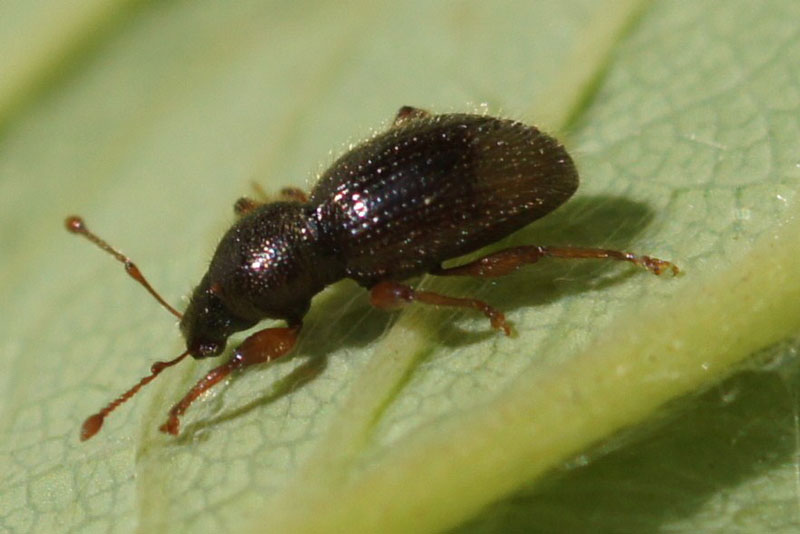
 .. ..
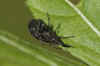 . .
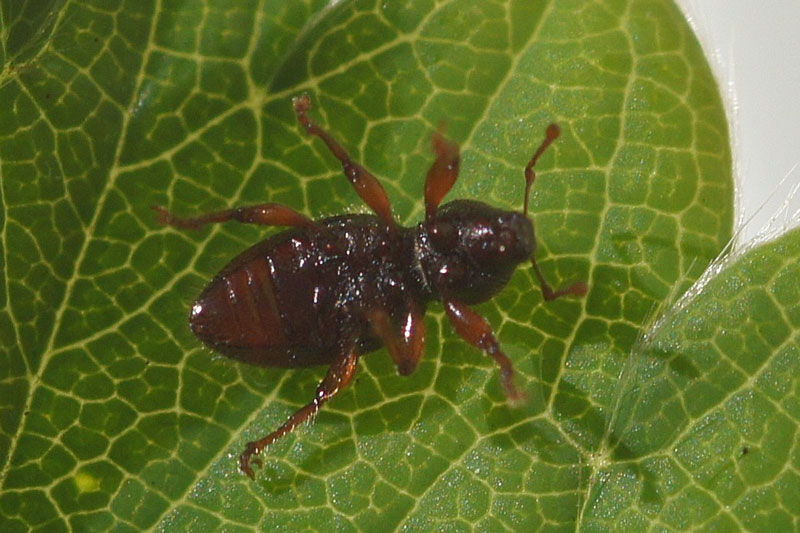
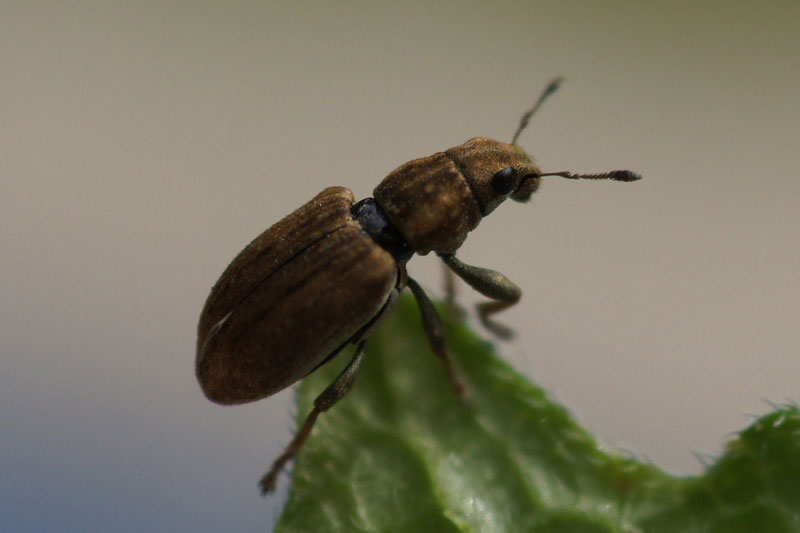
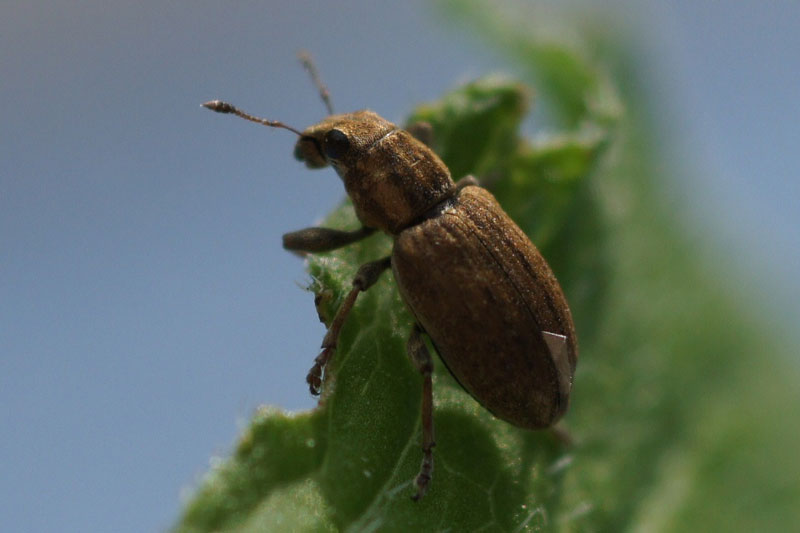
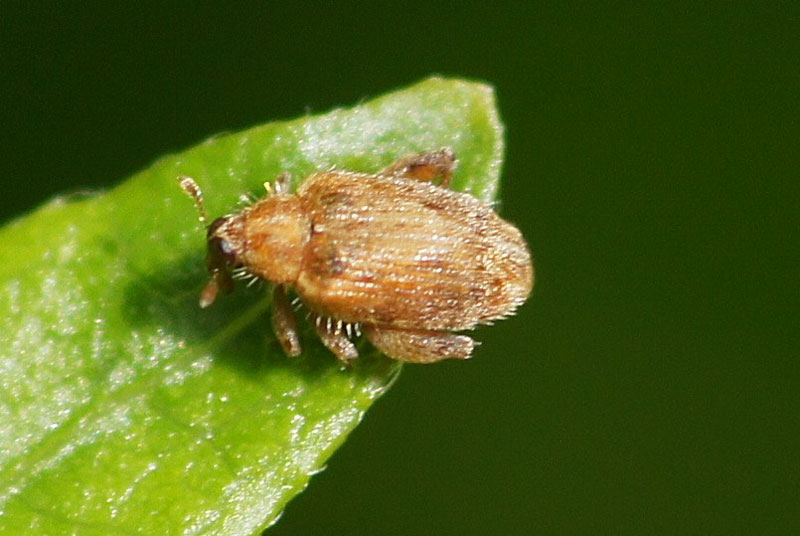
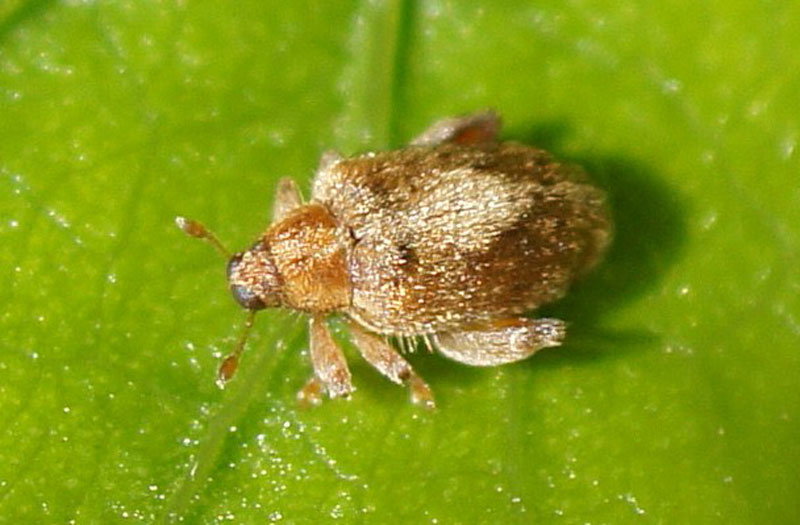
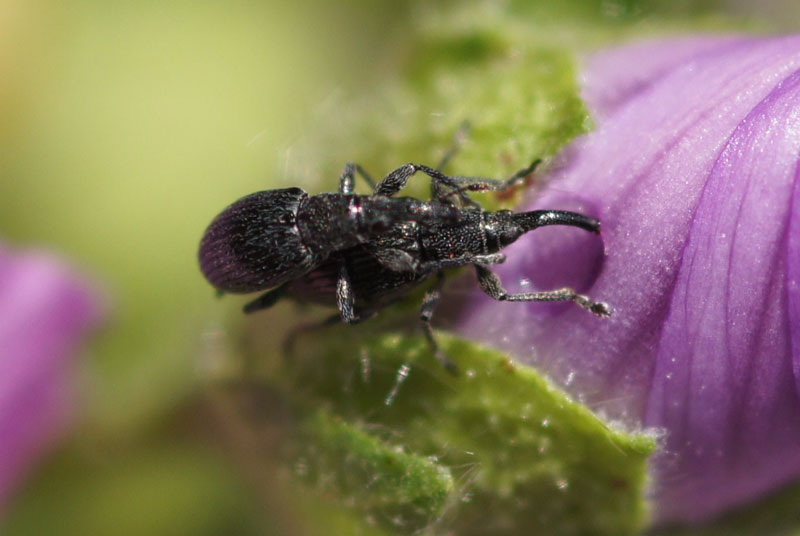
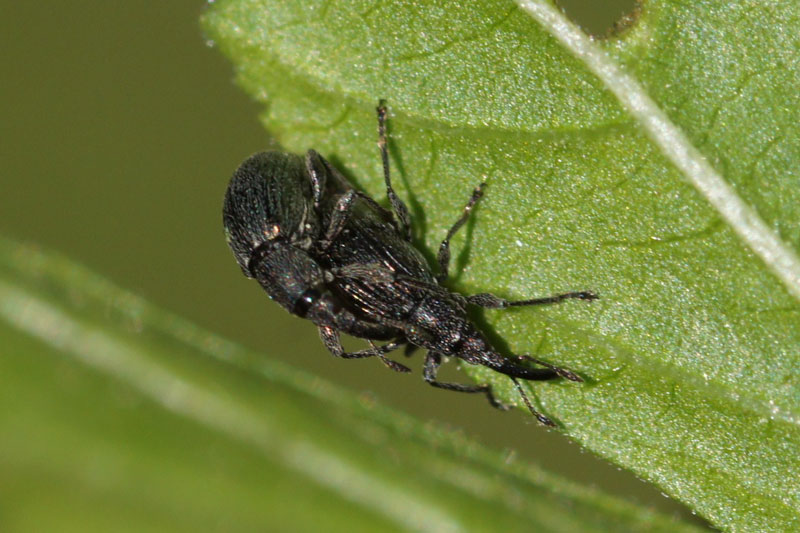
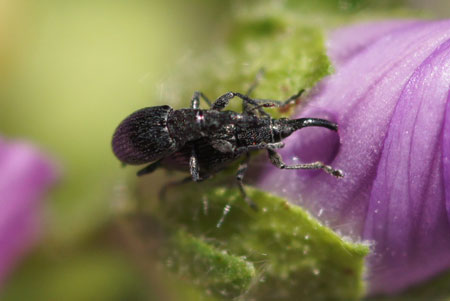
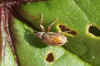
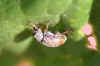
 Apion spec. Family Apionidae, synonym Brentidae.
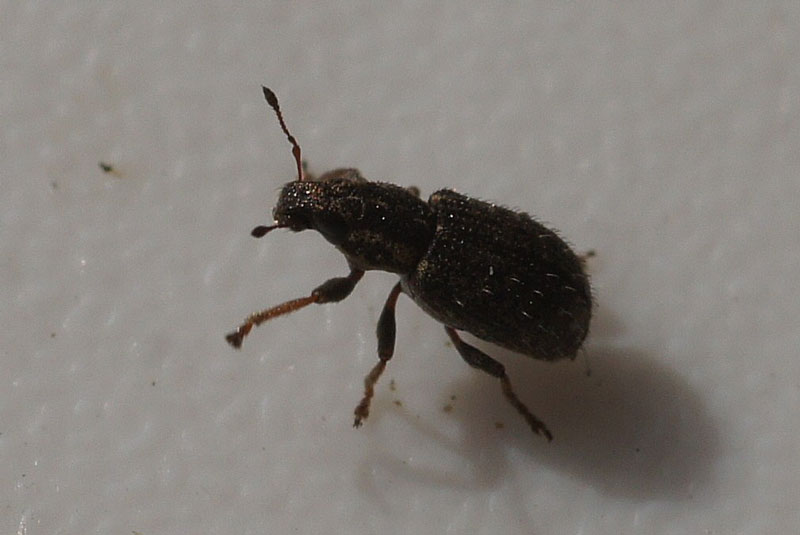
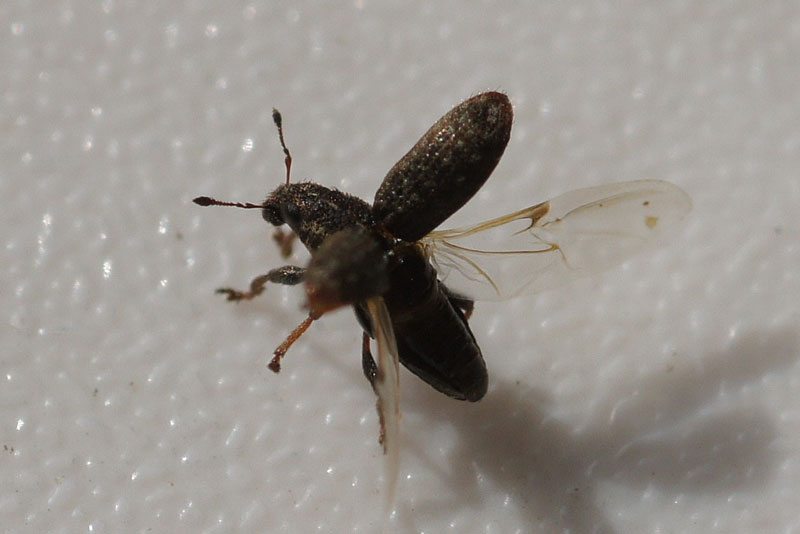
A family of small snout beetles. They all have the shape of the pictured beetles.
From a photograph, they are usually very difficult to identify. These weevils may
be beetles in the subfamilies Diplapion or Aspidapion.
Perhaps Aspidapion radiolus, because they are found on mallow.
These weevils are sitting on common mallow. But the very similar Aspidapion aeneum
also lives on mallow.
Length 3-4 mm. Photos 3-7-2010.
|
 .. ..
 . .
 . .
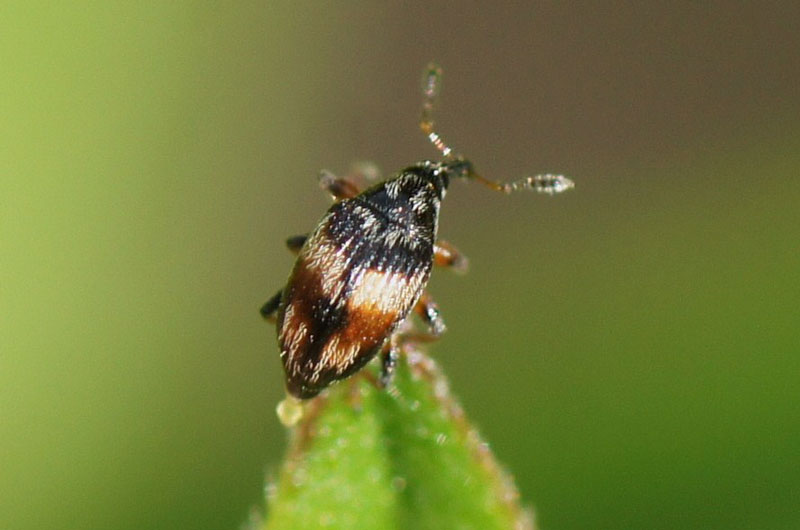
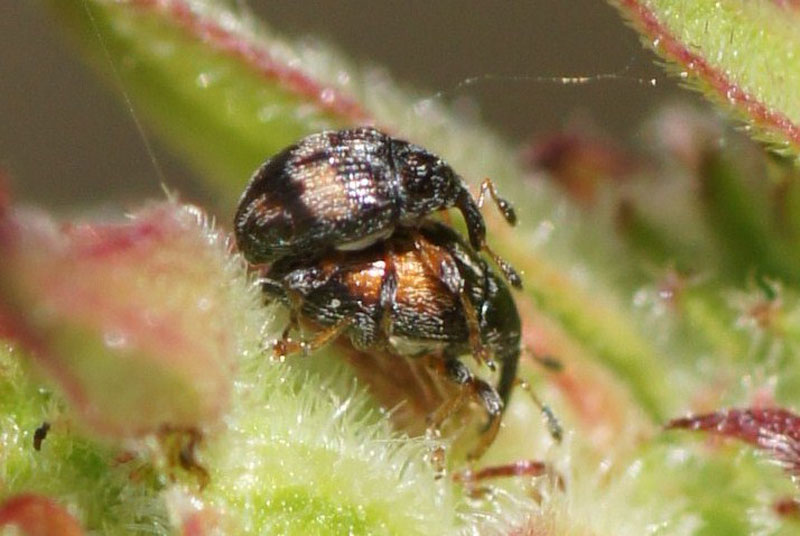
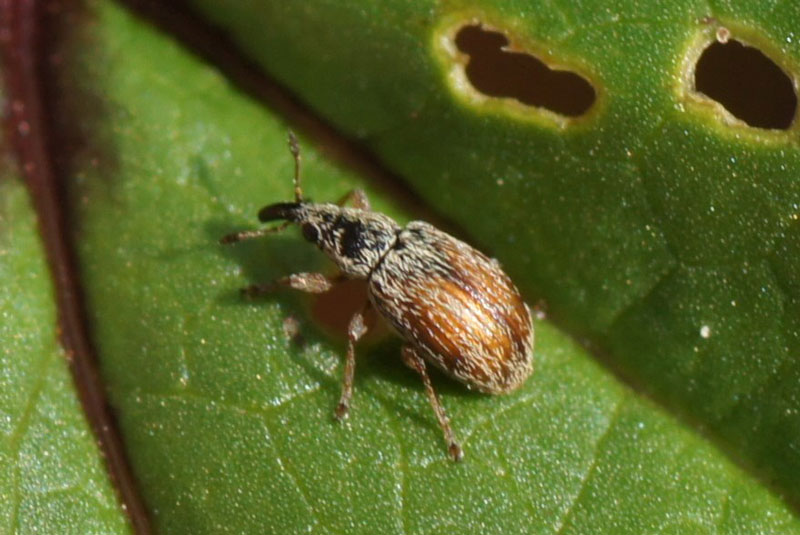
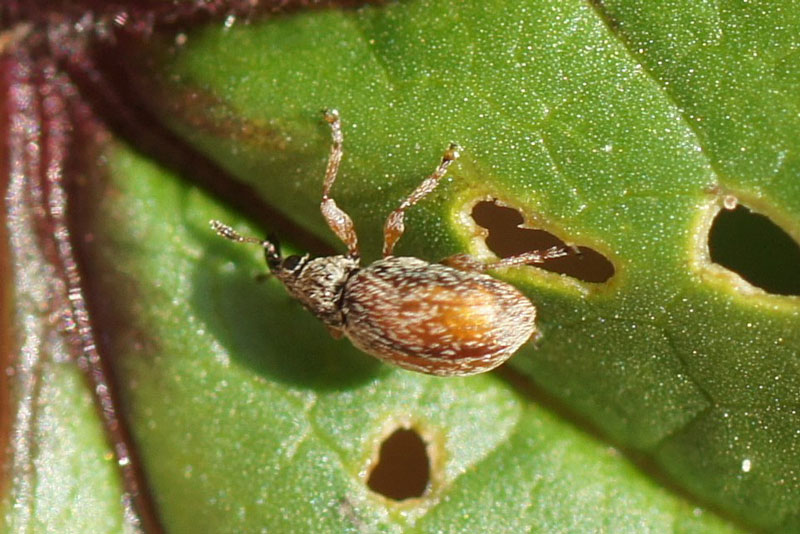
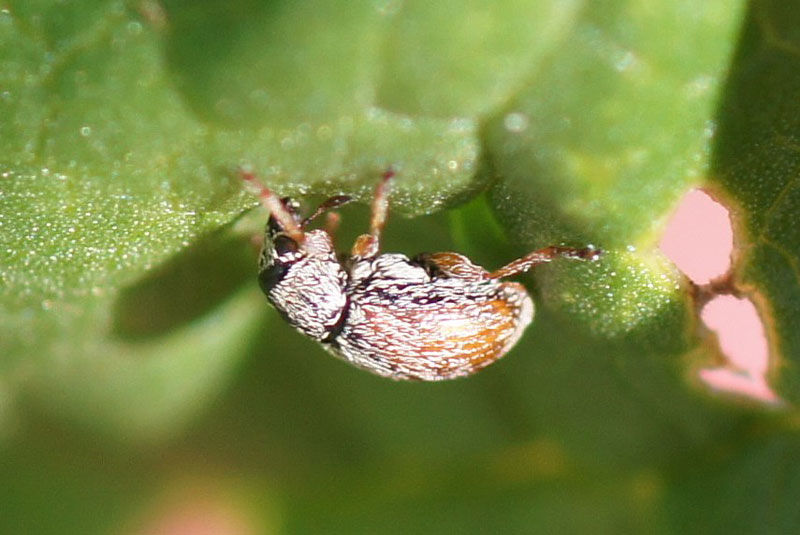
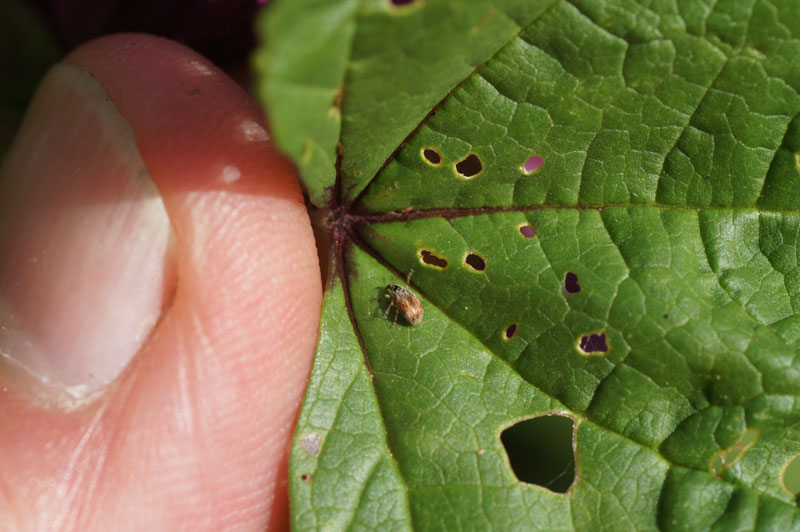
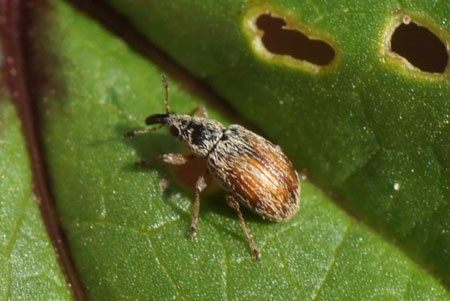
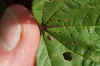 Malvapion malvae. Family Apionidae, synonym Brentidae.
A dense white hairy weevil. The shields are yello-red, -brown and black near
thepronotum. The pronotum and head are also black. The legs are reddish brown. They live on plants in the mallow family
(Malvaceae). The larvae feed on the seeds, where they pupate. The
weevils feed on the leaves.
April to September. Length 1.8-2.4 mm. Paleactic, but not in Northern Europe.
Photos 26-7-2015.
|
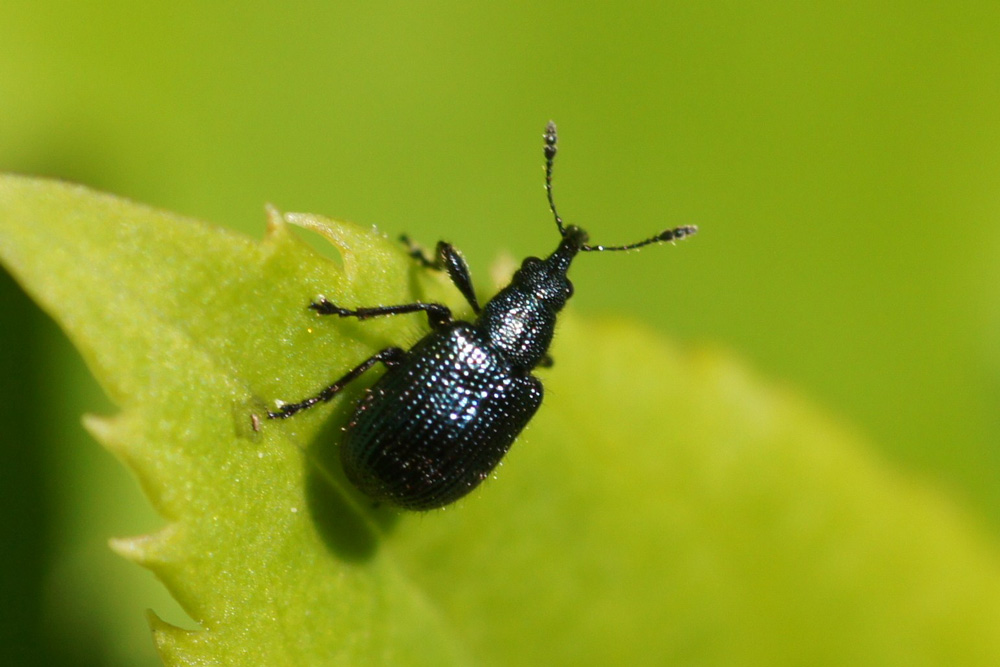
Family leaf-rolling weevilshttp://coleo-net.de/coleo/texte/deporaus.htm
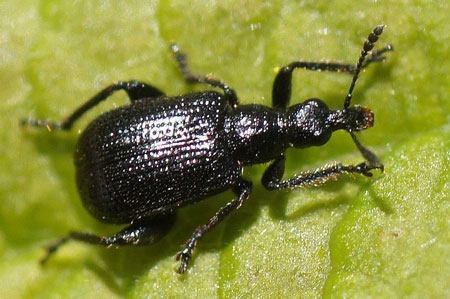 Birch Leaf Roller
Subfamily Rhynchitinae. Family Attelabidae. Not in the garden but
about 500 m from our house.
Birch Leaf Roller
Subfamily Rhynchitinae. Family Attelabidae. Not in the garden but
about 500 m from our house.
This weevil looks a lot like Depora
mannerheimii. However,
Depora mannerheimii is more dark blue instead of black and is slightly
narrower than Deporaus betulae.
The thighs of the male are swollen. Especially in birches, but also in bears, beech, hazelnut, rarer oak. The leaves are rolled up for the larvae.
Length 2.5-4 mm.
Photo: 25-4-2017. |
 .. ..
 .
. 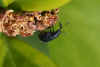 . .
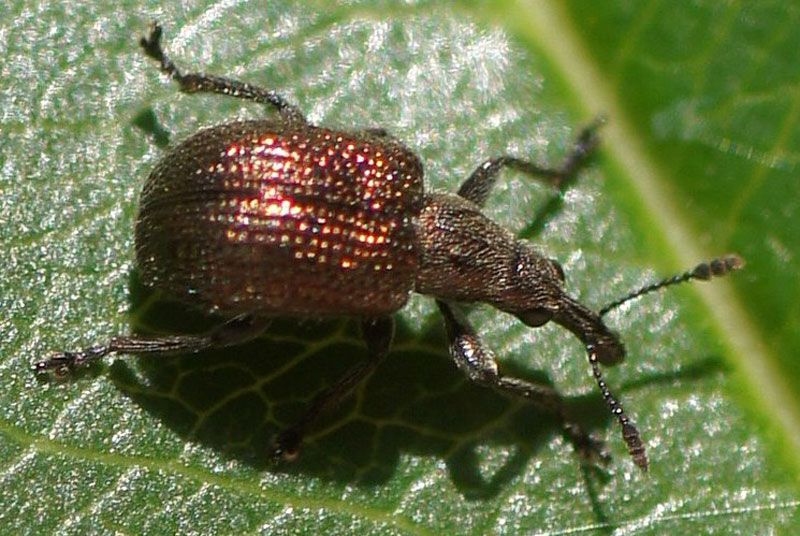
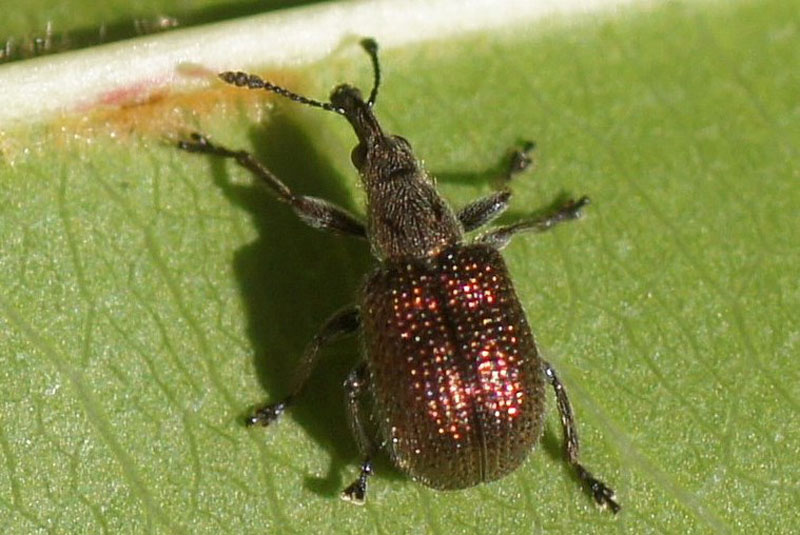
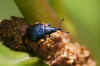
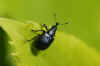 Caenorhinus / Rhynchites spec. Subfamily Rhynchitinae. Family
Attelabidae.
Caenorhinus / Rhynchites spec. Subfamily Rhynchitinae. Family
Attelabidae.
Every year I see them in the garden. Especially in the pear tree. To know exactly
the species, an expert must use a microscope. The differences between the various species are very small.
I let them in the trees. I am satisfied with the family name.
Length about 3 mm
Photos: 18-4-2011, 14-5-2010. |
 .. ..
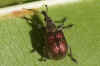 Rhynchites spec. Subfamily Rhynchitinae. Family Attelabidae. Not in the garden but in the dunes about 4 km from
our house.
Rhynchites spec. Subfamily Rhynchitinae. Family Attelabidae. Not in the garden but in the dunes about 4 km from
our house.
This weevil has the same beautiful shine as the weevil above. Only this
this time it's a golden colour. The neck is hairy. It's difficult to find
the right name. Maybe Rhynchites cupreus, but there are more possibilities.
Length about 4 mm.
Photos: 1-10-2013. |
I want to thank everyone, who has helped me (waarneming.nl)
to identify. In particular, Jan Cuppen en
Theodoor Heijerman.
Nederlands /
Dutch
 
Subpage
beetles:
Ground
beetles (Carabidae)
Leaf
beetles (Chrysomelidae)
Snout
beetles, weevils Longhorn
beetles, similar to longhorn beetles
Ladybirds,
Ladybugs, Coccinellidae
Rove
beetles (Staphylinidae)
Small
beetles
|