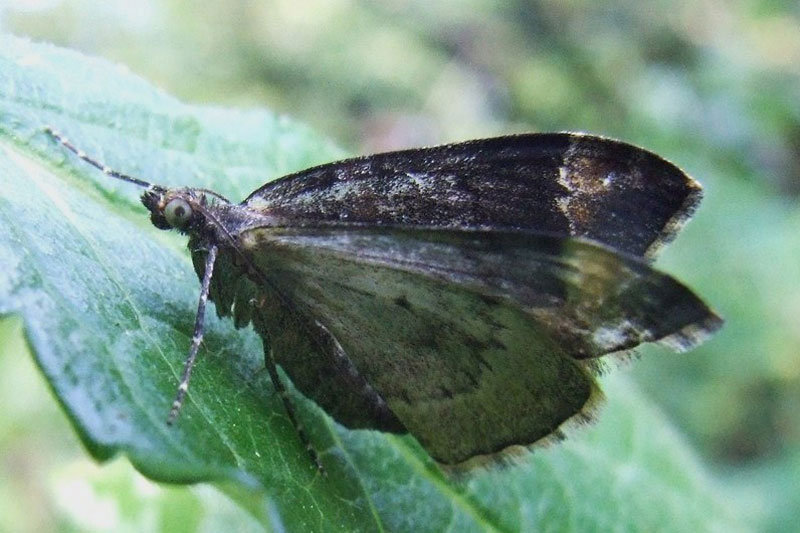
|
 Nederlands /
Dutch Nederlands /
Dutch
Moths: Geometer moths, Geometridae
in the garden
Subpage butterflies
and moths:
Butterflies
Owlet
moths, noctuidae Leafrollers,
tortrix moths, Pyralidae,
Crambidae Concealer
moths, Oecophoridae
Moths
That
moths fly at
night is understandable. Nevertheless
there are about hundred
species, which fly by day and sometimes
they also are beautiful
coloured.
A characteristic of moths are the long feelers,
or antennae,
which
are
unclubbed at the end.
They are often comb-like,
feathery or filamentous.
Most
moths have no bright colours (brown, grey, white or black) and often with
patterns of which help camouflage them during the day.
Moths
tend to have stout and hairy bodies to conserve heat during the cooler nights.
There’s a coupling of the forewing with the hindwing. Unlike
moths, butterflies generally hold their wings together above their backs when
resting.
|
| Family
geometer moths
(Geometridae).
A a
large family with 26.000 discribed species.
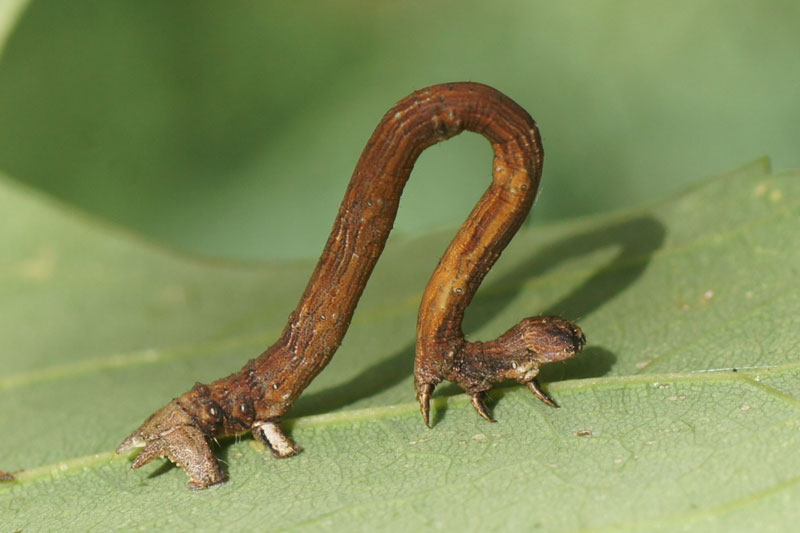
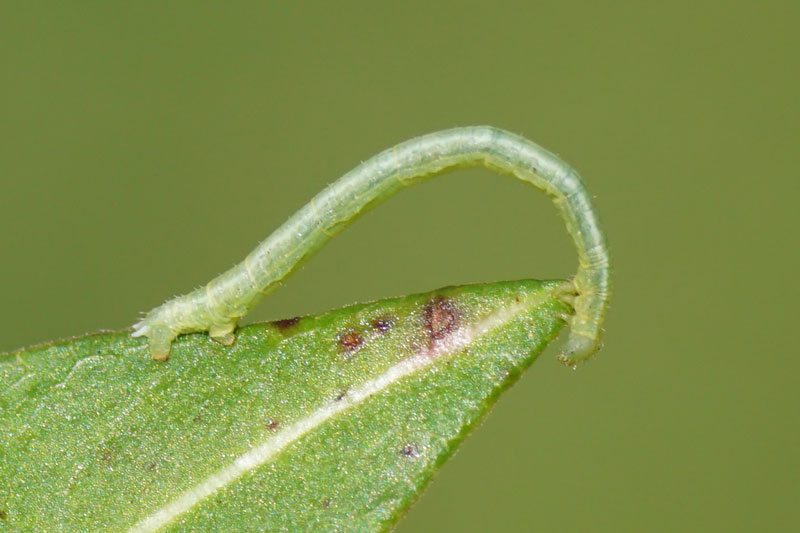
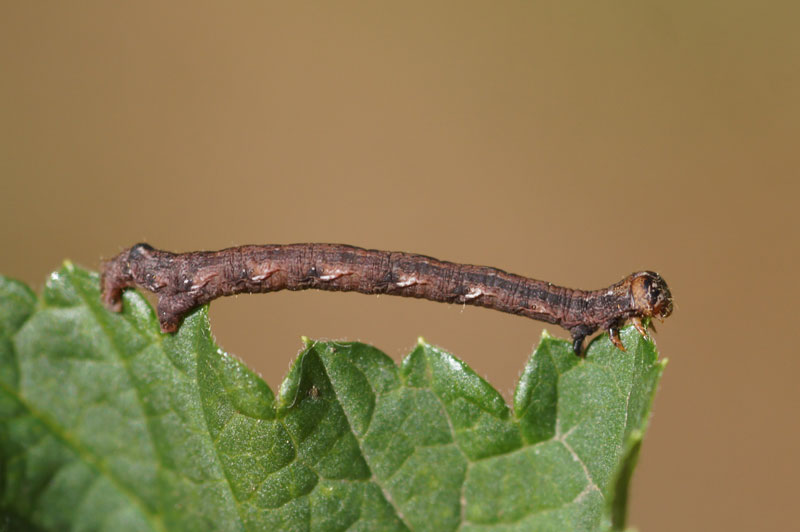
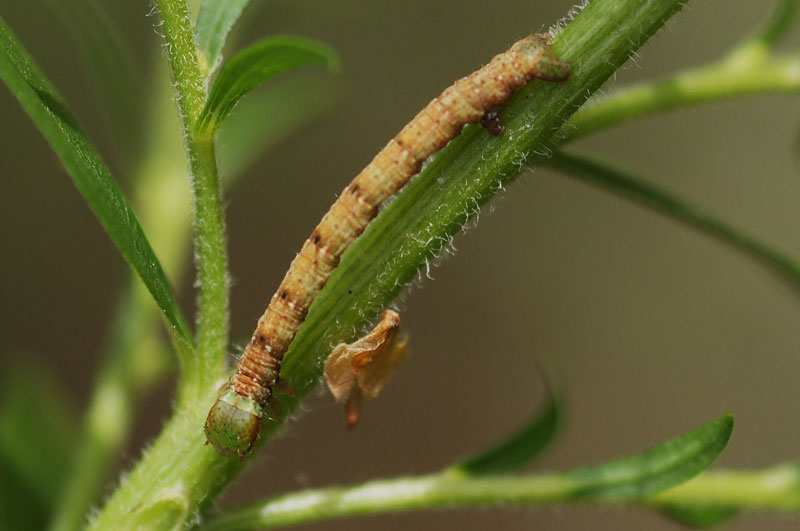
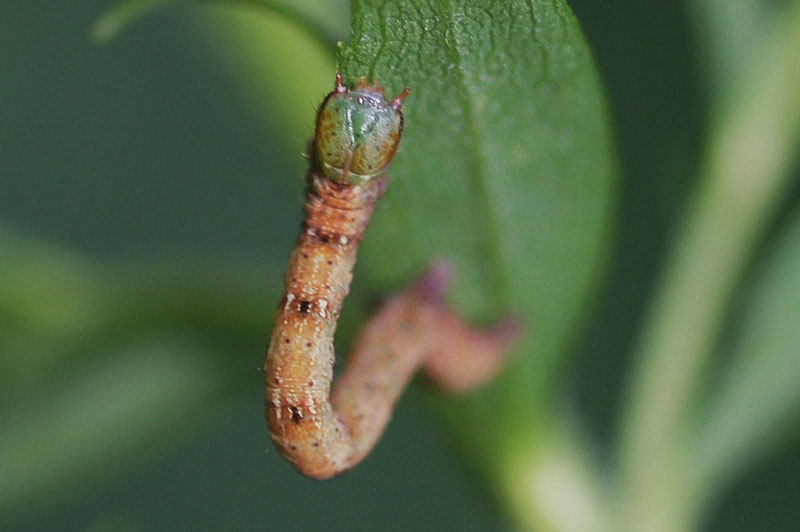
Catepillars generally have only two pairs of prolegs. They are drawing the
hind end up to the thoracic legs to form a loop, and then extending the
body forward
|
Subfamily Ennominae.
Tribe Abraxini.
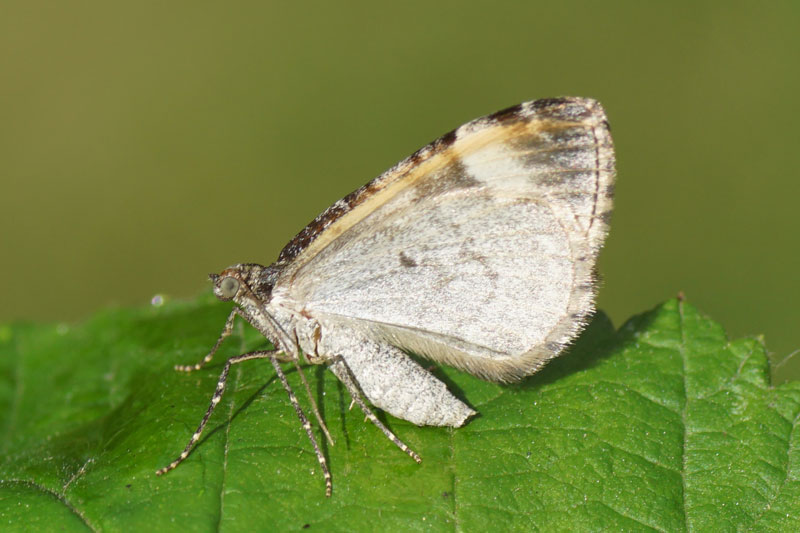
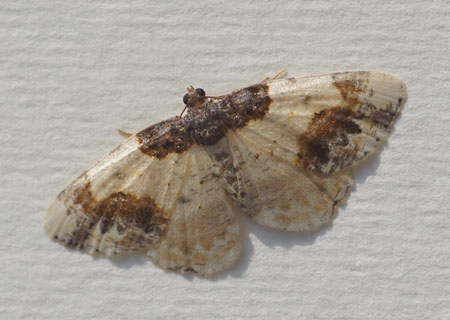 Scorched carpet (Ligdia adustata). Tribe
Abraxini. Subfamily Ennominae. Family geometer moths (Geometridae).
Scorched carpet (Ligdia adustata). Tribe
Abraxini. Subfamily Ennominae. Family geometer moths (Geometridae).
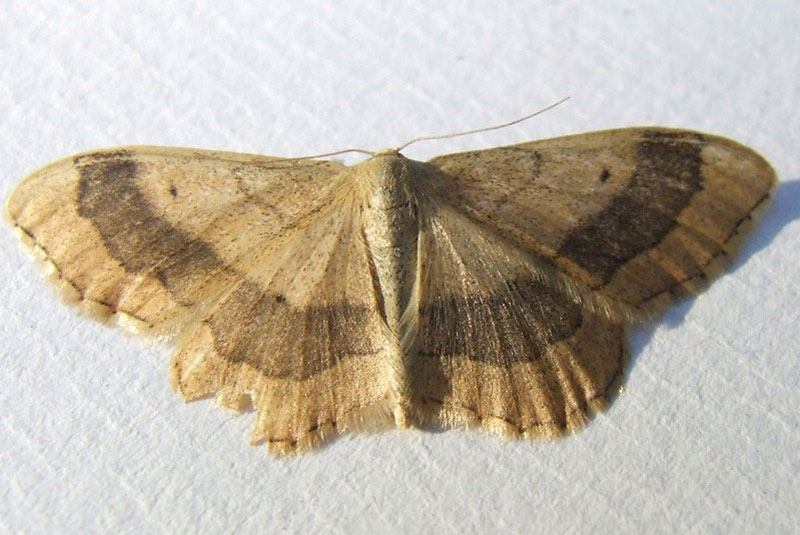
Forewings are glossy white, creamy white or light brown with a dark brown or blackish spot that runs over the body. At the outside edge a wide, wavy brown or blackish band. The hind wings are whitish with light brown, wavy lines. Little variation.
The caterpillars have wild cardinal smuts (Euonymus europaeus L.) and Berberis varieties as host plants.
April - August. Two generations. Caterpillar: May-September.
They overwinter as pupa. Wingspan 24-28 mm. Europe, Asia Minor, the Caucasus. Photo 4-8-2018.
German: Pfaffenhütchen-Harlekin, Spindelbaumspanner, Pfaffenspanner, Kleiner Pfaffenhütchenspanner French: La Phalène du
fusain. |
Tribe Babtinini.
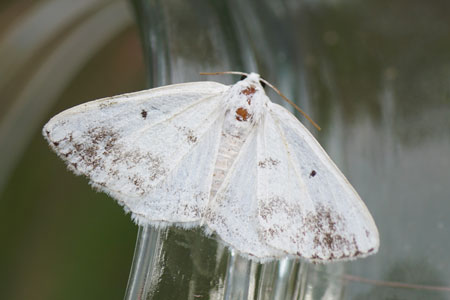 .
.  Clouded Silver
(Lomographa temerata).
Tribe Boarmiini. Subfamily Ennominae. Family geometer moths (Geometridae).
Clouded Silver
(Lomographa temerata).
Tribe Boarmiini. Subfamily Ennominae. Family geometer moths (Geometridae).
A geometer mothwith brown-black on the forewings and a black dot.
The caterpillars have different types of deciduous trees as a host. May, June. One generation. Caterpillar: June-July.
They overwinter as pupa. Span width 22-29 mm. Europe, East Asia. Photos 24-6-2019. |
Tribe Bistonini.
Tribe Boarmiini.
 .. ..
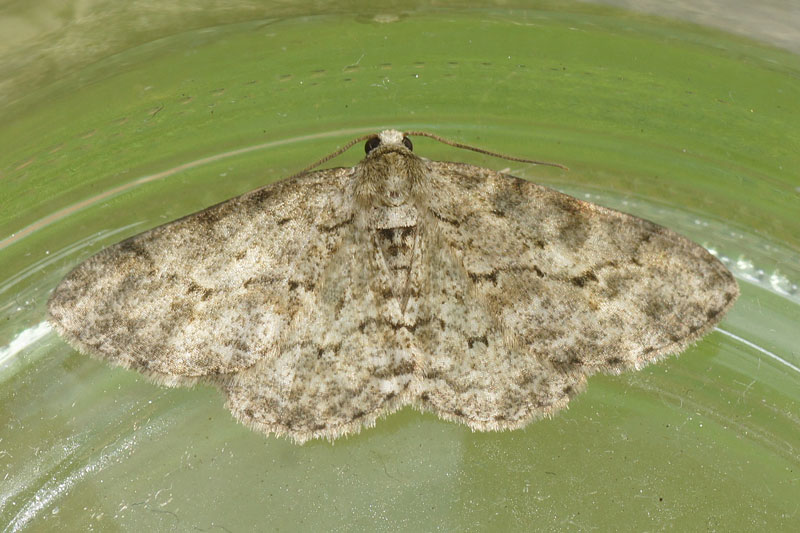
 . .  Pale Oak Beauty (Hypomecis
punctinalis syn. Serreca punctinalis). Tribe Boarmiini. Subfamily
Ennominae. Family
geometer moths (Geometridae).
Pale Oak Beauty (Hypomecis
punctinalis syn. Serreca punctinalis). Tribe Boarmiini. Subfamily
Ennominae. Family
geometer moths (Geometridae).
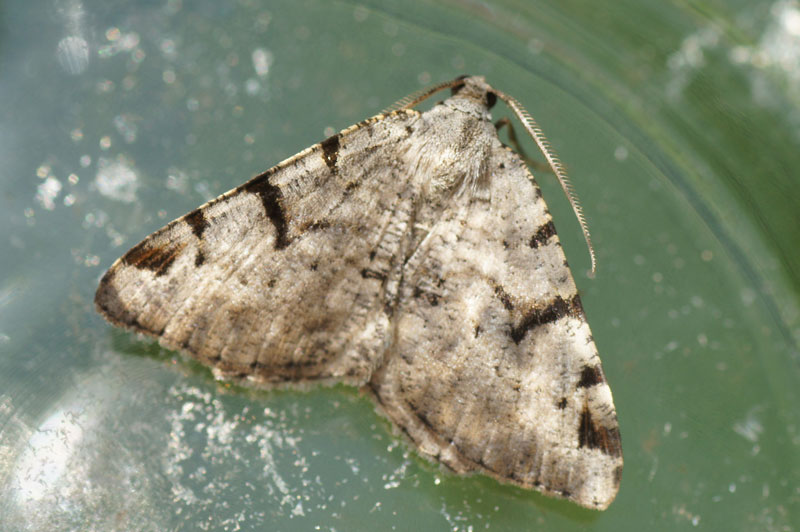
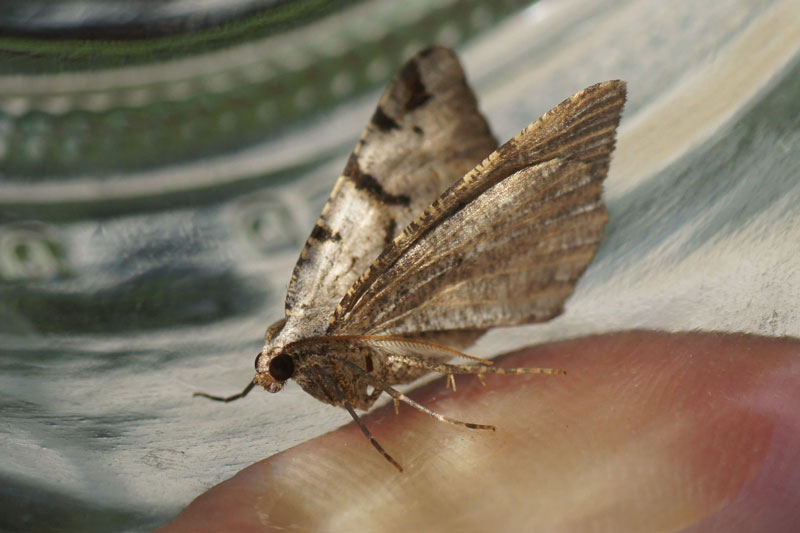
Colour: light brown. It looks like the Willow Beauty, but the spots, lines
are paler and it's a larger moth. On the hind wings is often a small annular spot with a
pale centre. The male has feathery antennae.
The caterpillars have different kinds of deciduous trees and shrubs as host.
April-July. One generation.
They overwinter as pupa in the soil.
Wingspan 46-55 mm. Europe, Asia Minor, the Caucasus, Japan, Korea, Western China.
Photos 1-7-2015. German: Großer Rindenspanner. French: Boarmie
pointillée. |
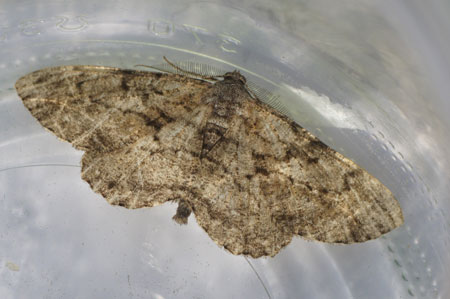 .. ..
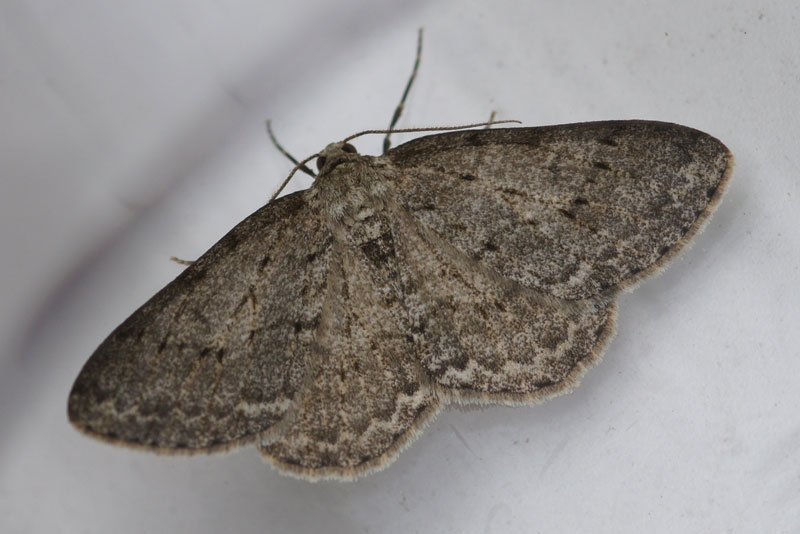
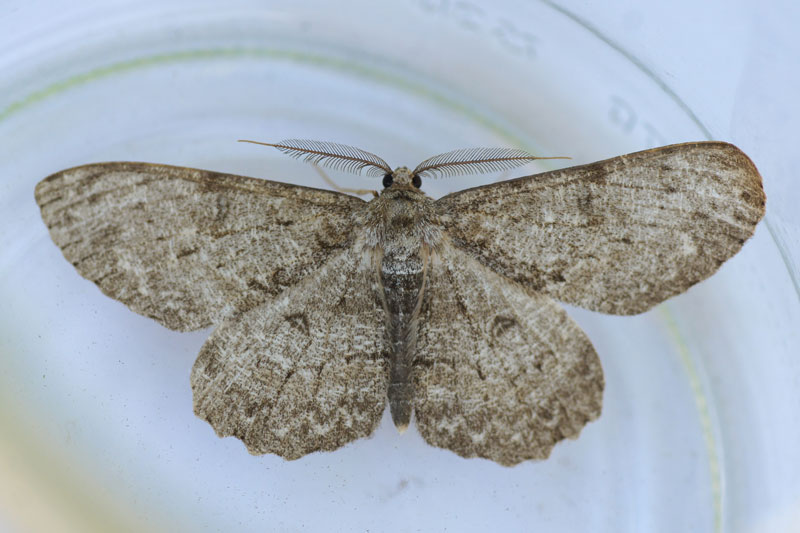
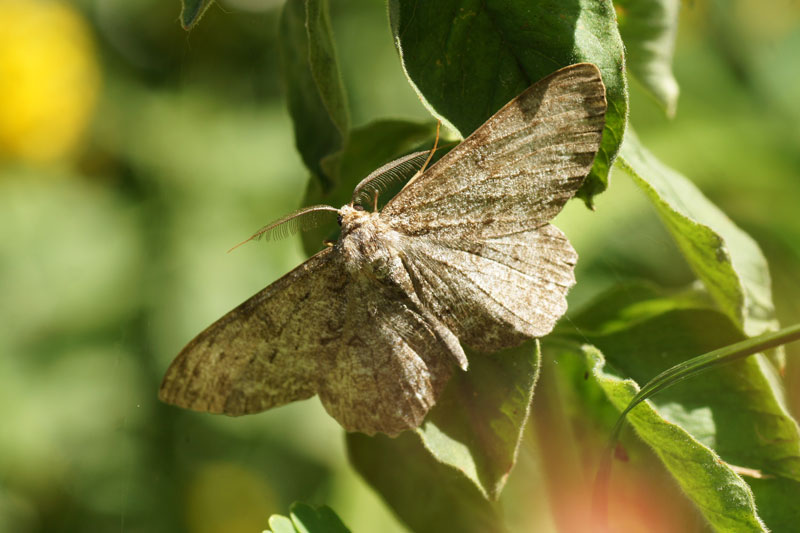
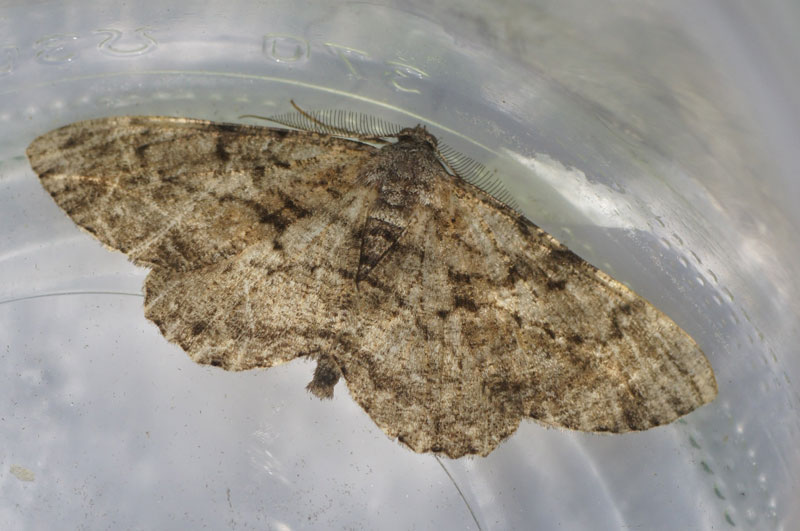
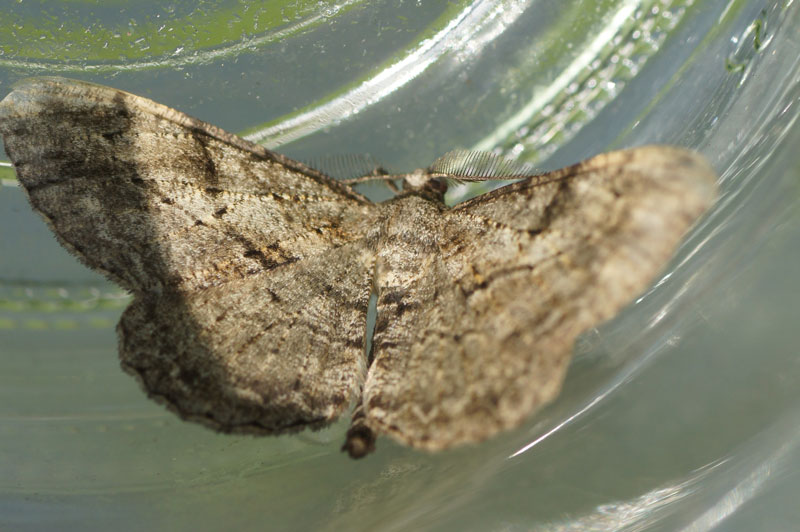
 Willow Beauty
(Peribatodes rhomboidaria). Tribe Boarmiini. Subfamily Ennominae. Family
geometer moths (Geometridae). Willow Beauty
(Peribatodes rhomboidaria). Tribe Boarmiini. Subfamily Ennominae. Family
geometer moths (Geometridae).
Colour: light brown to dark gray. The shape of the dark lines on the wings is a characteristic. The male has feathery antennae.
The second generation is often slightly smaller.
The caterpillars have different kinds of deciduous trees and plants as host.
May-September. Sometimes two generations.
They overwinter as a young caterpillar on the host.
Wingspan 30-38 mm. Europe.
Photos 7-7-2013, 15-7-2013. German: Rauten-Rindenspanner,
Rhombenspanner. French: Boarmie rhomboïdale. |
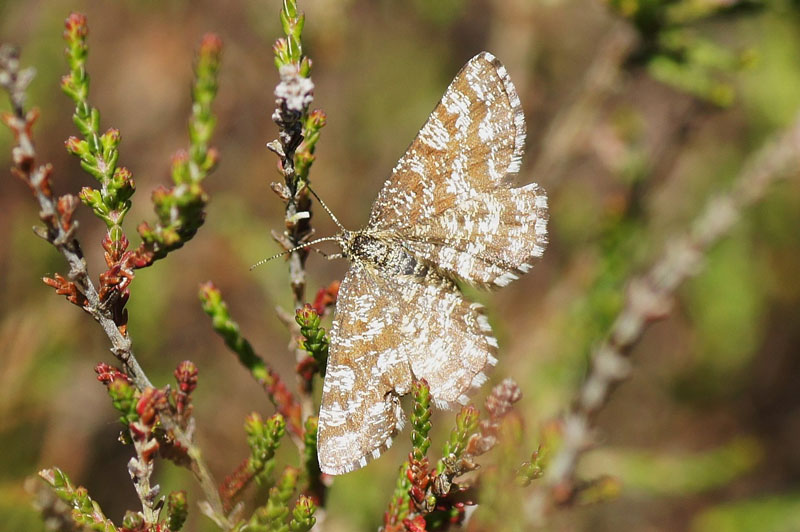
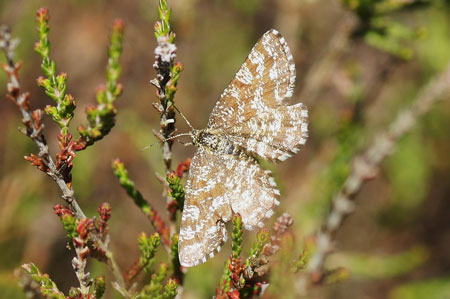 Gewone heispanner (Ematurga atomaria). Tribe Boarmiini. Onderfamilie
Ennominae. Familie spanners (Geometridae). Not in the garden, but in the dunes about 4 km from our
garden.
Gewone heispanner (Ematurga atomaria). Tribe Boarmiini. Onderfamilie
Ennominae. Familie spanners (Geometridae). Not in the garden, but in the dunes about 4 km from our
garden.
Very variable in colour: white, light brown to dark gray with light brown to dark brown transverse bands. The male has feathery antennae. Active during the day.
The caterpillars have different kinds of herbaceous and woody plants as host plants.
April-August Two generations. On sandy soils, such as in the dunes.
They overwinter as pupa in or on the ground.
Wingspan 22-34 mm. Europe. Photo 6-6-2014. German: Heidespanner. French: Phalène
picotée. |
Tribe
Campaeini.
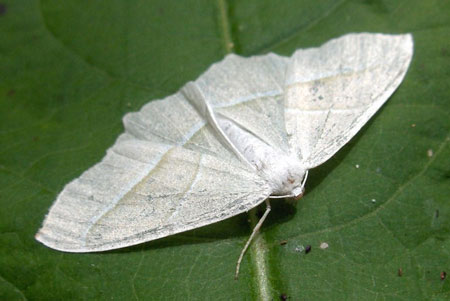 .. .. 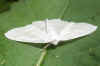 . .
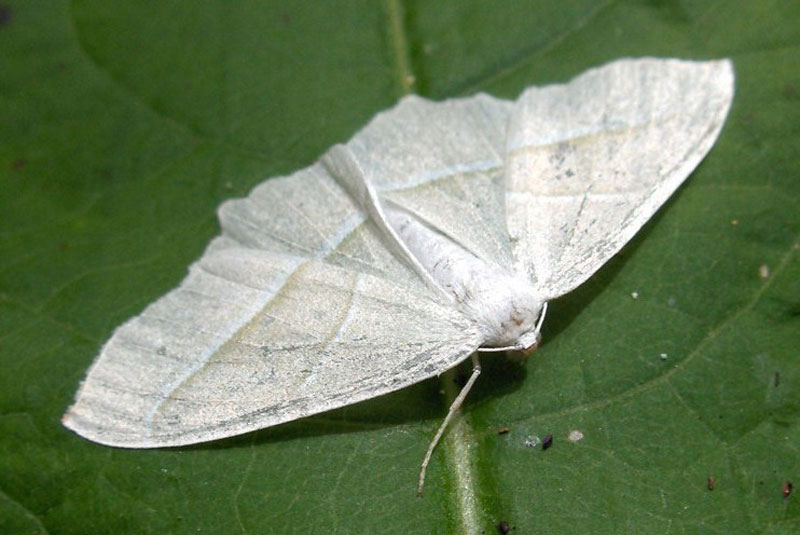
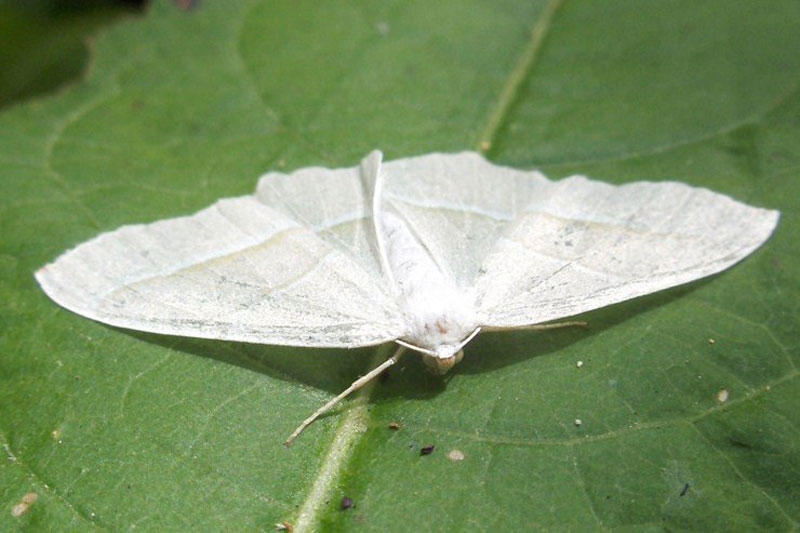
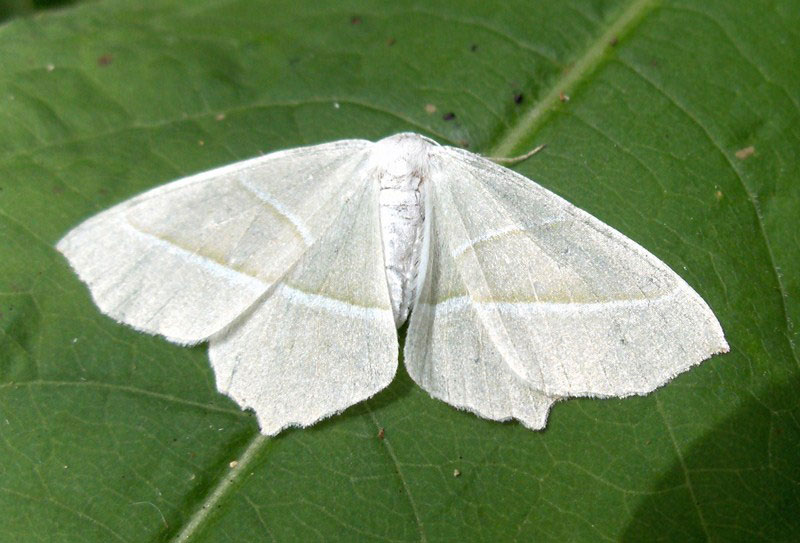
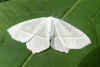 . .  Light Emerald
(Campaea margaritata). Tribe Campaeini. Subfamily Ennominae. Family
geometer moths (Geometridae). Light Emerald
(Campaea margaritata). Tribe Campaeini. Subfamily Ennominae. Family
geometer moths (Geometridae).
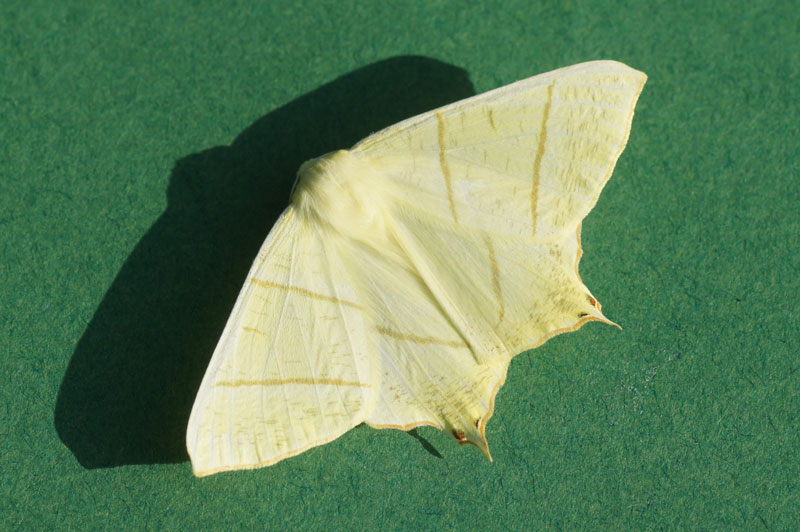
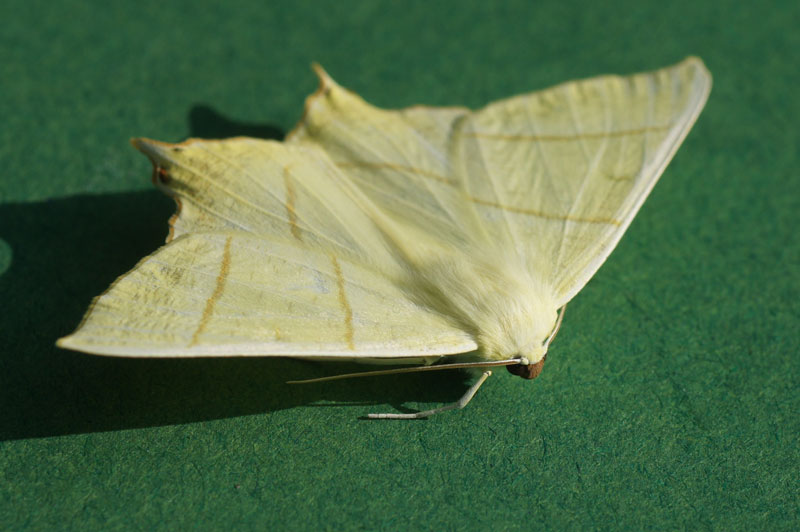
A pale green spanner, but a few days after hatching the colour changes
into greenish-white to white. It is recognizable by the almost straight
line on the wings. And by the small red flash on wingtips. (Only shown
well on the photo taken in 2013).
The caterpillar is often found in deciduous trees. The
butterfly especially on sandy soils.
May-September. Two generations. They hibernate as nearly mature larvae.
Wingspan 30-40 mm.
Europe, North Africa and the Middle East.
Photos 1-9-2007,
24-8-2013.
German: Perlglanzspanner. French: Céladon. |
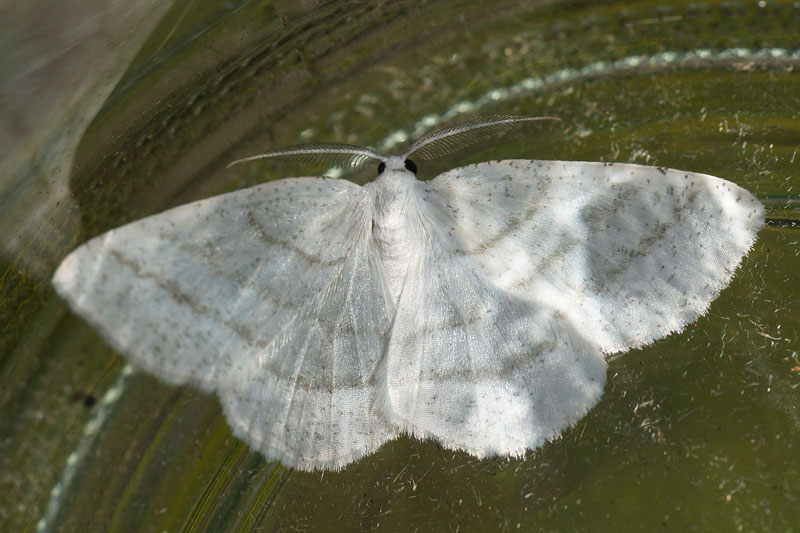
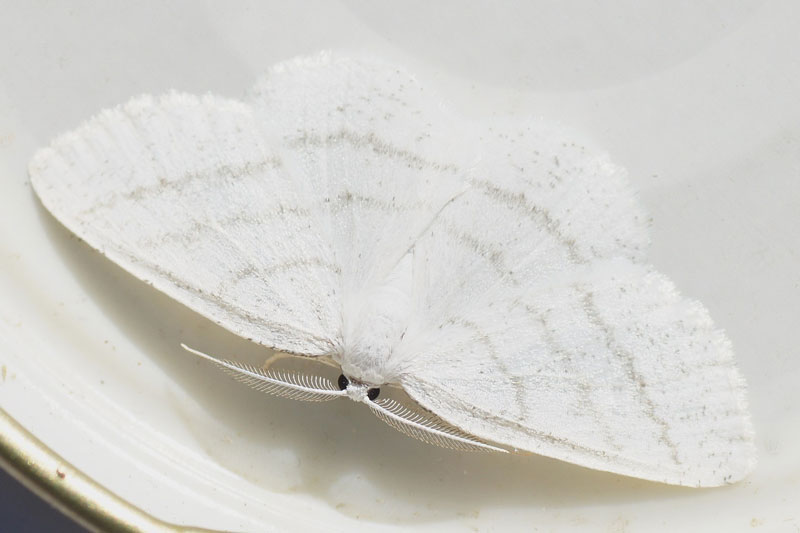
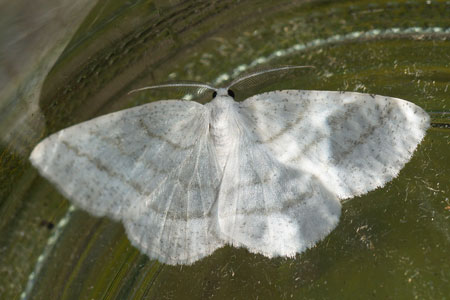 .. ..  Common White Wave
(Cabera pusaria). Tribe Campaeini. Subfamily Ennominae. Family
geometer moths (Geometridae). Common White Wave
(Cabera pusaria). Tribe Campaeini. Subfamily Ennominae. Family
geometer moths (Geometridae).
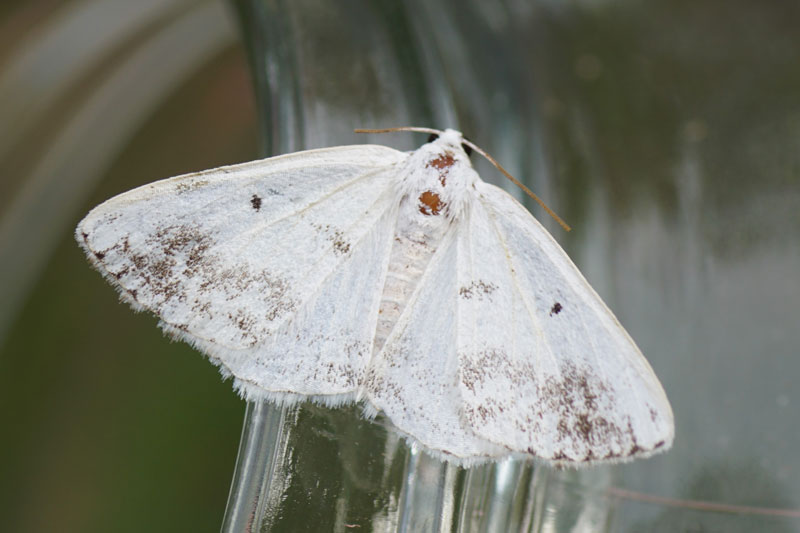
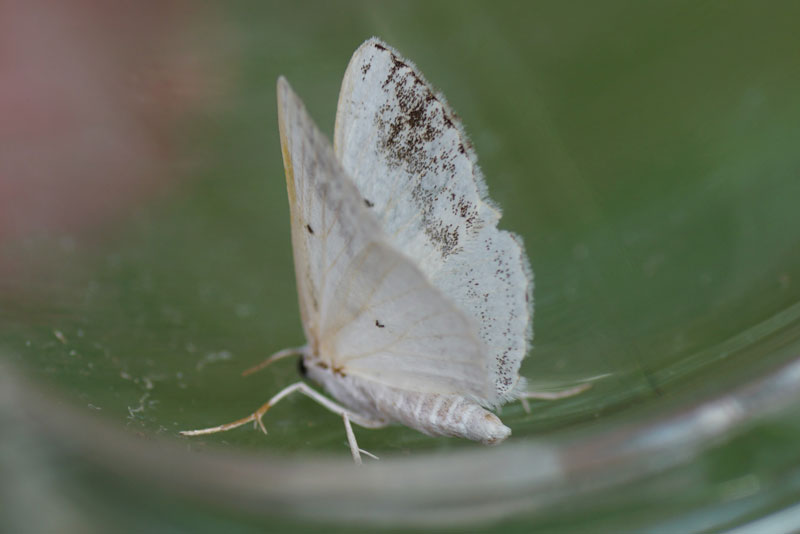
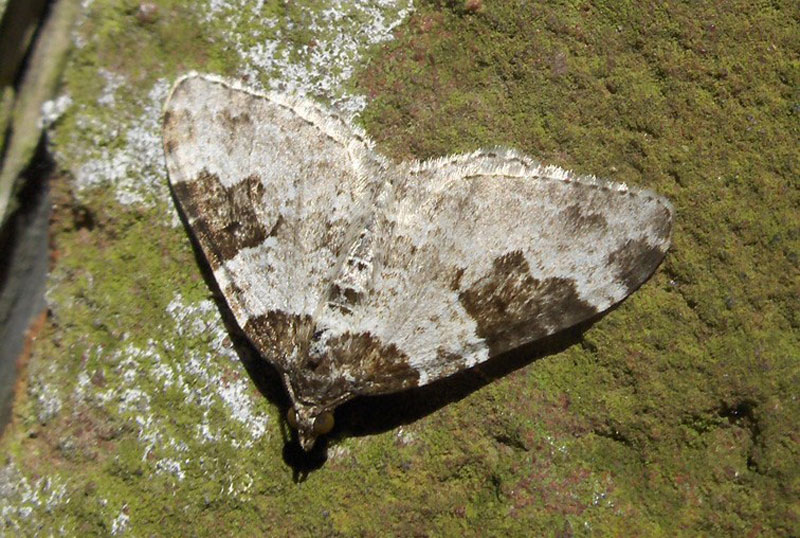
A white geometer moth with three parallel gray lines across the wings. These cross lines run
more right than the lines of the similar Common Wave (Cabera exanthemata). (those lines are browner)
The caterpillar can be found in all kinds of deciduous trees such as birch and alder.
May-September Two generations.
They overwinter as pupa on the ground in the leaf litter.
Wingspan 25-28 mm. Europe.
Photos 13-6-2014. German: Weißstirn-Weißspanner. French:
Cabère virginale. |
Tribe Cassymini.
 .. ..
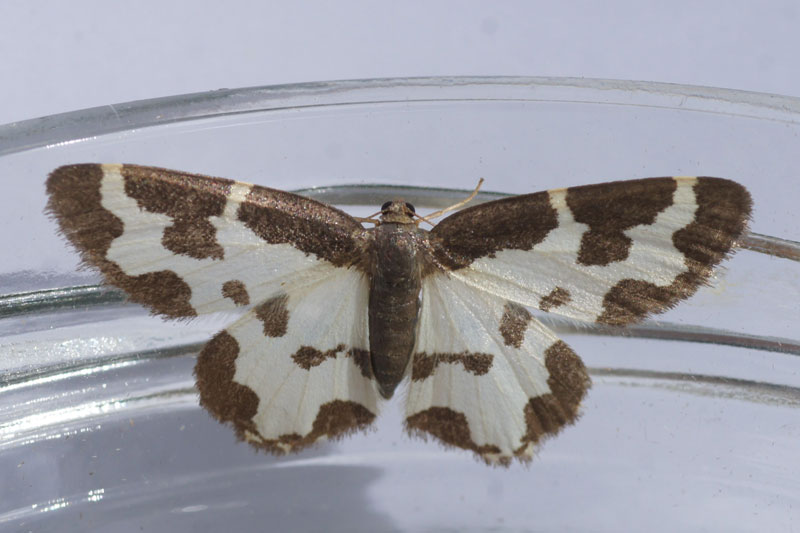
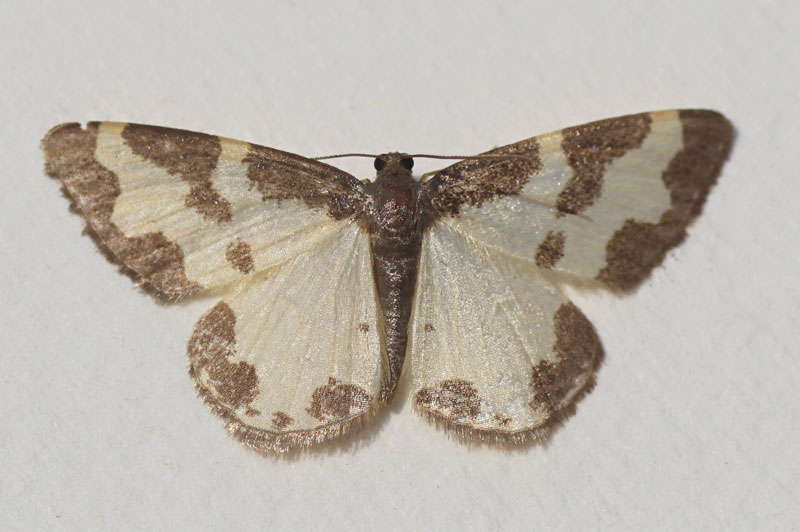
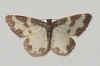 Clouded Border (Lomaspilis
marginata). Tribe (Cassymini). Subfamily Ennominae. Family
geometer moths (Geometridae). Clouded Border (Lomaspilis
marginata). Tribe (Cassymini). Subfamily Ennominae. Family
geometer moths (Geometridae).
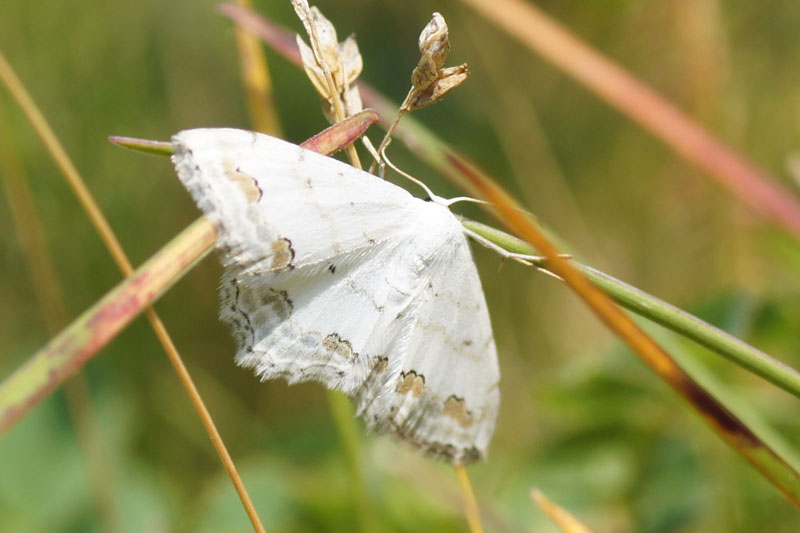
A day active geometer moth
with white wings marked with black blotches around the margins. The spots vary.
Host caterpillars: Especially poplar, willow and hazel.
Wingspan: 30-38 mm.
April-end August. Several generations The pupa overwinters in the soil.
Europe, Asia.
Photos 5-7-2015, 4-8-2018. German: Vogelschmeiß-Spanner, Saumspanner,
Schwarzrandspanner, Schwarzrand-Harlekin. French: la Marginée. |
Tribe Macariini.
 .. ..
 . .
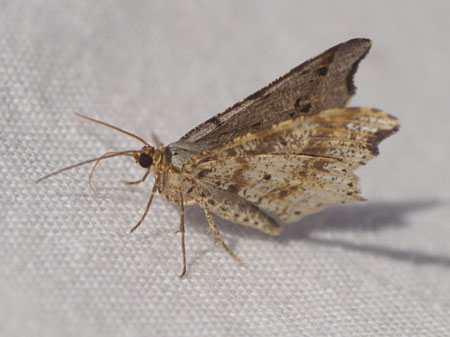
 Sharp-angled Peacock
(Macaria alternata, formely Semiothisa alternaria). Tribe Macariini. Subfamily
Ennominae. Family
geometer moths (Geometridae). Sharp-angled Peacock
(Macaria alternata, formely Semiothisa alternaria). Tribe Macariini. Subfamily
Ennominae. Family
geometer moths (Geometridae).
Variable, yellowish green, brown or grey. A wide cross band. It is very
similar to the peacock moth (Macaria notata).
Host plant: All kinds of deciduous trees and shrubs.
April-August. Two generations.
They overwinter as a doll in a cocoon.
Wingspan 22-27 mm.
Europe.
Foto's 7-8-2018. German: Dunkelgrauer Eckflügelspanner.
French: la Philobie alternée. |
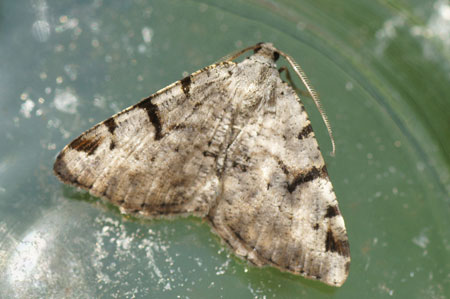 .. ..
 V-Moth
(Macaria wauaria). Tribe Macariini. Subfamily Ennominae. Family
geometer moths (Geometridae). V-Moth
(Macaria wauaria). Tribe Macariini. Subfamily Ennominae. Family
geometer moths (Geometridae).
The dark spot on light gray forewing forms a V. Along the edge you see three
other dark spots.
Host: berry bushes (Ribes).
May - July. One generation.
They overwinter as eggs on the host plant.
Wingspan 22-30 mm.
Europe, Central Asia.
Photos 14-7-2013. German: Vauzeichen-Eckflügelspanner,
Johannisbeerspanner, Braunes V. French:
le Damas cendré. |
Tribe Ourapterygini.
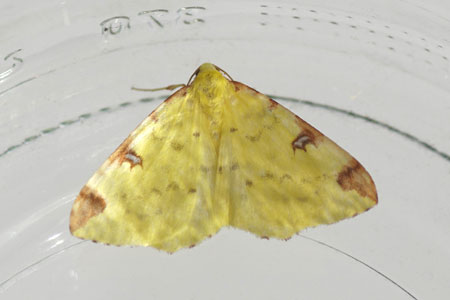 .. ..
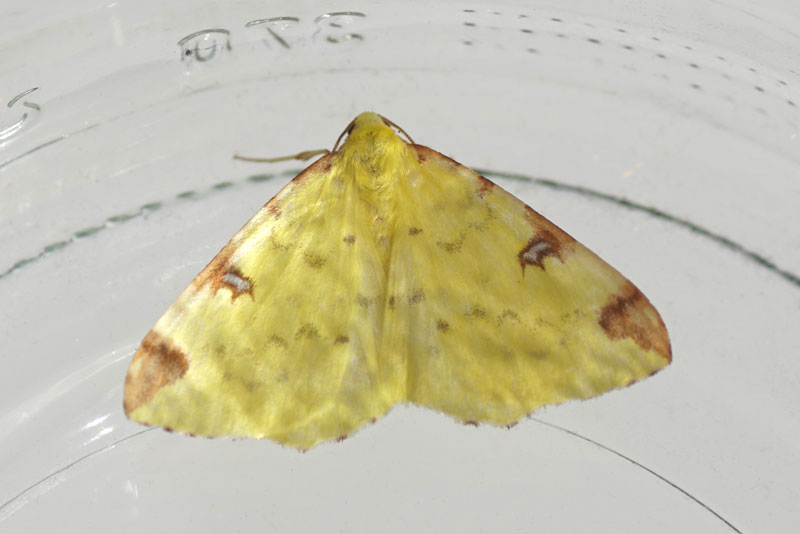
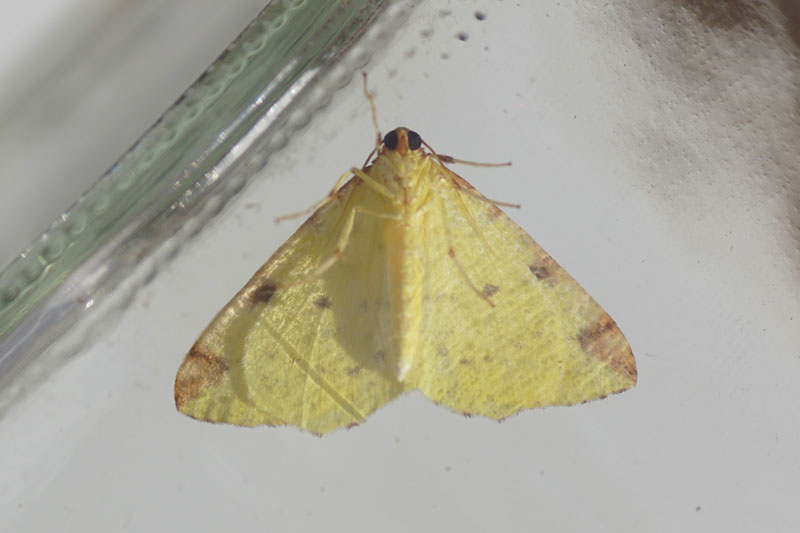
 Brimstone Moth
(Opisthograptis luteolata). Tribe Ourapterygini. Subfamily Ennominae. Family
geometer moths (Geometridae). Brimstone Moth
(Opisthograptis luteolata). Tribe Ourapterygini. Subfamily Ennominae. Family
geometer moths (Geometridae).
A lemon yellow moth with brown spots along the edge of the forewings.
The caterpillar can be found on many trees and shrubs.
April - September. Two generations. possibly three generations. The half-grown caterpillar or the pupa
in a cocoon overwinters.
Wingspan: 33-46 mm.
Europe, Asia.
Photos 7-8-2018. German: Gelbspanner. French: la Citronnelle
rouillée, la Phalène de l'alisier. |
Subfamily Geometrinae.
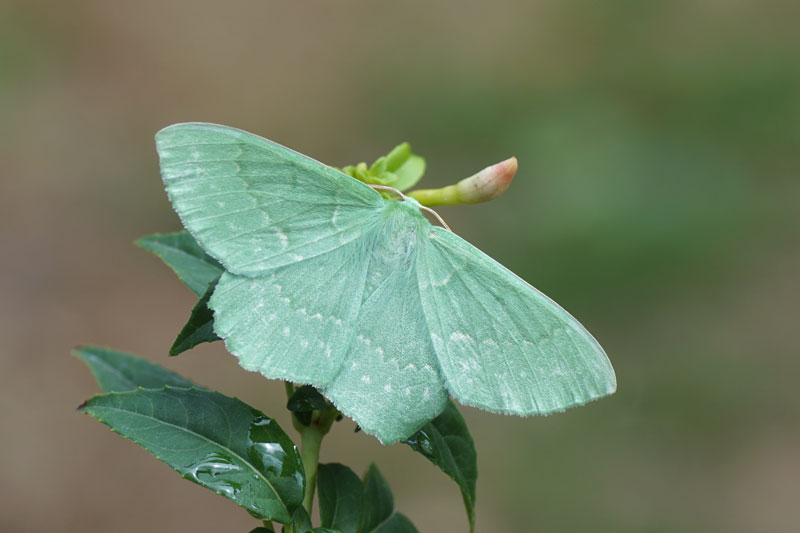
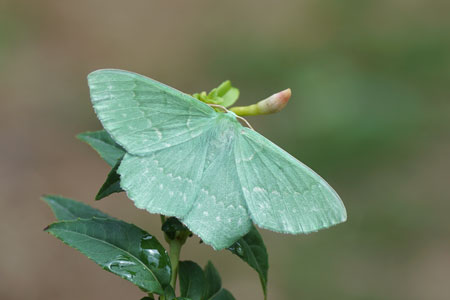 Large Emerald (Geometra papilionaria). Subfamily
Geometrinae. Family
geometer moths (Geometridae).
Large Emerald (Geometra papilionaria). Subfamily
Geometrinae. Family
geometer moths (Geometridae).
A large geometer moth. Green wings, which can fade. Whitish transverse lines.
The caterpillar can be found on birch. Sometimes on beech, alder and hazel.
It overwinters as a young caterpillar on the host plant. May-August. One generation.
Wingspan: 40-65mm. Europe and Asia Minor. Photo 19-7-2023. German:
Grünes Blatt. French: la Grande naïade , la Géomètre papillonaire. |
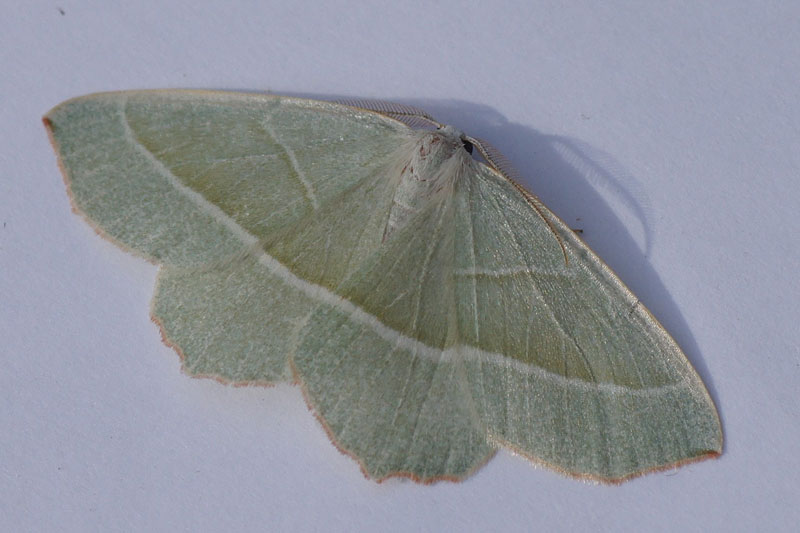
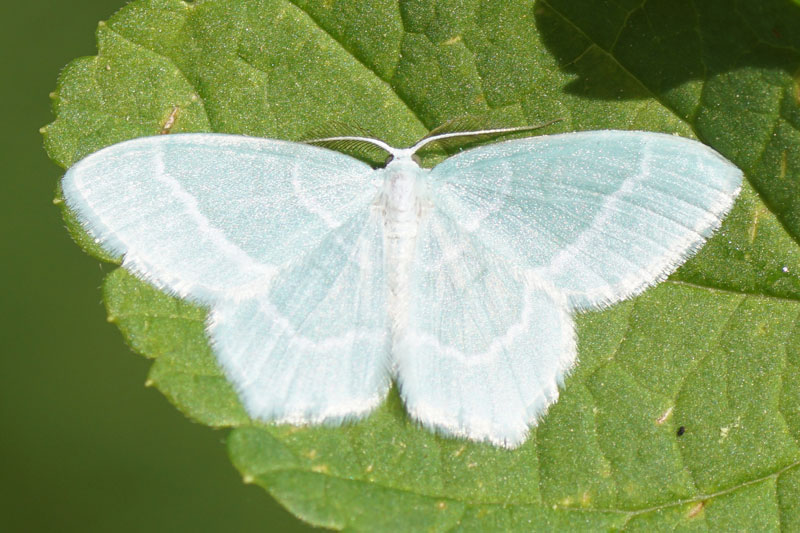
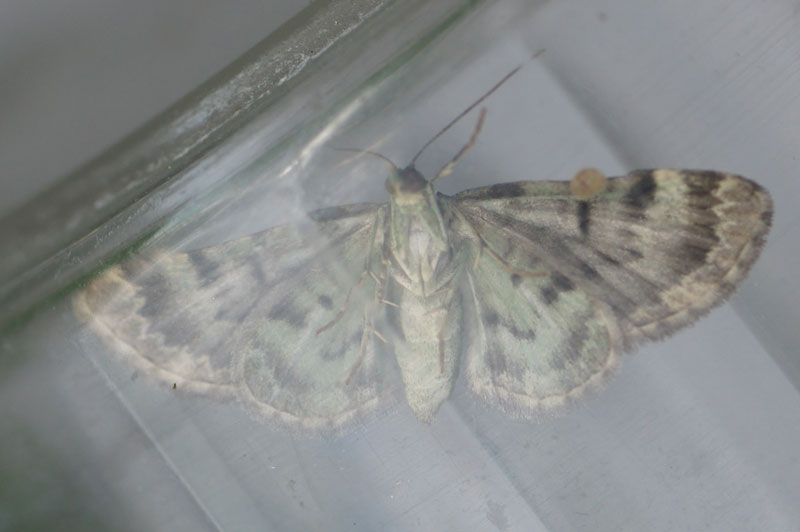
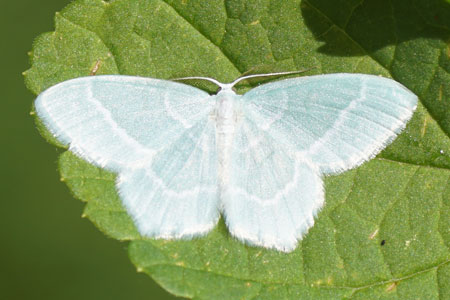 Little emerald (Jodis lactearia). Tribe
Hemitheini.
Subfamily Geometrinae. Family
geometer moths (Geometridae).
Little emerald (Jodis lactearia). Tribe
Hemitheini.
Subfamily Geometrinae. Family
geometer moths (Geometridae).
Pale green wings, fading to milky white. Two whitish transverse lines.
The caterpillar can be found on birch, oak, hazel and blueberry.
It hibernates as a pupa. April-August. One generation, sometimes two generations.
Wingspan: 23-26 mm. Europe and Asia. Photo 2-5-2024. German:
Laubwald-Grünspanner. French: Hémithée éruginée. |
Subfamily Larentiinae.
Tribe Cidariini.
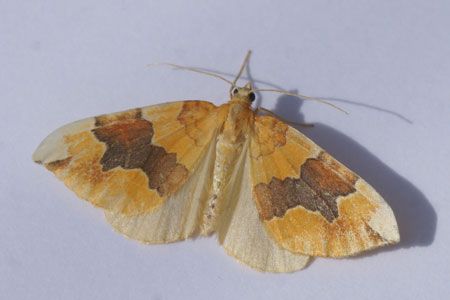 .. ..
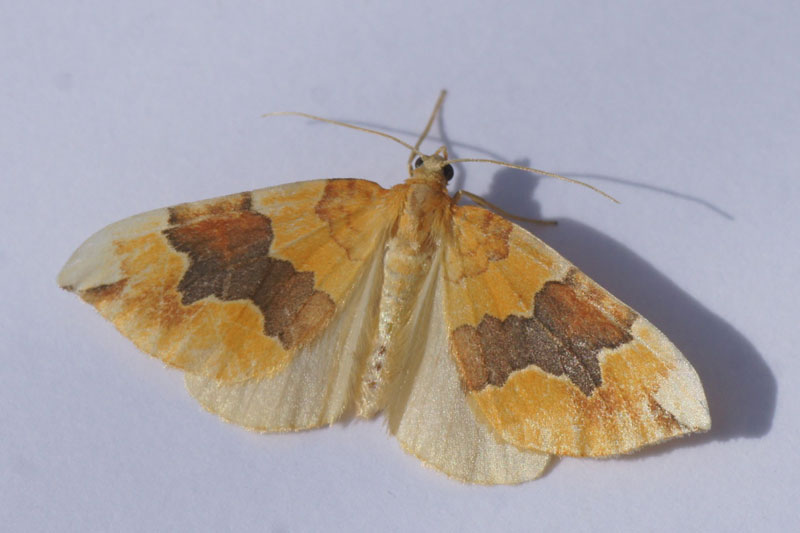
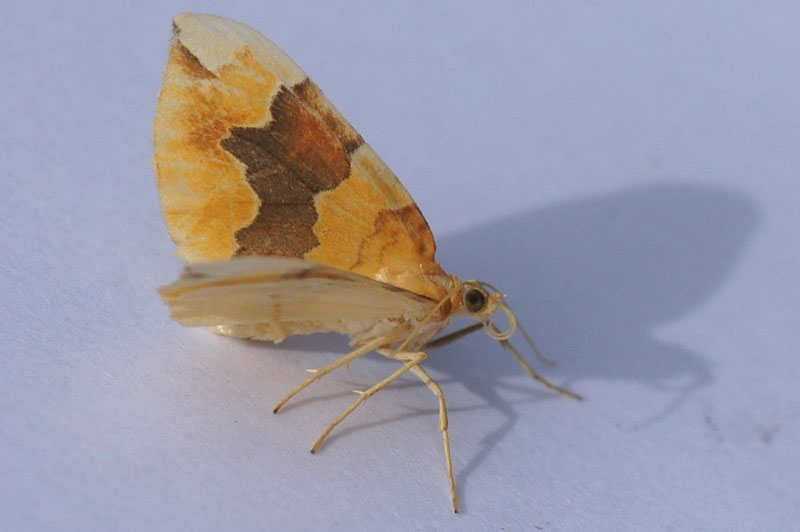
 Barred Yellow (Cidaria fulvata). Tribe
Cidariini. Subfamily Larentiinae. Family
geometer moths (Geometridae).
Barred Yellow (Cidaria fulvata). Tribe
Cidariini. Subfamily Larentiinae. Family
geometer moths (Geometridae).
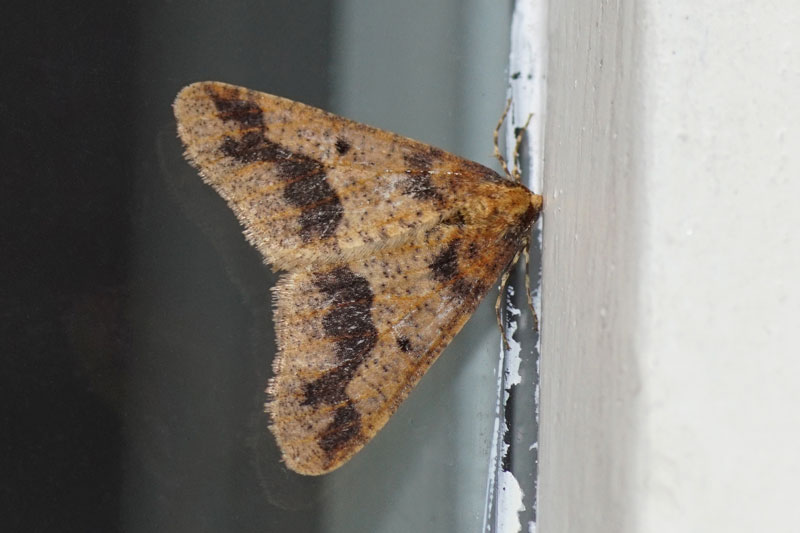
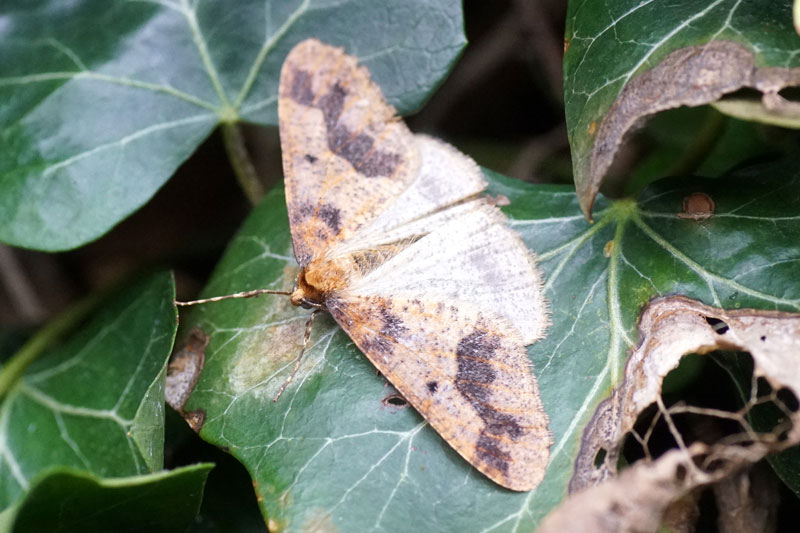
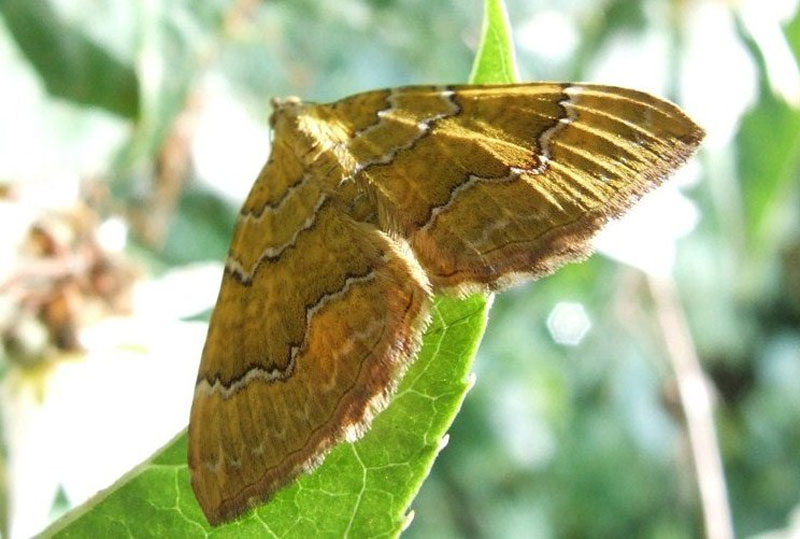
The forewings are yellow or ocher yellow with a broad irregular rusty
brown band. The hind wings are whitish.
The caterpillar can be found on wild roses (like dog rose) and
cultivated roses.
It overwinters as an egg on the host plant. June-July. One generation.
Wingspan: 20-25 mm. Europe en Central Asia. Photos 28-7-2013. German:
Gelber Rosen-Bindenspanner. French: la Cidarie fauve. |
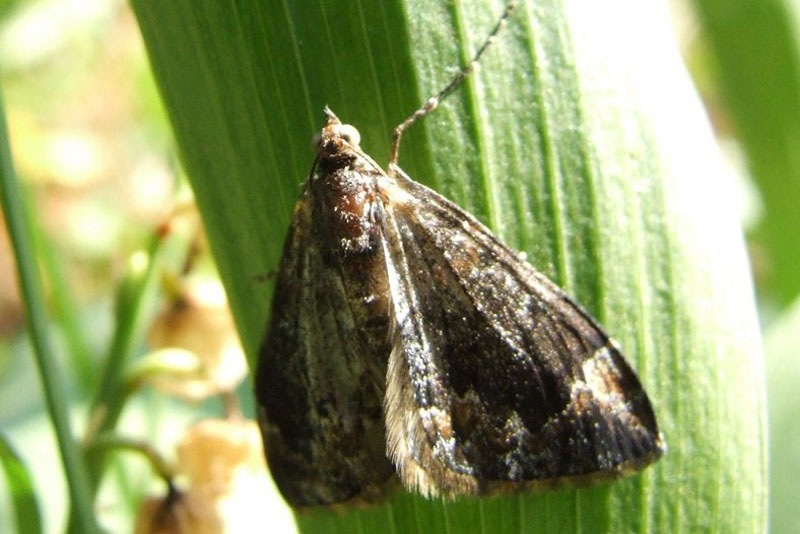
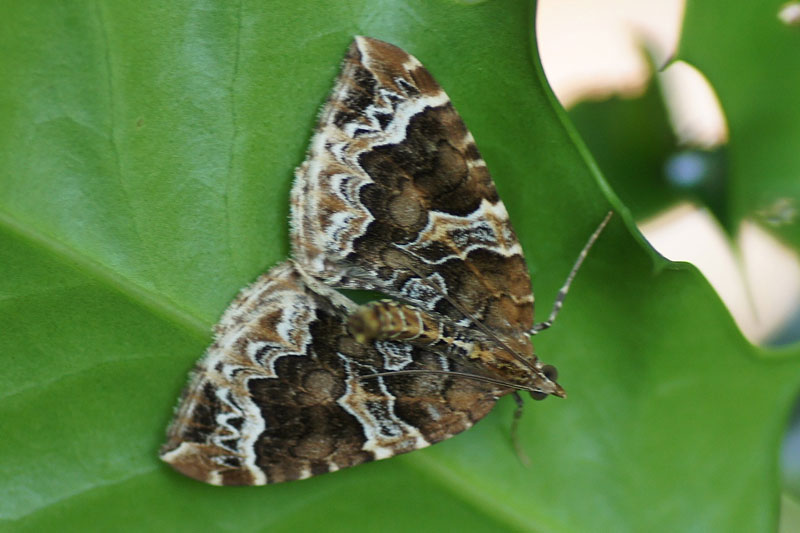
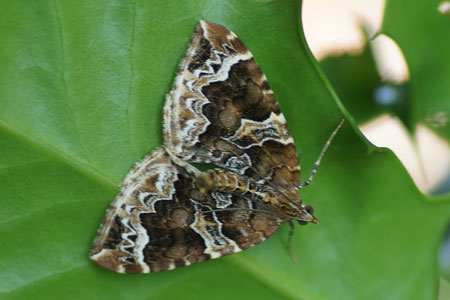 The Phoenix (Eulithis prunata). Tribe
Cidariini. Subfamily Larentiinae. Family geometer moths (Geometridae).
The Phoenix (Eulithis prunata). Tribe
Cidariini. Subfamily Larentiinae. Family geometer moths (Geometridae).
A beautifully marked, brown geometer moth. In rest its abdomen is curved upwards like the
Pyralis.
Host plants: Ribes family, currant and hawthorn. But also other trees and shrubs. June-August. One generation. It hibernates as an egg.
German: Dunkelbrauner Haarbüschelspanner.
French: la Cidarie du prunier. |
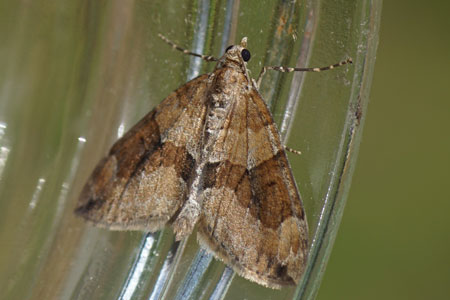 .. ..
 Grey Pine Carpet
(Thera obeliscata). Tribe Cidariini. Subfamily Larentiinae. Family geometer moths
(Geometridae).
Grey Pine Carpet
(Thera obeliscata). Tribe Cidariini. Subfamily Larentiinae. Family geometer moths
(Geometridae).
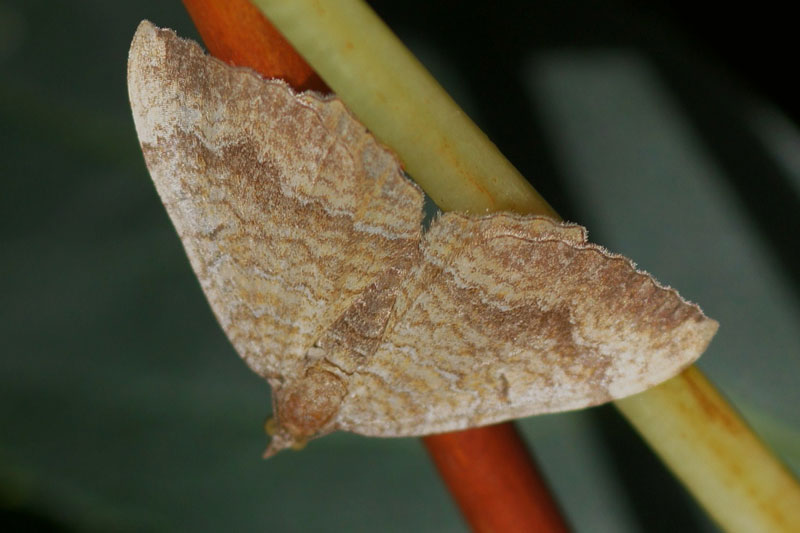
Variable in colour. Sand color, greyish brown, almost black. A reddish to greyish brown middle band. It is very similar to the Thera britannica and the Thera
variata. To a lesser extent on the Thera juniperata and the Pennithera
firmata.
Host plants: All kinds of conifers.
April-mid October. Two generations. It overwinters as a caterpillar. Wingspan:
25-34 mm. Europe. Photos 30-6-2019. German: Zweibrütiger
Kiefern-Nadelholzspanner.
French: la Phalène sobre. |
Tribe Eupitheciini.
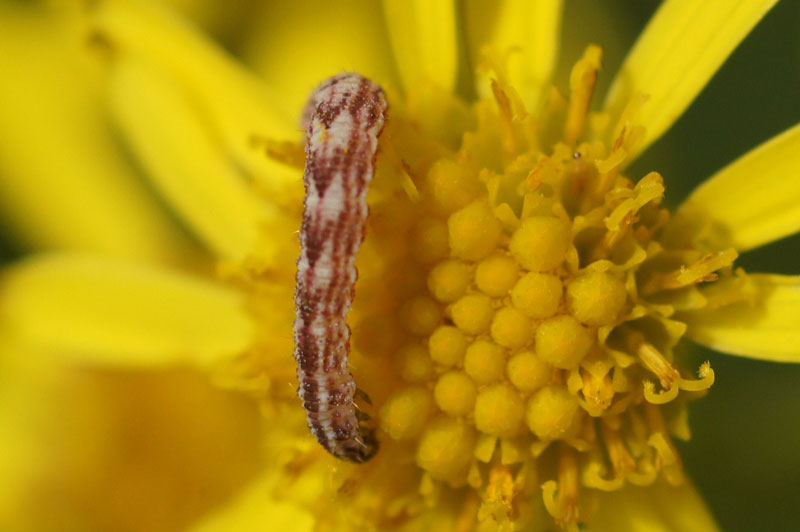
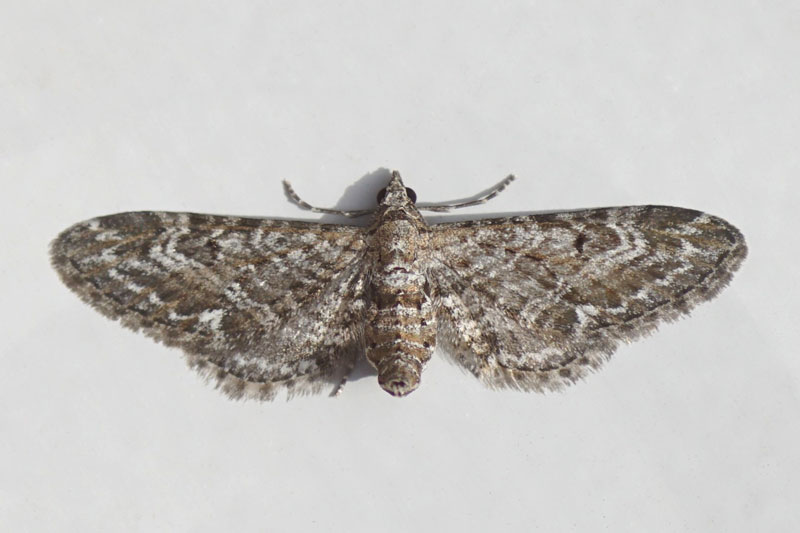
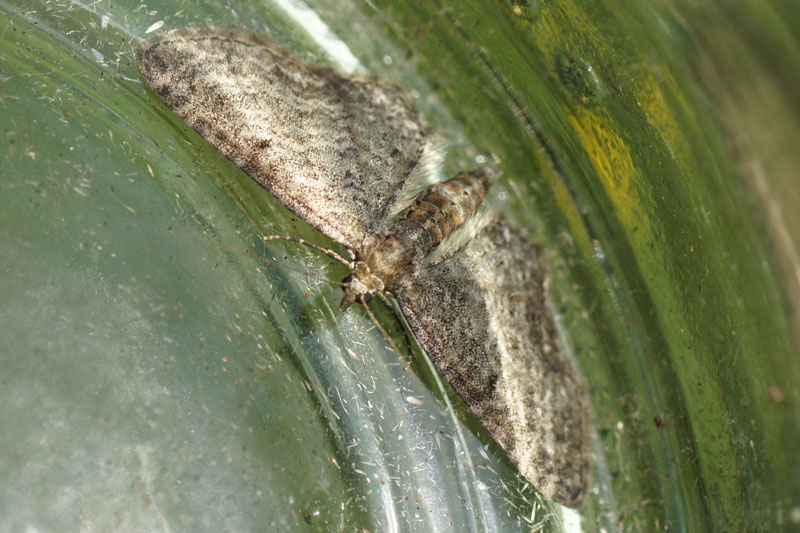
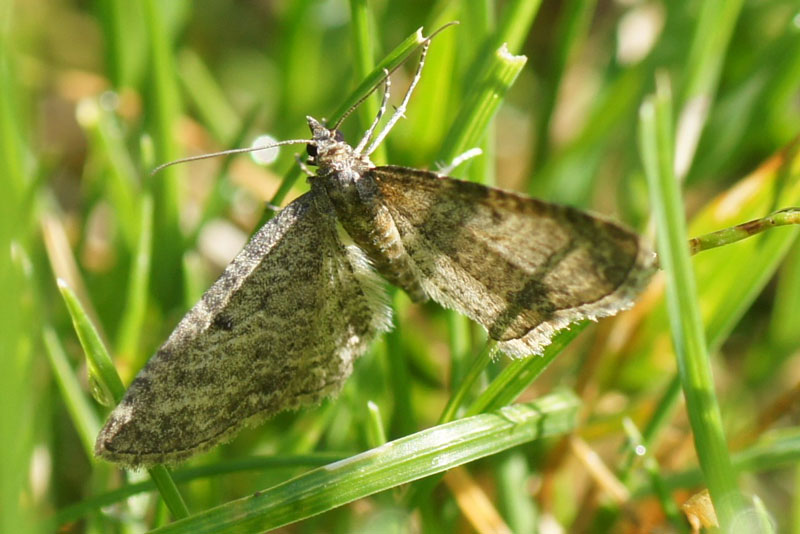
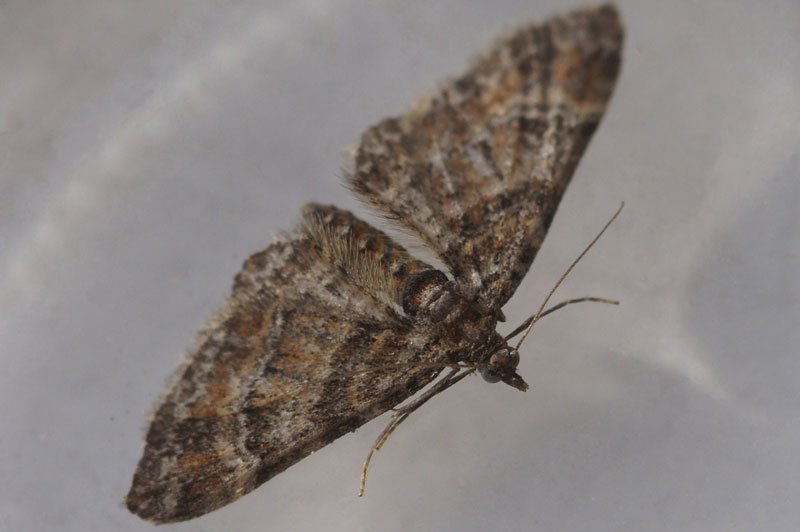
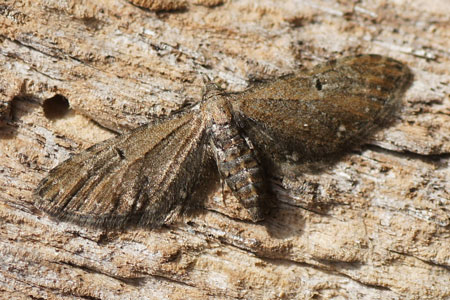 Wormwood Pug (Eupithecia absinthiata). Tribe
Eupitheciini. Subfamily Larentiinae. Family geometer moths (Geometridae).
Wormwood Pug (Eupithecia absinthiata). Tribe
Eupitheciini. Subfamily Larentiinae. Family geometer moths (Geometridae).
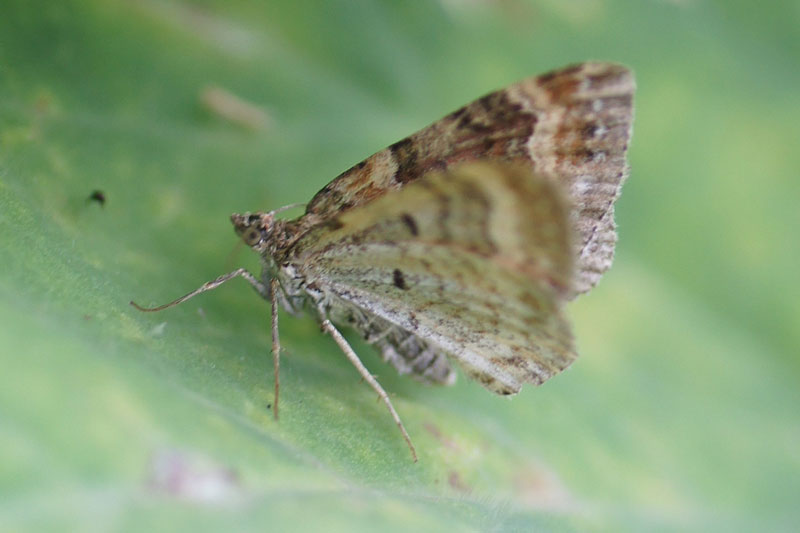
The warm brown front wing of the woodworm pug has along the front edge dark spots and a large dark spot near the front edge. The smaller Eupithecia goossensiata is now seen as the same species.
Wingspan 21 to 23 mm. Moths: April to September. One generation.
Caterpillar: July to October. It overwinters as a pupa in the leaf litter.
Much of the Palaearctic region and North America.
Host plants: yarrow, mugwort, Hemp-agrimony, ragwort, goldenrod and heather (forma
goossensiata). Photo: 27-9-2012.
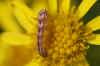 Photo 4-8-2010. On ragwort. German: Kreuzkraut-Blütenspanner.
French: l'Eupithécie de l'absinthe.
Photo 4-8-2010. On ragwort. German: Kreuzkraut-Blütenspanner.
French: l'Eupithécie de l'absinthe. |
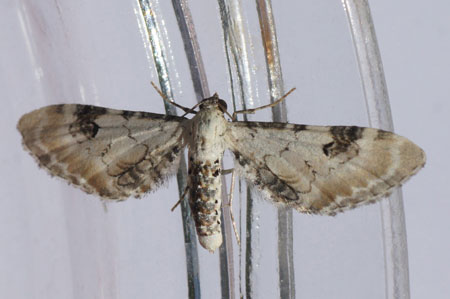 Lime-speck Pug (Eupithecia centaureata). Tribe
Eupitheciini. Subfamily Larentiinae. Family geometer moths (Geometridae).
Lime-speck Pug (Eupithecia centaureata). Tribe
Eupitheciini. Subfamily Larentiinae. Family geometer moths (Geometridae).
A largely white spanner with a dark spot along the leading edge of the fore wings.
Host plants: Many herbaceous plants.
Half April-early November. Two sometimes three generations. It overwinters as a pupa. It is overwintering as a pupa.
Wingspan: 15-24 mm. Europe, North Africa, Asia Minor.
Photo 18-6-2017. German: Mondfleckige Blütenspanner, Weisser
Blütenspanner. French: l'Eupithécie à tirets. |
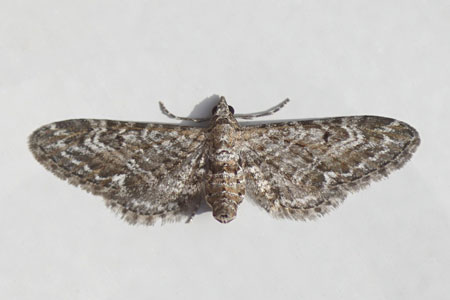 Narrow-winged pug (Eupithecia nanata). Tribe
Eupitheciini. Subfamily Larentiinae. Family geometer moths (Geometridae).
Narrow-winged pug (Eupithecia nanata). Tribe
Eupitheciini. Subfamily Larentiinae. Family geometer moths (Geometridae).
The front wings with a gray to brown or yellow-brown ground color and with a pattern of light and dark
crossbands.
Wingspan from 15 to 23 mm. March-September. Two generations. It overwinters as a pupa.
Especially on sandy soils. Caterpillars feed on common heather and sometimes yarrow. Photo 22-8-2018. German:
Heidekraut-Blütenspanner, Gebänderter Heidekraut-Blütenspanner. French: l'Eupithécie
naine. |
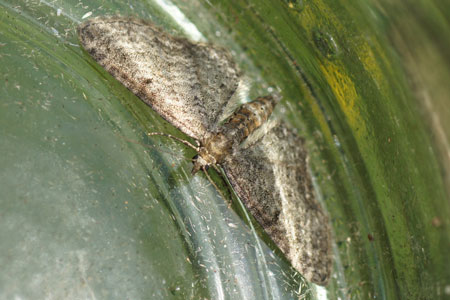 .. ..
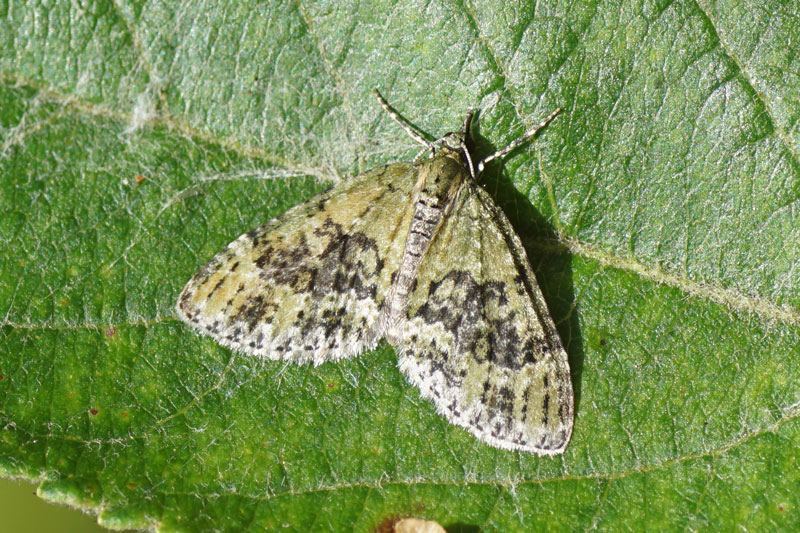
 Grey Pug (Eupithecia subfuscata). Tribe
Eupitheciini. Subfamily Larentiinae. Family geometer moths (Geometridae).
Grey Pug (Eupithecia subfuscata). Tribe
Eupitheciini. Subfamily Larentiinae. Family geometer moths (Geometridae).
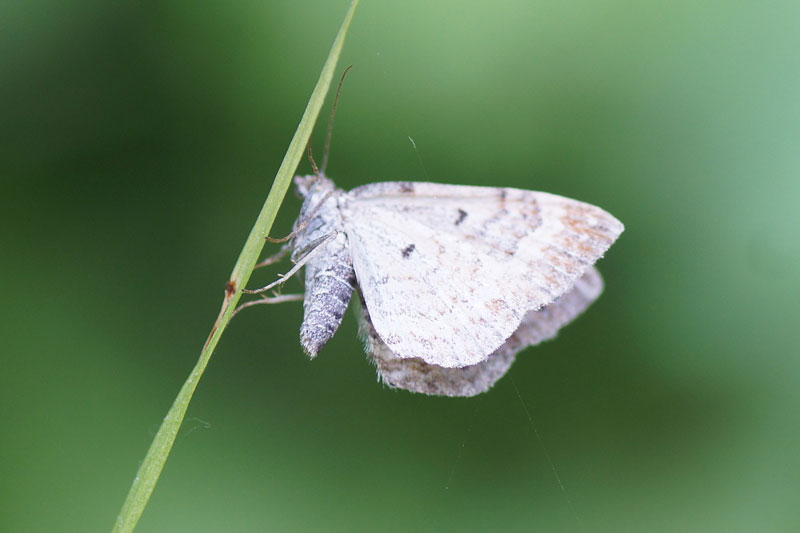
A grey geometer moth with a small center spot. No distinctive markings and it is therefore difficult to identify.
Span of 17 to 21 mm. May - August Two generations. It overwinters as a pupa. Caterpillars feed on many kinds of plants.
Palearctic, Near East, North America. Photos 9-6-2014. German:
Hochstaudenflur-Blütenspanner. French: l 'Eupithécie noirâtre. |
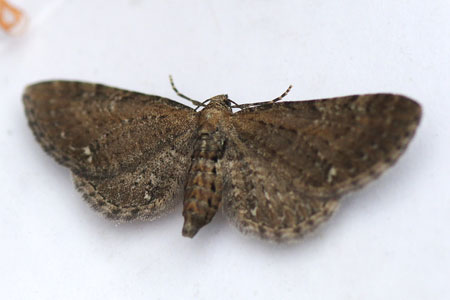
 White-spotted Pug (Eupithecia tripunctaria). Tribe
Eupitheciini. Subfamily Larentiinae. Family geometer moths (Geometridae).
White-spotted Pug (Eupithecia tripunctaria). Tribe
Eupitheciini. Subfamily Larentiinae. Family geometer moths (Geometridae).
Brownish dark grey forewings with little marking and usually with three white
spots along the trailing edge. Breast and sides of the abdomen with white
spot Sometimes the spots are missing.
Wingspan 16-23 mm.
March-September. Two generations. It hibernates as a pupa. Caterpillars feed on many types of
umbelliferae. Europe, North America.
Photo 9-7-2023. German: Dreipunkt-Blütenspanner. French:
l'Eupithécie triponctuée |
 .. ..
 . .
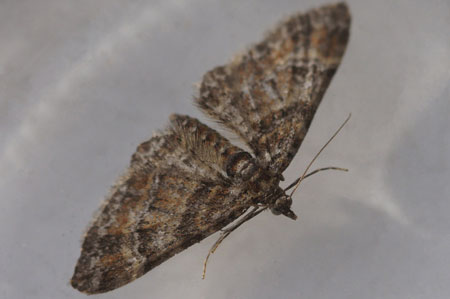
 Common Pug (Eupithecia vulgata). Tribe
Eupitheciini. Subfamily Larentiinae. Family geometer moths (Geometridae).
Common Pug (Eupithecia vulgata). Tribe
Eupitheciini. Subfamily Larentiinae. Family geometer moths (Geometridae).
A variable moth. The forewings reddish brown with white wave line with a white spot on the corner. On the abdomen, you see a row of black spots. Similar species are: Maple Pug
(Eupithecia inturbata), Valerian Pug (Eupithecia valerianata) and Triple-spotted Pug
(Eupithecia trisignaria).
Wingspan of 18 to 21 mm. April-August. Two generations. They fly from twilight. Various herbaceous plants, shrubs and trees.
The caterpillar overwinters as a pupa. Paleartic. Photos 21-5-2014. German:
Fallaub-Blütenspanner. French: l'Eupithécie austère. |
 .. ..
 Double-striped Pug (Gymnoscelis
rufifasciata). Tribe Eupitheciini. Subfamily Larentiinae. Family geometer moths
(Geometridae).
Double-striped Pug (Gymnoscelis
rufifasciata). Tribe Eupitheciini. Subfamily Larentiinae. Family geometer moths
(Geometridae).
A nice little geometer moth. I see it often on the window. Wingspan: 15-19 mm.
It flies from March to October. In three or four generations.
They fly from the afternoon until midnight. But they mostly fly in the twilight.
A huge range of herbaceous plants, shrubs and trees, including ling, Clematis
vitalba, hemp-agrimony, erica and laurel.
It hibernates as a pupa. Palearctic region, the Near East and North Africa. Photos 26-3-2011 German: Rotgebänderte
Blütenspanner. French: Phalène de l'olivier, fausse eupithécie. |
 .. ..
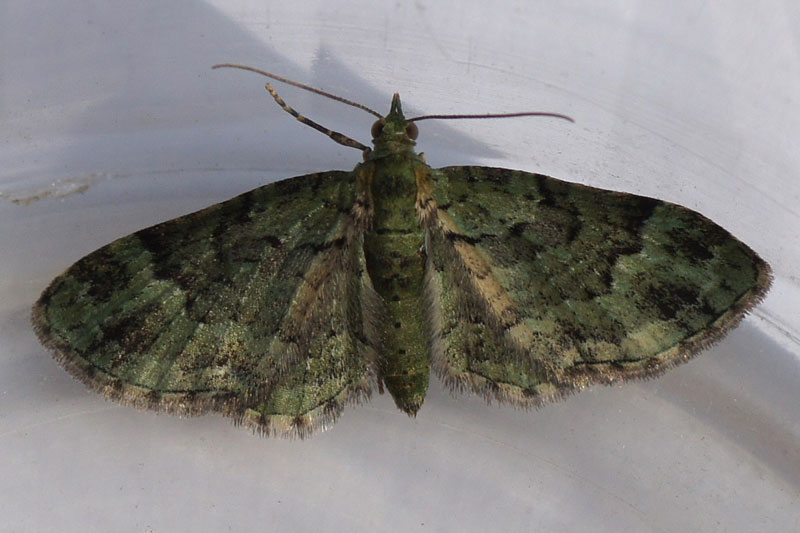
 Green Pug (Pasiphila rectangulata). Synoniem: Rhinoprora
rectangulata, formely: Chloroclystis rectangulata. Tribe Eupitheciini. Subfamily
Larentiinae. Family geometer moths (Geometridae).
Green Pug (Pasiphila rectangulata). Synoniem: Rhinoprora
rectangulata, formely: Chloroclystis rectangulata. Tribe Eupitheciini. Subfamily
Larentiinae. Family geometer moths (Geometridae).
A green geometer moth. However, there are grey and nearly black moths. The oldermoths are also less green. They are more difficult to recognize. On the forewings are many parallel, zigzag transverse lines. The underside is pale.
Similar species are Sloe Pug (Pasiphila chloerata) and the Bilberry Pug (Pasiphila
debiliata).
Wingspan of 15 to 20 mm. May - August. One generation. It overwinters as an egg.
Caterpillars feed on the buds of fruit trees like apple and pear.
Paleartisch, Near East.Underside. Photos 30-5-2014. German: Graugrüne
Apfel-Blütenspanner, Obstbaum-Blütenspanner. French: l'Eupithécie
rectangulaire. |
Tribe Hydriomenini.
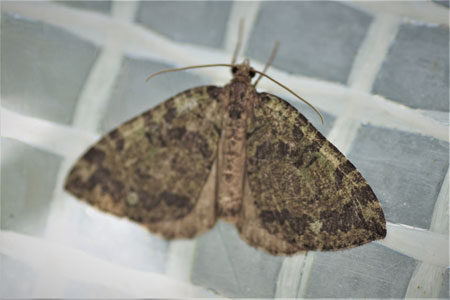 July Highflyer
(Hydriomena furcata) Tribe Hydriomenini. Subfamily Larentiinae. Family geometer moths
(Geometridae). July Highflyer
(Hydriomena furcata) Tribe Hydriomenini. Subfamily Larentiinae. Family geometer moths
(Geometridae).
A very variable moth in terms of color and pattern. Olive-green, grey,
grey-brown or red-brown forewings with variable crossbands and usually with a white spot in the middle at the bottom. There is always a short dark diagonal stripe (variable in width) in the tip of the front wing.
You can find the caterpillar on blueberry and deciduous trees, such as willow.
It overwinters as an egg on the host plant.
May-August. One generation. Sometimes a second generation in September.
Wingspan: 23-30 mm.
Europe, East Asia, North America. Photo 3-8-2018. German:
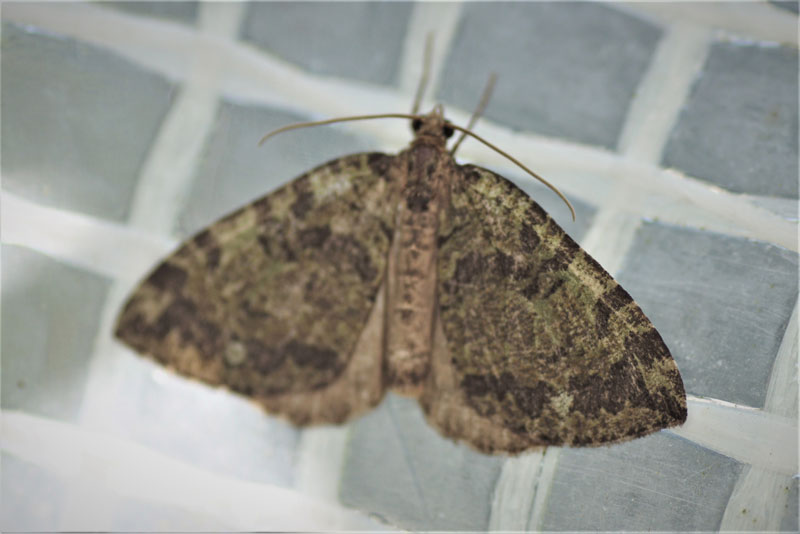
Heidelbeer-Palpenspanner. French: la Larentie lavée. |
Tribe Operophterini.
 .. ..
 . .
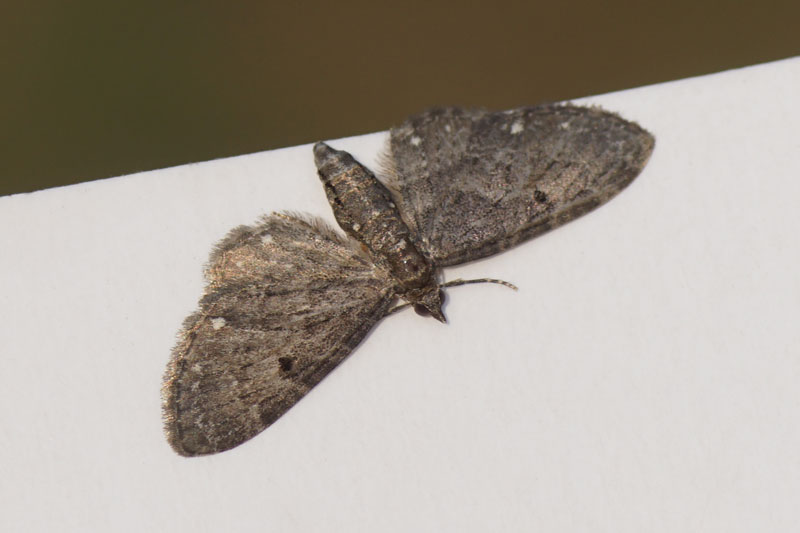
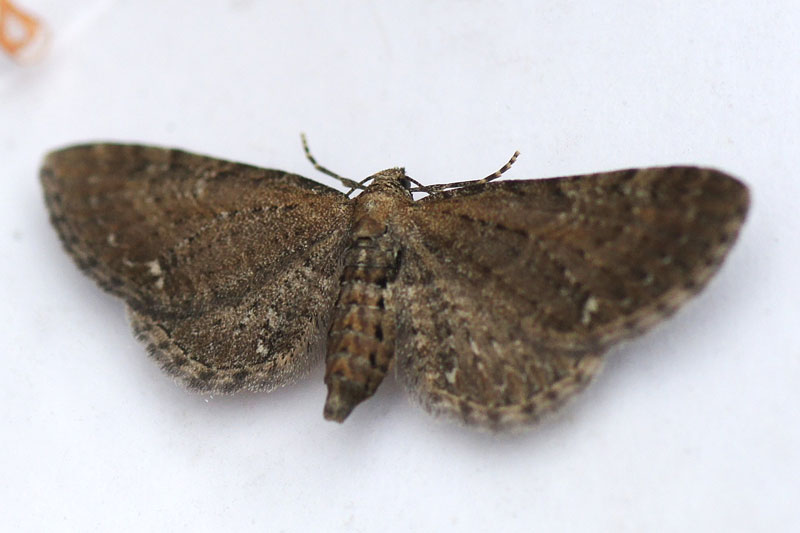
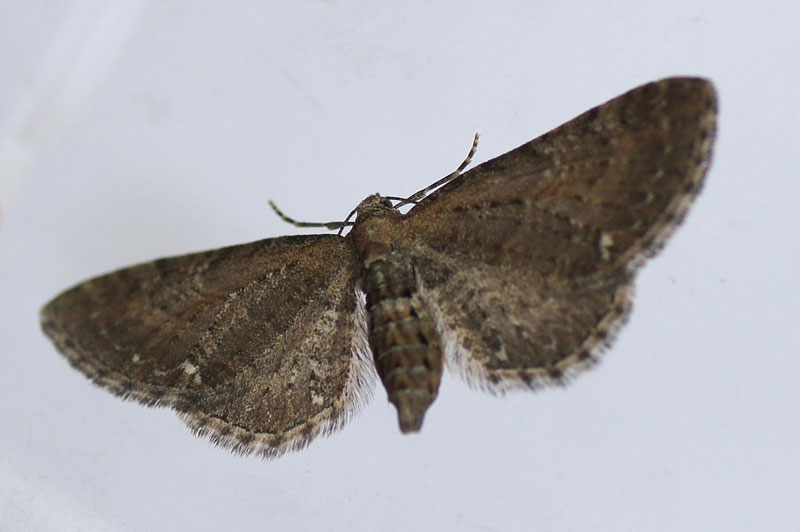
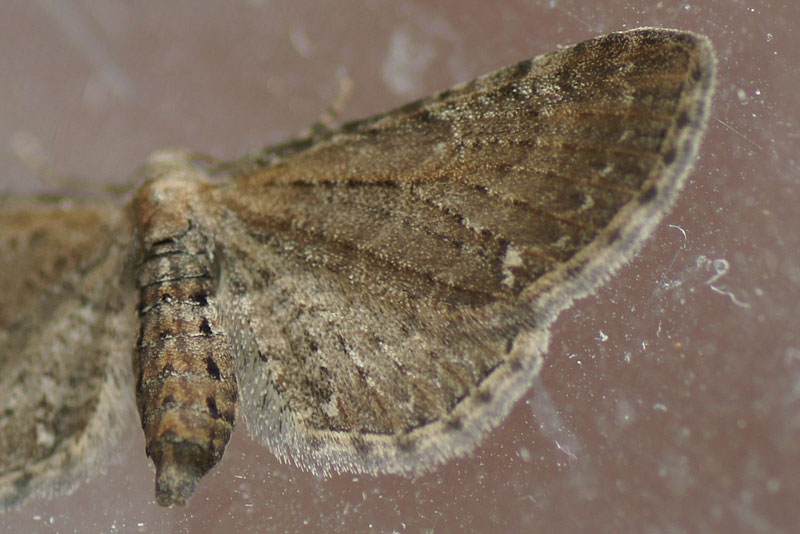
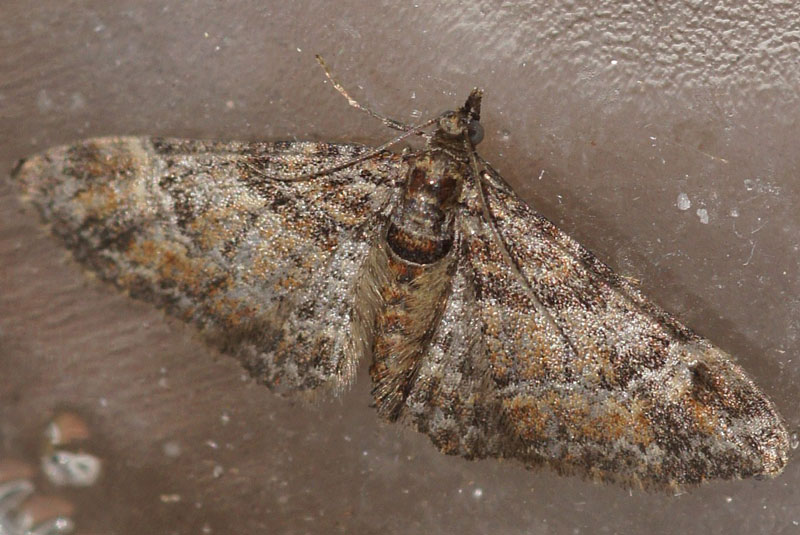
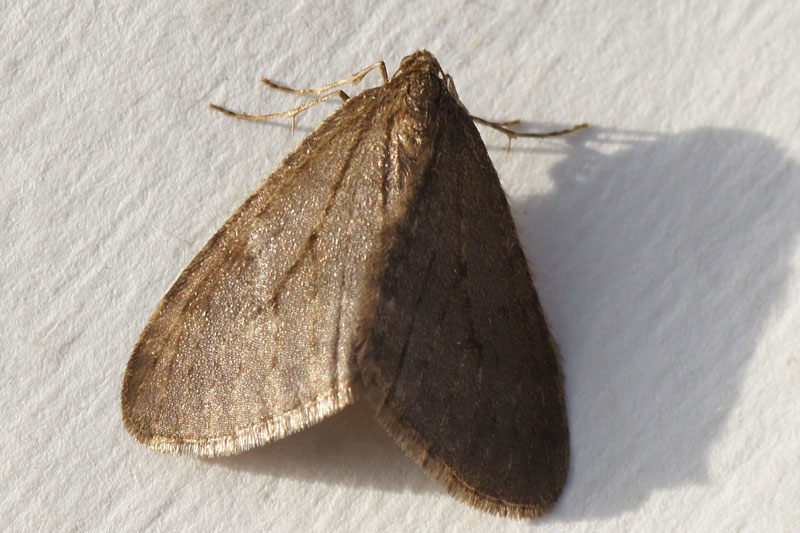
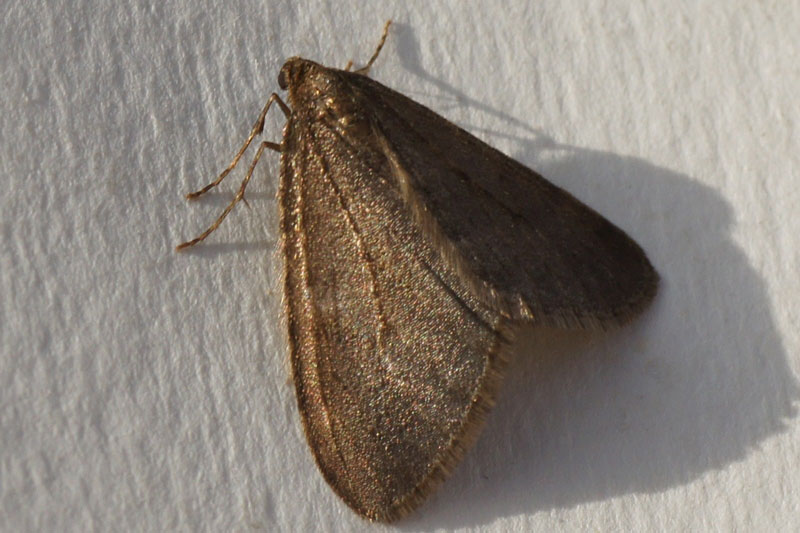
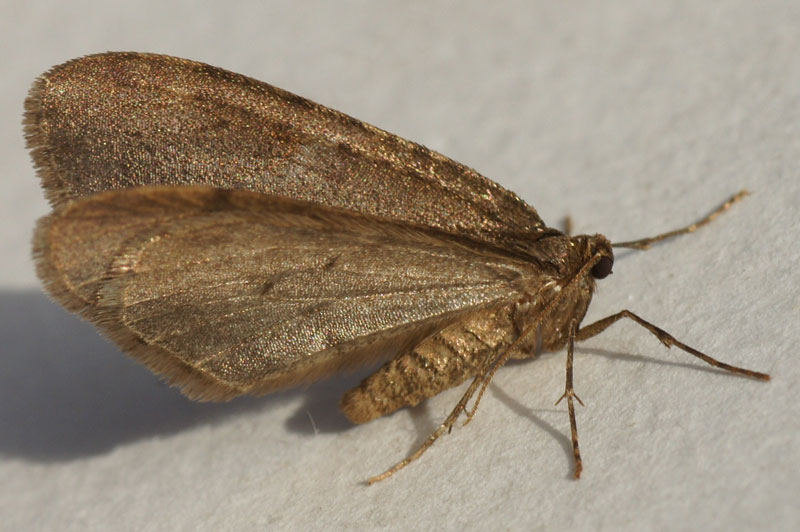
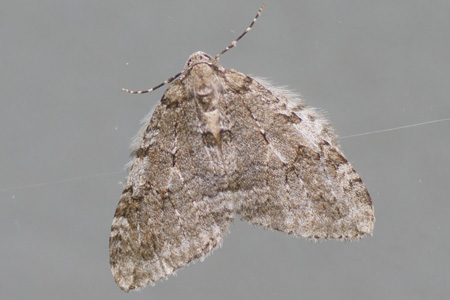
 Epirrita spec. Autumnal moth (Epirrita autumnata), Pale November moth
(Epirrita christyi),
November moth (Epirrita dilutata). Tribe Operophterini. Subfamily
Larentiinae. Family geometer moths (Geometridae).
Epirrita spec. Autumnal moth (Epirrita autumnata), Pale November moth
(Epirrita christyi),
November moth (Epirrita dilutata). Tribe Operophterini. Subfamily
Larentiinae. Family geometer moths (Geometridae).
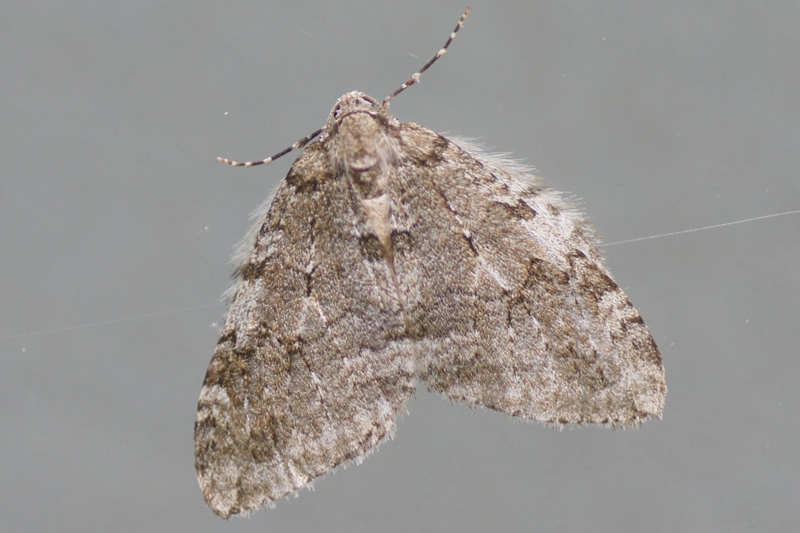
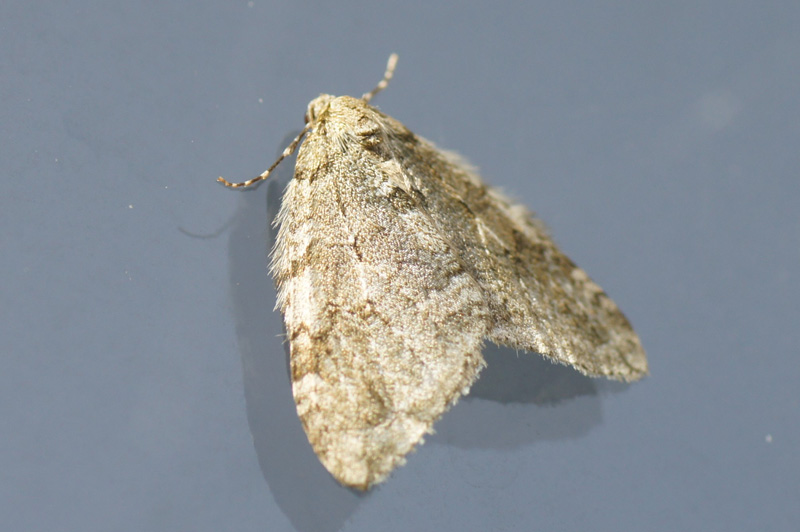
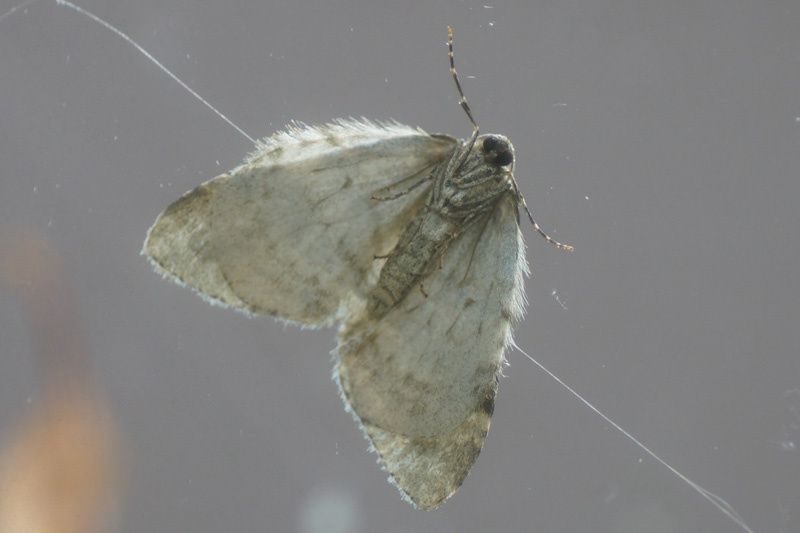
There are three species in the Netherlands which are very much alike and usually from a photo not to identify with certainty. One generation. The caterpillar lives in deciduous trees. They overwinter as eggs on a twig or bark.
Autumnal moth (Epirrita autumnata): Relatively common. Forewing length: 16-20 mm. Preference for birch and willow; sometimes blueberry. In late September-late November.
Pale November moth (Epirrita christyi): Rare. Forewing length: 14-19 mm. Strong preference for beech and birch small. Early October to mid-November.
November moth (Epirrita dilutata): Very general. Forewing length: 15-22 mm. For example birch. In late September-late November. Photos 3-11-2016 |
 .. ..
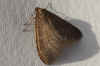 . .  Winter Moth (Operophtera brumata). Tribe
Operophterini. Subfamily Larentiinae.Family geometer moths (Geometridae).
Winter Moth (Operophtera brumata). Tribe
Operophterini. Subfamily Larentiinae.Family geometer moths (Geometridae).
When most of the moths has disappeared, the winter moth flies at night throughout the winter from October to January. These moths are the males, because the females have no wings.
The female crawl up tree-trunks to await the arrival of males. After mating, females lay their eggs in the tree. The adults die. The caterpillars are in spring an important food source for great tits. The eggs hibernate.
The caterpillars can spin a thread. So the wind can transport it to another tree. (called "ballooning," ) In June they use the thread to descend to the ground. There it pupates. At the end of the Autumn the adults appear.
The caterpillars will feed on any tree or shrub and can be a pest in apple orchards. Formaly there were bound sticky strings around the trunk. When the females crawled up, they
siicked to the trunk.
A common species in Europe. German: Kleine Frostspanner French:
cheimatobie, Cheimatobie hiemale, phalène hiémale, petite phalène hiémale
 Caterpillar.
Photos females 10-12-2011 Caterpillar.
Photos females 10-12-2011 
 |
Tribe Perizomini.
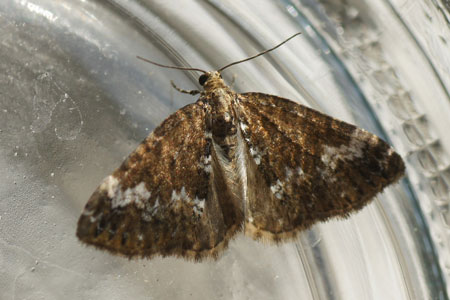 .. ..
 Small Rivulet (Perizoma alchemillata). Tribe
Perizomini. Subfamily Larentiinae.Family geometer moths (Geometridae).
Small Rivulet (Perizoma alchemillata). Tribe
Perizomini. Subfamily Larentiinae.Family geometer moths (Geometridae).
The front wing is a dark brown with an irregular white band. It looks like the larger Rivulet
(Perizoma affinitata).
The caterpillar can be found on plants like ordinary Hemp-nettle, purple deadnettle. The pupa overwinters in the ground. May - August. One generation.
Wingspan: 14-18 mm. Europe. Photos 2-8-2013, 6-8-2020. German:
Hohlzahn-Kapselspanner. French: la Mélanippe coupée. |
 .. ..
 Grass Rivulet
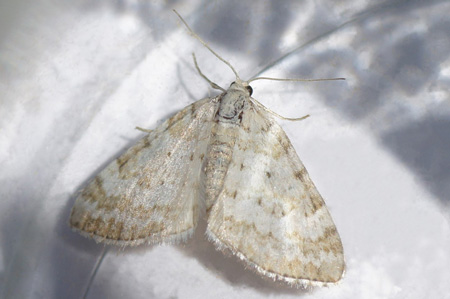
(Perizoma albulata). Tribe Perizomini. Subfamily Larentiinae.Family geometer moths
(Geometridae). Grass Rivulet
(Perizoma albulata). Tribe Perizomini. Subfamily Larentiinae.Family geometer moths
(Geometridae).
A white geometer moth with pale grey-brown bands. In the Netherlands it mainly occurs in the Dunes. They fly at night and in the afternoon..
Host plants: Rattle (Rhinanthus).
May-July. One generation, sometimes in September, October a second generation.
It overwinters as a pupa in the ground.
Wingspan: 18-20 mm. Europe, North Asia. Photos 13-6-2014. German:
Klappertopf-Kapselspanner. French: la Phalène du rhinante. |
 Sandy carpet, sandy rivulet (Perizoma
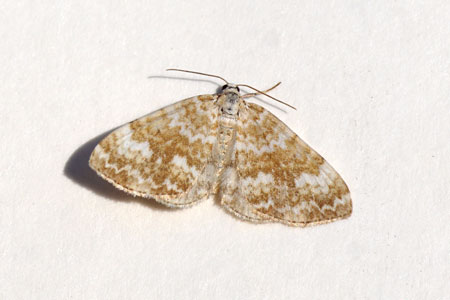
flavofasciata). Tribe Perizomini. Subfamily Larentiinae.Family geometer moths
(Geometridae).
Sandy carpet, sandy rivulet (Perizoma
flavofasciata). Tribe Perizomini. Subfamily Larentiinae.Family geometer moths
(Geometridae).
Whitish forewings with yellowish to ocher transverse bands that have two long bulges in the middle.
Host plants: Silene species, including the red campion.
April-September. Two generations. It hibernates as a pupa. Wingspan: 19-32 mm. Europe, North Africa, Siberia. Photo
7-6-2023. German: Gelbe Lichtnelken-Kapselspanner. French: la
Phalène décolorée |
Tribe Trichopterygini.
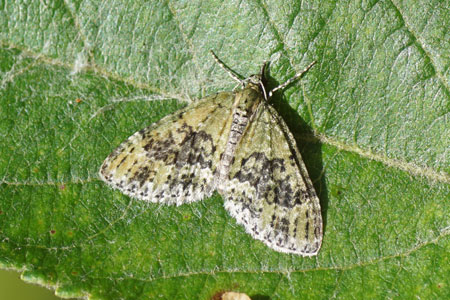 Yellow-barred Brindle (Acasis viretata). Tribe
Trichopterygini. Subfamily Larentiinae.Family geometer moths (Geometridae).
Yellow-barred Brindle (Acasis viretata). Tribe
Trichopterygini. Subfamily Larentiinae.Family geometer moths (Geometridae).
Olive green to yellowish with wavy blackish lines and sometimes whitish lines.
Host plants: Alder buckthorn ivy, privet, holly and common dogwood.
April-October. Two generations. It hibernates as a pupa. Wingspan: 25-29
mm. Europe, East Asia, North America, Siberia. Photo 15-8-2023. German:
Gelbgrüner Lappenspanner. French: la Lobophore verdâtre |
Tribe Xanthorhoini.
 .. ..
 . .
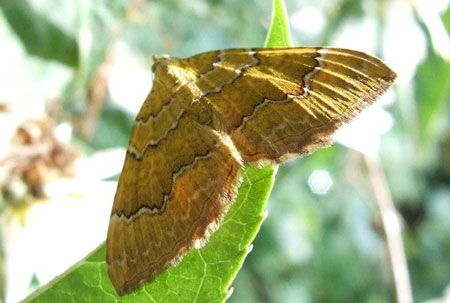
 Yellow shell moth
(Camptogramma bilineata). Tribe Xanthorhoini. Subfamily Larentiinae. Family geometer moths
(Geometridae). Yellow shell moth
(Camptogramma bilineata). Tribe Xanthorhoini. Subfamily Larentiinae. Family geometer moths
(Geometridae).
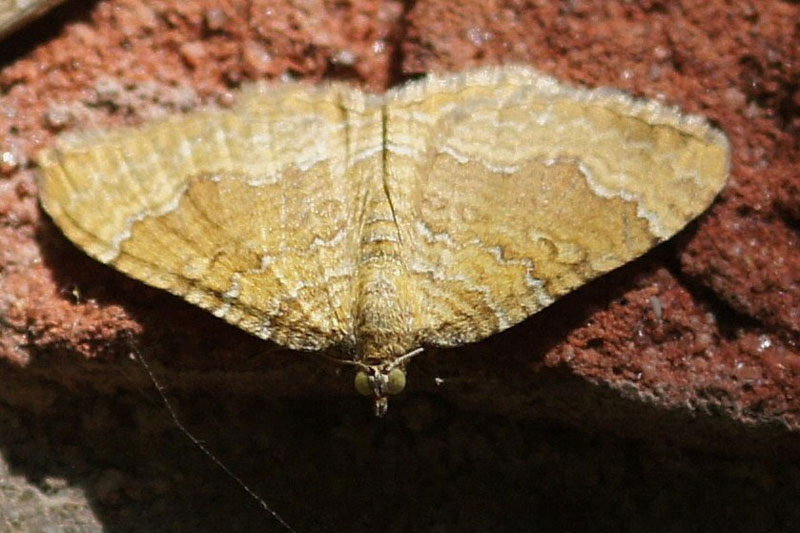
A beautiful golden geometer moth with fine brown wavy lines on the wings. It is variable in
colour.
In the Netherlands it is especially be found in areas with a sandy soil.
It flies by day. In mid-May-early September. Two generations in a year.
The caterpillars hibernate and feed on a variety of low-growing plants, including common chickweed and
Persicaria.
Wingspan: 20-25 mm. Europe, North America and Asia. German: Ockergelbe
Blattspanner, Brennesselspanner, Löwenzahnspanner. French: Brocatelle
d'Or.
|
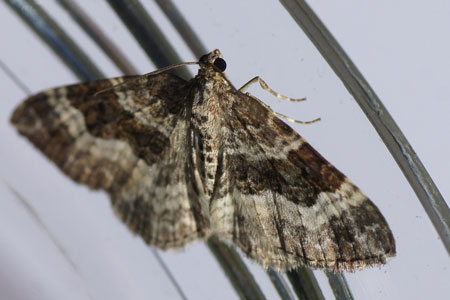 .. ..
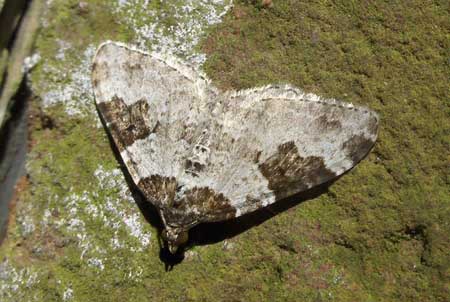
 Common Carpet, White-banded Toothed Carpet (Epirrhoe
alternata). Tribe Xanthorhoini. Subfamily Larentiinae. Family geometer moths
(Geometridae).
Common Carpet, White-banded Toothed Carpet (Epirrhoe
alternata). Tribe Xanthorhoini. Subfamily Larentiinae. Family geometer moths
(Geometridae).
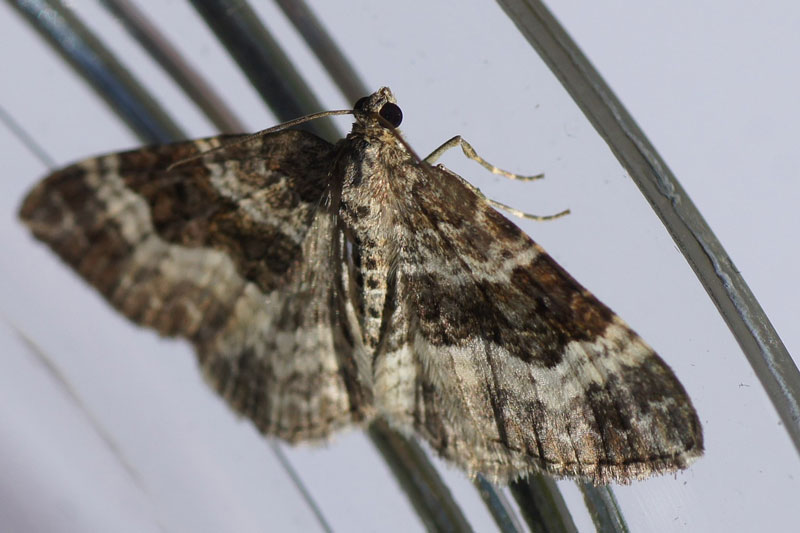
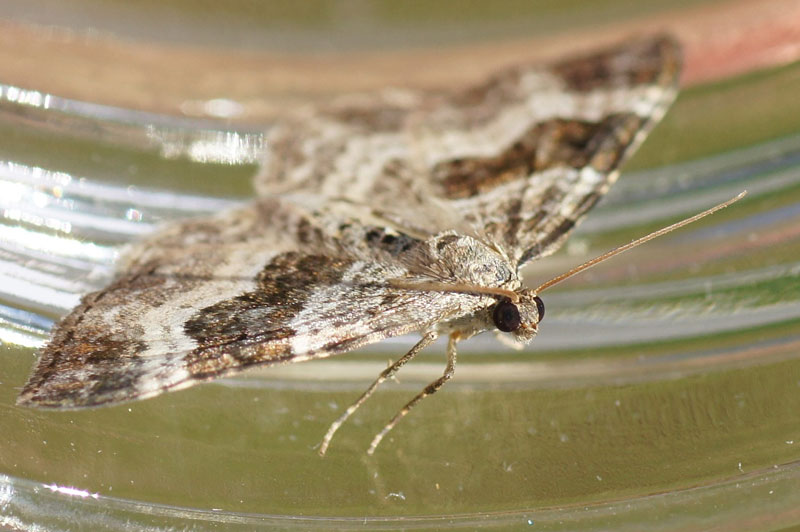
A geometer moth with pale grey, grey brown. dark grey, grey-brown and white bands. It looks like other Epirrhoe species.
In the Netherlands it is especially be found in areas with a sandy soil.
May-August. Two generations pro year. By day they are easily disturbed. The pupa overwinters in a cocoon in the soil.
Host: Galium. Wingspan: 25-27 mm. Palarctisc. Photos 23-7-2014. German: Graubinden-Labkrautspanner French: la Phalène du pied-de-lion ,
l'Alternée. |
 .. ..
 Garden Carpet
(Xanthorhoe fluctuata). Tribe Xanthorhoini. Subfamily Larentiinae. Family geometer moths
(Geometridae). Garden Carpet
(Xanthorhoe fluctuata). Tribe Xanthorhoini. Subfamily Larentiinae. Family geometer moths
(Geometridae).
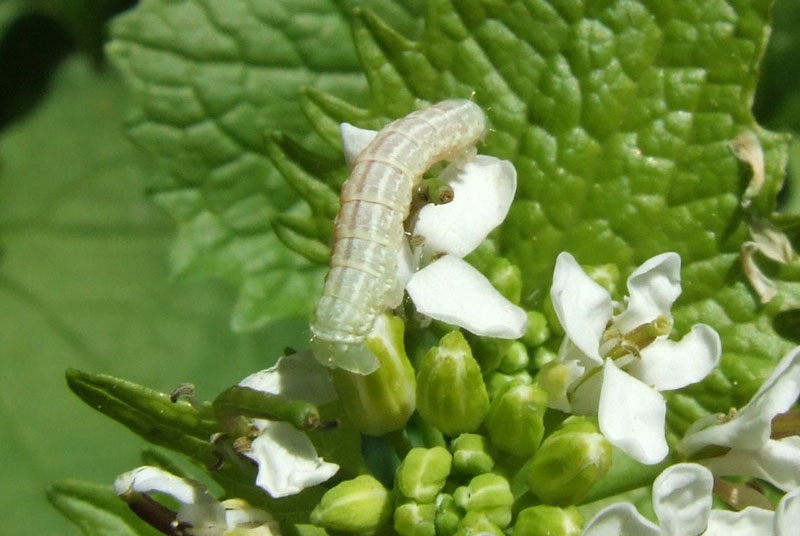
Because of the white paint on the wall, it was very difficult to see on a distance.
It usually feeds on crucifers: both cultivated brassicas and wild species such as
flixweed, garlic mustard.
It flies in two generations from April to September and hibernates as a pupa.
Wingspan: 27-31 mm. The whole Palearctic region, the Near East and North Africa. German:
Garten-Blattspanner. French: Phalène ondée. Small photo 30-8-2010. |
 .. ..
 . .
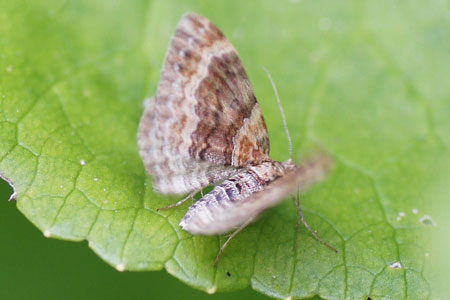
 Dark-barred Twin-spot Carpet or Red Twin-spot Carpet
(Xanthorhoe ferrugata or Xanthorhoe spadicearia). Tribe Xanthorhoini. Subfamily
Larentiinae. Family geometer moths (Geometridae) .
Dark-barred Twin-spot Carpet or Red Twin-spot Carpet
(Xanthorhoe ferrugata or Xanthorhoe spadicearia). Tribe Xanthorhoini. Subfamily
Larentiinae. Family geometer moths (Geometridae) .
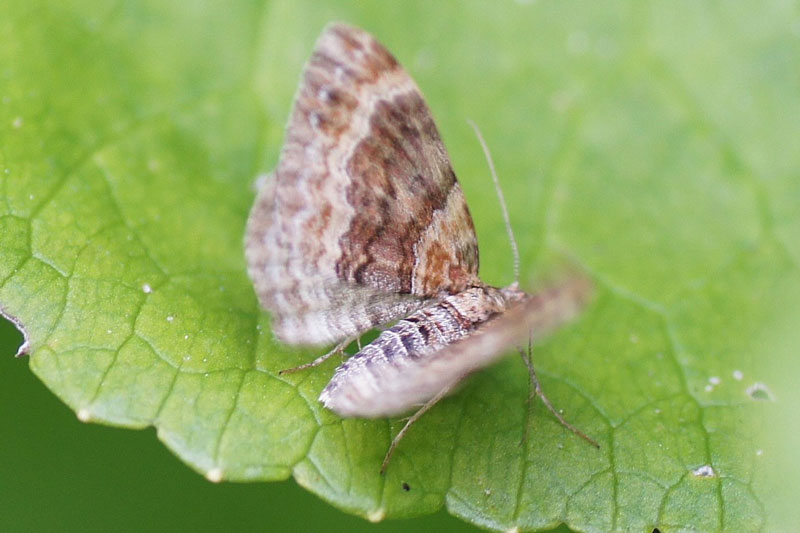
Both species look very much alike. They may have a reddish brown middle band. On the edge at the wing tip is double stain. Only if the middle band is dark
grey, you are sure that it is a Dark-barred Twin-spot Carpet X. ferrugata. A pale purplish middle band gives more chance of a Red Twin-spot Carpet four X.
spadicearia.
April-September / October. Two sometimes three generations.
The caterpillar can be found at various herbaceous plants. It overwinters as a pupa.
Wingspan: 18-22 mm / 24-27 mm. Photos 17-6-2014. German: Dunkler Rostfarben-Blattspanner / Heller
Rostfarben-Blattspanner. French: la Rouillée. |
Subfamily Sterrhinae.
Tribe Scopulini.
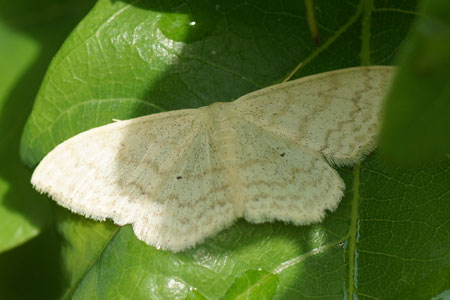 Cream wave
(Scopula floslactata). Tribe Scopulini. Subfamily Sterrhinae. Family geometer moths
(Geometridae).
Not in the garden, but in the dunes about 4 km from our garden. Cream wave
(Scopula floslactata). Tribe Scopulini. Subfamily Sterrhinae. Family geometer moths
(Geometridae).
Not in the garden, but in the dunes about 4 km from our garden.
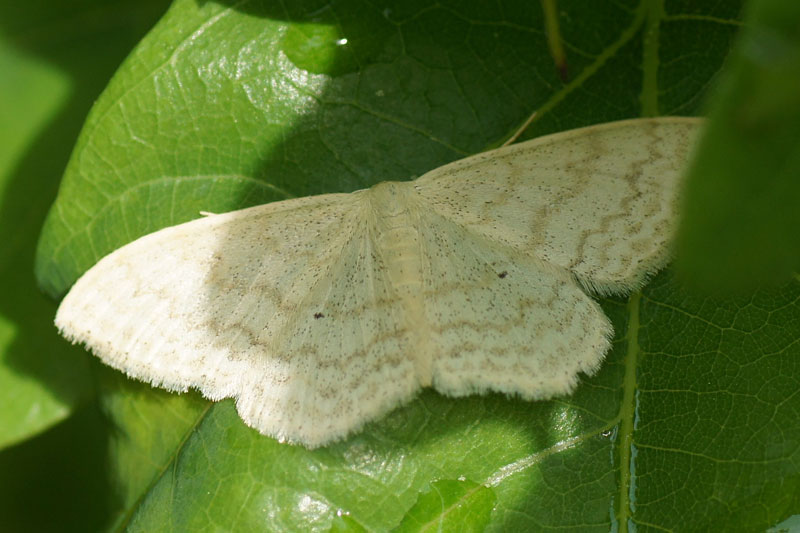
The colour of the wings is cream white to yellowish white with very small dark spots. Three or four light brown to dark brown wavy transverse lines. On the hind wing is a black center spot. On the forewings is the spot absent or difficult to see.
There are similar species: Sub-angled Wave (Scopula nigropunctata), Lesser Cream Wave
(Scopula immutata), Smoky Wave (Scopula ternata).
The caterpillar can be found on various herbaceous plants such as dandelion. Especially on sandy soil.
May-August. One generation. The caterpillar overwinters.
Wingspan: 20-30 mm. Europe, Asia. Photo 27-5-2014. German: Gelblichweiße
Kleinspanner. French: la Phalène laiteuse |
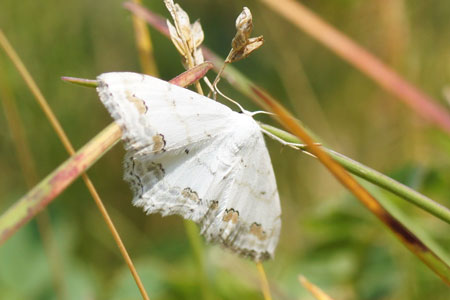 Lace Border
(Scopula ornata). Tribe Scopulini. Subfamily Sterrhinae. Family geometer moths
(Geometridae).
Not in the garden, but in the dunes about 4 km from our garden. Lace Border
(Scopula ornata). Tribe Scopulini. Subfamily Sterrhinae. Family geometer moths
(Geometridae).
Not in the garden, but in the dunes about 4 km from our garden.
A white moth with a light brown wavy band. Rare except in the dunes near Bergen -
Zandvoort.
The caterpillar can be found at various herbaceous plants, especially thyme.
May-August Two generations. The caterpillar overwinters in the grass.
Wingspan: 21-34 mm. Europe, Asia, North Africa. Photo 26-6-2014. German:
Schmuck-Kleinspanner, Weißer Dost-Kleinspanner, Schmuckspanner. French: Phalène
ornée.
|
Tribe Sterrhini.
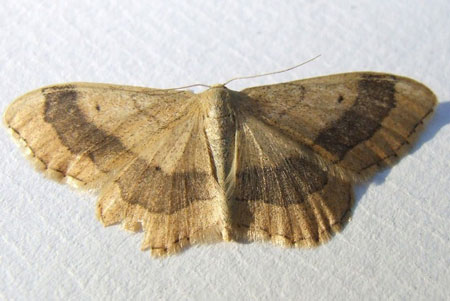 .. ..  . .
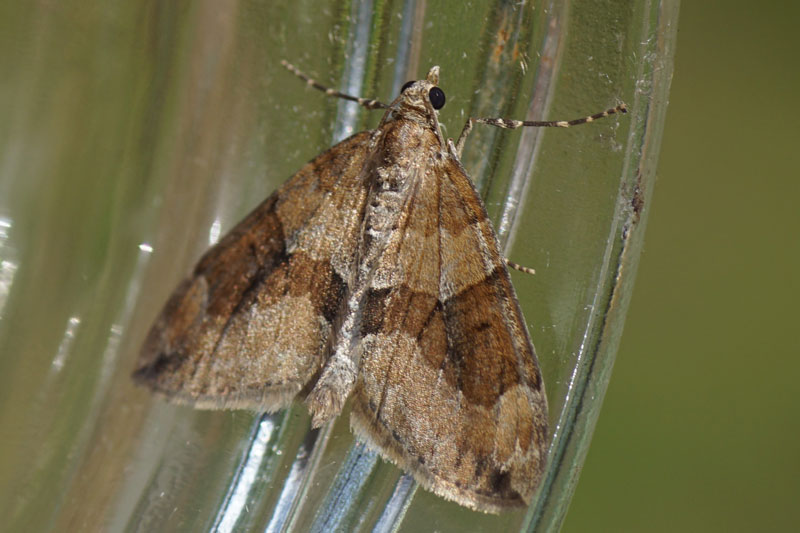
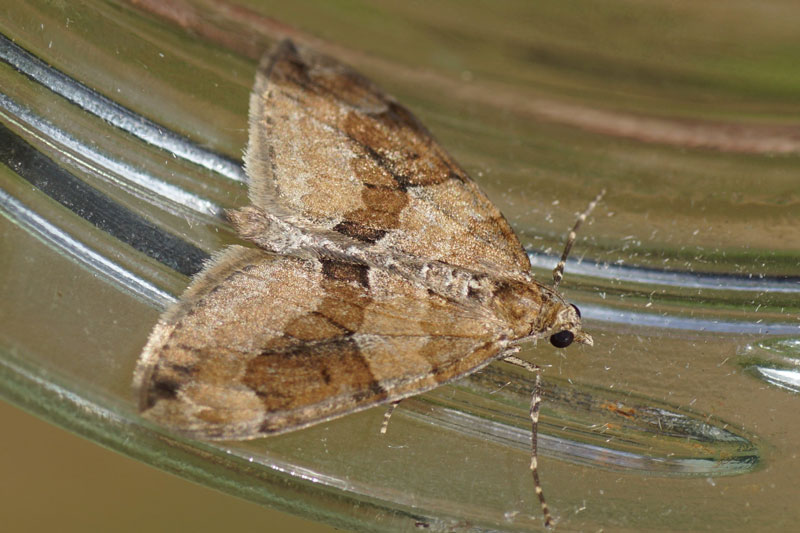
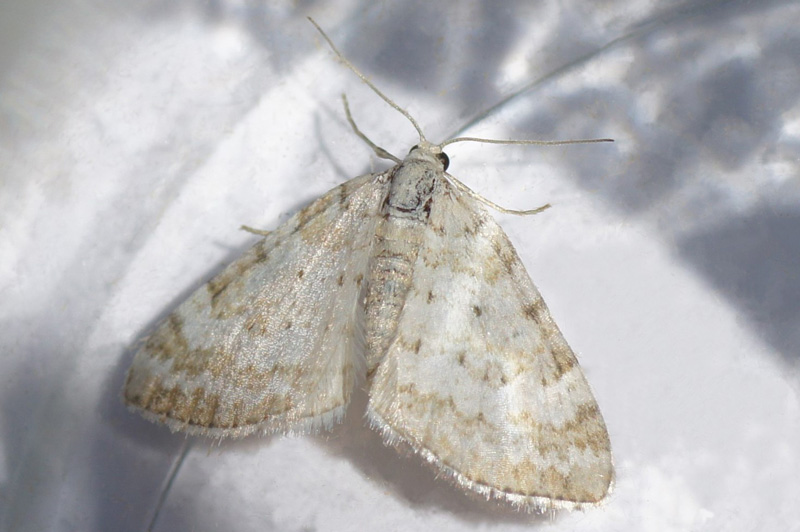
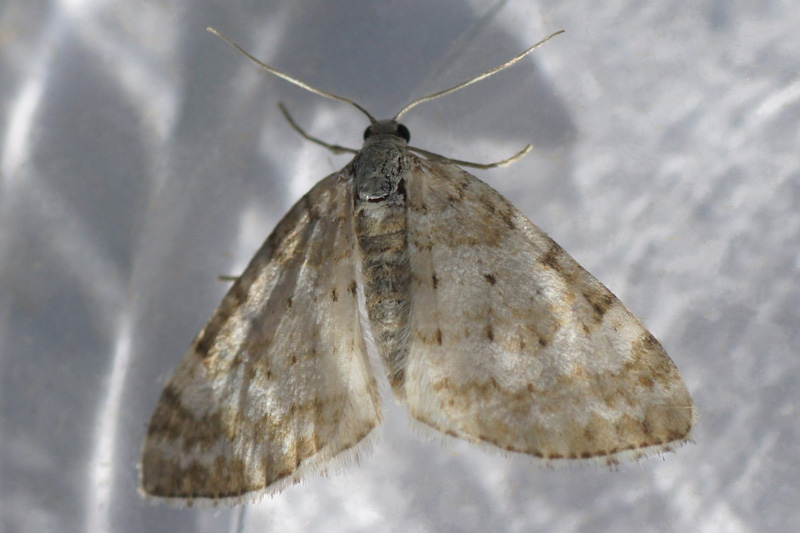
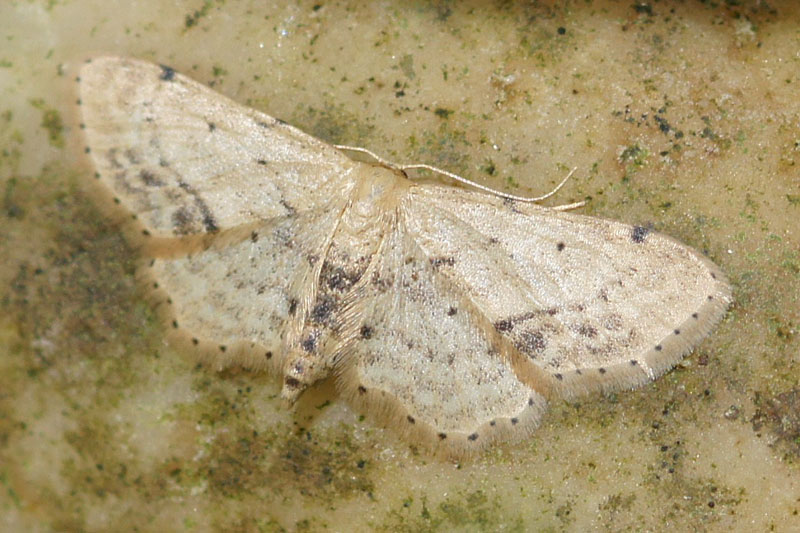
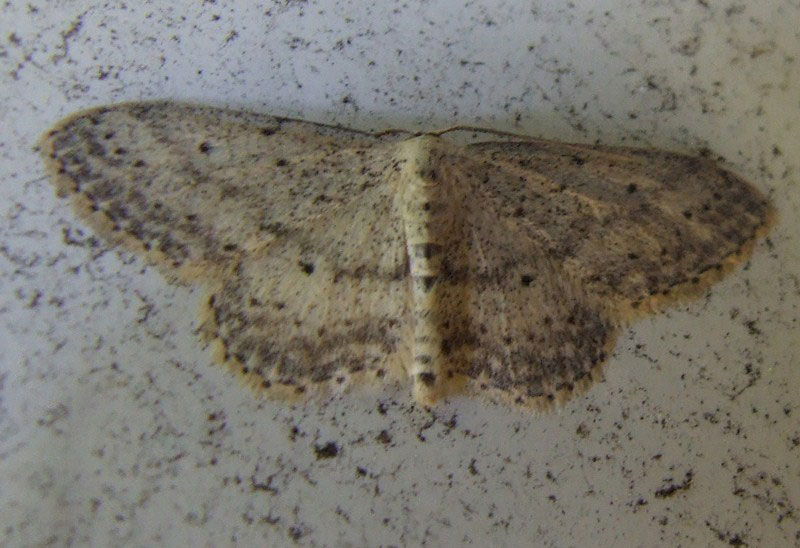
 Riband Wave (Idaea aversata). Tribe
Sterrhini. Subfamily Sterrhinae. Family geometer moths (Geometridae).
Riband Wave (Idaea aversata). Tribe
Sterrhini. Subfamily Sterrhinae. Family geometer moths (Geometridae).
This moth I found in July in my greenhouse. When I let it out, I photographed it through the glass. It didn't move when I took more photos.
Besides this form with a dark band, there are also moths with a light band. A clear dot on both the front and rear wings.
Host plants: Dandelion, dock, etc.
June to October. Two generations. The caterpillar do you find in July-May on many herbaceous plants. The young caterpillar overwinters on the ground in the litter layer.
Wingspan: 30 to 35 mm. Europe. Photos 4-7-2009. |
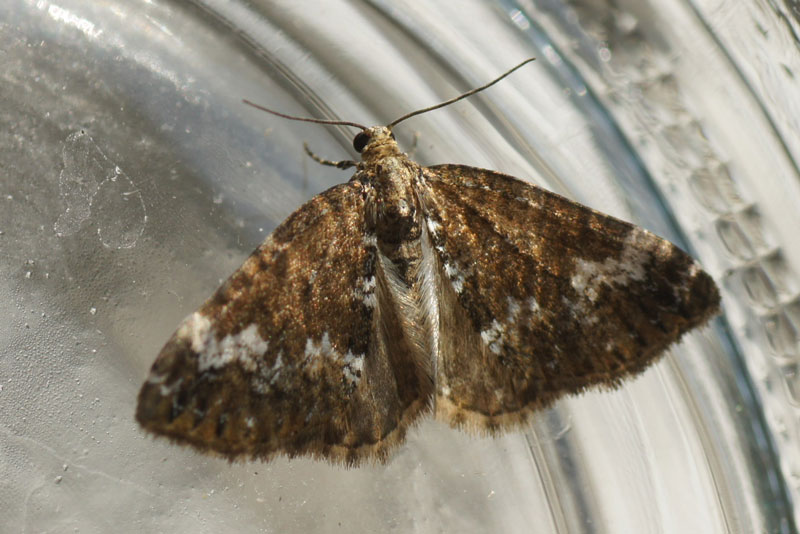
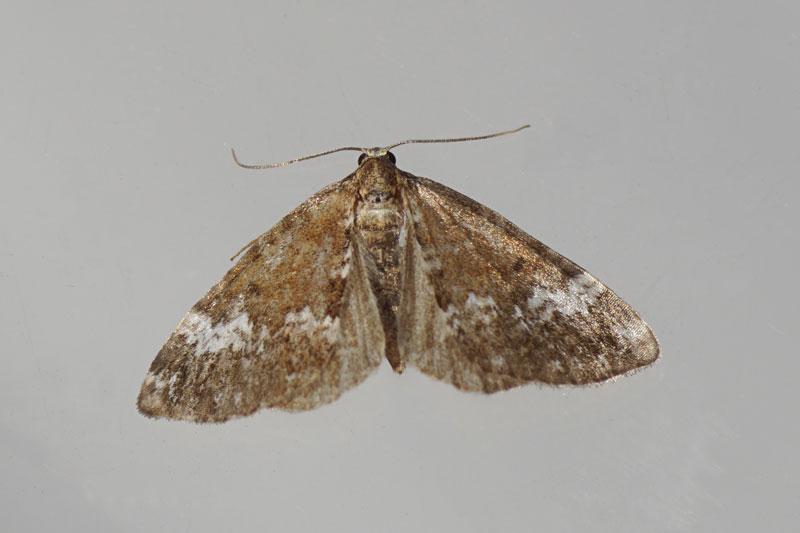
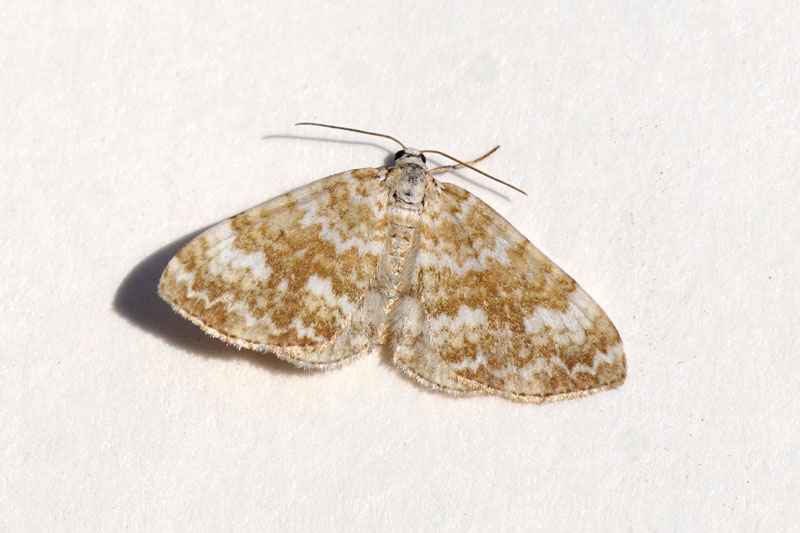
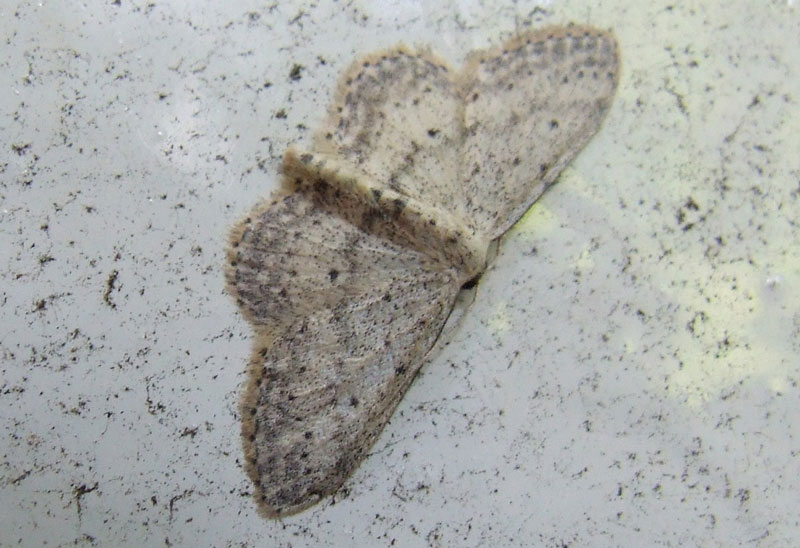
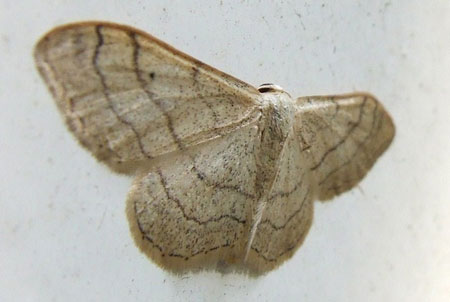 .. .. 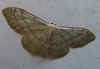 Riband Wave (Idaea aversata ab. remutata) Tribe Sterrhini. Subfamily
Sterrhinae. Family geometer moths (Geometridae).
Riband Wave (Idaea aversata ab. remutata) Tribe Sterrhini. Subfamily
Sterrhinae. Family geometer moths (Geometridae).
This is the form with a light band. (remutata) This form I see most in the garden (often on a window frame). Photos 13-7-2009. German: Breitgebänderte
Staudenspanner, Laub-Kleinspanner, Mausohr-Spanner. French: Ruban ondulé. |
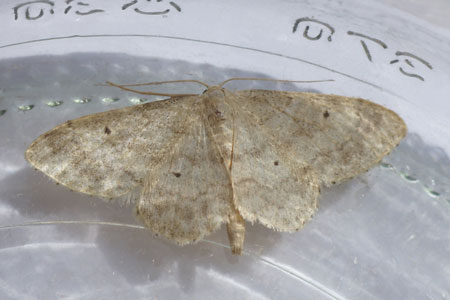 Small Fan-footed Wave
(Idaea biselata). Tribe Sterrhini. Subfamily Sterrhinae. Family geometer moths
(Geometridae). Small Fan-footed Wave
(Idaea biselata). Tribe Sterrhini. Subfamily Sterrhinae. Family geometer moths
(Geometridae).
Yellowish white, brownish white wings. The drawing varies with these geometer moths from light brown to dark brown. The inner transverse lines are less clear than the outer transverse lines.
The caterpillar can be found in many plant species such as dandelion, plantain, oak.
May-September Two generations. Wingspan: 16-21 mm. Europe, Asia. Photos 5-7-2014. German: Breitgesäumte
Zwergspanner, Breitgesäumter Gebüsch-Kleinspanner. French: la Truie. |
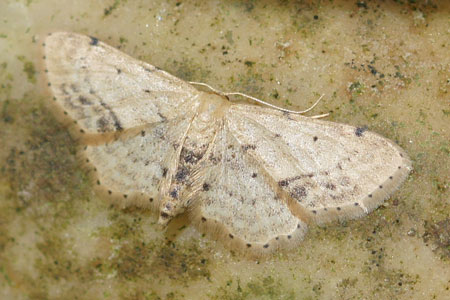 Single-dotted Wave
(Idaea dimidiata). Tribe Sterrhini. Subfamily Sterrhinae. Family geometer moths
(Geometridae). Single-dotted Wave
(Idaea dimidiata). Tribe Sterrhini. Subfamily Sterrhinae. Family geometer moths
(Geometridae).
A brownish yellow to brownish white geometer moth. The outer area of the forewing towards the trailing corner is darkened. The spots of the moth in this picture aren't very dark.
They love damp locations. I found this moth at the edge of the pond. The caterpillar hibernates. It can be found on various herbaceous plants.
June-August. One generation, sometimes two generations.
Wingspan: 15-20 mm. Palearctic region and North America. German: Braungewinkelter
Zwergspanner. French: la Phalène écussonnée. |
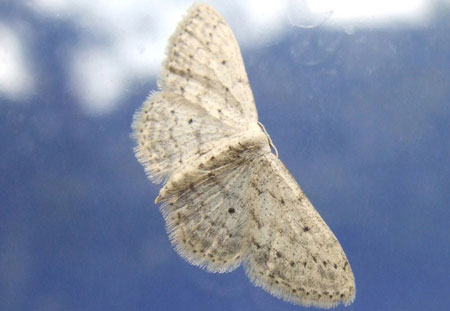 .. .. 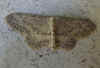 . .
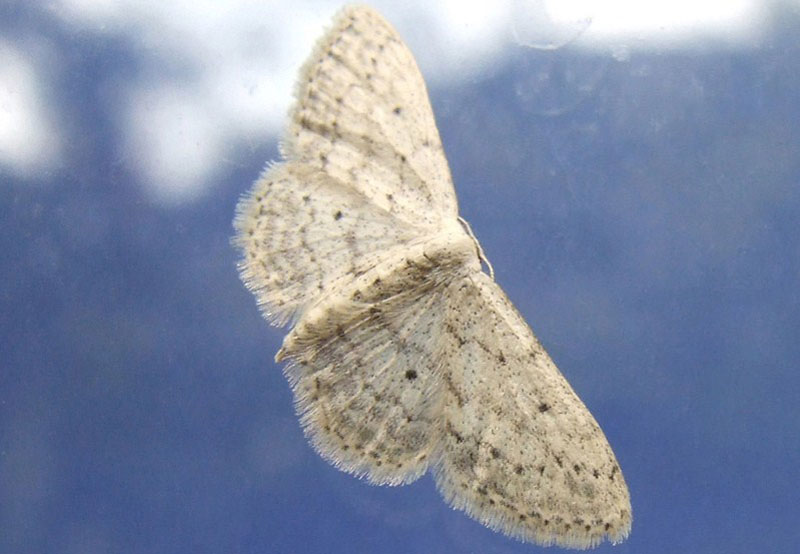
 Small Dusty Wave (Idaea seriata). Tribe
Sterrhini. Subfamily Sterrhinae. Family geometer moths (Geometridae).
Small Dusty Wave (Idaea seriata). Tribe
Sterrhini. Subfamily Sterrhinae. Family geometer moths (Geometridae).
A light gray to brownish gray geometer moth, which is entirely speckled and with a dark spot in the center of the fore wing and hind wing.
The caterpillar can be found on many different plants (such as ivy and dandelion). They feed on wilted and withered leaves. I often see them on the window frame. But they fly after sunset. May-September. Two generations.
Wingspan: 19-21 mm. Europe, North Asia. German: Graue Zwergspanner (Idaea
seriata), Kleinspanner. French: la Vieillie, la Voisine. |
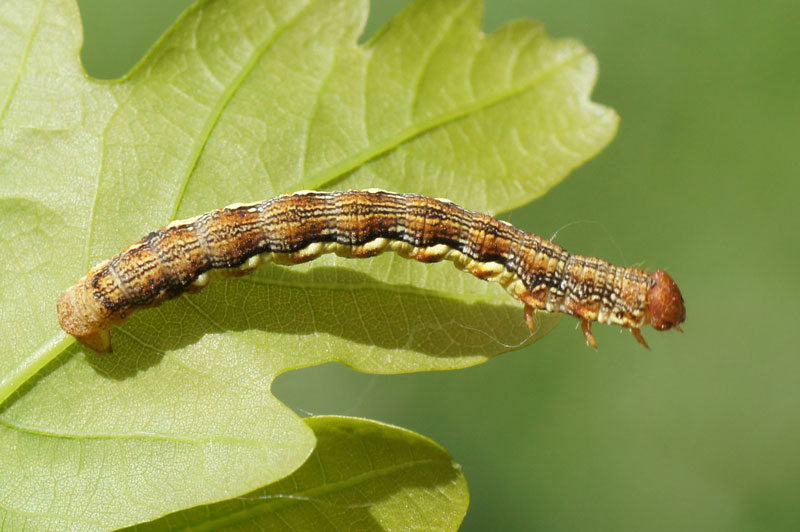
Caterpillars.
Subfamily Ennominae.
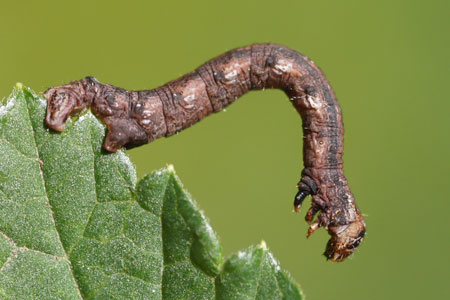 .. ..
 Dotted Border (Agriopis marginaria). Tribe Bistonini. Subfamily Ennominae. Family geometer moths
(Geometridae). Caterpillar
Dotted Border (Agriopis marginaria). Tribe Bistonini. Subfamily Ennominae. Family geometer moths
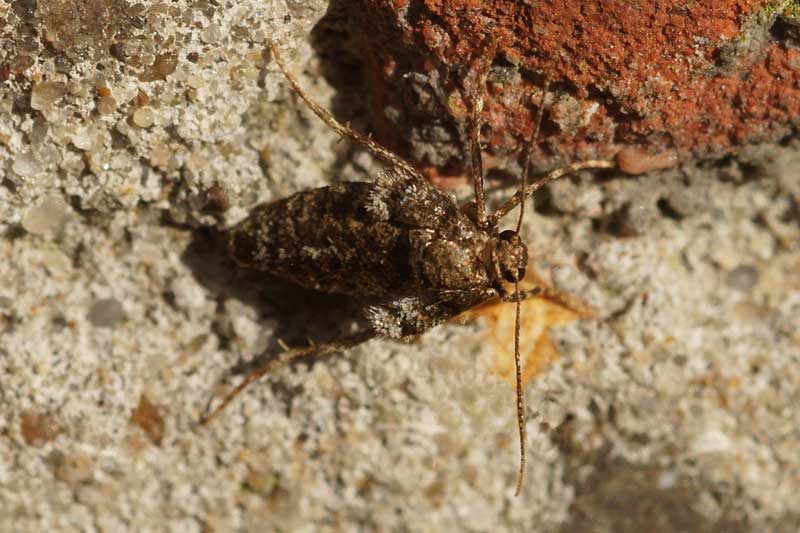
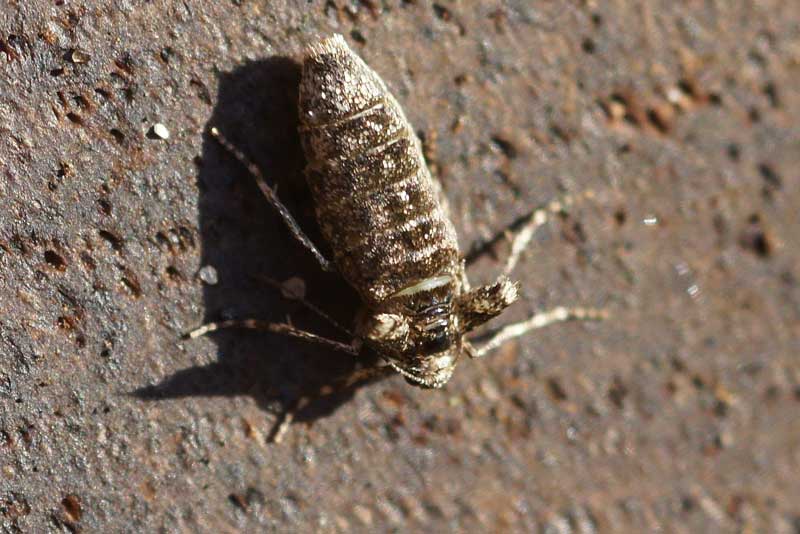
(Geometridae). Caterpillar
Like for example the winter moth, the female can not fly. It has only rudimentary wings. The male is distinguished by the row of black dots along the back edge of the wings. The colour and markings are variable.
Wingspan 36 to 42 mm. Moth: February to April. One generation.
Caterpillar: July to October. Tensioner overwinters as a pupa in the soil.
The caterpillar (April-June) has many host plants: Prunus, birch, oak, etc. The caterpillar resembles the Agriopis aurantiaria but has shorter hair.
Europe German: Graugelbe Breitflügelspanner Photo 23-5-2011.
I have no pictures of the moth. Here you can find many photos. Dotted
Border. |
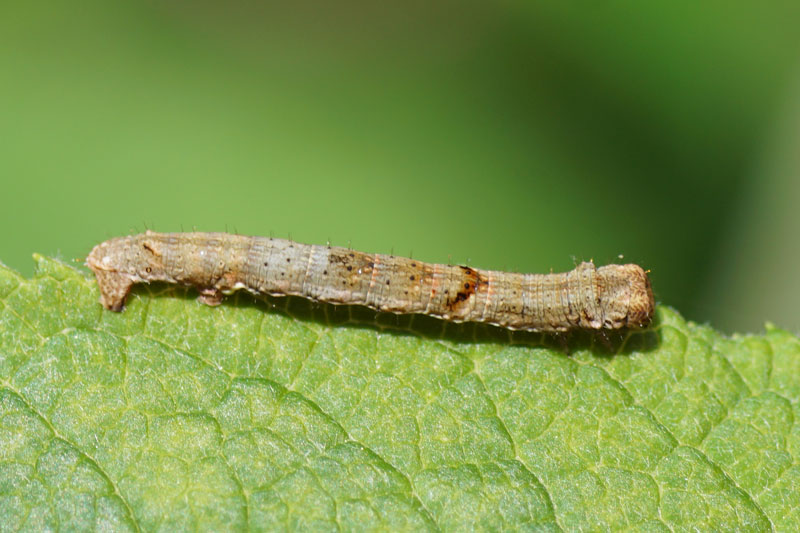
Tribe Caberini.
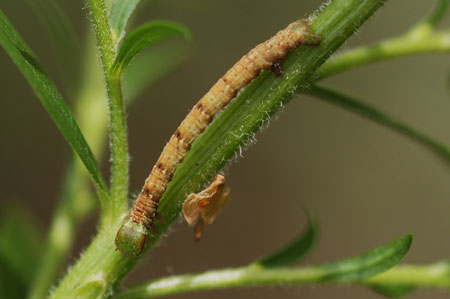 .. ..
 Common White Wave (Cabera pusaria). Tribe Caberini. Subfamily Ennominae.Family geometer moths
(Geometridae)
Common White Wave (Cabera pusaria). Tribe Caberini. Subfamily Ennominae.Family geometer moths
(Geometridae)
The Common White Wave has three parallel gray lines running over the wings. Sometimes one or two lines are missing.
Caterpillar host plants: various deciduous trees.
Wingspan 25-32 mm. Moth: May to September. Two generations.
Caterpillar: May-June. It overwinters as a pupa in a silk between the fallen leaves. Photos 25-8-2010. In goldenrod. German:
Weißstirn-Weißspanner.
I have no pictures of the moth. Here you can find many photos Common
White Wave. |
Nederlands /
Dutch
 
Subpage France:
Insects
France
Subpage butterflies and
moths:
Butterflies
Owlet
moths, noctuidae Leafrollers,
tortrix moths Pyralidae,
Crambidae
Concealer
moths, Oecophoridae
|