|
 Nederlands /
Dutch Nederlands /
Dutch
Subpage butterflies
and moths:
Butterflies
Geometer
moths Leafrollers,
tortrix moths Pyralidae,
Crambidae Concealer
moths, Oecophoridae.
Owlet Moths, Noctuidae in the garden
Moths
That
moths fly at
night is understandable. Nevertheless
there are about hundred
species, which fly by day and sometimes
they also are beautiful
coloured.
A characteristic of moths are the long feelers,
or antennae,
which
They are often comb-like,
feathery or filamentous.
Most
moths have no bright colours (brown, grey, white or black) and often with
patterns of which help camouflage them during the day.
Moths
tend to have stout and hairy bodies to conserve heat during the cooler nights.
There’s a coupling of the forewing with the hindwing. Unlike
moths, butterflies generally hold their wings together above their backs when
resting.
|
| Noctuidae
or Owlet moths
A family of robustly-built moths.
In
the Netherlands there are about 350 species. Most
have drab forewings, although some have brightly coloured hindwings.
Many caterpillars live in the soil.
|
I tried
to split up the owled moths in the subfamilies and tribes. That was not easy. It is apparently a difficult group, because
the subfamilies are often changed. In 2011, for example, a new family Erebidae
is made. I read that, some authors merge the tribe Xestiini with the tribe
Noctuinae.
Family owlet mothes
(Noctuidae).
Subfamily Acronictinae.
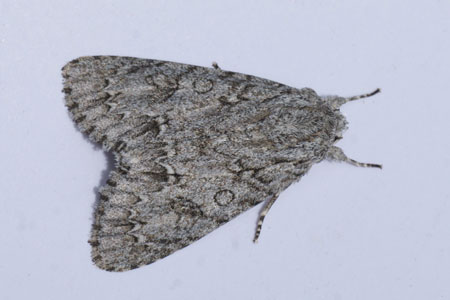 .. ..
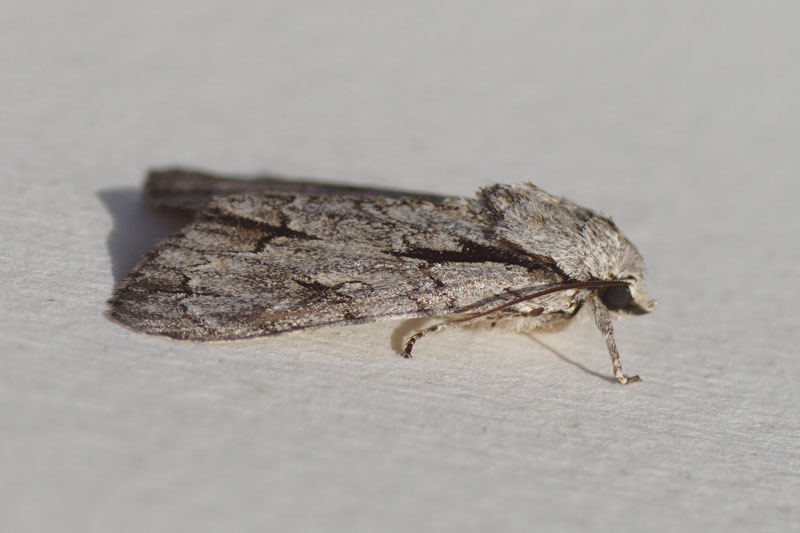
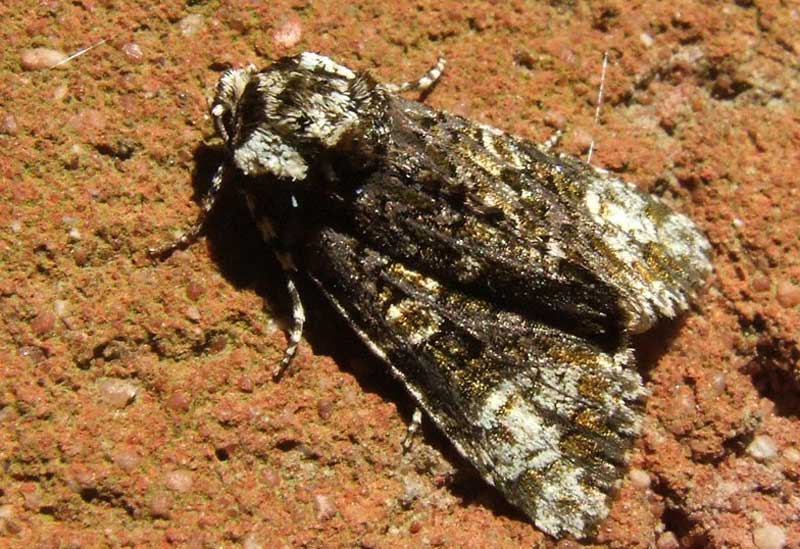
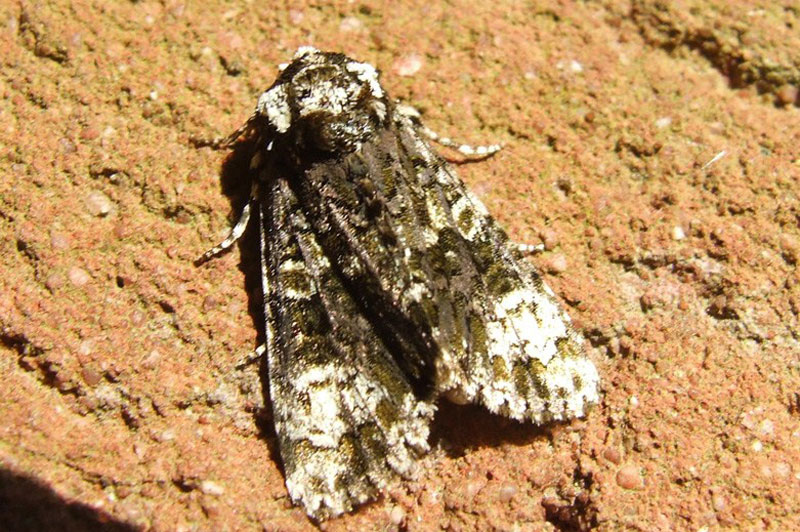
 Sycamore (Acronicta aceris). Onderfamilie Acronictinae. Familie uilen (Noctuidae).
A light grey, brown speckled owl. It looks like the poplar grey.
Of the caterpillar host plants are all kinds of deciduous trees such as oak, birch, field maple and horse chestnut.
Wingspan 41-49 mm. May - August One generation.
Caterpillar: June-October It overwinters as a pupa. usually in dead wood.
Europe, Central Asia. Photos 22-7-2015. German: Ahorn-Rindeneule, Ahorneule, Rosskastanieneule. French: Noctuelle de l'érable. |
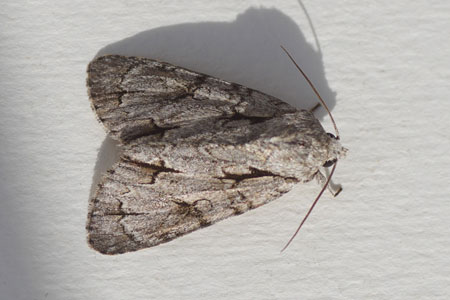 .. ..
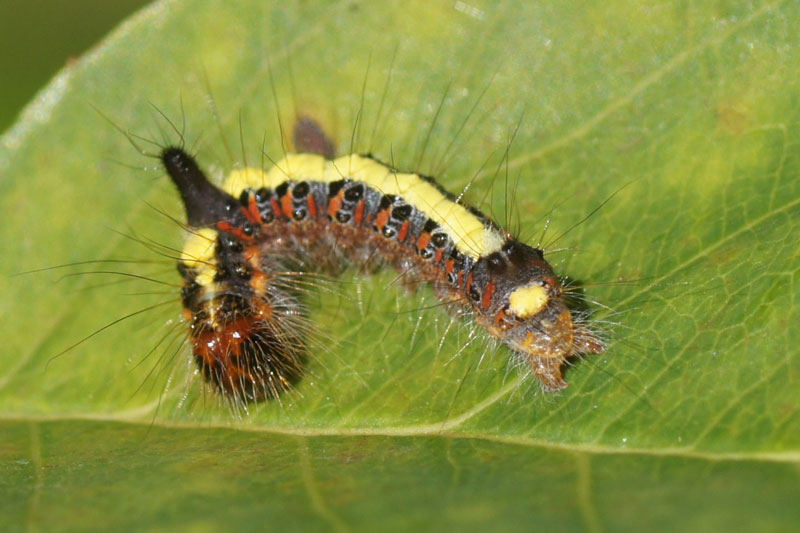
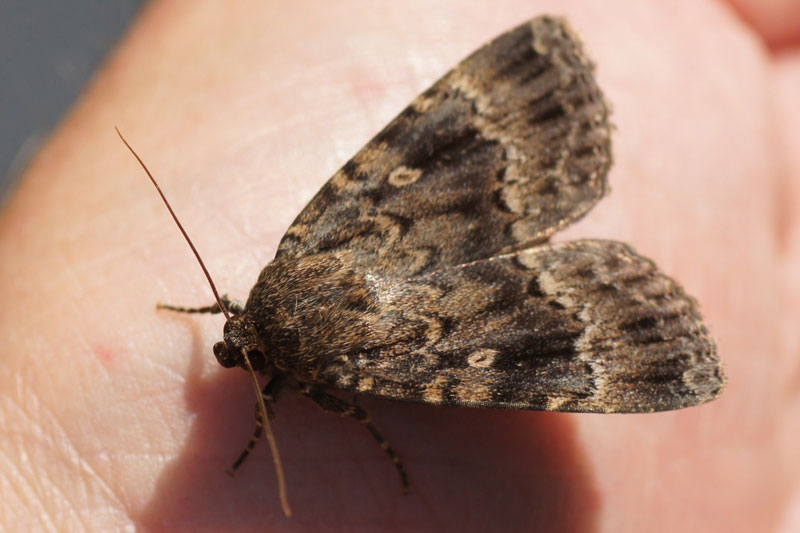
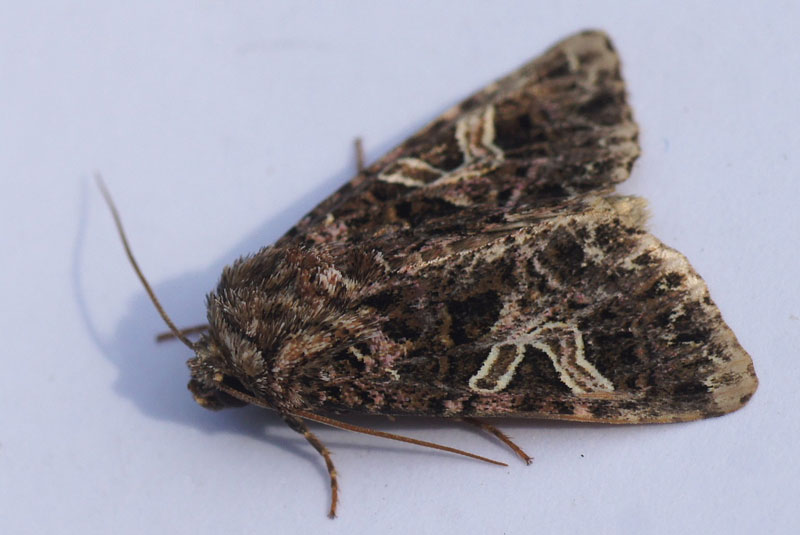
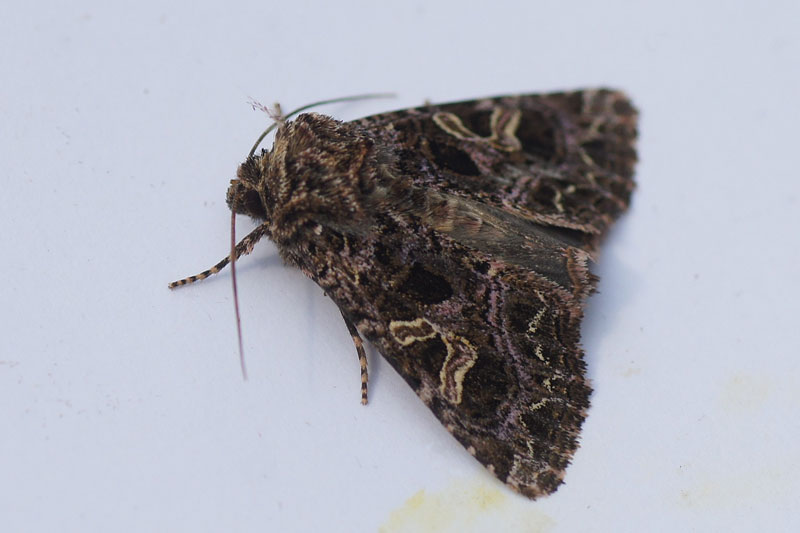
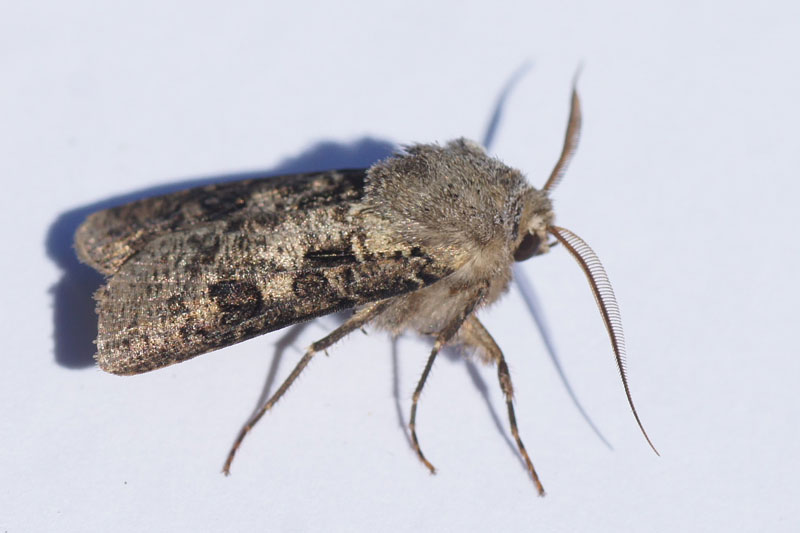
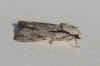 Grey Dagger (Acronicta psi) or dark dagger (Acronicta tridens). Tribe Acronictini. Subfamily Acronictinae. Family Noctuidae or Owlet moths.
Gray dagger (Acronicta psi) and dark dagger (Acronicta tridens) can not be separated from a photograph. They also resemble the slightly larger and in the Netherlands very rare large dagger (Acronicta cuspis).
Host of the caterpillar: Many types of deciduous trees and shrubs, for example birch, apple, elm.
Flight time: April-September. Two generations. Span about 36-44 mm. It overwinters as a pupa. Photos 7-8-2018.
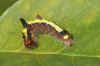 19-8-2013.
The caterpillar of the
grey dagger is well identifiable. (photo made in the dunes)
19-8-2013.
The caterpillar of the
grey dagger is well identifiable. (photo made in the dunes)
|
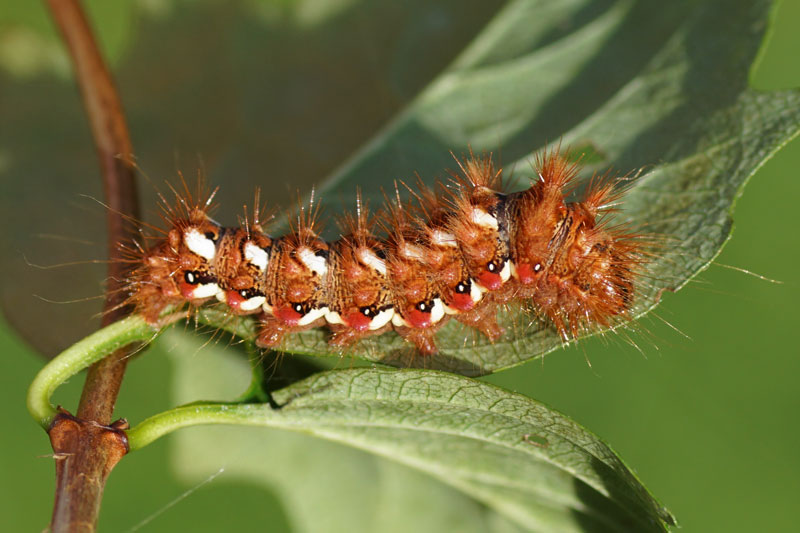
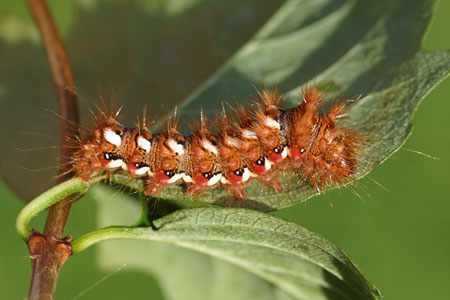 Knot grass moth (Acronicta rumicis). Caterpillar.
Tribe Acronictini. Subfamily Acronictinae. Family Noctuidae or Owlet moths.
Knot grass moth (Acronicta rumicis). Caterpillar.
Tribe Acronictini. Subfamily Acronictinae. Family Noctuidae or Owlet moths.
So far only a photo of the caterpillar. Moth resembles Acronicta auricoma, Subacronicta megacephala and Craniophora ligustr. Irregular black speckled wings with blackish markings.
The caterpillar's host plants are herbaceous and woody plants. Including sorrel, plantain, blackberry, nettle, hawthorn, willow. In this photo on common snowberry.
Wingspan 34-40 mm. April-October. Two or three generations.
Caterpillar: June-October. It hibernates as a pupa in a cocoon in the leaf litter.
Europe, Northwest Africa, Asia. Photo 9-9-2023. German:
Ampfer-Rindeneule. French: la Cendrée noirâtre , la Noctuelle de la patience. |
 .. ..
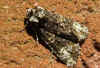 . .
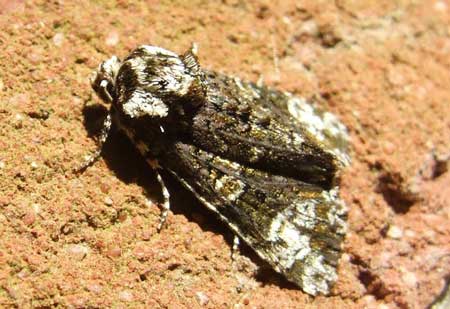
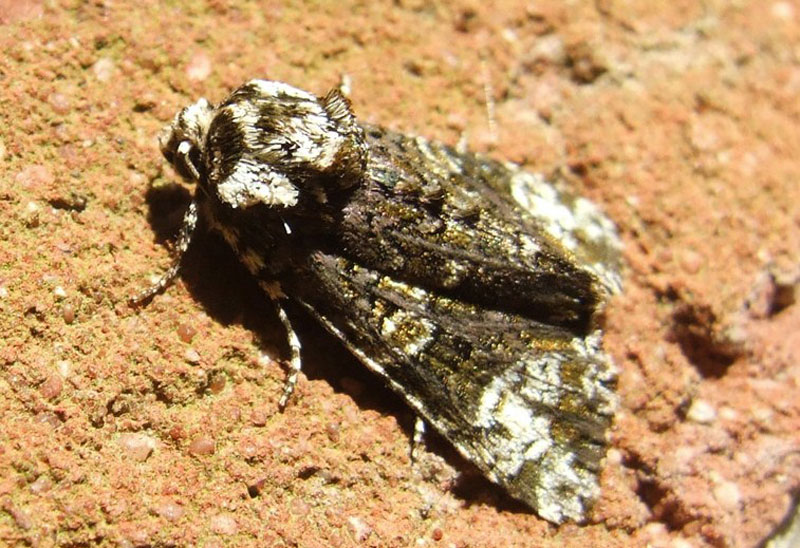
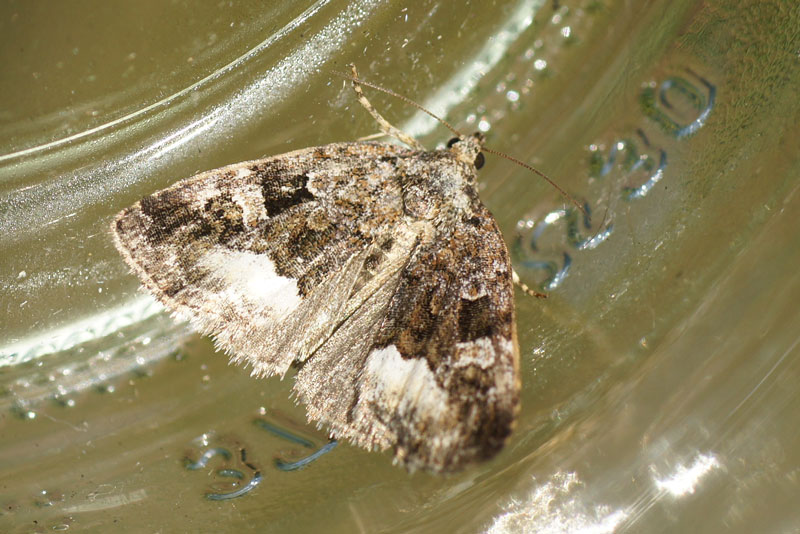
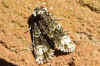 Coronet (Craniophora ligustri). Tribe Acronictini. Subfamily
Acronictinae. Family Noctuidae or Owlet moths.
Coronet (Craniophora ligustri). Tribe Acronictini. Subfamily
Acronictinae. Family Noctuidae or Owlet moths.
Sometimes olive-green suffusion to the darker parts of the forewing.
They live mainly on wild privet, ash and lilac. Europe. Especially on sandy soils.
Wingspan: 30-40 mm. April-September. Two generations. Caterpillars: June - October. The species hibernates as a pupa. Photos 11-7-2009. German: Admiral. French:
Vulcain.
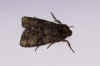 Sometimes the white spots are much less obvious, like with this coronet.
12-8-2020
Sometimes the white spots are much less obvious, like with this coronet.
12-8-2020 |
 .. ..
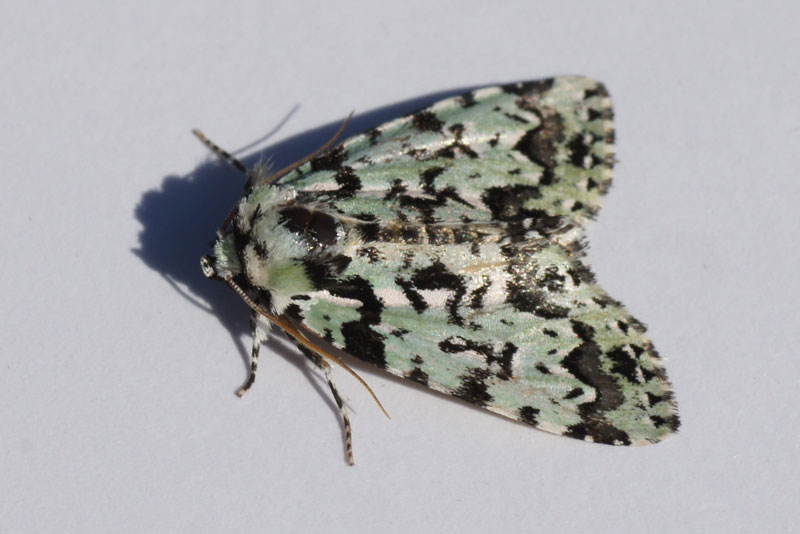
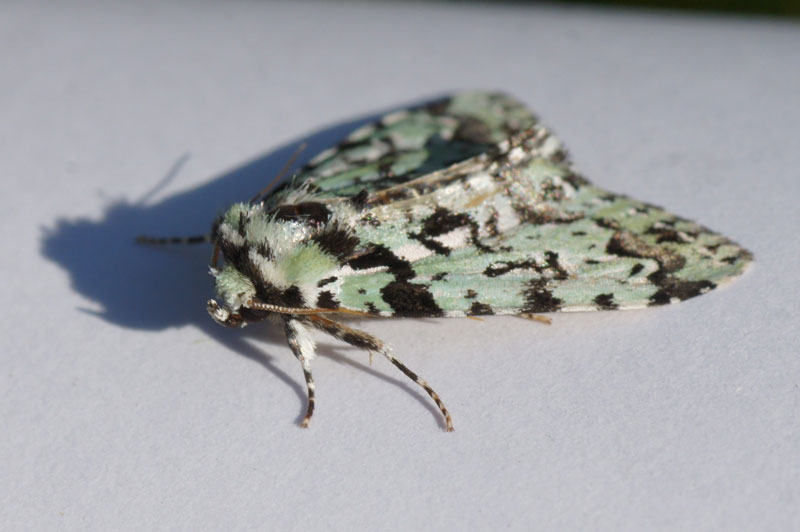
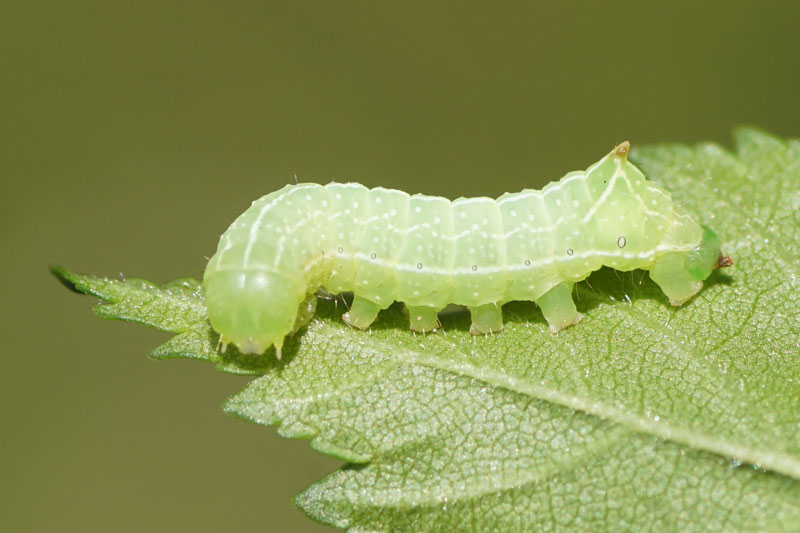
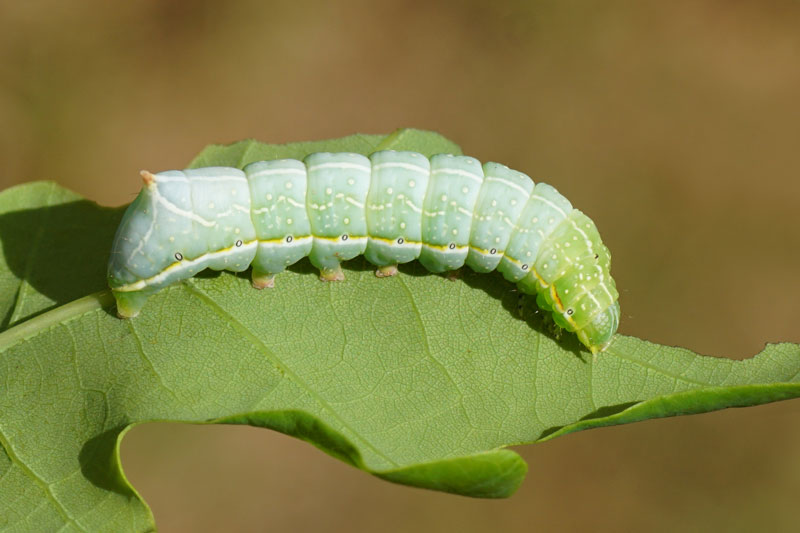
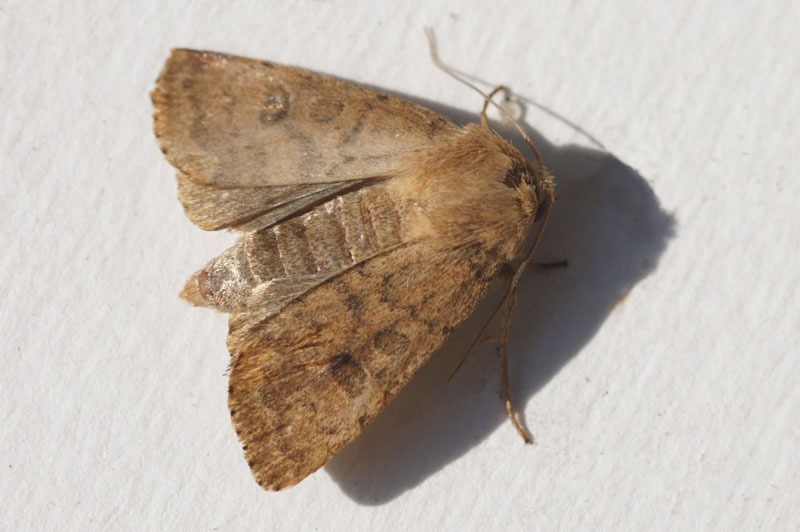
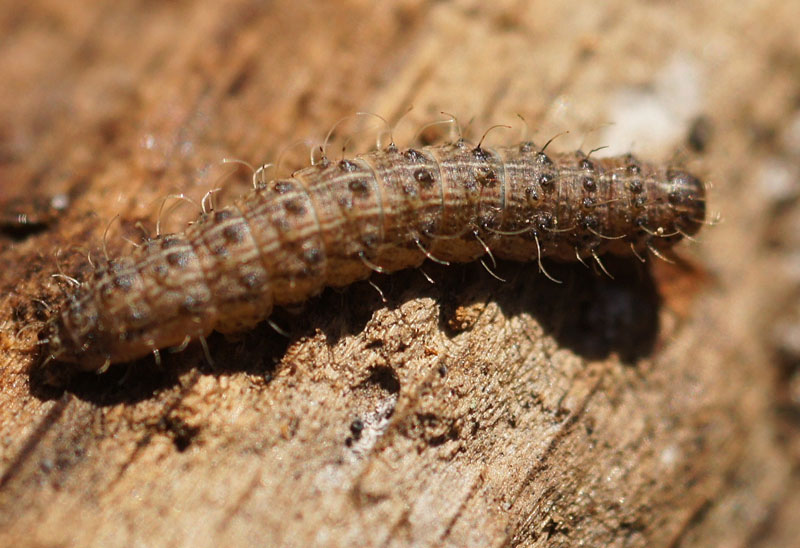
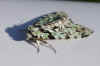 Scarce Merveille du Jour (Moma alpium). Subfamily Acronictinae. Family Noctuidae or Owlet moths.
A pale green owl with black markings.
The host of the caterpillar is mostly oak, but also birch and beech. The caterpillars are often in the tops of the trees.
Wingspan 34-42 mm. May-August. One generation.
Caterpillars: June-October. It overwinters as a pupa in a cocoon in the leaf litter.
Palearctic. Photos 6-7-2015. German: Seladoneule, Orioneule. French: L'Avrilière, Noctuelle avrilière. |
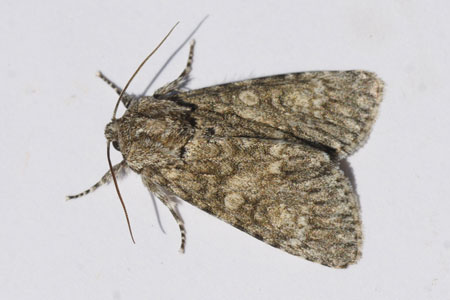 .. ..
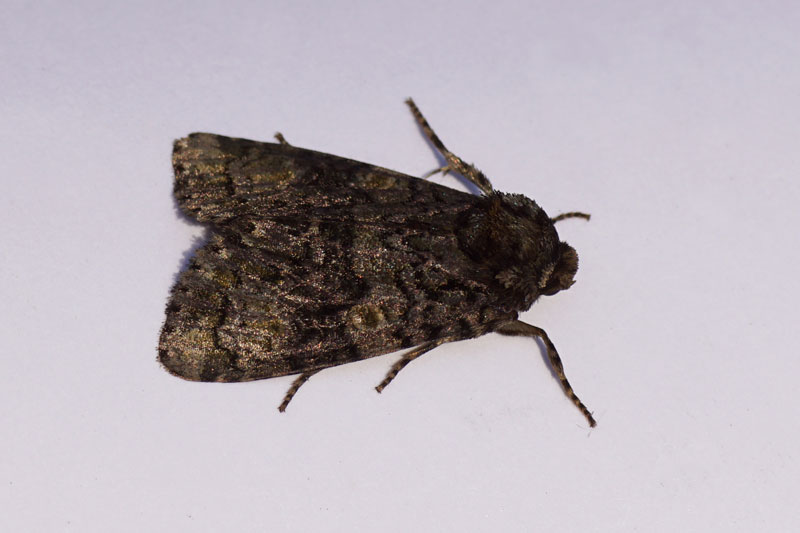
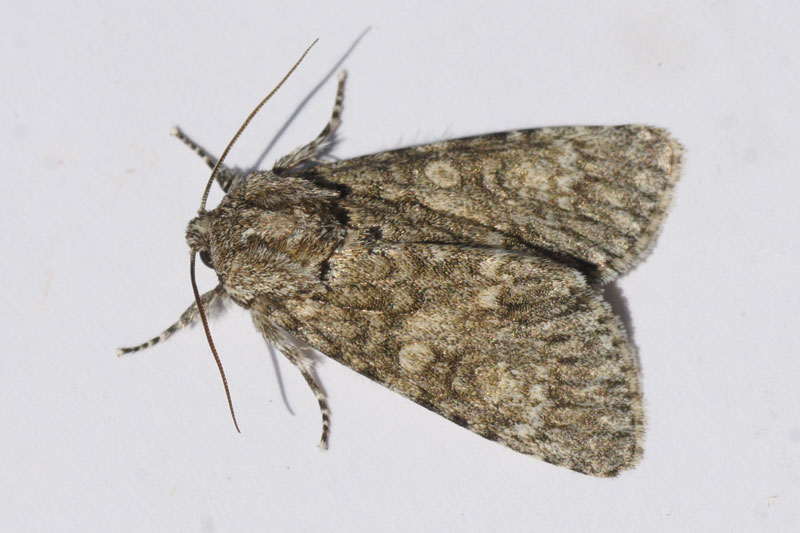
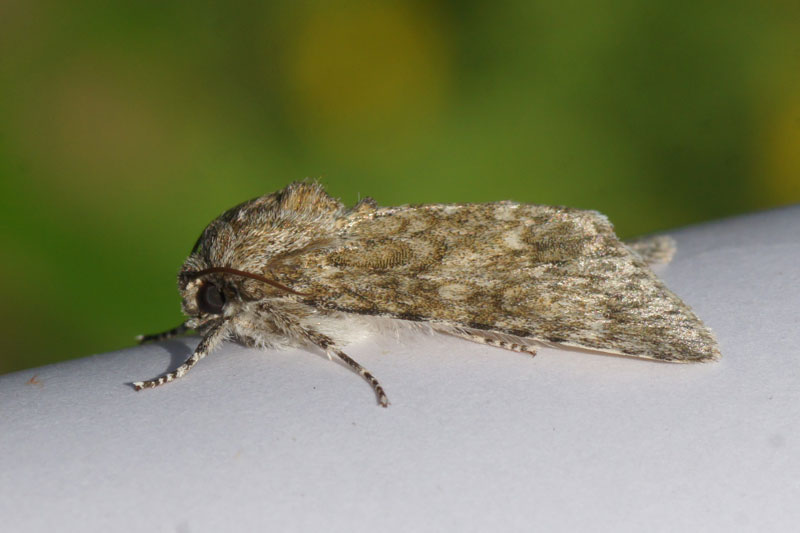
 Poplar Grey (Subacronicta megacephala). Subfamily Acronictinae. Family Noctuidae or Owlet moths.
A dark gray to greyish brown moth. Only when you look at it properly, you will see how beautiful this owlet moth is. It has a distinctly round whitish orbicular stigma. The hindwings of the male are whitish, the hindwings of the female are greyish.
The host plants of the caterpillar poplar and willow.
Wingspan 38-45 mm. April-September Two generations. Caterpillar: June - September It overwinters as a pupa in a cocoon behind the bark, in a hoarse sorry, in dead wood.
Palearctic. Photos 6-7-2015. German: Großkopf-Rindeneule, Aueneule. French: L'Avrilière, Noctuelle avrilière. |
Subfamily
Amphipyrinae.
 .. ..
 . .
 . .
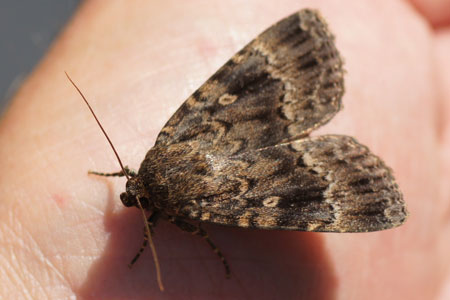
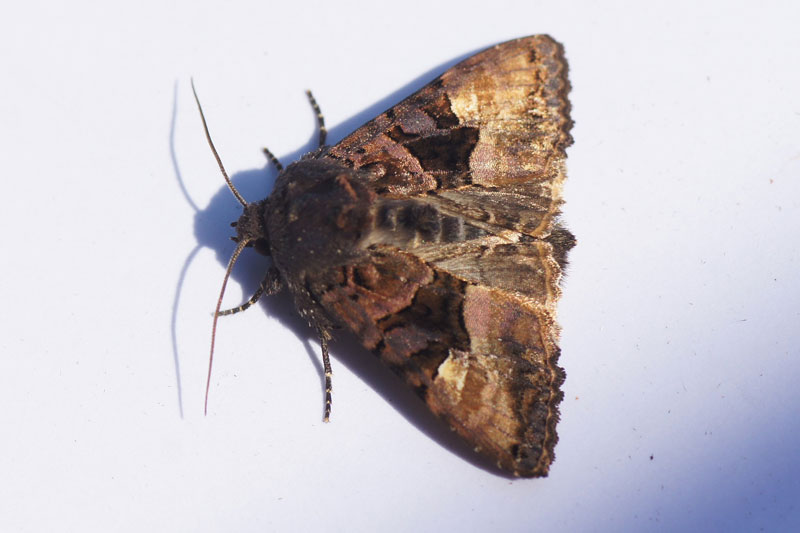
 Svensson's Copper Underwing (Amphipyra berbera) or Copper Underwing (Amphipyra
pyramidea). Subfamily Amphipyrinae. Family Noctuidae or Owlet moths.
Svensson's Copper Underwing (Amphipyra berbera) or Copper Underwing (Amphipyra
pyramidea). Subfamily Amphipyrinae. Family Noctuidae or Owlet moths.
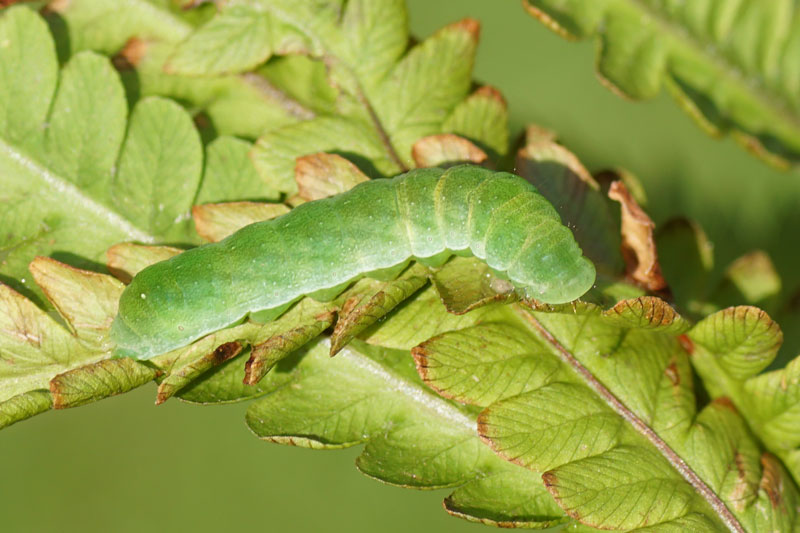
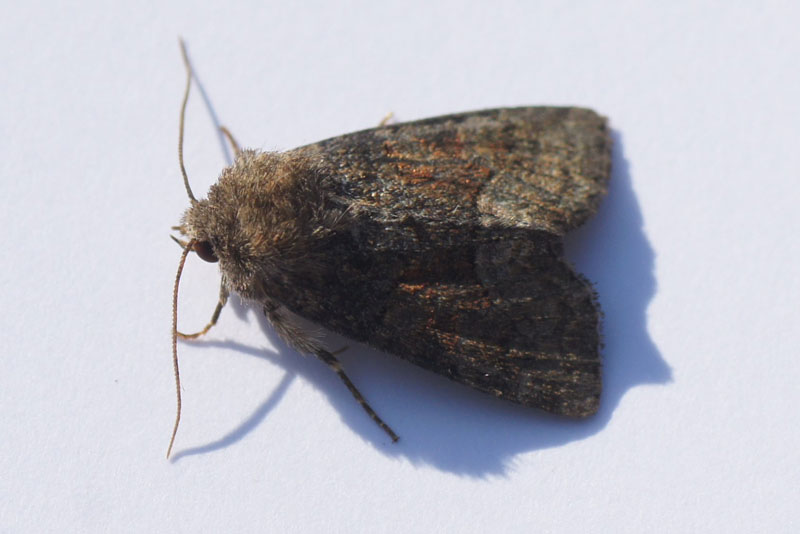
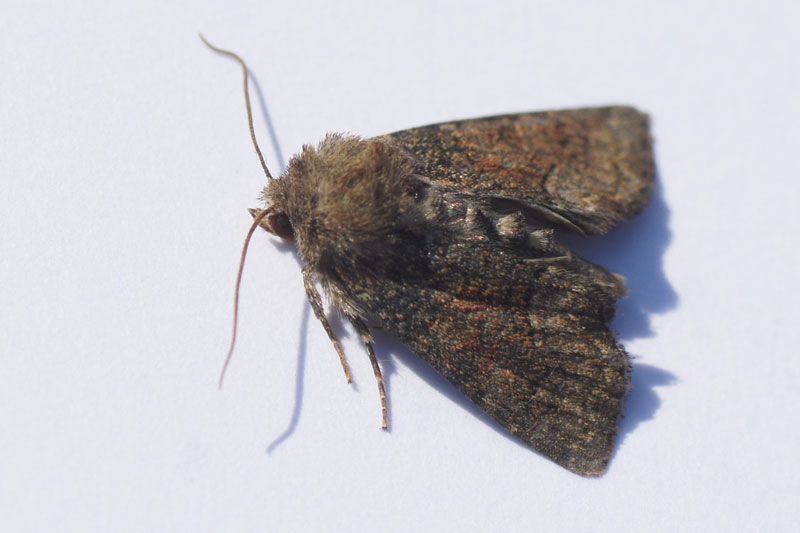
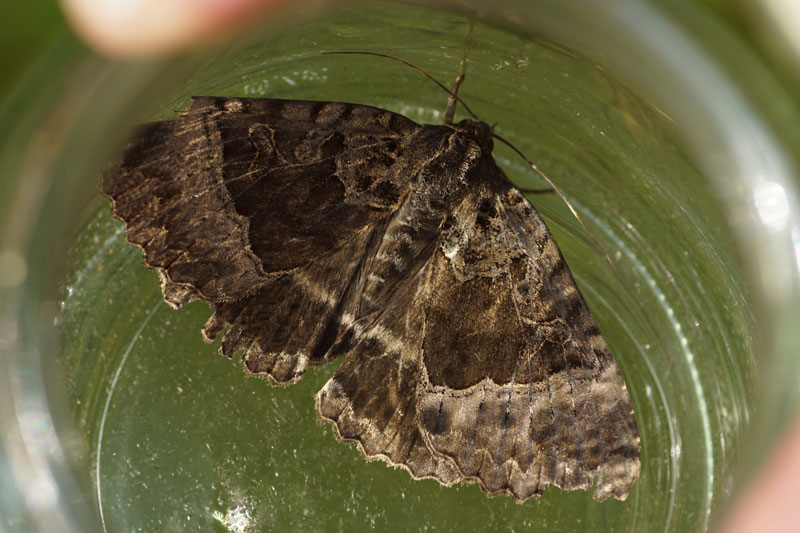
Probably Svensson's Copper Underwing but both species are very similar.
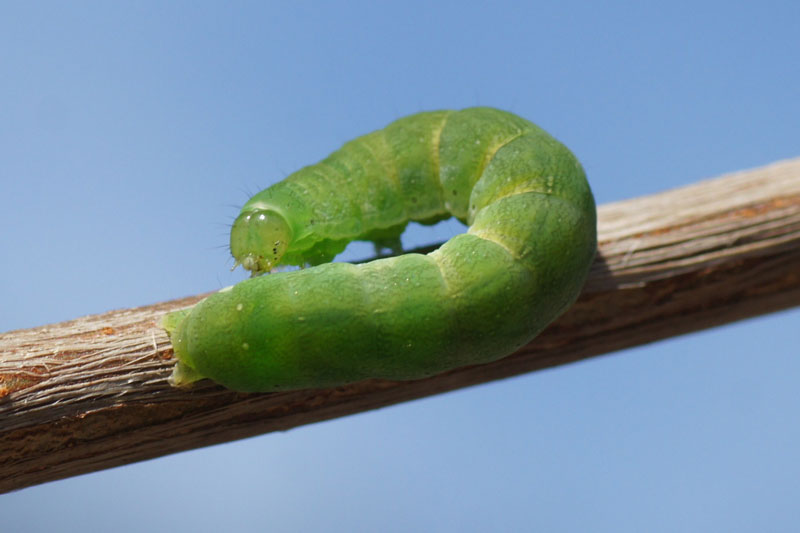
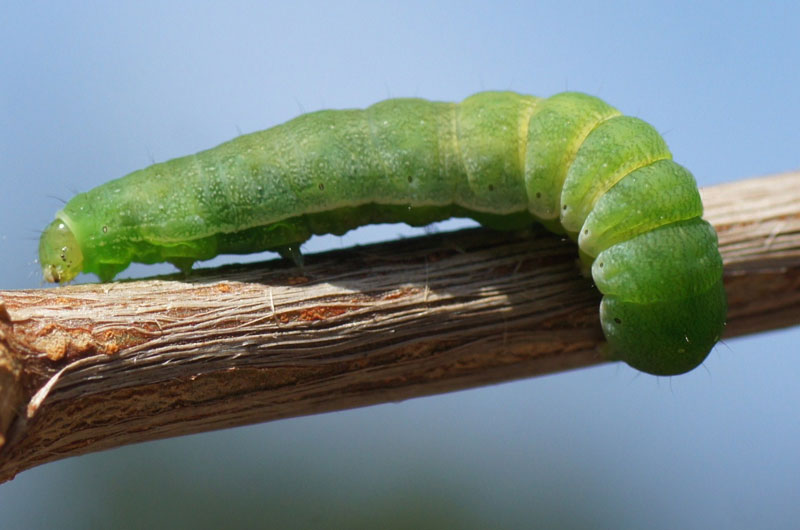
The green caterpillars pupate on the ground. It overwinters as an egg.
Host plants of the caterpillar: Deciduous trees and shrubs like oak, birch, privet, honeysuckle.
Wingspan 40-52 mm. Flight time: July to October. One generation. Caterpillar: April-June. Photos 1-8-2012.
 Caterpillar of the Copper underwing 21-5-2010.
  .. ..
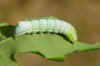 Caterpillar of the (young en older) Svensson's Copper Underwing (Amphipyra
berbera) 4-5-2020 en 14-5-2020.
Caterpillar of the (young en older) Svensson's Copper Underwing (Amphipyra
berbera) 4-5-2020 en 14-5-2020. |
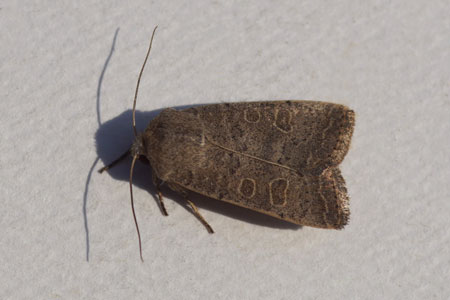 .
Vine's Rustic (Hoplodrina
ambigua). Subfamily Amphipyrinae. Family Noctuidae or Owlet moths. .
Vine's Rustic (Hoplodrina
ambigua). Subfamily Amphipyrinae. Family Noctuidae or Owlet moths.
Smaller than the other Hoplodrina-species.
The spots on the wings are large and regularly. Pale to dark grey forewings.
The caterpillar feeds at night on many different herbaceous plants. By day
it hides It hibernates as a caterpillar. It pupates in the soil.
Wingspan: 13-15 mm. May-October. Two generations. Europe, North Africa, Asia.
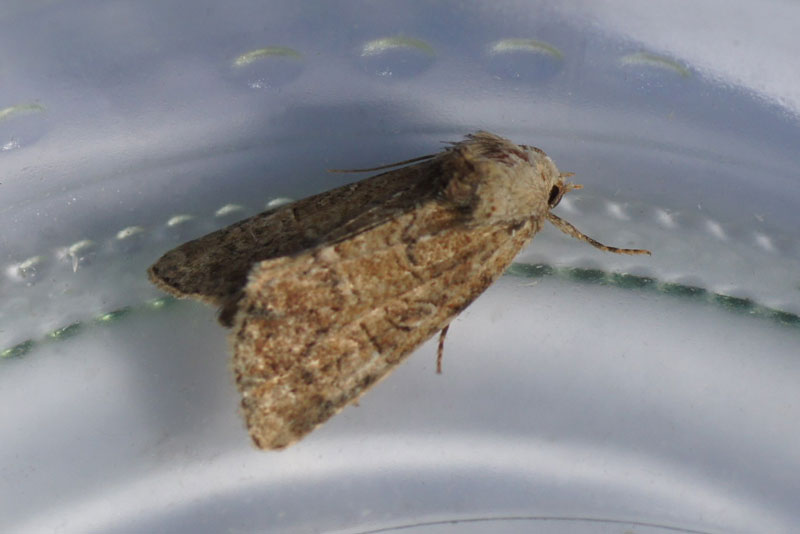
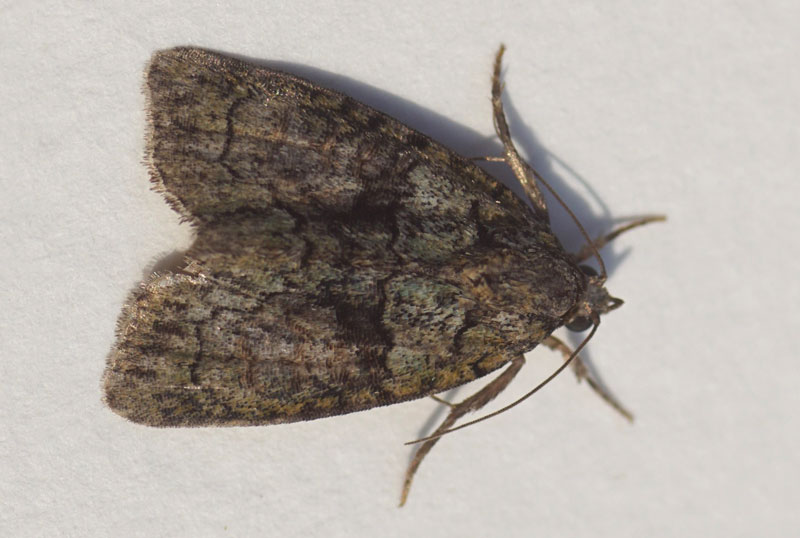
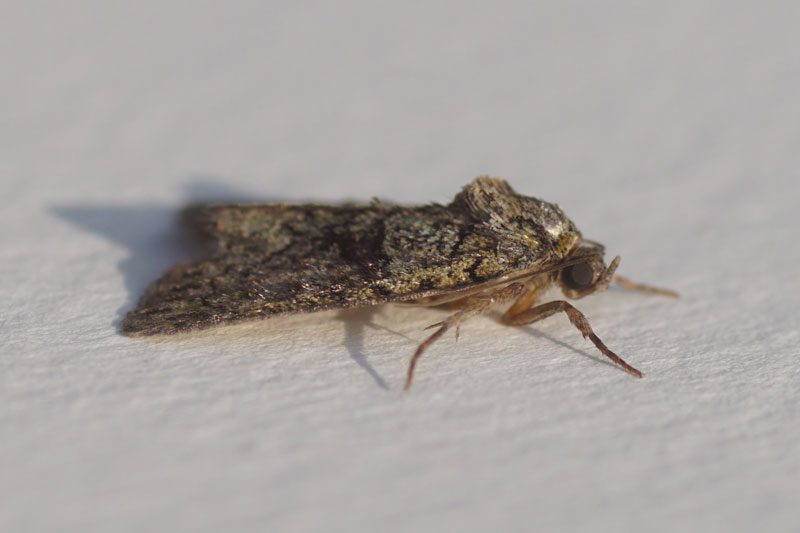
There are several species in the Netherlands. Namely: Rustic (Hoplodrina
blanda.) Hoplodrina octogenaria, Hoplodrina Ambigua and the (in the
netherlands) rare Hoplodrina respersa. Photo 27-8-2019. German:
Hellbraune Staubeule. French: l'Ambiguë. |
 .. ..
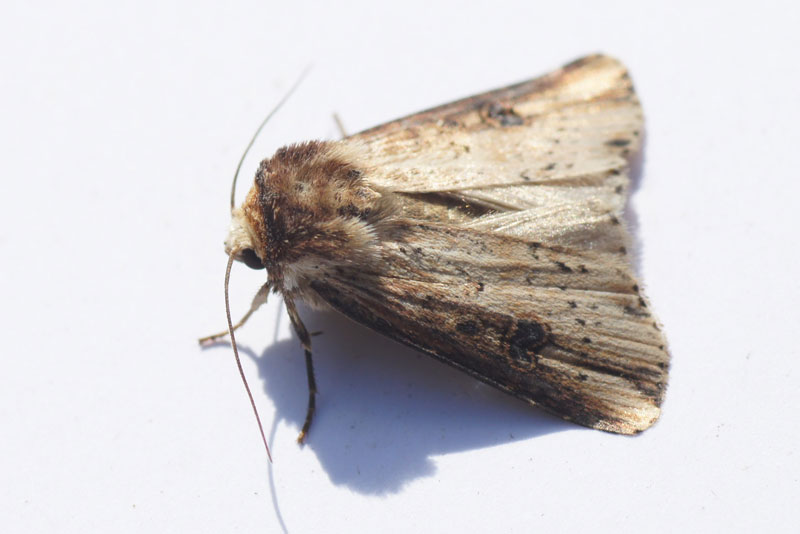
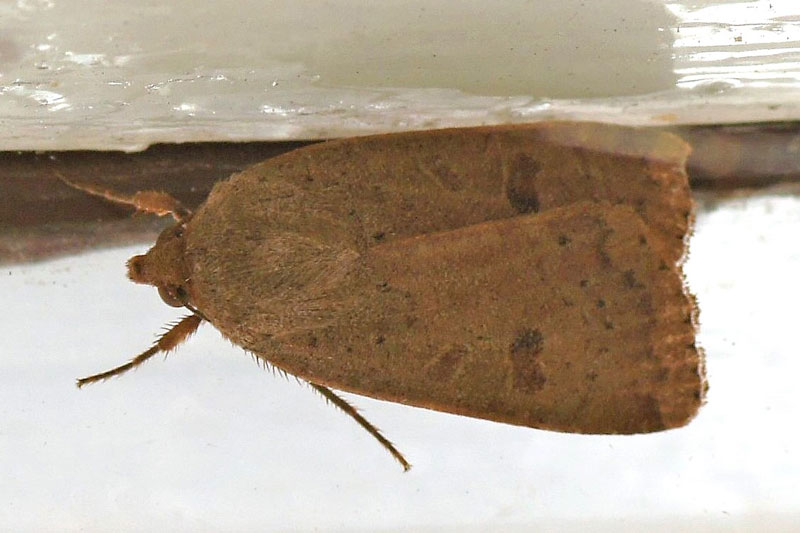
 Uncertain (Hoplodrina octogenaria, synonym Hoplodrina alsines). Subfamily Amphipyrinae. Family Noctuidae or Owlet moths.
It resembles the Rustic. But the spots on the wings are smaller. The caterpillar feeds at night on many different herbaceous plants. By day
it hides, like the caterpillar in the picture. It hibernates as a caterpillar.
It pupates in the soil.
Wingspan: 28-34 mm. May-August. One generation. Photos 15-7-2011. Europe,
Asia. German: Gelbbraune Staubeule. French: la Noctuelle de la morgeline.
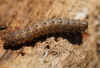
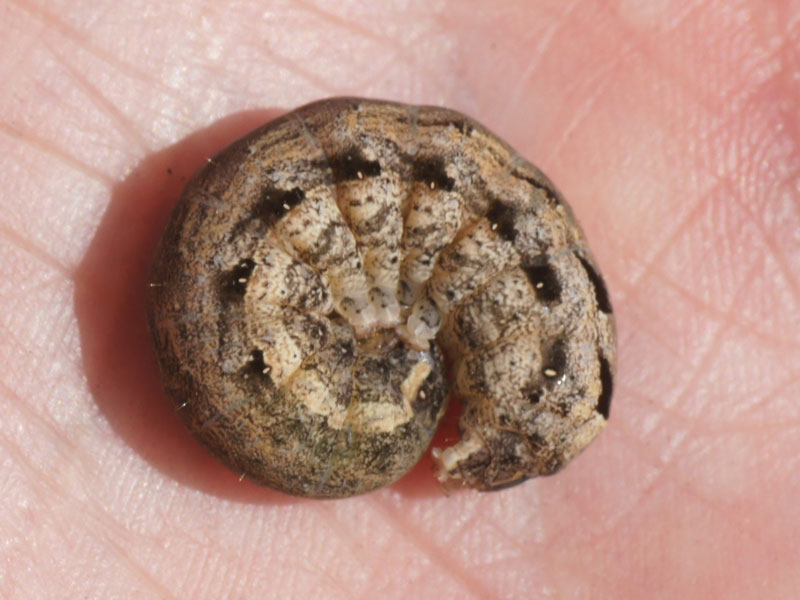
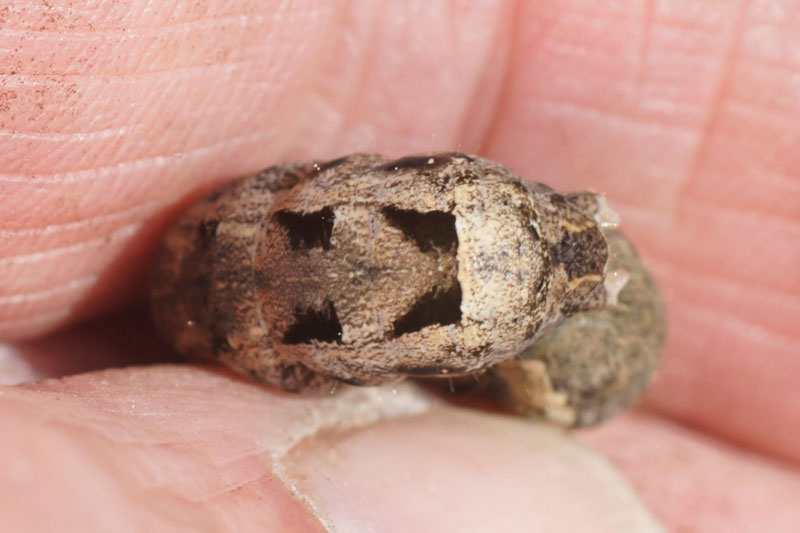
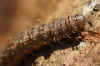 Photos
20-3-2011. The caterpillar is Hoplodrina spec. Maybe Uncertain.
Photos
20-3-2011. The caterpillar is Hoplodrina spec. Maybe Uncertain. |
 .. ..
 . .
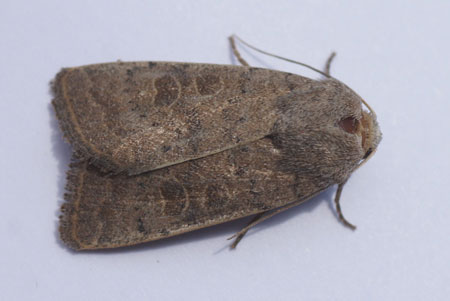
 Rustic (Hoplodrina blanda). Subfamily Amphipyrinae. Family Noctuidae or Owlet moths.
The colour of the wings is variable. Light gray but also dark gray brown. The outer lateral line consists of small dots.
The caterpillar feeds at night on different herbaceous plants such as plantains, sorrel and
stitchwort.
By day he hides, like the caterpillar in the picture. It hibernates as a caterpillar. He pupate in the soil.
Wingspan: 31-35 mm. May-September. One generation. Europe, Asia. Photos 28-8-2013. German: Graubraune
Staubeule. French: la Noctuelle du pissenlit. |
 .. ..
 Cloaked Minor (Mesoligia furuncula). Subfamily
Amphipyrinae. Family Noctuidae or Owlet moths.
Cloaked Minor (Mesoligia furuncula). Subfamily
Amphipyrinae. Family Noctuidae or Owlet moths.
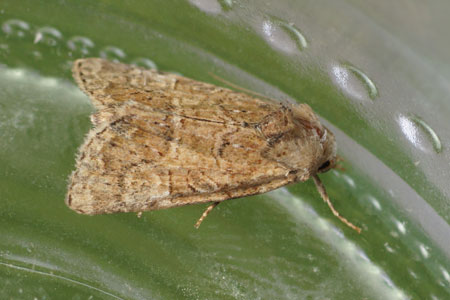
A small owlet moth. The colour of the wings is quite variable. In the middle is a dividing line, often with a dark brown inner half. But as you can see in this cloaked miror it is sometimes entirely pale brown. The pattern of the wings is not always clear.
Host plants: All kinds of grasses.
Wingspan: 22-28 mm. June-September. One generation. The caterpillar
overwinters. Palearctic. Photos 18-7-2014. German:
Trockenrasen-Halmeulchen. French: la Furoncule. |
Subfamily
Bryophilinae.
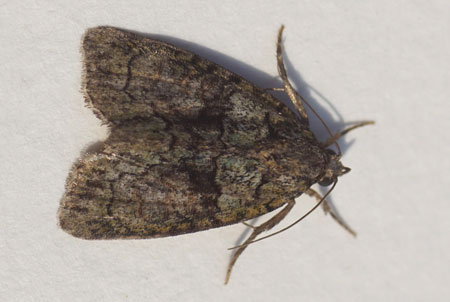 .. ..
 Tree-lichen Beauty (Cryphia algae, formely Discestra algae). Subfamily
Bryophilinae. Family Noctuidae or Owlet moths.
Tree-lichen Beauty (Cryphia algae, formely Discestra algae). Subfamily
Bryophilinae. Family Noctuidae or Owlet moths.
Variable in colour. From light blue to pastel green and dark green. A uniform, sometimes light green band runs over the front wings.
Host plants: Lichens, especially on trees.
July-September. One generation. Caterpillar September - May. The caterpillar overwinteres between lichens.
Wingspan 22-26 mm.
Europe, Asia Minor, Northwest Africa. Photos 4-8-2018. German: Dunkelgrüne
Flechteneule. French: la Bryophile vert-mousse. |
Subfamily
Cuculliinae.
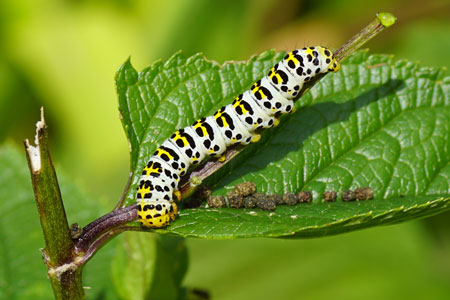 Water Betony (Cucullia scrophulariae). Subfamily
Cuculliinae. Family Noctuidae or Owlet
moths. caterpillar
Water Betony (Cucullia scrophulariae). Subfamily
Cuculliinae. Family Noctuidae or Owlet
moths. caterpillar
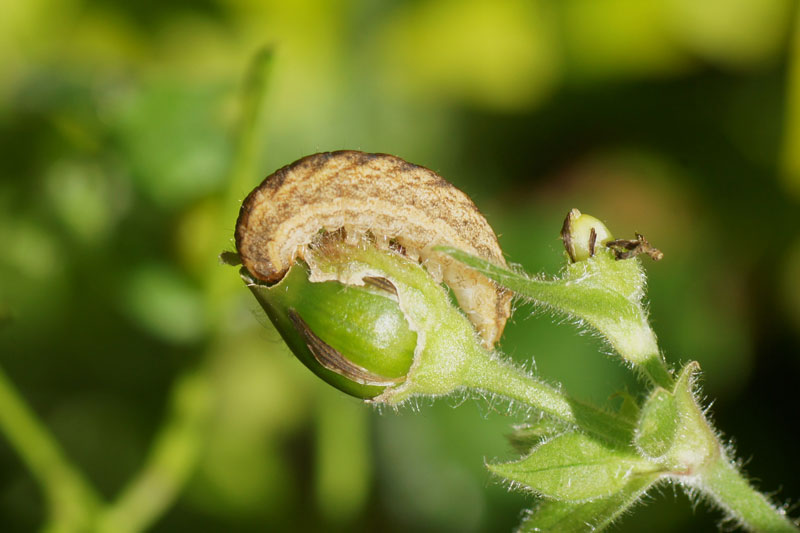
I was amazed when I saw this caterpillar on Figwort (Scrophularia nodosa). Because it is rare in our area. It is mainly found on sandy soils in the interior of the Netherlands. The moth is difficult to recognize because it resembles other Cucullia species. They can be recognized by a hairy neck collar.
Caterpillar: June-September. Moth: May-July, one generation. Host plants Figwort, mullein, sometimes butterfly bush. Europe.
Photo 14-7-2022. German: Braunwurz-Mönch. French:
la Cucullie de la scrophulaire. |
Subfamily
Eustrotiinae.
 .. ..
 Marbled white spot (Deltote pygarga synonym Protodeltote pygarga). Subfamily
Eustrotiinae. Family Noctuidae or Owlet moths.
Marbled white spot (Deltote pygarga synonym Protodeltote pygarga). Subfamily
Eustrotiinae. Family Noctuidae or Owlet moths.
A small owlet moth with brown patterned forewings with a distinctive large white spot. Wingspan 20-26 mm.
Host plants: A number of grasses.
May-July. One generation. The pupa overwinters in a cocoon in the soil.
Palearctic. Photo 22-7-2013, 27-6-2014. German:
Waldrasen-Grasmotteneulchen. French: l'Albule. |
Subfamily
Hadeninae.
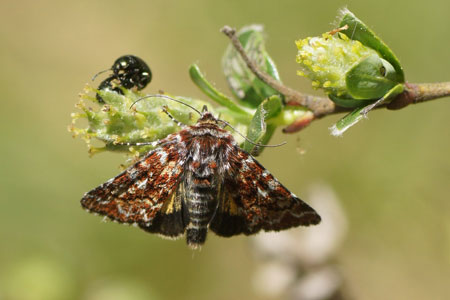 .. ..
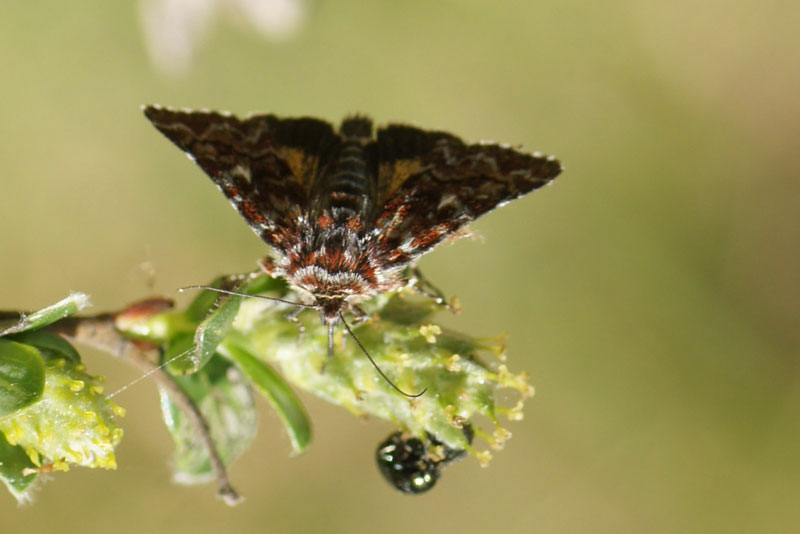
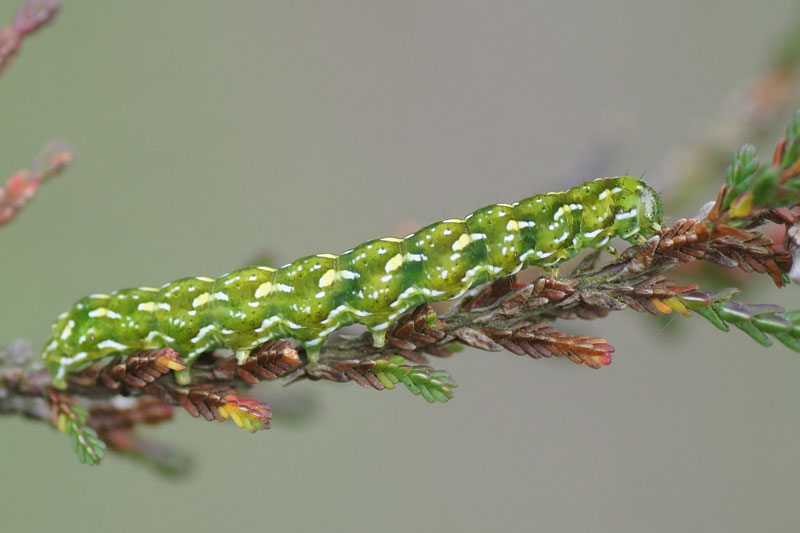
 Beautiful Yellow Underwing (Anarta myrtilli). Subfamily Hadeninae. Family Noctuidae or Owlet moths. Not in the garden, but in de dunes about 4 km from our house.
Reddish brown forewings with a gray-white drawing. The hind wings are yellow with a black band and white edge.
Host plants: Calluna vulgaris and Erica tetralix.
April-October. Two generations. The caterpillar or pupa overwinters.
Wingspan 24-28 mm. Europe. Photos 5-5-2014. German: Heidekraut-Bunteule,
Heidekrauteulchen. French: la Noctuelle de la myrtille.
 Caterpillar 9-10-2015.
 |
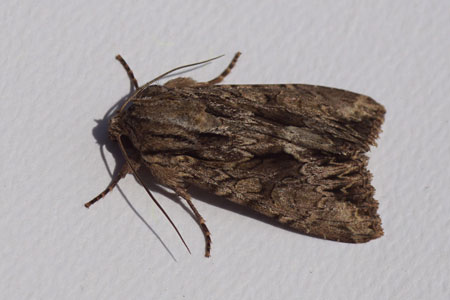 .. ..
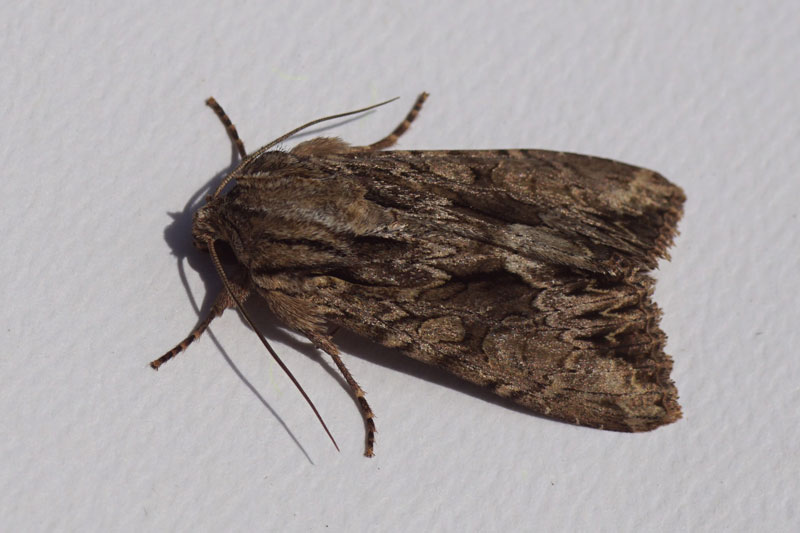
 D (Apamea monoglypha). Subfamily Hadeninae. Family Noctuidaeor or Owlet moths.
Variable in colour: Greyish brown, straw-colored brown, deep brown or blackish. Recognizable by the big W in the light wave line along the rear edge of the forewings. Wingspan 45-57 mm.
Host plants: Grasses. Young caterpillars feed on the seeds and flowers. Older caterpillars in a cavity lined with spindle underground and reed on the roots and lower parts.
June-August. One generation. Sometimes some in September, October. It overwinters as a caterpillar in the ground.
Europe, Asia. Photos 24-6-2019. German: Große Grasbüscheleule. French: la Noctuelle
radicée.
|
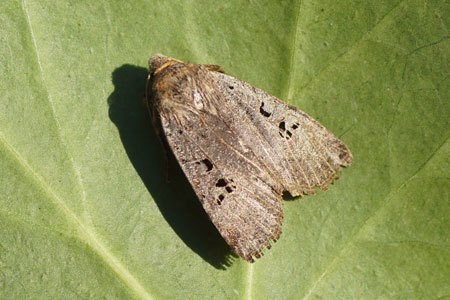 .
Black-spot chestnu
(Conistra rubiginosa). Subfamily Hadeninae. Family Noctuidaeor or Owlet moths. .
Black-spot chestnu
(Conistra rubiginosa). Subfamily Hadeninae. Family Noctuidaeor or Owlet moths.
Greyish brown. A black part of the spot resembles a paw print. Wingspan 31-36 mm.
Host plants: Deciduous trees and shrubs, including blackthorn, lilac, apple and rose. Older caterpillars also on various herbaceous plants.
October-April. One generation. It overwinters as an adult moth. Active during the winter.
Europe. Photo 28-12-2020. German:
Schwarzgefleckte Wintereule. French: l'Isolée , la Noctuelle silène , l'Orrhodie grise. |
 .. ..
 . .
 Varied Coronet (Hadena compta). Subfamily
Hadeninae. Family Noctuidaeor or Owlet moths.
Varied Coronet (Hadena compta). Subfamily
Hadeninae. Family Noctuidaeor or Owlet moths.
On the black gray brown gray forewings runs in the middle a white cross band. It is not a variable owl. Wingspan 25-30 mm.
Host plants: Several species of the carnation family such as sweet william and campion (especially bladder
campion).
May-August Two generations. It overwinters as a pupa.
You can find it everywhere in the Netherlands, but is not a general moth. Europe, North Africa and East Asia.
Photos 30-4-2014. German: Weißbinden-Nelkeneule. French: la Noctuelle
saupoudrée. |
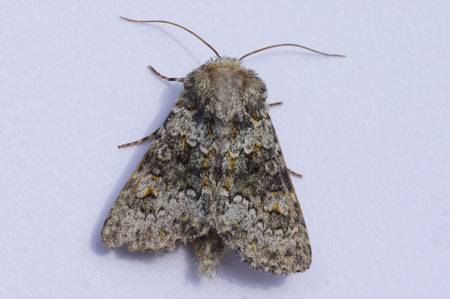 .. ..
 Small Ranunculus (Hecatera dysodea). Subfamily
Hadeninae. Family Noctuidaeor or Owlet moths.
Small Ranunculus (Hecatera dysodea). Subfamily
Hadeninae. Family Noctuidaeor or Owlet moths.
Greenish or gray forewings, with in the middle a darker cross band and with orange spots. Wingspan 32-34 mm.
Host plants: All kinds of lettuce types, including prickly lettuce, milk thistle
(Lactuca serriola)
May-September. One generation. It overwinters as a pupa. Europe. Photos 23-7-2016German:
Kompasslatticheule. French: la Noctuelle dysodée. |
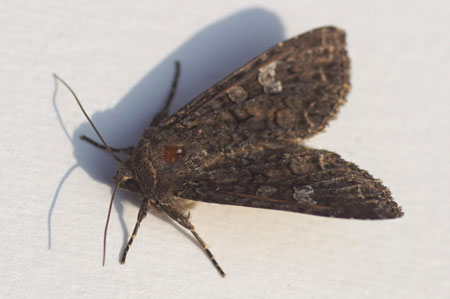 Cabbage moth (Mamestra brassicae). Subfamily
Hadeninae. Family Noctuidae or Owlet moths.
Cabbage moth (Mamestra brassicae). Subfamily
Hadeninae. Family Noctuidae or Owlet moths.
Colour varies from brown to grayish green with a pattern of lines and spots. On the forewings a kidney-shaped spot enclosed in a white border and a narrow whitish wave line.
Host plants: Herbaceous plants, especially cabbage. But also in deciduous trees such as willow and oak.
April-October. Two generations. Caterpillar especially May - October. It overwinters as a pupa, sometimes as a caterpillar.
Wingspan 36-44 mm. Europe, Asia. Photo 4-8-2018. German: Kohleule. French: la noctuelle du chou ou
brassicaire. |
 .. ..
 Dot Moth (Melanchra persicariae). Subfamily
Hadeninae. Family Noctuidae or Owlet moths.
Dot Moth (Melanchra persicariae). Subfamily
Hadeninae. Family Noctuidae or Owlet moths.
The forewings is very dark (almost black with a blue, brown tint) marked with a large white stigma. The forewings are patterned, but it is hard to see. On the thorax a bunch of brown hair.
Host plants: Herbaceous plants for example nettle, clover, sorrel and trees like willow and hazel.
May-August. One gneration. It overwinters as a pupa and some times as a caterpillar.
Wingspan 28-38 mm. Europe, Asia. Photos 22-7-2013. German: Flohkraut-Eule. Frencb le Polygonière , la Noctuelle de la
persicaire. |
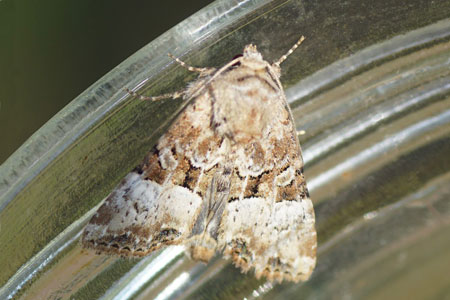 Cloaked Minor
(Mesoligia furuncula). Subfamily Hadeninae. Family Noctuidae or Owlet
moths. Cloaked Minor
(Mesoligia furuncula). Subfamily Hadeninae. Family Noctuidae or Owlet
moths.
The fore wings are variable, but usually with a distinctive dividing line between the dark brown inner part and the light brown, whitish outer part.
Host plants: Various grasses.
June-September. One generation. It overwinters as a caterpillar.
Wingspan 22-28 mm. Europe, Asia, Northwest Africa. Photo 12-8-2020. German:
Trockenrasen-Halmeulchen. French: la Furoncule. |
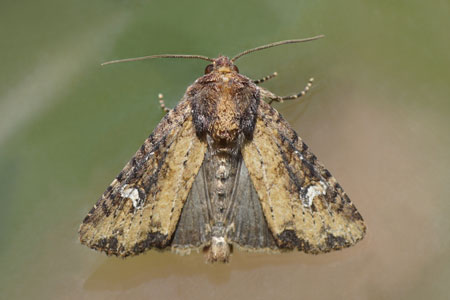 Common Rustic /
Lesser Common Rustic (Mesoligia secalis / secalella). Subfamily
Hadeninae. Family Noctuidae or Owlet
moths. Common Rustic /
Lesser Common Rustic (Mesoligia secalis / secalella). Subfamily
Hadeninae. Family Noctuidae or Owlet
moths.
Two very similar species. The forewings are very variable with a clear
stigma. A blunt wing tip.
Host plants: Various grasses.
May-September / June-August. One generation. It overwinters as a caterpillar.
Forewing length: 12-16mm / 11-16mm. Europe, Northwest Africa / Europe. Photo 21-7-2021. German:
Getreide-Halmeule. French: l'Hièroglyphe , la Clignotante. / German:
Didyma-Halmeule. |
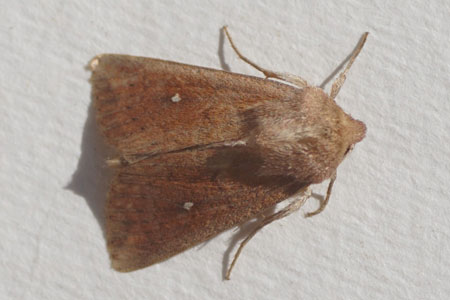 .. ..
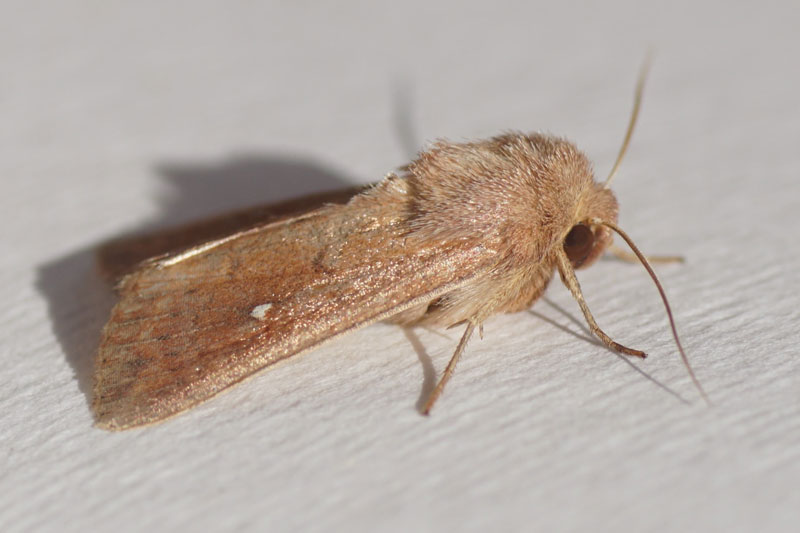
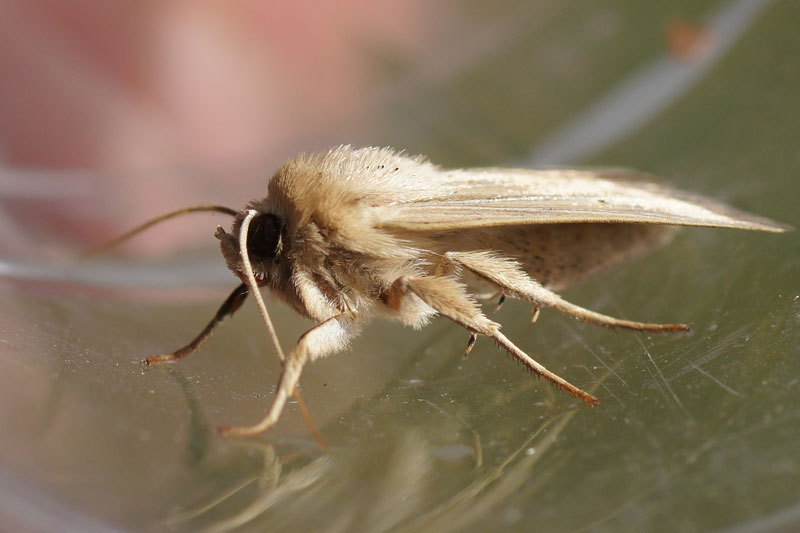
 White-point (Mythimna albipuncta). Subfamily Hadeninae. Family Noctuidae or Owlet moths.
The fore wings are orange-coloured, sometimes more light-brown with an olive-colored or sand-colored hue. On the forewings a clear, small, round, white spot. This spot is less clear in the case of the collared owl (M.
ferrago).
Host plants: Various grasses. April-November. Two, sometimes three generations. It overwinters as a caterpillar.
Wingspan 30-35 mm.
Europe, Asia, North-West Africa. Photos 1-9-2018. German:
Weisspunkt-Graseule. French: le Point blanc. |
 .. ..
 . .
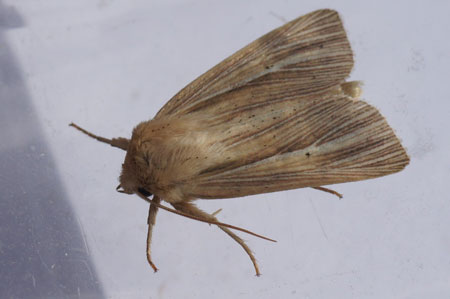
 Smoky Wainscot
(Mythimna impura, synonym Aletia impura). Subfamily Hadeninae. Family Noctuidae or Owlet moths.
Smoky Wainscot
(Mythimna impura, synonym Aletia impura). Subfamily Hadeninae. Family Noctuidae or Owlet moths.
It looks like a Southern Wainscot (Mythimna straminea) and a Common Wainscot
(Mythimna pallens). The forewings are straw coloured. A brown stripe along the white main vein. Gray hind wings.
Host plants: Various grasses.
May-August One generation, sometimes two generations. It overwinters as a young caterpillar.
Wingspan 30-35 mm. Europe, Asia. Photos 24-6-2014. German:
Stumpfflügel-Graseule. French: la Leucanie souillée . |
 Southern wainscot
(Mythimna straminea). Subfamily Hadeninae. Family Noctuidae or Owlet
moths. Southern wainscot
(Mythimna straminea). Subfamily Hadeninae. Family Noctuidae or Owlet
moths.
Straw-colored light gray forewings with a straight trailing edge, which sometimes bends slightly outward just before the wingtip, causing the wingtip to protrude slightly..
June-August. One generation, sometimes two generations. It overwinters as a young caterpillar.
Host plants: Reed and reed canary grass.
Wingspan 32-40 mm. Europe, Asia, North Africa. Photo 27-6-2025 |
 .. ..
 .. ..
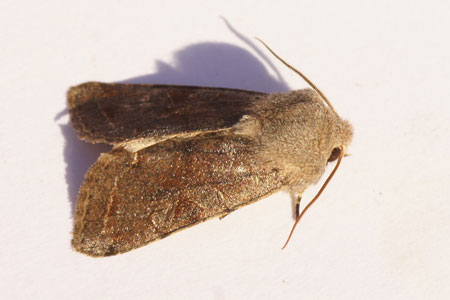
 Clouded Drab (Orthosia incerta). Subfamily Hadeninae. Family Noctuidae or Owlet moths.
The front wing has an angular wing tip. Color and markings are variable. Ranging from light gray, purple gray, blue-gray, reddish gray, reddish brown to dark brown with all intermediate shades.
There are similar species Orthosia gracilis, Orthosia opima and Orthosia
populeti. .
Host plants: Deciduous trees like oak, willow, some fruit trees and herbaceous plants such as sorrel.
February-June One generation. It overwinters as a pupa in the soil.
Wingspan 37-41 mm. Europe. Photos 15-4-2015. German: Variable
Kätzcheneule. French: l'orthosie variable. |
 .. ..
 . .
 . .
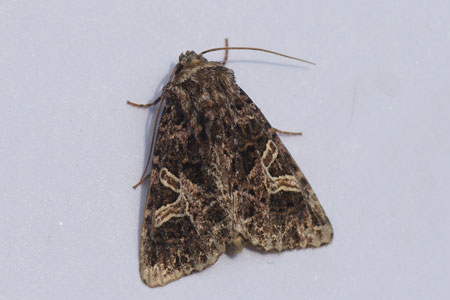
 Campion (Sideridis rivularis synonym: Hadena
rivularis). Subfamily Hadeninae. Family Noctuidae or Owlet moths.
Campion (Sideridis rivularis synonym: Hadena
rivularis). Subfamily Hadeninae. Family Noctuidae or Owlet moths.
Dark grayish brown forewings. Young owls have a purplish sheen. The two stigmata have pale edges, which are joined at the base, forming a V. Underneath a striking yellowish, white zigzag, wave line. The Lychnis
(Hadena bicruris) is very similar. The young owls miss the purplish glow and the wavy line zigzags less. A less obvious V.
Hostplants: Silene species especially Red campion.
April-September. Two sometimes three generations. It overwinters as a pupa
Wingspan 27-30 mm.
Europe. Photos 24-8-2013. A younger Campion: 5-7-2014.German: Violettbraune
Kapseleule. French: Noctuelle du Cucubale.

 7-6-2014.
 |
Subfamily Noctuinae.
Tribe Agrotini.
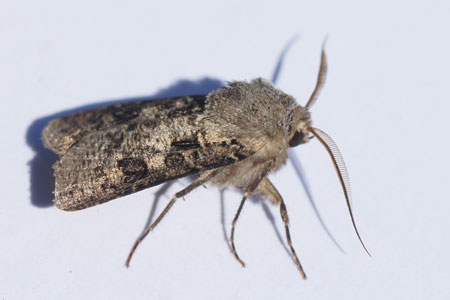 .. ..
 Heart and club (Agrotis clavis). Tribe Agrotini. Subfamily
Noctuinae. Family Noctuidae or Owlet moths.
Heart and club (Agrotis clavis). Tribe Agrotini. Subfamily
Noctuinae. Family Noctuidae or Owlet moths.
The basic color of the wings is variable. Light gray, brown, dark brown, blackish. On the wings an elongated dark spot and two round dark stigmata. One stigmata looks like an eye. The antennae of the male are two-thirds feathery.
Caterpillars on various herbaceous plants.
Wingspan 35-40 mm. May-August A generation, sometimes two generations. The full-grown caterpillar
overwinters.
Palearctic. Photos 5-7-2014. German: Magerwiesen-Bodeneule. French: la Clé , la
Pointillée. |
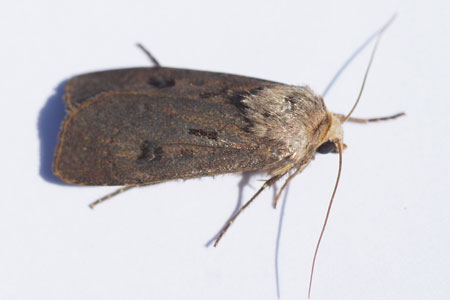 .. ..
 Heart and Dart (Agrotis exclamationis). Tribe
Agrotini. Subfamily Noctuinae. Family Noctuidae or Owlet moths.
Heart and Dart (Agrotis exclamationis). Tribe
Agrotini. Subfamily Noctuinae. Family Noctuidae or Owlet moths.
The colour of the forewings is variable. Pale grey, brown, reddish, yellowish, blackish. On the wings are two black spots, one black spot has the shape of an exclamation mark.
Caterpillars on various herbaceous plants.
Wingspan 35-46 mm. May-August Two generations. The full-grown caterpillar
overwinters.
Europe, Asia. Photos 13-6-2014. German: Ausrufungszeichen,
Ausrufezeichen, Gemeine Graseule, Braungraue Gras-Eule, Braungraue Gras-Erdeule. French: Point
d'exclamation, Double
tache. |
 Dark Sword-grass
(Agrotis ipsilon). Tribe Agrotini. Subfamily Noctuinae. Family Noctuidae
or Owlet moths.
Dark Sword-grass
(Agrotis ipsilon). Tribe Agrotini. Subfamily Noctuinae. Family Noctuidae
or Owlet moths.
The basic color of the forewings is variable. Light brown to dark brown. An elongated arrow-shaped stripe on the outside of the spot.
Caterpillars on various herbaceous plants, grasses, vegetables.
Wingspan 40-56 mm.
April-October. Two generations. The caterpillar overwinters. Worldwide. Photo 12-8-2020. German:
Ypsiloneule French: la Noctulelle baignée. |
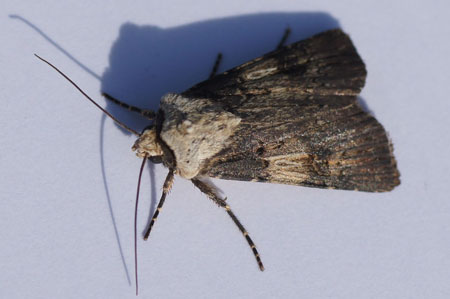 .. ..
 Female.
  Male. Shuttle-shaped Dart (Agrotis puta). Female. Tribe Agrotini. Subfamily
Noctuinae. Family Noctuidae or Owlet moths.
Male. Shuttle-shaped Dart (Agrotis puta). Female. Tribe Agrotini. Subfamily
Noctuinae. Family Noctuidae or Owlet moths.
On the forewings is an elongated pale spot and a dark spot. The male has pale wings, causing the pale spot is hard to see. The females have dark wings, causing the dark spot is hard to see.
The caterpillar is found in many herbaceous plants.
Wingspan 28-32 mm. April-October. Two generations. The caterpillar
overwinters.
Europe, Asia, North Africa. Photos 19-7-2014, 12-5-2015. German: Schmalflügelige
Erdeule, Fahlbräunlichgraue Erdeule. French: l'Élagueuse , la Noctulelle des
renouées, la Noctulelle puta. |
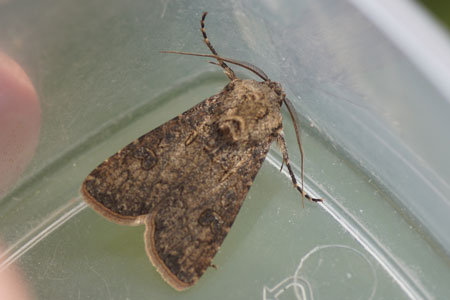 .. ..
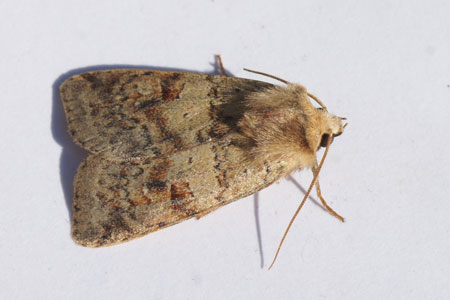
 Turnip Moth (Agrotis segetum). Tribe Agrotini. Subfamily Noctuinae. Family Noctuidae or Owlet moths.
Variable in colour. From sandy to very dark brown; sometimes with a
grey tint. There are double cross lines on the forewings.
Caterpillar: July-March. The caterpillar lives underground and feeds at night on roots and young shoots of all kinds of plants. I found this
turnip moth in the grass. Wingspan 32-42 mm.
May - November. Two generations. The caterpillar overwinters. Europe, Asia, Africa. Photos 21-4-2019. German:
Saateule. French: la Moissonneuse, la Noctulelle des moissons. |
 .. ..
 Ingrailed Clay (Diarsia mendica). Tribe Agrotini. Subfamily
Noctuinae. Family Noctuidae or Owlet moths.
Ingrailed Clay (Diarsia mendica). Tribe Agrotini. Subfamily
Noctuinae. Family Noctuidae or Owlet moths.
The drawing is very variable and therefore difficult to recognize. On the wings is a small dark spot. Occasionally this spot lacks.
The caterpillar can be found all kinds of herbaceous plants, shrubs and trees. Wingspan 35-40 mm. May-September Two generations.
The caterpillar overwinters. Palearctic. Photos 1-7-2015. German:
Primel-Erdeule. French: la Noctulelle paré , la Noctulelle de la
primevère. |
Tribe
Phlogophorini.
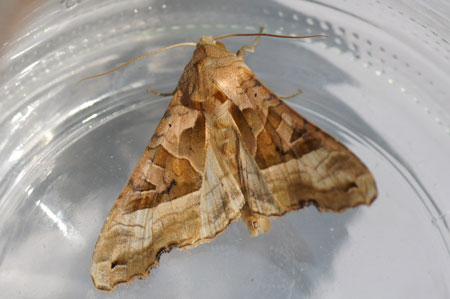 .. ..
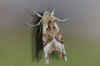 Angle Shades (Phlogophora meticulosa). Tribe
Phlogophorini. Subfamily Noctuinae. Family Noctuidae or Owlet moths.
Angle Shades (Phlogophora meticulosa). Tribe
Phlogophorini. Subfamily Noctuinae. Family Noctuidae or Owlet moths.
Olive green and pink-brown, sometimes they are reddish brown. The V-shaped pattern pattern on the wings is not variable. At rest, the front wing is folded as shown in the small picture.
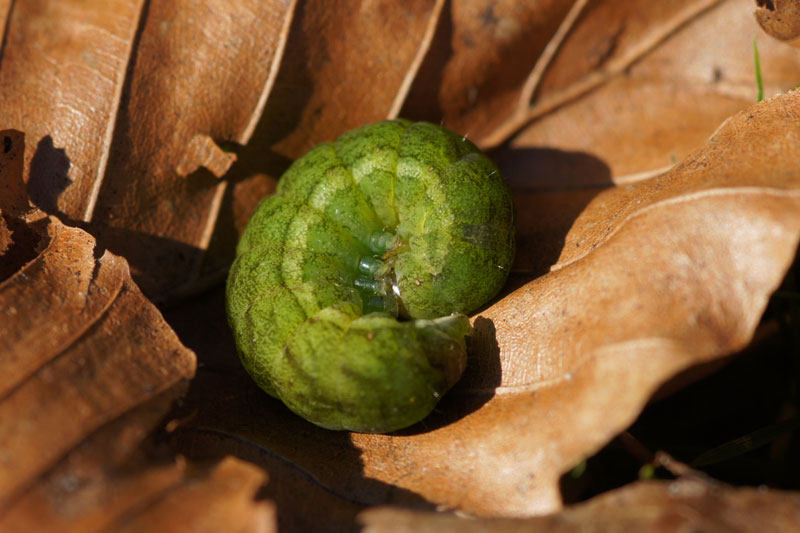
The caterpillar I found rolled up in May between the withered leaves on the ground. By day it is hiding. At night it is searching of food. Host plants of the caterpillar kinds of plants, shrubs and trees like ivy, stinging nettle, nettle, bramble and birch.
Flying time: April-November Two generations. The caterpillar overwinters.
Wingspan 45-52 mm. Photos 16-9-2014. German: Achateule. French: La Méticuleuse ou
Craintive, Phlogophora meticulosa.
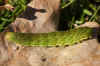
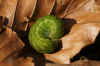 Photos caterpillar 7-3-2011.
 |
Tribe Noctuini.
 .. ..
 . .
 . .
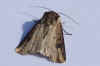 . .
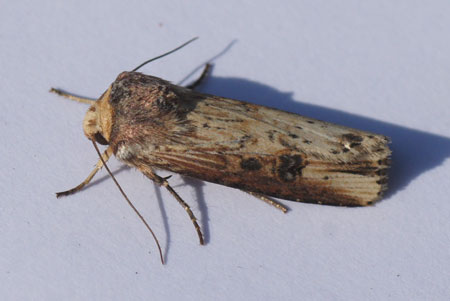
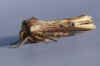
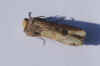
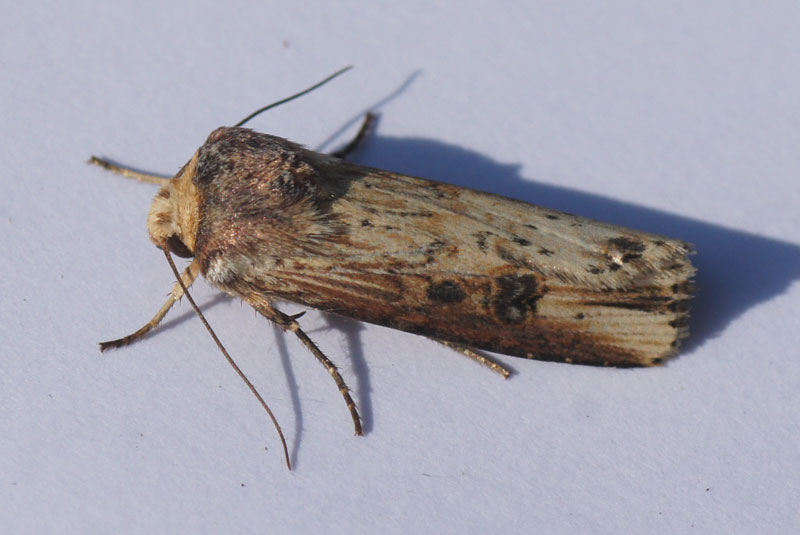
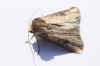 The Flame (Axylia putris). Tribe Noctuini. Subfamily
Noctuinae. Family Noctuidae or Owlet moths.
The Flame (Axylia putris). Tribe Noctuini. Subfamily
Noctuinae. Family Noctuidae or Owlet moths.
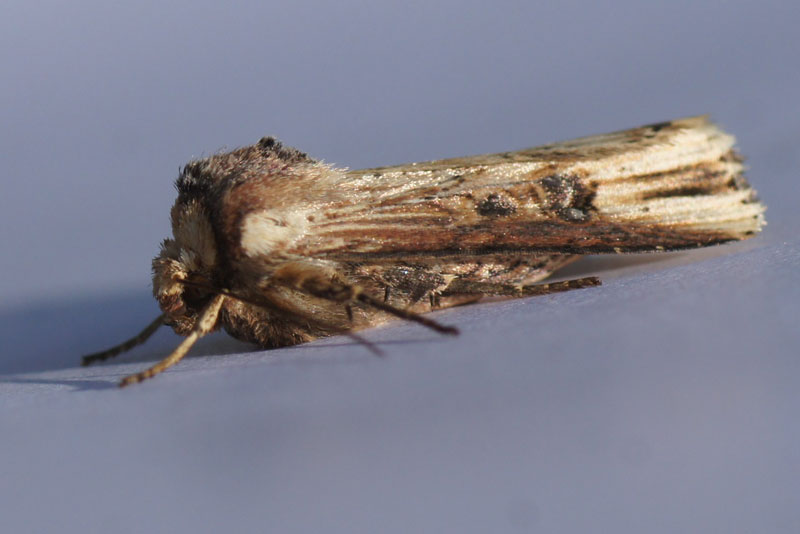
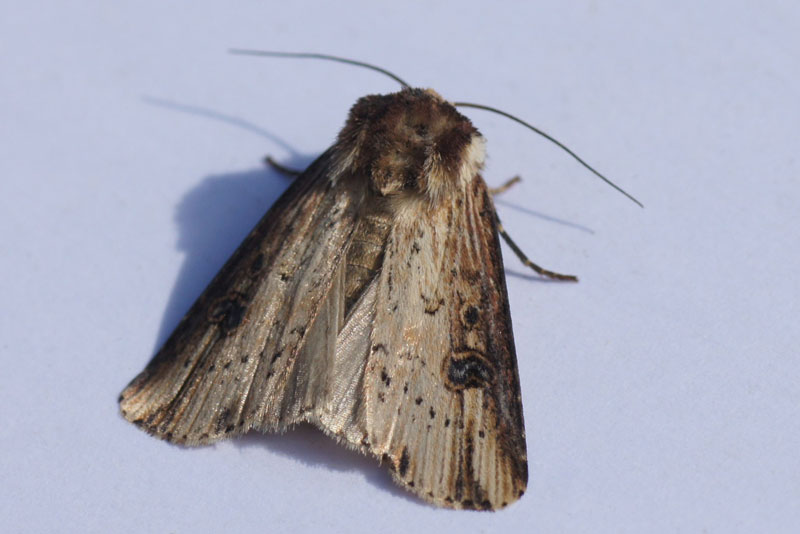
This owlet moth at rest looks like a piece of wood, because its wings are wrapped tightly around its body. The colour of the wings also looks like the colour of a broken twig.
Caterpillars feed on of herbaceous plants such as nettles, sorrel, plantain.
Wingspan 30-40 mm. May-August. One ore two generations. It overwinters as a pupa.
Photos 18-7-2013. In one picture it looks dead. But if you release it, the flame flies away immediately. I noticed this behavior several times. 24-6-2014. With the wings spread. German:
Putris-Erdeule, Gebüschflur-Bodeneule. French: la Noctulelle putride. |
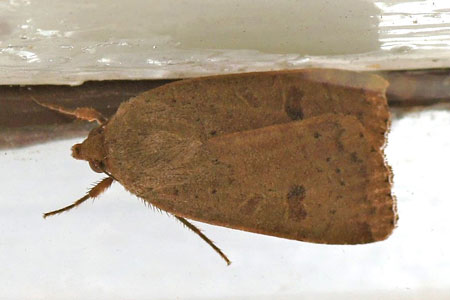 Lesser yellow underwing (Noctua comes). Tribe Noctuini. Subfamily
Noctuinae. Family Noctuidae or Owlet moths.
Lesser yellow underwing (Noctua comes). Tribe Noctuini. Subfamily
Noctuinae. Family Noctuidae or Owlet moths.
The colour is variable from light (often grayish and sometimes greenish tint) to reddish brown, sometimes almost black. A usually clearly visible wave line. Hindwing is orange yellow with a broad black band a dark center spot.
Host plants: Various herbaceous plants. In the spring also in bushes and small trees.
Wingspan 35-50 mm. June-October. One generation.
It hibernates as a young caterpillar.
Europe, North Africa, Asia Minor and North America (introduced in Canada and spread
therefrom). Photo 1-9-2016. German: Breitflügelige Bandeule, Lederbraune
Bandeule, Primeleule. French: la Hulotte, la Triphène hulotte.

 Caterpillar
16-4-2018, 12-5-2018.
Caterpillar
16-4-2018, 12-5-2018. |
 .. ..
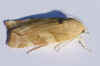 . .
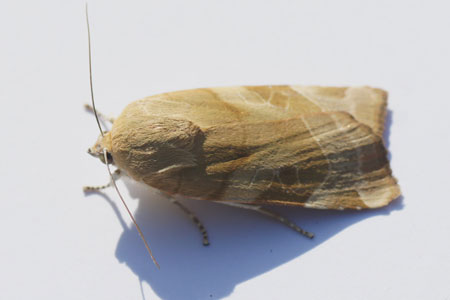
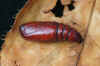 Pupa.. Broad-bordered Yellow Underwing (Noctua
fimbriata). Tribe Noctuini. Subfamily Noctuinae. Family Noctuidae or Owlet moths.
Pupa.. Broad-bordered Yellow Underwing (Noctua
fimbriata). Tribe Noctuini. Subfamily Noctuinae. Family Noctuidae or Owlet moths.
My wife found the pupa in the ground, from which we got this beautiful Broad-bordered Yellow
Underwing.
The colour is variable from reddish brown to olive green of the male and light brown, light green and brown for the female. The markings are always the same. The orange-yellow hind wings have a broad black band. At rest, the wings overlap quite far.
Host plants: All kinds of herbaceous plants such as sorrel and nettle, sometimes woody plants, such as blackberry, privet.
Wingspan 45-61 mm. June-September. One generation.
It overwinters as a young caterpillar. Europe, North Africa, Asia Minor. Photos 20-5-2014 (pupa), 8-6-2014. German: Bunte
Bandeule, Gelbe Bandeule. French: la Frangée. |
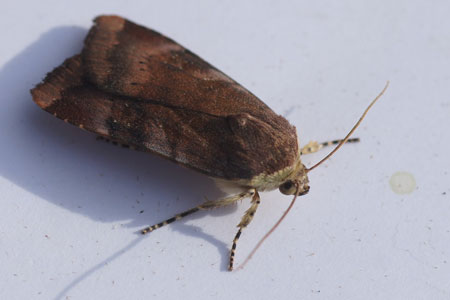 .. ..
 . .
 Lesser Broad-bordered Yellow Underwing / Langmaid's Yellow Underwing ( Noctua janthe / Noctua
janthina). Tribe Noctuini. Subfamily Noctuinae. Family Noctuidae or Owlet moths.
Lesser Broad-bordered Yellow Underwing / Langmaid's Yellow Underwing ( Noctua janthe / Noctua
janthina). Tribe Noctuini. Subfamily Noctuinae. Family Noctuidae or Owlet moths.
Reddish brown forewings with sometimes a grey tint and light bands. The difference between the two species is in the underside of the front wings and in the
hindwings. Simply said, these are the differences.
Lesser Broad-bordered Yellow Underwing: At the underside of the forewing a large blackish field to the hind edge. Hindwing is yellow ocher with a very broad black band.
Langmaid's Yellow Underwing: At the underside of the front wing a large blackish field is not all the way to the hind edge. Hindwing is dark yellow with a slightly less broad black band.
The caterpillar is found. In many deciduous trees, shrubs and herbaceous plants.
Wingspan 30-40 mm. / 34-44 mm.
June-September. One generation.The caterpillar overwinters. Europe, North Africa. Photos 16-8-2013. German: Janthe-Bandeule /
Janthina-Bandeule. |
 .. ..
 . .
 . .
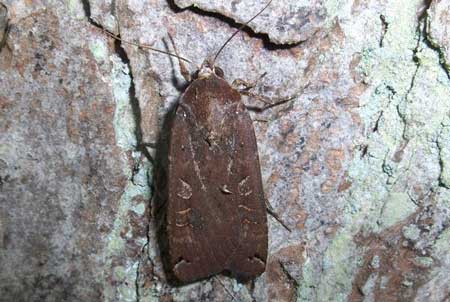
 Large Yellow Underwing (Noctua pronuba). Tribe
Noctuini. Subfamily Noctuinae. Family Noctuidae or Owlet moths.
Large Yellow Underwing (Noctua pronuba). Tribe
Noctuini. Subfamily Noctuinae. Family Noctuidae or Owlet moths.
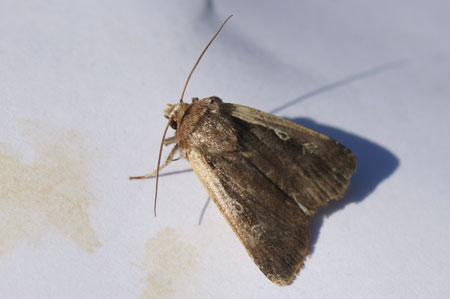
A large moth. I found it in the kitchen. When I put it outside. I took a photo, when it rested for a moment on the chestnut.
The forewings are quite variable from light brown to almost black. On the small photos some examples. The hindwings are bright orange-yellow with a black sub-terminal band. If it flies away, it confuses the predators.
It is a common butterfly in the Netherlands. Flying time: May to September. Wingspan 50-60 mm.
The species hibernates as a caterpillar and feeds on plants like rubus, nettle and dandelion. Photos 22-7-2013, 2-8-2013, 11-9-2013.
Palearctic. German: Hausmutter. French: Fiancée.
 18-8-2010. Here you can see the bright orange-yellow hindwings.
 |
 .. ..
 . .
 . .
 Flame Shoulder (Ochropleura plecta). Tribe Noctuini. Subfamily Noctuinae. Family Noctuidae or Owlet moths.
A bright cream coloured band runs along the front edge of the reddish brown forewing with white stigmata. The Flame Shoulder in the picture is more grey brown. Host plants: All kinds of herbaceous plants.
Wingspan 28-34 mm. April-October. Two sometimes three generatons.
It hibernates as a pupa. Palearctic. Photos 2-8-2013, 28-8-2013 and 9-6-2014. German: Hellrandige
Erdeule. French: le Cordon blanc. |
Tribe Xestiini.
 .. ..
 . .
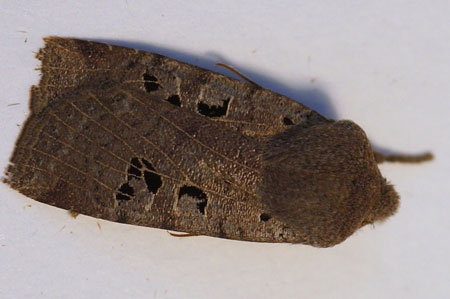
 Black-spot Chestnut (Conistra rubiginosa) Tribe
Xestiini. Subfamily Noctuinae. Family Noctuidae or Owlet moths
Black-spot Chestnut (Conistra rubiginosa) Tribe
Xestiini. Subfamily Noctuinae. Family Noctuidae or Owlet moths
Features: On the wings ate two black spots divided by light coloured veins. Length of the forewings 15 - 16 mm.
In the Netherlands the Black-spot Chestnut was not a common species, but it has greatly expanded.
The larvae feed on leaves of various trees, shrubs and herbaceous plants.
Wins the exchange is from October to May The caterpillars from May to June.
If it's not too cold, you see these moths also flying in winter. The moth in the picture I found in our house. It was hard to get a good picture because it was very cloudy. I thought the moth was not doing well. But after I had took the photographs it flew into a tree.
Wingspan 31- 6 mm. Photos 1-11-2010. Photo 18-3-2013 With spread wings. German:
Feldholz-Wintereule, Schwarzgefleckte Wintereul. French: Découpure. |
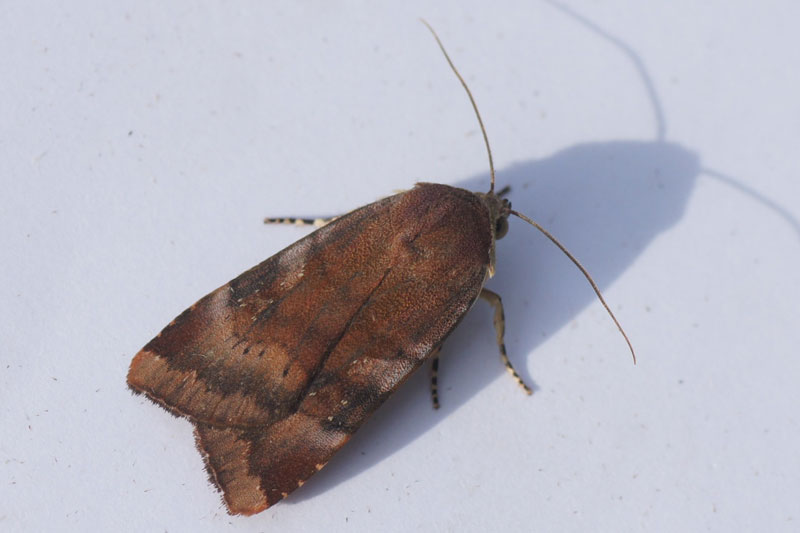
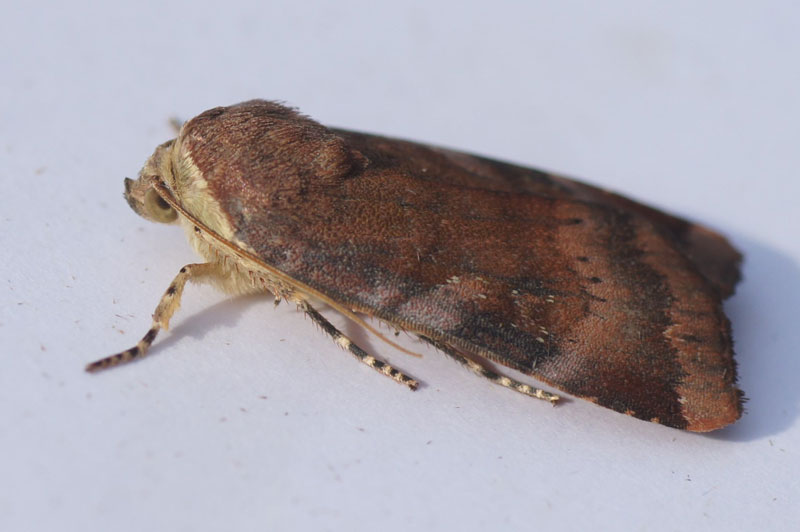
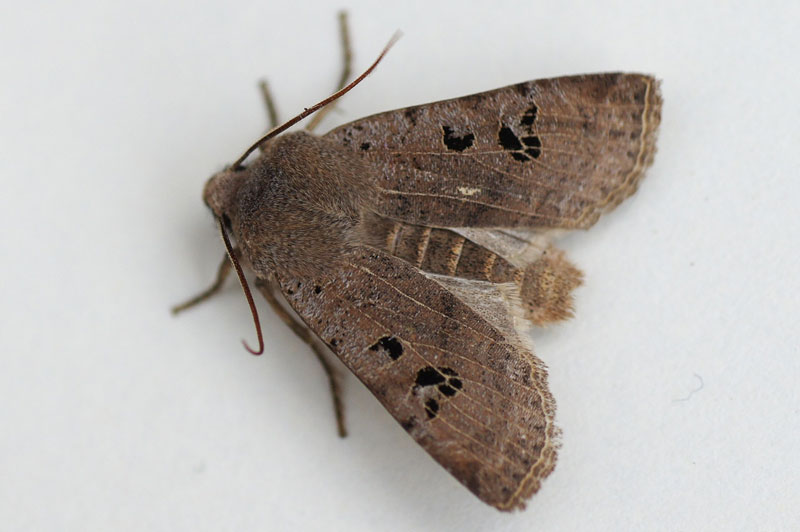
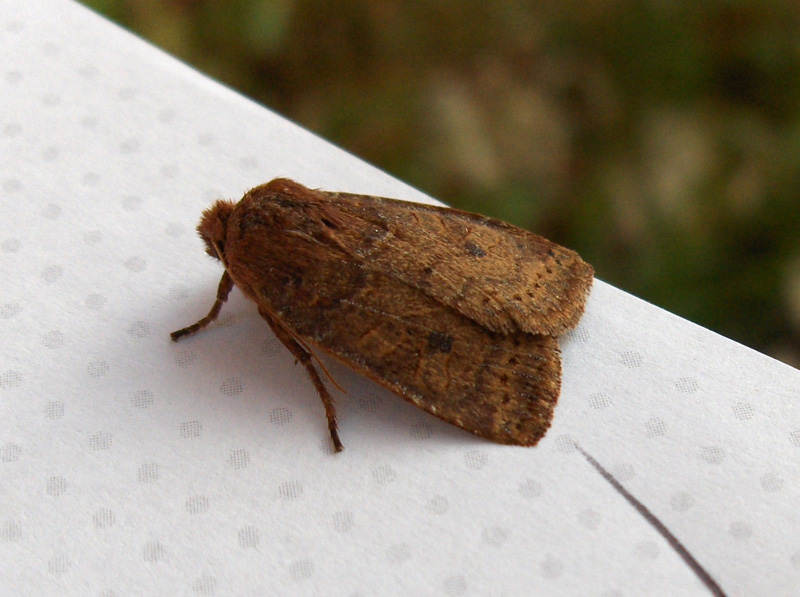
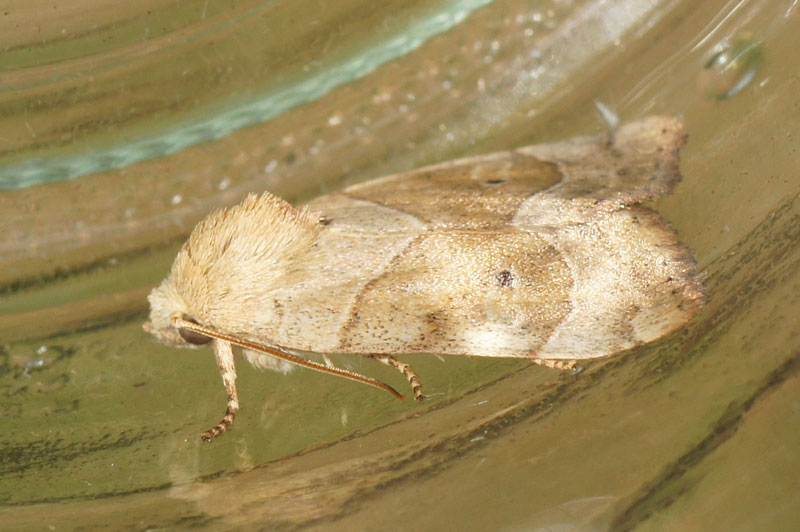
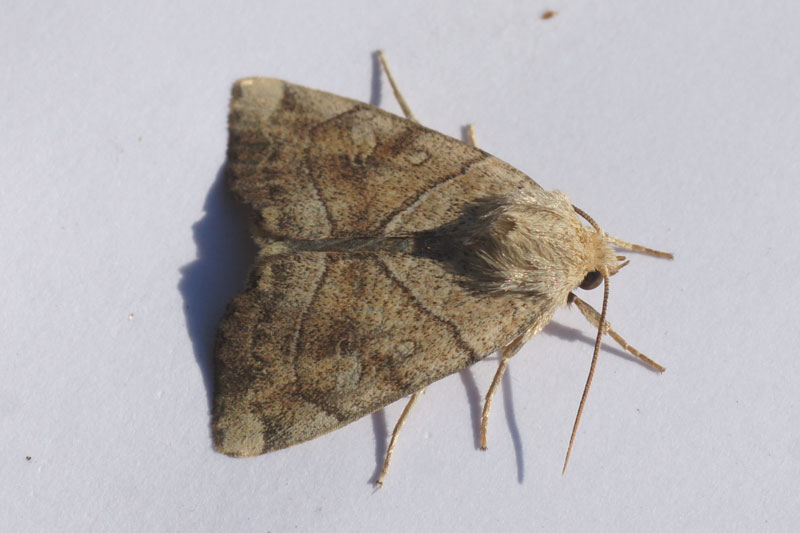
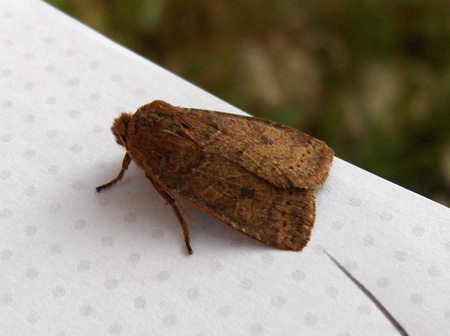 Chestnut (Conistra vaccinii) Tribe Xestiini. Subfamily
Noctuinae. Family Noctuidae or Owlet moths.
Chestnut (Conistra vaccinii) Tribe Xestiini. Subfamily
Noctuinae. Family Noctuidae or Owlet moths.
The markings and colouring of this moth is very variable. Light brown, dark brown or deep chestnut brown. Smooth, marbled, speckled or striped.
Therefore it is particulary distinguished by the distinctive rounded wing shape.
The moth on this photo has a dark spot on the wings.
The larva feed on various deciduous shrubs and trees. But also in herbaceous plants (in later stages).
The chestnut hibernates in the adult stage. End of February it flies again (depending on weather).
Wingspan 28-36 mm. September-May. One generation.
Europe, North Africa and Western Asia. German: Heidelbeer-Wintereule. French: la
Robuste, la Conistre polie, l'Orrhidie de l'airelle. |
 .. ..
 . .
 . .
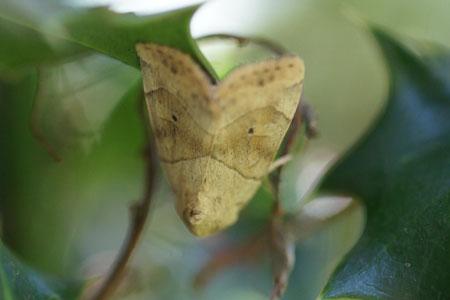
 Dun-bar (Cosmia trapezina). Tribe Xestiini. Subfamily
Noctuinae. Family Noctuidae or Owlet moths.
Dun-bar (Cosmia trapezina). Tribe Xestiini. Subfamily
Noctuinae. Family Noctuidae or Owlet moths.
This owl was hidden in the holly. I tried to catch it, after I had made this picture. (To make a better photo) It escaped, however.
It is variable in color, but easily recognized by the cross lines. Usually yellow brown. But there are also greyish and reddish species.
The caterpillar feeds on leaves but also on other caterpillars. Especially leaf roller caterpillars. It lives in trees and shrubs.
Wingspan: 25-33 mm. July-September. One generation. The species overwinters as an egg.
Photos 11-7-2011, 26-7-2013, 2-8-2013: Two years later. The difference in colour is visible. German:
Trapezeule. French: Trapèze. |
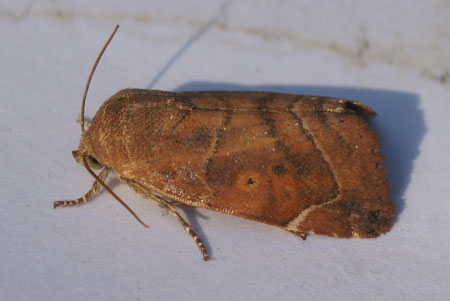 .. ..
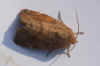 Lesser-spotted Pinion (Cosmia affinis). Tribe Xestiini. Subfamily
Noctuinae. Family Noctuidae or Owlet moths.
Lesser-spotted Pinion (Cosmia affinis). Tribe Xestiini. Subfamily
Noctuinae. Family Noctuidae or Owlet moths.
The Lesser-spotted Pinion has dark reddish brown to gray-brown colored forewings. Along the dark cross lines on the wings a pale, white line that widens. It looks like the White-spotted Pinion
(Cosmia diffinis), which has clearly white spots along the leading edge of the wings and the Lunar-spotted Pinion
(Cosmia pyralina) with a clear crescent-shaped spot close to the wing tip and a strong corrugated inner cross line.
The caterpillar is found in elm and oak. It is found mainly in the coastal region of the Netherlands.
Wingspan: 28-33 mm. July-September. One generation. The species overwinters as an egg.
Palearctic. Photos 23-8-2013. German: Rotbraune Ulmeneule. French: la Cosmie
baie. |
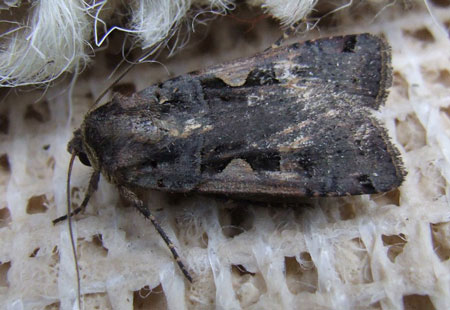 .. ..
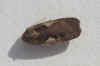 Setaceous Hebrew Character (Xestia c-nigrum). Tribe
Xestiini. Subfamily Noctuinae. Family Noctuidae or Owlet moths.
Setaceous Hebrew Character (Xestia c-nigrum). Tribe
Xestiini. Subfamily Noctuinae. Family Noctuidae or Owlet moths.
It got its name because of the black mark on the forewings resembling the Hebrew letter Nun. The forewings are reddish brown. The hind wings are yellowish white.
It looks like the Hebrew Character (Orthosia gothica). But this moth flies in March and April.
It is a common butterfly throughout Europe and in North America.
The caterpillars overwinter and mature in April. April-October. Two generations.
Wingspan 35-45mm. Photos 15-9-2008, 18-9-2018. German: Schwarze C, Schwarze
C-Erdeule, C-Eule. French: C noir. |
 .. ..
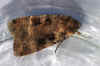 . .
 Double Square-spot (Xestia triangulum). Tribe Xestiini. Subfamily
Noctuinae. Family Noctuidae or Owlet moths.
Double Square-spot (Xestia triangulum). Tribe Xestiini. Subfamily
Noctuinae. Family Noctuidae or Owlet moths.
The forewings are grayish brown (sometimes reddish) with two black to dark brown spots. One spot is triangular, the other square.
The Double Square-spot looks much like the Triple-spotted Clay (Xestia
ditrapezium), but is often a little paler.
It hibernates as a larva. One ganeration. In autumn the larvae can be found on lower plants, like Dock and Dandelion.
The brownish caterpillar is feeding on a wide variety of plants including birch, blackthorn, bramble, raspberry. Wingspan 36-46 mm.
June-July. Europe. Small photos 7-7-2013. German: Triangel-Bodeneule
Triangel-Erdeule. French: La Noctuelle de la Chélidoine. |
 .. ..  Square-spot Rustic (Xestia xanthographa). Tribe
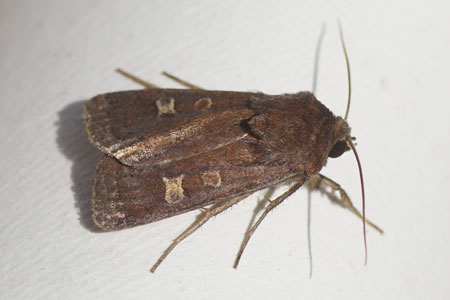
Xestiini. Subfamily Noctuinae. Family Noctuidae or Owlet moths.
Square-spot Rustic (Xestia xanthographa). Tribe
Xestiini. Subfamily Noctuinae. Family Noctuidae or Owlet moths.
The bright spot on the wings of the Square-spot Rustic is the square or has the shape of an X. The colour of the wing is light brown to black or brown.
It overwinters as a caterpillar. Caterpillar host plant: herbaceous plants and grasses.
Wingspan 30-40 mm. Flight time: July to October. One generation. Caterpillar: September-May
Photos 6-4-2010, 24-9-2011. German: Braune Spätsommer-Bodeneule. French: la
Trimaculée, la Xanthographe.
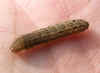 Caterpillar.
 |
Subfamily Pantheinae.
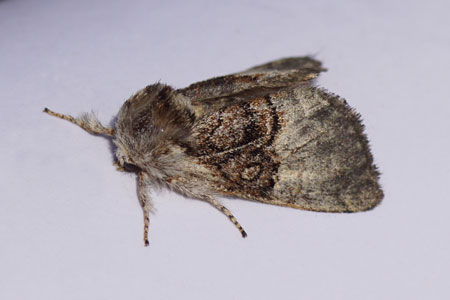 Nut-tree tussock (Colocasia coryli). Subfamily Pantheinae. Family Noctuidae or Owlet moths.
Brownish gray. The inner half of the forewings is darker.
Wingspan 27-35 mm.
April-September. Two generations. Europe, West Asia.
Caterpillars: May-July and September-October. The doll hibernates. The caterpillar lives in deciduous trees such as hazel, birch, beech, oak and
field maple. Photo 8-8-2020. German: Haseleule. French: la Noctuelle du coudrier. |
Subfamily Plusiinae.
Tribe Abrostolini.
|
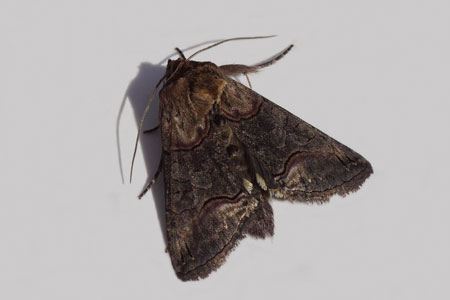 Dark Spectacle (Abrostola triplasia). Tribe Abrostolini. Subfamily
Plusiinae. Family Noctuidae or Owlet moths.
Dark Spectacle (Abrostola triplasia). Tribe Abrostolini. Subfamily
Plusiinae. Family Noctuidae or Owlet moths.
It looks like the spectacle (Abrostola tripartita). A dark brown or black brown ground
colour, base of the forewings has a dull straw colour and cross lines bordered with red..
Wingspan 32-38 mm. May-August. Two sometimes three generations.
Caterpillars: June, July and October-April. It overwinters as a pupa.
The caterpillar lives on nettle and hops.
Europe, North Africa, Asia. Photo 7-8-2018. German: Dunkelgraue
Nessel-Höckereule. French: la Plusie de l'ortie. .
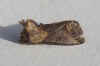 Side
view. It kept itself dead and then flew away very quickly.
Photo 7-8-2018. Side
view. It kept itself dead and then flew away very quickly.
Photo 7-8-2018.
|
Tribe Plusiini.
 .. ..
 . .
 . .
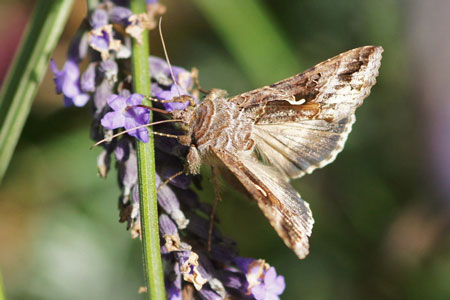
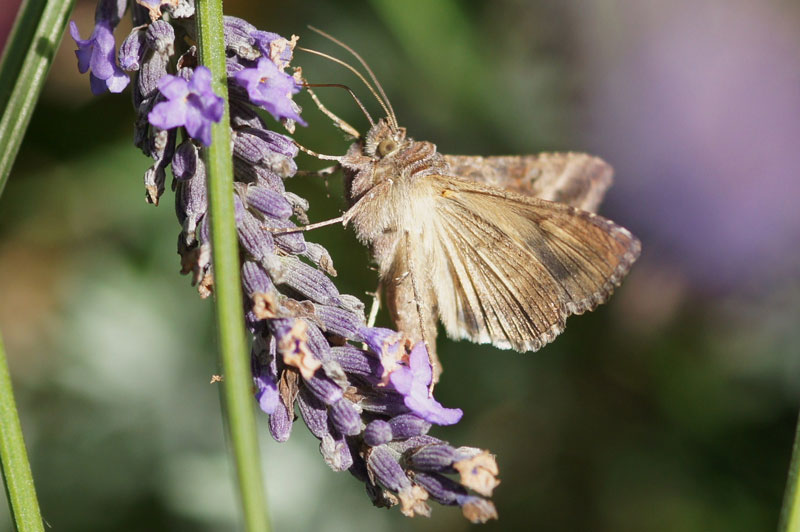
 Silver Y (Autographa gamma). Tribe Plusiini. Subfamily Plusiinae. Family Noctuidae or Owlet moths.
It is of course named for the silvery Y-shaped mark on its forewings.
It an appetite butterfly is. It is a migratory moth. In spring they arrive from the south in the Netherlands. In the autumn some moths fly south again. They can't survive in winter in The Netherlands. But sometimes they overwinter in mild winters as a full-grown caterpillar or as a pupa.
The larvae feed on a wide range of low plants. By day it also visit flowers.
Widespread across Europe, parts of Asia and North Africa.
Wingspan 35-45mm. German: Gammaeule. French: la Plusie de l'ortie. |
 .. ..
 . .
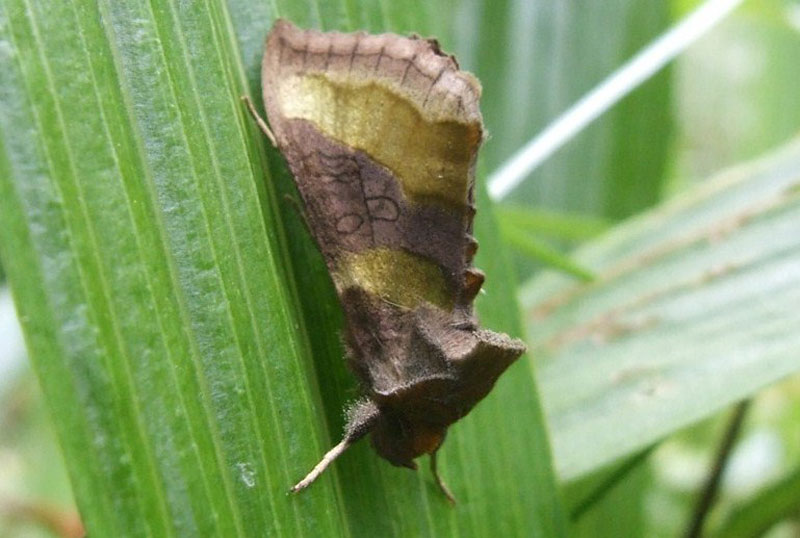
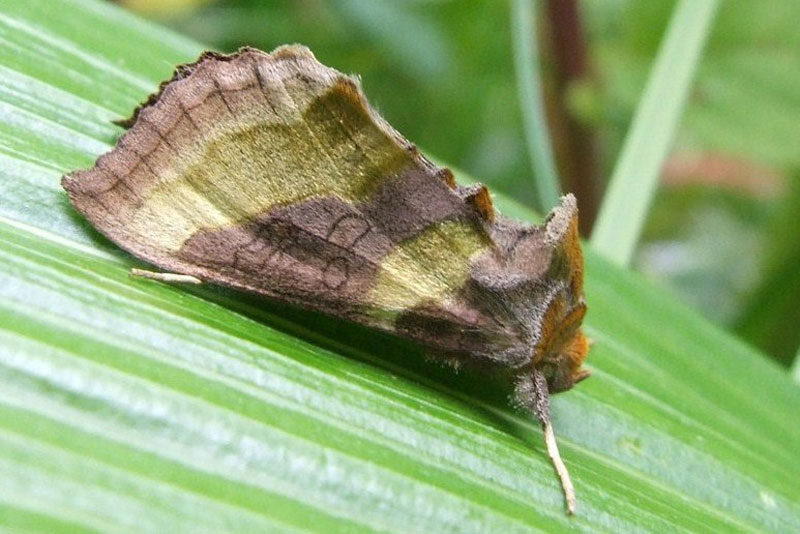
 Burnished Brass (Diachrysia chrysitis). Tribe
Plusiini. Subfamily Plusiinae. Family Noctuidae or Owlet moths.
Burnished Brass (Diachrysia chrysitis). Tribe
Plusiini. Subfamily Plusiinae. Family Noctuidae or Owlet moths.
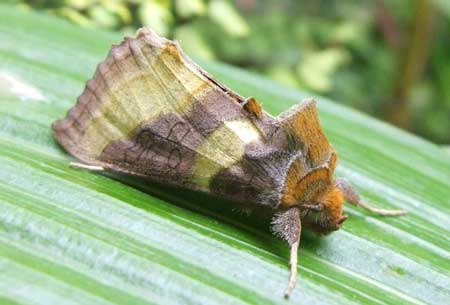
A beautiful moth which his name has been given by the metallic sheen. The head and crest are striking orange. Behind is a small orange crest.
A few times you see it during the day. This Saturday it was hidden between the leaves, but it remained calm when I photographed it.
Wingspan 28-35 mm. May to October. Two generations. (sometimes three)
Widespread across Europe. Caterpillars: June, July and also in autumn and spring, because the caterpillars
overwinter.
They live in a variety of herbaceous plants. E.g. nettle, deadnettle. Photos 28-6-2009.
Messingeule. French le Lambda, le Gamma. |
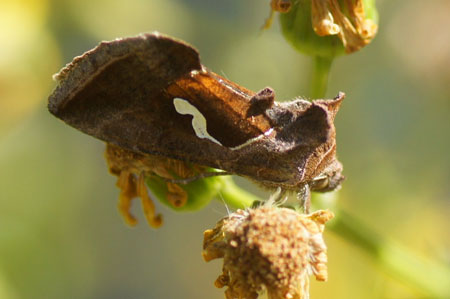 .. ..
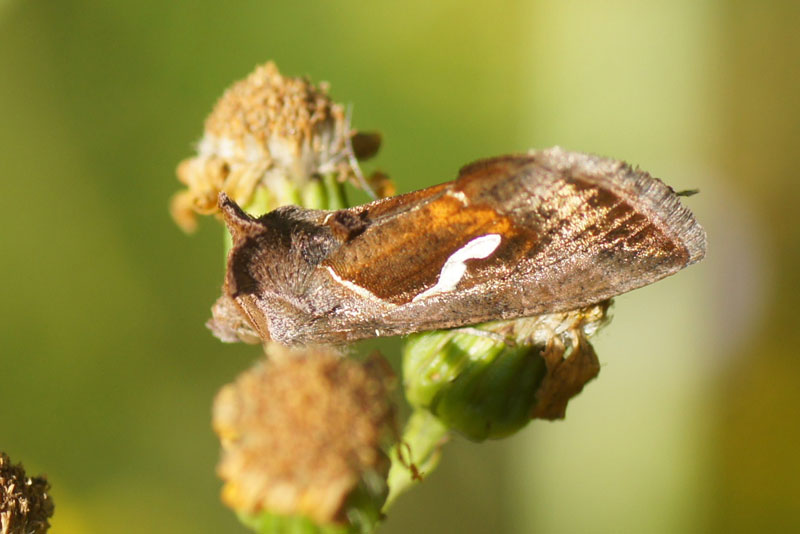
 Dewick’s Plusia (Macdunnoughia confusa). Tribe Plusiini. Subfamily Plusiinae. Family Noctuidae or Owlet moths.
At rest the wings are roof-shaped. On front of the thorax is a big crest and behind a small crest.
On the front wings is a constricted white, silver spot, which is connected with a thin, white transverse
line. Active during the day and at night. Wingspan 36-42 mm.
April-October. Three generations.
Caterpillars: June, July en October - April. The caterpillar overwinters
in the litter layer.
They live in a variety of herbaceous plants. E.g. nettle, deadnettle, camomile.
Europe, Asia. Photos 29-8-2012. German: Schafgarben-Silbereule, Feldstaudenrasen-Silbereule, Silberkommaeule. French: la Confuse, la Goutte d'argent.
|
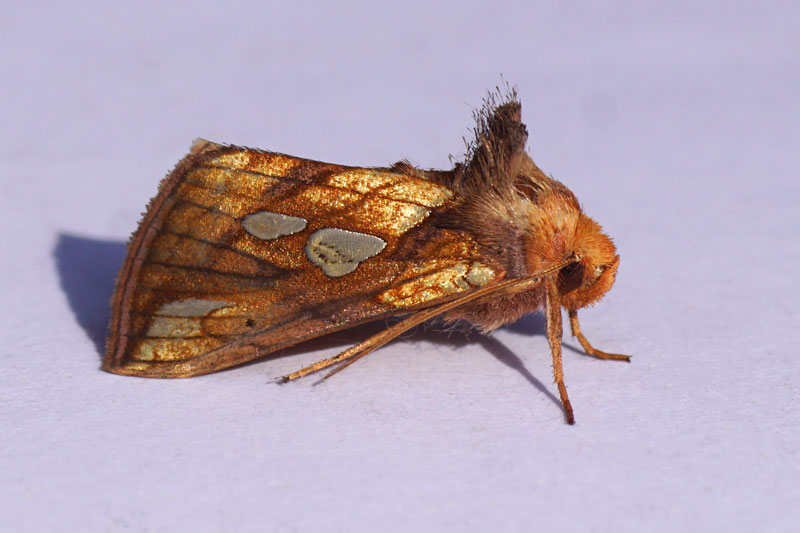
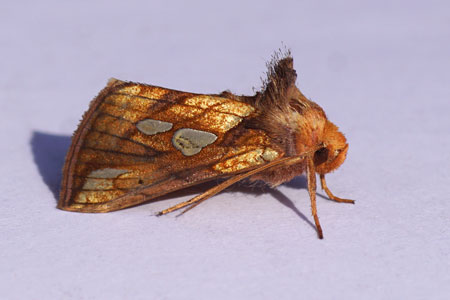 Gold spot (Plusia festucae). Tribe Plusiini. Subfamily Plusiinae. Family Noctuidae or Owlet moths.
The wings are roof-shaped when at rest. There is a large crest on the
thorax at the front.
Orange with golden yellow. In the center of the forewings are two silver colored spots.
Wingspan 34-46 mm. Active during the day and at night.
April-October. Two generations. Europe, Asia, Northwest Africa.
Caterpillars: June-April. The young caterpillar overwinters in the litter
layer.
They live in damp places on sedges, yellow iris, simplestem bur-reed and
common water plantain. Photo 8-8-2020. German: Röhricht-Goldeule. French:
la Riche , la Plusie de la fêtuque.
|
Subfamily
Scoliopteryginae.
Tribe
Scoliopterygini.
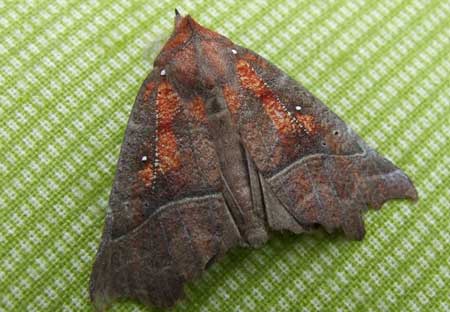 .. ..  . .
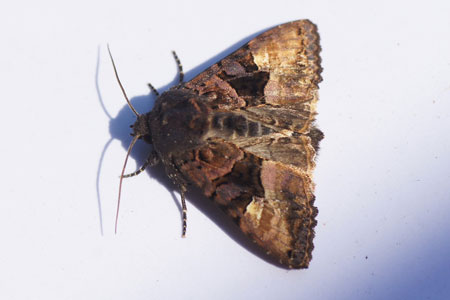
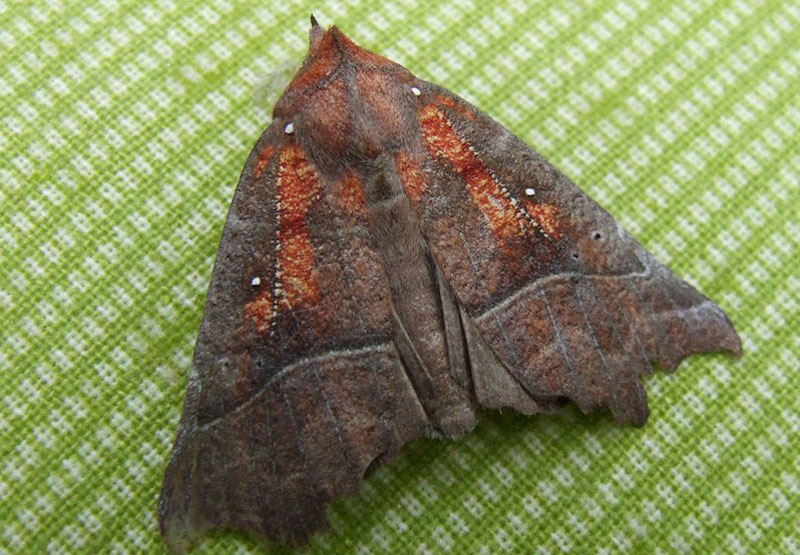
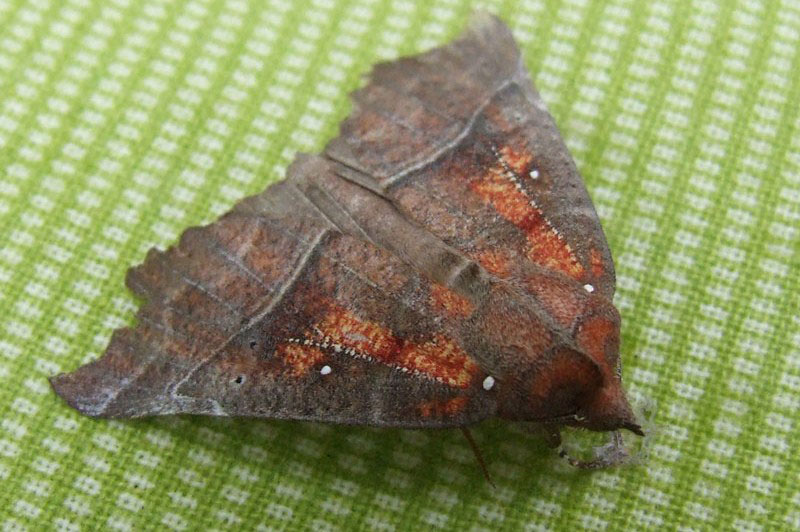
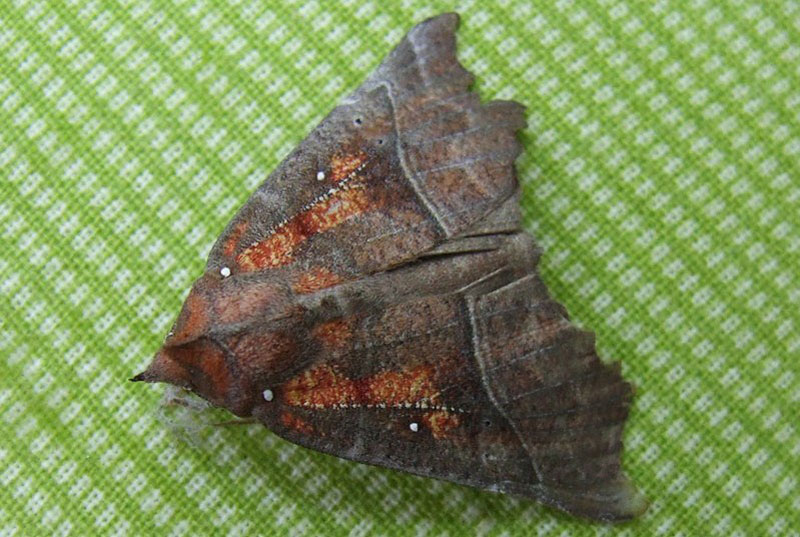
 The Herald (Scoliopteryx libatrix). Tribe Scoliopterygini. Subfamily Scoliopteryginae. Family Noctuidae or Owlet moths.
Features: Greyish brown with orange spots. Along that spot is a black and white spotted vein. Four prominent small white spots. The lower edge of the wing is jagged. The male has comb-like antennae.
You can find him in a wooded area but also in gardens. They often overwinter inside garages, attics, etc.
This butterfly was stuck in cobwebs. After it was released, I put it on a chair for a few pictures. Then I have removed the cobwebs from the legs. It remained very quiet and then it flew away unharmed.
Host caterpillars: including willow and poplar.
Wingspan 44-48 mm. Flight: After hibernation: April to June. Next Generation: July-October. Caterpillar: May to September.
Europe, Asia, North Africa, North America.
Photos 6-6-2010. German: Zackeneule, Zimteule. French: la Découpure , la Noctuelle
verseuse. |
Subfamily
Xyleninae.
 .. ..
 Small angle shades (Euplexia lucipara). Subfamily Xyleninae. Family Noctuidae or Owlet moths..
The forewings are reddish brown to purplish brown. With a dark band in the middle and with a broad, pale subterminal band. At rest, the front wing is folded as shown in the small picture.
Host plants: All kinds of trees, shrubs and herbaceous plants, such as ferns and birch.
It overwinters as a pupa in the soil. Wingspan: 27-32 mm. May-August. One generation.
Europe. Photos 8-7-2013. German: Gelbfleck-Waldschatteneule oder Purpurglanzeule. French: Euplexia lucipara, la
Brillante.
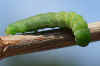 . .
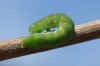
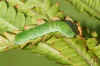 Photos caterpillar 17-9-2012, 7-9-2021.
 |
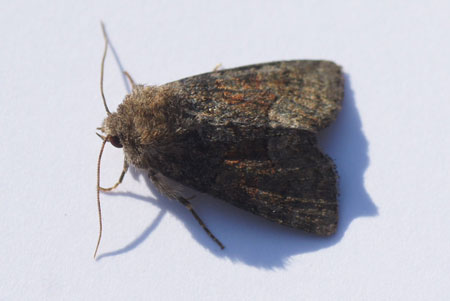 .. ..
 Tawny Marbled Minor (Oligia latruncula). Subfamily Xyleninae. Family Noctuidae or Owlet moths I'm not quite sure.
It is very similar to the Marbled Minor (Oligia. strigilis) and the Rufous Minor (Oligia versicolor). Here you can find some differences in Dutch.
A dark owlet moth in the middle of the forewings some red brown
Hosts: Various grasses In the Netherlands especially in areas with a sandy soil. .
Wingspan: 21-28 mm. May-August. Palearctic. Photos 7-7-2013. German: Dunkle Halmeulchen, Bergheiden-Graseulchen. French: la Trompeuse, le Filou. |
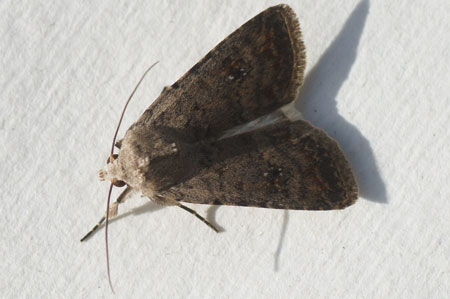 Pale mottled willow (Paradrina clavipalpis). Tribe Caradrinini. Subfamily Xyleninae. Family Noctuidae or Owlet moths.
The colour of the pale mottled willow is light to dark beige. The forewing is quite narrow. A characteristic are the small white dots along the kidney-shaped spot on the wings. They are not always as visible as in this picture. Along the front edge are three or four black dots. The hindwings are white to
greyish-white.
It is often found in houses, barns.
Host plants: grasses, plantain.
Wingspan 21-32 mm. April-October. Two generations. The caterpillar overwinters in a cocoon in the soil.
Europe, North Africa, Asia. Photo 18-8-2012. German: Heu-Staubeule. French: la Noctuelle des jachères, la Noctuelle
cubiculaire. |
 Old Lady (Mormo maura). Tribe
Dypterygiini. Subfamily Xyleninae. Family Noctuidae or Owlet
moths.
Old Lady (Mormo maura). Tribe
Dypterygiini. Subfamily Xyleninae. Family Noctuidae or Owlet
moths.
A very large moth that looks like a Catocala of the family Erebidae. Very wide dark brown front wings. The
hindwings with a pale edge.
Host plant caterpillars: In the autumn mainly herbaceous plants, in the spring mainly deciduous trees and shrubs.
Wingspan 63-74 mm.
They overwinter as young caterpillars, low in vegetation. June - September. One generation. Europe, Northwest Africa, Asia Minor. Photo 26-8-2019. German:
Schwarzes Ordensband. French: la Maure , la Lichénée des ponts , le Crapaud. |
Family
Erebidae.
The
moths in the new family Erebidae (2011) were formely classified in the family
Noctuidae, Arctiidae and Lymantriidae. (A re-classification)
Subfamily
Arctiinae.
 .. ..
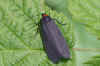 . . 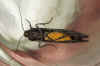 . .
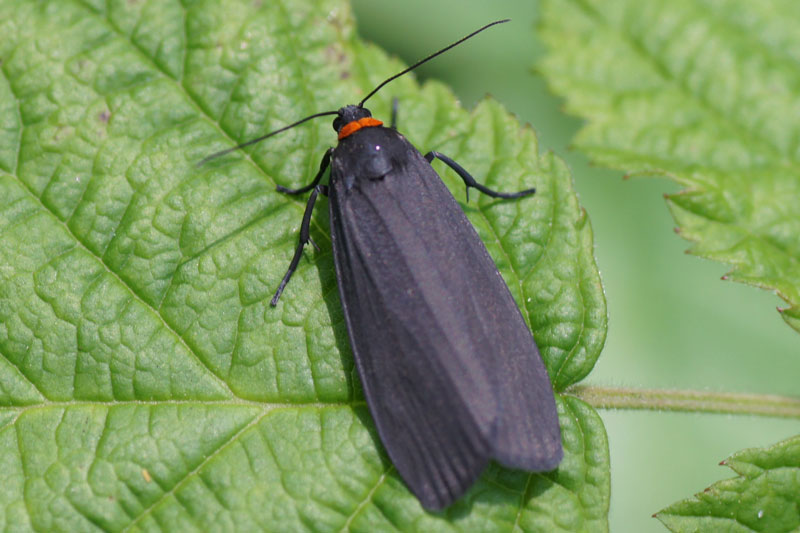
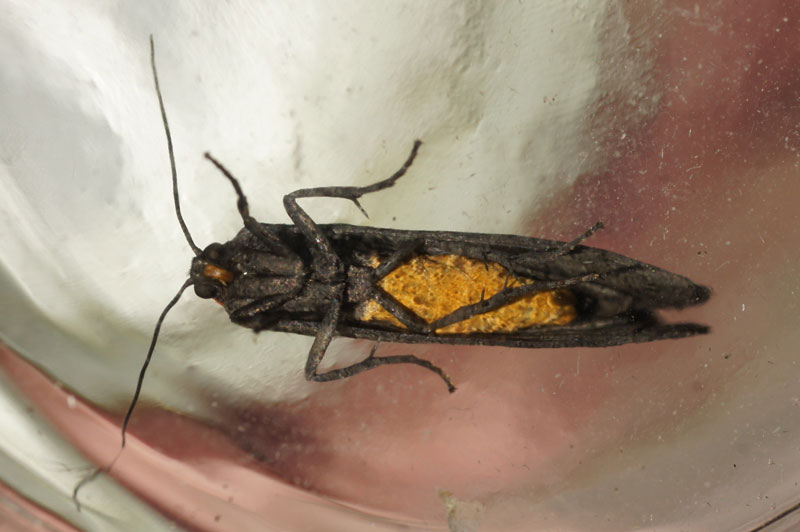
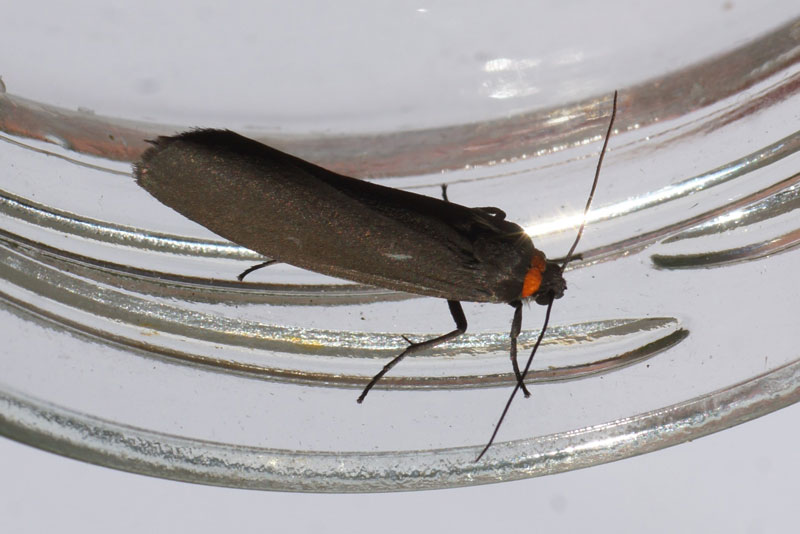
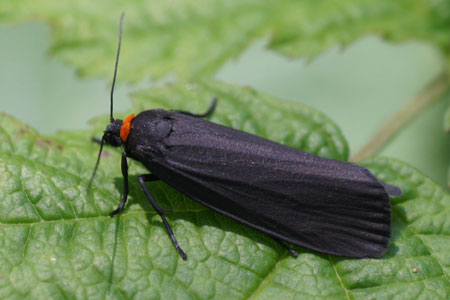
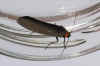 Red-necked Footman (Atolmis rubricollis). Subfamily Arctiinae. Family Erebidae.
A moth with black wings and legs and with a red collar. The last part of the abdomen is orange yellow, but that is not seen in these pictures ..
Sometimes you see them rest (as in this photo) on a leaf.
Host caterpillars: Mosses, algae. Wingspan 25-35 mm.
The pupa overwinters under moss and leaf litter. May-July. One genaration.
Europe and northern Asia. Photos 7-8-2012. (in the dunes), 1-7-2015 (in the garden).
German: Rotkragen-Flechtenbärchen. French: le Collier rouge ou la Veuve. |
 .. ..
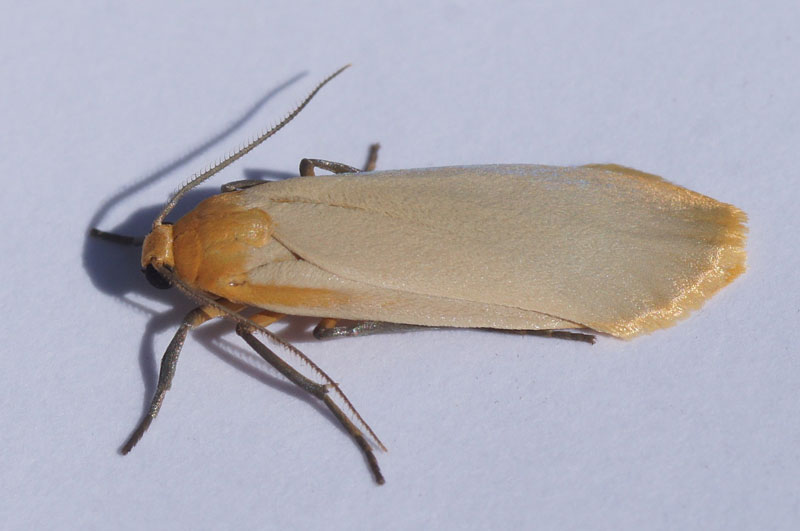
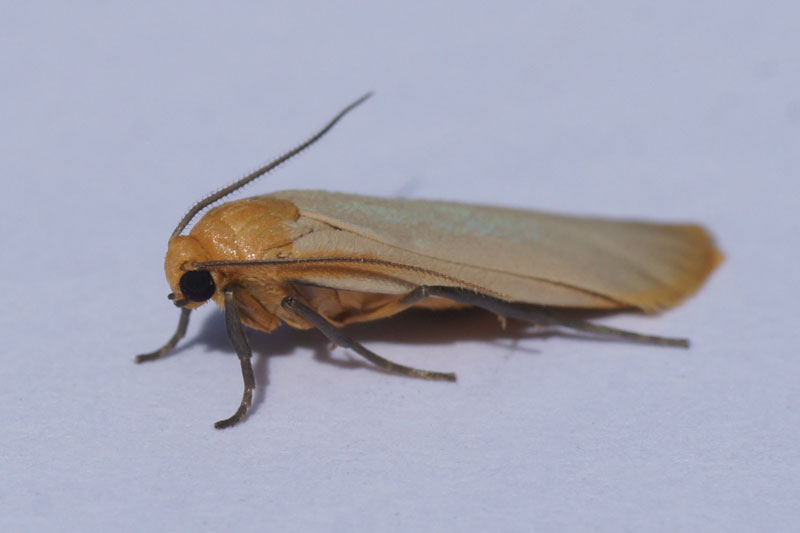
 Scarce footman (Eilema complana). Subfamily Arctiinae. Family Erebidae.
Grey forewings with a sharp yellow line along the side. A golden yellow collar. At rest the wings are folded around the body like a tube.
Other similar species: E. lurideola and E. caniola. Host plant caterpillars: mosses, lichens.
Wingspan 28-35 mm. The caterpillar hibernates. June-September. One generation. Europe and Central Asia. Photos 6-8-2019. German:
Gelbleib-Flechtenbärchen. French: le Manteau à tête jaune, la Lithosie aplatie. |
 .. ..
 . .
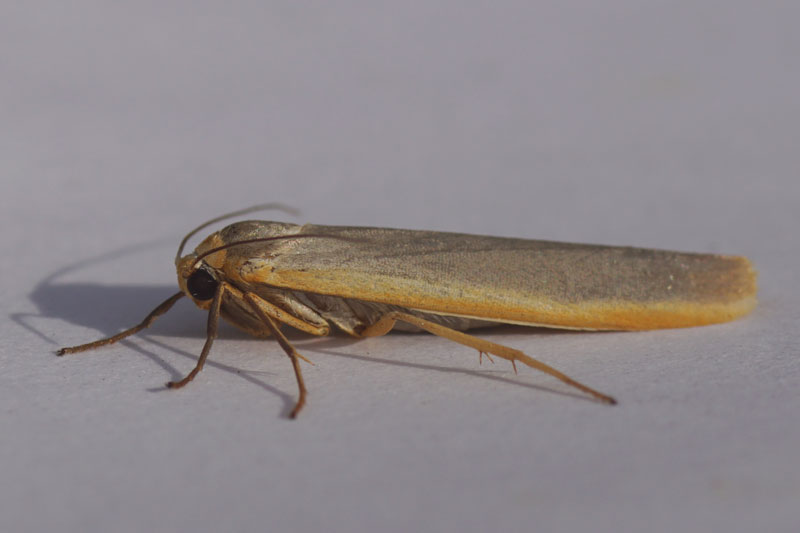
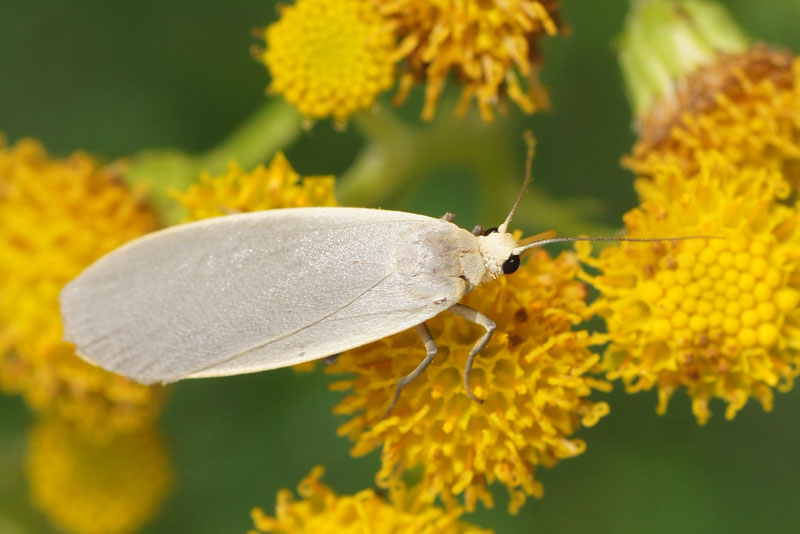
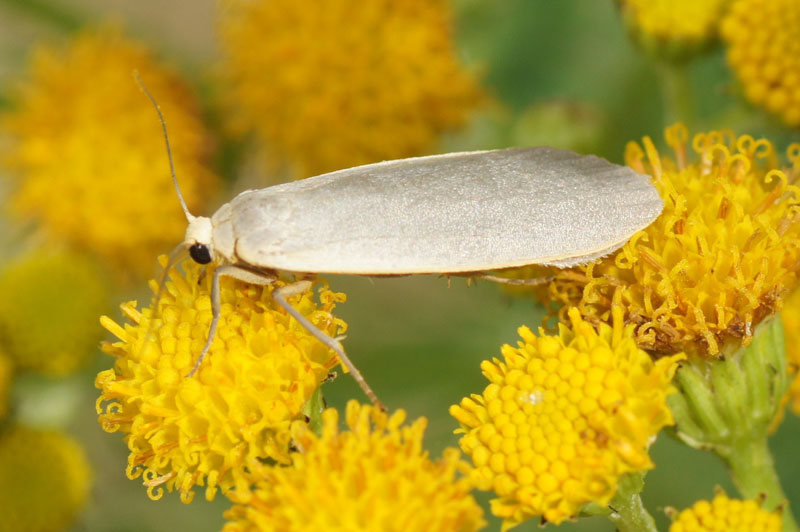
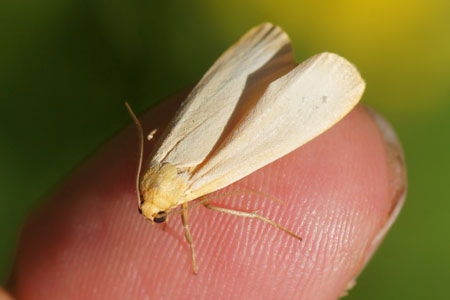
 Buff Footman (Eilema depressa). Subfamily Arctiinae. Family Erebidae.
The thorax is orange yellow. The wings greyish with an ocher yellow margin along the leading edge. (on this photo not visible) The forewings of the females are more brownish gray with sometimes an orange tint.
At rest, they keep the wings flat over the body.
Other similar species: E. griseola, E. lurideola, E. sororcula.
Host caterpillars: Mosses, algae.(Especially on conifers).
Wingspan 28-36 mm. The caterpillar hibernates. June-September. One generation. Europe. Photos
2-8-2013. 5-7-2014. German: Nadelwald-Flechtenbärchen. French: la Lithosie ocre, la Lithosie déprimée. |
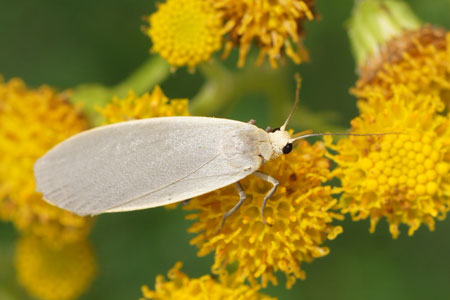 .. ..  Dingy Footman (Eilema griseola). Subfamily Arctiinae. Family Erebidae.
Not in the garden but in the dunes about 4 km from our home.
Dingy Footman (Eilema griseola). Subfamily Arctiinae. Family Erebidae.
Not in the garden but in the dunes about 4 km from our home.
The dingy footman is recognizable by the broad, rounded forewing with a curved front edge. The dingy footman in this picture is quite light. If they are more greyish, you can see a dull yellow margin along the leading edge on the forewings. The wings are held flat over the body.
Other similar species: E. depressa, E. lurideola, E. sororcula.
Host caterpillars: Mosses, algae. Wingspan 32-40 mm.
The caterpillar hibernates. May-September. One sometimes two generations.
Europe and North- en southeast-Asia. Photos 7-8-2012. German: Bleigraue Flechtenbärchen, Bleigraue Gelbsaumflechtenbär, Erlen-Flechtenbär. French: Lithosie
grise. |
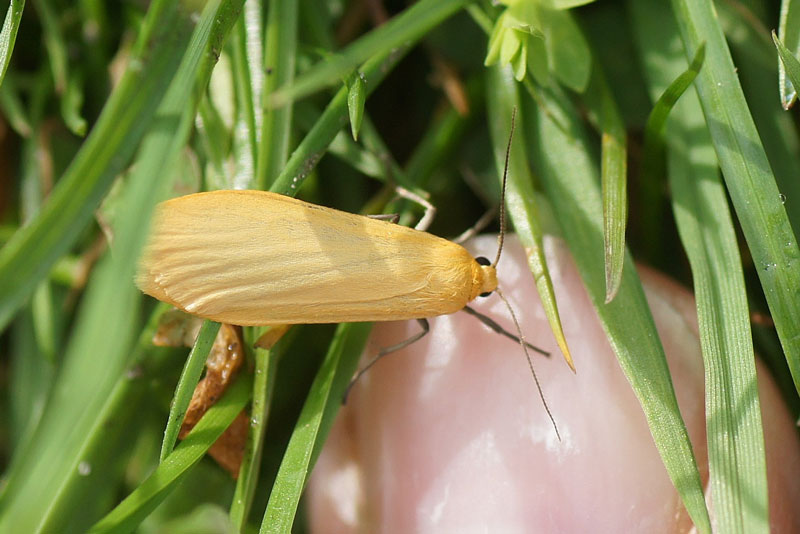
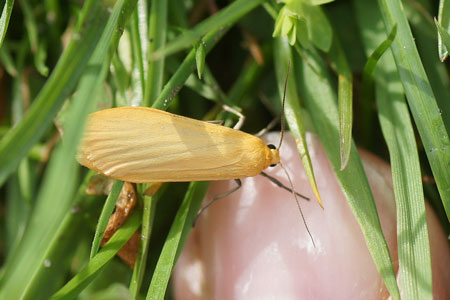 Orange Footman (Eilema sororcula). Subfamily Arctiinae. Family Erebidae.
The forewings are yolk colour. Other similar species:E.depressa, E. griseola, E.
lurideola,
Host caterpillars mosses especially oak, beech.
Wingspan 27-30 mm. The caterpillar overwinters. Flying time: april-June One generation.
Central and Southern Europe, Asia Minor and Southeast Asia. Photos 11-5-2015. German: Dottergelbe Flechtenbärchen, Frühlings-Flechtenbär. French: Manteau
jaune. |
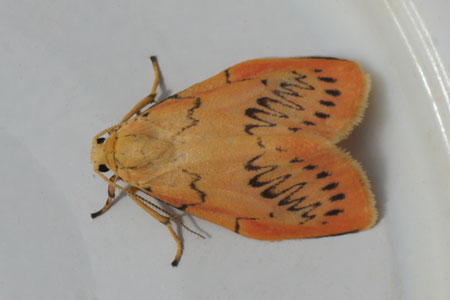 . .
 Rosy Footman (Miltochrista miniata). Onderfamilie Beervlinders (Arctiinae). Familie
Spinner-uilen (Erebidae).
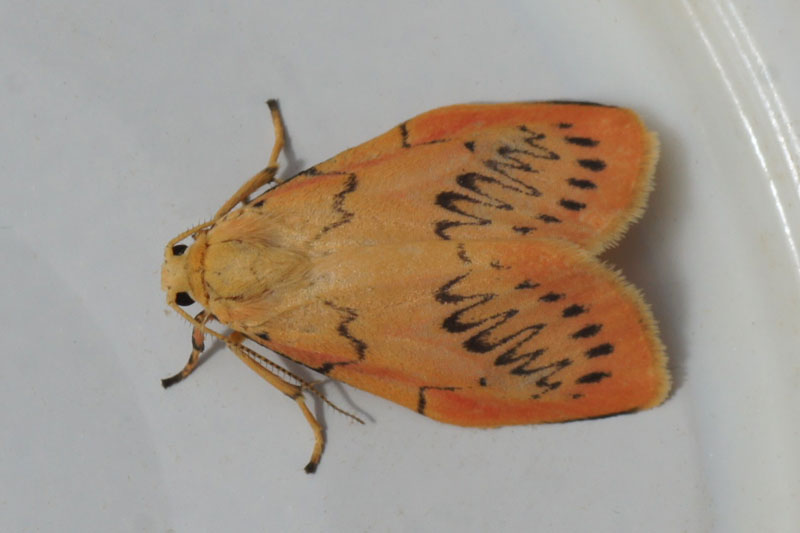
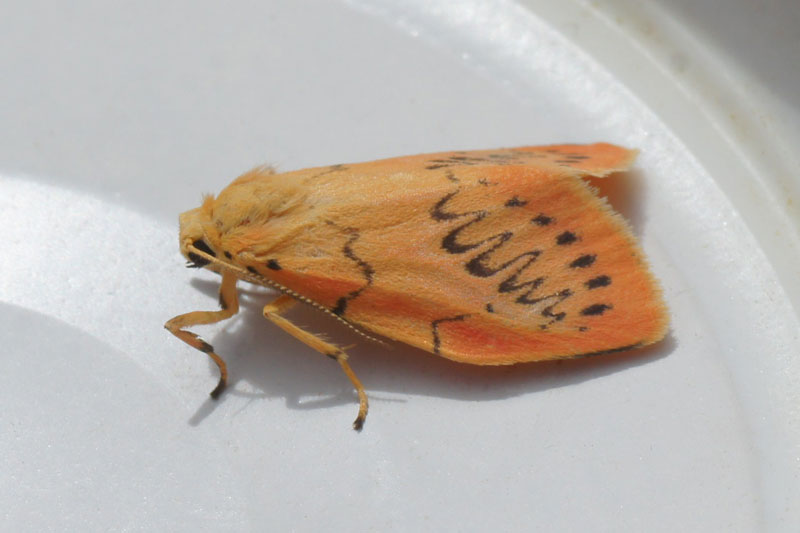
Rosy Footman (Miltochrista miniata). Onderfamilie Beervlinders (Arctiinae). Familie
Spinner-uilen (Erebidae).
An entirely rose red moth. The edges of the wings are darker. Over the forewings runs a clear black wavy line, before the margin a row of black elongate spots and at the beginning of the wings a less wavy line.
Wingspan 23-27 mm. The caterpillars feed on lichens in the trees, especially oak. They live on sandy soils.
June-September. One or two generations. The young caterpillar overwinters and on mild winter days you can find them searching for food.
Palearctic. Photos 22-7-2015. German: Rosen-Flechtenbärchen oder die Rosenmotte. French: La Rosette. |
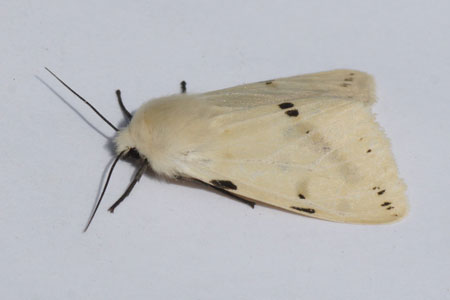 .. ..  Buff ermine (Spilosoma lutea). Subfamily Arctiinae. Family
Erebidae.
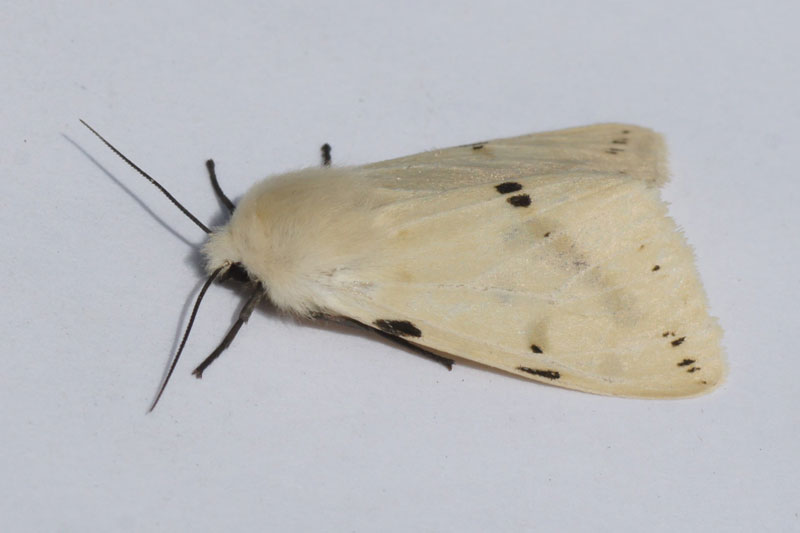
Buff ermine (Spilosoma lutea). Subfamily Arctiinae. Family
Erebidae.
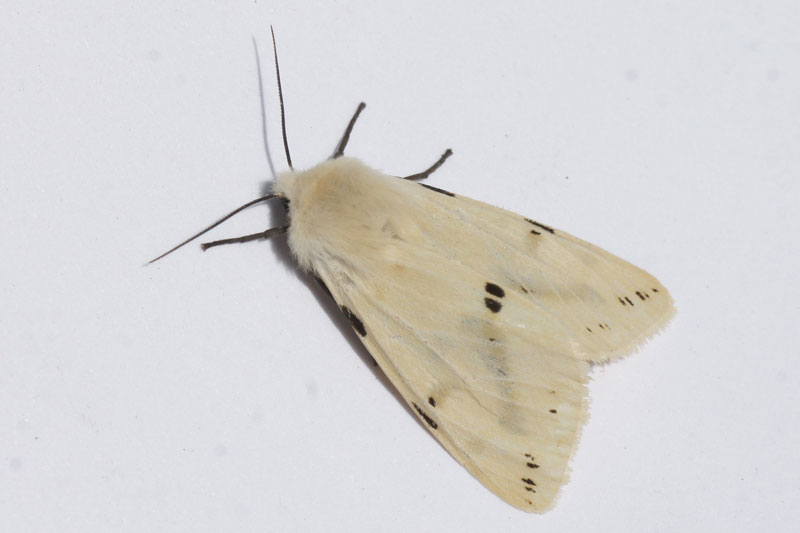
The male is yellowish or buff. The female is lighter. On the forewing is a row of black spots. Wingspan 30-42 mm.
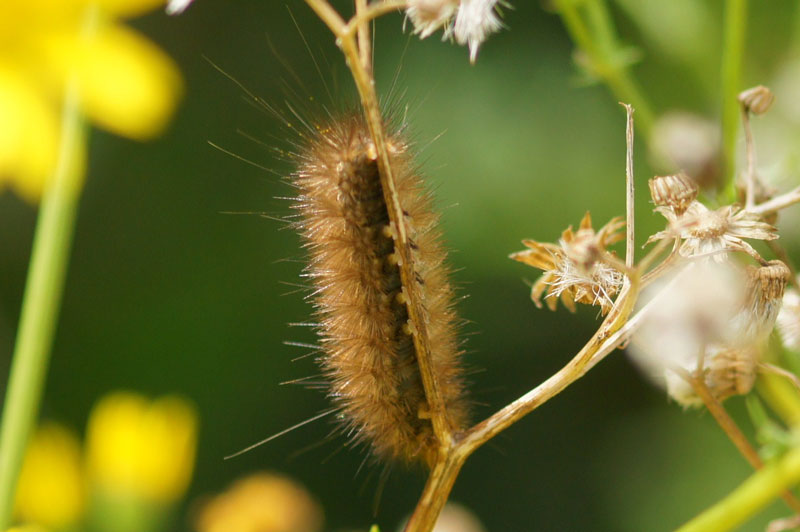
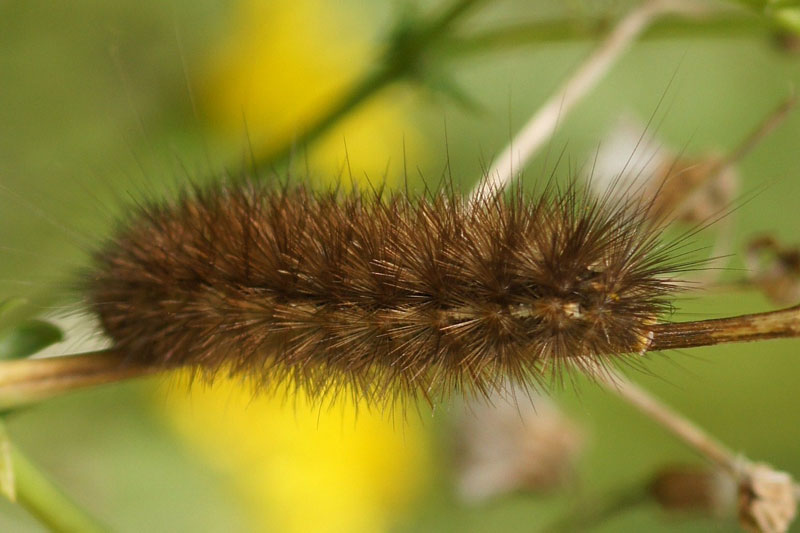
Host caterpillars: A variety of herbaceous and woody plants like nettle, honeysuckle, birch. Here it is on ragwort.
April-st. One generation. The pupa overwinters in the leaf litter.
Palearctic. Photos 22-7-2015.
German: Gelbe Fleckleibbär oder Gelbe Tigermotte.
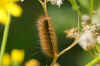
 The large (tot 45 mm) caterpillar has long brown hairs. 11-9-2010.
 |
Subfamily
Boletobiinae.
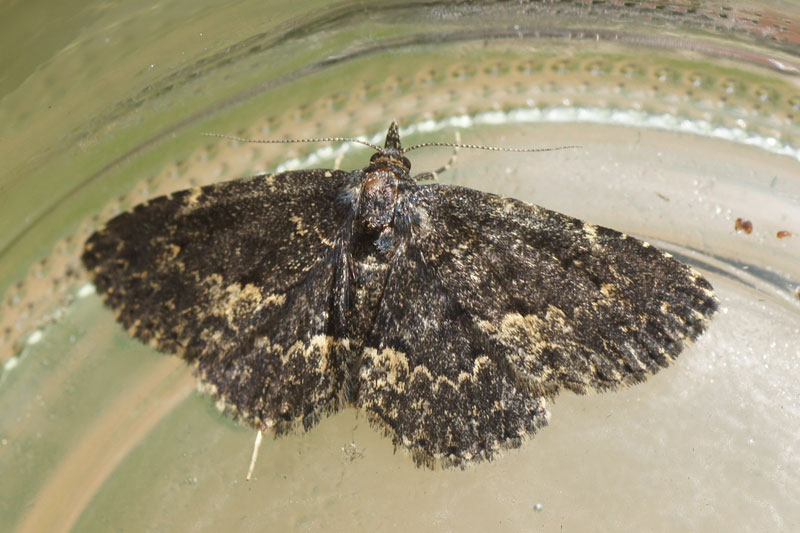
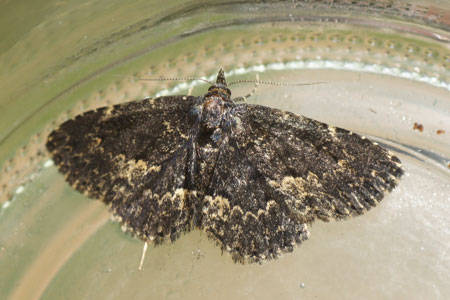 Waved Black (Parascotia fuliginaria). Subfamily Boletobiinae. Family Erebidae.
When the waved black rests, it looks like a geometrid moth for it helds its wings flat with the hindwings visible. A gray black owlet moth with cream spots and lines.
Host caterpillars: Mushroom on dead trees like the trametes versicolor, birch bracket, but also lichens.
Wingspan 18-28 mm. The caterpillar overwinters. June-August. One generation.
Europe, introduced in North America. One generation.. Photo 26-7-2013. German: Pilzeule. French: Lithosie
grise. |
Subfamily
Catocalinae.
 .. ..  . .
 . .
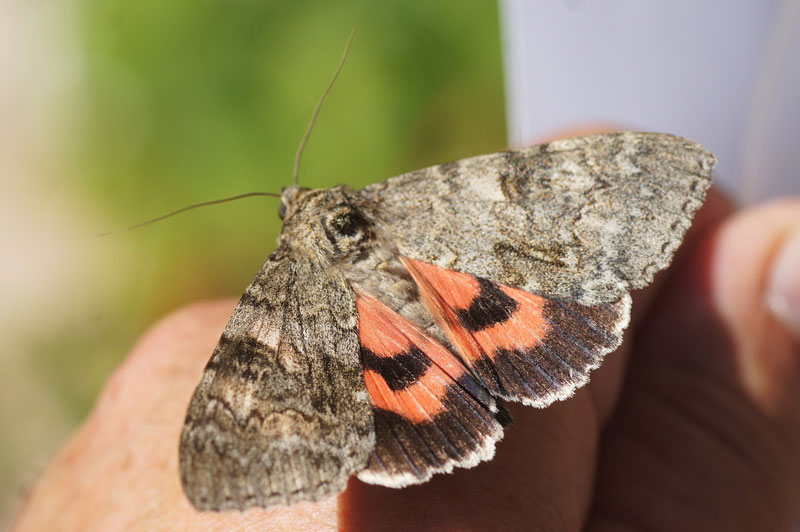
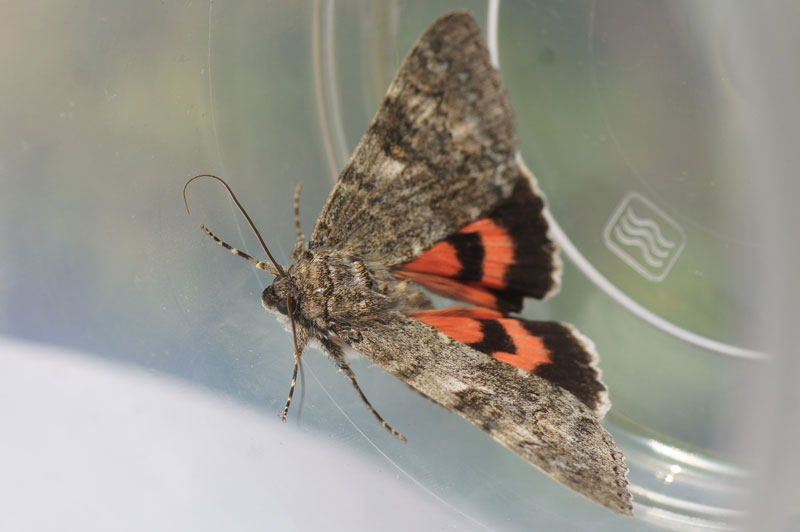
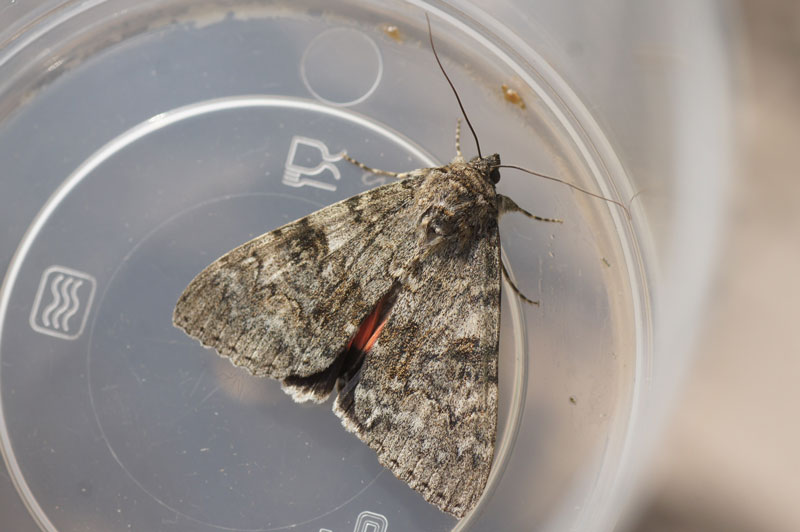
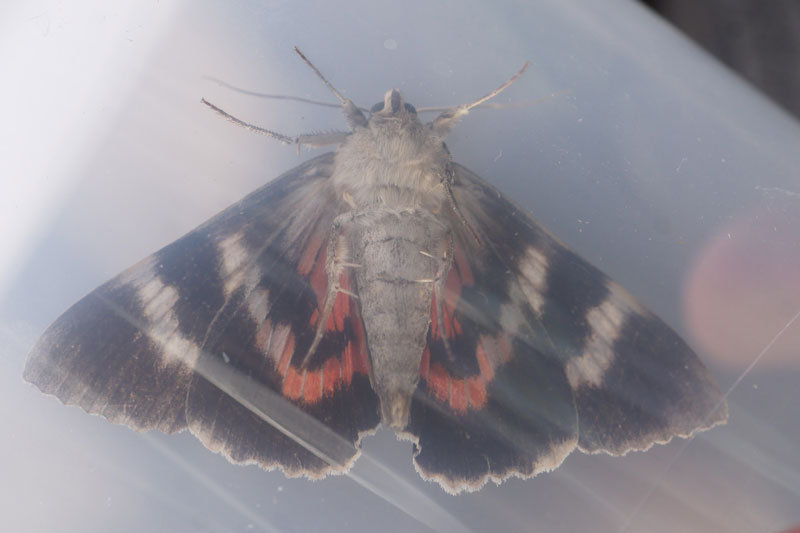
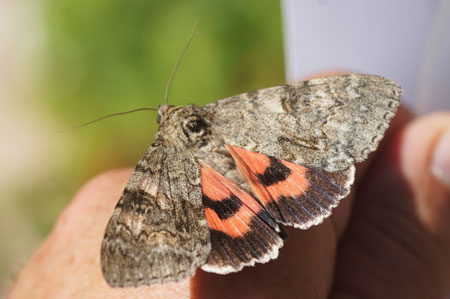
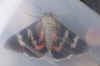 Red Underwing (Catocala nupta). Subfamily Catocalinae. Family Erebidae.
A very large moth. The forewings are brownish gray. The outer transverse line on the wings is a zigzag line. The hindwings are red with two black bands and a narrow white border. The underside of both the frontwings and hindwings are black with two white bands. (see photo)
Host caterpillars: poplar and willow. Wingspan 65-80 mm.
They overwinter as eggs in a bark crevice. Flight time: July-October. One generation.
Europe, Asia. Photos 9-8-2013. German: Rote Ordensband. French: la Mariée, Lichénée rouge. |
Subfamily
Eribinae.
 Mother Shipton Moth (Euclidia mi, formely Callistege mi). Subfamily Erebinae. Family
Erebidae. Not in the garden but in the dunes about 4 km from our home.
Mother Shipton Moth (Euclidia mi, formely Callistege mi). Subfamily Erebinae. Family
Erebidae. Not in the garden but in the dunes about 4 km from our home.
The Mother Shipton Moth is a day active moth. On the dark brown wings you can see the pattern of the profile of the head of a witch. In this picture you can see on the left side of the left wing. English name: This pattern resembles the iconic representation of Ursula Southeil, known as Mother Shipton – a sixteenth-century prophetess and witch.The hind wings are dark brown cream-coloured spots.
Especially on sandy soils and in the dunes.
Wingspan 25-30 mm. April-June. One generation. The pupa overwinters in a cocoon in the grass or in the ground.
Europe, Siberia, the Far East and Asia Minor. Photo 11-6-2013. German:
Scheck-Tageule. |
Subfamily
Hypeninae.
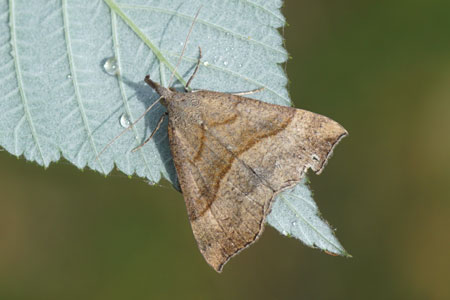 The Snout (Hypena proboscidalis). Subfamily Hypeninae. Family
Erebidae.
The Snout (Hypena proboscidalis). Subfamily Hypeninae. Family
Erebidae.
Brown, dull grayish brown or dark purplish brown with two dark brown transverse lines. Second generation are smaller and often darker.
Caterpillar host plant: Nettle.
Wingspan 28-38mm. The caterpillar hibernates. Flight time: May-October. Two generations. Europe, North Africa, Asia. Photos
3-9-2023. German: Nessel-Schnabeleule. French: la Noctuelle à museau , l'Hypène proboscidale |
 .. .. . .
 . .
 . .
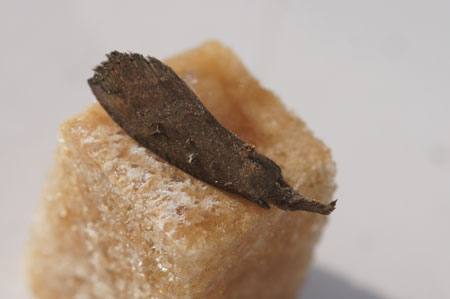
 Buttoned snout (Hypena rostralis) Subfamily Hypeninae. Family
Erebidae.
Buttoned snout (Hypena rostralis) Subfamily Hypeninae. Family
Erebidae.
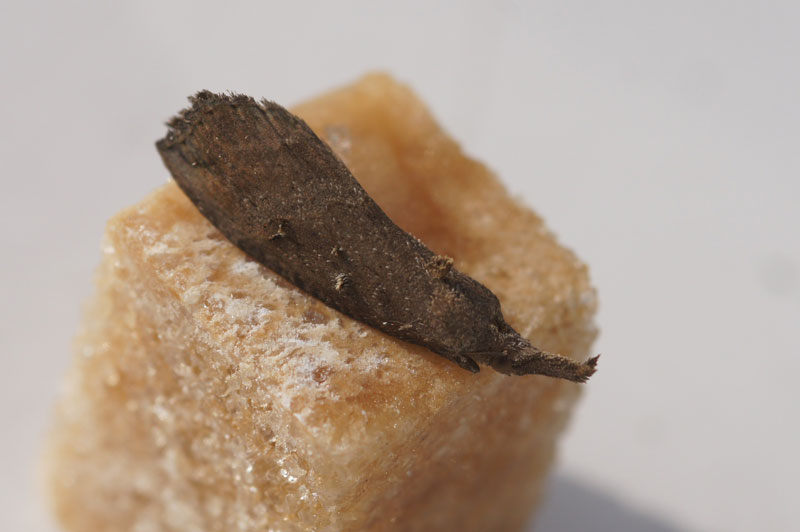
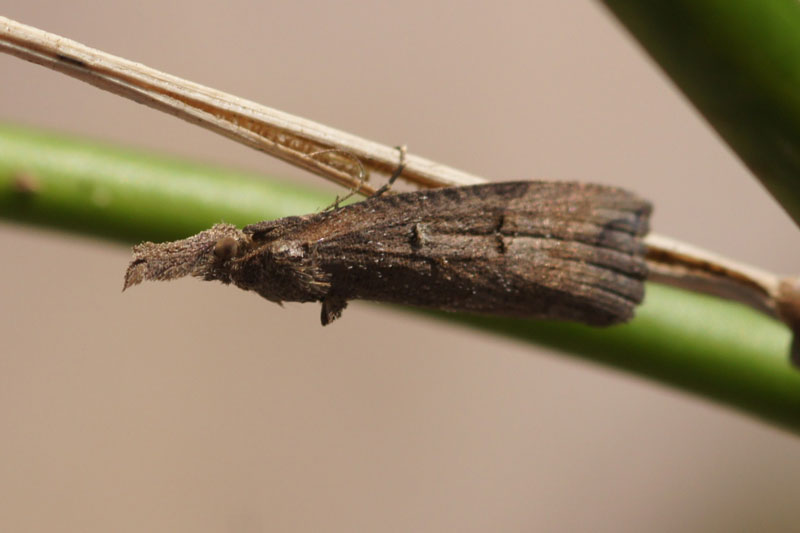
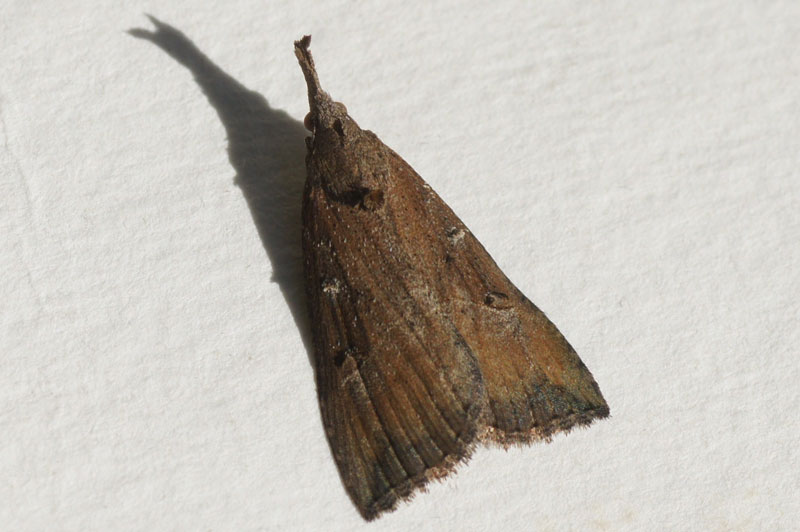
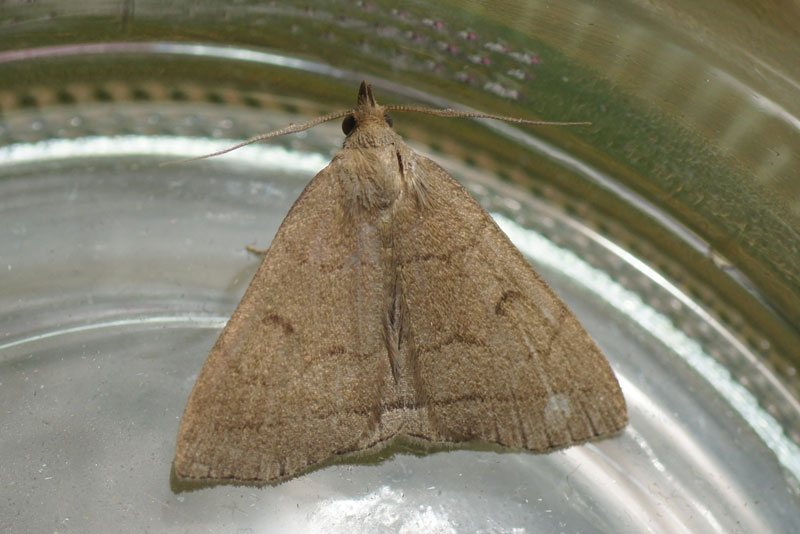
I hadn't recognized this moth as an owl. I thought of a grass moth. Tymo thanks for the help. It sat on a jacket. Because the bad weather that week it was impossible to take photos. That's why it stayed one week in a box with a lump of sugar with honey.
Features: A small light brown moth. The markings are variable. The moth on the photo is almost without markings and uniform coloured. The long snout is formed by long palps. Compared with other snout moths it has slender wings.
Caterpillar host plant: hop. But also nettles, blackberries and raspberries.
Wingspan 27-32 mm. The adult moth overwinters. Flight: After hibernation: from March to June. Next generation: from August to October.
Europe, Asia Minor. Photos 2-3-2011, 27-10-2012, 12-11-2018. German: Hopfen-Zünslereule, Hopfenschnabeleule. French:
Toupet. |
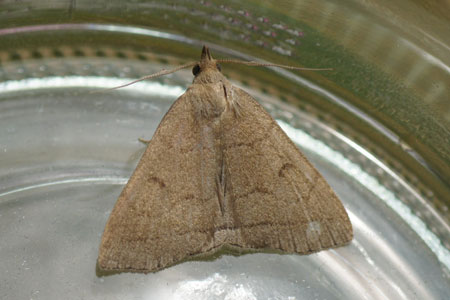 .. .. Fan-foot (Zanclognatha tarsipennalis, sometimes called Hypena
tarsipennalis). Family Erebidae.
Fan-foot (Zanclognatha tarsipennalis, sometimes called Hypena
tarsipennalis). Family Erebidae.
An olive brown owl with dark lines. There are some very similar species. Similar are: the Jubilee Fan-foot (Zanclognatha lunalis), Shaded Fan-foot (Herminia tarsicrinalis), Small Fan-foot (Herminia grisealis) and Common Fan-foot (Pechipogo strigilata).
Host caterpillars: The fallen leaves, especially of beech, oak and blackberry.
Wingspan 30-35 mm. The caterpillar overwinters..
May-September. Two generations. Europe. Photo 26-7-2013. German: Olivbraune Zünslereule. French: l’Herminie de la
vigne-blanche. |
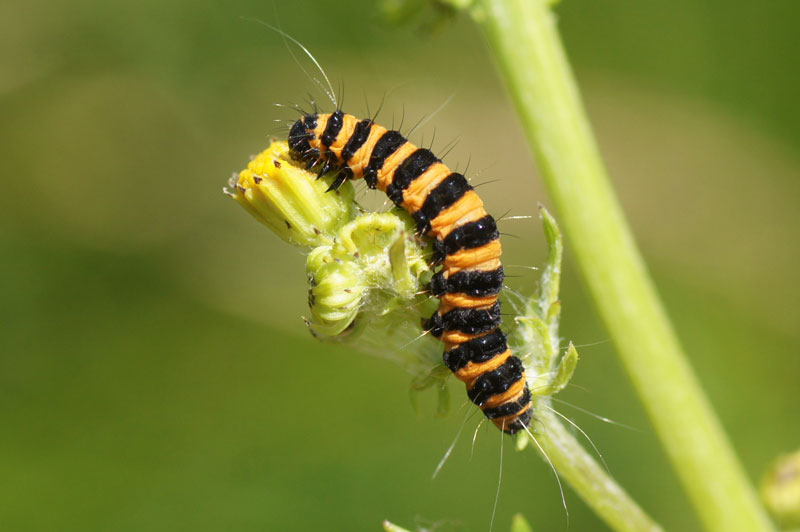
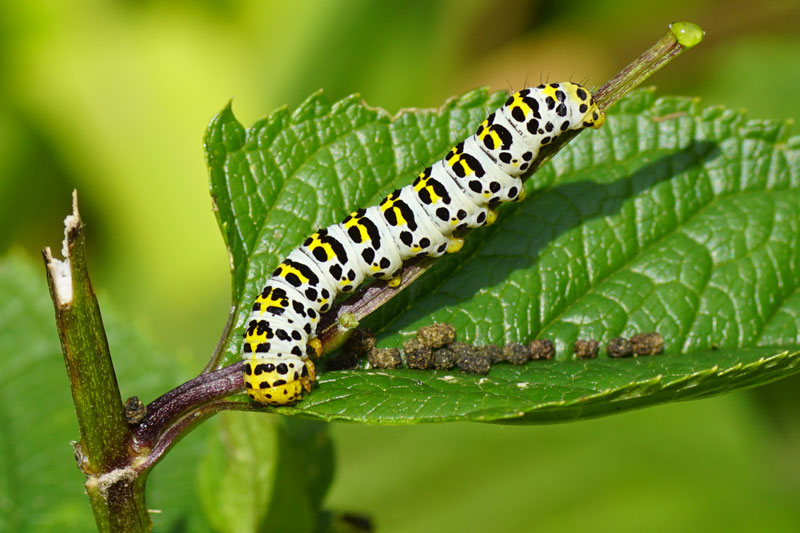
Caterpillar, family Erebidae.
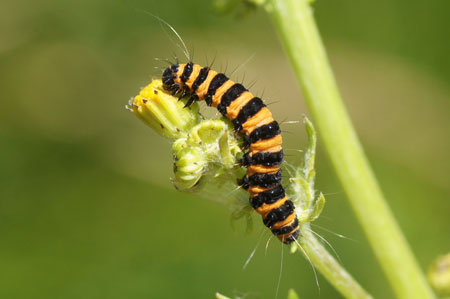 Cinnabar moth. Subfamily Arctiinae. Family Erebidae. Not in the garden but in the dunes about 4 km from our home.
Host plants of the caterpillar: Ragwort and other ragwort species. Both the caterpillar and the butterfly are inedible because of the poison of the
ragwort. The caterpillars are not affected by the poison.
Flying time: April - August A generation. They overwinter as pupa.
Wingspan 32-45 mm.
Europe, West and Central Asia and are introduced in New Zealand, Australia and North America to control the Ragwort
Here you can find photos of the moth: Cinnabar
moth
Photo 21-7-2013.German: Jakobskrautbär, Blutbär, Karminbär. French: Goutte de sang, Tyria
jacobaeae, Écaille du séneçon, Carmin. |
Nederlands /
Dutch
 
Subpage France:
Insects
France
Subpage butterflies and
moths:
Butterflies
Geometer
moths Leafrollers,
tortrix moths Pyralidae,
Crambidae Concealer
moths, Oecophoridae
|






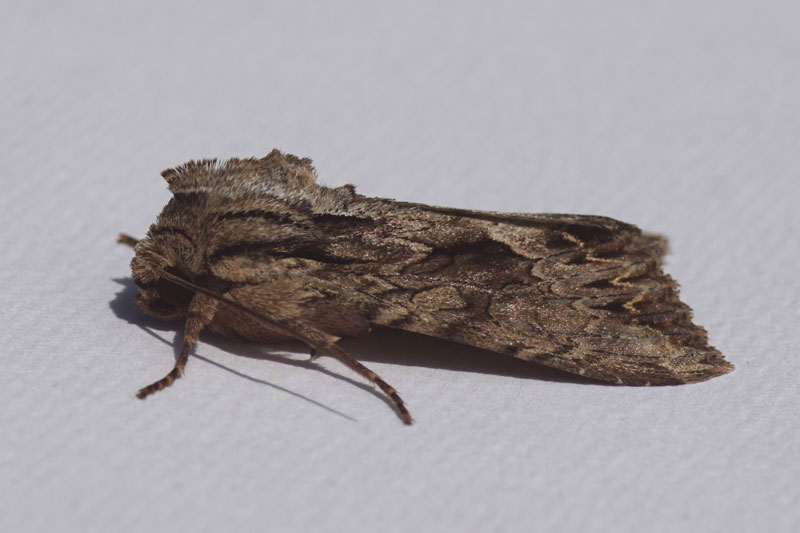
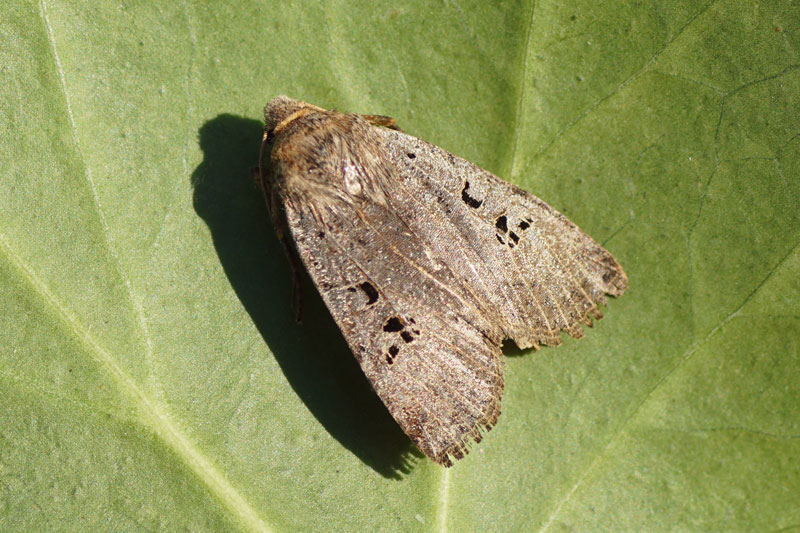
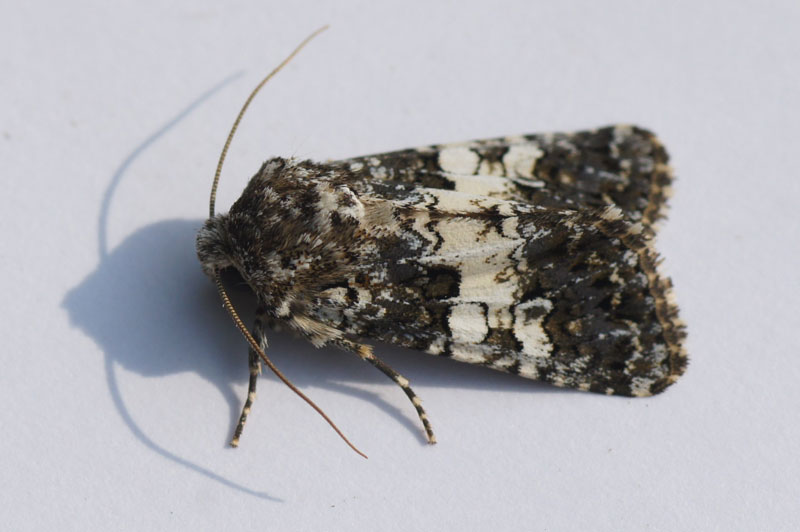
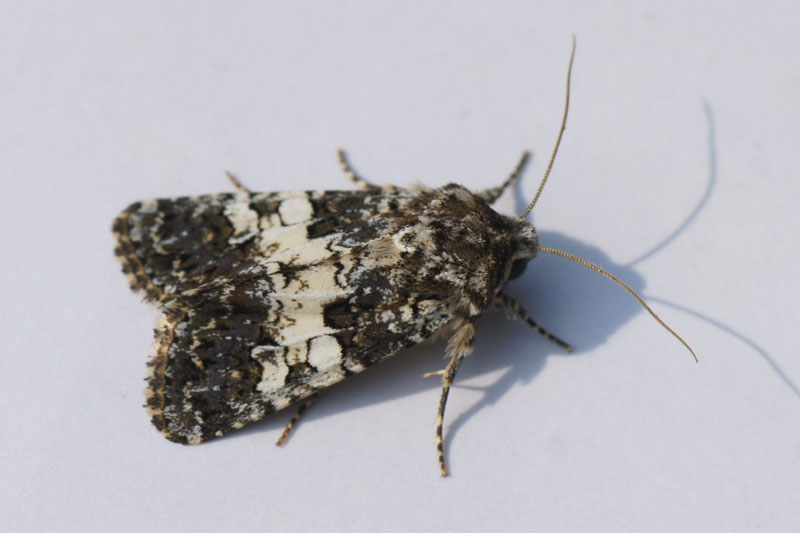














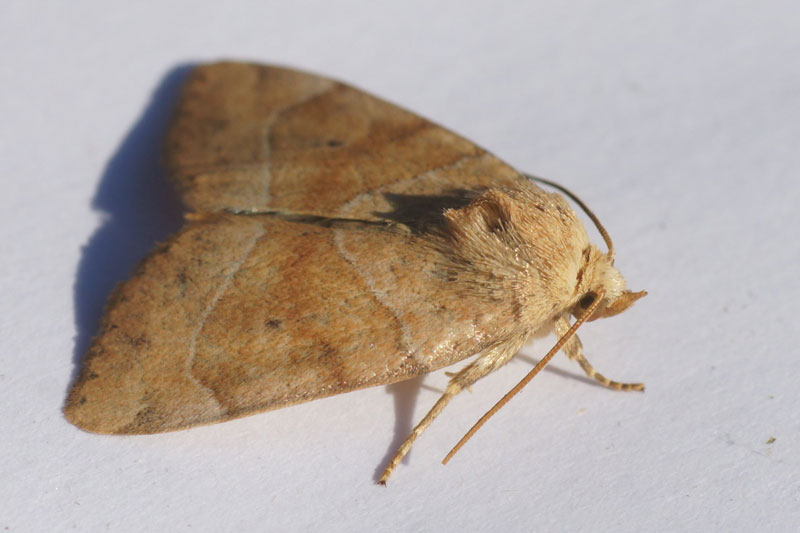
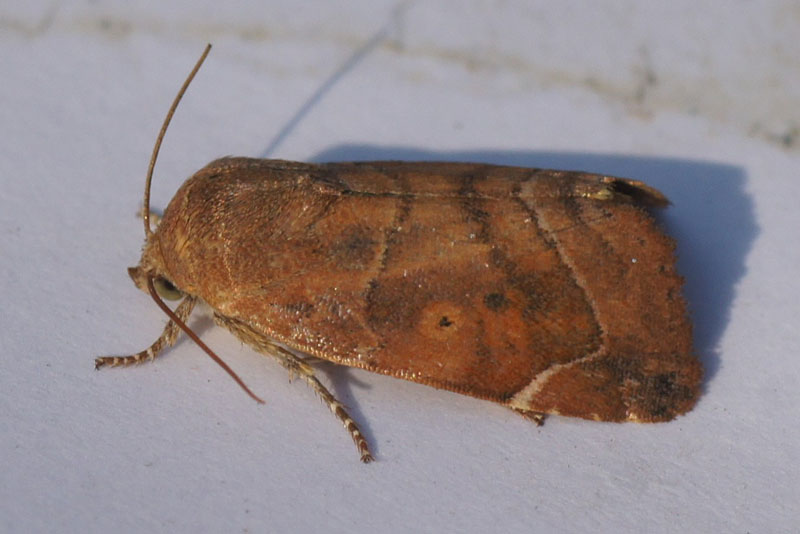
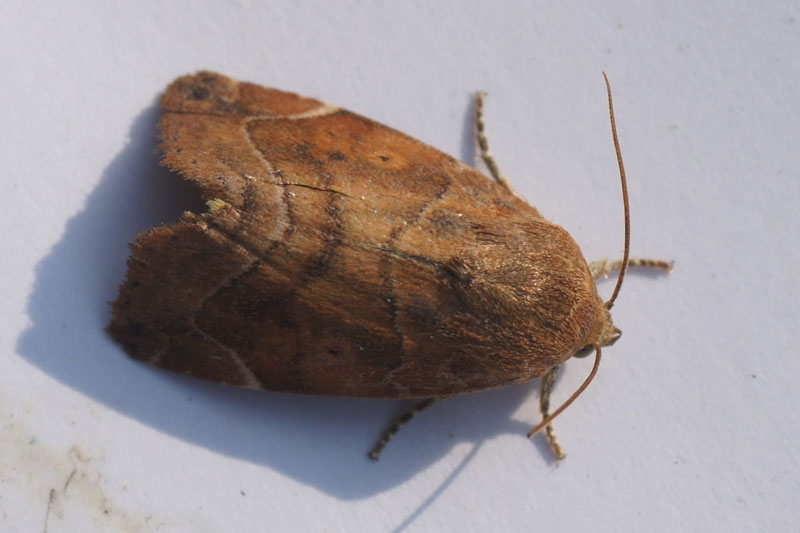
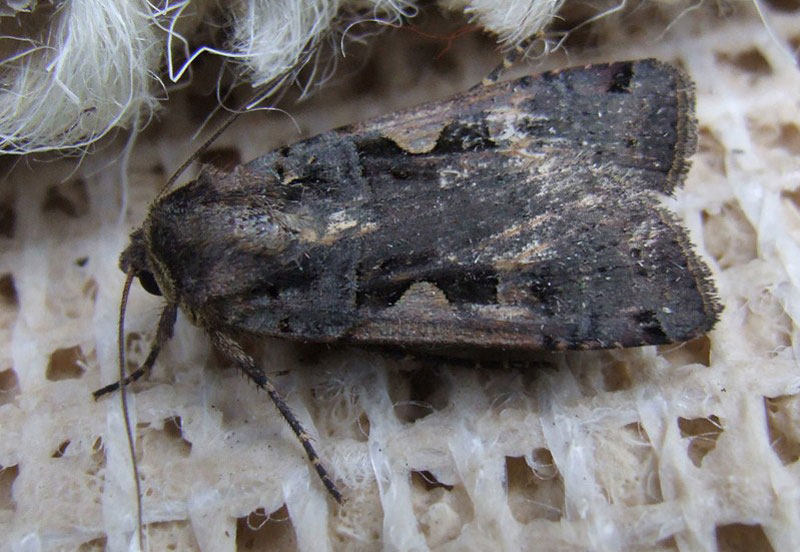
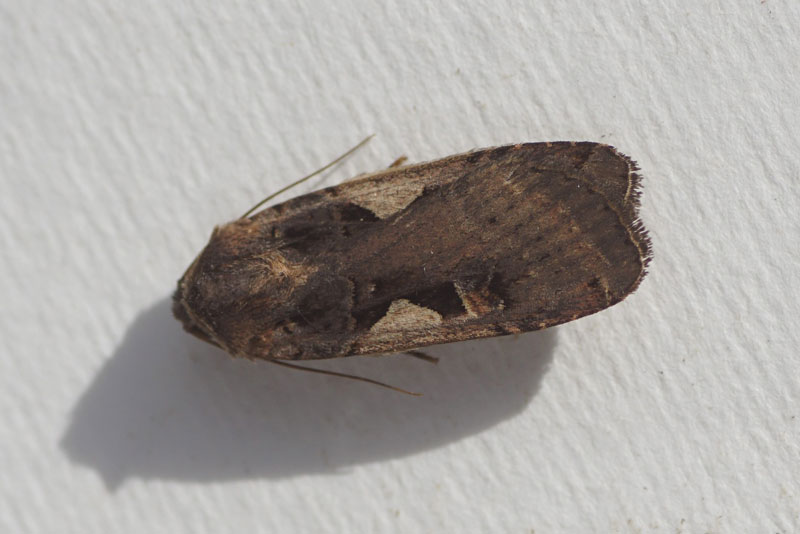

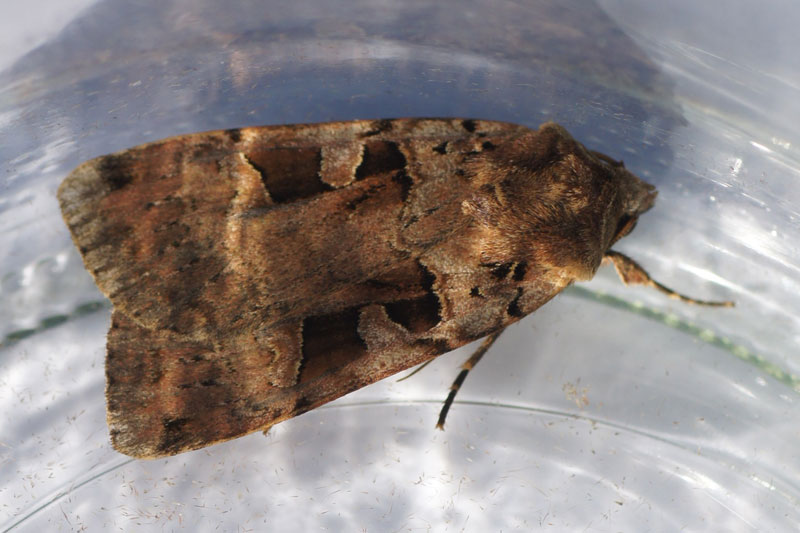
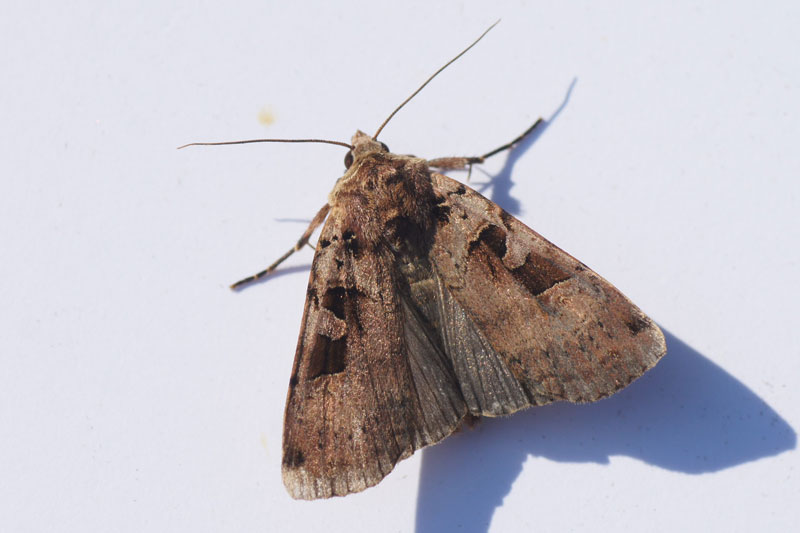
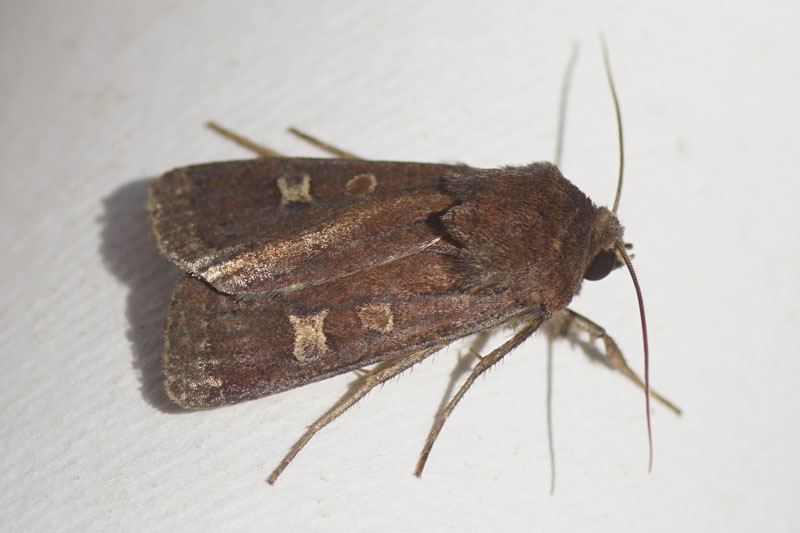




 .
.